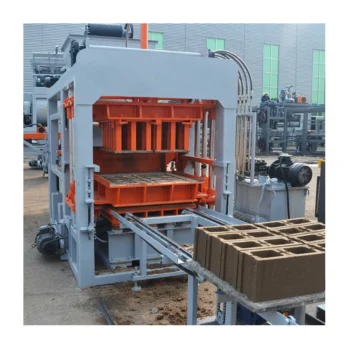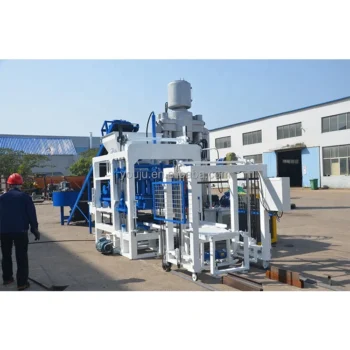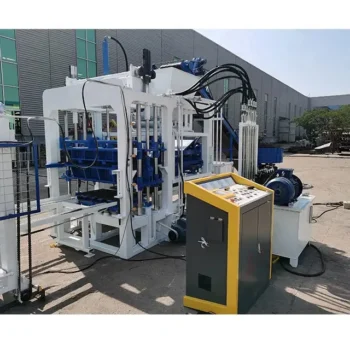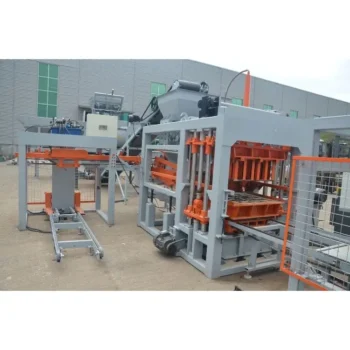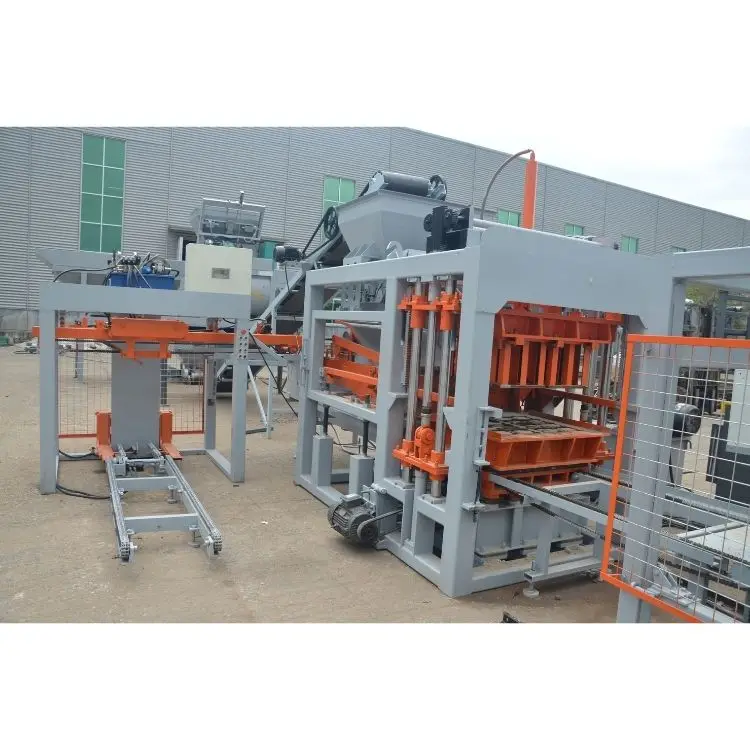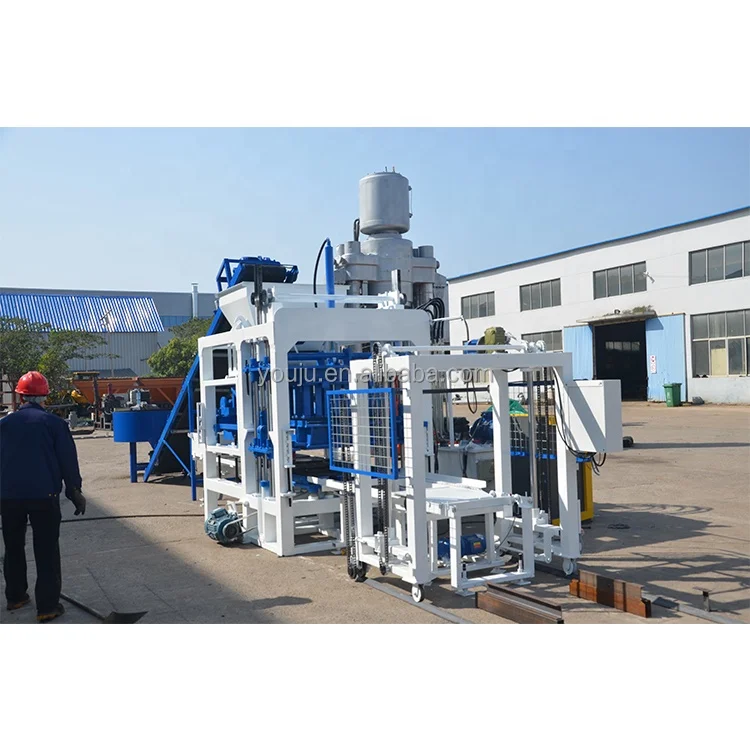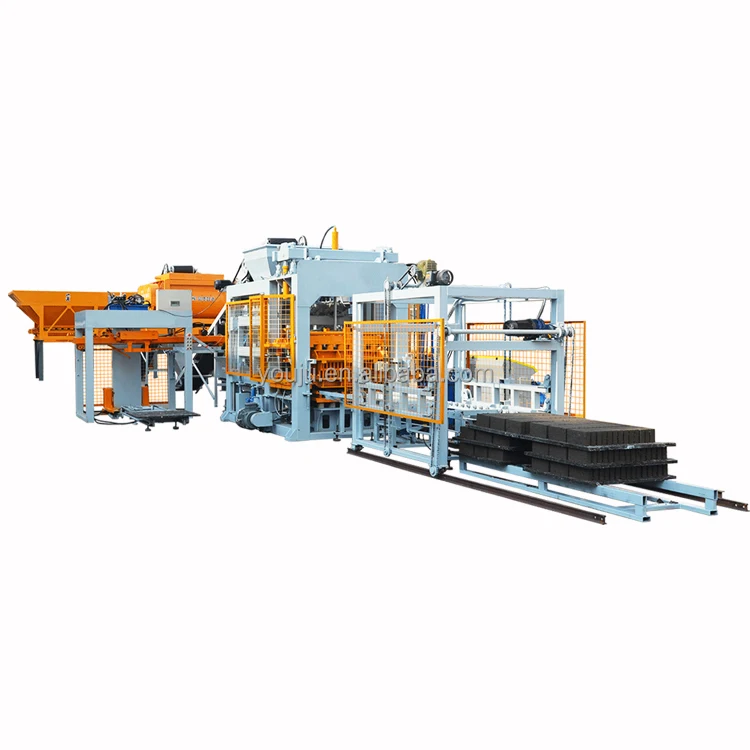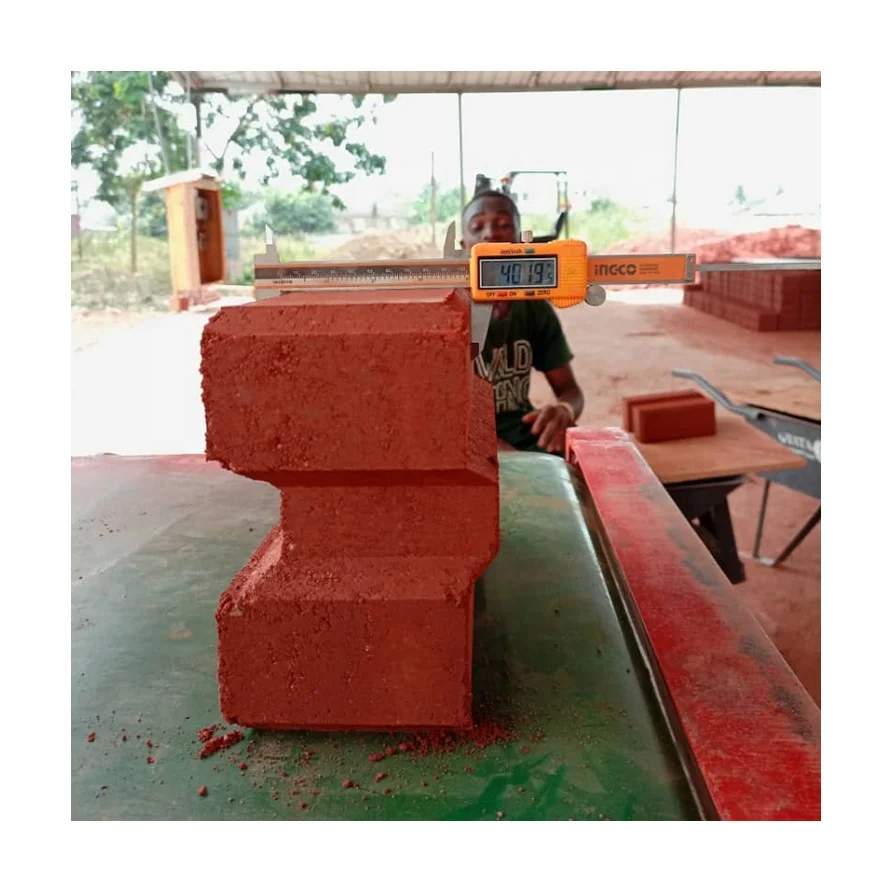
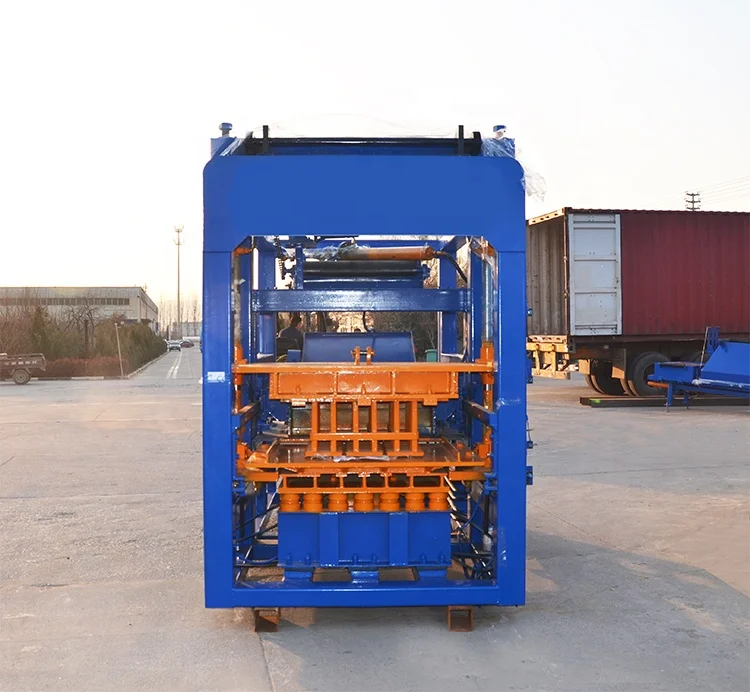
Description
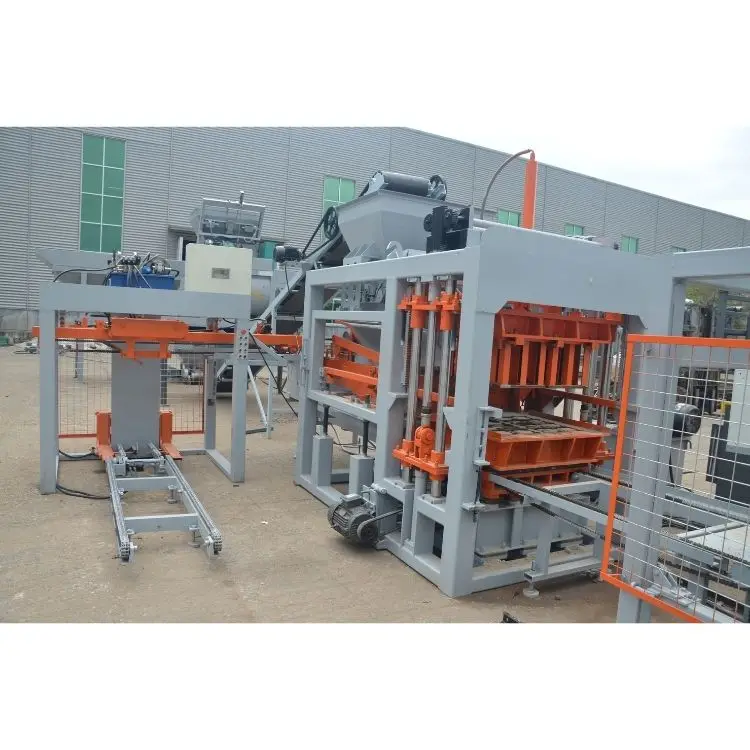
Matched System Sizing — capacity for each block format is calculated against your local mix design and pallet dimensions, not a generic catalogue default.
Technical Specifications
| Parameter | Value |
|---|---|
| Model | QT6-15 |
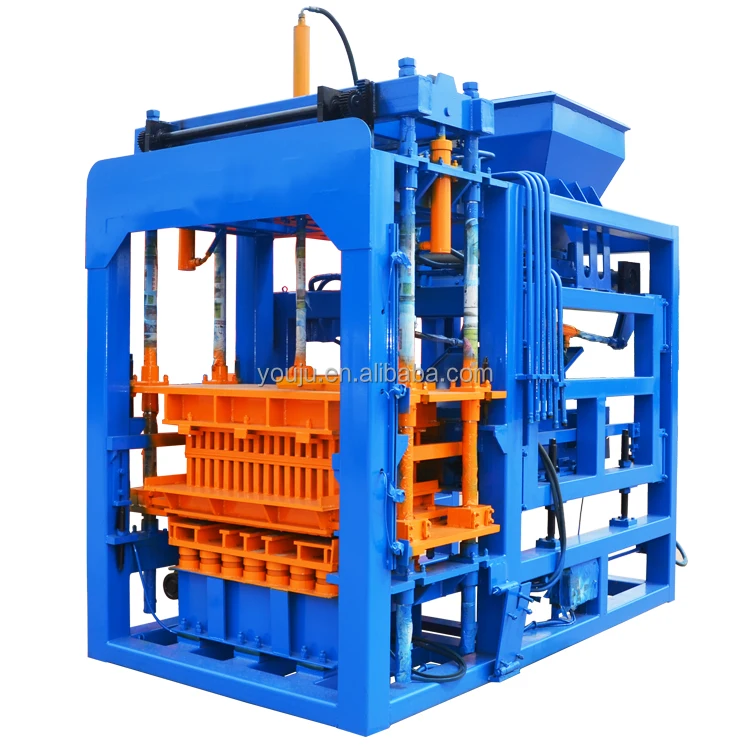
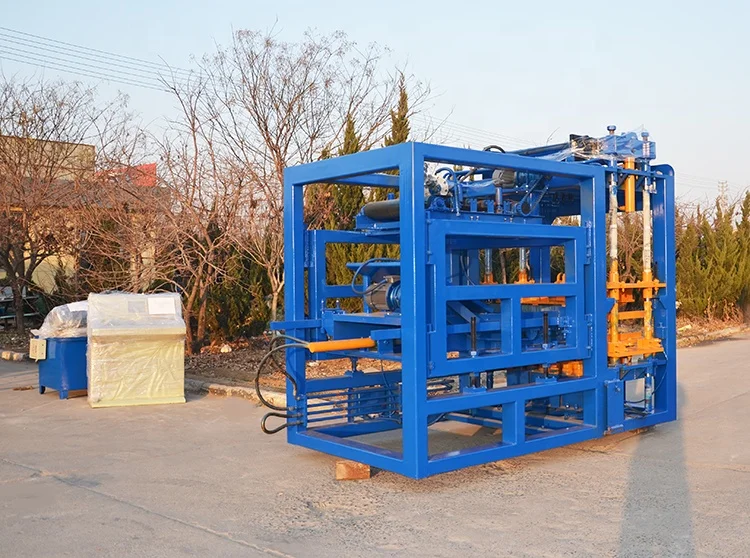
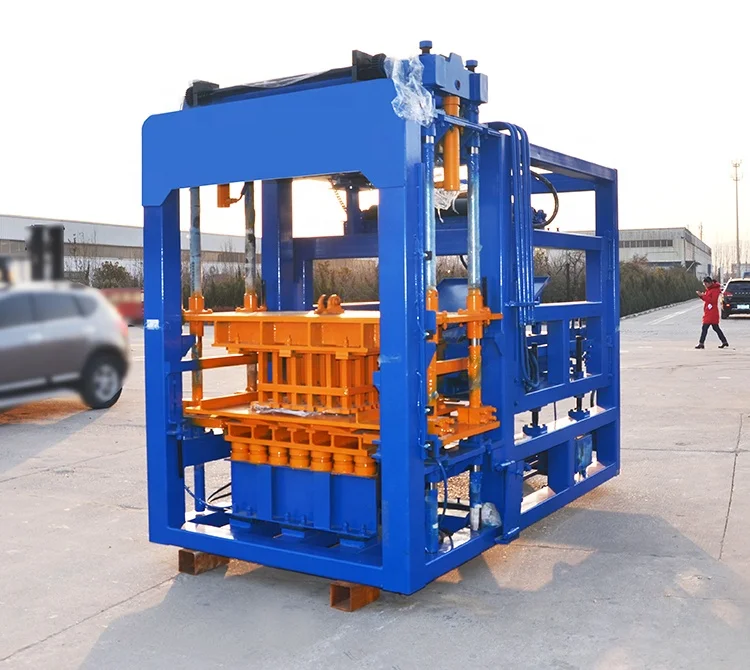
| Product Type | Semi-Automatic Concrete Block Making Machine |
| Molding Way | Vibration and hydraulic pressing |
| Rated Pressure | 21 MPa |
| Molding Cycle | 15s–20s (basis not stated in source — confirm block format / material / thickness) |
| Pallet Size | 900×700 mm |
| Main Machine Weight | 6000 kg |
| Output Capacity (Hollow Block) | 6 pcs/pallet, 1440 pcs/h, 11520 pcs/8h based on 400×200×200 mm format |
| Output Capacity (Paving Brick) | 21 pcs/pallet, 5040 pcs/h, 40320 pcs/8h based on 200×100×60 mm format |
| Output Capacity (Solid Brick) | 32 pcs/pallet, 7680 pcs/h, 61440 pcs/8h based on 240×115×53 mm format |
| Automation Level | Semi-automatic (simple line or full line with batching and pallet handling) |
| Raw Materials | Cement, sand, fly ash, stone powder, slag |
| Product Formats | Hollow blocks, paving bricks, solid bricks, kerbstones, color pavement bricks |
| Warranty | 1 year (excluding wear parts) |
Application Suitability
| Application | Material or Output |
|---|---|
| Fly ash block production | Cement, fly ash, sand, and slag blends for structural and partition hollow blocks |
| Paving brick manufacturing | High-density stone powder and cement mixes for pedestrian and light-traffic paving |
| Solid brick runs | Standard cement-sand or fly ash-sand formulations for load-bearing walls |
| Kerbstone and color pavers | Pigmented face-mix concrete for streetscape and infrastructure edging |
What "Pieces per Hour" Leaves Out About Semi-Automatic Block Machine Specifications How to Choose
Real capacity depends on which block format the machine is running, not a single headline number.
Suppliers often quote peak cycles per hour assuming a thin paving brick, then the same press runs hollow blocks at a fraction of that rate. Buyers sign contracts expecting daily volumes the machine cannot physically deliver on the format their market actually demands. A fly ash hollow block requires a longer vibration and pressing sequence than a solid brick, cutting hourly output substantially. Without a format-by-format capacity breakdown, the semi-automatic block machine specifications how to choose conversation stays abstract until the machine arrives and misses targets. [NEED_CITE: block format impact on cycle time and daily throughput]
Matching the Press to the Block Your Market Sells
The QT6-15 is built around vibration combined with hydraulic pressing at 21 MPa rated pressure, a combination that reaches into different block densities depending on the mix. A paver needs high pressure and short vibration; a hollow block needs sustained vibration to settle the core walls. When we size this machine, the semi-automatic block machine specifications how to choose discussion starts with your target block dimensions, then works backward to confirm the cycle time each format actually requires.
Pallet Dimensions as the Sizing Anchor
The 900×700 mm pallet defines how many pieces fit per cycle and how cured stock moves through your yard. If your forklift tines are set for a different pallet footprint, or your curing racks were built around another supplier’s dimensions, every pallet becomes a handling problem. Confirming pallet compatibility before the machine enters production avoids re-racking or buying a second forklift just to move finished blocks. [NEED_CITE: pallet and curing rack compatibility in block plant layout]
Reading the Specs That Actually Matter on Site
The rated pressure of 21 MPa sets the upper limit for block compaction, but the effective density also depends on vibration frequency and duration matched to your aggregate particle size. Coarse crushed stone needs different vibration energy than fine fly ash to achieve the same compressive strength. The 6000 kg main machine weight contributes to vibration damping — a lighter frame transmits more energy into the mould rather than the foundation, which affects both block consistency and structural wear over time. Moulding cycles of 15 to 20 seconds apply only when the material, block height, and target density align with the original test conditions; thicker hollow blocks or high-slag mixes typically push the cycle toward the upper end of that range. The semi-automatic configuration lets you start with a mixer, belt conveyor, and stacker, then add a cement silo, screw conveyor, cement scale, batching machine, pallet feeder, and pallet separator as output demands grow.
The Cost of Skipping the Material Conversation
I worked on a project in Peru where the press ran perfectly on standard sand at the factory but produced crumbling blocks on arrival because the local volcanic fly ash had a completely different moisture absorption profile. Vibration frequency and hydraulic pressure both needed adjustment before the plant reached even half its expected output. Without sending a raw material sample first, the buyer paid for a month of idle curing racks and delayed deliveries. Skipping that step with any block press turns commissioning into an expensive trial-and-error exercise. [NEED_CITE: local aggregate variability in block production commissioning]
Why Sourcing Here Reduces Format Mismatches
Block machinery is our single focus, so the press, mould, pallet, and handling equipment are specified together rather than assembled from unrelated suppliers. We configure the QT6-15 against your actual mix design, local aggregate, and the block formats your market buys — not a catalogue default. Mould design covers the dimensions you need, with custom drawings when your market runs a non-standard format. Automation level is selectable, letting you begin semi-automatic and expand the line as demand justifies it. Installation includes operator training so your team understands mould change procedure, cycle adjustment, and daily maintenance from the first shift. [NEED_CITE: matched block line specification versus component assembly]
Documentation & Verification
- Line layout and capacity calculation stating the block format assumed for each output figure
- Mould drawing and format list confirming dimensions and change procedure before production
- Pallet specification sheet matching size, material, and load rating to your curing system
- Factory test record run on your confirmed mix proportions and block dimensions
- Hydraulic and electrical schematic with voltage and control language noted
Installation, Commissioning & Support
- Foundation must support the 6000 kg main machine weight plus dynamic vibration loads
- Power supply confirmed to local voltage and frequency before electrical panel build
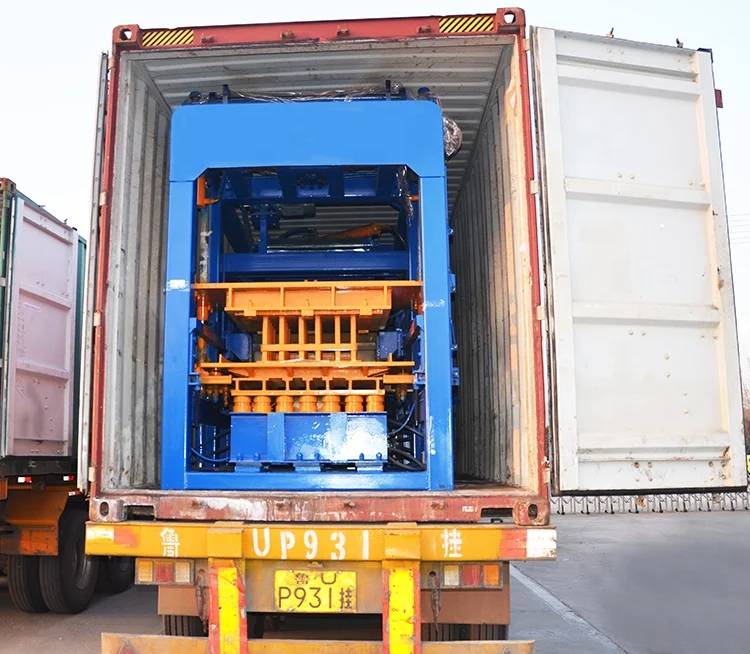
- Machine shipped in dismantled state with reassembly supervised on site
- Vibration frequency and hydraulic pressure tuned to your local aggregate during commissioning
- Mould change training covers alignment, clamp release, and cycle recalibration for each format
- Wear parts list provided with recommended reorder intervals based on your material abrasiveness
What to Prepare Before Inquiry
Send us the exact block formats your market sells, including dimensions and target compressive strength. Tell us which raw materials are available locally and their typical proportions. Share your curing area dimensions and the forklift or handling equipment already on site. Confirm your local voltage, frequency, and preferred control language so the semi-automatic block machine specifications how to choose conversation produces a quotation you can actually commission.
Frequently Asked Questions
Q: How is output capacity calculated for each block format?
A: Each output figure is based on a specific block dimension — hollow block at 400×200×200 mm yields 11,520 pieces per 8-hour shift, while paving brick at 200×100×60 mm reaches 40,320 per shift. Cycle time varies by format and material, so we confirm the assumption for your actual product before quoting.
Q: How do I match the 900×700 mm pallet to my curing area and forklift?
A: We ask for your curing rack spacing and forklift tine width before confirming the pallet specification. A mismatch means you either rebuild your racks or buy different handling equipment, so this check happens before the pallets enter production.
Q: What mould formats are available and how long does a change take?
A: The QT6-15 accepts moulds for hollow blocks, solid bricks, paving bricks, kerbstones, and color pavers. Mould change time depends on the clamp system and operator familiarity — we train your team during commissioning so format switches do not consume most of a shift.
Q: How is the machine configured for my local raw materials?
A: We request a sample of your fly ash, sand, or slag before finalizing vibration and pressure settings. Different materials absorb moisture and respond to compaction differently, so the machine parameters are set against your actual mix, not a generic test sand.
Q: What voltage, frequency, and control language are confirmed before shipment?
A: We confirm your local voltage and frequency in writing before the electrical panel is built, and the control display language is set to your operator’s preference. This prevents commissioning delays caused by mismatched power supply or unreadable menus on arrival.