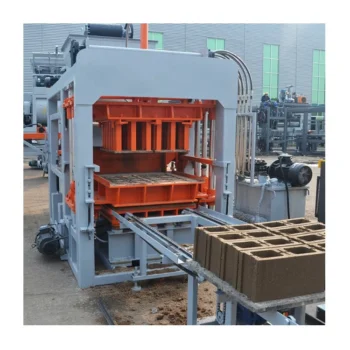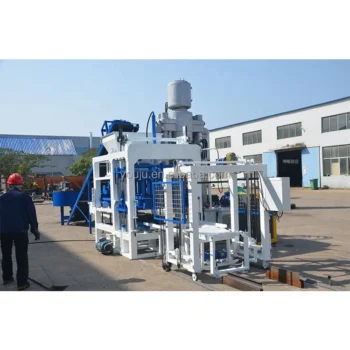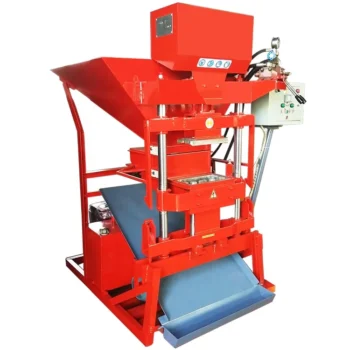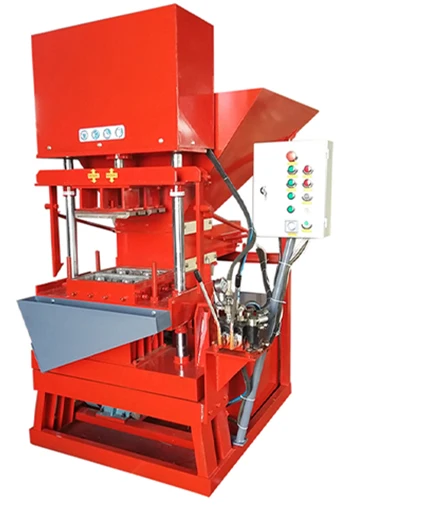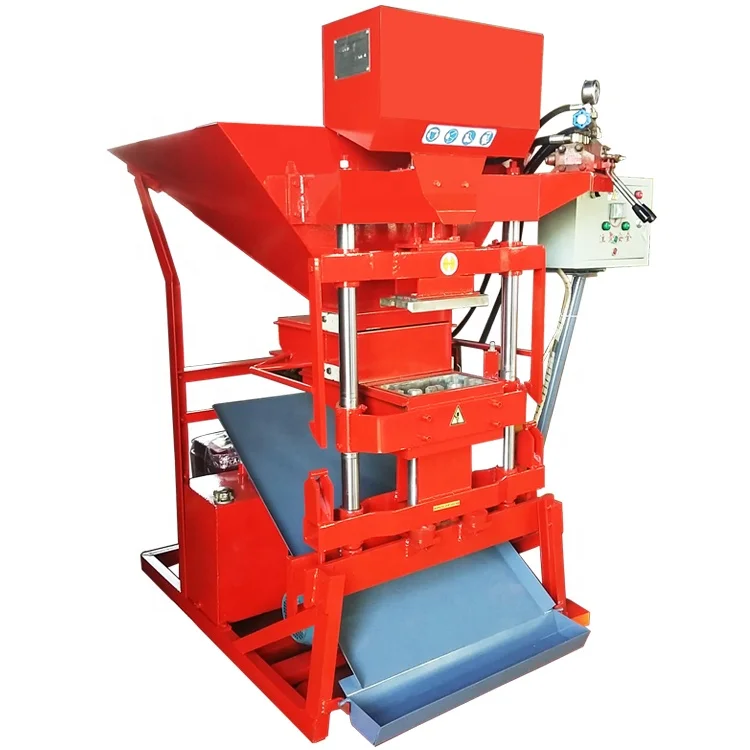

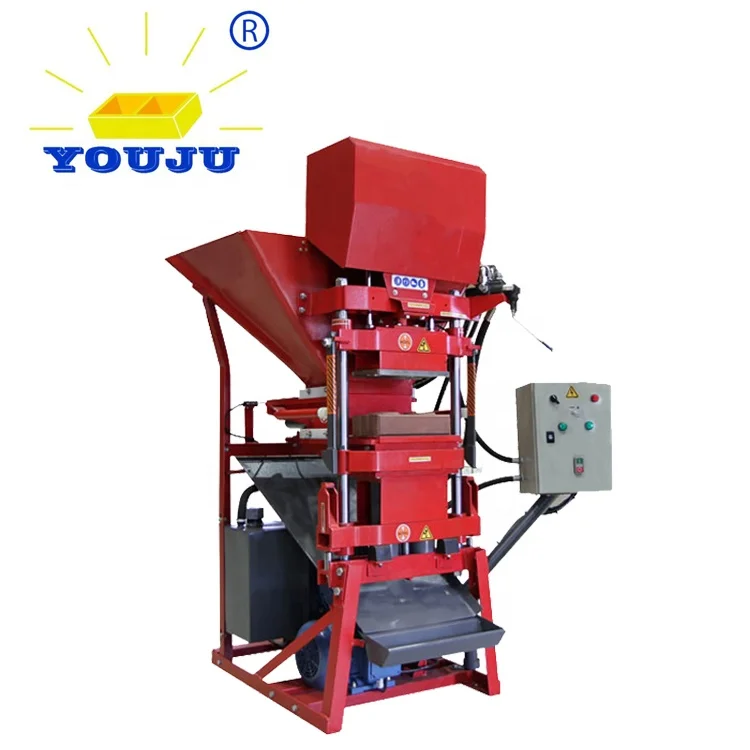

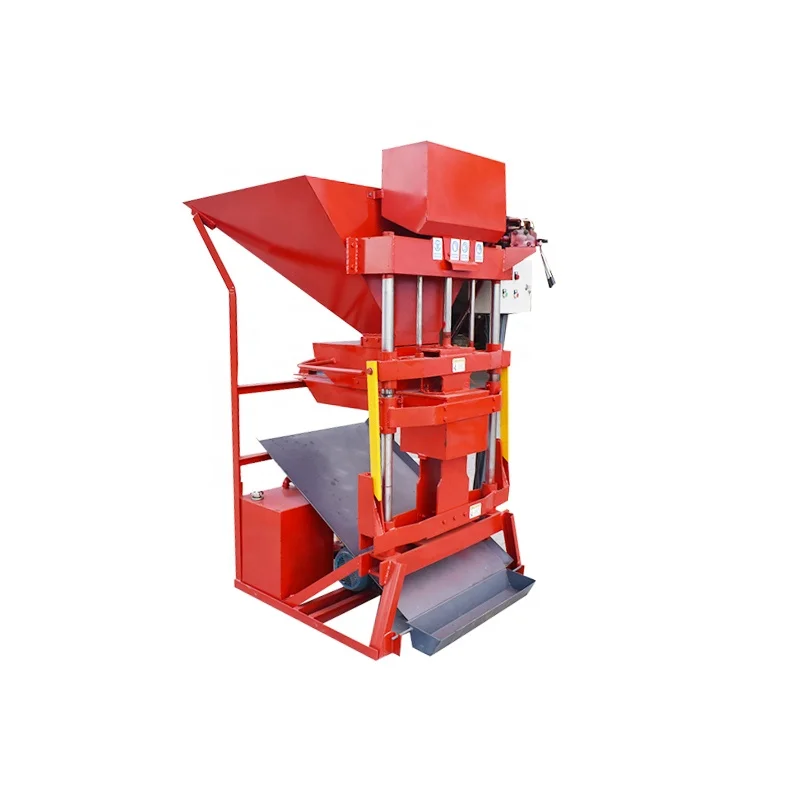
Description
Configuration anchored to your local clay mix and block format — the ECO 2700 is specified against the buyer’s actual raw material and target product, not a catalogue default, so the 16 MPa hydraulic pressure delivers blocks that handle demoulding without slumping.
Technical Specifications
| Parameter | Value |
|---|---|
| Model | ECO 2700 |
| Product Type | Clay Block Making Machine |
| Overall Dimensions (L×W×H) | 1000×1000×1800 mm |
| Shaping Cycle | 15–20 seconds (basis to be confirmed per block format) |
| Rated Power | 5.5 kW |
| Hydraulic Pressure | 16 MPa |
| Voltage & Frequency | 380V, 3-phase, 50Hz (customizable to local standard) |
| Automation Level | Semi-automatic / manual pressing |
| Net Weight | 1000 kg |
| Mould Format | To be confirmed per buyer’s product |
| Pallet Size | To be confirmed per buyer’s setup |
| Output Capacity | Dependent on block format and shift hours (basis to be confirmed) |
| Certification | CE |
| Warranty | 1 year |
| Assembly State | Fully assembled on arrival |
Application Suitability
| Application | Material or Output |
|---|---|
| Small-scale clay brick plant | Locally sourced clay with sand or grog addition |
| On-site construction block forming | Clay blended for structural or infill blocks |
| Startup building material operation | Low-volume production of solid or hollow clay units |
| Supplementary line for existing block producers | Adding clay brick formats alongside concrete block range |
What "15–20 Seconds per Cycle" Actually Means for Your Daily Output
Cycle time alone does not equal daily capacity — it must be tied to the block format, mould fill time, and operator handling rhythm to produce a realistic shift output.
I have seen too many buyers in South America receive a machine whose quoted cycle assumes a small solid brick, only to discover that the hollow format they actually sell requires longer fill and vibration. The ECO 2700 clay block making machine specifications list a 15–20 second shaping cycle, but without confirming which block size and wall thickness that figure assumes, a buyer cannot plan curing racks, labour, or pallet flow. [NEED_CITE: importance of stating block format alongside cycle time in machinery quotations] Always request the capacity sheet broken down by format before committing.
Matching the Press to the Format You Sell
The block market in any given region tends to settle on two or three dominant formats. A machine that can produce them all on paper means little if the cycle for your highest-volume format pushes your daily output below break-even. The ECO 2700 clay block making machine specifications must be cross-referenced with your target block dimensions, wall thickness, and the clay blend you source locally so the pressure and vibration match the density your market demands.
Why Mould Specification Must Come Before the Purchase Order
A buyer once told me he spent three weeks after delivery trying to source a replacement mould locally because the original format did not match what his distributors stocked. Confirming the mould drawing, format list, and interchange mechanism before the order is placed prevents that kind of on-site standstill. The ECO 2700’s mould configuration should be locked in during the proposal stage, with a drawing approved against your local block standard. [NEED_CITE: mould compatibility and standard block formats by region]
Pressure, Cycle, and Power — Reading the Numbers Together
The 16 MPa hydraulic pressure on the ECO 2700 is sufficient to compact clay into high-density blocks that can bear standing load immediately after demoulding, reducing early breakage on the curing rack. The 5.5 kW rated power keeps electrical infrastructure requirements low, which matters for first-time producers working from a small workshop with limited transformer capacity. A 15–20 second shaping cycle on a standard solid brick means the press itself is not the bottleneck — pallet handling, mix feeding, and block removal from the mould are where time is usually lost in a semi-automatic setup. The 1000×1000×1800 mm footprint allows the machine to sit inside a confined production area without demanding a purpose-built plant building.
The Cost of Overlooking Pallet and Voltage Details
When the pallet size is chosen without checking the curing area dimensions or the forklift the buyer already owns, pallets end up stored on the floor and blocks are handled twice. Similarly, arriving at site to find the local supply is 220V 60Hz while the machine was built for 380V 50Hz means the press sits idle until a transformer is sourced. These mismatches are avoidable if the ECO 2700 clay block making machine specifications are confirmed against site conditions during the proposal, not after the container is sealed. [NEED_CITE: common electrical mismatches in machinery exports to South America]
Why Buyers Come Back for a Second Line
Block machinery is our single focus, which means the ECO 2700 press, its mould, pallet, and handling equipment are specified as one matched system rather than assembled from separate vendors. The configuration is set against your local clay source and the block format your distributors actually sell. Mould design covers the formats your market requires, and custom drawings are available if your region uses a non-standard dimension. Automation is selectable — start with the semi-automatic ECO 2700 and upgrade pallet feeding or stacking later. Installation support includes operator training so your crew can run a format change independently from day one.
Documentation & Verification
- Capacity calculation sheet stating the block format, cycle assumption, and daily shift hours for the ECO 2700
- Mould drawing and format list matched to your local block standard before production begins
- Voltage, frequency, and control language confirmed in writing prior to build
- Factory test record run on your clay sample or an equivalent mix design
- Operation and maintenance manual covering the ECO 2700 hydraulic system and mould change procedure
- CE declaration and packing photographs provided before container loading
Installation, Commissioning & Support
- The 1000×1000×1800 mm footprint requires a level concrete pad with clearance on three sides for pallet access
- 380V 3-phase supply on a dedicated circuit with the amperage rated above the 5.5 kW draw
- Machine ships fully assembled — no major re-assembly needed on arrival
- First-run commissioning covers hydraulic pressure calibration at 16 MPa against your specific clay mix
- Operator training includes the semi-automatic mould change sequence and daily hydraulic check routine
- Wear parts list with hydraulic seal and mould liner part numbers provided at delivery
Before You Request a Quote
To configure the ECO 2700 clay block making machine correctly, share your target block format with dimensions, the daily output you need to meet market demand, and the type of clay or clay-sand blend available locally. Confirm your site voltage and frequency, and let us know the pallet size and curing area you already have in place. If you have an existing block line upstream or downstream, describe it so the press cycle and pallet handling can be matched.
Frequently Asked Questions
Q: What block formats can the ECO 2700 produce and how does format affect daily output?
A: The ECO 2700 can be fitted with moulds for solid bricks, hollow blocks, and pavers, depending on your market. Daily output varies significantly by format because larger hollow blocks require longer fill and compaction time than small solid bricks. Always request a capacity sheet that states the format and shift hours behind the output figure.
Q: How is the 15–20 second shaping cycle measured and which block size does it assume?
A: The shaping cycle covers the press stroke and compaction dwell time. The 15–20 second range typically assumes a standard solid clay brick. Larger or hollow formats will extend the cycle. Confirm with the supplier which format the quoted cycle is based on before comparing machines.
Q: Can the motor voltage be customized to my country’s electrical standard?
A: Yes. The ECO 2700 is built to order and the 380V 3-phase 50Hz default can be changed to match your local supply. Voltage and frequency must be confirmed in writing before production starts to avoid commissioning delays on arrival.
Q: What documentation is included with the ECO 2700 shipment?
A: You receive a machine specification sheet, mould drawing and format list, hydraulic and electrical schematic, factory test record, CE declaration, and an operation and maintenance manual. Voltage and control language confirmation is documented separately before build.