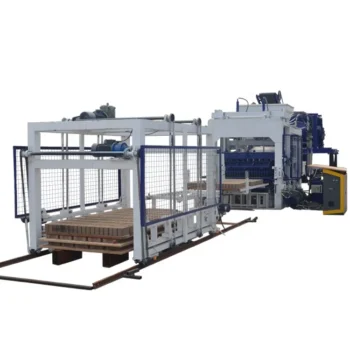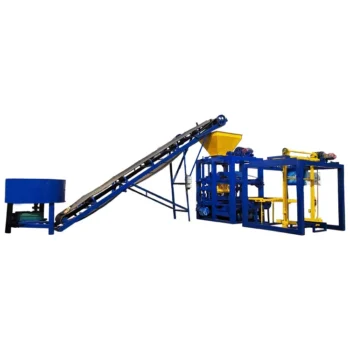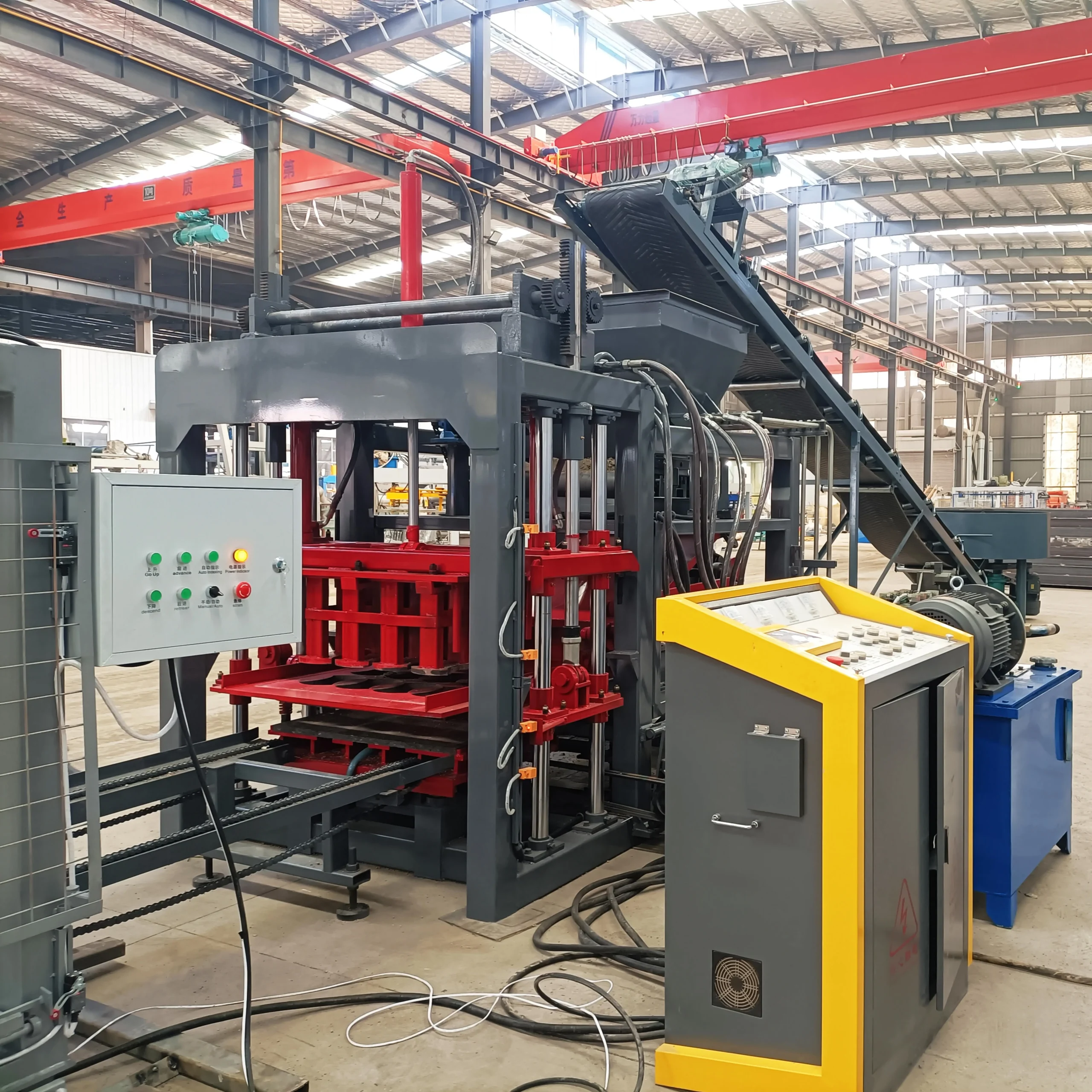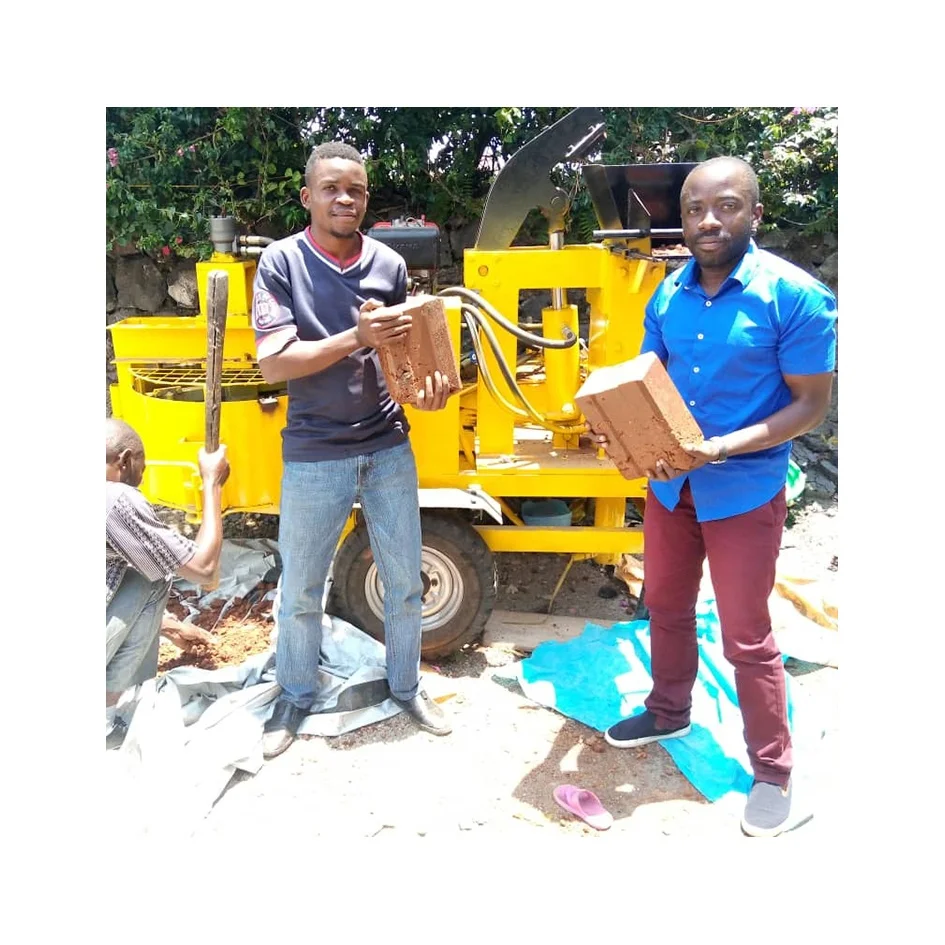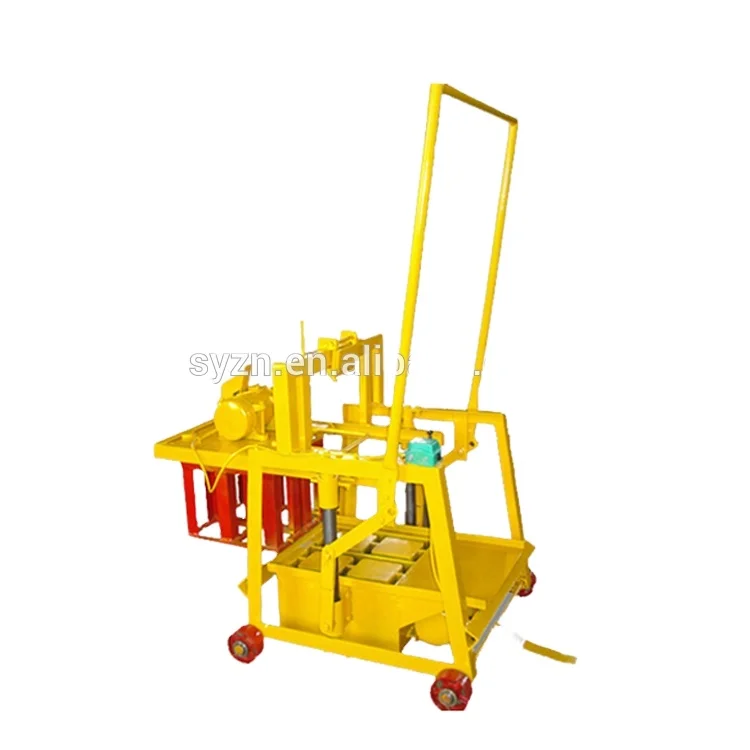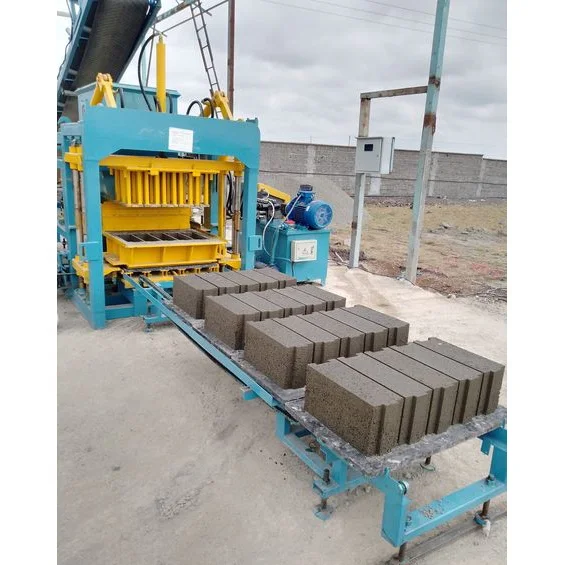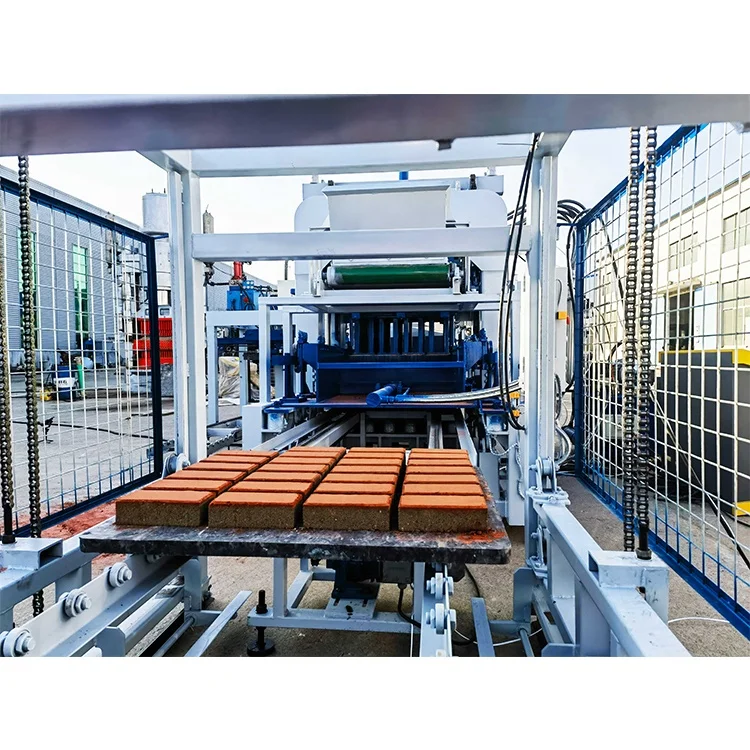
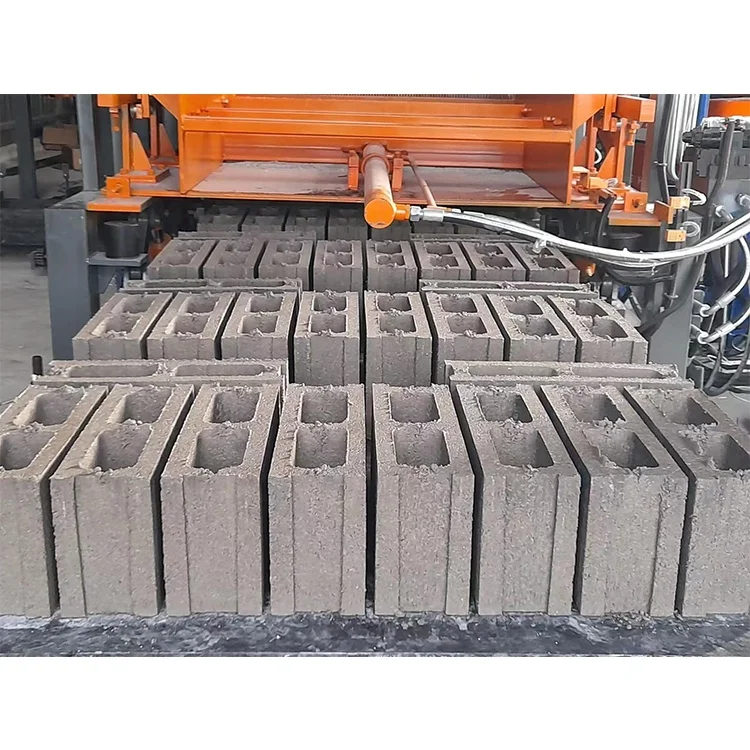

Description
Matched to Your Mix — Vibration frequency and hydraulic pressure on the QT8-15 are tuned against your actual aggregate and target block format, not a catalogue default.
Technical Specifications
| Parameter | Value |
|---|---|
| Model | QT8-15 |
| Product Type | Hydraulic Concrete Block Making Machine |
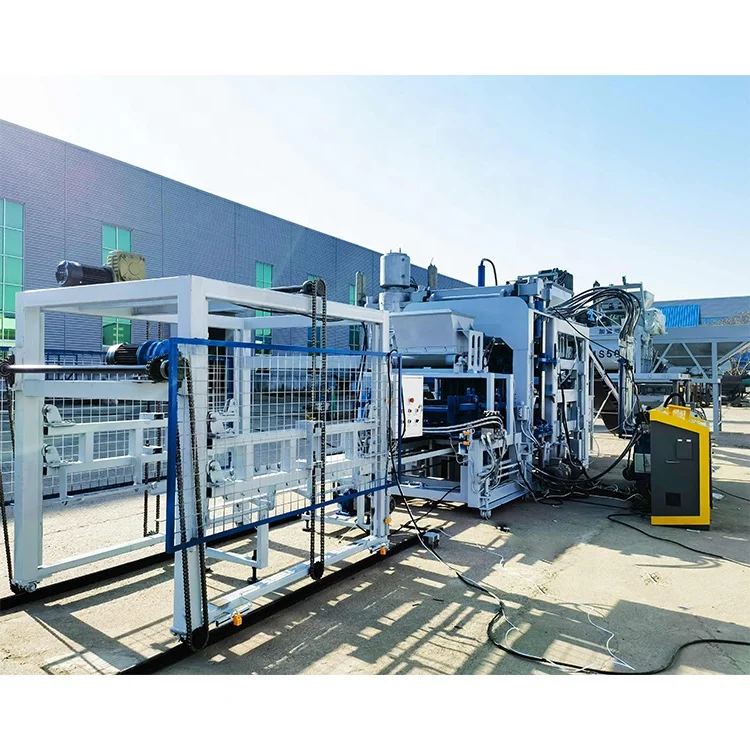
| Overall Dimensions (L×W×H) | 8300 × 1860 × 3000 mm |
| Rated Pressure | 21 MPa |
| Main Vibration Form | Platform Vibration |
| Vibration Frequency | 2800–4500 r/min |
| Vibration Force | 45 KN |
| Pallet Size | 950 × 900 mm |
| Molding Cycle | 15–20 s (basis not stated in source — confirm block format / material / thickness) |
| Overall Power | 55.5 kW |
| Total Mass | 8 T |
| Demolding Method | Hydraulic |
| Factory Area | 300 m² |
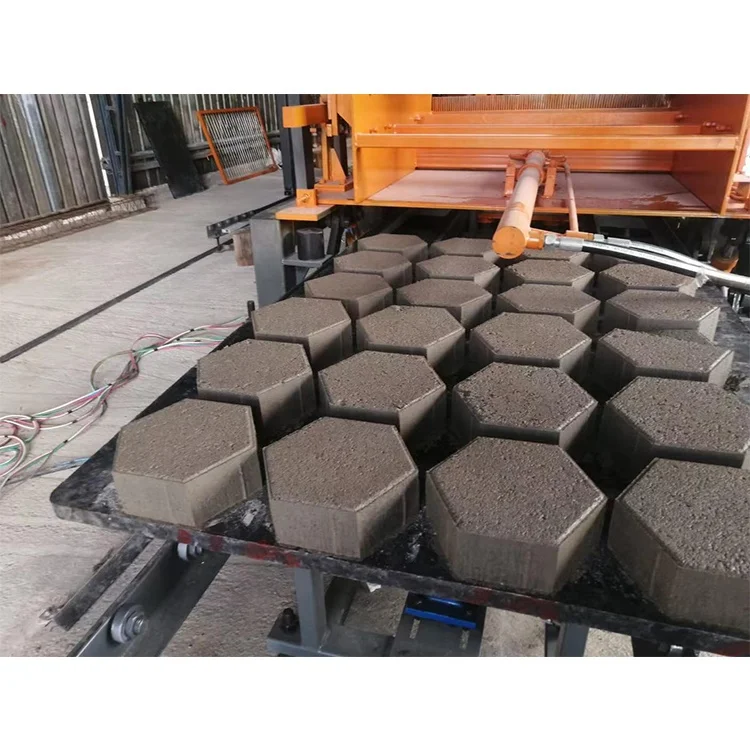
| Applied Products | Hollow blocks, solid blocks, pavers, interlocking blocks, curbstones, colored pavers |
| Raw Materials | Crushed stone, sand, cement, fly ash, gravel, slag, dust |
| Voltage & Frequency | Configurable to buyer’s site supply (to be confirmed before production) |
| Control System | To be confirmed (PLC or MCC options available) |
Application Suitability
| Application | Material or Output |
|---|---|
| Hollow block production for load-bearing walls | Crushed stone, cement, and sand mixes |
| Solid block manufacturing for partition walls | Fly ash blended with gravel and cement |
| Paver and interlocking brick runs for landscaping | Colored concrete with fine sand aggregate |
| Curbstone and kerbstone production | Coarse aggregate with high cement content |
| On-site block production for housing projects | Locally sourced sand and crushed stone |
What "15–20 Second Cycle Time" Actually Means for Your Daily Output
Cycle time only translates to real output when the block format and mix design are fixed.
Buyers often see a single cycle time figure and multiply it across an eight-hour shift, only to find their daily pallet count falls well short once the machine is running. The QT8-15 concrete block making machine specifications list a 15–20 second molding cycle, but that number shifts depending on whether you are pressing a thin paver or a thick hollow block, and whether your aggregate is fine river sand or coarse coral sand. Without stating the format assumption, a headline cycle figure is little more than a starting point for negotiation [NEED_CITE: block format impact on cycle time and daily output in hydraulic press operations].
Matching Vibration Profile to Your Aggregate
The platform vibration system on the QT8-15 runs across a 2800–4500 r/min frequency range. That adjustability matters because different aggregates respond to different vibration profiles. Fine sand compacts quickly at higher frequencies, while coarse crushed stone needs lower frequency with longer dwell to settle into the mould cavity. When the vibration is wrong for the mix, blocks leave the press with weak corners or surface cracking, and the rejection rate climbs before the operator even notices the pattern.
Hydraulic Pressure and Block Density Across Formats
Rated at 21 MPa, the hydraulic demolding system delivers the pressing force needed for consistent density across hollow block, solid block, and paver formats. The real test comes when you switch from a lightweight hollow block to a dense interlocking paver on the same shift. The hydraulic circuit must hold pressure steady through the full compaction stroke regardless of the mould geometry sitting on the 950 × 900 mm pallet. Inconsistent pressure between formats is one of the most common reasons buyers report strength variation across their product range [NEED_CITE: hydraulic pressure consistency in multi-format block production].
Reading the Specifications That Matter Most
The 45 KN vibration force and 21 MPa rated pressure work together — vibration settles the mix into the mould while hydraulic pressure locks the density. If either is mismatched to your aggregate, the other cannot compensate. The 55.5 kW overall power draw reflects the combined demand of the vibration motor, hydraulic pump, and conveyor drives, so your site electrical supply needs dedicated capacity beyond the nameplate figure. The 950 × 900 mm pallet size should be checked against your existing curing rack spacing and forklift tine width before the order is placed, because a pallet that does not fit your rack means blocks are stacked by hand from day one. The 300 m² factory area figure covers the press footprint and immediate material handling zone, not the full curing yard your production volume will require.
The Hidden Cost of Skipping the Format Conversation
When the machine arrives configured for a mix the buyer cannot source locally, the choices are either to import the specified aggregate at added cost or to retune the vibration and pressure settings from scratch on the factory floor. I have watched a QT8-15 class machine lose an entire first week of production because the coral sand on site behaved nothing like the river sand used during factory testing. Green blocks crumbled on the curing rack, daily output dropped to a fraction of the quoted figure, and the buyer blamed the press when the real issue was an unconfirmed material specification [NEED_CITE: aggregate substitution effects on concrete block strength and press tuning].
Why Source This Machine Here
Block machinery is our single focus, so the QT8-15 press, mould, pallet, and handling equipment are specified as one matched system rather than assembled from separate suppliers. Configuration is set against your actual mix design and local aggregate, not a catalogue default. Mould design covers the formats your market sells, with custom drawings available for shapes outside the standard range. Automation level is selectable, so a buyer can start with manual pallet handling and add automatic stacking later. Installation support includes operator training on your specific block formats and mix.
Documentation & Verification
- Line layout with capacity calculation stating the block format assumed for each output figure
- Mould drawing and format list confirming included and optional block shapes
- Pallet specification matched to your curing rack dimensions and forklift capacity
- Voltage, frequency, and control language confirmation before production begins
- Factory test record run on your specified mix and block format before dispatch
Installation, Commissioning & Support
- Foundation plan sized to the 8300 × 1860 mm footprint and 8 T operating mass
- Dedicated electrical circuit rated for the 55.5 kW total power draw with confirmed voltage and frequency
- Machine arrives dismantled for container loading with reassembly guidance on site
- First-run parameter tuning against your local aggregate and target block format
- Operator training covering mould change procedure and daily maintenance checks
- Wear parts and mould replacement list provided with recommended reorder intervals
What to Include in Your Inquiry
To size the QT8-15 concrete block making machine to your production, share the block formats your market sells, the daily output target for each format, and your local raw material source. We also need your site voltage and frequency, the PLC display language your operators read, and the dimensions of any existing curing racks and forklifts so the pallet specification aligns from the first day of production.
Frequently Asked Questions
Q: What cycle time does the QT8-15 achieve for hollow blocks versus pavers, and what does that mean for daily output?
A: The listed 15–20 second cycle is a range, and the actual figure depends on block thickness, mix design, and aggregate type. A thin paver cycles faster than a deep hollow block. We calculate daily output per format after confirming your specific block drawing and material, so the capacity figure you receive is tied to your actual product, not a generic assumption.
Q: How do you match vibration force and hydraulic pressure to my local aggregate?
A: Before production, we review your aggregate gradation, cement ratio, and target block strength. The 2800–4500 r/min vibration range and 21 MPa hydraulic pressure are then set to suit that specific mix. Factory testing runs your material profile so the machine arrives on site with baseline parameters already dialed in.
Q: Which mould formats come with the base QT8-15 and which require separate tooling?
A: The standard configuration covers common hollow and solid block sizes for your market. Paver, interlocking brick, and curbstone moulds are available as additional tooling. We provide a full format list and mould drawing with your quotation so you know exactly which shapes are included and which are optional.
Q: Is the 950 × 900 mm pallet compatible with my existing curing racks and forklift?
A: That depends on your rack spacing and forklift tine width. We ask for those dimensions during the inquiry stage and adjust the pallet specification if needed. A mismatch here means blocks cannot be racked mechanically and must be stacked by hand, which cuts into the output you planned for.
Q: How long does a mould change take when switching from hollow block to paver production?
A: Mould change time depends on the changeover system configured on your press. We confirm the expected changeover duration during the proposal stage and include it in the line capacity calculation so you can plan multi-format production shifts accurately.