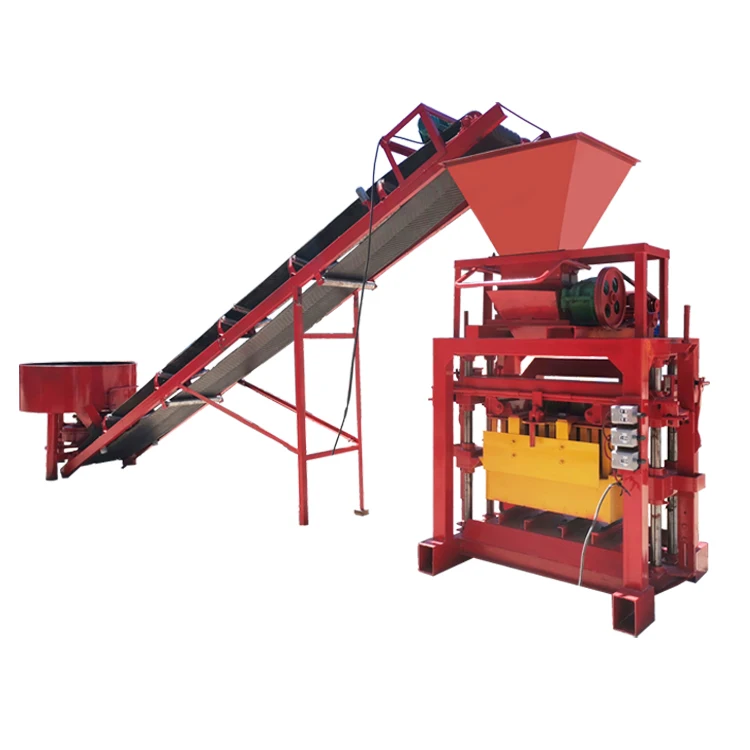
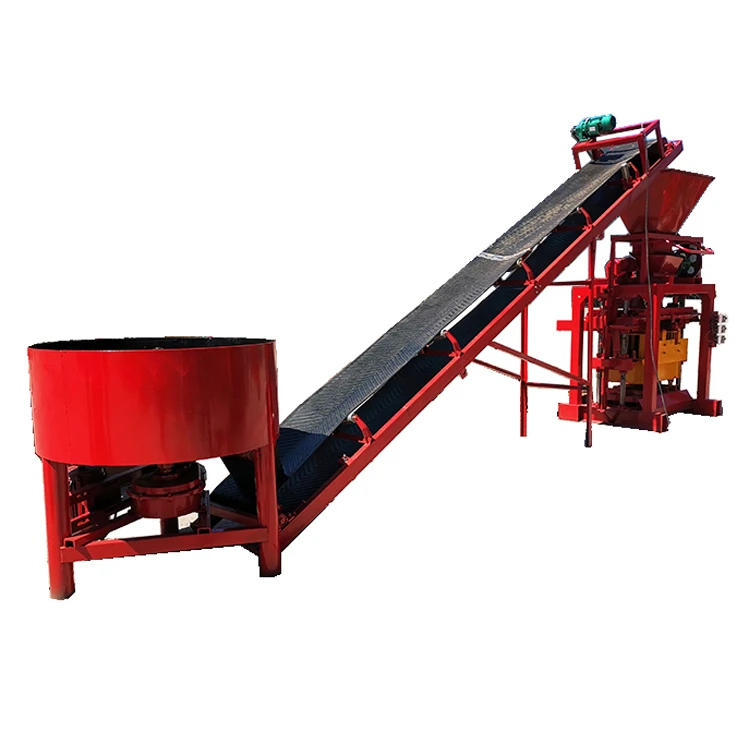

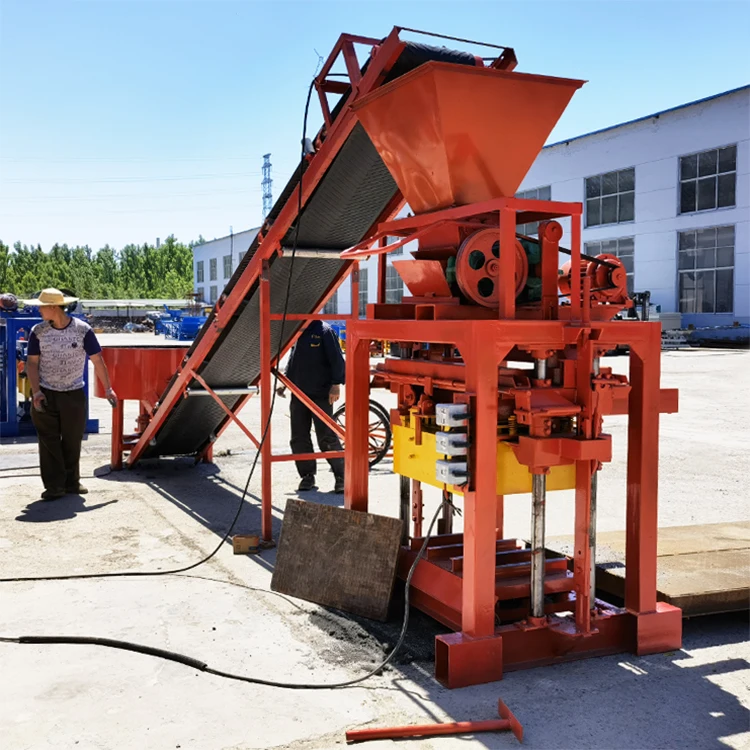


Description
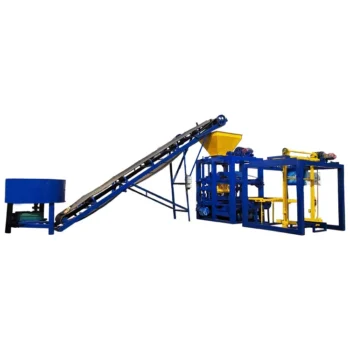
Matched System Sizing — every output figure below is tied to a specific block format, mould cavity count and cycle time, so daily capacity can be calculated from actual product, not catalogue defaults.
Technical Specifications
| Parameter | Value |
|---|---|
| Model | QTJ4-35 |
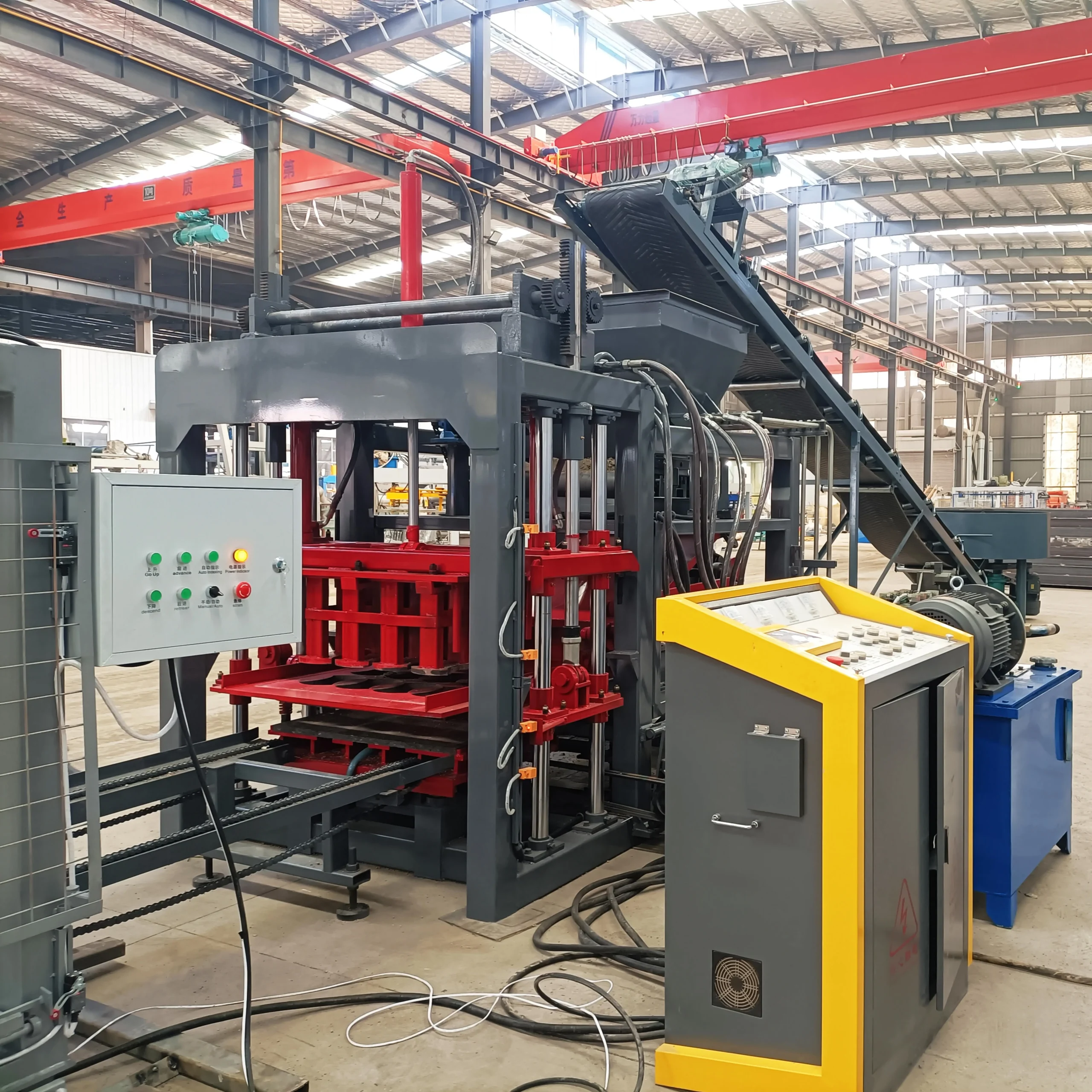
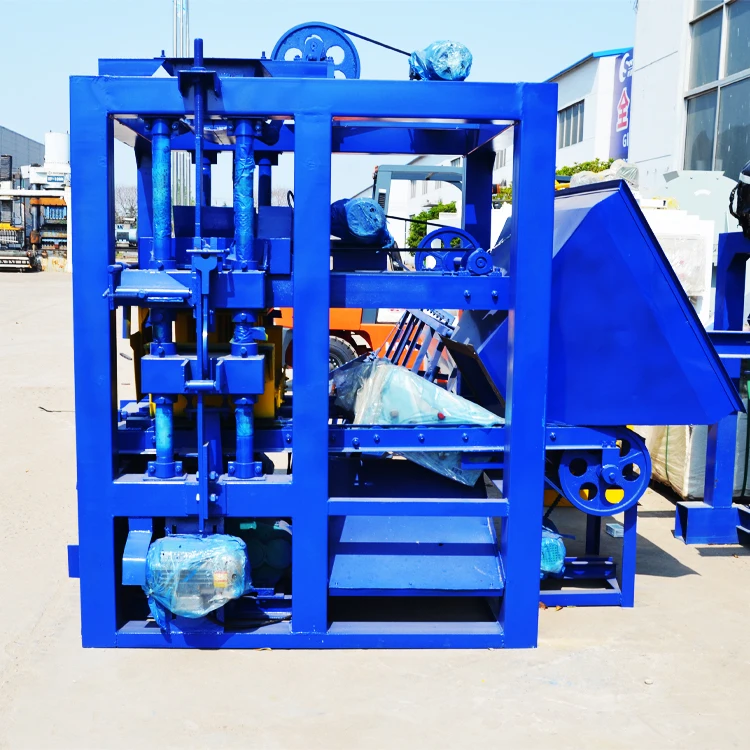
| Product Type | Semi-Automatic Concrete Block Making Machine |
| Overall Dimensions (L×W×H) | 1350×1460×1800 mm |
| Total Weight | 1500 kg |
| Rated Power | 11.15 kW |
| Voltage & Frequency | Configurable to buyer’s local grid (to be confirmed before production) |
| Control System | Manual / Semi-automatic operation |
| Vibration Frequency | 2800 r/min |
| Exciting Force | 30 kN |
| Moulding Cycle Time | 35 s |
| Pallet Size | 850×450×20 mm |
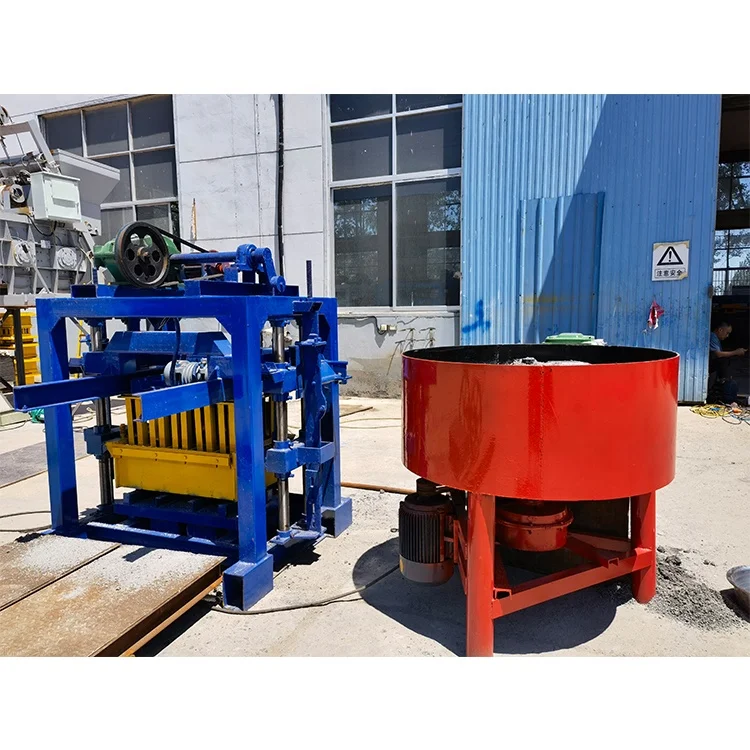
| Mixer Model | JQ350 |
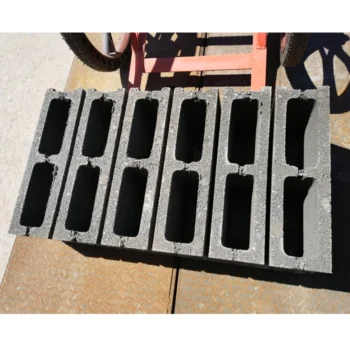
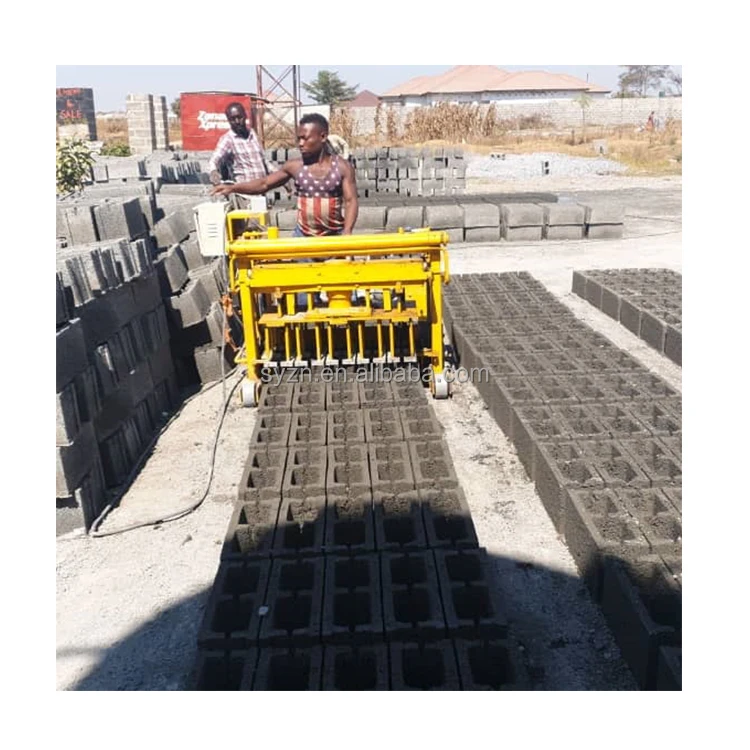
| Applied Products | Hollow block (8 inch, 6 inch), solid brick |
| Raw Materials | Crushed stones, sand, cement, dust, fly ash |
| Output Capacity | 408 pcs/h based on 400×200×200 mm hollow block, 4 pcs/mould |
| Output Capacity | 510 pcs/h based on 400×150×200 mm hollow block, 5 pcs/mould |
| Output Capacity | 2100 pcs/h based on 240×115×53 mm solid brick, 18 pcs/mould |
| Output per 8-hour Shift | 3264 pcs based on 400×200×200 mm hollow block |
| Output per 8-hour Shift | 4080 pcs based on 400×150×200 mm hollow block |
| Output per 8-hour Shift | 17000 pcs based on 240×115×53 mm solid brick |
| Automation Level | Semi-automatic |
| Mould Change Time | To be confirmed with manufacturer |
| Stacking Method | To be confirmed (manual or assisted) |
| Certification | To be confirmed (CE or other) |
Application Suitability
| Application | Material or Output |
|---|---|
| First block plant for entrepreneurs | Hollow block and solid brick from crushed stone, sand, cement and fly ash |
| On-site production by construction contractors | 8 inch and 6 inch hollow blocks using locally sourced aggregate |
| Format expansion for existing concrete product makers | Standard solid bricks at 240×115×53 mm alongside hollow formats |
| Low-investment building material supply | Semi-automatic operation with JQ350 pan mixer feeding the press |
What "Pieces per Hour" Leaves Out When No Block Format Is Named
Capacity only means something when you know which block it refers to.
Sellers often quote a single headline number — cycles per hour, pieces per shift — without stating the block size, mould cavity count or mix density behind it. I have watched buyers sign for a machine expecting 8000 hollow blocks a day, only to find that figure assumed a solid brick mould running 18 cavities at once. The QTJ4-35 block machine specifications listed here tie every output figure to a named format so you can verify real daily volume before the order is placed [NEED_CITE: common disputes over block machine capacity claims in import markets].
Format-by-Format Output Instead of a Single Headline Number
This machine runs a 35-second moulding cycle regardless of format, which means throughput depends entirely on how many pieces the mould produces per press. At 400×200×200 mm with a four-cavity mould, the QTJ4-35 block machine specifications show 408 pieces per hour, rising to 510 per hour when the mould is switched to 400×150×200 mm with five cavities. Solid brick production at 240×115×53 mm fills 18 cavities per cycle, shifting the hourly figure to 2100. Knowing these per-format numbers lets a buyer plan curing yard space and delivery schedules around the block they actually sell.
Pallet Size and What It Dictates Downstream
The 850×450×20 mm pallet is the physical link between the press and the curing area. Every pallet of wet blocks must be moved to a curing rack or ground-cured, which means pallet dimensions must align with the buyer’s existing forklift tine spacing and rack width. I once saw a buyer receive a machine whose pallets were too wide for their yard’s racking — pallets had to be re-cut locally before the line could run. Confirming this dimension against site infrastructure before shipment avoids that kind of delay [NEED_CITE: pallet handling mismatches reported by block plant operators].
Vibration and Compaction Parameters That Shape Block Density
The 30 kN exciting force at 2800 r/min is applied through the mould box while the upper head presses down. This combination determines how tightly aggregate particles are packed, which directly affects the compressive strength and weight consistency of each block. For buyers using fine sand or fly-ash-heavy mixes, vibration frequency and duration matter more than raw force alone. The semi-automatic control allows the operator to observe compaction behaviour and adjust feed volume per cycle.
Reading the Specs That Matter Most to Your Market
Vibration frequency, exciting force and cycle time together set the ceiling for block quality and output, but none of them operate in isolation from the buyer’s mix design. A mix with high fly ash content may require longer vibration to reach full density, which in turn affects the achievable cycle time in practice. The rated power of 11.15 kW covers the vibration motor, mixer drive and ancillary components; buyers should verify that local supply can sustain this draw continuously across an eight-hour shift without voltage drop affecting compaction consistency [NEED_CITE: impact of voltage fluctuation on vibration motor performance in block making].
The Cost of Skipping Format Confirmation Before Purchase
When a buyer orders on headline capacity alone, the mismatch usually surfaces after the machine arrives. A plant that expected 8000 hollow blocks per shift but receives a machine set up for solid brick moulds faces weeks of re-ordering and shipping delay. Pallet incompatibility with existing curing racks adds further idle time. Voltage and control language mismatches delay commissioning even when the press itself is correct. Each of these issues is preventable if format, pallet and electrical specifications are confirmed in writing before production begins [NEED_CITE: commissioning delays caused by unconfirmed voltage and language settings].
Why Sizing Starts with the Block, Not the Machine
At Shiyue, the configuration conversation begins with the buyer’s target block format, local aggregate source and daily volume requirement — not a catalogue page. Mould design covers the exact sizes the buyer’s market sells, and pallet dimensions are checked against the curing yard and handling equipment already on site. The QTJ4-35 can be specified as a standalone press or as part of a line with material feeding, mixing and pallet handling stations matched to its cycle time. Voltage, frequency and control panel language are confirmed before the machine enters production. Factory testing uses the buyer’s stated block format and mould, so the test record reflects actual output conditions.
Documentation & Verification
- Capacity calculation sheet naming each block format, cavity count and cycle time used
- Mould drawings showing exact block dimensions and tolerances per buyer’s market
- Pallet specification matched to buyer’s curing rack and forklift dimensions
- Voltage, frequency and control language written confirmation before production starts
- Factory test record run on the buyer’s specified block format and mould set
- Operation and maintenance manual with wear parts list for the supplied configuration
Installation, Commissioning & Support
- Foundation pad sized for 1500 kg machine weight and 1350×1460 mm footprint
- Electrical supply verified for 11.15 kW continuous draw at confirmed voltage and frequency
- Mixer JQ350 positioned for gravity feed into the press hopper at correct height
- First-run commissioning on buyer’s actual mix design and target block format
- Operator training covering mould change procedure, vibration adjustment and daily maintenance
- Wear parts list supplied with recommended replacement intervals for vibration motor and mould liners
What to Include in Your Inquiry
To size the QTJ4-35 accurately, provide the block formats your market requires, including dimensions and target compressive strength. Share your local aggregate type — whether crushed stone, river sand, fly ash or a blend — so vibration and compaction settings can be matched. Confirm your site’s voltage, frequency and preferred control panel language, along with curing yard dimensions and existing handling equipment, so pallet and line layout can be planned around what you already have.
Frequently Asked Questions
Q: How do I verify the real daily output for the block format I actually sell?
A: The capacity table on this page lists output per hour and per eight-hour shift for three specific block sizes, each tied to a stated mould cavity count and the 35-second cycle. To verify your own figure, multiply the pieces per mould by the cycles achievable in your working hours, accounting for pallet handling and mixer loading time between presses. Request a written capacity calculation for your exact block dimensions before ordering.
Q: Which mould formats are available and how is mould change handled on this machine?
A: The QTJ4-35 ships with moulds for 400×200×200 mm and 400×150×200 mm hollow blocks plus 240×115×53 mm solid brick as standard options. Custom mould sizes can be designed to buyer drawings. Mould change time is not stated in the current specification sheet and should be confirmed during the quotation stage so you can plan format changeover within your shift schedule.
Q: What pallet size is used and how do I check it against my curing yard?
A: The machine uses 850×450×20 mm pallets. Measure your curing rack spacing, forklift tine width and storage area dimensions before confirming the order. If your existing infrastructure does not match, pallet size may be adjustable or alternative handling arrangements can be discussed during line layout planning to avoid idle time after arrival.
Q: How do I confirm voltage, frequency and control language before shipment?
A: State your local grid voltage, frequency and preferred control panel language in your inquiry. These are confirmed in writing before production begins so the electrical cabinet and any display interfaces match your site conditions on arrival. This step prevents commissioning delays that arise when voltage or language settings are assumed rather than specified.