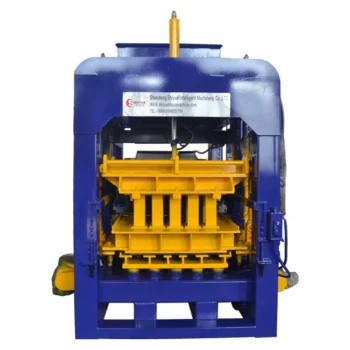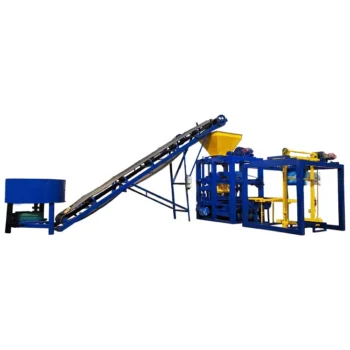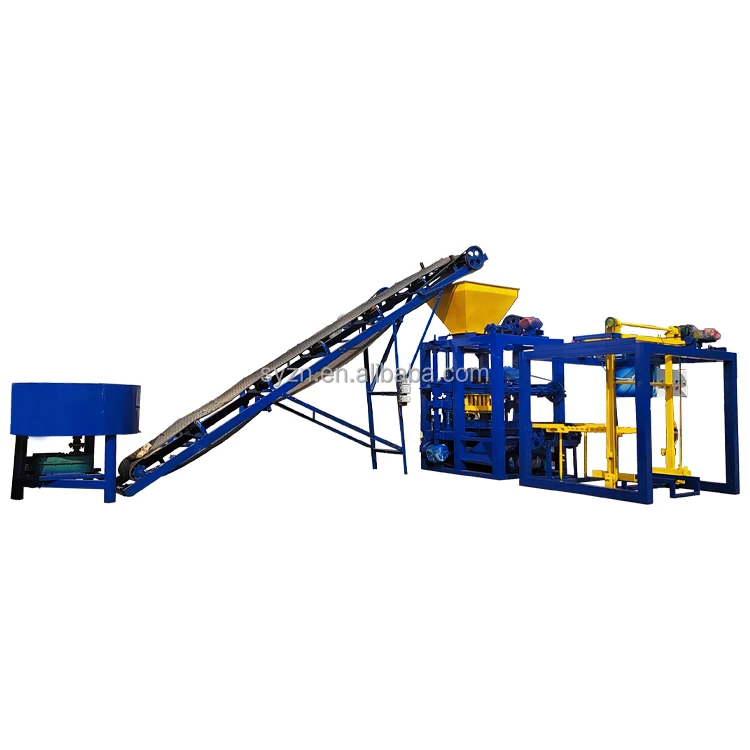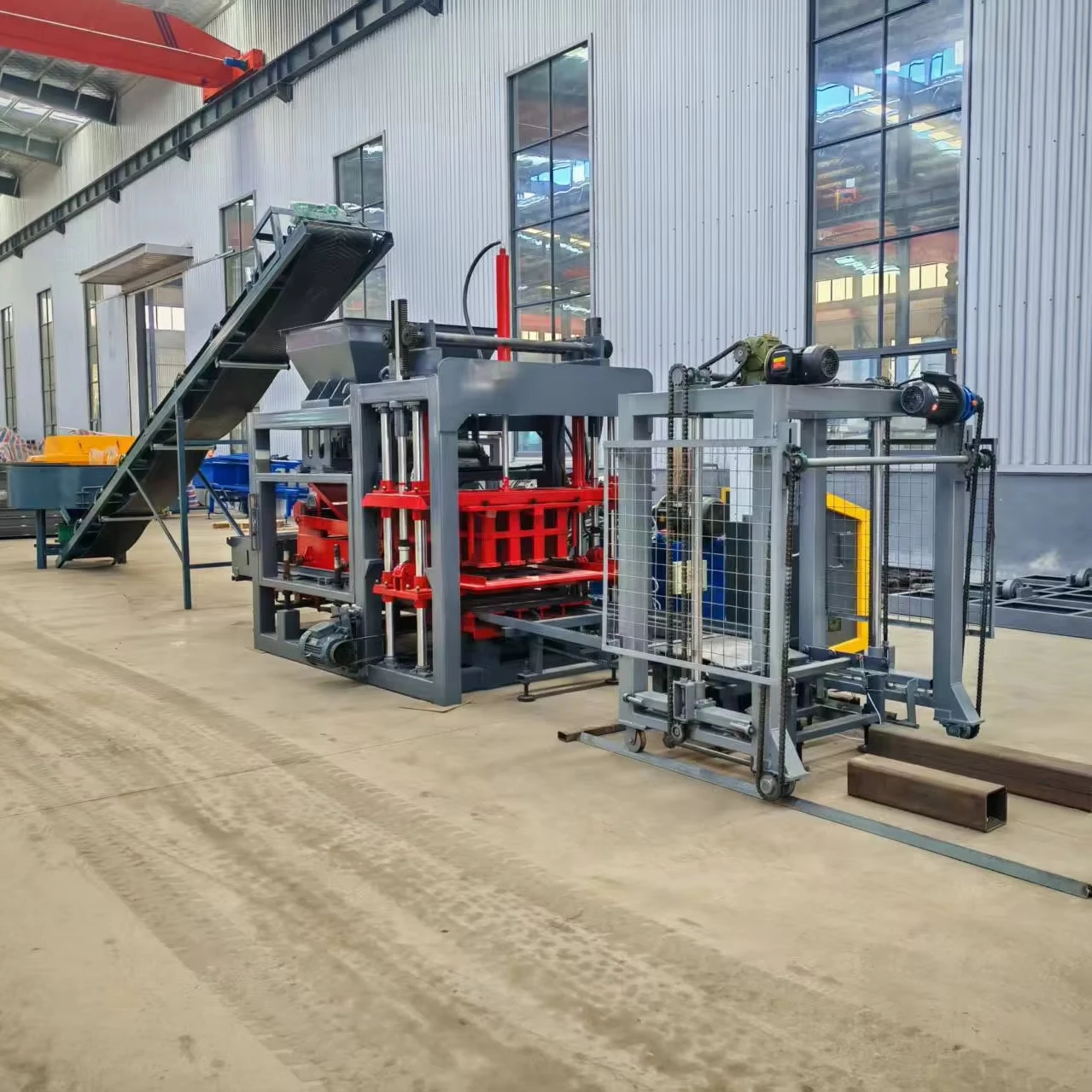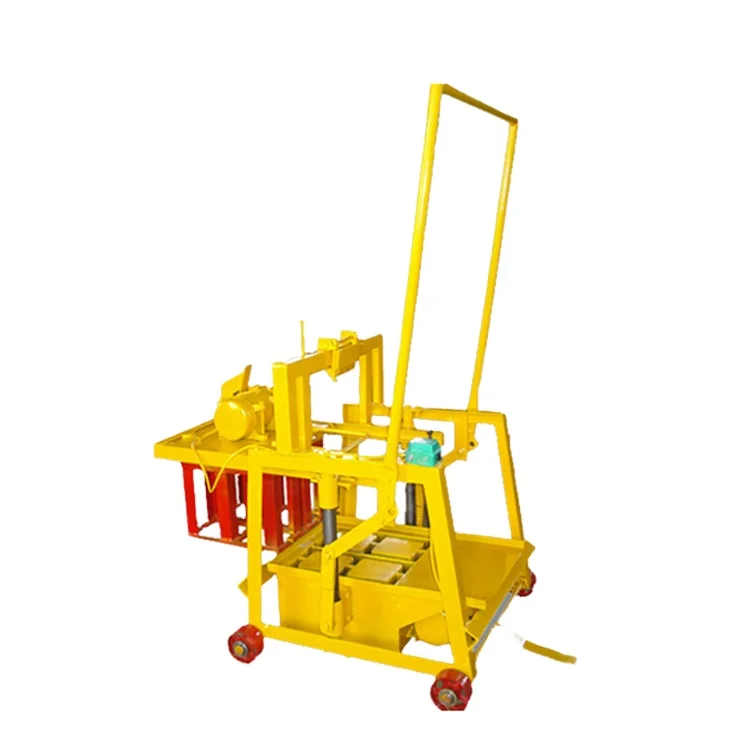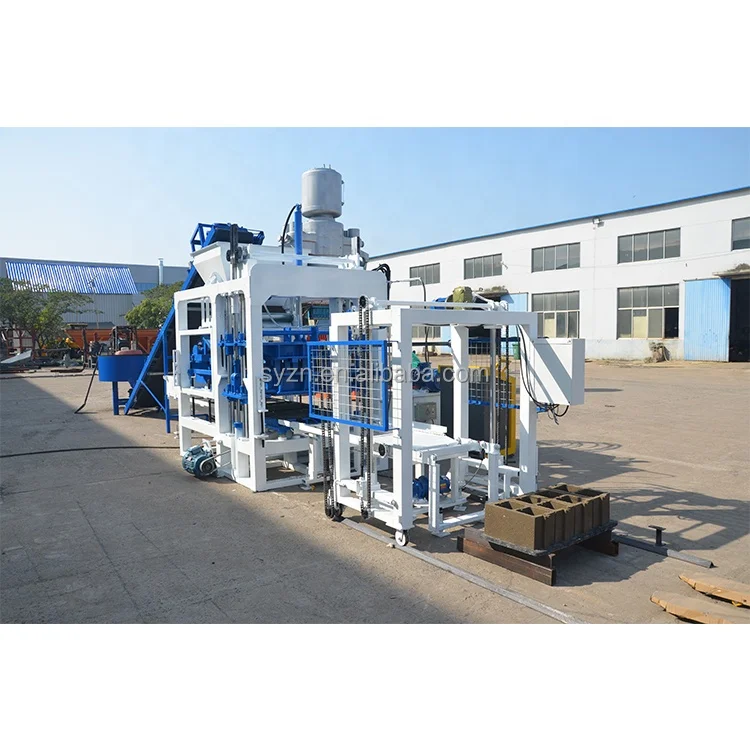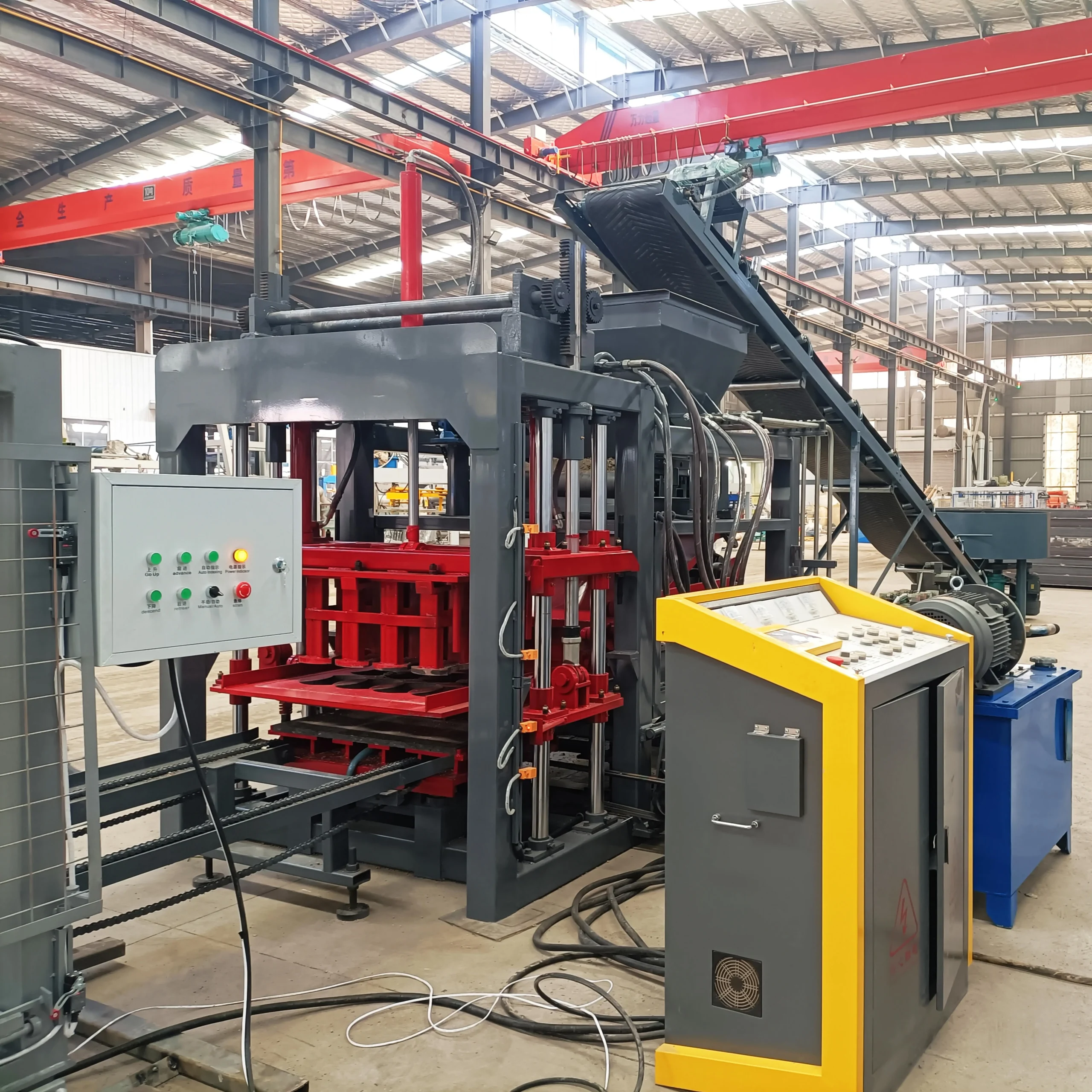
Description
Matched System Sizing — Every QT4-15 configuration is built around the buyer’s actual block format and local aggregate, so capacity numbers reflect real production, not catalogue assumptions.
Technical Specifications
| Parameter | Value |
|---|---|
| Model | QT4-15A |
| Product Type | Automatic Concrete Block Making Machine |
| Overall Dimensions (L×W×H) | 4100×1600×2600 mm |
| Rated Pressure | 16–21 MPa |
| Main Vibration Form | Platform Vibration |
| Vibration Frequency | 4200 r/min |
| Vibration Force | 55 kN |
| Pallet Size | 880×550 mm |
| Molding Cycle | 25–30 s (basis not stated in source — confirm block format and material) |
| Overall Power | 18.45 kW |
| Total Mass | 4 T |
| Demolding Method | Hydraulic |
| Factory Area Required | 300 m² |
| Applied Products | Concrete hollow blocks, solid blocks, pavers, interlocking blocks, curbstone, colored pavers |
| Raw Materials | Crushed stone, sand, cement, fly ash, gravel, slag, dust |
| Control System | PLC |
| Automation Level | Fully automatic (line extent to be confirmed) |
| Warranty | 1 year (whole machine, excluding spare parts) |
| Loading | 1×40HQ container (basic equipment) |
Application Suitability
| Application | Material or Output |
|---|---|
| Hollow block production for housing projects | Crushed stone, sand, cement blends |
| Solid block manufacturing for load-bearing walls | Gravel, fly ash, cement mixes |
| Paving block production for roads and walkways | Colored aggregates, sand, cement |
| Interlocking brick forming for retaining walls | Dust, slag, cement combinations |
| Curbstone and kerb production for municipal works | High-strength crushed stone and cement |
What "25–30 Seconds per Cycle" Actually Means for the QT4-15 Block Machine Specifications
A cycle time without a stated block format is a number that tells you nothing about your daily output.
I learned this the hard way in Lima. A customer signed for a QT4-15 automatic block making machine based on a quoted cycle time, expecting a certain daily volume of hollow blocks. When we started production with their local volcanic ash aggregate at high proportions, the vibration parameters were completely wrong for that mix. Block strength dropped, the line stopped, and I spent a week adjusting pressure and frequency remotely. The 25–30 second QT4-15 block machine specifications figure only holds meaning when tied to a specific block format, wall thickness, and material blend. [NEED_CITE: effect of aggregate type on block compaction cycle time]
How Vibration Force and Hydraulic Pressure Work Together
The 55 kN vibration force and 16–21 MPa hydraulic pressure on the QT4-15A must be read as a pair. Vibration settles the aggregate into the mould cavity, while hydraulic pressure compresses it to final density. If either value is mismatched to your local mix design — say you run a high fly ash content with low coarse aggregate — the block will either crack during demolding or fail a compression test after curing. This is why the automatic block making machine cycle time by format matters more than a single headline number: each block geometry demands a different pressure-vibration balance.
Pallet Size and What It Dictates Downstream
The 880×550 mm pallet size on the QT4-15 is not just a press specification — it governs your entire curing area layout and forklift requirements. Before confirming an order, I always check whether the buyer’s existing curing racks accept that dimension and whether their forklift fork spacing matches. A pallet size mismatch means either rebuilding curing racks or running two different pallet fleets through the same yard. [NEED_CITE: pallet dimension standards in block production plants]
Reading the Specification Sheet Like a Technical Buyer
Three numbers on the QT4-15 spec sheet deserve close attention. The 4200 r/min vibration frequency determines how quickly fine particles settle — too low for a paver mix and you get surface voids, too high for a lightweight hollow block and the mix segregates. The 4100×1600×2600 mm overall dimensions define your minimum building envelope; a 300 m² factory area is quoted, but headroom and column spacing often get overlooked during planning. The 4 T total mass tells you about foundation requirements — this machine needs a reinforced concrete pad, not a compacted gravel base, to maintain vibration consistency across the platform.
The Cost of Skipping Mix Design Validation
When a buyer skips the step of testing their local aggregate with the QT4-15 before finalizing the order, the consequences show up within the first week of production. Blocks crack during demolding because the hydraulic pressure is too high for a fragile fly ash blend. Pavers come out with honeycomb surfaces because vibration frequency was set for a denser mix. The QT4-15 block machine specifications assume a material range, but your specific crushed stone gradation and cement ratio determine where within that range the machine must be tuned. Correcting this after commissioning costs more than doing the validation upfront. [NEED_CITE: common causes of block cracking in automatic press operations]
Why Procurement From a Single-Focus Manufacturer Matters
Shandong Shiyue Intelligent Machinery concentrates entirely on block machines, moulds, pallets, and handling equipment. For the QT4-15A, that means the mould is designed for the specific block format your market sells — not a generic cavity pulled from a catalogue. The pallet material is selected for your local climate, whether bamboo for dry regions or steel for coastal humidity. Mould design can be customized from buyer drawings when your market demands non-standard dimensions. The automation level is selectable, so you can start with basic pallet handling and add stacking later. Installation support includes operator training on your actual mix, not a generic startup procedure.
Documentation & Verification
- Line layout showing QT4-15A station spacing and pallet flow path
- Capacity calculation stating block format assumed for each output figure
- Mould drawing and format list including custom options
- Hydraulic and electrical schematic with voltage confirmed for your market
- Factory test record on buyer-specified mix before dispatch
Installation, Commissioning & Support
- Reinforced concrete foundation required to support 4 T machine mass and 55 kN vibration
- Dedicated electrical circuit sized for 18.45 kW total power with confirmed voltage and frequency
- Machine shipped in 1×40HQ container; on-site reassembly of hydraulic and vibration assemblies
- PLC parameter tuning for buyer’s specific raw material blend during commissioning
- Operator training covering mould change procedure and daily maintenance checkpoints
- Wear parts list supplied with first recommended replacement intervals
What We Need From You to Size the QT4-15 Correctly
To give you an accurate configuration and honest capacity calculation, share the block formats your market actually sells — dimensions, wall thickness, and whether you need hollow, solid, paver, or interlocking types. Tell us your local raw materials and typical mix proportions so we can validate vibration and pressure settings. Confirm your site voltage, frequency, and the language your operators need on the PLC display.
Frequently Asked Questions
Q: How does the 25–30 second cycle time change across different block formats?
A: Hollow blocks with thin walls compact faster because the vibration penetrates a smaller cross-section. Pavers and interlocking blocks require longer dwell times at full pressure to achieve surface density. The QT4-15 automatic block making machine cycle time by format must be calculated individually for each mould, and we provide a per-format capacity sheet before order confirmation.
Q: Can custom moulds be designed for non-standard block sizes on the QT4-15?
A: Yes. Mould design is done from buyer drawings or market samples. The 880×550 mm pallet constrains maximum mould footprint, but within that envelope we can engineer cavities for almost any block geometry your market demands, including non-standard interlocking profiles and colored paver patterns.
Q: How is block strength validated against my local aggregate before shipment?
A: We request a sample of your crushed stone, sand, and fly ash to run trial batches at the factory. Vibration frequency and hydraulic pressure are adjusted until test blocks meet your local compression standard. The results are documented in a factory test record shipped with the machine.
Q: What happens when I need to switch between hollow blocks and pavers on the same QT4-15?
A: Each format change requires a mould swap and PLC parameter adjustment for pressure and cycle timing. Mould change time depends on whether a quick-change system was specified in your configuration. We confirm this during the proposal stage so you know the actual downtime between formats.