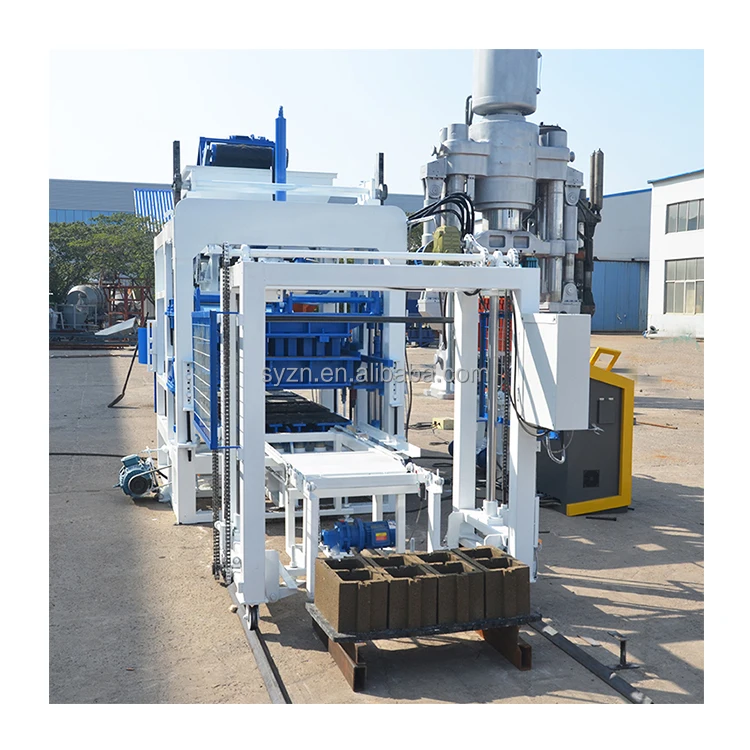
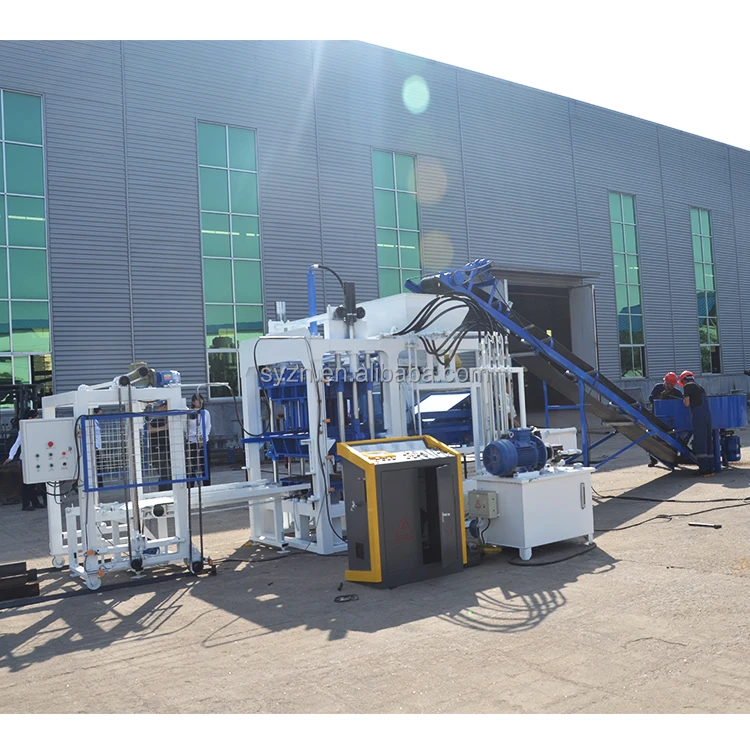
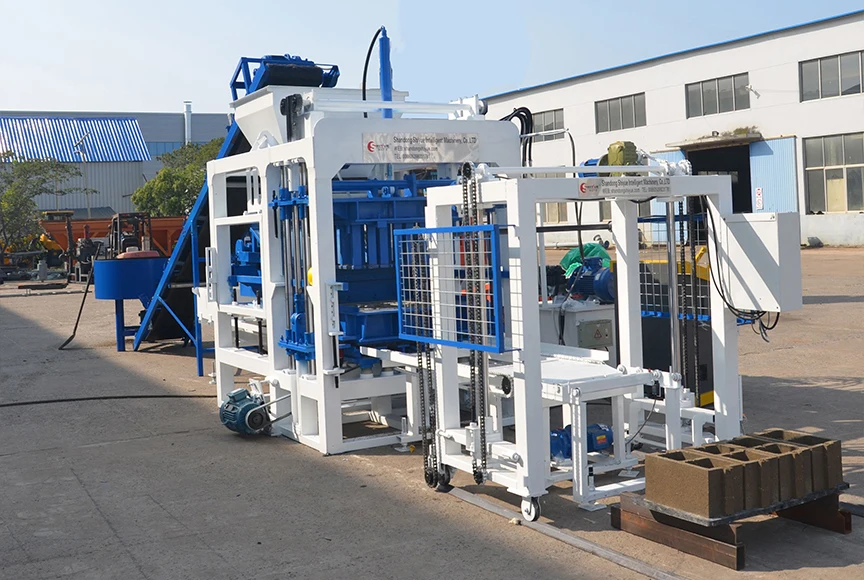
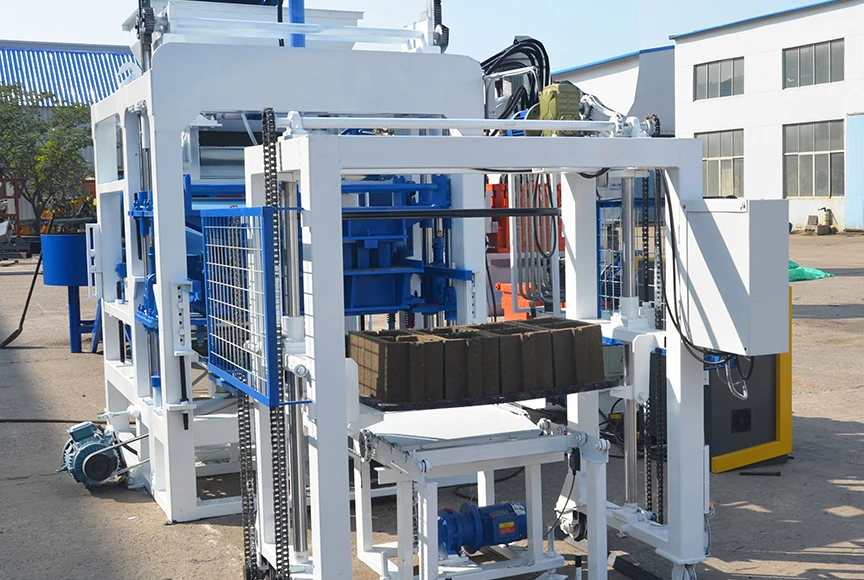
Description
Honest capacity per format — every QT4-18 output figure we quote names the exact block dimensions and cycle time it assumes, so your daily tally matches the projection on paper.
Technical Specifications
| Parameter | Value |
|---|---|
| Model | QT4-18 |
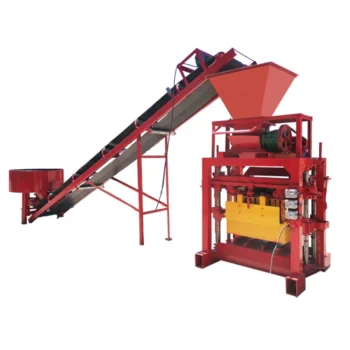
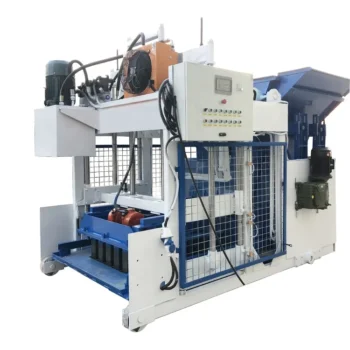
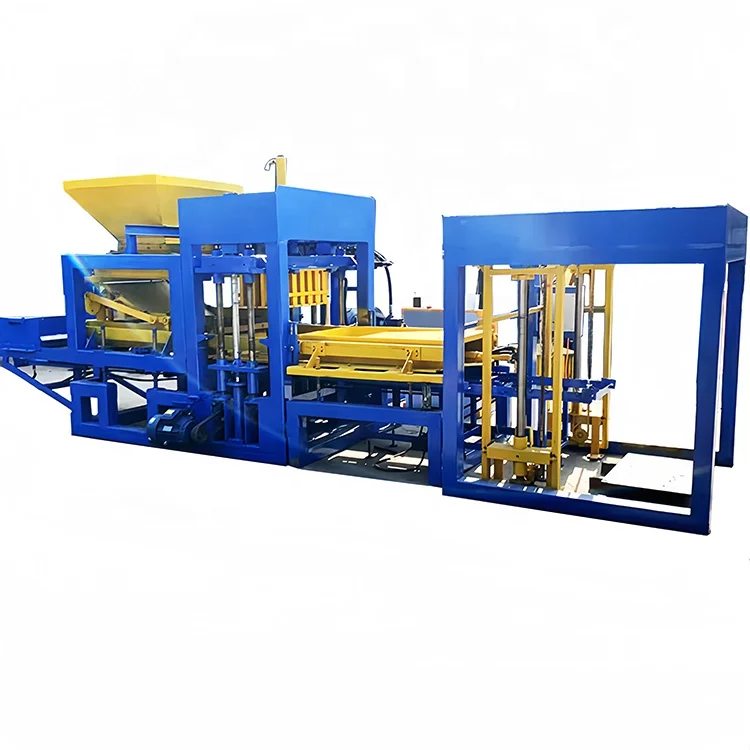
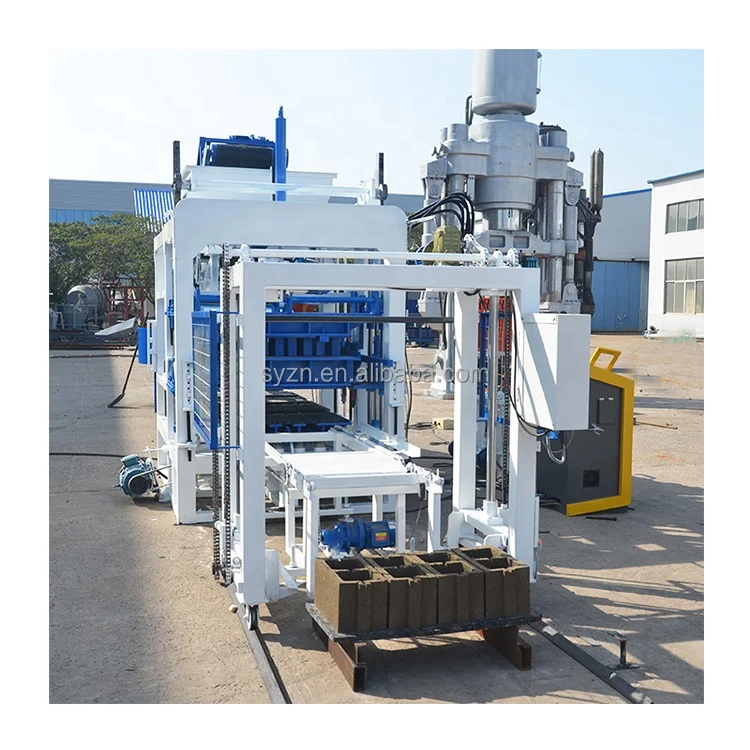
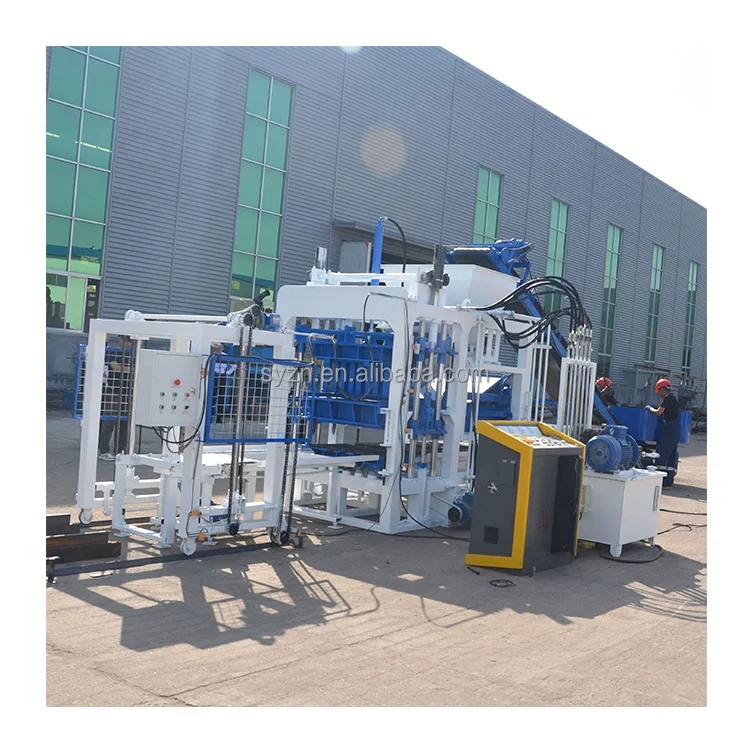
| Product Type | Hydraulic Concrete Block Making Machine |
| Overall Dimensions | 3900×1600×2300 mm |
| Total Weight | 3T |
| Rated Power | 24KW |
| Vibration Force (Exciting Power) | 40-50KN |
| Molding Cycle | 15-25s (basis not stated in source — confirm block format / material / thickness) |
| Pallet Size | 850×550×25mm |
| Control System | PLC control system |
| Mixer Model | JQ350 |
| Included Line Equipment | Block making machine, hydraulic station, PLC control system, pallet feeder, brick conveyor, block sweeper |
| Free Accessories | Manual hydraulic trolley, spare parts and tools |
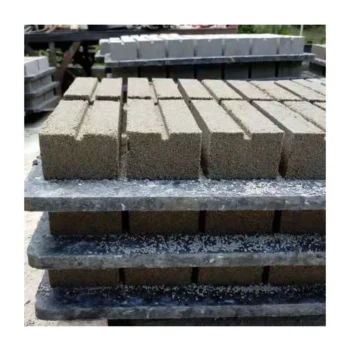
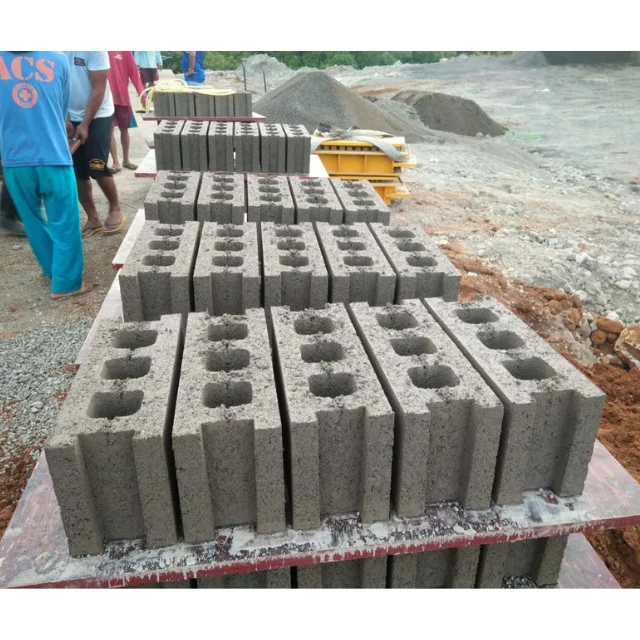
| Output — Hollow Block 400×200×200mm | 1200-1680 pcs/hr (9600-13440 pcs/8hr) |
| Output — Hollow Block 400×150×200mm | 1800-2400 pcs/hr (14400-19200 pcs/8hr) |
| Output — Solid Brick 240×115×53mm | 3240 pcs/hr (16200-19440 pcs/8hr) |
| Applicable Raw Materials | Crushed stones, sand, cement, dust, fly ash |
| Applicable Products | Paver, solid block, hollow block, curbstone (mould change required) |
| Standards | CE declaration where applicable |
Application Suitability
| Application | Material or Output |
|---|---|
| Hollow block production for wall construction | Crushed stone, sand, cement mix on 400×200×200mm or 400×150×200mm format |
| Solid brick manufacturing for load-bearing structures | Fine aggregate and cement blend on 240×115×53mm format |
| Paving block production for walkways and yards | Crushed stone and cement on paver mould (mould change required) |
| Kerbstone forming for road and site perimeter works | Coarse aggregate mix on curbstone mould (mould change required) |
| On-site block production by construction contractors | Locally sourced sand and cement, portable pallet circuit |
What "QT4-18 Block Machine Specifications" Leave Out About Daily Output
A cycle time means nothing until you tie it to a block format, a mix design, and an eight-hour shift.
Over the years at our Kuala Lumpur desk, I have watched buyers sign off on a headline capacity number and then face a very different reality on their first production day. A QT4-18 block machine specifications sheet might show a fast cycle, but if the local river sand runs high in clay content, the vibration window shifts and the actual output per hour drops noticeably. That gap between brochure and plant floor is where projects lose margin. I now ask for a local aggregate lab report before I finalize any capacity projection, because guessing the mix behaviour is guessing the buyer’s profit. [NEED_CITE: effect of aggregate clay content on concrete block compaction cycle]
Mould Format and the Real Flexibility Question
The QT4-18 press handles hollow block, solid brick, paver and curbstone formats through mould change. The concrete block making machine how to choose decision starts with listing the formats your market actually buys, then confirming which moulds ship with the line. A machine that covers four formats only delivers flexibility if the changeover fits inside a shift.
Pallet Size and the Curing Bottleneck
Pallet dimensions at 850×550×25mm govern how many blocks cure per rack and whether your existing forklift can handle loaded pallets safely. If the pallet is wider than the curing rack you already built, blocks stack on the floor and output stalls. Matching pallet to curing area before the press ships avoids a bottleneck that no amount of automation can fix later. [NEED_CITE: pallet-to-curing-rack sizing practice in block production]
Vibration, Pressure and Block Strength
The 40-50KN exciting power works together with the hydraulic station to compact the mix inside the mould. Higher vibration alone does not guarantee density; the hydraulic pressure must hold the mould box steady so the vibration energy transfers into the concrete rather than shaking the frame. When vibration force and hydraulic pressure are matched to the buyer’s specific mix design, block strength stays consistent across the shift.
Reading the Numbers Behind the QT4-18
Rated power at 24KW tells you the electrical supply the plant must provide; undersizing the dedicated circuit causes voltage sag that shortens contactor life. The PLC control system centralizes cycle timing and fault display, so the operator can read the process state without tracing relay logic. Pallet size at 850×550×25mm sets the maximum block footprint per press stroke and dictates the curing rack geometry. Vibration force between 40-50KN determines the range of aggregate gradations the press can compact reliably, from fine sand mixes for solid brick to coarser crushed stone for hollow block.
The Cost of Skipping the Configuration Step
When a line ships with a default mould set that does not match the buyer’s best-selling block format, the machine sits idle while a new mould is fabricated and freighted. When voltage and frequency are assumed rather than confirmed, the motor winding may not match the local grid, delaying commissioning by weeks. When pallet material is chosen without checking forklift load limits, warped pallets jam the feeder and operators spend the shift clearing blockages instead of making blocks. [NEED_CITE: common commissioning delays from unconfirmed voltage and frequency]
Why Source This Line Through Our Configuration Process
Block machinery is our single focus, so the press, mould, pallet and handling equipment are specified as one matched set rather than assembled from separate suppliers. We set the QT4-18 configuration against your actual mix design and target block format instead of quoting a catalogue default. Mould drawings are produced for the exact formats your market sells, including custom profiles when standard moulds do not cover the dimension you need. Automation level is selectable, so you can start semi-automatic with the included pallet feeder and brick conveyor, then add automatic stacking later. Installation support includes on-site commissioning and operator training so the first production day is not a learning experiment.
Documentation & Verification
- Line layout drawing showing the QT4-18 with pallet feeder and brick conveyor positions
- Capacity calculation sheet stating the block format assumed for each output figure
- Mould drawing and format list for every mould included in the shipment
- Hydraulic and electrical schematic matching the shipped configuration
- Voltage, frequency and PLC display language confirmation signed before production
- Factory test record run on your specified block format before dispatch
Installation, Commissioning & Support
- Foundation slab sized to the 3900×1600 mm footprint with anchor bolt template provided
- Dedicated 24KW circuit with correct voltage and frequency confirmed before wiring
- Machine arrives with hydraulic station and PLC cabinet mounted, ready for power connection
- First-run cycle tuning done on your local aggregate to dial in vibration and press timing
- Operator training covers PLC navigation, mould change procedure and daily greasing points
- Wear parts list and mould maintenance schedule handed over at commissioning sign-off
Before You Send the Inquiry
To size the QT4-18 correctly, share the block formats your market buys most, the daily volume you need per format, and a lab report on your local sand and aggregate. Tell us the voltage and frequency at your site along with the preferred PLC display language. If you already have curing racks or forklifts in place, send their dimensions so the pallet spec fits your existing layout.
Frequently Asked Questions
Q: How is output capacity calculated per block format, and what cycle time does each format assume?
A: Each output figure on the QT4-18 sheet is tied to a specific block dimension — hollow 400×200×200mm, hollow 400×150×200mm, or solid 240×115×53mm. The molding cycle ranges from 15 to 25 seconds, but the exact cycle depends on your mix design and target strength. We confirm the cycle time during factory testing on your actual aggregate before quoting a final daily capacity.
Q: Which mould formats are included, and how long does a mould change take?
A: The QT4-18 supports hollow block, solid brick, paver and curbstone formats. The moulds included depend on your order configuration. Mould change involves unbolting the current mould box, fitting the replacement, and resetting the press stroke via the PLC. We train your operator on this procedure during commissioning so format switches fit within a normal shift.
Q: How should pallet size be chosen relative to my curing area and forklift?
A: The standard pallet measures 850×550×25mm. Before production begins, we check this against your curing rack spacing and forklift fork width to ensure loaded pallets move without damage. If your existing infrastructure calls for a different dimension, the pallet specification can be adjusted before the feeder is built.
Q: Can the machine be configured for my local aggregate and mix design, or only a catalogue default?
A: We ask for a local aggregate lab report and your target mix proportions before finalizing the vibration and pressure settings. The QT4-18 is then tuned to compact that specific mix during the factory test. This way the machine arrives configured for the materials you can actually source, not a generic recipe.
Q: What block strength can I expect given the vibration force and hydraulic pressure?
A: The 40-50KN exciting power combined with the hydraulic station compacts the mix to a density that meets standard structural requirements for the chosen block format. Actual compressive strength depends on your cement ratio, aggregate gradation and curing practice. We verify strength samples during the factory test and again on your site during commissioning.