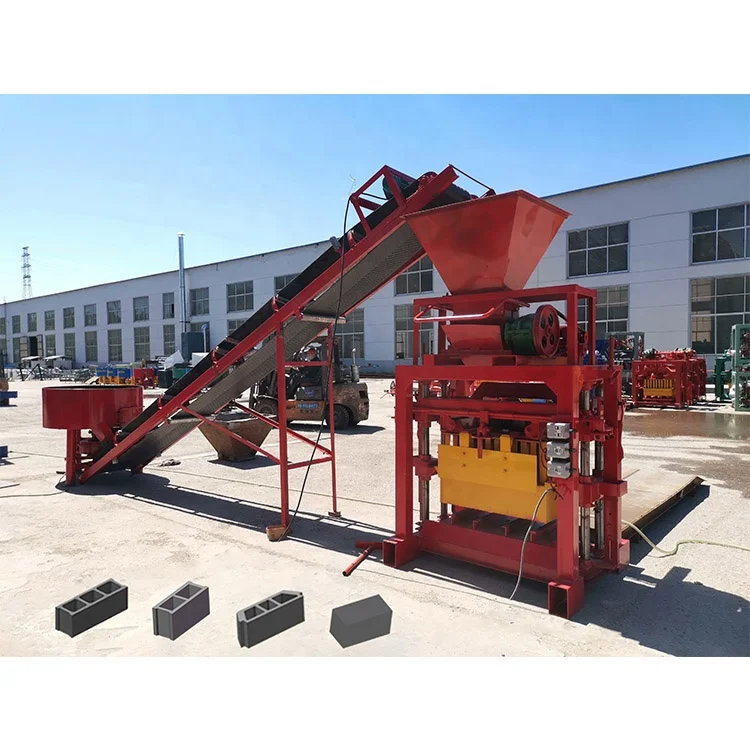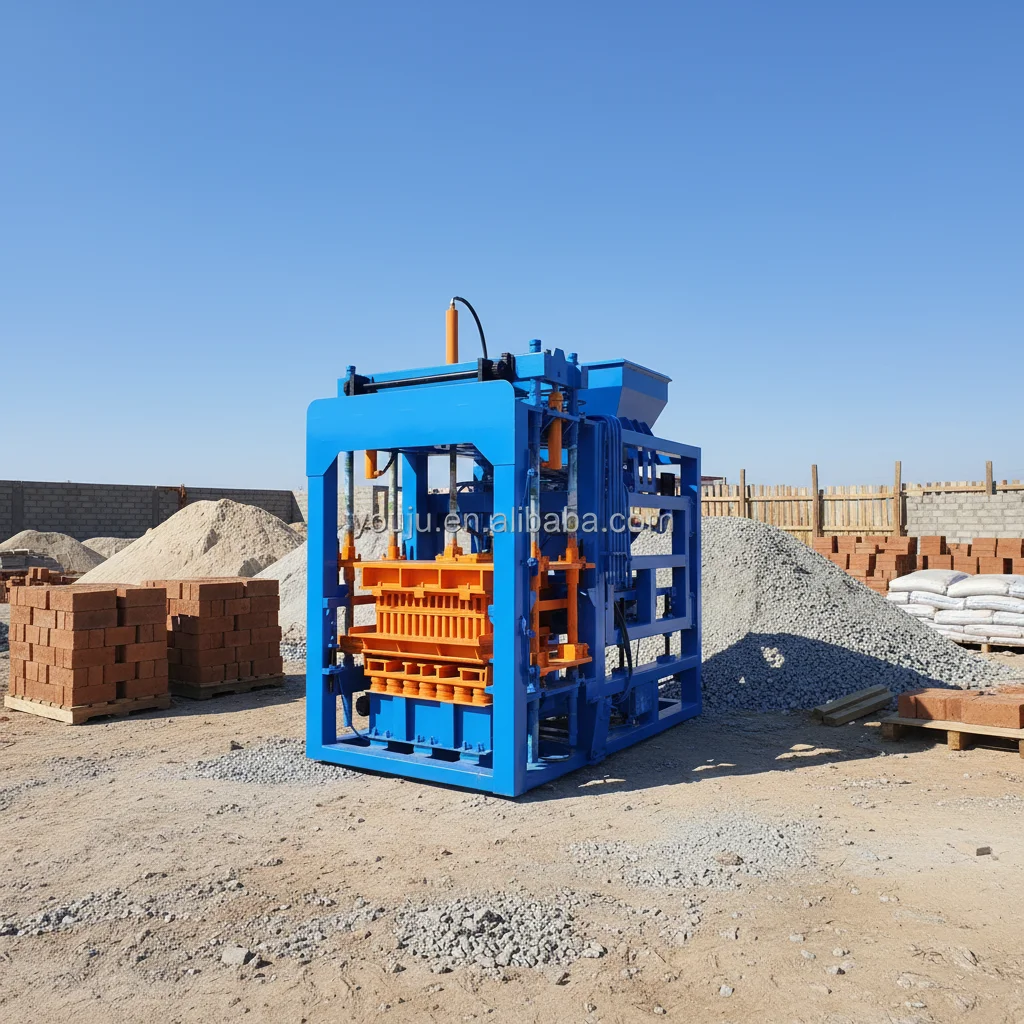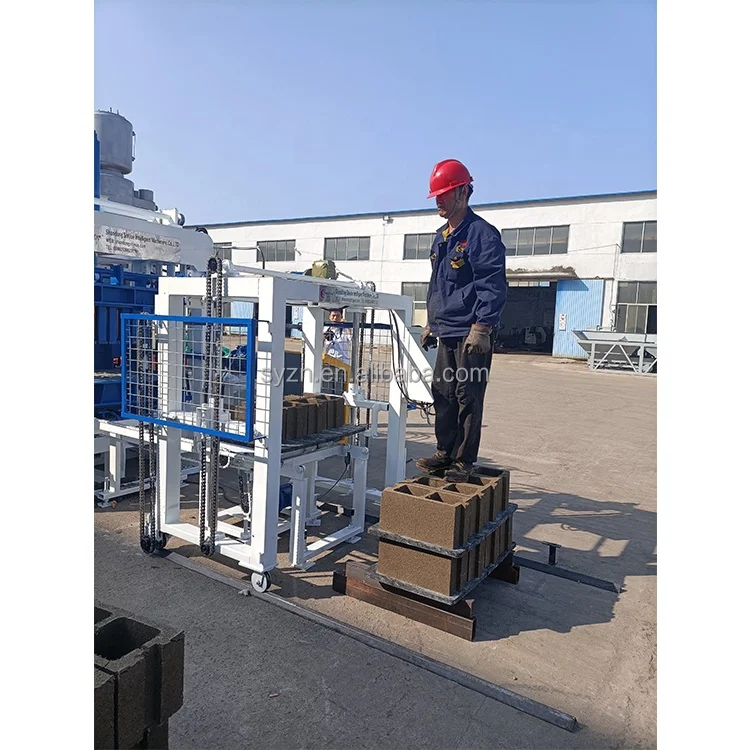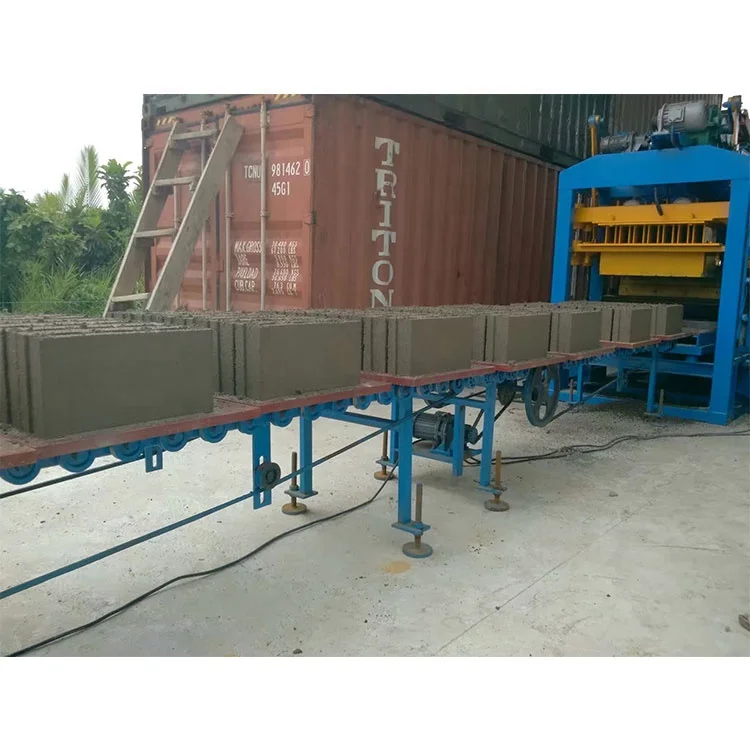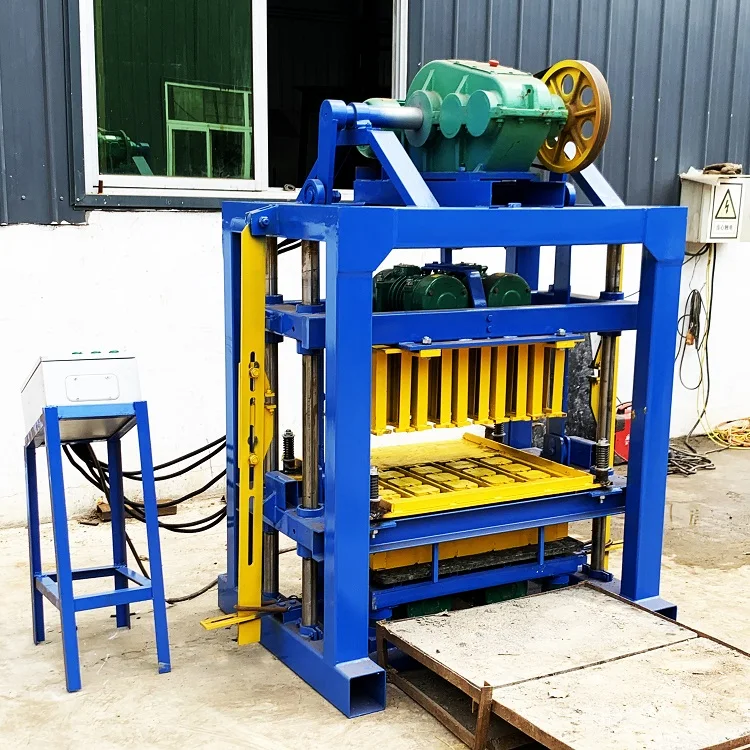
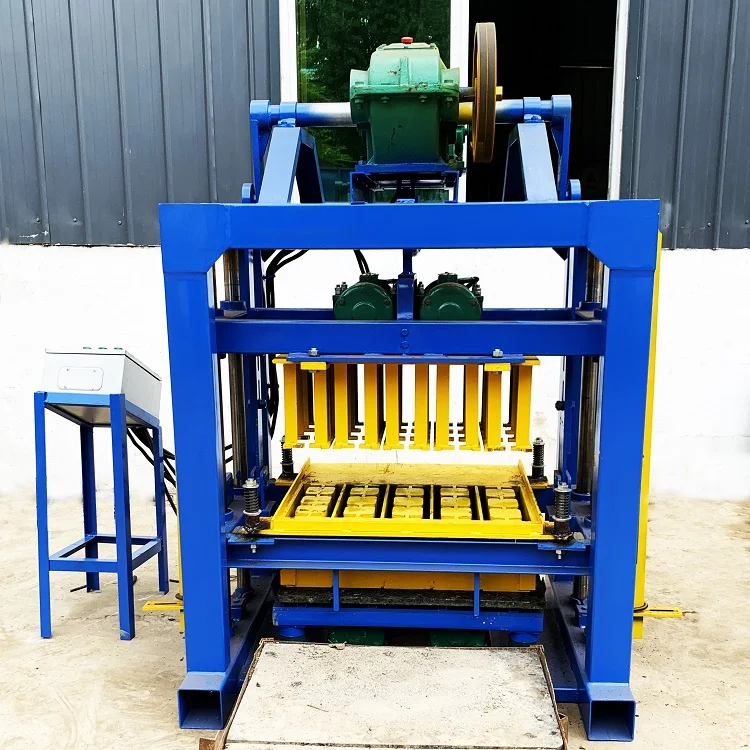
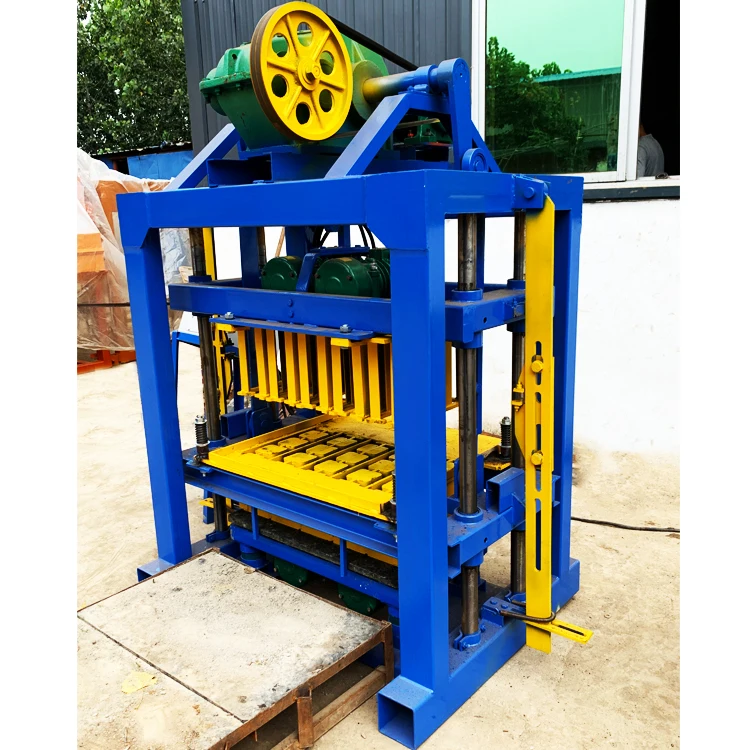
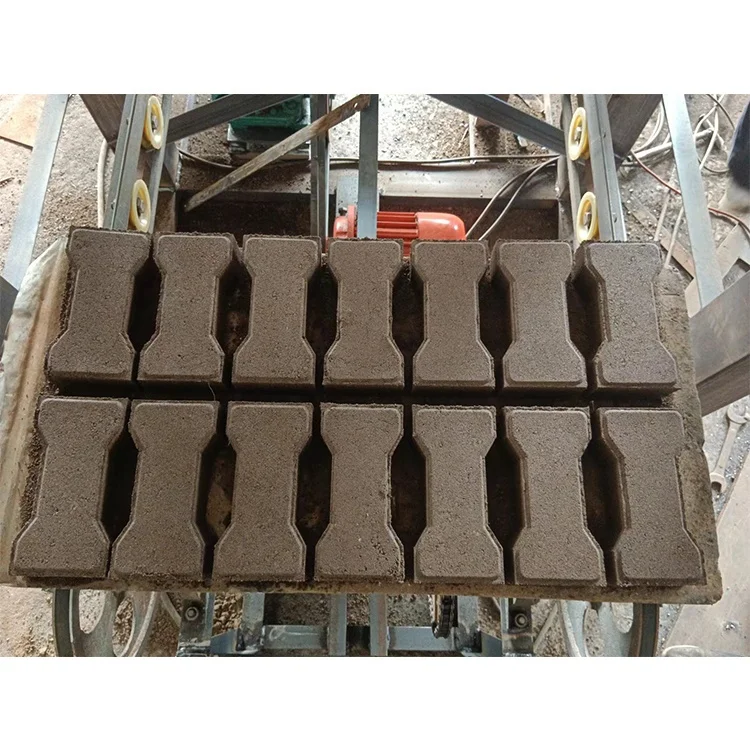
Description
Mould-First Capacity Planning — output figures are quoted per block format and pallet size so your daily volume matches what your market actually sells.
Technical Specifications
| Parameter | Value |
|---|---|
| Model | QTJ4-40 |
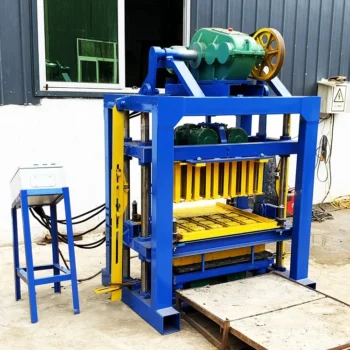
| Product Type | Stationary Concrete Block Making Machine |
| Vibration Form | Platform Vibration |
| Vibration Frequency | 2800 r/min |
| Pallet Size | 850 × 450 mm |
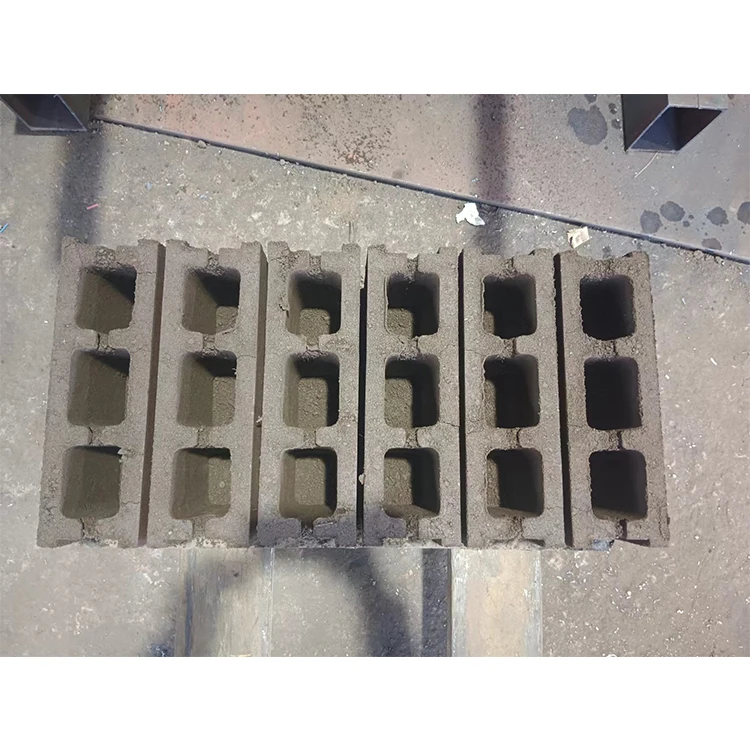
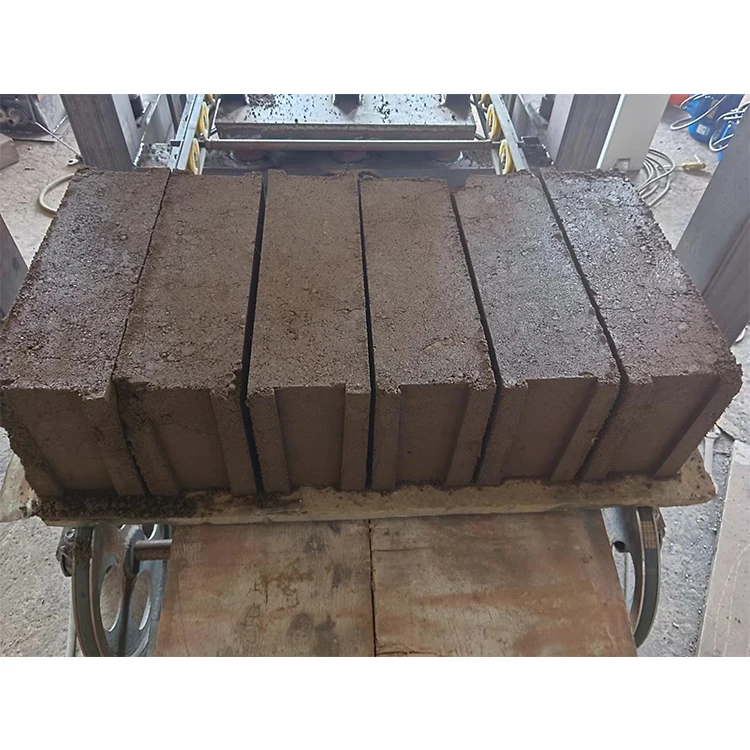
| Output (400×200×200 mm hollow, 4 pcs/mould) | 2880 pcs / 8 h |
| Output (400×150×200 mm hollow, 5 pcs/mould) | 4000 pcs / 8 h |
| Output (225×112.5×60 mm solid, 9 pcs/mould) | 7200 pcs / 8 h |
| General Claim | 2800 pcs / 8 h (basis not stated in source) |
| Raw Material Ratio | Cement 8-10 %, sand 30-40 %, stone 50-60 % (approx. 1:4:5) |
| Raw Materials | Concrete, cement, fly ash, crushed stone, sand, gravel, slag |
| Overall Dimensions | 1350 × 1460 × 1800 mm |
| Machine Weight | 1 T (source value — verify) |
| Factory Area Required | 200 m² |
| Workers Required | 1 – 3 |
| Mould Mechanism | Top die push-pull with automatic scraper |
| Automation Level | Semi-automatic (manual pallet handling) |
| Voltage & Frequency | To be confirmed before commissioning |
| Control System | To be confirmed (PLC or manual) |
| Rated Power | To be confirmed |
| Hydraulic Pressure | To be confirmed |
| Standard | CE (declaration to be verified) |
Application Suitability
| Application | Material or Output |
|---|---|
| Hollow block plant for small-to-medium output | Concrete with fly ash or crushed stone aggregate |
| Solid brick production for masonry and infill | Cement, sand, and gravel mix at 1:4:5 ratio |
| Paver and interlocking brick runs | Colored concrete with mould change |
| On-site contractor production (limited footprint) | Local sand and stone within 200 m² yard |
| Curbstone and kerb production | High-density concrete with platform vibration |
What "2800 Pieces per Shift" Actually Means
Capacity is meaningless without the block format it assumes.
I have watched buyers sign for a line rated at 2800 pieces per shift, only to discover on arrival that the number was based on a solid brick format their market never orders. The hollow blocks they needed took twice the cycle time, and real daily output dropped to half. The QTJ4-40 block machine specifications show three very different outputs depending on whether you run a 400×200×200 mm hollow block, a thinner 400×150×200 mm hollow, or a 225×112.5×60 mm solid brick. Without confirming which format your quotation assumes, you are buying a guess. [NEED_CITE: block capacity calculation assumptions in machinery quotations]
Platform Vibration Matched to Block Densification
The 2800 r/min platform vibration is tuned for the compaction demand of hollow and solid concrete blocks. Unlike mould-only vibration, platform vibration transmits energy through the pallet into the full mix column, which matters when your aggregate contains fines that resist settling. For the QTJ4-40 block machine, this frequency sits in the range where mid-size hollow blocks achieve wall density without over-shaking the lighter face mix.
Mould Change and Format Flexibility
The top die push-pull mechanism with automatic scraper shortens the block release stroke, which matters when you switch between a deep hollow mould and a shallow paver mould on the same shift. Buyers who plan to sell multiple formats should confirm the mould change procedure and tooling required before ordering, because a machine that takes half a shift to re-tool defeats the purpose of format flexibility. [NEED_CITE: mould change time impact on daily output in semi-automatic block plants]
How Vibration Force and Mix Design Interact
Platform vibration alone does not guarantee block strength. The 2800 r/min frequency must be matched to your local aggregate grading and cement ratio — a river sand with high clay content will absorb vibration energy differently than crushed granite dust. The stated 1:4:5 cement-sand-stone ratio is a starting point; if your sand is unwashed or your stone is porous, the amplitude and pressure need adjustment to reach target compressive strength. Pallet size at 850×450 mm also dictates the curing rack spacing you must prepare, so confirm your existing forklift tine width and rack dimensions before the line ships.
The Cost of Skipping the Pallet Conversation
A buyer once sourced a machine with the right press but wrong pallet size. The 850×450 mm pallets did not fit the curing racks already welded in his yard, so every wet block had to be hand-stacked on the ground until new racks were fabricated two months later. The pallet dimension also determines how many blocks fit per layer on a standard curing rack and whether your existing forklift can lift a full rack without overhang. Confirming pallet compatibility before the machine leaves the factory avoids weeks of double-handling on site. [NEED_CITE: pallet size mismatch causing handling delays in block production]
Why the Configuration Is Set Against Your Actual Product
This is where most catalogue quotations fall short — the machine is shipped at default settings and the buyer is left to tune it. With the QTJ4-40, the vibration frequency, pallet size, and mould selection are confirmed against your target block format before production begins, so the capacity you were quoted is the capacity you run.
- Mould drawings are provided for every format included in the quotation, not just the base hollow block.
- Pallet specification is matched to your curing area and forklift, avoiding post-arrival fabrication.
- Voltage, frequency, and control language are locked in before the electrical panel is wired.
- Raw material ratio is adjusted to your local sand and stone, not copied from a generic chart.
- Capacity calculation states the exact block format and cycle assumption, so daily output is verifiable from day one.
- Semi-automatic layout allows a future upgrade path to automatic pallet feeding and stacking when volume justifies it.
Documentation & Verification
- Line layout drawing with capacity stated per block format
- Mould drawing and format list for every included size
- Pallet specification matched to your rack and forklift dimensions
- Voltage and control language confirmation sheet before wiring
- Factory test record run on your material ratio
- Operation and maintenance manual with wear parts list
Installation, Commissioning & Support
- Foundation pad sized to 1350×1460 mm machine footprint with vibration isolation
- Electrical supply confirmed for your local voltage and frequency before panel build
- Platform vibration calibration on-site using your actual aggregate and cement source
- Mould change procedure demonstrated with your included format set
- Operator training covering mix ratio adjustment and scraper maintenance
- Wear parts list provided with first replacement schedule for top die and vibrator mounts
Before You Send an Inquiry
To size the QTJ4-40 block machine to your project, we need to know the block formats your market orders most, the daily output you are targeting per format, and the local sand or stone you will use. Share your workshop dimensions and existing curing rack specifications so the pallet and handling layout can be matched. Confirm your site voltage and frequency, and whether you need the control panel in a specific operator language.
Frequently Asked Questions
Q: How is the general 2800 pcs/8h capacity figure derived?
A: That figure appears in some source sheets without a stated block format. The verified outputs for this machine are 2880 pcs for a 400×200×200 mm hollow block, 4000 pcs for a 400×150×200 mm hollow, and 7200 pcs for a 225×112.5×60 mm solid brick. Always confirm which format your quotation assumes before comparing offers.
Q: What mould formats are available and how long does a change take?
A: Moulds cover hollow blocks, solid bricks, pavers, interlocking bricks, and curbstones within the pallet envelope. Change time depends on whether you store the alternate mould beside the press and whether the top die push-pull bolts are pre-staged. Confirm the procedure and required tools in your quotation so you can plan shift changeovers.
Q: How should the 1:4:5 raw material ratio be adjusted?
A: The cement-sand-stone ratio is a starting point for standard crushed aggregate. If your local sand contains clay or your stone is highly porous, the water demand and vibration response change. We adjust the mix against a trial batch using your material before finalizing the vibration setting, so block strength meets your market standard.
Q: Is the 850×450 mm pallet compatible with my existing curing racks?
A: Compatibility depends on your rack slot width, forklift tine length, and stacking height. Share your current rack dimensions and forklift model so we confirm the pallet fits before production. If your racks were built for a different pallet size, a mismatch will force hand-stacking until new racks arrive.
Q: What voltage and control details must be confirmed before shipment?
A: Voltage, frequency, phase, and control panel language must be locked before the electrical panel is wired. A 380 V / 50 Hz machine shipped to a 415 V / 60 Hz market will underperform or trip breakers on day one. Confirm these values at quotation stage and we include a written confirmation sheet with your documentation.