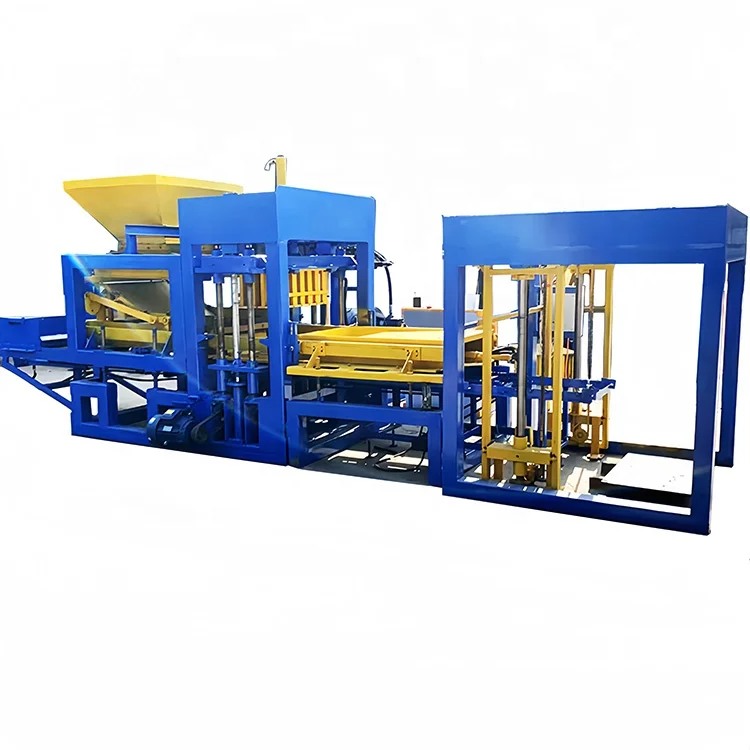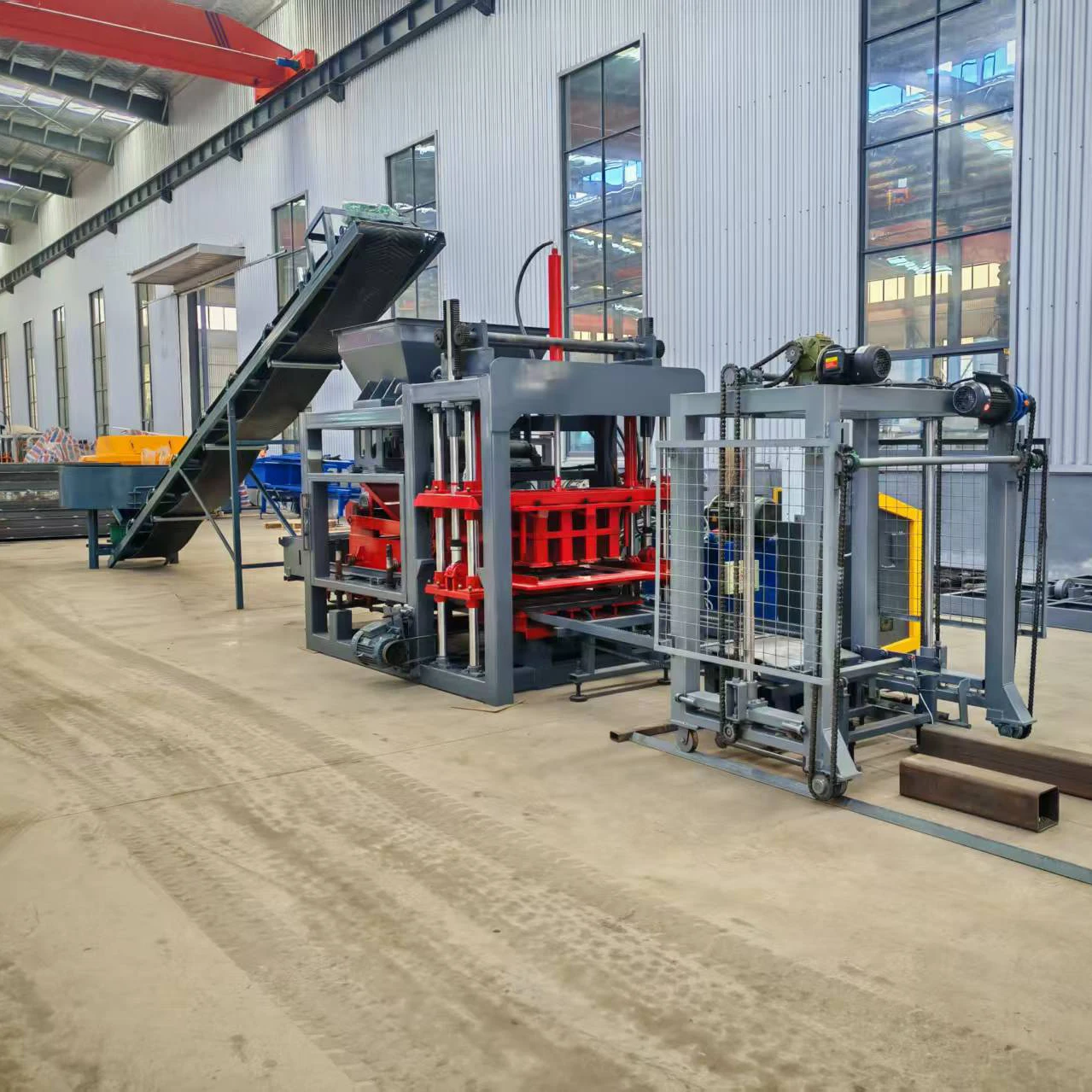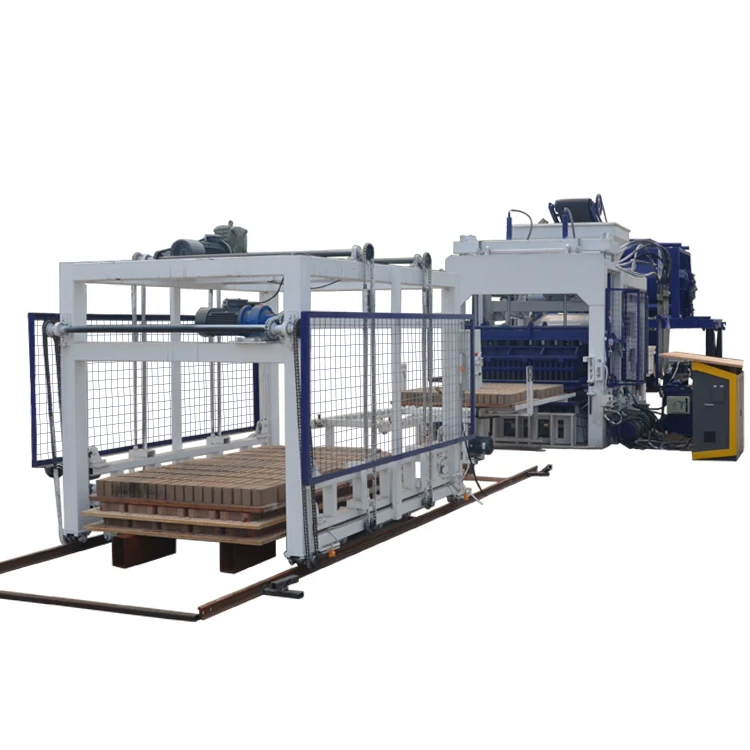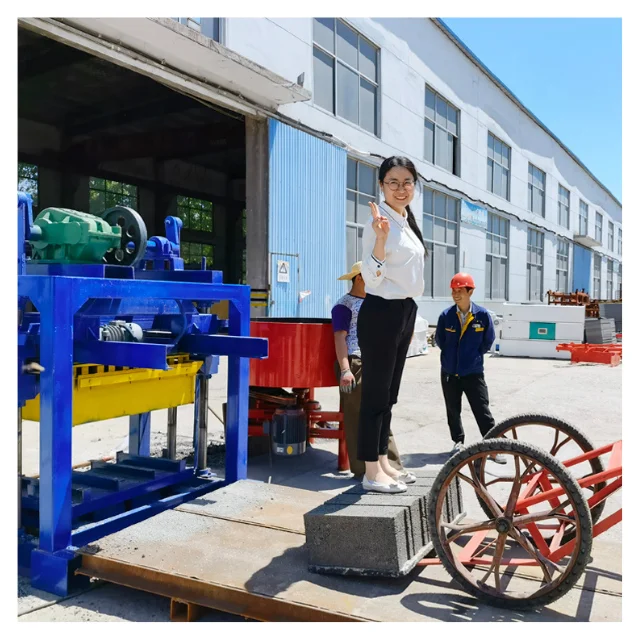
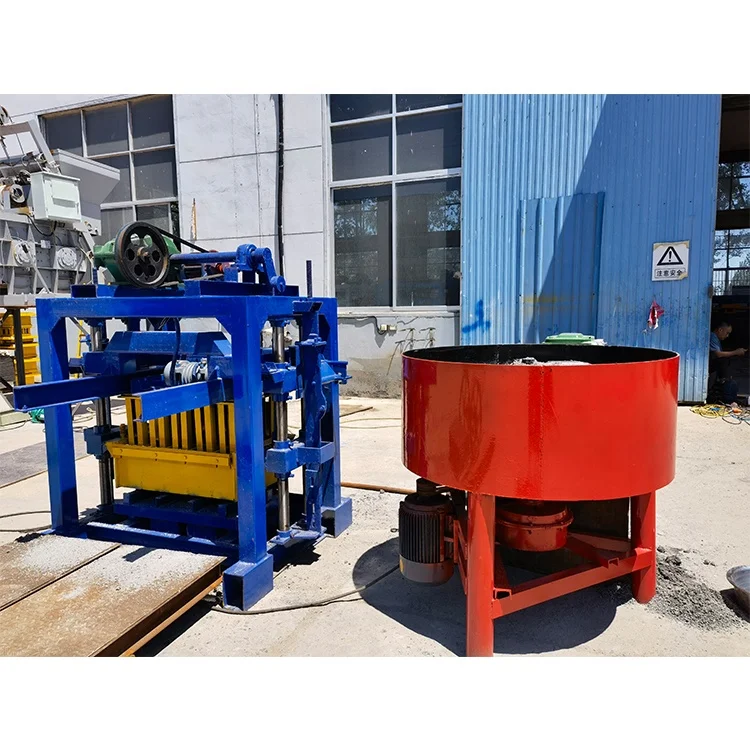
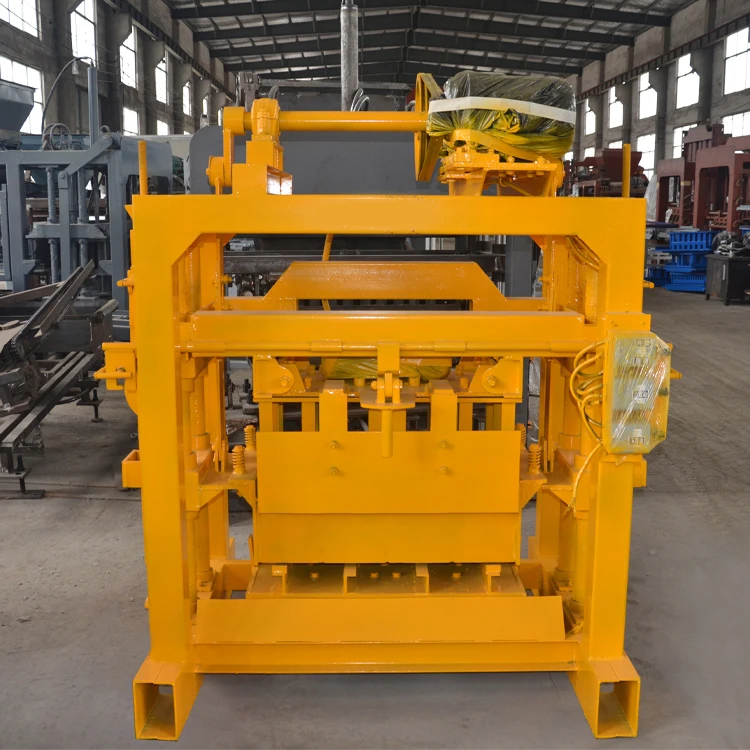
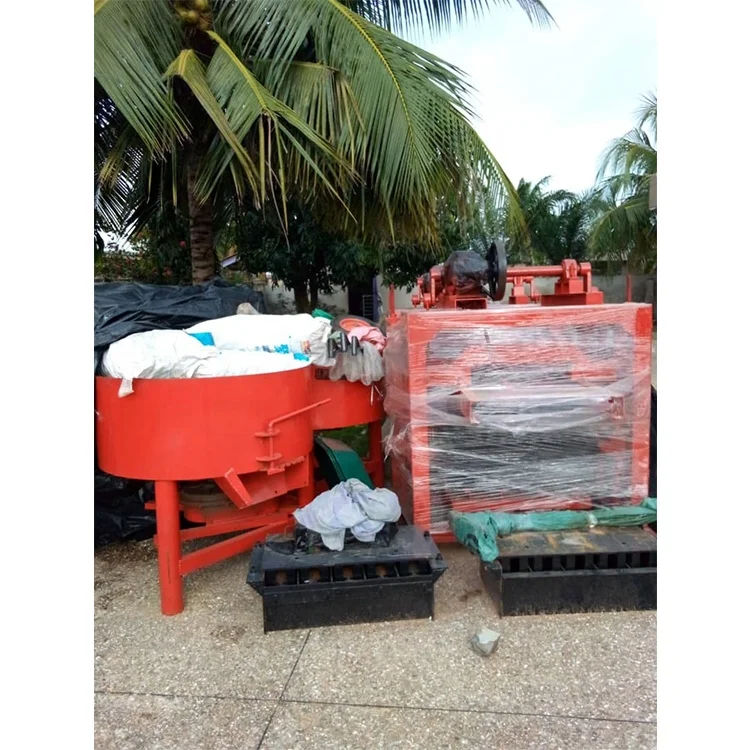
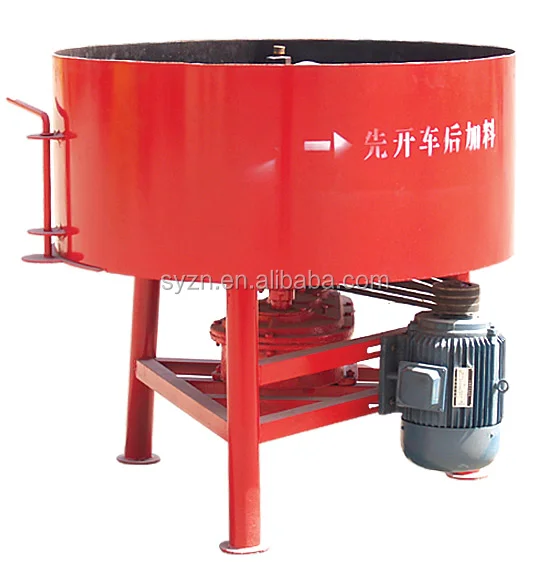
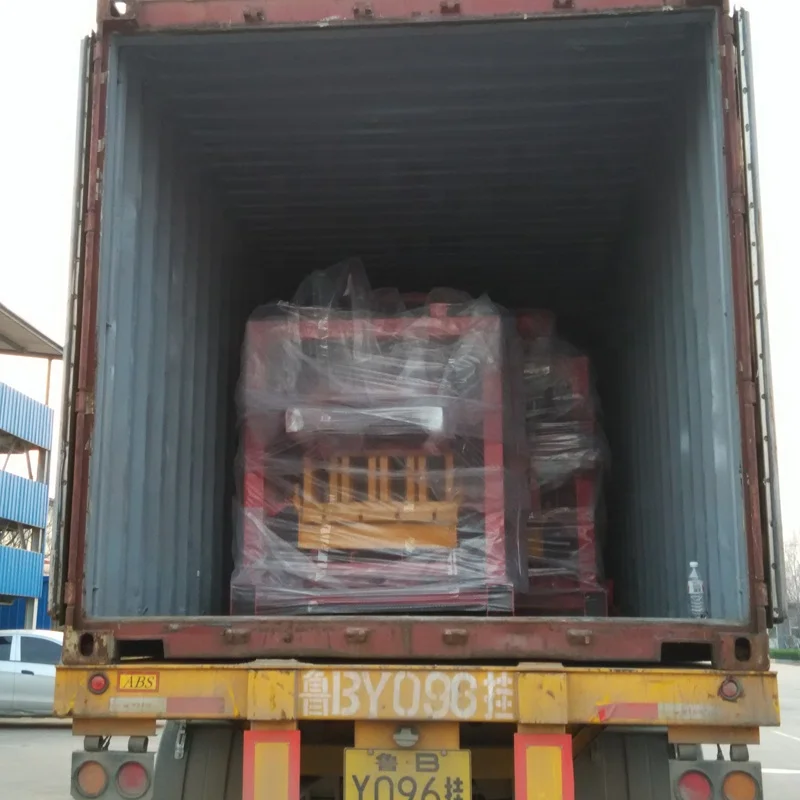
Description
Honest Capacity by Format — every QTJ4-40 output figure is stated against a specific block dimension and mould cavity count, so your daily plan matches reality.
Technical Specifications
| Parameter | Value |
|---|---|
| Model | QTJ4-40 |
| Product Type | Semi-Automatic Concrete Block Making Machine |
| Rated Power | 9.5 kW |
| Molding Cycle | 40 s |
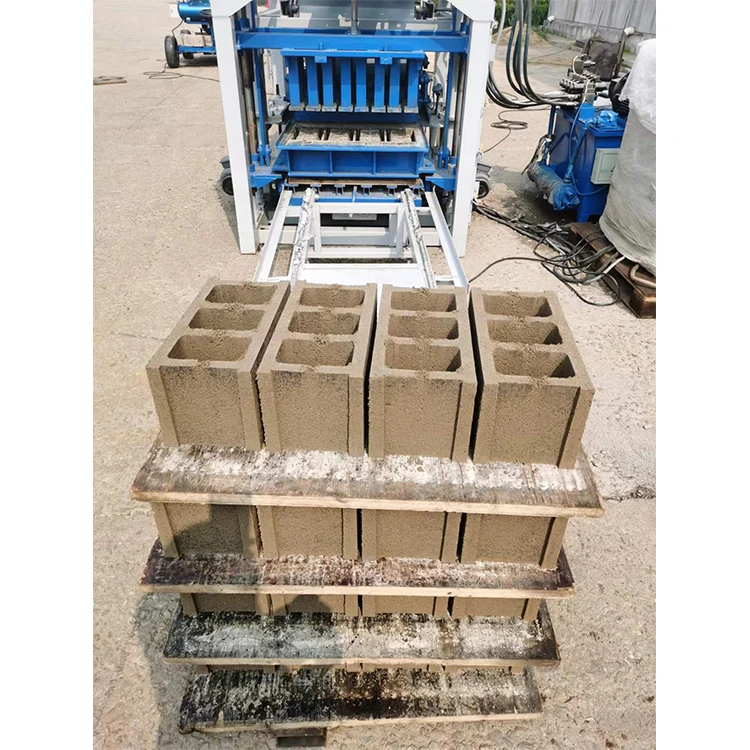
| Theoretical Output (400×200×200 mm hollow block, 4 pcs/mould) | 360 pcs/h, 2800 pcs/day |
| Theoretical Output (400×150×200 mm hollow block, 5 pcs/mould) | 450 pcs/h, 3600 pcs/day |
| Theoretical Output (225×112.5×60 mm solid brick, 9 pcs/mould) | 800 pcs/h, 6400 pcs/day |
| Pallet Size | 850 × 450 mm |
| Overall Dimensions (L×W×H) | 1350 × 1460 × 1800 mm |
| Machine Weight | 1 T |
| Vibration System | Bed mould vertical vibration + upper mould compression vibration |
| Mould Actuation | Top die push-pull with automatic scraper |
| Automation Level | Semi-automatic |
| Voltage | Configurable to buyer’s local supply (basis to be confirmed) |
| Raw Materials | Concrete, sand, cement, fly ash, lime, gypsum |
Application Suitability
| Application | Material or Output |
|---|---|
| Hollow block production for residential walls | Crushed stone, sand, and cement mix |
| Solid brick manufacturing for load-bearing structures | Fly ash, lime, gypsum, and cement blend |
| On-site block production for housing projects | Locally sourced aggregate and cement |
| Small to medium block plant start-up | Various concrete mixes with regional sand |
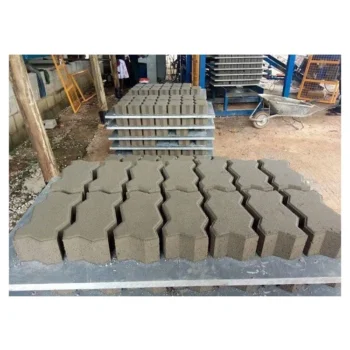
| Paver and format diversification for existing plants | Interlocking and porous brick materials |
What "2800 Blocks a Day" Actually Means for the QTJ4-40
The QTJ4-40 block machine specifications only hold when the block format, mix design, and mould cavity count match the stated basis.
I have watched buyers sign for a machine quoted at a single headline capacity, then discover on commissioning day that the figure assumed a hollow block their market does not buy. The QTJ4-40 produces 2800 pieces per day only when running 400×200×200 mm hollow blocks with four cavities per mould at a 40-second cycle. Switch to a 400×150×200 mm hollow block with five cavities and the theoretical daily figure rises to 3600; switch again to a 225×112.5×60 mm solid brick with nine cavities and it reaches 6400. These are not interchangeable numbers — each belongs to one format only. Any supplier quoting a single output without naming the block dimension is leaving out the variable that matters most [NEED_CITE: capacity calculation standards for concrete block machinery].
Vibration Matching to Your Local Aggregate
The bed mould vertical vibration combined with upper mould compression vibration determines how densely the concrete pack fills the mould cavity. When the vibration force is matched to the buyer’s actual aggregate — whether river sand, crushed basalt, or volcanic ash — the block emerges with uniform density and consistent compressive strength. A mismatch between vibration frequency and the particle size distribution of the local mix is the most common reason blocks crumble during curing.
Pallet Size and Curing Area Alignment
The 850 × 450 mm pallet governs how many blocks travel through the press per cycle and how they stack in the curing yard. Before confirming an order, the buyer must measure existing curing rack spacing and forklift tine width. A pallet that does not match the curing infrastructure forces manual re-handling, cancelling the output advantage the machine was bought to deliver [NEED_CITE: pallet handling logistics in block production].
Reading the Specs That Shape Daily Output
The 9.5 kW rated power must be read against the buyer’s local voltage and frequency; a machine wired for 380 V / 50 Hz arriving in a 220 V / 60 Hz market will not start without a transformer or motor swap. The 40-second molding cycle is the mechanical baseline — actual cycle time lengthens when the operator manually feeds pallets and removes finished blocks, which is inherent to the semi-automatic classification. The 1 T machine weight and 1350 × 1460 × 1800 mm footprint mean the QTJ4-40 fits inside a standard workshop without a reinforced foundation, but floor flatness still affects pallet travel and block dimensional tolerance. Top die push-pull actuation with an automatic scraper reduces the manual effort of mould filling compared to gravity-fed machines, yet the operator remains responsible for pallet placement and block removal at the exit end.
The Hidden Cost of Skipping Format Confirmation
When a buyer confirms a machine without locking the block format, mould cavity count, and pallet size together, the consequences surface after shipment. Moulds arrive for a dimension the local market does not purchase, forcing a custom order and weeks of idle capacity. Pallets that do not fit the curing racks mean blocks are stacked on the floor, cracking under their own weight. Voltage confirmed too late means the control panel sits unpowered while an electrician sources compatible contactors. Every one of these delays traces back to a missing line on the original specification sheet [NEED_CITE: commissioning delays caused by unconfirmed electrical specifications].
Why Technical Buyers Source Here
Block machinery is the single focus of this operation, so the QTJ4-40 is specified as a matched system — machine, mould, pallet, and handling — rather than assembled from unrelated suppliers. Configuration starts from the buyer’s actual mix design and target block format, not a catalogue default. Mould design covers the formats the buyer’s market sells, with custom drawings available for non-standard dimensions. The semi-automatic platform allows a buyer to start with manual pallet handling and add automation stations later. Installation support includes operator training on the specific vibration and cycle settings that match the confirmed mix.
Documentation & Verification
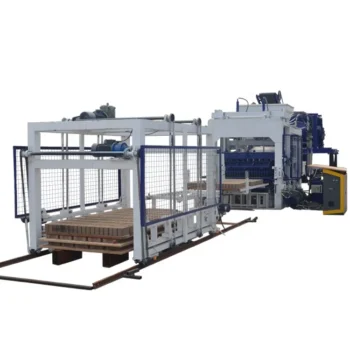
- Line layout showing QTJ4-40 footprint and pallet flow path
- Capacity calculation stating block format and mould cavity count
- Mould drawing with dimensional tolerances for your target block
- Pallet specification cross-referenced to your curing rack spacing
- Voltage, frequency, and control language confirmation sheet
- Factory test record on your confirmed mix before dispatch
Installation, Commissioning & Support
- Floor flatness within tolerance for 1350 × 1460 mm machine footprint
- Dedicated 9.5 kW circuit with confirmed voltage and frequency
- Machine arrives assembled; pallet feeder and exit conveyor positioned on site
- Vibration frequency tuned to your aggregate sample during commissioning
- Operator trained on 40-second cycle and manual pallet handling sequence
- Wear parts list covering mould liner and scraper blade replacement intervals
Preparing Your QTJ4-40 Inquiry
Send the exact block dimensions your market purchases, the daily volume your business plan requires, and a sample or analysis of your local aggregate. Confirm your site voltage, frequency, and the language you need on the control display. If you already have curing racks or a forklift, share the pallet dimensions they accept so the 850 × 450 mm pallet can be verified or adjusted before the order is placed.
Frequently Asked Questions
Q: How is the QTJ4-40’s daily output calculated, and which block format does each figure assume?
A: Each output figure is tied to one block format and mould cavity count. The 2800-piece daily figure assumes 400×200×200 mm hollow blocks with four cavities at a 40-second cycle. The 3600 and 6400 figures assume different formats. No single number applies across all products.
Q: What mould formats are available for the QTJ4-40, and what is the realistic cycle time per format?
A: Moulds are supplied for hollow blocks, solid bricks, pavers, and custom dimensions. The 40-second mechanical cycle is the baseline; actual cycle time depends on pallet handling speed and the operator’s rhythm in the semi-automatic sequence.
Q: How do I confirm the pallet size matches my curing area and existing forklift?
A: Measure your curing rack spacing and forklift tine width before ordering. The standard 850 × 450 mm pallet must slide into your racks without modification. If dimensions differ, pallet size is adjusted during the specification stage.
Q: What voltage, frequency and control language options are available, and how are they confirmed before shipment?
A: Voltage and frequency are configured to your site supply. Control display language is confirmed on the specification sheet before production. Both items are locked in writing to avoid commissioning delays after arrival.
Q: What mix design and local aggregate factors affect block strength on the QTJ4-40?
A: Particle size distribution, moisture content, and cement ratio all influence how the dual vibration system compacts the mix. Vibration frequency is matched to your aggregate sample so block density and compressive strength meet your market standard.