
Description
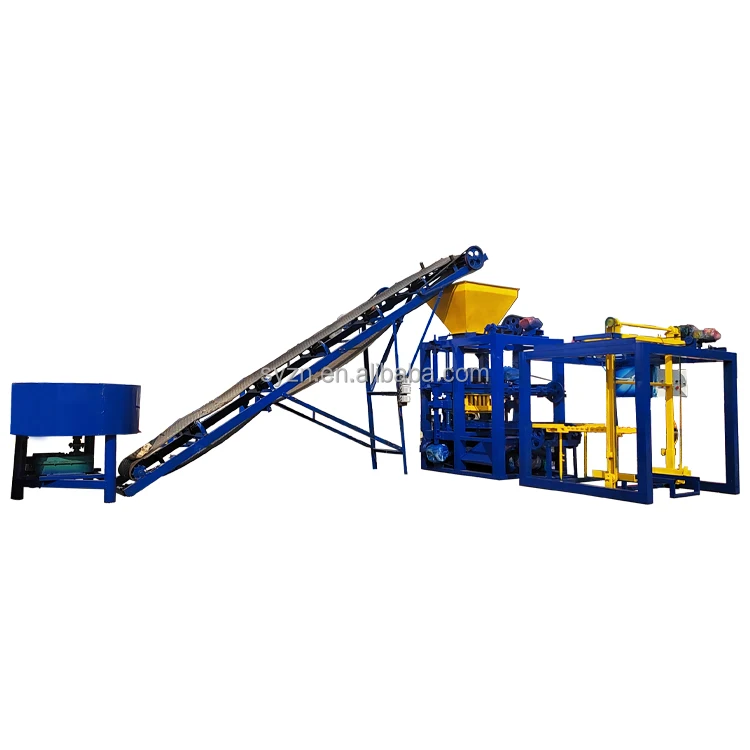
Honest capacity planning — The QTJ4-40 block machine quotes output by mould format rather than a single misleading headline figure, so buyers know what daily volume to expect for each block size before they commit.
Technical Specifications
| Parameter | Value |
|---|---|
| Model | QTJ4-40 |
| Product Type | Concrete Block Making Machine |
| Rated Power | 9.5 kW |
| Voltage & Frequency | Configurable to local supply (to be confirmed before production) |
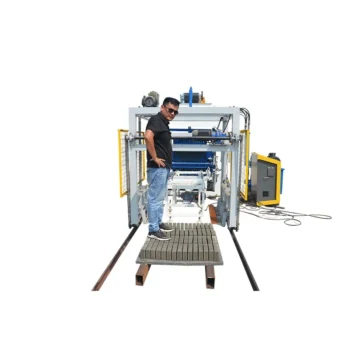
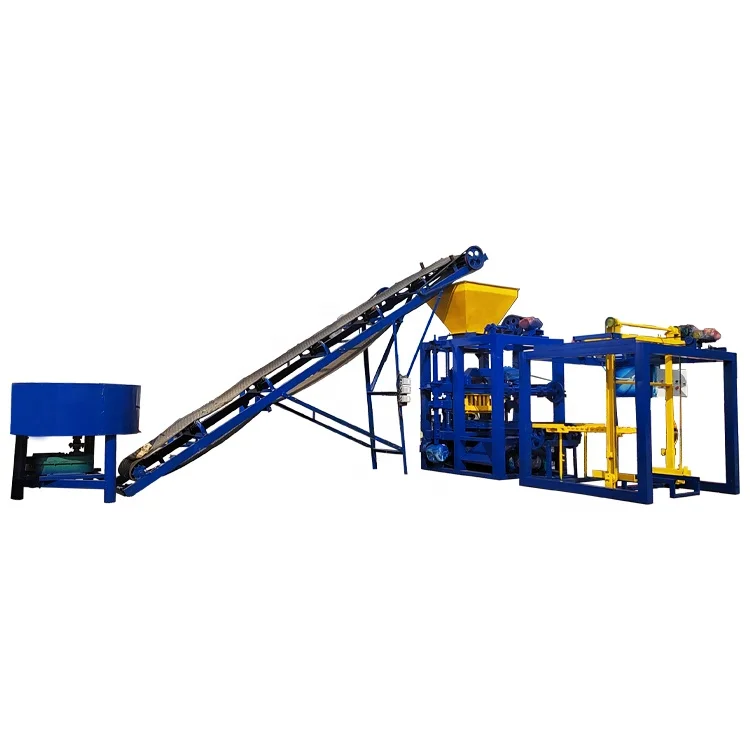
| Control System | Semi-automatic with top die push/pull and automatic scraper |
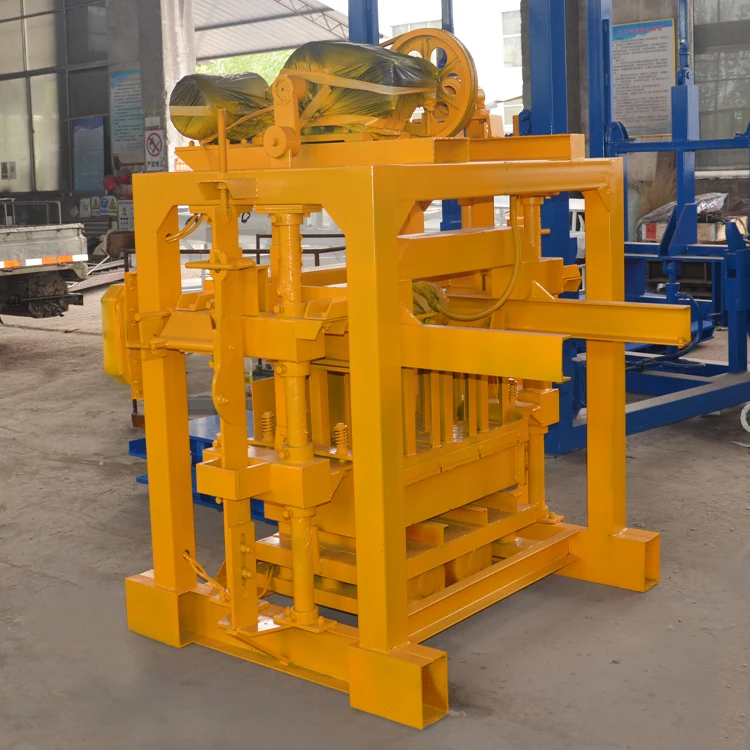
| Overall Dimensions (L×W×H) | 1350 × 1460 × 1800 mm |
| Net Weight | 1 T (basis to be confirmed) |
| Cycle Time | 40 s per moulding cycle |
| Vibration System | Bed mould vertical vibration + upper mould compression vibration |
| Pallet Size | 850 × 450 mm |
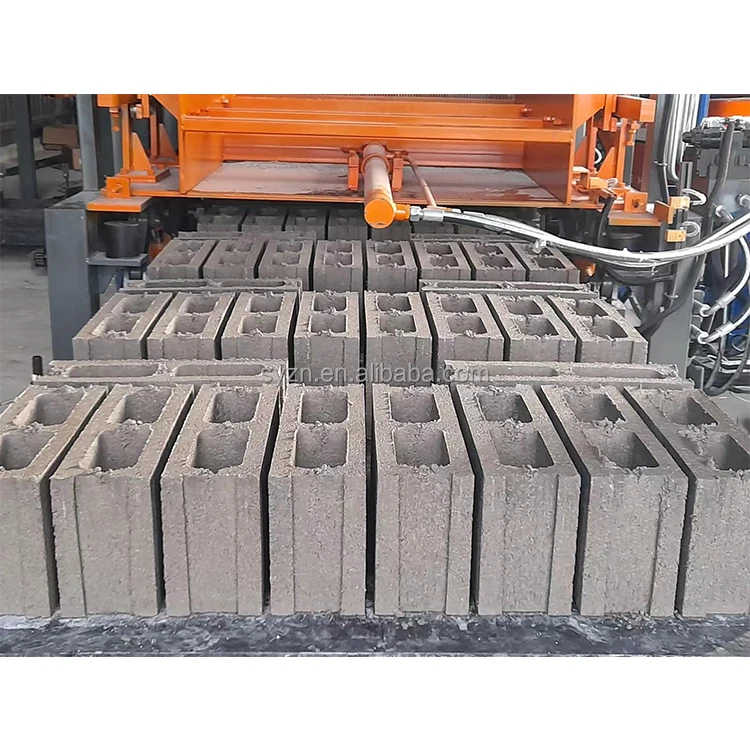
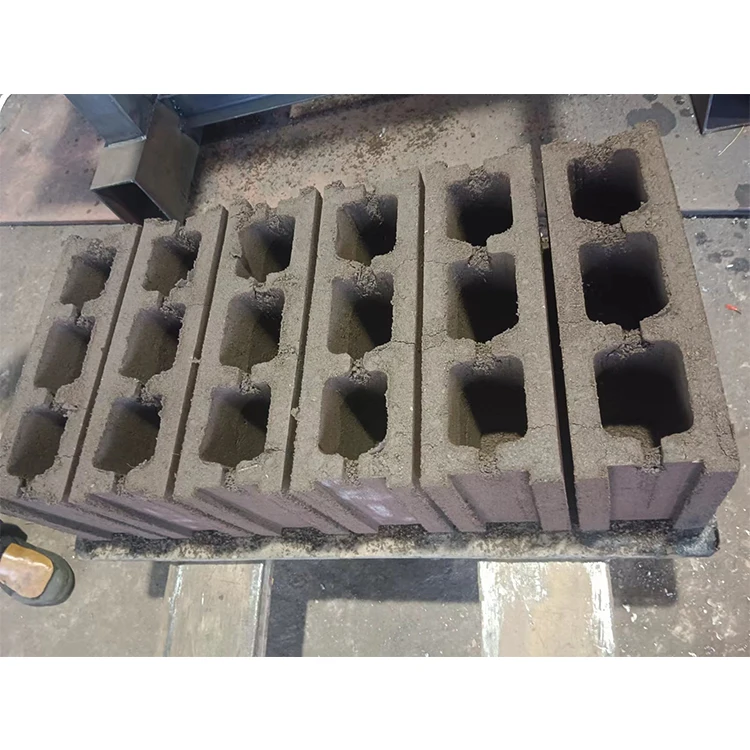
| Mould Formats | 400×200×200 mm (4 pcs/mould), 400×150×200 mm (5 pcs/mould), 225×112.5×60 mm (9 pcs/mould) |
| Output Capacity | 2800 pcs/day based on 400×200×200 mm hollow block; 3600 pcs/day based on 400×150×200 mm block; 6400 pcs/day based on 225×112.5×60 mm solid brick |
| Automation Level | Semi-automatic |
| Stacking Method | Manual |
| Raw Materials | Concrete, sand, cement, fly ash, lime, gypsum |
Application Suitability
| Application | Material or Output |
|---|---|
| Small block production plants | 400×200×200 mm hollow blocks from crushed stone, sand and cement |
| Entrepreneur-led first block plant | 400×150×200 mm wall blocks from locally available aggregate |
| On-site production for construction projects | Hollow and solid blocks using site-sourced sand and cement |
| Fly ash brick manufacturing | 225×112.5×60 mm solid bricks from fly ash, lime and gypsum blends |
What "2000–2500 Pieces per Shift" Really Means for the QTJ4-40 Block Machine
Capacity figures only matter when the block format behind them is stated.
A quoted range of 2000–2500 pieces per eight-hour shift sounds straightforward until you ask which block size that assumes. I once configured a hollow block press for an African buyer using the sample capacity without checking his local aggregate grading. The machine cycled fine, but the block faces cracked during demoulding because the vibration duration was too short for his high-carbon fly ash mix. We spent weeks on-site adjusting parameters that should have been locked down before shipment [NEED_CITE: effect of fly ash carbon content on concrete block curing and demoulding strength].
With the QTJ4-40, the daily output varies considerably depending on the mould fitted. A 400×200×200 mm hollow block yields around 2800 pieces per day at a 40-second cycle, while a smaller 225×112.5×60 mm solid brick mould pushes that figure toward 6400 pieces per day on the same machine. Without stating the format, any single number is essentially meaningless.
Mould Format Determines Your Actual Daily Output
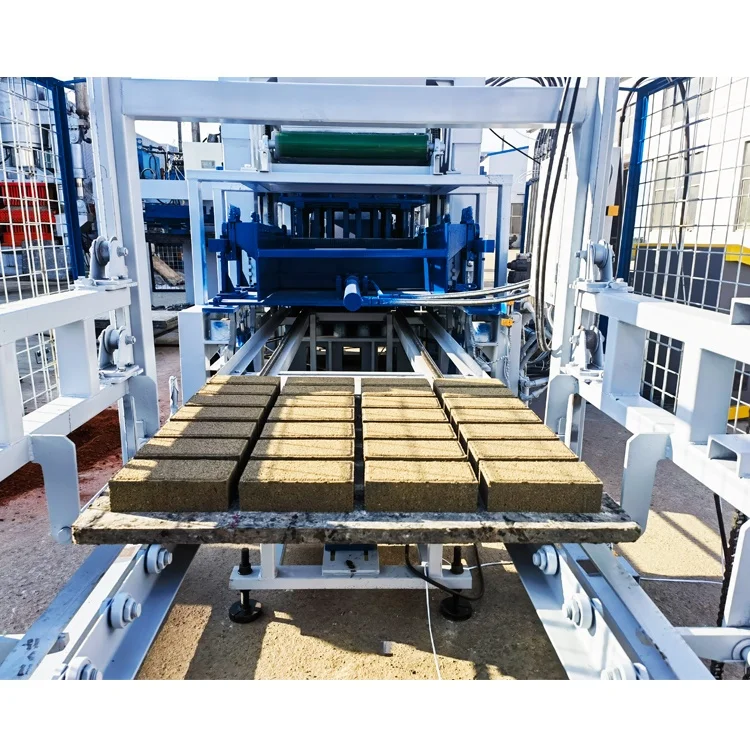
The QTJ4-40 block machine specifications how to choose become clear once you map each available mould to the format your market actually buys. The 850 × 450 mm pallet accommodates three standard formats: four 400×200×200 mm hollow blocks, five 400×150×200 mm blocks, or nine 225×112.5×60 mm solid bricks per cycle. Each format carries a different daily volume ceiling, and quoting capacity without naming the format leaves buyers planning against a number they cannot achieve.
Matching Vibration Force to Your Mix Design
The dual vibration arrangement combines vertical bed mould vibration with upper mould compression vibration to densify the concrete matrix from both directions. This matters because different raw materials respond differently to vibration intensity and duration. A fly ash-heavy mix typically requires a longer vibration window than a clean crushed-stone aggregate to reach the same compaction density. If your local sand has high fines content, the 40-second cycle may need adjustment during commissioning [NEED_CITE: vibration duration and concrete block compressive strength correlation].
Reading the Power and Pallet Specs Together
The 9.5 kW rated power drives both the vibration motors and the top die push/pull mechanism through the semi-automatic control system. That power level sits in the range typical for small-format block presses and is adequate for the pallet size and mould formats listed. The 850 × 450 mm pallet dimension is equally important because it dictates the curing rack spacing and forklift tine width you need on the other end of the line. Ordering pallets that do not match your existing curing infrastructure turns a compact machine into a bottleneck at the stacking stage.
The Hidden Cost of Ignoring Pallet and Voltage Alignment
When buyers skip confirming pallet dimensions and local voltage before production, the consequences surface after the crate arrives. A pallet that is even slightly wider than the curing rack slots means every block must be rehandled manually, doubling labour at the stacking end. Voltage mismatches — say the machine was built for 380 V/50 Hz but the site runs 440 V/60 Hz — can burn out the vibration motor within the first week [NEED_CITE: voltage and frequency standards by export market]. Neither issue is a manufacturing defect; both are specification gaps that a pre-production checklist would have caught.
Why Source This Machine Through a Format-First Workflow
Every configuration starts with your target block drawing and local raw material report, not a catalogue default. Mould design covers the formats your regional market demands, including custom drawings if your standard brick dimension falls outside the three listed formats. The semi-automatic control with top die push/pull and automatic scraper keeps the operator learning curve manageable while leaving room to add automatic stacking later if volume grows. Factory test records are generated using the buyer’s confirmed mix proportions, so cycle times and block strength are validated before the machine leaves the workshop. Documentation includes hydraulic and electrical schematics with voltage and PLC language confirmed to the destination market.
Documentation & Verification
- Capacity calculation sheet stating output per block format rather than a single figure
- Mould drawing package covering each format with dimensional tolerances
- Factory test record run on the buyer’s confirmed raw material proportions
- Voltage, frequency and control language confirmation signed before production
- Wear parts and mould inventory list included in the shipping documents
- Hydraulic and electrical schematic matching the as-built configuration
Installation, Commissioning & Support
- Foundation pad sized to the 1350 × 1460 mm footprint with vibration isolation allowance
- Dedicated circuit rated for the 9.5 kW load plus start-up surge capacity
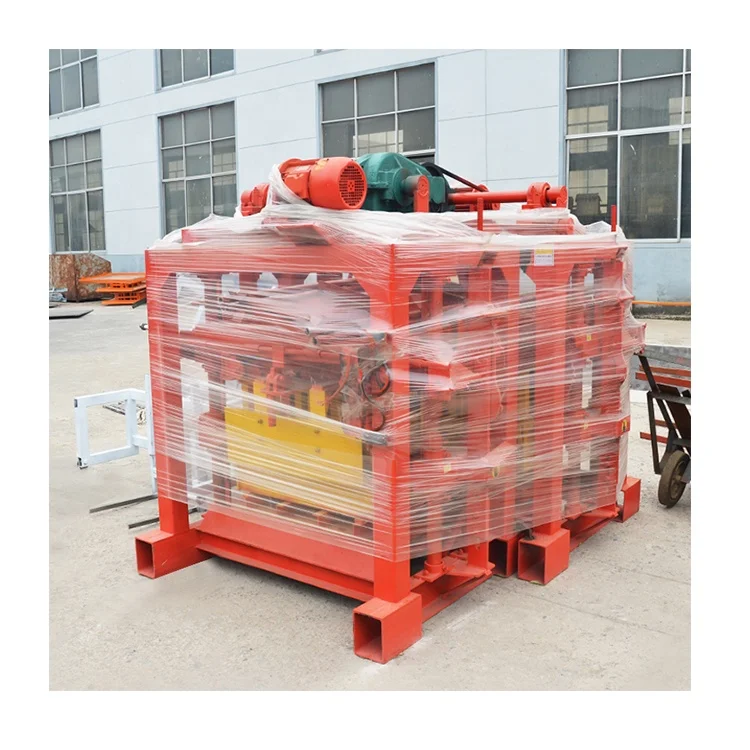
- Machine shipped partially assembled with top die and vibration bed bolted separately
- On-site vibration duration tuned to the buyer’s local aggregate and mix proportions
- Operator training covers the semi-automatic scraper sequence and mould changeover steps
- Wear parts list with reorder codes for first replacement cycle planning
Planning Your QTJ4-40 Inquiry
To size the QTJ4-40 block machine specifications how to choose correctly for your operation, share the block format drawings that represent your highest-volume product and the daily output target for that specific format. Include a raw material report covering your local sand, fly ash or aggregate gradation so the vibration cycle can be set before dispatch. Confirming your site voltage, frequency and preferred control language at the inquiry stage keeps commissioning on schedule once the machine arrives.
Frequently Asked Questions
Q: How is the QTJ4-40 daily output calculated for each block format?
A: The output figures are derived from the 40-second moulding cycle multiplied across an eight-hour shift, adjusted for the number of cavities per mould. Four-cavity hollow block moulds yield approximately 2800 pieces per day, while nine-cavity solid brick moulds reach around 6400 pieces per day. These figures assume uninterrupted operation and do not include pallet handling or curing time.
Q: Which mould formats fit the 850×450 mm pallet and how long does changeover take?
A: The pallet accepts 400×200×200 mm, 400×150×200 mm and 225×112.5×60 mm mould formats. Changeover involves releasing the mould clamp bolts, lifting the old mould with a hoist and seating the replacement. The exact changeover duration depends on operator familiarity and whether the new mould is pre-assembled with its wear plates.
Q: Can the 40-second cycle hold across different local aggregates?
A: The 40-second cycle is a baseline measured under controlled conditions. Dense crushed-stone aggregates may compact within that window, while high-fines sand or fly ash blends often need extended vibration to reach target density. Commissioning includes adjusting cycle parameters to match the buyer’s actual raw material report.
Q: Is the 850×450 mm pallet compatible with my existing curing racks and forklift?
A: Compatibility depends on the rack slot width and forklift tine spacing already in use at your site. If your current racks were built for a different pallet dimension, blocks will need manual rehandling. Confirming rack and forklift dimensions before ordering ensures the pallet size integrates with your curing workflow.
Q: What raw material mix does the QTJ4-40 expect, and can it use local fly ash?
A: The machine processes concrete, sand, cement, fly ash, lime and gypsum in various proportions. Fly ash blends work well provided the carbon content and fineness are checked beforehand, as these properties affect vibration duration and demoulding strength. Sharing your material report allows the mix to be validated during factory testing.