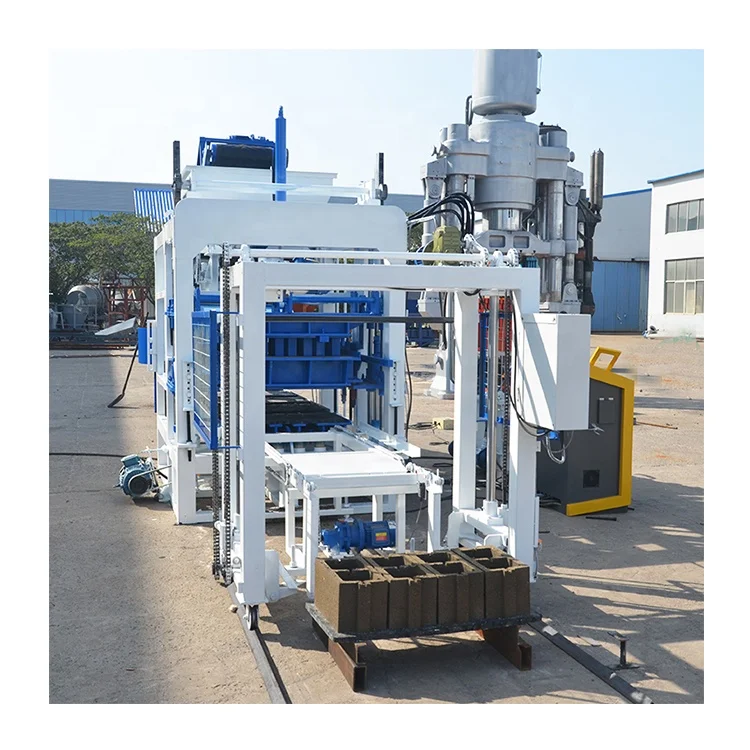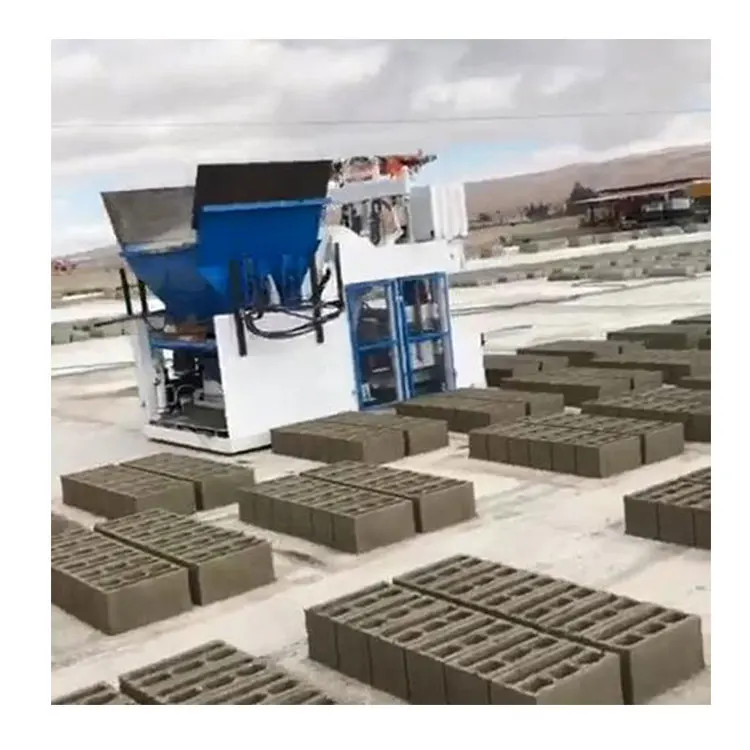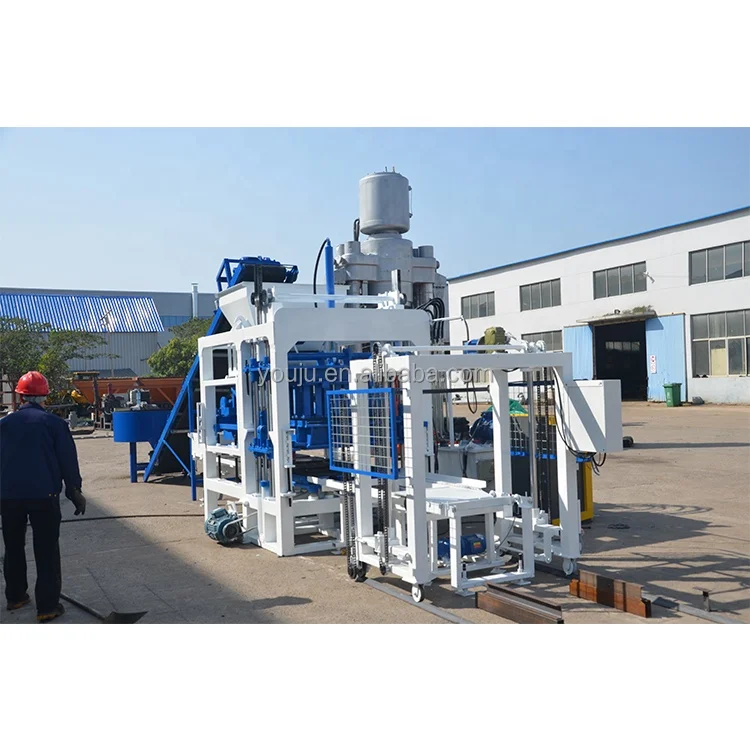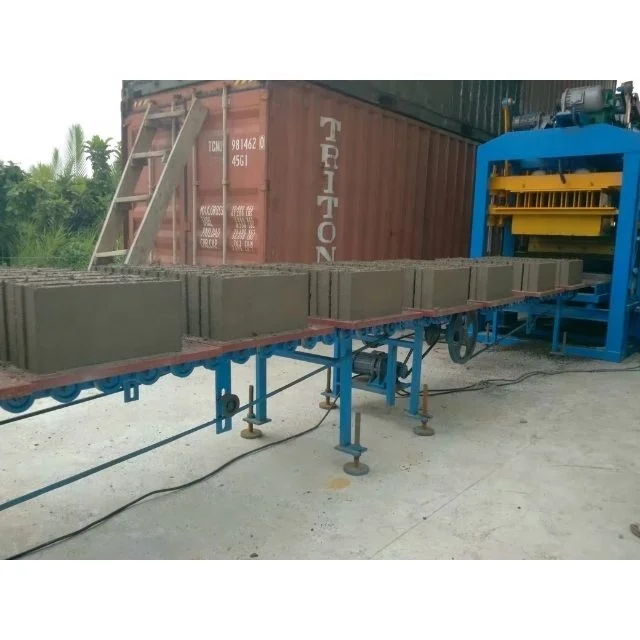
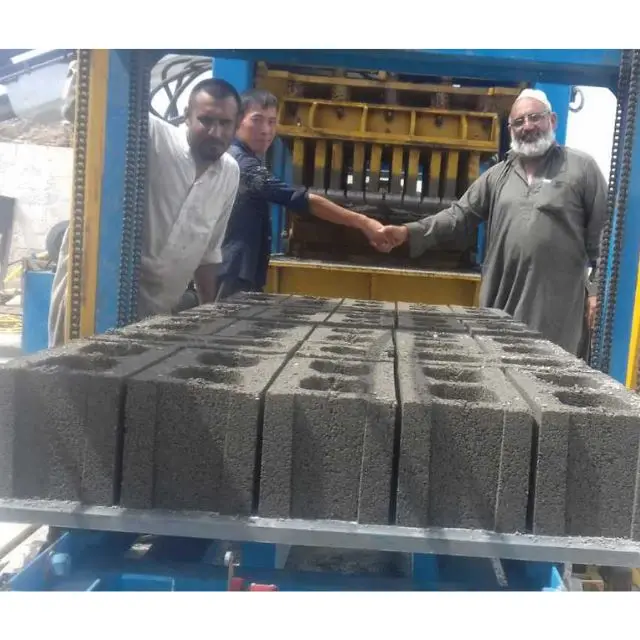
Description
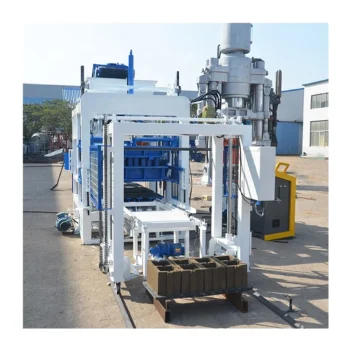
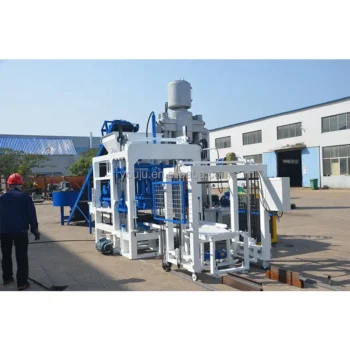
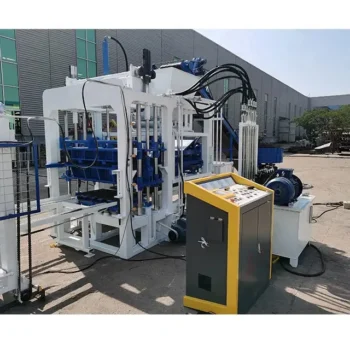
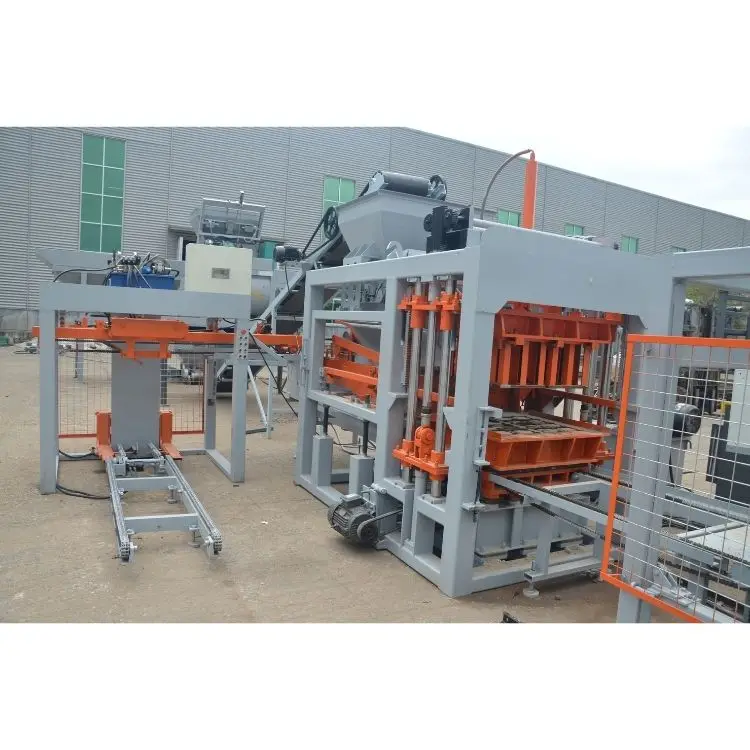
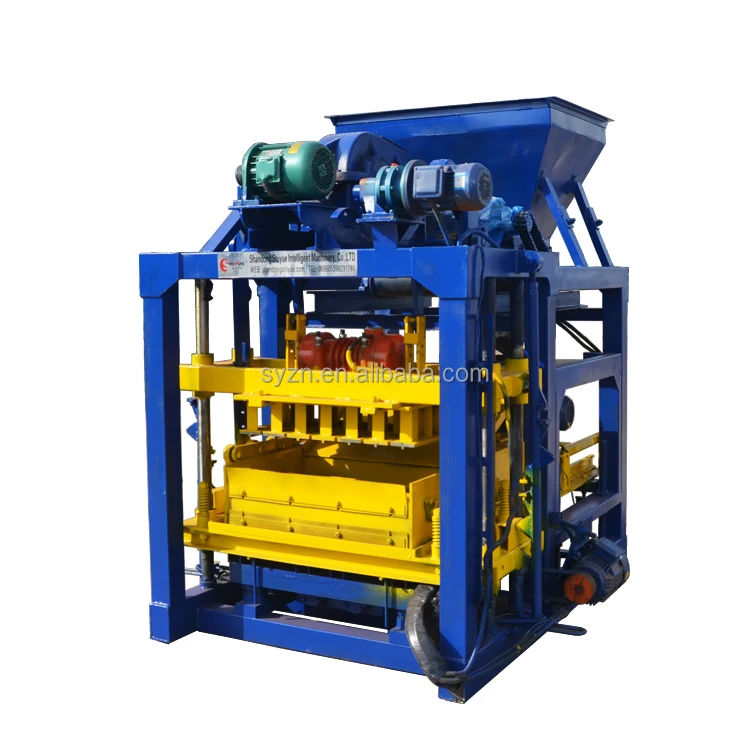
Matched System Design — machine, mould, pallet and handling specified together against your actual block format and local aggregate, not assembled from separate catalogues.
Technical Specifications
| Parameter | Value |
|---|---|
| Model | QTJ4-25 |
| Product Type | Concrete Block Making Machine |
| Overall Dimensions (L×W×H) | 3060 × 1730 × 2580 mm |
| Total Mass | 4 T |
| Pallet Size | 850 × 550 mm |
| Main Vibration Form | Platform Vibration |
| Vibration Frequency | 4200 r/min |
| Vibration Force | 45.5 kN |
| Rated Pressure | 16–21 MPa |
| Molding Cycle | 25–30 s (basis not stated in source — confirm block format / material / thickness) |
| Overall Power | 14.9 kW (source value — verify against manufacturer catalog) |
| Demolding Method | Vibration |
| Factory Area Required | 200 m² |
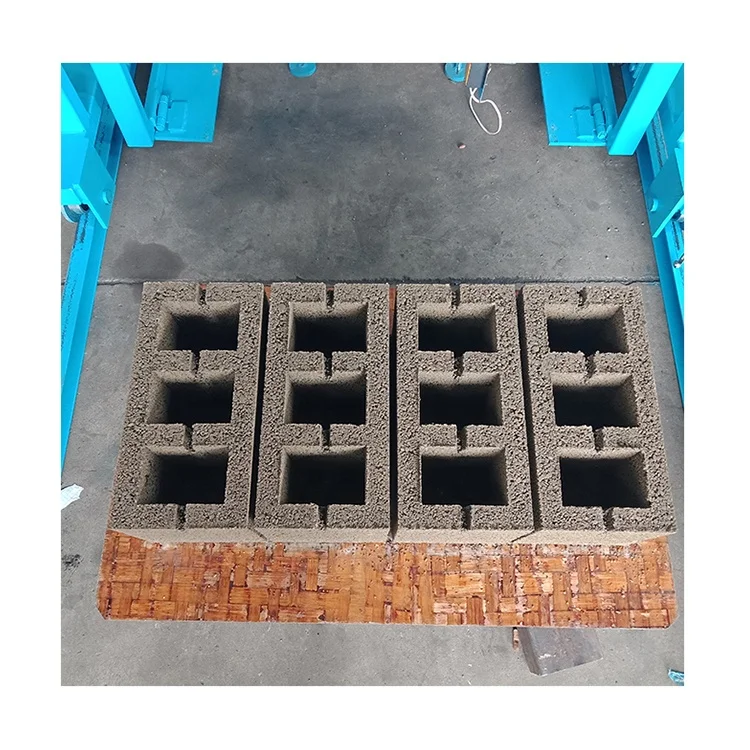
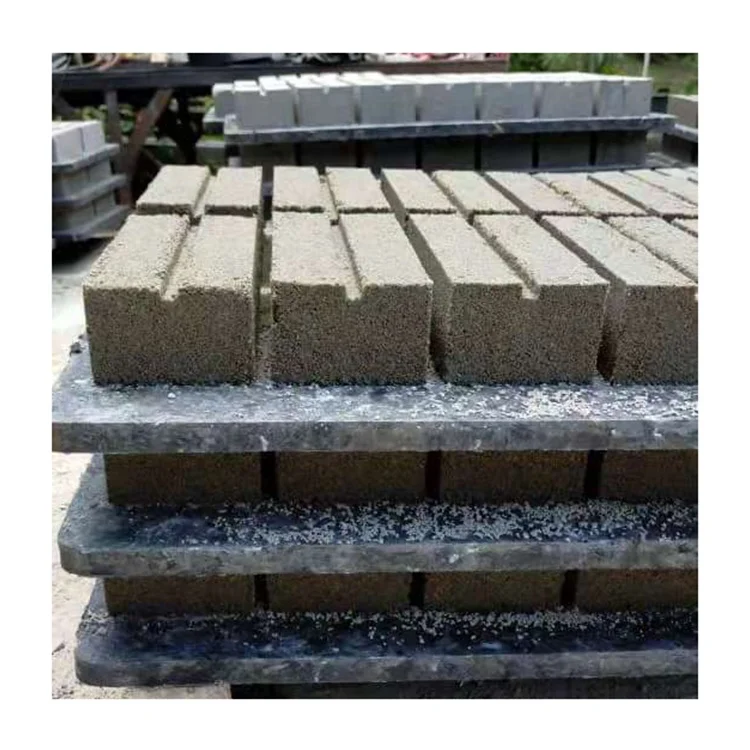
| Applied Products | Hollow blocks, solid blocks, pavers, interlocking blocks, curbstone, colored pavers |
| Raw Materials | Crushed stone, sand, cement, fly ash, gravel, slag, dust |
Application Suitability
| Application | Material or Output |
|---|---|
| Hollow block production for wall construction | Crushed stone, sand, cement, fly ash blends |
| Solid block manufacturing for load-bearing structures | Gravel, sand, cement with higher cement ratio |
| Paving block and colored paver runs | Fine aggregate, cement, pigment additives |
| Interlocking brick for retaining walls and landscaping | Sand, crushed stone dust, cement |
| Kerbstone and curb production | Coarse aggregate, sand, cement under high vibration |
What the "25-Second Cycle" Actually Means for Your Output
Cycle time changes with every block format, and daily capacity must be recalculated for the product you actually sell.
I once watched a buyer in Southeast Asia place an order based on a catalogue cycle figure, only to discover the number assumed a thin solid paver — not the 200 mm hollow block his market demanded. His real molding cycle stretched well beyond the quoted range, and daily output fell to roughly half of what he had planned for. The QTJ4-25 block machine specifications list a 25–30 second cycle, but that figure carries no format assumption in the source data [NEED_CITE: block machine capacity calculation standards by format]. Before you size your plant around a single number, confirm which block dimensions, wall thickness, and raw material mix that cycle was measured on.
Pallet Size as the Real Bottleneck
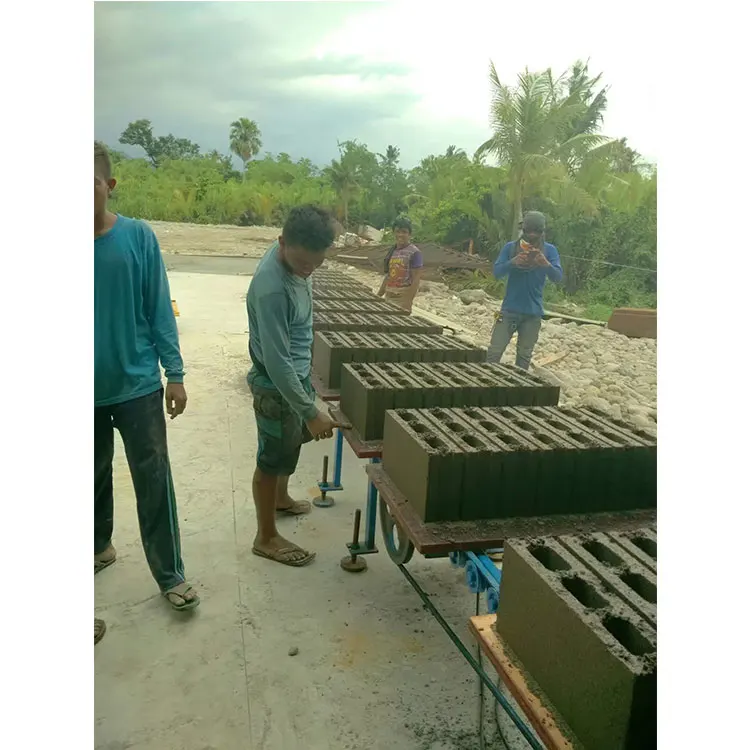
The 850 × 550 mm pallet defines how many blocks fit per cycle for each format. A standard 400 × 200 × 200 mm hollow block may yield four pieces per pallet, while a thinner paver could fit eight or more. This pallet size also determines whether your existing curing racks and forklifts can handle the output without modification. When buyers overlook pallet dimensions, they end up reconfiguring the entire curing area after the QTJ4-25 block machine specifications arrive on site.
Mould Options and Format Flexibility
The machine supports hollow, solid, interlocking, paving, and kerbstone moulds, but each format requires its own tooling. Mould change involves removing the current die, aligning the new one on the platform, and recalibrating vibration parameters. If your market demands frequent format switches, the time spent on each change directly subtracts from productive hours. Buyers planning a diversified product range should confirm mould availability and change procedure before committing [NEED_CITE: mould change procedures for multi-format block plants].
Reading the Pressure and Vibration Numbers Together
The rated pressure of 16–21 MPa and the vibration force of 45.5 kN at 4200 r/min work as a pair. Pressure compacts the mix while platform vibration settles aggregate into voids. If your local sand carries high clay content, the vibration frequency may need adjustment to achieve consistent density — a setting that must be validated during commissioning. A mismatch between vibration force and mix design produces blocks that pass dimensional checks but fail compressive strength tests. The QTJ4-25 block machine specifications give you the mechanical envelope; your raw material defines where inside that envelope you will operate.
The Hidden Cost of Skipping Format Confirmation
When a buyer orders without specifying target block formats, the quotation typically includes one standard mould. Arriving on site with a different product in mind means waiting weeks for a replacement mould while the machine sits idle. Pallets ordered in bulk may not match the curing rack spacing already built in the yard. Voltage and frequency left unconfirmed can delay commissioning further, especially in regions where industrial supply runs on non-standard configurations [NEED_CITE: voltage and frequency standards by export market]. These are not machine defects — they are gaps in the specification conversation that surface only after the container is unloaded.
Why Sourcing Here Reduces Configuration Risk
Block machinery is the single focus of this operation, so the QTJ4-25 is proposed as a matched system — press, mould, pallet, and handling — rather than a standalone unit bolted to third-party peripherals. Configuration is set against your actual mix design and local aggregate, not a default catalogue recipe. Mould design covers the formats your market sells, with custom drawings accepted for non-standard shapes. Automation level is selectable, allowing a buyer to begin with semi-automatic pallet handling and add stacking later. Installation support includes on-site commissioning and operator training so the crew understands cycle parameters before full production begins.
Documentation & Verification
- Line layout with capacity calculation stating the block format assumed for each output figure
- Mould drawing and format list confirming included and optional block types
- Pallet specification matched to curing area dimensions and forklift capacity
- Voltage, frequency, and control language confirmation sheet signed before production
- Factory test record on your target block format before dispatch
- Operation and maintenance manual with wear parts and mould replacement list
Installation, Commissioning & Support
- Foundation pad sized to the 3060 × 1730 mm footprint with vibration isolation considerations
- Dedicated power circuit rated for the 14.9 kW total load at confirmed voltage and frequency
- Machine shipped partially assembled; platform and hopper bolted on site to the 4 T frame
- First-run commissioning includes vibration frequency tuning against your local aggregate sample
- Operator training covers mould change procedure, pallet feeding rhythm, and daily maintenance checkpoints
- Wear parts list provided with recommended reorder intervals for vibration springs and hydraulic seals
What to Include in Your Inquiry
Send your target block format with exact dimensions, the daily output you need for that specific format, and a sample description of your local aggregate — including source, gradation, and any known clay or moisture issues. Confirm your site voltage, frequency, and preferred control display language. If you already have curing racks or forklifts in place, share their specifications so pallet size can be matched before the QTJ4-25 block machine specifications are finalized for production.
Frequently Asked Questions
Q: How is cycle time and daily output calculated for my specific block format?
A: The listed 25–30 second cycle has no stated format basis, so it must be validated against your target block dimensions, wall thickness, and mix design. We run a test cycle with your actual raw material during commissioning and record the real molding time. Daily output is then calculated from that measured cycle, pallet count per format, and your planned shift hours — not from a generic catalogue figure.
Q: Which mould formats are available, and can custom moulds be made to my drawings?
A: Standard moulds cover hollow, solid, paving, interlocking, and kerbstone formats in common dimensions. If your market requires a non-standard shape or size, custom moulds can be manufactured from your drawings. Each mould is designed to match the 850 × 550 mm pallet and the platform vibration profile so block density remains consistent across formats.
Q: How do I confirm pallet size compatibility with my curing area and handling equipment?
A: The 850 × 550 mm pallet must fit your existing curing rack spacing and forklift tine width. Before production, we request your rack dimensions and forklift model so pallet specifications can be verified. If a mismatch is found, pallet size or rack layout is adjusted before the machine ships — avoiding costly rework after arrival.
Q: What raw material mix is required, and how is vibration matched to local aggregate?
A: The machine handles crushed stone, sand, cement, fly ash, gravel, and slag, but the ideal ratio depends on your target block strength and local material properties. During commissioning, we test your aggregate sample and adjust vibration frequency and pressure within the 16–21 MPa and 4200 r/min range to achieve the required density and compressive strength.
Q: What is the mould change procedure and how long does a format switch take?
A: Mould change involves releasing the current die from the platform, lifting it clear, positioning the new mould, and securing it before recalibrating vibration settings. The exact time depends on mould weight and operator experience. We cover the full procedure during on-site training so your team can perform format switches independently within a single shift window.