
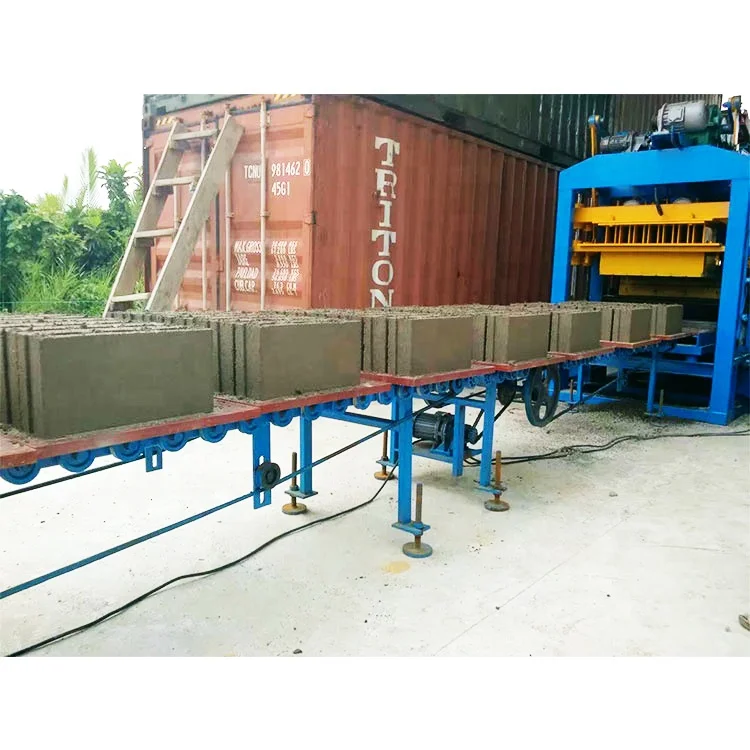

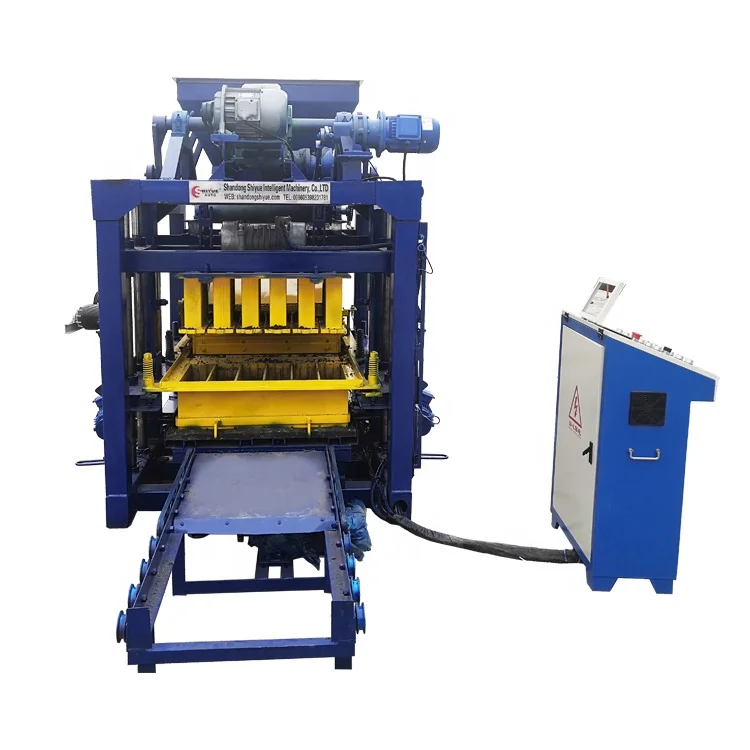

Description
Matched System Sizing — vibration force, pallet format and mould design are confirmed together against your local aggregate, not quoted from a default catalogue.
Technical Specifications
| Parameter | Value |
|---|---|
| Model | QTJ4-25 |
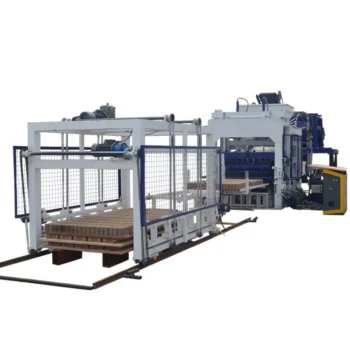
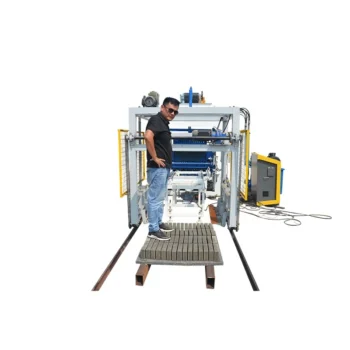
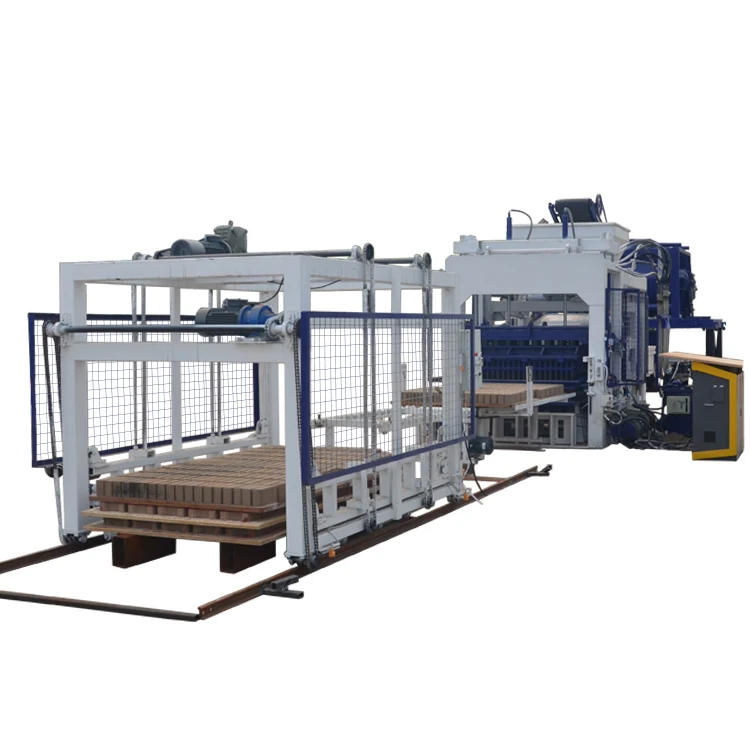
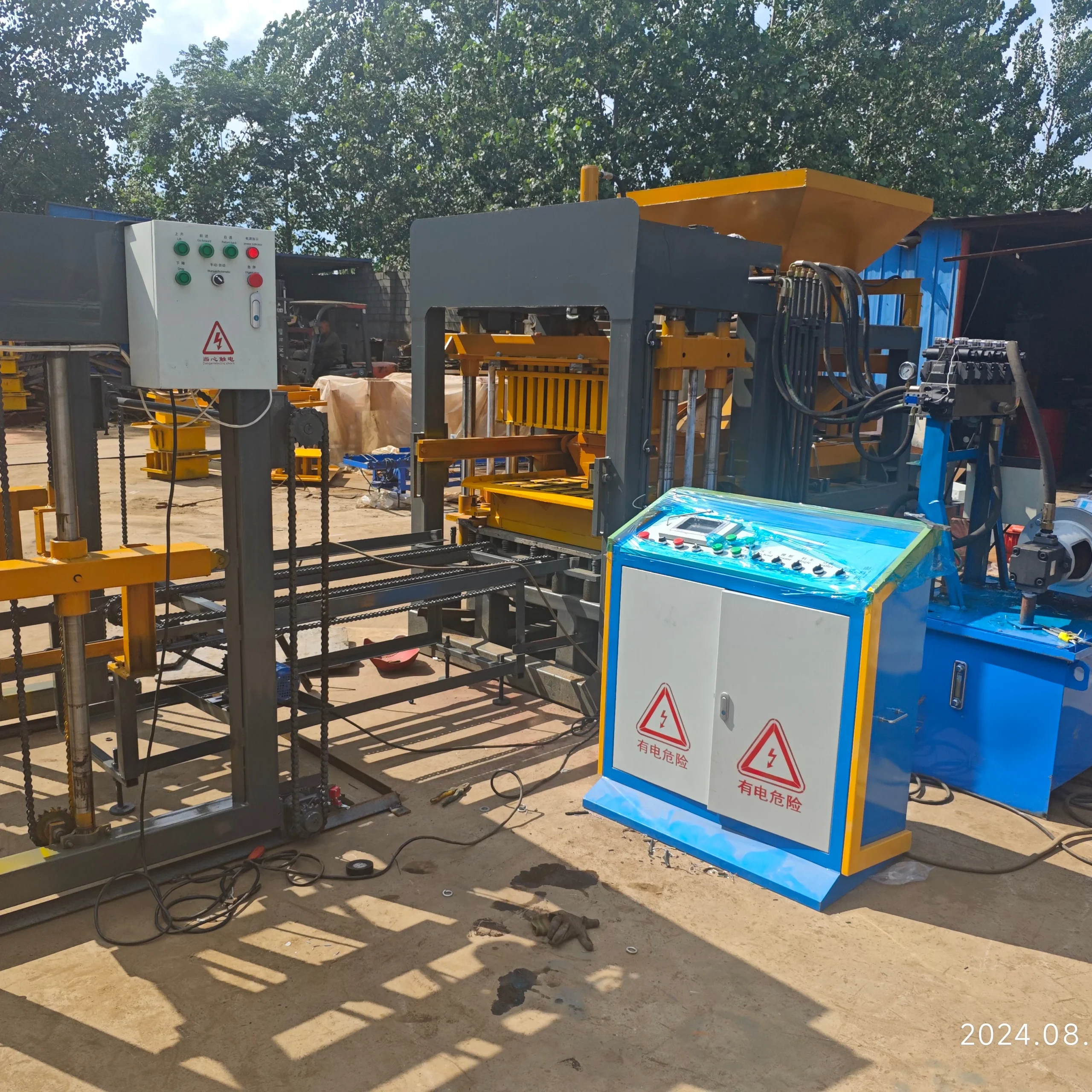
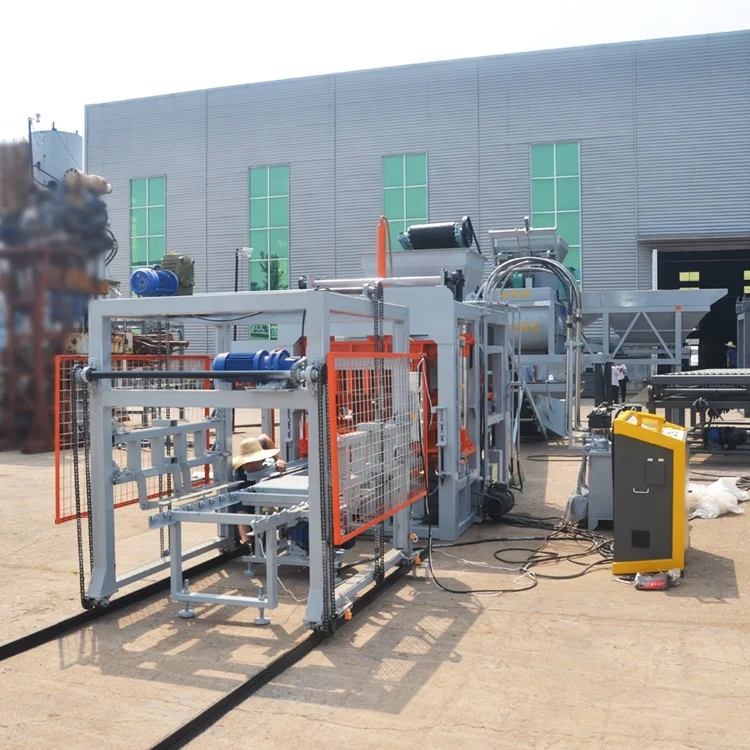
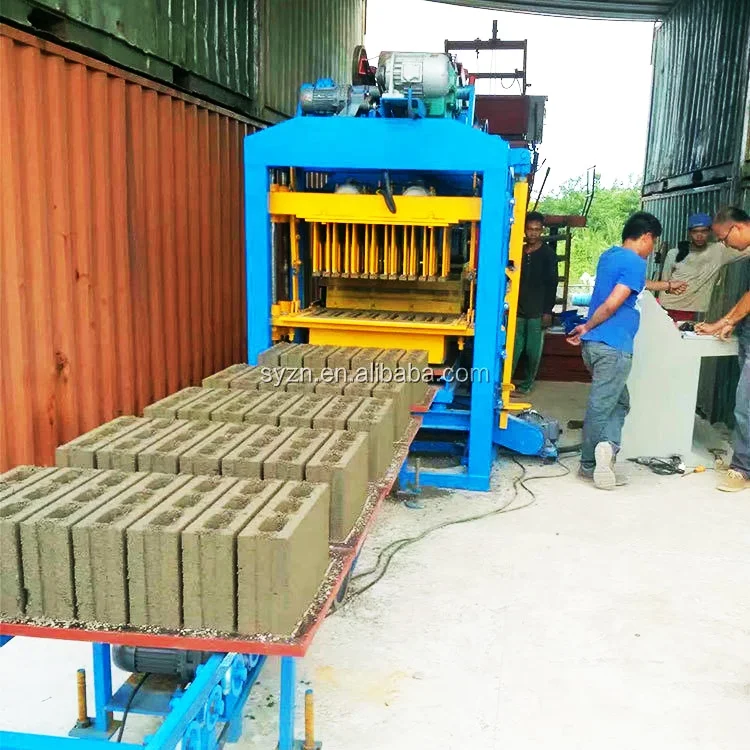
| Product Type | Semi-Automatic Concrete Block Making Machine |
| Overall Dimensions (L×W×H) | 3060×1730×2580 mm |
| Rated Pressure | 16–21 MPa |
| Main Vibration Form | Platform Vibration |
| Vibration Frequency | 4200 r/min |
| Vibration Force | 45.5 kN |
| Pallet Size | 850×550 mm |
| Molding Cycle | 25–30 s (basis not stated in source — confirm block format / material / thickness) |
| Overall Power | 14.9 kW (source listed as 14.9W — verify against manufacturer catalog) |
| Total Mass | 4 T |
| Demolding Method | Vibration |
| Factory Area Required | 200 m² |
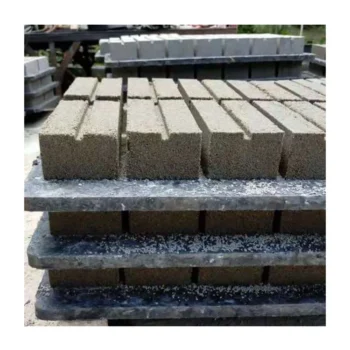
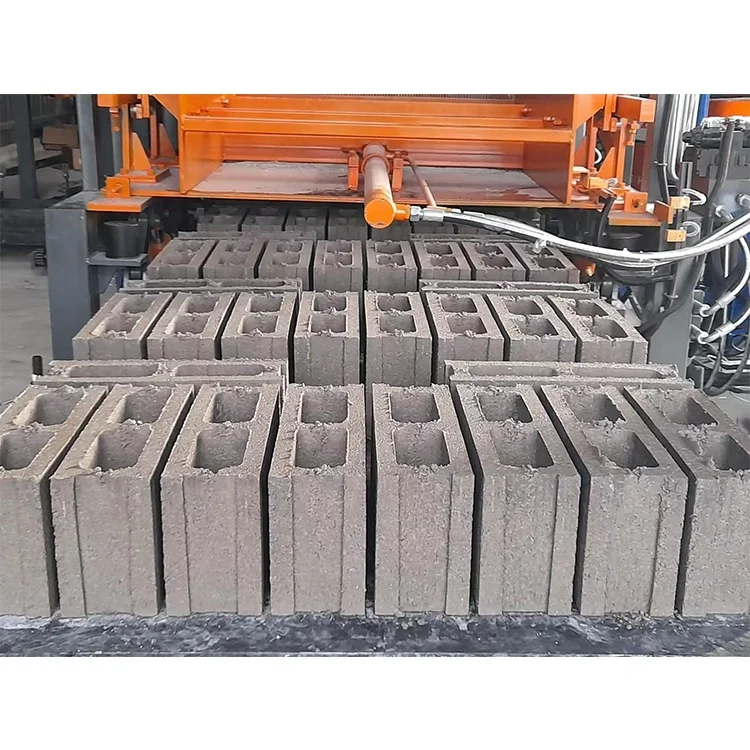
| Applied Products | Concrete blocks, hollow/solid blocks, pavers, interlocking blocks, curbstone, colored pavers |
| Raw Materials | Crushed stone, sand, cement, dust, fly ash, gravel, slag |
| Automation Level | Semi-automatic |
| Mould Format | Custom moulds available per buyer drawings |
| Voltage & Frequency | To be confirmed before production |
| Control System | To be confirmed (PLC / relay / manual options) |
| Language Options | To be confirmed for control display |
| Warranty | 1 year (excluding spare parts) |
| Loading | 1×40HQ container (basic equipment) |
Application Suitability
| Application | Material or Output |
|---|---|
| Small-to-medium hollow and solid block production | Crushed stone, sand, cement, fly ash blends |
| On-site block manufacturing for building contractors | Local aggregate with site-sourced sand and gravel |
| Paver and interlocking brick runs for landscaping projects | Colored concrete mixes with fine aggregate |
| Kerbstone and curb production for infrastructure works | High-cement-content mixes with coarse gravel |
| First plant setup by entrepreneurs entering block market | Standard cement-aggregate ratios with locally available sand |
What the Quoted Cycle Time Actually Means for Your Daily Output
A 25–30 second cycle only tells half the story — the block format behind that number decides whether your plant ships one truck a day or three.
Many buyers receive a QTJ4-25 block machine specifications sheet showing cycle time without naming the exact block dimensions, wall thickness or mix assumed. When the machine arrives and runs a different format — say a 200 mm hollow block instead of a thin paver — the real cycle stretches. Daily output drops, and the production plan built around the original number falls apart. I have watched plants in West Africa spend their first two weeks just chasing a stable rhythm because the quoted figure assumed a mix the buyer could not source locally [NEED_CITE: impact of aggregate gradation on concrete block cycle time].
Matching Mould Selection to the Format Your Market Buys
The QTJ4-25 block machine specifications include custom mould capability to buyer drawings, which means you decide the format before the machine is built. A hollow block popular in one region may have completely different wall thickness and height from what sells two hundred kilometres away. Specifying the mould against your actual market demand — rather than accepting a standard set — removes the situation where half the formats shipped with the machine never leave the store room. The 850×550 mm pallet size sets the outer boundary for every mould, so format planning starts here.
Vibration Force Meets Local Aggregate Reality
Platform vibration at 45.5 kN and 4200 r/min must be evaluated against the material you will actually feed. High-clay or high-silt aggregates absorb vibration differently from clean crushed stone, and the same QTJ4-25 block machine specifications on paper can produce dense blocks in one quarry and crumbly ones in another. In Shandong we learned this the hard way: a machine that ran perfectly in our test bay produced under-strength blocks overseas because the buyer’s sand carried fines we had not accounted for [NEED_CITE: effect of fine aggregate clay content on block compressive strength]. Getting a sample of your local raw material before finalizing vibration parameters avoids weeks of trial and error on site.
Reading the Pressure and Vibration Numbers Together
Rated pressure at 16–21 MPa and vibration force at 45.5 kN work as a pair, not as isolated figures. Pressure compacts the mix while vibration rearranges particles into a denser arrangement. If pressure is high but vibration is too low for a stiff mix, the block surface cracks before demolding. If vibration dominates on a wet mix, the block slumps on the pallet. The 25–30 s molding cycle can only be achieved when both values are balanced for your specific block height and mix design. Semi-automatic operation means an operator controls feed and pallet transfer, so consistent cycle timing also depends on how the workstation is organized around the press. Total installed power of 14.9 kW must be confirmed against the voltage and frequency at your site — a mismatch here can reduce motor torque and shift the entire pressure-vibration balance.
The Hidden Cost of Skipping Pallet and Curing Alignment
When the 850×550 mm pallet is chosen without checking your existing curing racks and forklift dimensions, blocks end up stacked by hand or re-palletized before they can cure. That extra handling damages green blocks and adds labour the original layout never planned for. Buyers who confirm pallet specification against their curing area before the machine ships avoid discovering — after arrival — that their forklift tines are too short or their rack spacing is wrong [NEED_CITE: pallet handling mismatches in concrete block plant setup].
Why Buyers Source This Machine Here
Block machinery remains the single focus of this operation, so the QTJ4-25 is never quoted as a standalone press — it is specified alongside its mould, pallet and handling stations as one matched line. Configuration is set against the buyer’s actual mix design and local aggregate, not pulled from a catalogue default. Mould design covers the formats the buyer’s market sells, with custom drawings available. Automation level stays selectable, meaning a plant can start semi-automatic and add pallet feeding or stacking later. Installation support includes operator training so the team running the machine on day one understands the vibration-pressure balance specific to their material.
Documentation & Verification
- Line layout showing QTJ4-25 footprint with capacity per confirmed block format
- Mould drawing and format list matching the products your market requires
- Pallet specification cross-checked with your curing rack spacing
- Voltage and control language confirmation signed before production starts
- Factory test record run on your mix design where sample is available
- Operation and maintenance manual with QTJ4-25 wear parts list
Installation, Commissioning & Support
- 200 m² factory area must be level and clear for the 3060×1730 mm machine footprint
- Power supply confirmed to 14.9 kW total with dedicated circuit matching your local voltage
- Machine ships dismantled in one 40HQ container for straightforward unloading
- First-run commissioning includes vibration parameter tuning to your aggregate sample
- Operator training covers mould change procedure and platform vibration adjustment
- Wear parts list provided with recommended stock for first replacement cycle
What to Send with Your Inquiry
Provide the exact block formats your market buys — dimensions, wall thickness, and whether hollow or solid — so the mould set and cycle calculation match reality. Include a sample or description of your local aggregate, especially fines content, so vibration parameters can be adjusted before the QTJ4-25 leaves the factory. State your site voltage, frequency, and preferred control display language to prevent commissioning delays.
Frequently Asked Questions
Q: What block format does the 25–30 s cycle time assume, and what is my realistic daily output?
A: The quoted cycle depends on block dimensions, wall thickness and mix design — none of which are fixed until your format is confirmed. We calculate daily output per specific block type once the mould drawing and your local aggregate are reviewed, so the number you plan against reflects what the machine actually produces on your product.
Q: Is the 850×550 mm pallet compatible with my existing curing racks and forklift?
A: That depends on your rack spacing and forklift tine length. We ask for your curing area dimensions and forklift model before finalizing the pallet specification, ensuring fresh blocks move from press to rack without re-handling or damage during the critical early curing hours.
Q: Can the vibration force and pressure be matched to my local aggregate and mix design?
A: Yes. The 45.5 kN vibration force and 16–21 MPa pressure range are adjusted during commissioning based on your actual material. Providing an aggregate sample or lab report before production lets us set initial parameters so the machine arrives closer to stable running condition.
Q: How long does a mould change take on the QTJ4-25, and what formats are available?
A: Mould change time varies with the format difference and operator familiarity. Custom moulds are built to your drawings, so the available formats are those your market demands — hollow blocks, pavers, interlocking bricks or kerbstones — all sized to the 850×550 mm pallet boundary.
Q: What voltage, frequency and control language will be confirmed before shipment?
A: All three are confirmed in writing before production begins. We verify your site supply against the machine’s 14.9 kW load and set the control display to your preferred language, so commissioning starts with electrical and interface questions already resolved.