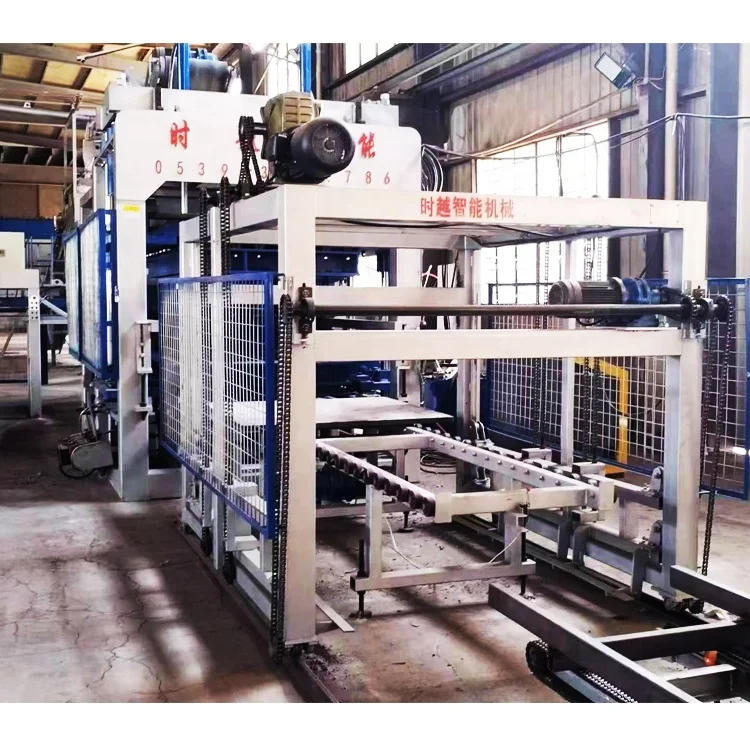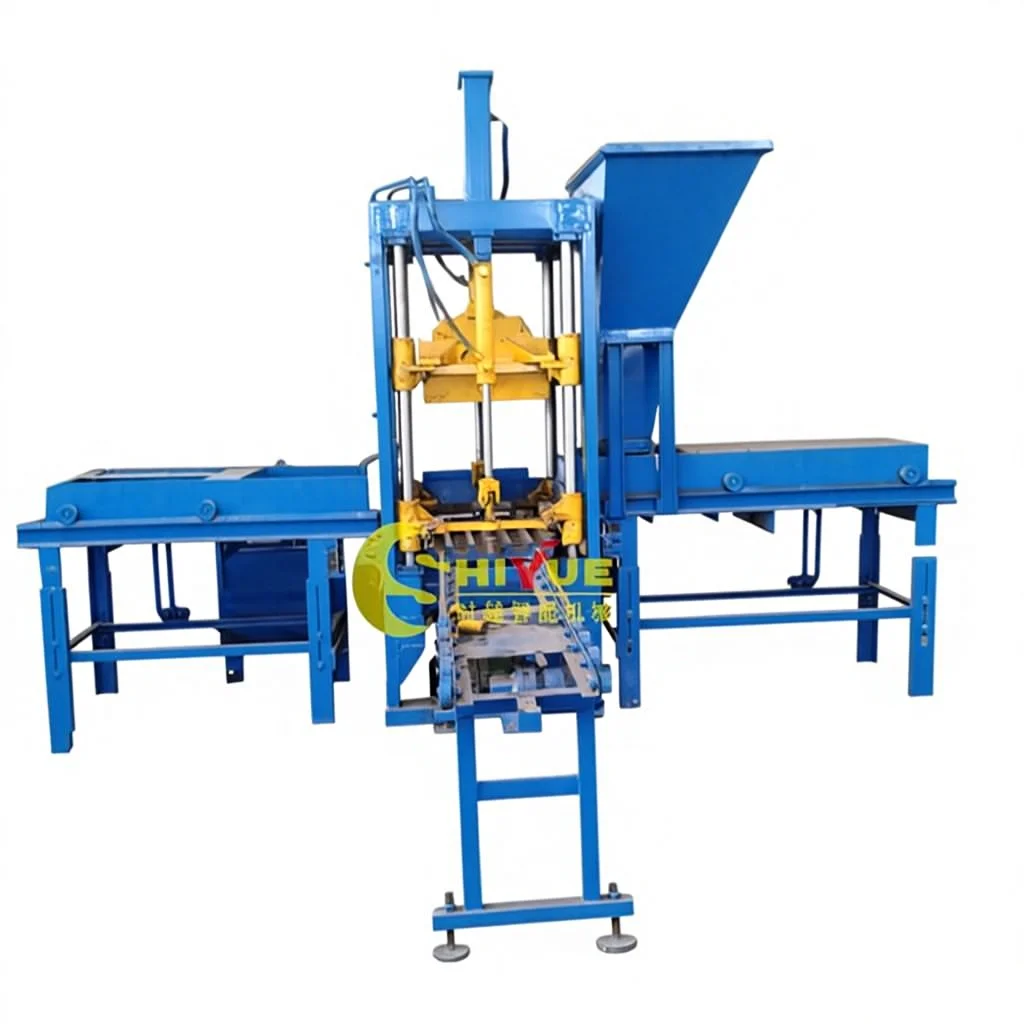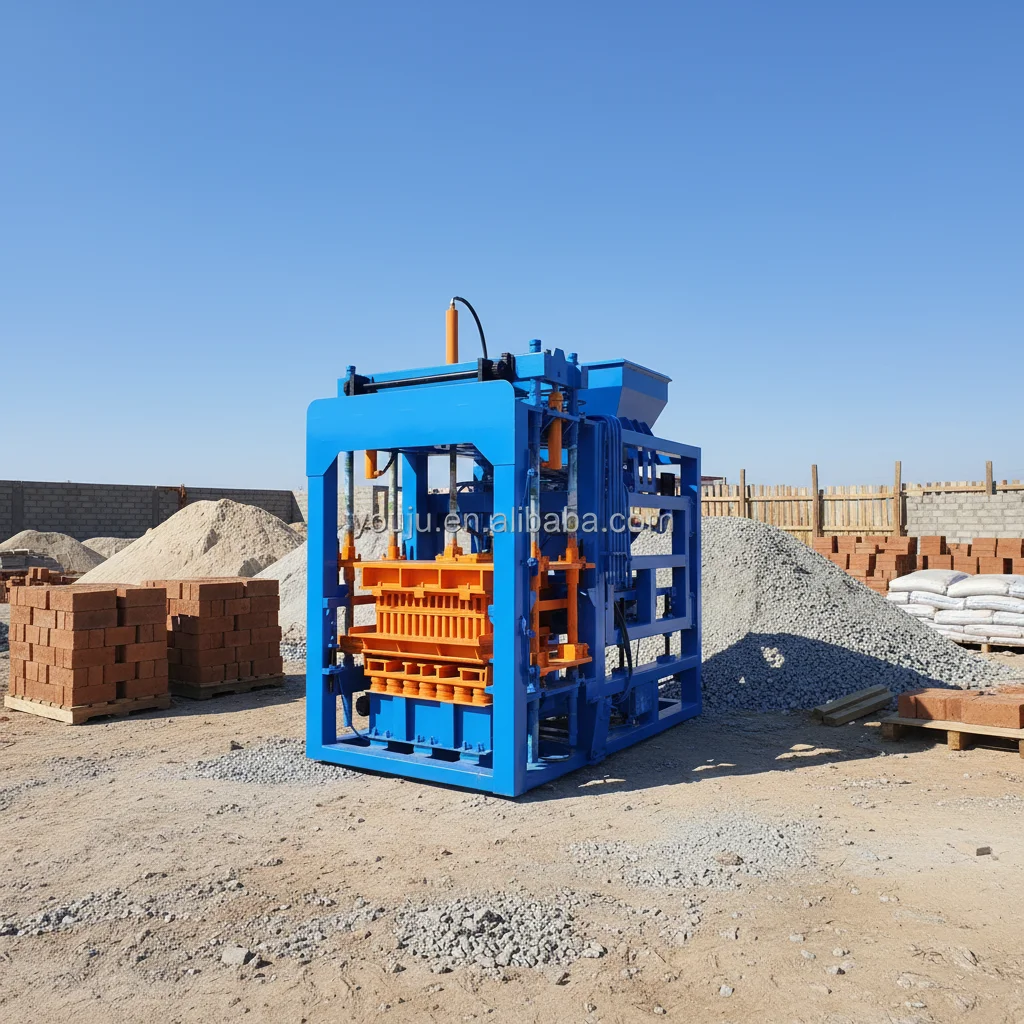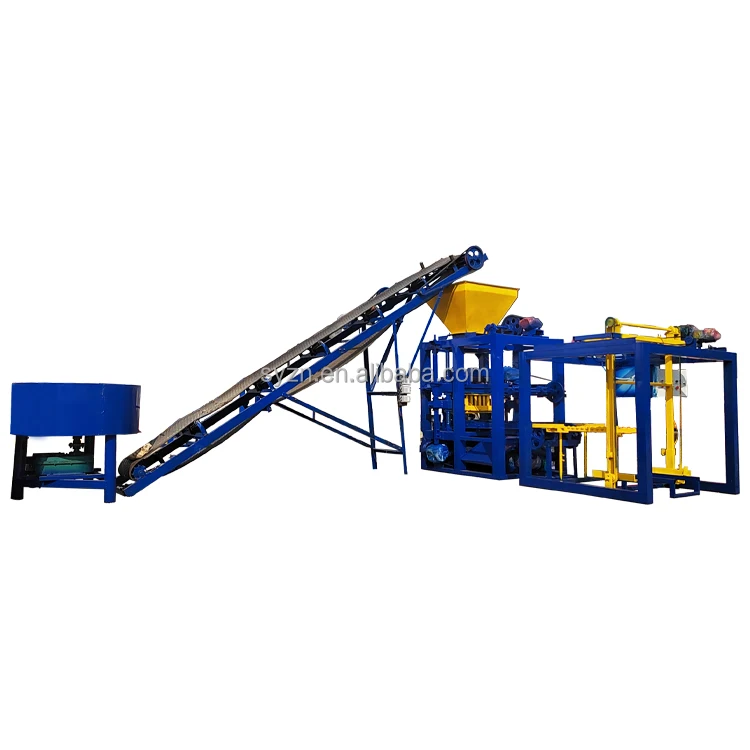
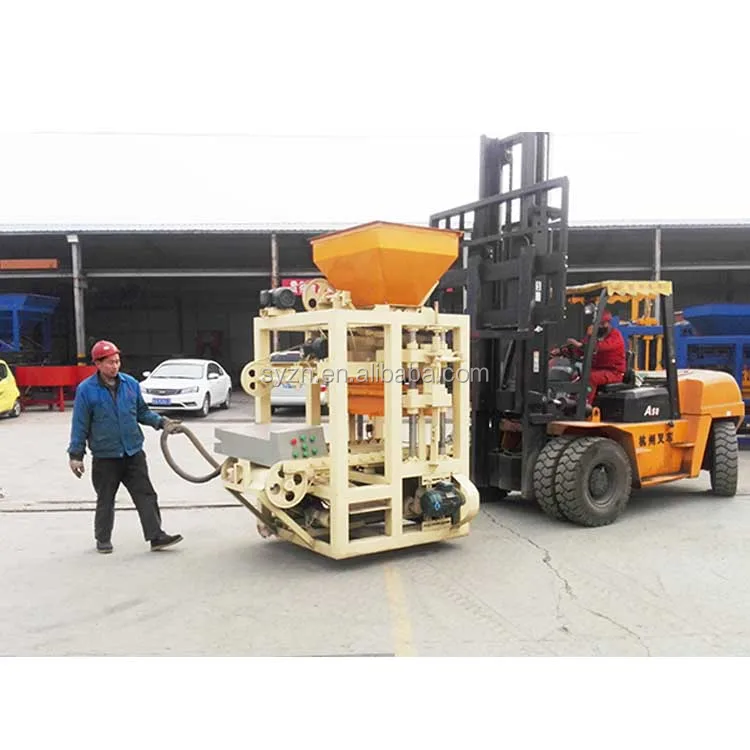
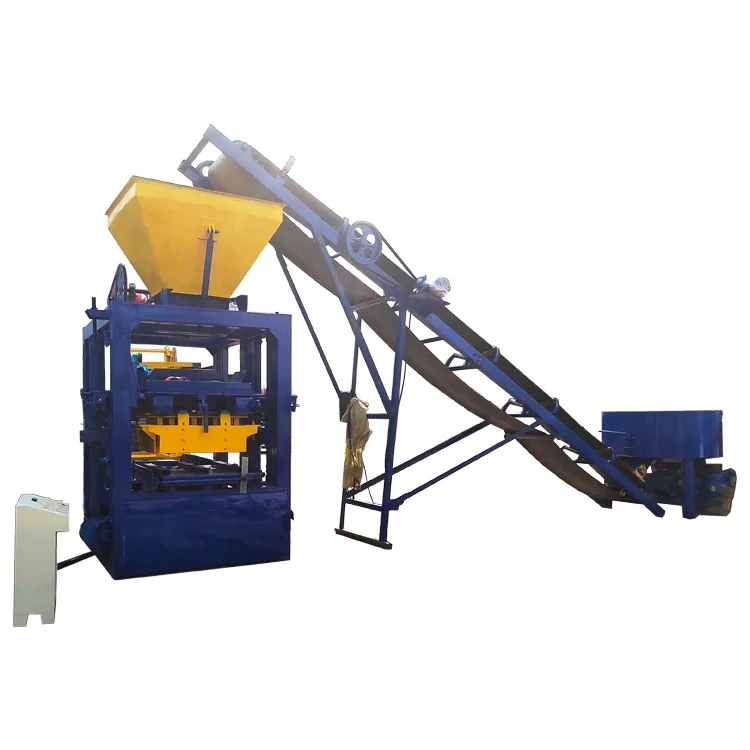


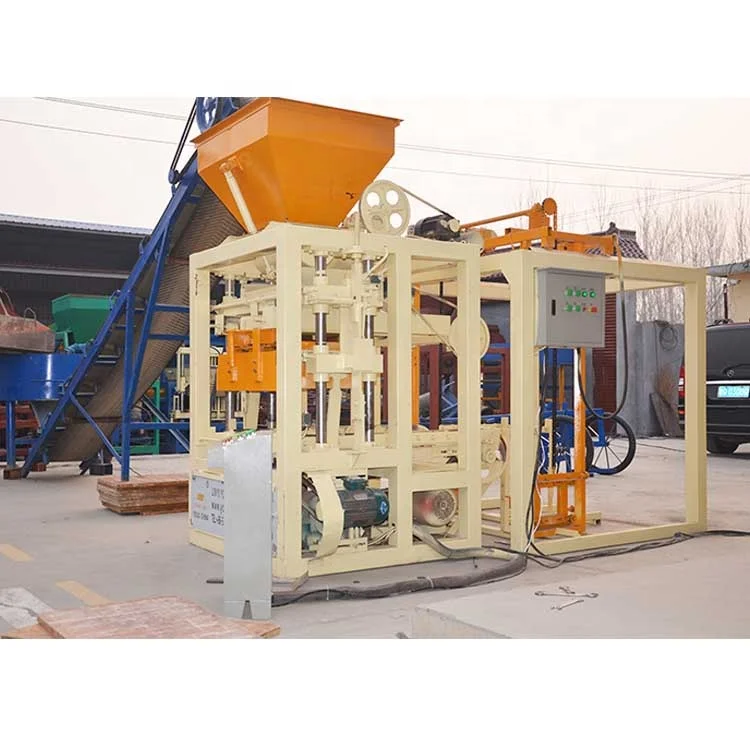
Description
Honest capacity by format — cycle time and pallet size are stated per block type, so the daily output you plan against is the one you actually get on your floor.
Technical Specifications
| Parameter | Value |
|---|---|
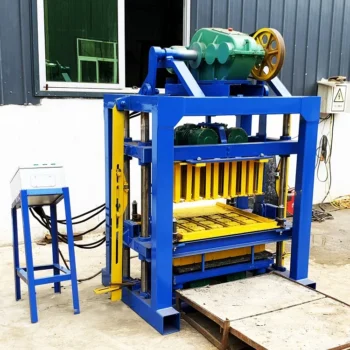
| Model | QTJ4-24 |
| Product Type | Stationary Block Making Machine |
| Overall Dimensions (L×W×H) | 3600×1700×2560 mm |
| Pallet Size | 850×450 mm |
| Molding Cycle | 24–26 s (basis to be confirmed per block format) |
| Overall Power | 11.95 kW |
| Vibration Force | 45 kN |
| Total Mass | 2 T |
| Molding Method | Mechanical |
| Vibration Configuration | 2×3 kW lower vibrators + 2×1.5 kW upper vibrators |
| Reducer for Mold Lifting | 350-type |
| Material Distribution | Full-automatic spiral |
| Materials Processed | Cement, sand, stone |
| Block Formats | Interlocking bricks, hollow bricks, paving bricks, solid bricks |
| Voltage & Frequency | Configurable (confirm before commissioning) |
| Control System | PLC or relay (verify before shipment) |
| Automation Level | Semi-automatic with automatic spiral feeding |
| Warranty | 1 year for the whole machine (excluding spare parts) |
Application Suitability
| Application | Material or Output |
|---|---|
| Hollow block production for masonry walls | Cement, sand and crushed stone aggregate |
| Solid brick manufacturing for load-bearing structures | Cement, sand and fine stone |
| Paving brick production for walkways and yards | Cement, sand and coarse aggregate |
| Interlocking brick production for retaining walls | Cement, sand and graded stone |
What a 24-Second Cycle Actually Means for Your Daily Output
The molding cycle only becomes a meaningful capacity number once the block format and mould cavity count are defined.
Many quotations list a cycle time without naming the block format that figure assumes. A 24–26 second cycle on a small solid brick mould produces a very different daily tally than the same cycle on a large hollow block mould. I have watched plant owners in West Africa and South Asia build their production schedules around a generic cycles-per-hour number, only to find actual output falling well short once the correct mould was installed. When the stationary block making machine specifications are quoted without a format reference, the gap between expectation and reality becomes a commercial problem, not just a technical one. [NEED_CITE: block format impact on daily output calculations in concrete product manufacturing]
Dual-Level Vibration and What It Does to Block Density
The QTJ4-24 uses two 3 kW lower vibrators paired with two 1.5 kW upper vibrators. This dual-level configuration addresses a common problem in stationary block making machine specifications: uneven compaction across the mould cavity. Lower vibration consolidates the aggregate bed, while upper vibration settles the surface layer. The result is a block with consistent density from bottom to top, which matters most when producing hollow blocks where wall thickness is limited and voids weaken the structure.
Spiral Feeding and the Problem It Solves
The full-automatic spiral distribution system feeds material across the mould cavity in a controlled sweep. In manual or gravity-fed systems, material tends to pile in the centre, leaving corners underfilled. This becomes visible on paving bricks where edge definition is a selling point. The spiral mechanism on the QTJ4-24 reduces that variation, meaning less scrap from underfilled corners and fewer blocks rejected by site inspectors. [NEED_CITE: material distribution methods and their effect on block dimensional accuracy]
Reading the Specs That Matter on the Shop Floor
The 45 kN vibration force is the figure to check against your local aggregate. River sand with high clay content absorbs vibration differently than washed crushed stone, and the pressure must be matched accordingly. The 850×450 mm pallet size determines how many blocks fit per cycle and how your curing racks must be dimensioned — order pallets that do not match your existing forklift tines, and you create a handling bottleneck the machine itself cannot fix. The 11.95 kW total power requirement means a dedicated circuit is necessary; sharing a line with other heavy equipment risks voltage drops that shorten motor life. The 350-type reducer dedicated to mould lifting is sized for repeated vertical cycles, reducing the frequency of gearbox maintenance compared to undersized alternatives.
The Cost of Skipping the Format Conversation
When the mould is selected after the machine arrives rather than before, the consequences are immediate. A mould that does not match the pallet size forces custom pallet orders or pallet trimming. A vibration force set for one aggregate type applied to another produces blocks that fail compressive strength tests, and the buyer blames the machine rather than the configuration mismatch. I have seen projects delayed by weeks because the voltage and frequency were not confirmed before shipment, leaving a brand-new stationary block making machine sitting in a container while transformers are sourced locally. [NEED_CITE: common causes of commissioning delays in exported concrete block machinery]
Why This Configuration Approach Works
Block machinery is our single focus, so the QTJ4-24 is specified as a matched system — machine, mould, pallet and handling — rather than assembled from separate supplier catalogues. The configuration is set against your actual mix design and local aggregate, not a default setting. Mould design covers the formats your market sells, with custom drawings available. Automation is selectable, so a buyer can start with the semi-automatic spiral feeding and plan a future upgrade. Installation includes operator training on the specific block formats you will produce.
Documentation & Verification
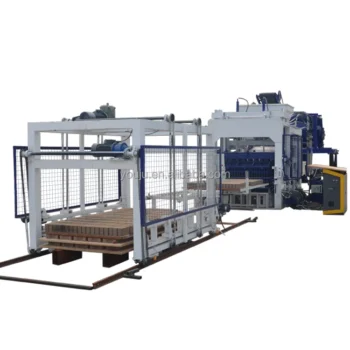
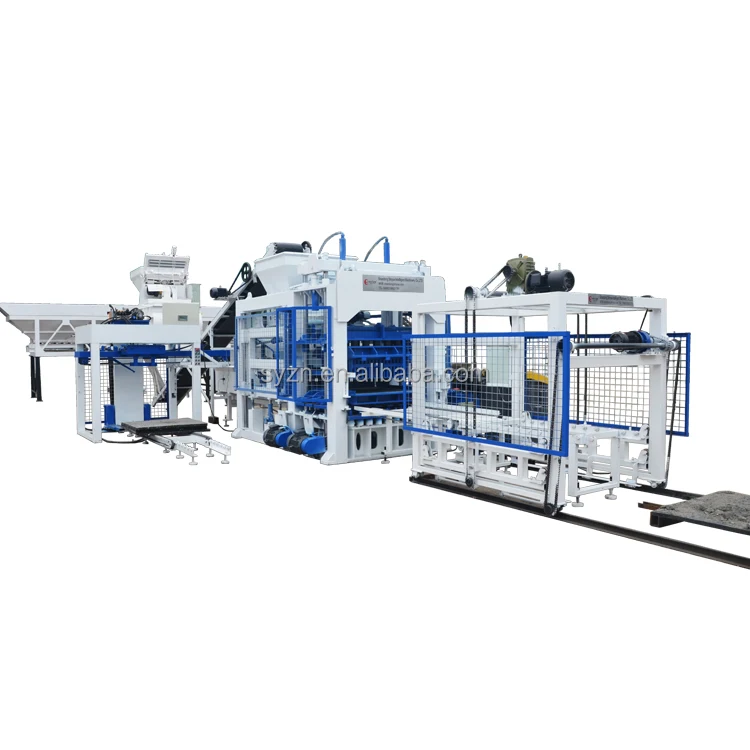
- Line layout showing pallet flow from press through curing rack with format-specific cycle assumptions
- Mould drawing confirming cavity count and block dimensions for the 850×450 mm pallet
- Hydraulic and electrical schematic matching the confirmed voltage and frequency
- Factory test record run on the block format you intend to produce
- Wear parts list with first-replacement timeline for vibrators and spiral components
Installation, Commissioning & Support
- Foundation must support the 2 T total mass with level tolerance for the 3600×1700 mm footprint
- Dedicated power circuit sized for 11.95 kW with voltage and frequency confirmed before wiring
- Machine arrives assembled; mould and pallet feed components require on-site alignment
- Commissioning includes cycle time verification on your chosen block format and aggregate
- Operator training covers mould change procedure and spiral feed rate adjustment
- Wear parts kit covers first replacement cycle for vibration motors and reducer
Before You Send an Inquiry
To size the QTJ4-24 correctly, we need to know the specific block format you sell most — dimensions, wall thickness for hollow blocks, surface finish for pavers. Share your local aggregate type and any existing mix design data so the vibration and feeding parameters can be matched. Confirm your site voltage, frequency and preferred control language so commissioning proceeds without delay.
Frequently Asked Questions
Q: How do I verify the real daily output of the QTJ4-24 for my block format?
A: The 24–26 second molding cycle is a starting point. To calculate daily output, we need your specific block format, mould cavity count, and planned shift length. We provide a capacity sheet that states the assumed format and shows realistic throughput including mould change and pallet handling time, so you can plan production schedules against a verified number rather than a generic estimate.
Q: Does the 850×450 mm pallet size work with my existing curing racks and forklift?
A: That depends on your current setup. The pallet dimensions determine the spacing of your curing rack rails and the fork entry width your forklift requires. Share your existing rack dimensions and forklift specification before ordering, so we can confirm compatibility or adjust the pallet size within the machine’s molding envelope.
Q: What is involved in changing moulds between hollow, paving and interlocking formats?
A: Mould change on the QTJ4-24 involves releasing the mould clamps, lifting the current mould with the 350-type reducer, and seating the replacement. The time required depends on operator familiarity and whether quick-release fittings are specified. We include the tools and procedure in the operation manual and cover it during on-site training.
Q: Can the voltage and control system be configured for my local power supply?
A: Yes, but the exact voltage, frequency and control language must be confirmed before production begins. A machine built for the wrong voltage cannot be corrected on site with a transformer in most cases. We verify these details during the quotation stage and print them on the electrical schematic and nameplate before shipment.
Q: What spare parts should I order with the first shipment?
A: The wear parts list included in the documentation identifies components that require periodic replacement — vibration motor brushes, spiral feed wear plates, and reducer seals. We recommend ordering a first-replacement kit with the machine to avoid production stoppages while waiting for international shipping on a single component.