
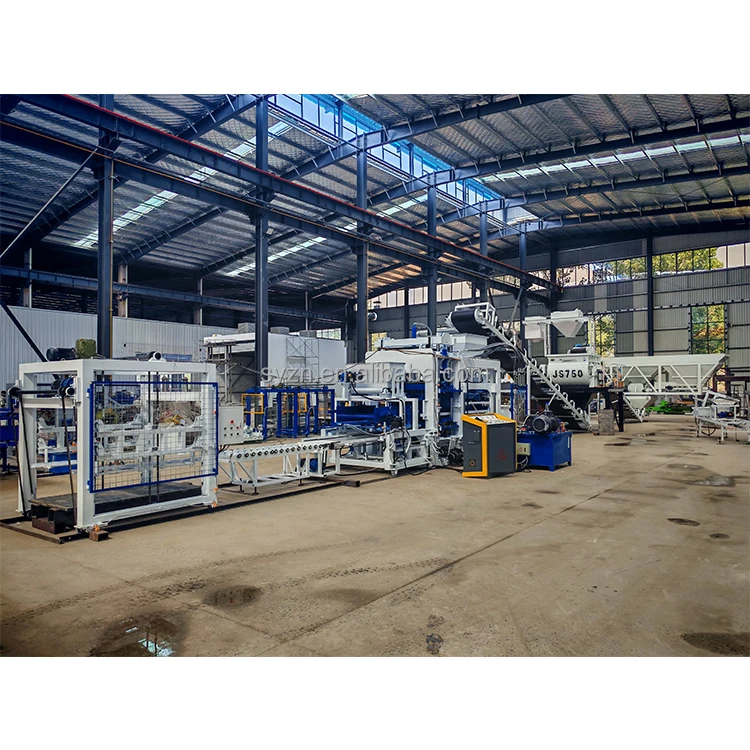

Description
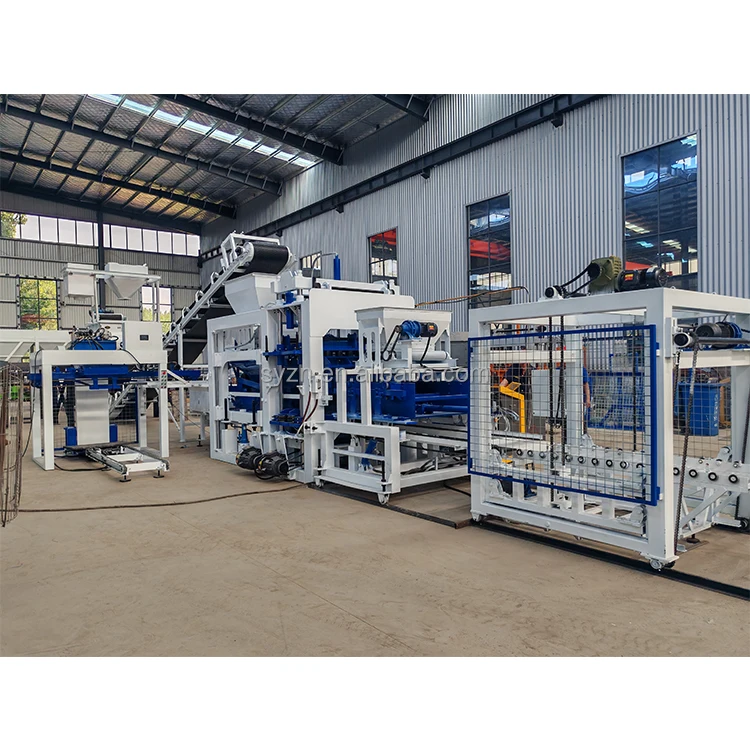
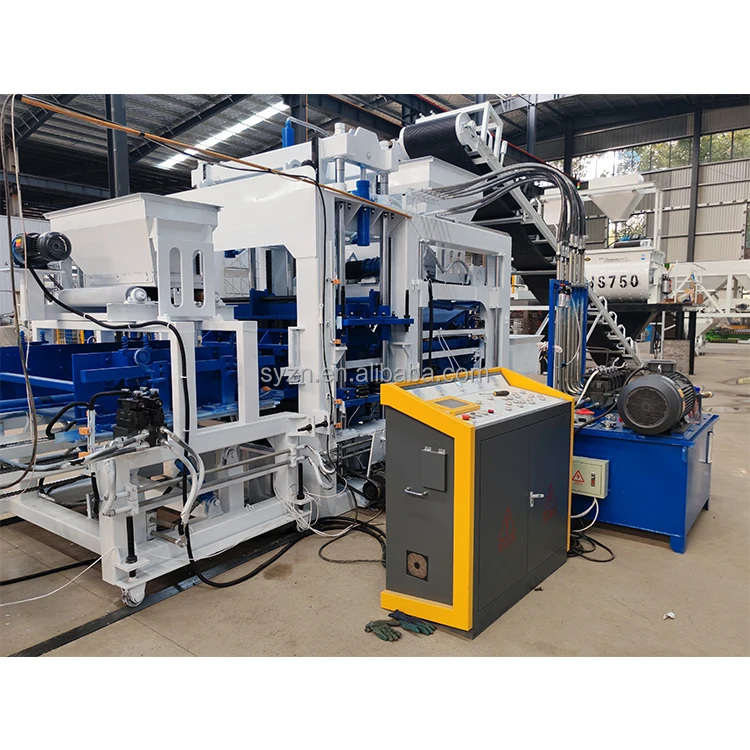
Matched System Specification — machine, mould, pallet and handling configured together against your actual block format and local aggregate, not quoted as isolated catalogue items.
Technical Specifications
| Parameter | Value |
|---|---|
| Model | QT8-15 |
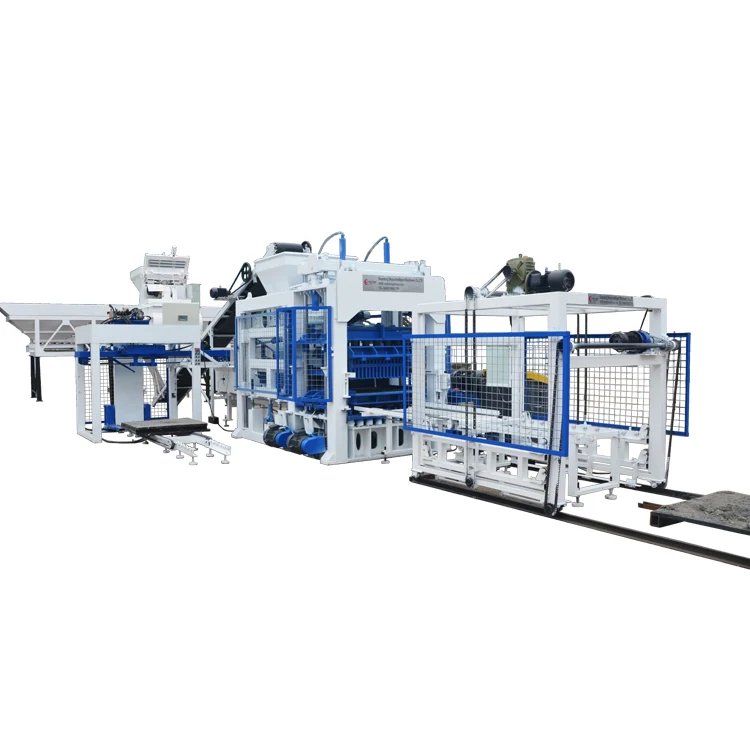
| Product Type | Hydraulic Concrete Block Making Machine |
| Overall Dimensions (L×W×H) | 8300×1860×3000 mm |
| Rated Pressure | 21 MPa |
| Main Vibration Form | Platform Vibration |
| Vibration Frequency | 2800-4500 r/min |
| Vibration Force | 45 kN |
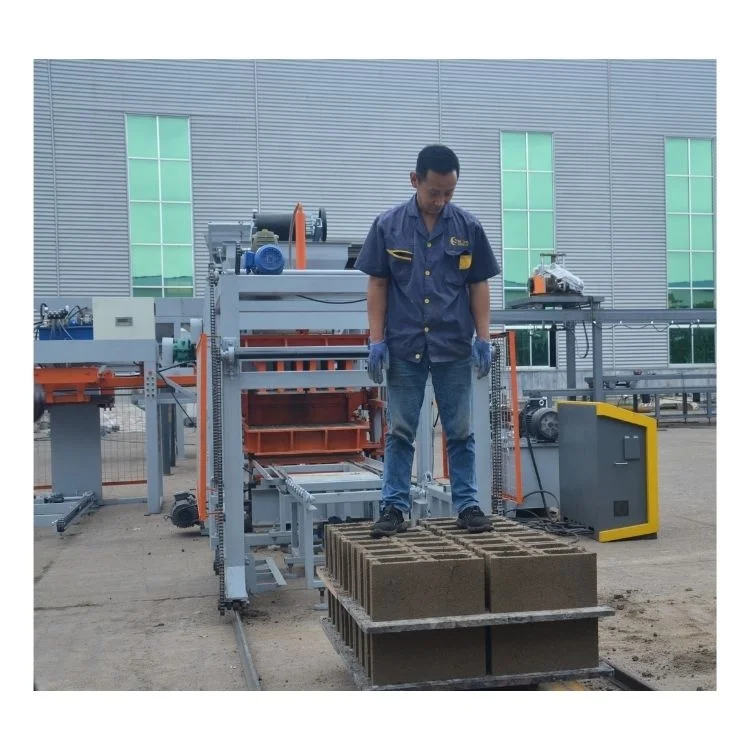
| Pallet Size | 950×900 mm |
| Molding Cycle | 15-20 s (basis not stated in source — confirm block format / material / thickness) |
| Overall Power | 55.5 kW |
| Total Mass | 8 T |
| Demolding Method | Hydraulic |
| Factory Area | 300 m² |
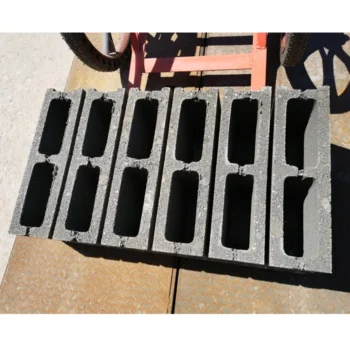
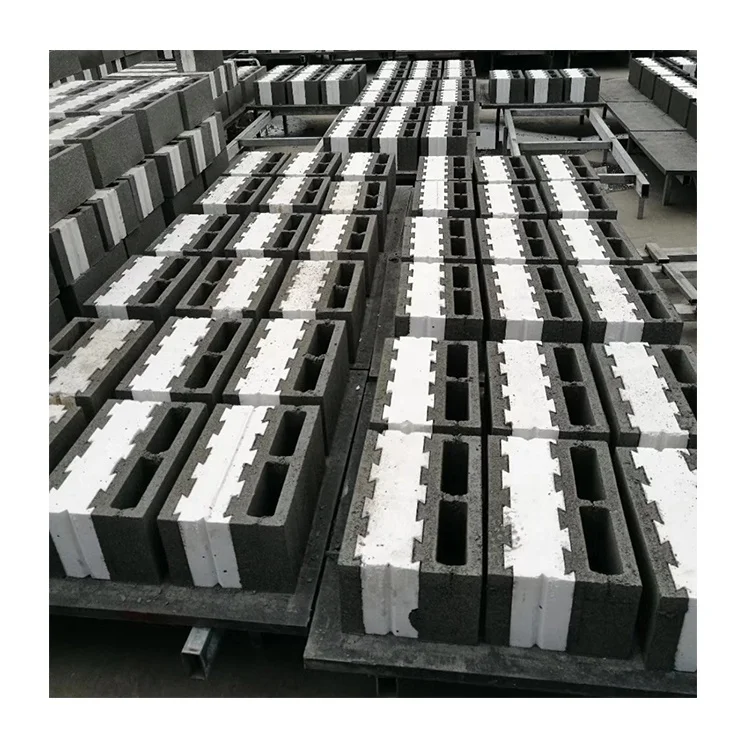
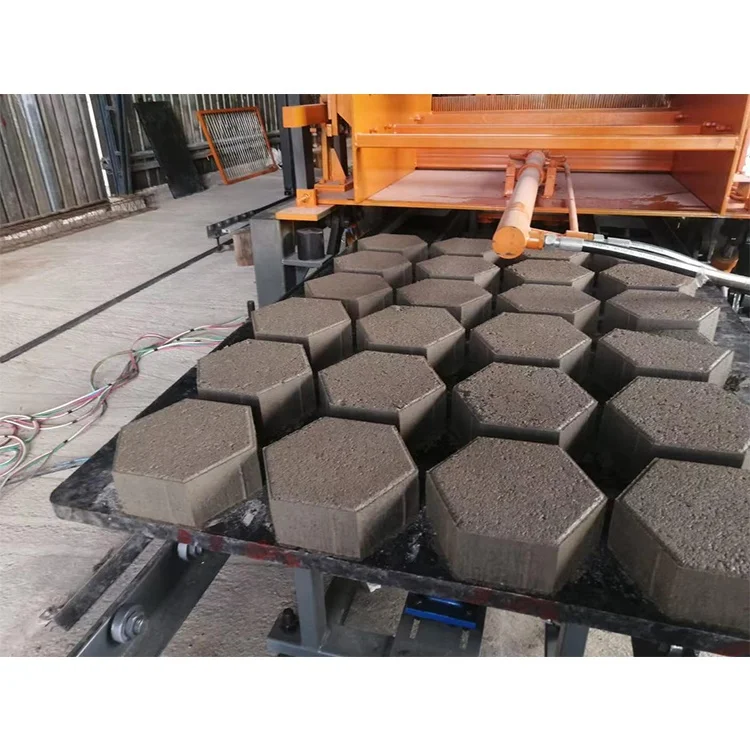
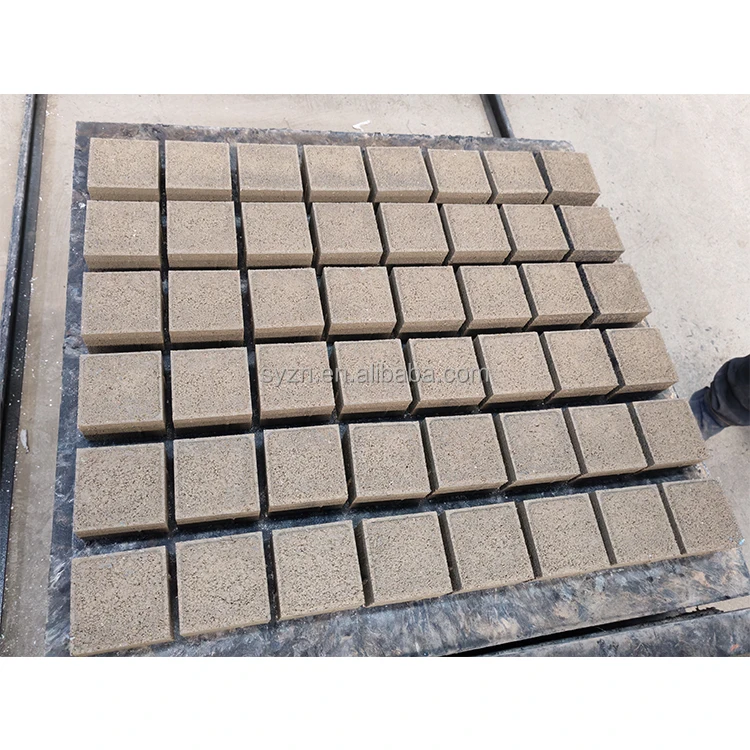
| Applied Products | Concrete blocks, hollow/solid blocks, pavers, interlocking blocks, curbstone, colored pavers |
| Raw Materials | Crushed stone, sand, cement, dust, fly ash, gravel, slag |
| Control System | PLC (language options not stated in source) |
| Voltage & Frequency | Not stated in source — confirm with manufacturer |
| Standards | CE (mentioned as applicable in documentation scope) |
Application Suitability
| Application | Material or Output |
|---|---|
| Hollow block production for load-bearing walls | Crushed stone, sand, cement, fly ash blends |
| Solid block manufacturing for partition and boundary walls | Gravel, sand, cement mixes |
| Interlocking brick production for paving and landscaping | Crushed stone and cement at higher compaction |
| Curbstone and kerbstone forming for road and drainage projects | Coarse aggregate with cement binder |
| Colored paver production for architectural and municipal projects | Pigmented concrete mixes with fine aggregate |
What "15-20 Seconds Cycle Time" Actually Means for the QT8-15 Block Machine Specifications
Cycle time only translates into daily output when the block format, mould configuration, and material behaviour are all locked in.
Too many quotations list a single cycle figure — and the buyer assumes that number applies equally to a 400 mm hollow block, a thin interlocking paver, and a dense curbstone. It does not. On the QT8-15, the 15-20 second molding cycle represents the press stroke under a specific mould and material condition [NEED_CITE: cycle time variation across block formats and mix designs]. A heavier curbstone with deeper draw may demand longer vibration and higher hydraulic dwell, while a shallow paver with fine aggregate can cycle faster. When I have been on site in West Africa watching a line stall, the problem was almost never the press itself — it was a capacity quote built on one format being stretched across an entire product portfolio.
Matching Vibration Force to Your Mix and Format
The QT8-15 block machine specifications list platform vibration at 45 kN with a frequency range of 2800-4500 r/min. That combination works across hollow blocks, pavers and interlocking bricks, but only when the vibration profile is tuned to the specific aggregate grading and cement ratio the buyer is actually running. Coarse crushed stone demands a different frequency band than fine sand-heavy mixes, and getting this wrong shows up as inconsistent block density across a single production shift. The machine’s hydraulic pressure at 21 MPa must also be matched — too low for a dense interlocking format and you get weak edges; too high for a lightweight hollow block and you crack the shell before demolding.
Pallet Size, Curing Area and the Forklift You Already Own
A 950×900 mm pallet defines more than the press stroke. It determines how many blocks cure per rack level, how the racks fit inside the curing chamber, and whether the buyer’s existing forklift can handle a loaded pallet without tipping. When the pallet size is chosen without checking the curing infrastructure already on site, the result is a line that technically produces at full capacity but cannot move product into curing fast enough. I have seen plants in South Asia where the pallet spec was finalised weeks after the machine order, forcing a complete rack redesign.
Hydraulic Pressure, Vibration and the Density Question
The 21 MPa rated pressure and 45 kN vibration force on the QT8-15 work together to compact the concrete mix inside the mould cavity. Higher pressure alone does not guarantee a stronger block — without adequate vibration, air pockets remain trapped in the mix, particularly in tall hollow block formats where the material column is deep. Conversely, vibration without sufficient hydraulic hold allows the material to settle unevenly, producing blocks with density gradients from top to bottom [NEED_CITE: concrete compaction principles for block making]. The demolding method is hydraulic, which means the stripper head applies controlled force to release the block without fracturing thin webs on hollow formats or damaging surface texture on pavers. Overall power of 55.5 kW supports the simultaneous operation of hydraulic pump, vibration motor and feeder systems without load shedding during the press stroke.
The Cost of Choosing a Default Configuration
When the QT8-15 is ordered without specifying the target block format, the factory ships with a standard mould and a generic vibration setting. The buyer then discovers that their local aggregate — perhaps a laterite-heavy sand or a slag-blended mix — does not compact cleanly at the default frequency. Block rejection climbs. Mould wear accelerates because the mix is more abrasive than the default specification assumed. The PLC language arrives in a default option that the line operators cannot read, adding days to commissioning [NEED_CITE: PLC language configuration for export machinery]. Every one of these issues is preventable when format, material and site conditions are confirmed before production begins.
Why Configuration Comes Before Quotation
Block machinery as a single focus means the QT8-15 is not assembled from mismatched third-party components. The machine, mould, pallet and handling equipment are specified as one system against the buyer’s confirmed block format and local raw material. Mould design covers the formats the buyer’s market actually sells, including custom drawings when standard catalogue options do not match. Configuration is set against the buyer’s actual mix design, not a generic default, so vibration and pressure are matched before the machine is built. Automation level is selectable — a buyer can begin with semi-automatic pallet handling and upgrade the stacking and cubing stations later without replacing the press. Installation support includes operator training so the team running the line understands mould change procedure and daily maintenance.
Documentation & Verification
- Line layout with capacity calculation stating the block format assumed for each output figure
- Machine specification sheet with voltage, frequency and PLC display language confirmed
- Mould drawing and format list covering every block type in the buyer’s production plan
- Pallet specification matched to curing rack dimensions and forklift capacity
- Factory test record demonstrating press cycle on the buyer’s confirmed block format
- Wear parts and mould list with replacement intervals for hydraulic seals and vibration liners
Installation, Commissioning & Support
- 8300×1860×3000 mm footprint requires a level concrete foundation within the 300 m² factory area
- 55.5 kW total power demand requires dedicated circuit with voltage and frequency confirmed before dispatch
- Machine ships dismantled for container loading with reassembly sequence documented
- PLC commissioning includes language verification and cycle parameter tuning for the buyer’s first mould format
- Operator training covers hydraulic pressure adjustment, vibration frequency selection and mould change procedure
- Wear parts list supplied with recommended stock levels for hydraulic seals and vibration platform liners
What to Include in Your Inquiry
Provide the specific block formats you intend to produce — hollow, solid, interlocking, paver, curbstone — along with the target daily output for each. Share your local aggregate type, cement grade and any existing mix design you are already running. Confirm the voltage and frequency at your site, the language your operators need on the PLC display, and the curing infrastructure you already have in place so the pallet size can be matched before the configuration is locked.
Frequently Asked Questions
Q: How is the QT8-15’s daily output calculated, and which block format does the capacity figure assume?
A: The 15-20 second molding cycle is a press stroke figure that must be recalculated for each confirmed block format. A shallow paver cycles faster than a deep hollow block, and material behaviour affects dwell time. We provide a capacity calculation that states the block format, mould and mix assumed for every output number, so the daily figure matches what the line actually produces.
Q: How do I match vibration force and hydraulic pressure to my local aggregate for consistent block strength?
A: The QT8-15 runs platform vibration at 45 kN across a 2800-4500 r/min range, paired with 21 MPa hydraulic pressure. The correct combination depends on your aggregate grading, cement ratio and block format. We set vibration frequency and pressure against your actual mix sample before production, rather than shipping a catalogue default that may not suit local materials.
Q: What is the mould change procedure on the QT8-15, and how long does a format switch take?
A: Mould change time depends on the specific change system configured and the operator’s familiarity with the procedure. Hydraulic demolding simplifies the stripper head alignment, and the mould mounting design allows format switches within a working shift. We confirm the change procedure and expected duration for your specific mould set before the machine leaves the factory.
Q: Which pallet size is specified, and is it compatible with my existing curing racks and forklift?
A: The standard pallet size is 950×900 mm, but the final specification must be checked against your curing rack dimensions and forklift capacity. A mismatch means loaded pallets cannot enter the curing chamber or the forklift cannot handle the weight. We confirm pallet material and size against your existing infrastructure before configuration is finalised.
Q: What documentation is supplied with the QT8-15 block machine?
A: Documentation includes a line layout with per-format capacity calculations, machine specification sheet, mould drawings and format list, pallet specification, hydraulic and electrical schematics, PLC language confirmation, factory test record, operation and maintenance manual, wear parts list, and CE declaration where applicable. Every document is specific to your confirmed configuration.