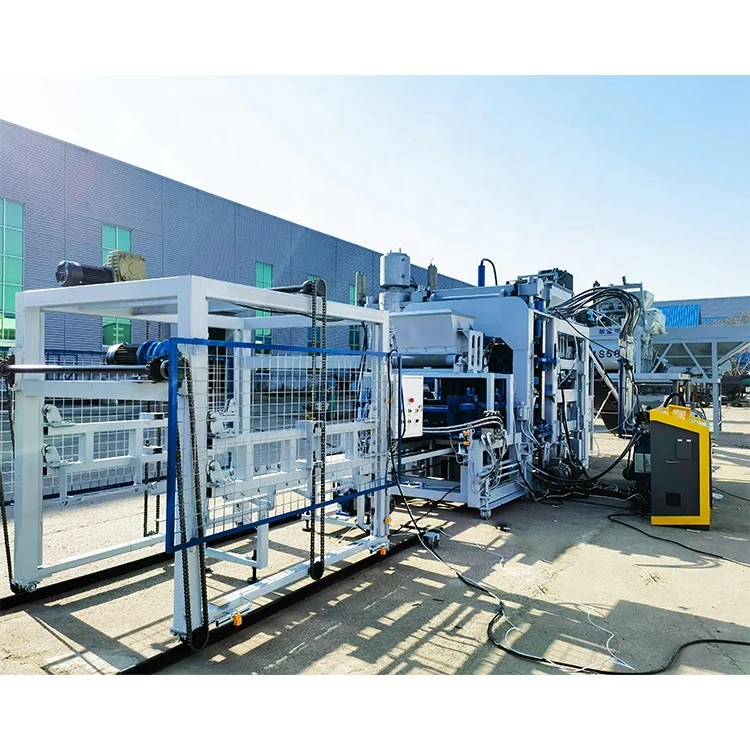
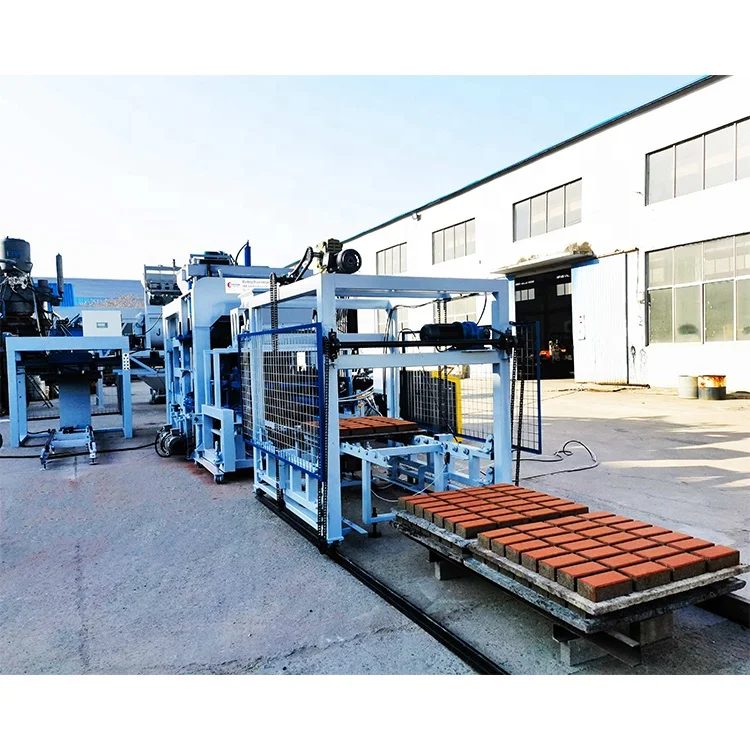
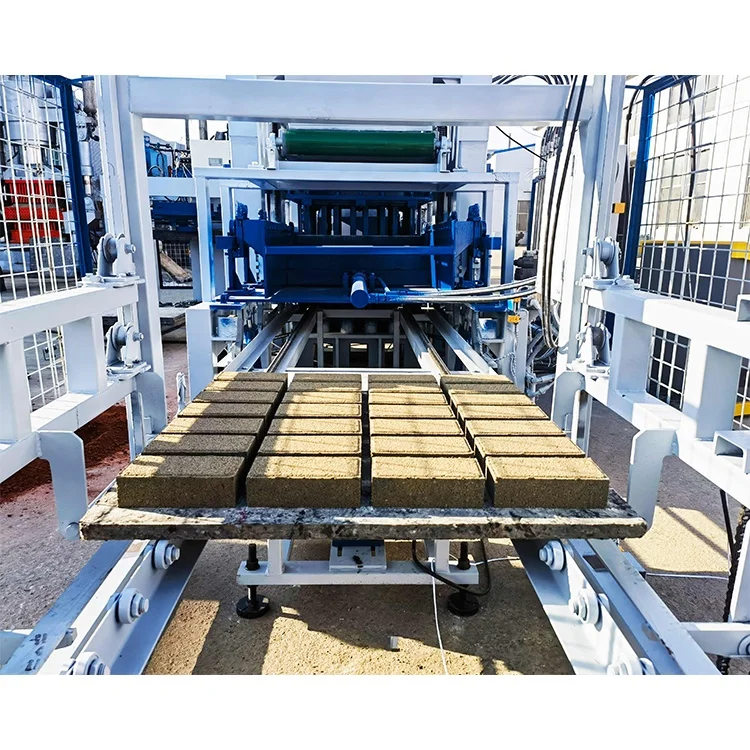
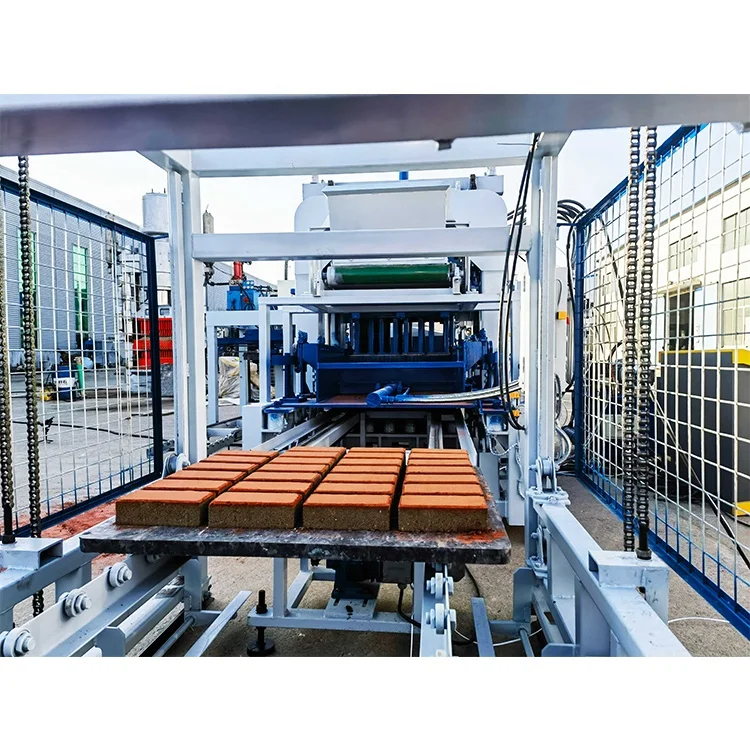
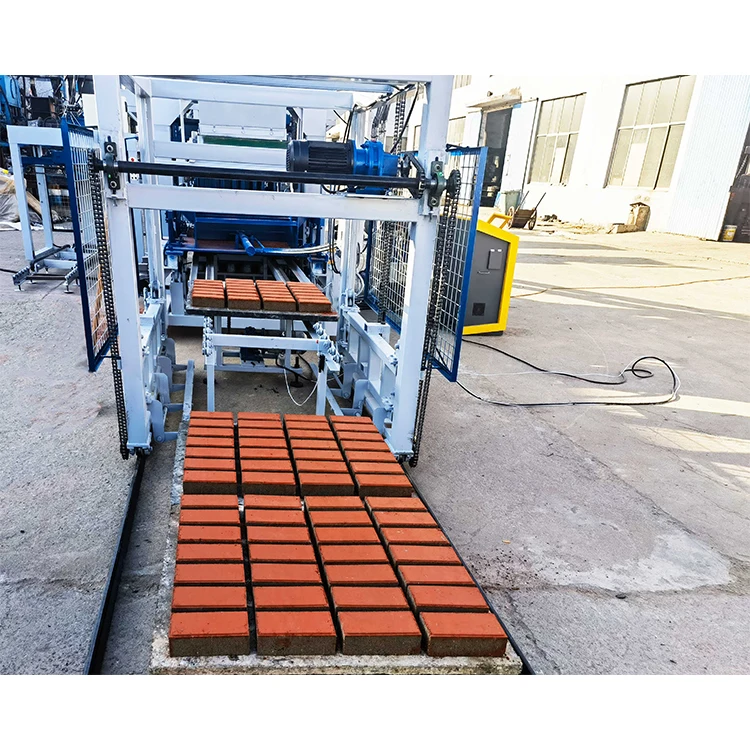
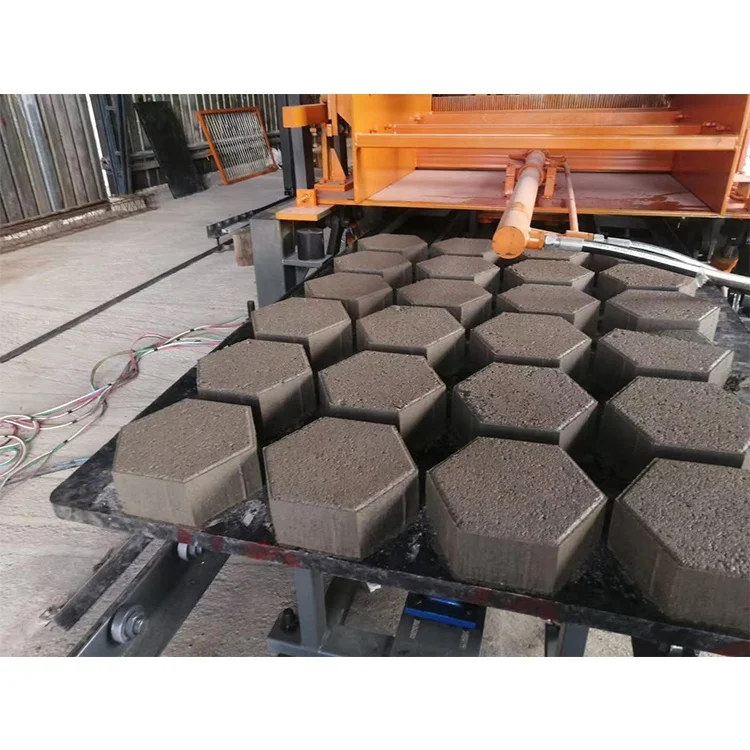
Description
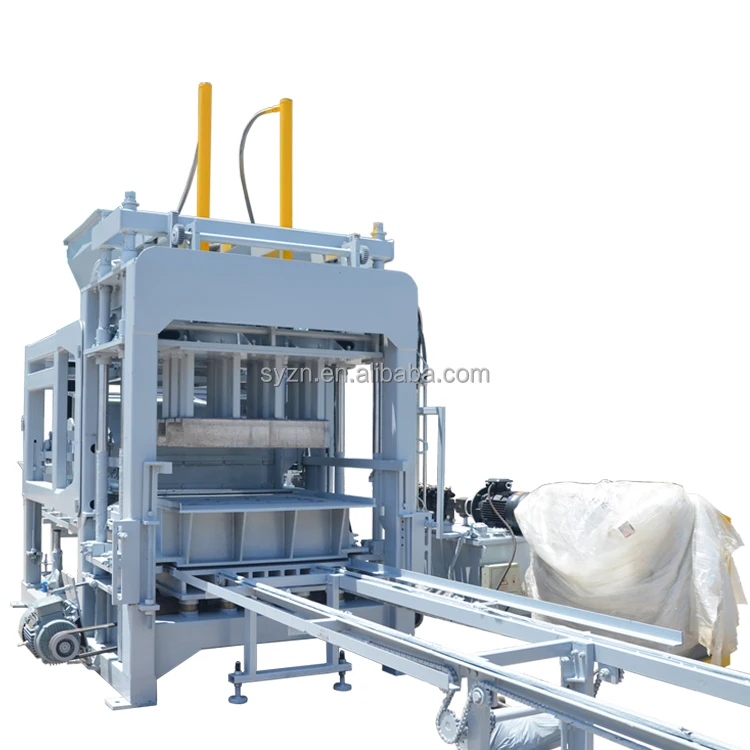
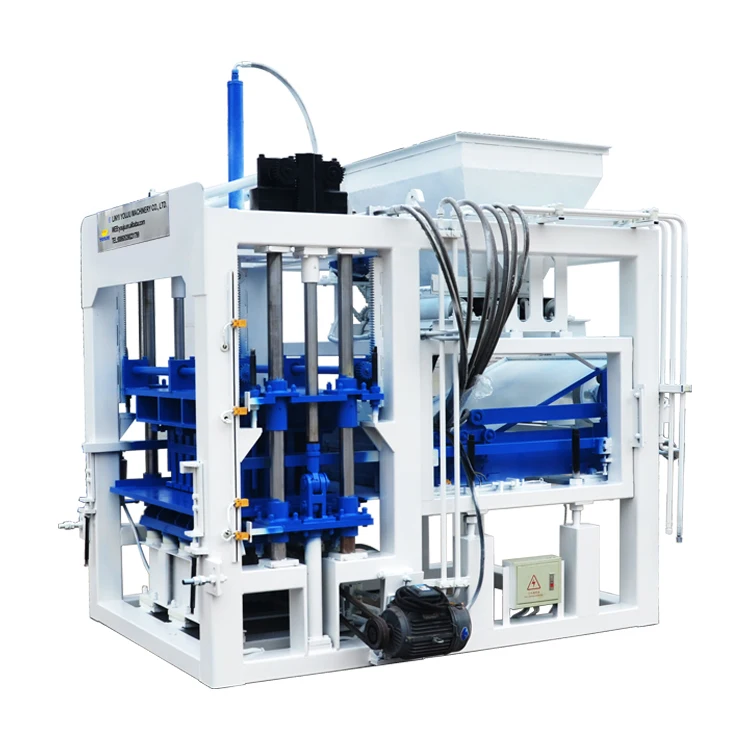
Mould-First Sizing — Every QT8-15 quotation starts with your target block dimensions and local aggregate, so cycle time and daily output are calculated per format before the machine is built.
Technical Specifications
| Parameter | Value |
|---|---|
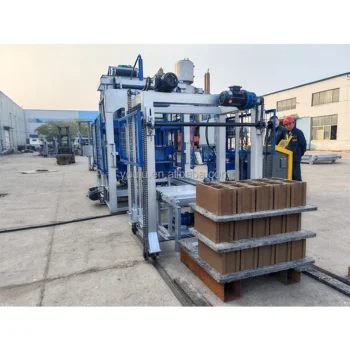
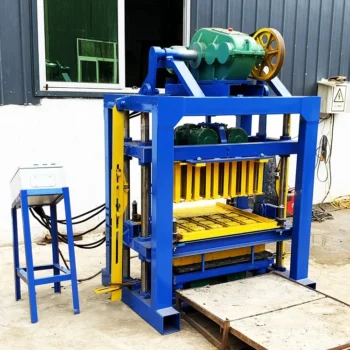
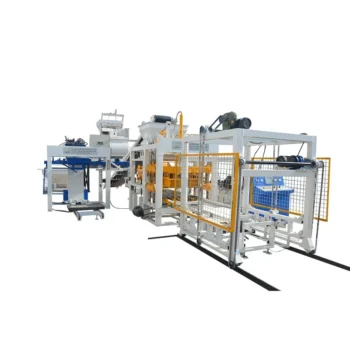
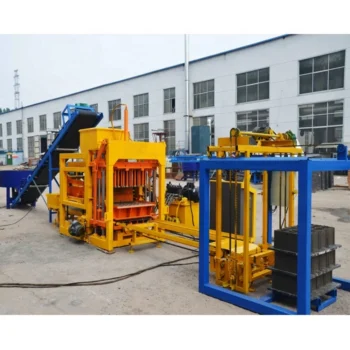
| Product Type | Stationary Hydraulic Block Making Machine |
| Model | QT8-15 |
| Overall Dimensions | 8300 × 1860 × 3000 mm |
| Rated Pressure | 21 MPa |
| Vibration Force | 60 kN |
| Vibration Frequency | 2800–4500 r/min |
| Main Vibration Form | Platform Vibration |
| Pallet Size | 950 × 900 mm |
| Molding Cycle | 15–25 s (basis not stated in source — confirm block format / material / thickness) |
| Overall Power | 55.5 kW |
| Total Mass | 9 T |
| Demolding Method | Hydraulic |
| General Water Consumption | 12 T/Day |
| Factory Area | 600 m² |
| Control System | PLC with human-machine interface dialogue system |
| Feeding System | Semi-closed screen reticular rotational forced feeding |
| Automation Level | Fully automatic |
Application Suitability
| Application | Material or Output |
|---|---|
| Hollow block production for load-bearing walls | Crushed stone, sand, and cement mixes |
| Solid block manufacturing for partition walls | Fly ash, slag, and cement blends |
| Interlocking paver production for driveways and walkways | Fine aggregate with pigment layers |
| Kerbstone and curb production for road infrastructure | Dense aggregate with high cement content |
| Colored paving block runs for landscape projects | Surface-layer pigmented concrete over base mix |
What "15 Seconds per Cycle" Really Means for Your Output
A cycle time is only honest when it names the block format, wall thickness, and aggregate behind it.
I have watched buyers receive a QT8-15 block machine specifications sheet showing a 15-second cycle, then discover on commissioning that their local volcanic ash mix needs 28 seconds to reach target strength. The machine was not wrong — the assumption was. Quoting throughput without locking the format and material first is how entire project schedules slip [NEED_CITE: concrete block curing and strength development standards]. When the QT8-15 is configured for a specific interlocking brick profile in a particular aggregate, that cycle time holds. Swap the mould to a 200 mm hollow block with a lighter mix, and the vibration dwell must change. This is why every capacity document we issue names the exact format behind the number.
Matching the QT8-15 to the Block Your Market Actually Buys
The QT8-15 block machine specifications centre on a 950 × 900 mm pallet, which determines how many cavities each mould can carry. A standard 400 × 200 × 200 mm hollow block fits fewer units per cycle than a thin interlocking paver, so daily output varies significantly between formats. Before confirming the machine, the mould layout is drawn against your pallet size to show exact pieces per cycle. This prevents the common disappointment of receiving a headline capacity that assumed a format you never intended to produce.
How Platform Vibration and Hydraulic Pressure Work Together
Platform vibration at 60 kN with a frequency range of 2800–4500 r/min compacts the mix from below the mould box, while the 21 MPa hydraulic head presses from above. The balance between these two forces determines block density and surface finish. A high sand content mix may need higher frequency with lower amplitude, whereas a fly ash blend benefits from longer vibration dwell at moderate frequency. The PLC on the QT8-15 stores parameter sets per mould, so operators recall the correct profile instead of guessing when switching from hollow blocks to pavers [NEED_CITE: vibration compaction parameters for concrete masonry units].
Reading the QT8-15 Specifications Against Your Site Conditions
The 55.5 kW total power draw means the QT8-15 needs a dedicated supply circuit with adequate transformer headroom — a detail often overlooked until the machine trips the breaker on first start. The semi-closed screen reticular forced feeding system distributes material evenly across the mould cavity, which matters most for paver and interlocking formats where surface consistency is visible to the end buyer. Factory area of 600 m² covers the press, pallet return, and a minimal curing zone; buyers planning larger curing racks should confirm the pallet flow direction and forklift turning radius against the 950 × 900 mm pallet footprint. Voltage and frequency must match the local grid before the control cabinet is wired, because rewiring a PLC cabinet on site adds days to commissioning [NEED_CITE: industrial voltage and frequency standards by region].
The Cost of Skipping Format-Level Configuration
Buyers who confirm a machine on headline capacity alone often find that mould change takes most of a shift because the quick-change system was not specified for their mould weight. Others discover the pallet material chosen for them does not survive the local humidity, warping before the first curing cycle completes. These problems are not machine defects — they are configuration gaps that surface only after production starts. A machine quoted without your block drawing, your aggregate sample, and your curing layout will always arrive with assumptions that cost you time to correct [NEED_CITE: block machine commissioning delays from mismatched configuration].
Why Buyers Specify the QT8-15 Through This Process
Block machinery is our single focus, so the QT8-15 press, mould, pallet, and handling equipment are specified as one matched system rather than assembled from separate suppliers. Configuration is set against your actual mix design and local aggregate, not a catalogue default. Mould design covers the formats your market sells, with custom drawings when standard moulds do not match your block dimensions. Automation level is selectable, so a buyer can start with manual pallet handling and add automatic stacking later without replacing the press. Installation includes on-site commissioning with operator training on your specific mould set and parameter profiles.
Documentation & Verification
- Capacity calculation document stating the exact block format and cycle time behind every output figure
- Mould drawing and format list showing cavity count per pallet for each block type
- Pallet specification sheet covering size, material, and thickness matched to your curing rack
- Voltage, frequency, and PLC display language confirmation signed before production begins
- Hydraulic and electrical schematic for your site maintenance team
- Factory test record run on your confirmed mould and parameter set before dispatch
Installation, Commissioning & Support
- Foundation plan sized to the 8300 × 1860 mm machine footprint and 9 T operating mass
- Dedicated power circuit calculated for 55.5 kW total draw with voltage and frequency verified
- PLC language and human-machine interface configured to operator preference before crating
- First-run parameter tuning on your local aggregate and target block format during commissioning
- Operator training covering mould change procedure, parameter recall, and daily maintenance checkpoints
- Wear parts list with hydraulic seal and vibration motor bearing part numbers for local sourcing
Before You Request a Quote
Send the block drawing or photo of the format you sell most, along with your target daily output per format. Include a sample or description of your local aggregate — sand origin, maximum particle size, and whether fly ash or slag is available. Confirm your site voltage, frequency, and preferred PLC display language so the control cabinet is wired correctly before shipment.
Frequently Asked Questions
Q: How is daily output calculated for each block format on the QT8-15?
A: Daily output is derived from the cycle time for a specific block format, the number of cavities that format occupies on the 950 × 900 mm pallet, and your planned shift length. We issue a capacity sheet that names the exact block dimensions, wall thickness, and aggregate behind each cycle time figure, so you can verify the calculation against your production schedule.
Q: Which mould formats are available, and how long does a change take?
A: Standard moulds cover common hollow block, solid block, paver, and interlocking profiles that fit the 950 × 900 mm pallet. Custom moulds are built to buyer drawings when local market dimensions differ. Mould change time depends on whether the quick-change frame is specified; without it, a full mould swap requires unbolting the mould box and recalibrating vibration parameters.
Q: How is the machine matched to my local aggregate and mix design?
A: We request a sample or lab report of your aggregate before finalizing the vibration frequency range and hydraulic pressure profile. The PLC stores separate parameter sets per mix, so switching between a fly ash blend and a crushed stone mix is a screen selection rather than a manual recalibration on the shop floor.
Q: What pallet size does the QT8-15 use, and how does it affect my curing area?
A: The machine runs 950 × 900 mm pallets, which determines your curing rack slot width, forklift tine spacing, and stacking height. We provide a pallet specification covering material and thickness so you can confirm your existing racks and handling equipment are compatible before the machine ships.
Q: What documentation confirms voltage and control language before dispatch?
A: A voltage and control confirmation sheet is signed before the cabinet is wired, listing supply voltage, frequency, phase, and PLC display language. The electrical schematic and hydraulic diagram ship with the machine so your site electrician can verify connections against the documented configuration on arrival.