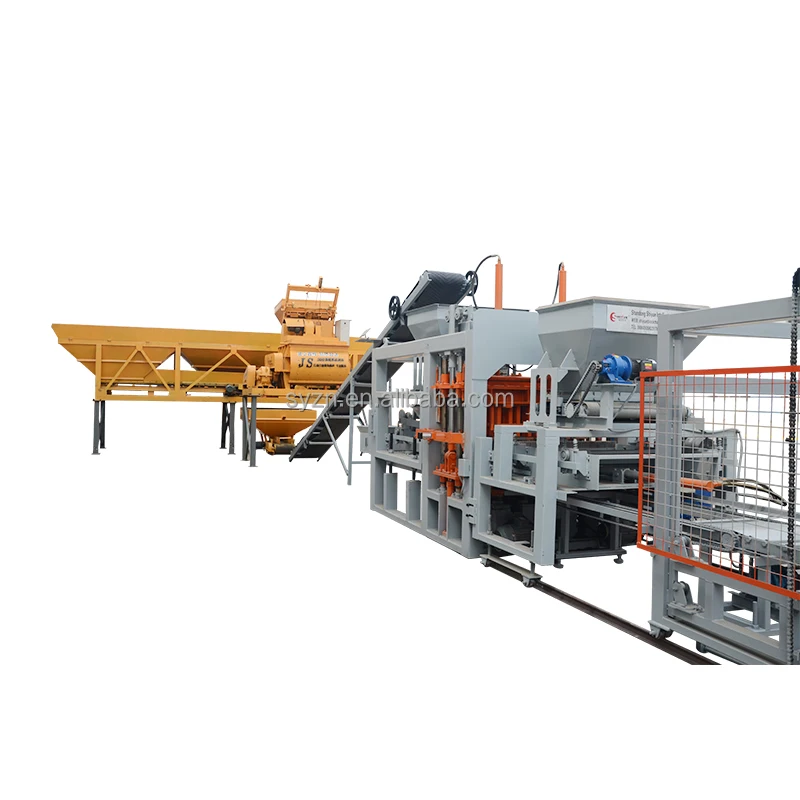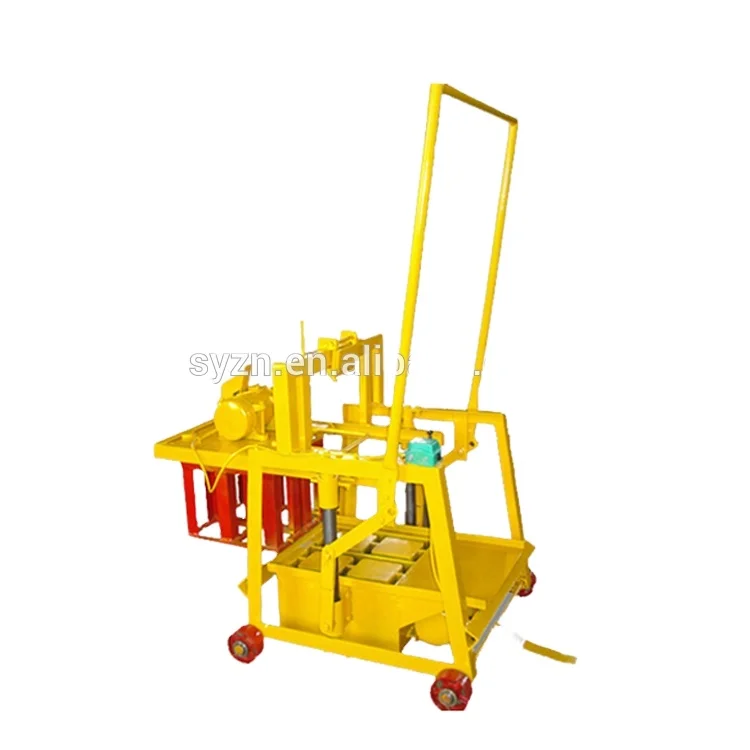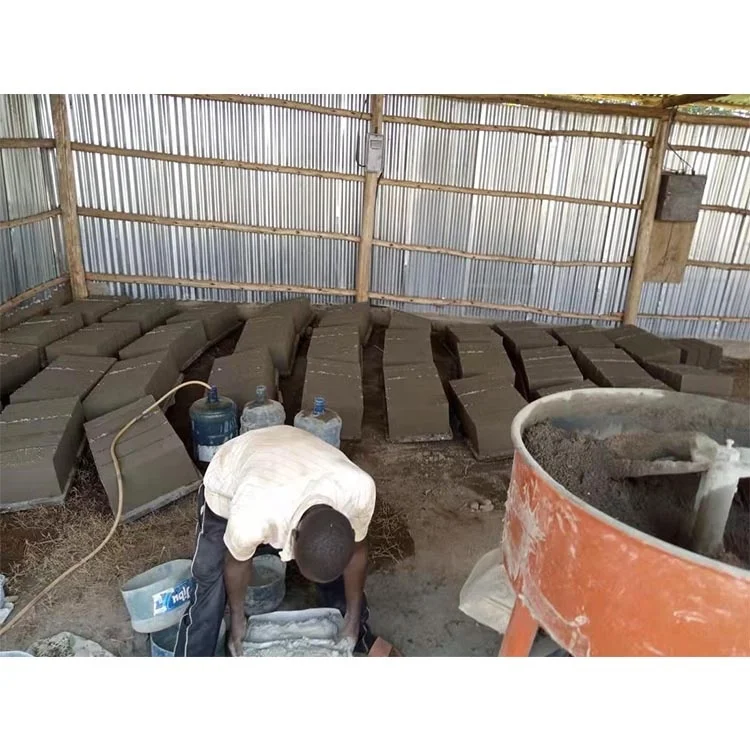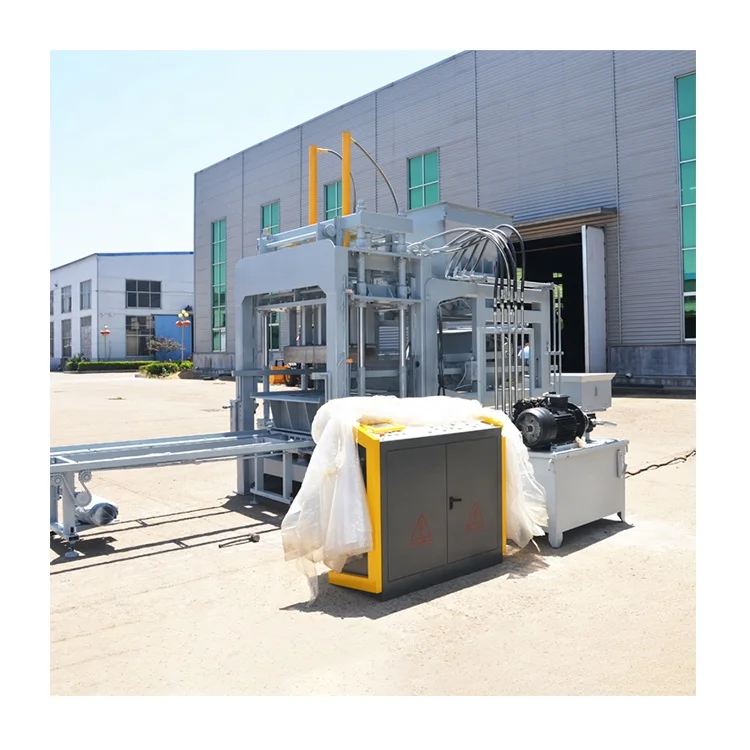
Description
Matched Mould Cycles — Every output figure for the QT7-15 is tied to a specific block format, pallet dimension, and cycle range rather than a single generic claim.
Technical Specifications
| Parameter | Value |
|---|---|
| Model | QT7-15 |
| Product Type | Concrete Block Making Machine |
| Pallet Size | 1150 × 700 mm |
| Molding Cycle | 15–20 s (basis not stated in source — confirm block format, material, and thickness) |
| Overall Power | 45 kW |
| Vibration Force | 100 kN |
| Vibration Frequency | 0–60 Hz, adjustable |
| Vibration Form | Platform Vibration |
| Total Mass | 8 T |
| Demolding Method | Hydraulic |
| Control System | PLC with touch screen interface, remote fault diagnosis capable |
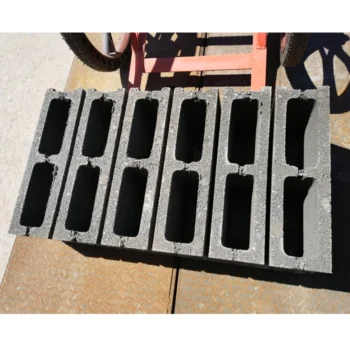
| Output — Hollow Block 400×200×200 mm | 7 pcs/mould, 1260–1680 pcs/h, 10080–13440 pcs/8 hr |
| Output — Hollow Block 400×150×200 mm | 8 pcs/mould, 1440–1920 pcs/h, 11520–15360 pcs/8 hr |
| Output — Rectangular Paving Brick 200×100×60 mm | 27 pcs/mould, 3888–4860 pcs/h, 31104–38880 pcs/8 hr |
| Automation Level | Automatic with PLC intelligent control |
| Mould Change | Quick replacement for multi-format production (time basis to be confirmed) |
| Warranty | 1 year for whole machine, excluding spare parts |
| Standards | CE declaration where applicable |
Application Suitability
| Application | Material or Output |
|---|---|
| Hollow block production for load-bearing and partition walls | Crushed stone, river sand, cement, fly ash blends |
| Rectangular paving brick for driveways and walkways | Fine aggregate and cement mixes with pigment dosing |
| Solid block production for structural masonry | Dense aggregate with higher cement ratio |
| Interlocking brick for retaining walls and landscape | Interlocking profile moulds on standard pallet |
| Kerbstone and porous brick for municipal projects | Permeable aggregate gradation with adjusted vibration frequency |
Why "Pieces per Hour" Means Nothing Without the Block Format
Capacity is only honest when it names the mould, the cycle, and the material behind every number.
Most block machine quotations lead with a single output figure. That number usually assumes the smallest, lightest block the press can form in the shortest possible cycle. When the buyer starts running the format their market actually demands — a heavier hollow block with a longer cure requirement — daily output drops noticeably. I watched an Indian customer receive a QT7-15 concrete block making machine specifications sheet quoting the highest tier, then spend weeks trying to hit that number with crushed limestone dust instead of river sand. The cycle doubled because the vibration frequency that works for sand could not compact limestone dust fast enough. [NEED_CITE: aggregate particle shape and compaction behaviour in concrete block production]
Matching Vibration to Your Actual Mix
The QT7-15 concrete block making machine specifications list 100 kN of vibration force with adjustable frequency from 0 to 60 Hz. That range matters because different aggregates respond to different frequencies. River sand compacts efficiently at higher frequencies, while angular crushed stone or lightweight aggregates need lower frequency and longer vibration time. Platform vibration transmits energy through the pallet into the mould cavity, so the pallet material and thickness also change how much force actually reaches the mix. A technical buyer should share the exact aggregate source and mix ratio before the machine is configured, not after it arrives.
Pallet Size Dictates Your Curing Layout
The 1150 × 700 mm pallet is the physical link between the press and the curing yard. Every rack slot, forklift tine spacing, and curing chamber shelf must accept this dimension. If the buyer’s existing curing area was built around a different pallet standard, the mismatch forces a full yard rebuild or a custom pallet order that delays commissioning. Confirming pallet size against the site plan before the QT7-15 ships avoids this. [NEED_CITE: pallet dimension standards in concrete block curing systems]
Reading the Specs That Shape Block Quality
Hydraulic demolding and 100 kN vibration force work together. The vibration consolidates the mix inside the mould cavity, while hydraulic pressure controls the head compression during the final compaction stage. If hydraulic pressure is too low for the vibration force, the block surface stays porous and edges chip during demolding. The 45 kW overall power must cover the vibration motors, hydraulic pump, and conveyor drives simultaneously, so undersized electrical supply causes voltage drop and inconsistent cycles. The PLC touch screen stores process data for each mould, meaning an operator can recall the exact cycle time, frequency, and pressure setting for a 400×200×200 mm hollow block versus a 200×100×60 mm paving brick without trial and error on every shift.
The Hidden Cost of an Unconfirmed Mould List
A buyer who assumes the quoted price includes every mould format they plan to produce often discovers on commissioning day that only one mould was shipped. The remaining formats become separate purchase orders with separate lead times. Quick mould replacement is listed in the QT7-15 specifications, but the actual changeover time depends on whether the mould clamping system uses bolted or pinned connections and whether the buyer has the matching lifting tool. Without a confirmed format list and changeover procedure, the flexibility the machine promises stays theoretical. [NEED_CITE: mould changeover procedure and tooling requirements for block presses]
Why Buyers Come Back for the Second Machine
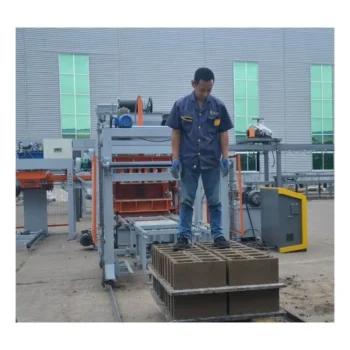
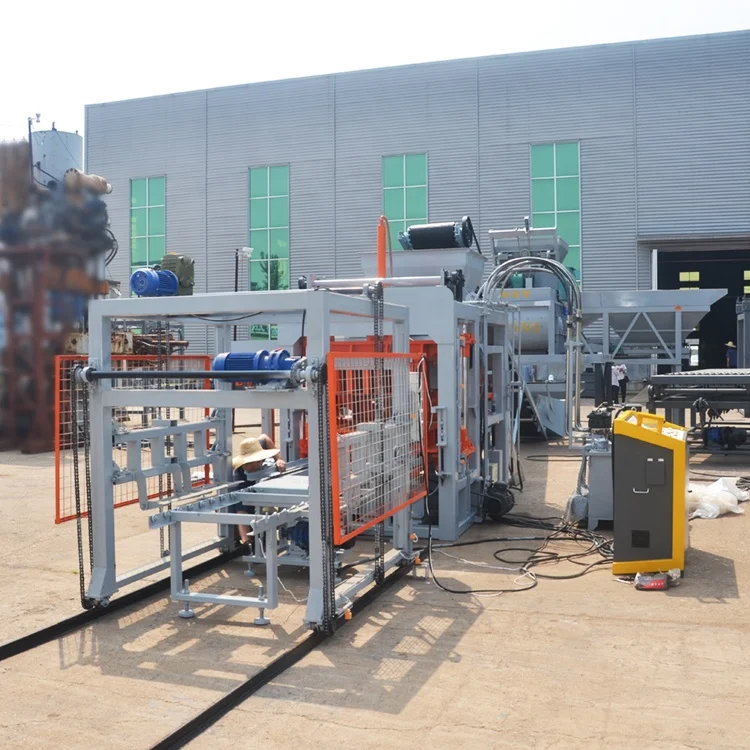
Block machinery is a single focus for Shiyue, so the QT7-15 is specified as one matched system — press, mould, pallet, and handling — rather than assembled from separate suppliers. Configuration starts from the buyer’s actual mix design and local aggregate, not a catalogue default. Mould design covers the formats the buyer’s market sells, with custom drawings available when a local standard differs from the factory list. Automation level is selectable, so a plant can begin with semi-automatic pallet handling and add automatic stacking later. Installation support includes operator training on the PLC interface and remote fault diagnosis for early commissioning issues.
Documentation & Verification
- Line layout and capacity calculation stating block format assumed for each output tier
- Mould drawing and format list confirming included and optional block types
- Hydraulic and electrical schematic matching the as-built 45 kW configuration
- Voltage, frequency, and PLC display language confirmation before production
- Factory test record on buyer’s specified block format before dispatch
- Operation and maintenance manual with wear parts and mould replacement list
Installation, Commissioning & Support
- Foundation plan sized for 8 T machine mass and 100 kN dynamic vibration load
- Dedicated 45 kW power circuit with voltage and frequency confirmed pre-shipment
- Machine dismantled for container loading, reassembled and levelled on-site
- PLC touch screen parameters loaded for buyer’s first mould format at commissioning
- Operator training covering mould change, cycle adjustment, and daily maintenance
- Wear parts list with recommended reorder intervals for hydraulic seals and vibration springs
Before You Request a Quote
Tell us which block formats your market actually sells and the daily volume for each. Share your local aggregate type — river sand, crushed stone, limestone dust, or a blend — along with the cement ratio you plan to use. Confirm the voltage and frequency at your site, the language you need on the PLC display, and the pallet dimensions your existing curing racks accept.
Frequently Asked Questions
Q: How is capacity calculated per block format and what cycle time applies to each mould?
A: Each output figure ties to a named block dimension, mould cavity count, and a cycle range. For the QT7-15, a 400×200×200 mm hollow block runs 7 pieces per mould at 15–20 seconds, while a 200×100×60 mm paving brick runs 27 pieces per mould in the same cycle window. Actual cycle depends on your mix and aggregate, so we confirm after a test run.
Q: How do I match vibration force and frequency to my local aggregate?
A: Angular crushed stone needs lower frequency and slightly longer vibration than rounded river sand. The QT7-15 adjusts from 0 to 60 Hz, and we set the starting point based on the aggregate sample and mix design you provide before production. Fine-tuning happens during on-site commissioning.
Q: What is the mould change time and which formats fit the 1150×700 mm pallet?
A: Hollow blocks, solid blocks, paving bricks, interlocking bricks, and kerbstones all fit the standard pallet. Changeover time depends on whether the mould uses bolted or pinned clamps and whether the operator has the correct lifting tool. We supply the procedure and tooling list with the machine.
Q: What voltage, frequency, and PLC language options must be confirmed before shipment?
A: Voltage and frequency vary by export market and must match the site supply exactly. The PLC touch screen language is set during production so the operator sees instructions in their working language on day one. Both are confirmed in writing before the QT7-15 enters assembly.
Q: What block strength can the 100 kN vibration force achieve with my specific mix?
A: Strength depends on the cement ratio, aggregate gradation, and curing method as much as on vibration force. We run a sample batch with your mix during the factory test, measure compressive strength after standard curing, and share the result before the machine ships.