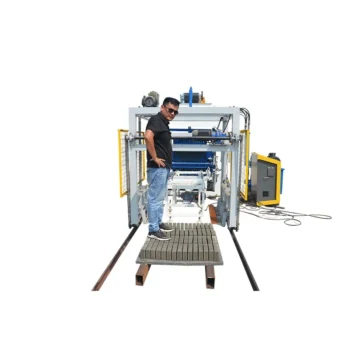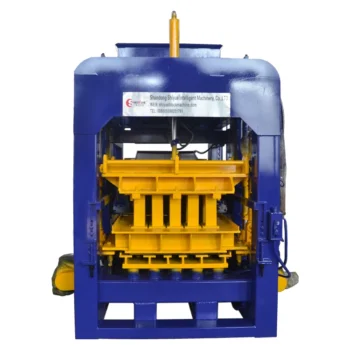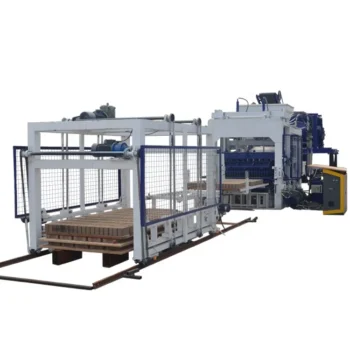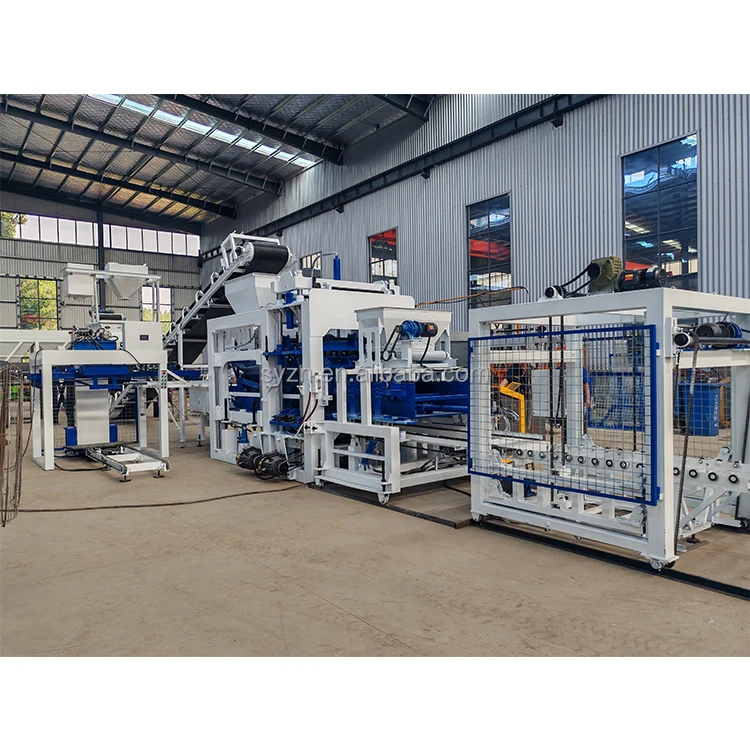
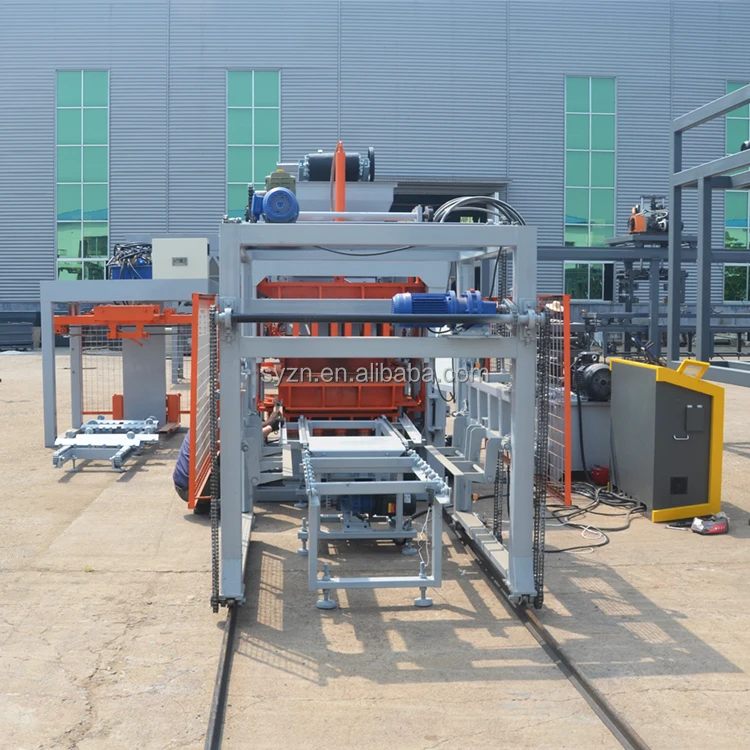

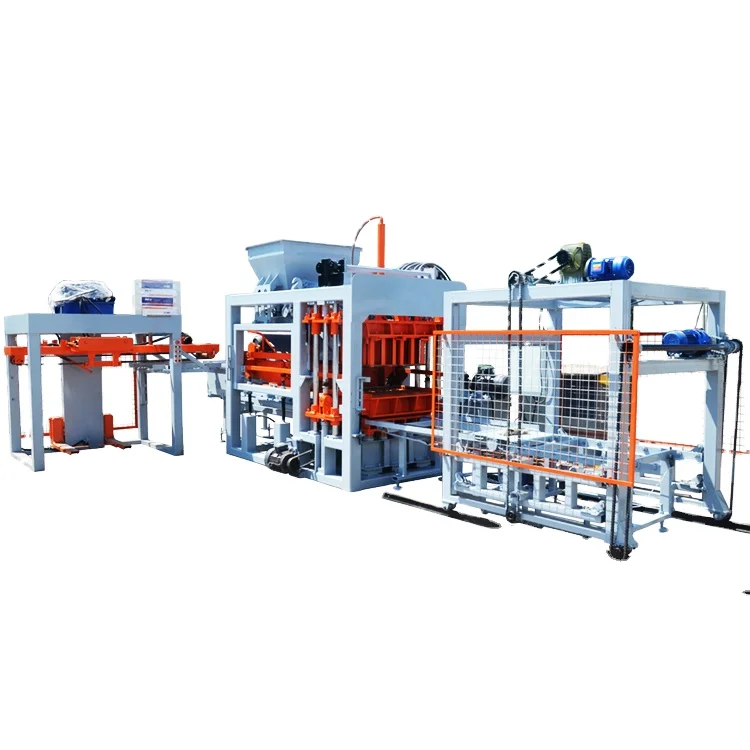
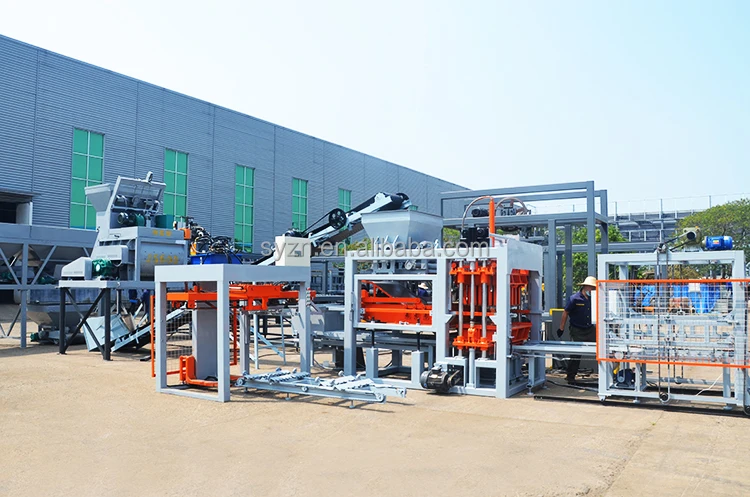
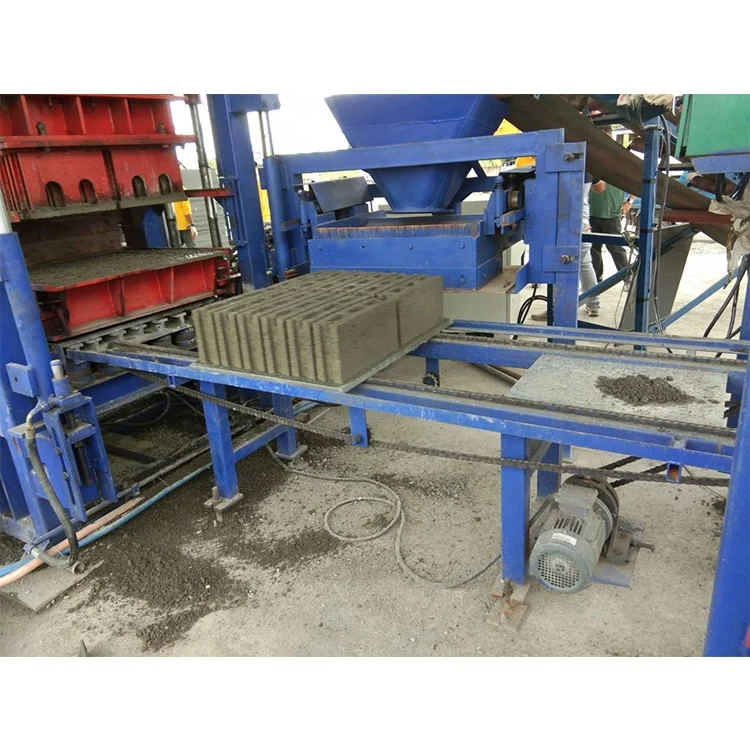
Description
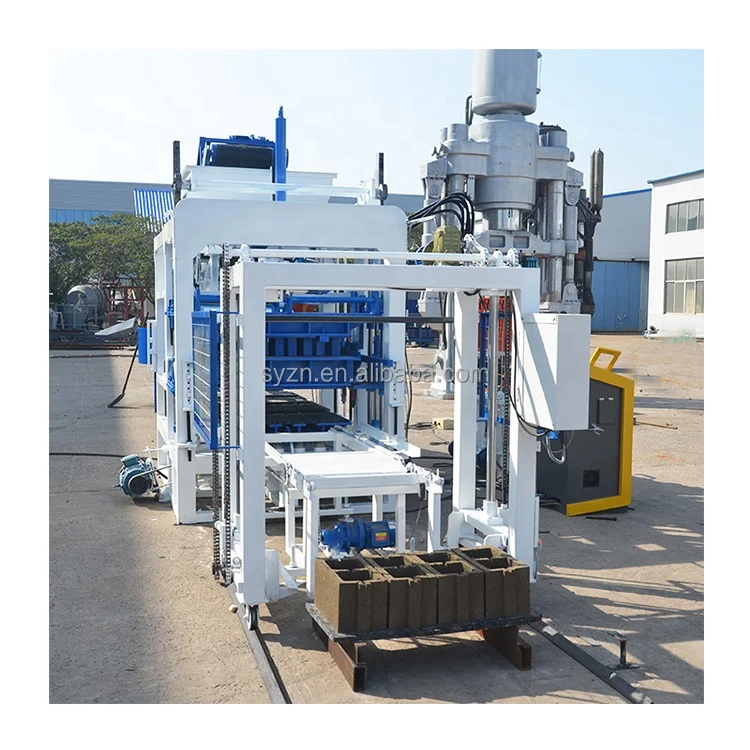
Format-specific capacity matching — every output figure for the QT6-15 is tied to a named block format, mould cavity count, and confirmed cycle time rather than a generic cycles-per-hour claim.
Technical Specifications
| Parameter | Value |
|---|---|
| Model | QT6-15 |
| Product Type | Concrete Block Making Machine |
| Overall Dimensions (L×W×H) | 8200 × 1700 × 2950 mm |
| Vibration Force | 45 kN |
| Vibration Frequency | 0–60 Hz (adjustable) |
| Vibration Form | Platform Vibration |
| Moulding Mode | Automatic loading, vibration moulding |
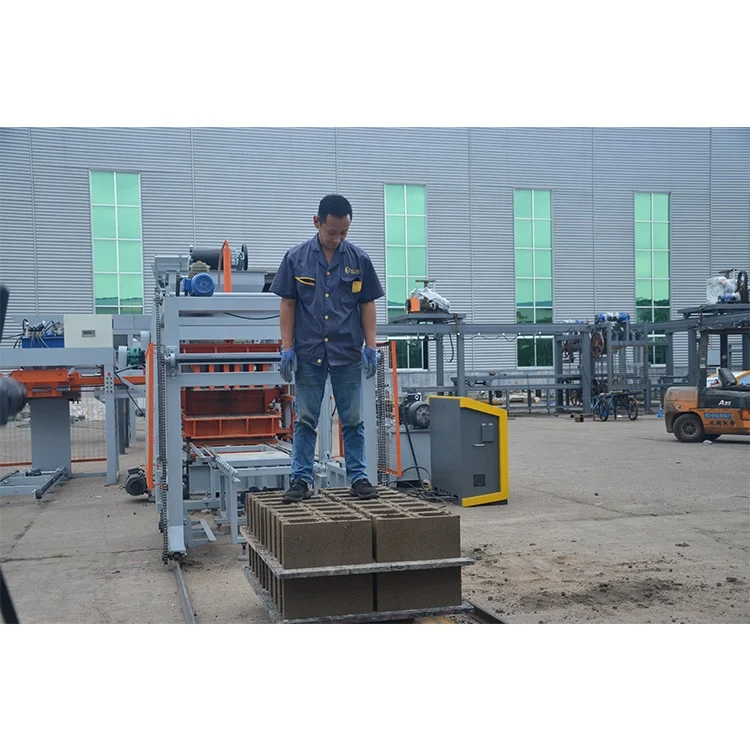
| Pallet Size | 880 × 850 mm |
| Molding Cycle | 15–20 s (basis not stated in source — confirm block format / material / thickness) |
| Overall Power | 37 kW |
| Total Mass | 7 T |
| Demolding Method | Hydraulic |
| Recommended Factory Area | 1200 m² |
| Control System | PLC with touch screen HMI |
| Hydraulic System | Independent integrated hydraulic station |
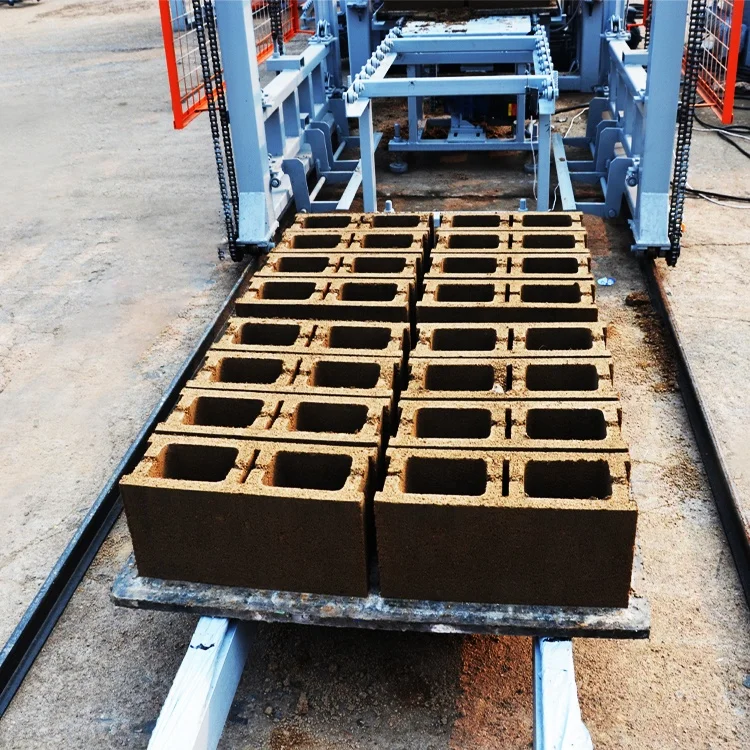
| Output — Hollow Block 400×200×200 mm | 6 pcs/mould, 8640–11520 pcs/8hr (15–20s cycle) |
| Output — Hollow Block 400×150×200 mm | 8 pcs/mould, 11520–15360 pcs/8hr (15–20s cycle) |
| Output — Solid Brick 240×115×53 mm | 32 pcs/mould, 46080–61440 pcs/8hr (15–20s cycle) |
| Output — Rectangular Paver 200×100×60 mm | 21 pcs/mould, 17280–23040 pcs/8hr (20–25s cycle) |
| Output — Zigzag Paver 225×112.5×60 mm | 15 pcs/mould, 17280–23040 pcs/8hr (20–25s cycle) |
| Block Compressive Strength | >15 MPa (basis not stated in source — verify against manufacturer catalog) |
| Automation Level | High — PLC controlled, automatic loading and moulding |
| Fault Diagnosis | Integrated into PLC system |
| Raw Material Adaptability | Waste ash, slag, and various aggregates |
Application Suitability
| Application | Material or Output |
|---|---|
| Hollow block production | Crushed stone, sand, cement, and lightweight aggregates for 400×200×200 mm and 400×150×200 mm formats |
| Solid brick production | Standard aggregate and cement mixes for 240×115×53 mm bricks |
| Rectangular paver production | Fine aggregate and cement for 200×100×60 mm interlocking pavers |
| Zigzag paver production | Fine aggregate and cement for 225×112.5×60 mm interlocking pavers |
| Waste utilization | Fly ash, slag, and recycled aggregate blends with reduced cement dosage |
What "Cycle Time per Format" Actually Means for the QT6-15 Concrete Block Making Machine Specifications
A 15-second cycle on hollow blocks is not the same as a 15-second cycle on pavers, and quoting one number for all formats misleads every buyer who plans a daily production target.
When I first started quoting block machines, I learned the hard way that a single "cycles per hour" figure hides more than it reveals. A buyer would see 180 cycles per hour and multiply that by whatever cavity count they imagined, arriving at a daily output that the machine could never deliver on their actual product mix. The QT6-15 concrete block making machine specifications list separate cycle assumptions for hollow blocks versus pavers because the material settling behaviour and demolding resistance differ substantially between a 200 mm tall hollow cavity and a 60 mm solid paver. [NEED_CITE: block format impact on cycle time and vibration duration in concrete block production]
Without format-specific data, a plant owner who plans to run zigzag pavers three days a week and hollow blocks two days a week will consistently miss their weekly output target. The mismatch only surfaces after installation, when the shift supervisor notices the pallets coming off the press are still curing slower than expected because the vibration dwell was set for a different product.
Mould Options and Format Changeover
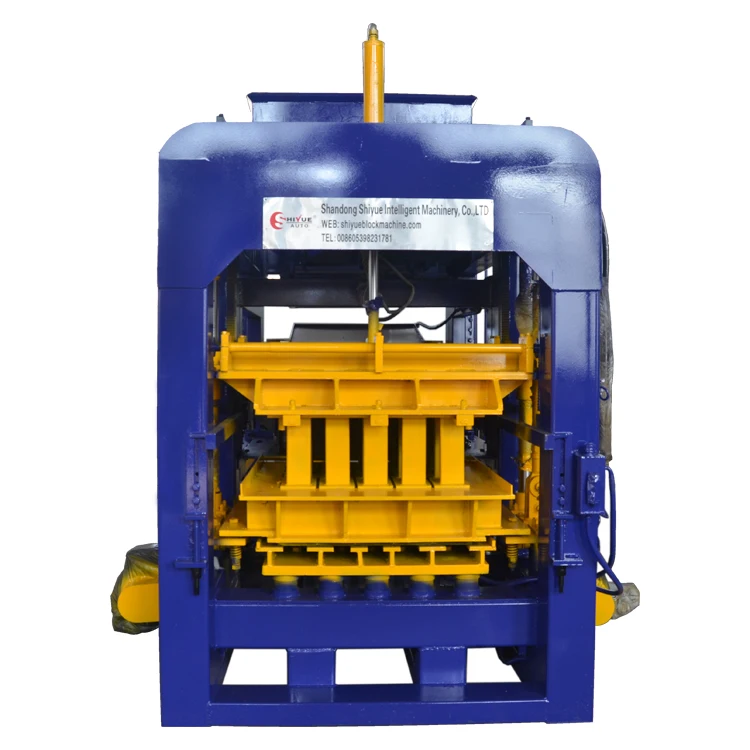
The QT6-15 supports hollow block, solid brick, rectangular paver, and zigzag paver moulds, each with a distinct cavity count matched to the 880 × 850 mm pallet. Switching between formats involves removing the active mould, aligning the replacement mould on the vibration platform, and recalibrating the hydraulic demolding stroke through the PLC touch screen. The mould change time depends on operator familiarity and whether the plant has a dedicated mould storage rack positioned near the press.
Buyers who plan to run multiple formats in the same shift should verify the mould change procedure during factory acceptance testing. A format list and mould drawing document accompanies each QT6-15 delivery, specifying which block types are included in the order and the dimensional tolerances for each cavity. This documentation lets the buyer confirm before shipment that the machine covers the exact formats their local market demands. [NEED_CITE: concrete block mould changeover procedures and tolerances]
Pallet Size and Downstream Handling Alignment
The 880 × 850 mm pallet is the interface between the press and every downstream station — transfer conveyor, curing rack, and forklift. If the buyer already operates a curing yard with racking designed for a different pallet dimension, the mismatch forces either a rack rebuild or manual restacking of every wet block off the press pallet and onto the existing rack pallet. Neither outcome is acceptable once production begins.
Before the QT6-15 concrete block making machine specifications are finalized for a given order, the pallet size and material must be confirmed against the buyer’s existing curing infrastructure. Pallets can be supplied in different materials — typically bamboo, plywood, or composite — each with a different weight, surface friction, and service life under repeated wet-concrete contact and steam curing. The choice affects both the vibration transfer efficiency at the press and the forklift handling speed at the curing yard.
Vibration Force, Hydraulic Pressure, and Block Density
The 45 kN vibration force and adjustable 0–60 Hz frequency work together with the independent hydraulic station to compact the concrete mix into the mould cavity. Higher frequency settings are generally used for fine aggregate paver mixes where surface finish matters, while lower frequency with longer dwell suits coarse aggregate hollow blocks where through-density is the priority. The hydraulic demolding system must lift the formed block off the pallet without cracking, which requires the hydraulic pressure to be matched to the green strength of the specific mix.
A mix designed around lightweight volcanic aggregate will compact differently under 45 kN than a dense river-sand mix, even at the same cycle time. This is why the block compressive strength figure above 15 MPa is listed with a verification note — it assumes a specific cement-to-aggregate ratio and aggregate grading that may not match every buyer’s locally available materials. Sending a sample of the intended aggregate to the factory for a trial run allows the vibration parameters to be preset before the machine ships, reducing on-site commissioning time. [NEED_CITE: aggregate type influence on vibration parameters and block compressive strength]
The Cost of Skipping Format-Specific Verification
A plant that orders a block machine based on a single headline capacity figure often discovers during the first production week that their primary selling format — say, 400×150×200 mm hollow blocks — runs slower than the quoted cycle time because the mould cavity fill pattern was not optimized for their aggregate blend. The result is a daily output gap that compounds across every shift, eroding the revenue projection the buyer used to justify the investment. [NEED_CITE: common causes of block machine output shortfall after installation]
When the pallet size was selected without checking the buyer’s forklift fork width or curing rack spacing, every pallet transfer requires manual intervention, adding labour and breakage risk that no automation level at the press can compensate for.
Why Sizing a Machine to Your Actual Product Mix Matters Here
Every QT6-15 proposal starts with the buyer’s target block format and local raw material, not a catalogue default. The capacity calculation document lists output per format with the cycle time assumption stated beside each figure, so the buyer can verify the daily total against their own production schedule.
Mould design covers the specific formats the buyer’s market sells, including custom drawings when standard cavity layouts do not match local demand. The automation level is selectable — a buyer can begin with semi-automatic pallet handling and add automatic stacking later as volume grows.
Voltage, frequency, and PLC display language are confirmed in writing before the machine enters production, preventing commissioning delays caused by a control panel the local electrician cannot read. The independent hydraulic station is isolated from the main vibration frame, which reduces hydraulic seal wear and maintains consistent demolding pressure across long production runs.
Documentation & Verification
- Line layout showing QT6-15 placement with capacity stated per confirmed block format
- Mould drawing and format list for every cavity type included in the order
- Pallet specification sheet matching size and material to buyer’s curing setup
- Voltage, frequency, and PLC language confirmation signed before production begins
- Factory test record run on buyer’s specified block format and aggregate sample
- Hydraulic and electrical schematic for on-site maintenance reference
Installation, Commissioning & Support
- 1200 m² recommended factory area verified against QT6-15 footprint of 8200 × 1700 mm plus material staging
- 37 kW total power requires dedicated circuit with correct voltage and frequency confirmed pre-shipment
- Machine dismantled into press frame, hydraulic station, and control cabinet for container loading
- PLC touch screen language set and fault diagnosis system tested during on-site commissioning
- Operator training covers mould change procedure across all ordered block formats
- Wear parts and mould maintenance list provided for first replacement cycle planning
Before You Request a Quote
Provide the specific block formats your market sells — dimensions, hollow or solid, and target compressive strength. Confirm the aggregate type and cement grade available locally, along with a sample if possible. State your existing curing rack pallet dimensions and forklift capacity so the 880 × 850 mm pallet can be evaluated against your downstream handling setup.
Frequently Asked Questions
Q: How is the capacity per format calculated for the QT6-15?
A: Each output figure in the QT6-15 concrete block making machine specifications is derived from the mould cavity count multiplied by the number of cycles achievable in an 8-hour shift, using the stated cycle time range for that format. Hollow blocks assume a 15–20 second cycle, while pavers assume 20–25 seconds due to longer vibration dwell needed for surface finish.
Q: Can the 880 × 850 mm pallet be adjusted for my curing racks?
A: The pallet size is confirmed during the proposal stage against the buyer’s existing curing rack spacing and forklift fork width. If the standard dimension does not match, an alternative pallet size can be evaluated before the order is finalized, though this may affect the mould cavity layout and output per cycle.
Q: How long does a mould change take between formats?
A: Mould changeover involves removing the active mould, seating the replacement, and recalibrating the hydraulic demolding stroke through the PLC. The actual time depends on operator experience and whether a mould storage rack is positioned adjacent to the press, which is addressed during installation training.
Q: What mix conditions are needed to reach the stated compressive strength?
A: The compressive strength reference above 15 MPa assumes a specific aggregate grading and cement ratio. Buyers using lightweight or locally sourced aggregates should provide a sample for factory trial testing so that vibration frequency and hydraulic pressure can be adjusted to their actual mix before the QT6-15 ships.
Q: What electrical and control options are confirmed before dispatch?
A: Voltage, frequency, and PLC display language are confirmed in writing before the machine enters production. This ensures the 37 kW power supply matches the site electrical infrastructure and that operators can read fault codes and adjust parameters on the touch screen HMI without translation delays.