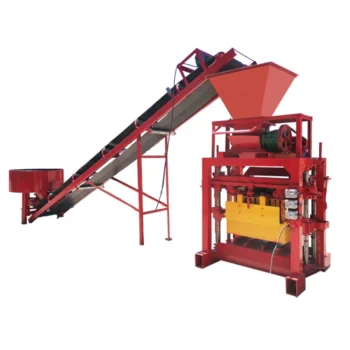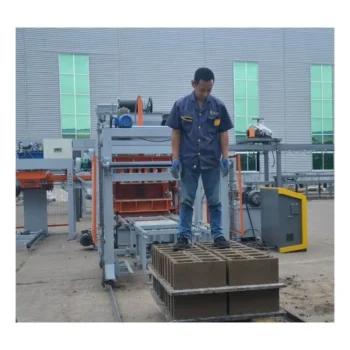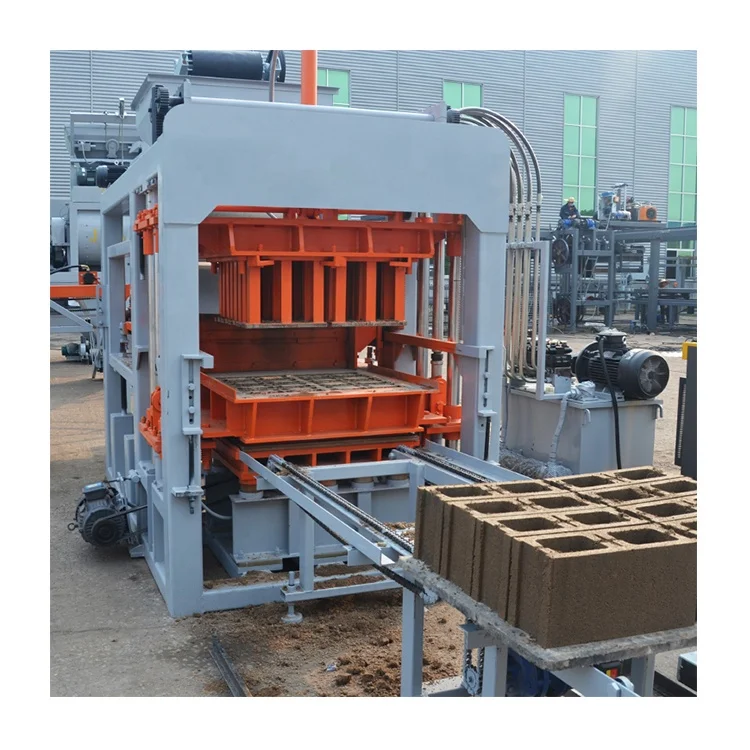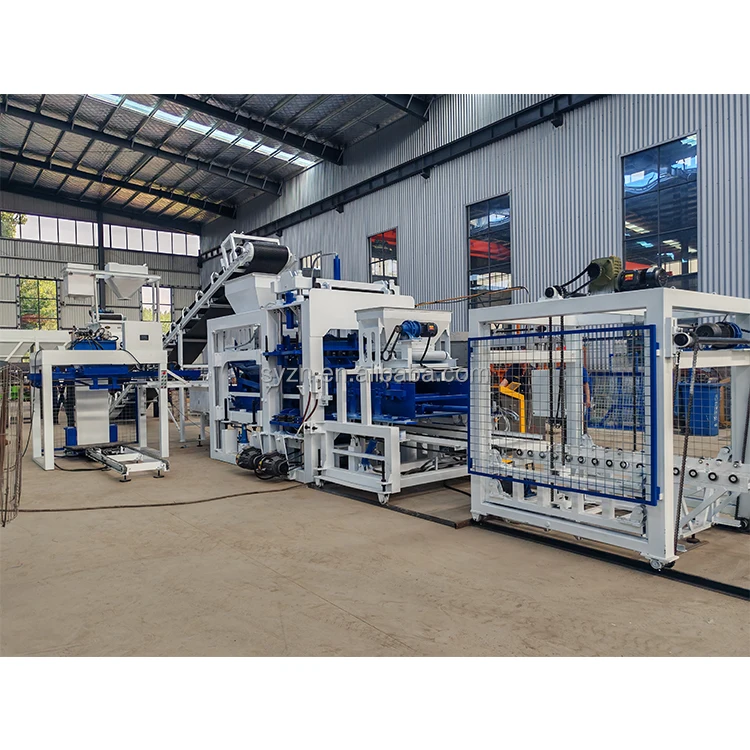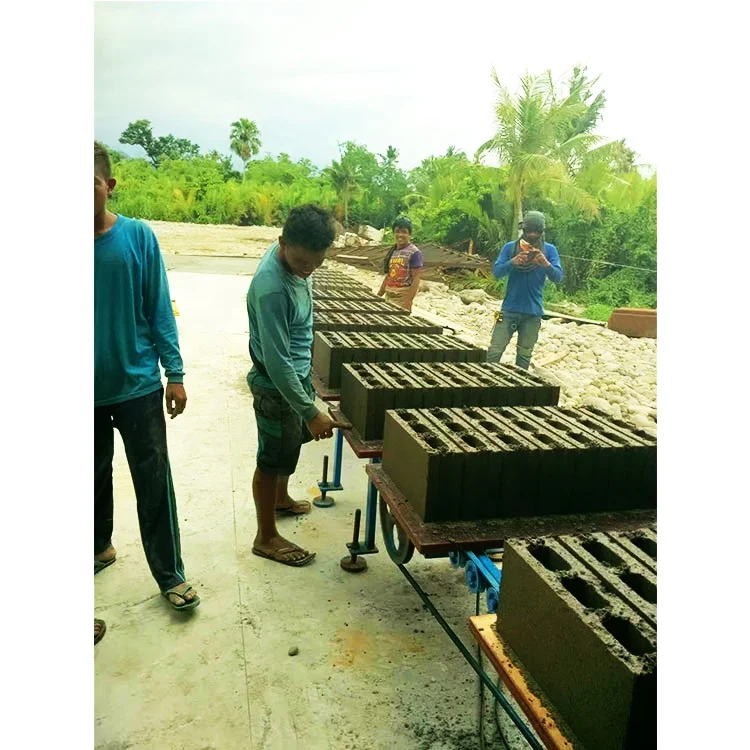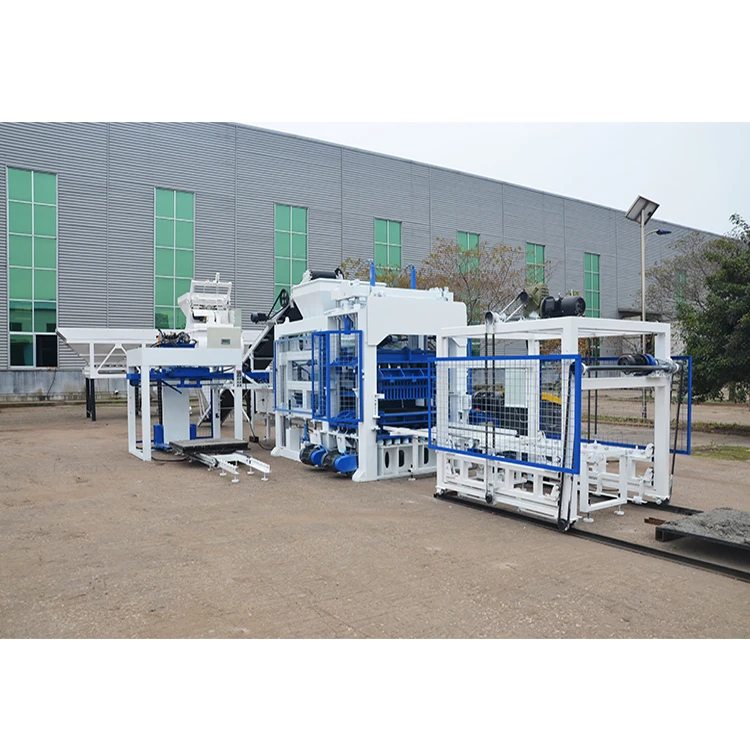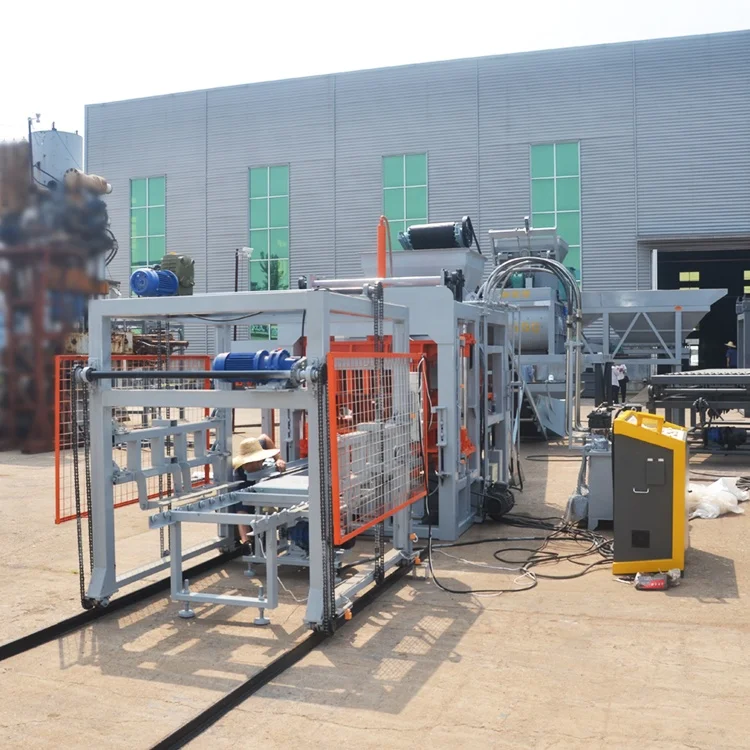


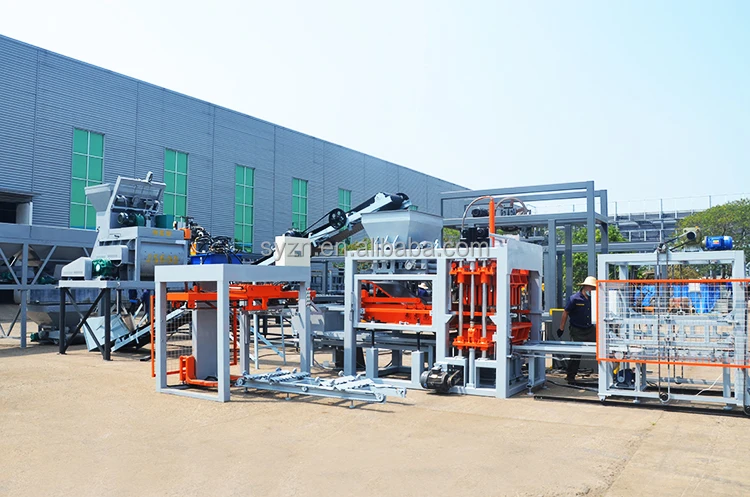

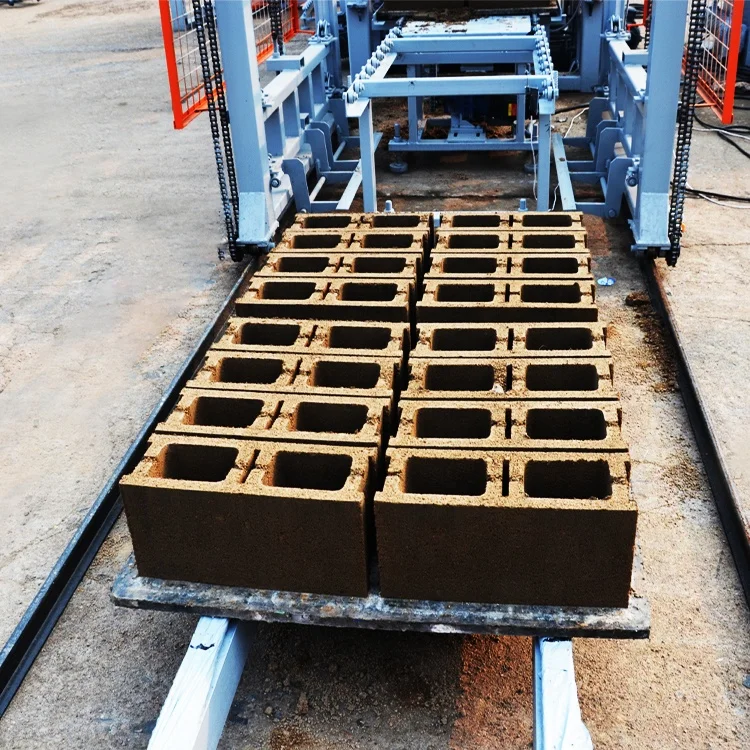
Description
Format-by-Format Capacity — every output figure for the QT6-15 block machine states the block dimensions, mould cavity count, and cycle time behind it, so the line matches the product your market actually buys.
Technical Specifications
| Parameter | Value |
|---|---|
| Model | QT6-15 |
| Product Type | Automatic Hydraulic Concrete Block Making Machine |
| Overall Dimensions (L×W×H) | 8200×1700×2950 mm |
| Vibration Force | 45 kN |
| Vibration Frequency | 0–60 Hz |
| Vibration Form | Platform Vibration |
| Moulding Mode | Load automatically, vibration moulding |
| Pallet Size | 880×850 mm |
| Moulding Cycle | 15–20 s for hollow/solid blocks; 20–25 s for pavers |
| Overall Power | 37 kW |
| Total Mass | 7 T |
| Demolding Method | Hydraulic |
| Recommended Factory Area | 1200 m² |
| Control System | PLC with touch screen HMI and fault diagnosis |
| Block Compressive Strength | > 15 MPa (based on stated mix design) |
| Automation Level | Automatic (PLC controlled, automatic loading and vibration moulding) |
| Output — Hollow Block 400×200×200 mm | 1080–1440 pcs/h, 8640–11520 pcs/8h (6 pcs/mould, 15–20 s cycle) |
| Output — Hollow Block 400×150×200 mm | 1440–1920 pcs/h, 11520–15360 pcs/8h (8 pcs/mould, 15–20 s cycle) |
| Output — Solid Brick 240×115×53 mm | 5760–7680 pcs/h, 46080–61440 pcs/8h (32 pcs/mould, 15–20 s cycle) |
| Output — Rectangular Paver 200×100×60 mm | 2160–2880 pcs/h, 17280–23040 pcs/8h (21 pcs/mould, 20–25 s cycle) |
| Output — Zigzag Paver 225×112.5×60 mm | 2160–2880 pcs/h, 17280–23040 pcs/8h (15 pcs/mould, 20–25 s cycle) |
| Voltage & Frequency | To be confirmed with buyer’s site supply |
| PLC Display Language | To be confirmed with buyer |
| Stacking Method | To be confirmed (manual or automatic) |
| Warranty | 1 year for whole machine (excluding spare parts) |
Application Suitability
| Application | Material or Output |
|---|---|
| Hollow block production for structural and partition walls | Crushed stone, sand, cement, and fly ash blends |
| Solid brick manufacturing for load-bearing masonry | Graded aggregate with cement binder |
| Rectangular and zigzag paving for walkways and driveways | High-density concrete mixes with fine aggregate |
| On-site production by construction contractors | Local sand, gravel, and waste slag with reduced cement |
| Format expansion for existing concrete product plants | Waste ash, slag, and various aggregates matched to target block strength |
Why "Pieces per Hour" Means Nothing Without the Block Format
A single peak number hides the format, mould cavity count, and cycle time that actually determine your daily output.
Buyers who have been quoted only a headline capacity figure often find that real daily production falls far short once the machine is running their specific block. A catalogue might claim a high hourly number based on a small solid brick, then the buyer discovers their primary product — a 400×200×200 mm hollow block — runs at a considerably lower rate because fewer cavities fit the pallet and the cycle time differs. When I first sourced block machines for a Middle East project, the supplier’s capacity sheet listed only one number with no format attached; the QT6-15 block machine specifications here avoid that trap entirely. [NEED_CITE: industry standards for block machine capacity reporting]
Mould Cavity Count Drives Honest Output
Each output line in the specification table above ties directly to a mould configuration. Six cavities of 400×200×200 mm hollow block per pallet yields 8640–11520 pieces in an eight-hour shift, while thirty-two cavities of solid brick produce 46080–61440 in the same period. The pallet size of 880×850 mm sets the physical limit on how many cavities fit, and that constraint applies to every format equally. Understanding the QT6-15 block machine specifications format by format prevents the gap between quoted and actual output.
Vibration and Pressure Must Match the Mix
Platform Vibration Tuned to Local Aggregate
The 45 kN vibration force operating across a 0–60 Hz adjustable frequency range is delivered through platform vibration rather than mould-only excitation. This matters because desert sand in the Middle East, for instance, tends to carry high silt content, which demands a different frequency setting than clean river gravel to achieve consistent compaction. The adjustable range allows the operator to dial in the frequency that produces blocks exceeding 15 MPa compressive strength with the specific aggregate available on site.
Pallet Size as a Line Design Constraint
The 880×850 mm pallet is not an arbitrary choice; it governs curing rack dimensions, forklift tine spacing, and the footprint of the drying yard. Before confirming an order, the pallet size needs to be checked against the buyer’s existing curing infrastructure. A mismatch here means either new forklifts or wasted curing space — costs that never appear in the machine quotation but show up on the project balance sheet. [NEED_CITE: pallet standardization in concrete block production lines]
Hydraulic Demolding and Cycle Time Reality
The 15–20 second moulding cycle for hollow and solid blocks, extending to 20–25 seconds for pavers, reflects the time needed for hydraulic pressure to build, vibration to compact, and demolding to release cleanly. Shorter cycles might be achievable in a factory test with ideal material, but sustained production with local aggregate requires the full range. The hydraulic demolding system pulls the mould vertically without disturbing the green block, reducing edge damage and scrap rate on formats with thin webs like the 400×150×200 mm hollow block.
What Happens When Format Matching Is Skipped
Buyers who skip the format-by-format exercise often end up with a machine optimized for a block their market does not buy. The press might be perfectly capable, but the wrong mould cavity layout means longer cycles or weaker blocks, and the pallet size forces an expensive reconfiguration of the curing area. Voltage and frequency left unconfirmed delay commissioning by weeks while a transformer is sourced locally. PLC display language set to default forces operators to navigate menus they cannot read, slowing format changes and troubleshooting. [NEED_CITE: common commissioning delays in exported concrete machinery]
Why Procurement Through This Channel Works
Block machinery is a single focus here, so the QT6-15 is specified as one matched system — press, mould, pallet, and handling — rather than assembled from separate suppliers. The configuration is set against the buyer’s actual mix design, local aggregate, and target block format rather than pulled from a catalogue default. Mould design covers the formats the buyer’s market actually sells, with custom drawings available when standard cavity layouts do not fit. The automation level is selectable, allowing a buyer to start with manual pallet handling and add automatic stacking later. Installation support includes operator training on format change procedures and cycle time optimization for the local material.
Documentation & Verification
- Line layout with capacity calculation stating each block format assumed for the QT6-15
- Mould drawing confirming cavity count and 880×850 mm pallet match per format
- Hydraulic and electrical schematic with voltage, frequency, and PLC language confirmed before production
- Factory test record showing actual cycle time per block format, not a catalogue claim
- Wear parts and mould list with part numbers for first replacement ordering
Installation, Commissioning & Support
- Foundation plan sized to the 8200×1700 mm footprint and 7 T operating mass of the QT6-15
- Dedicated power circuit rated for the 37 kW total load, voltage and frequency confirmed pre-shipment
- PLC touch screen configured in the operator’s language before the control cabinet leaves the factory
- First-run mould setup and cycle time calibration performed on the buyer’s actual mix and aggregate
- Operator training on hydraulic demolding, vibration frequency adjustment, and fault diagnosis via the HMI
- Spare mould and hydraulic wear parts list supplied at commissioning for local reorder planning
What to Prepare Before Inquiry
Share the block dimensions and strength grade your market requires, along with the daily volume you need per format. Include your local aggregate type and whether samples can be sent for mould trial. Confirm the site voltage and frequency, the PLC display language your operators need, and whether existing curing racks and forklifts must match the 880×850 mm pallet.
Frequently Asked Questions
Q: How is output capacity verified per block format and what does the cycle time assume?
A: Every capacity figure lists the block dimensions, cavity count per mould, and cycle time range. The 15–20 second cycle for hollow and solid blocks assumes a standard concrete mix with local aggregate. Actual sustained output depends on material flow, pallet handling speed, and operator熟练度. A factory test record with your specific format confirms real-world cycle times before dispatch.
Q: How is the mould selected to match local block dimensions and strength requirements?
A: The mould is designed around the buyer’s target block format and the compressive strength the local market demands. Cavity count is calculated to fit the 880×850 mm pallet. Mix design and aggregate samples are tested to confirm the block exceeds 15 MPa before the mould is finalized and shipped.
Q: How are pallet size and material chosen to fit existing curing infrastructure?
A: The 880×850 mm pallet specification is shared early so the buyer can verify compatibility with current curing racks, forklift tine spacing, and drying yard layout. Pallet material — wood, steel, or composite — is selected based on the curing environment and expected handling cycles at the buyer’s plant.
Q: How is voltage, frequency, and PLC language confirmed before shipment?
A: The buyer’s site electrical supply details are collected during the quotation stage and written into the production order. The PLC touch screen HMI is loaded with the agreed display language, and the electrical schematic reflects the confirmed voltage and frequency before the control cabinet is wired.
Q: What does the mould change procedure look like and how long does it take?
A: The hydraulic demolding system allows vertical mould extraction without disturbing the press frame. Mould change time depends on the format transition and operator familiarity. Training covers the full procedure, and the fault diagnosis system on the PLC HMI guides the operator through alignment checks after each swap.