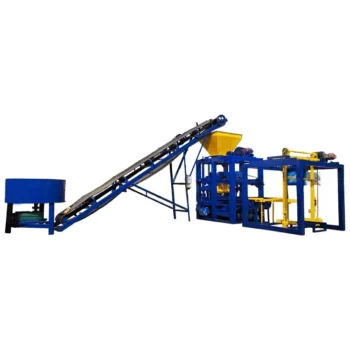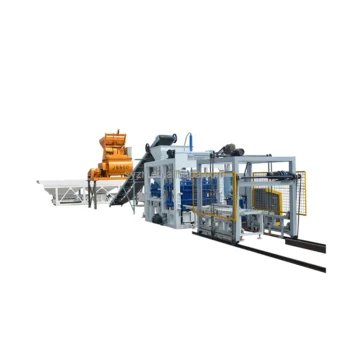
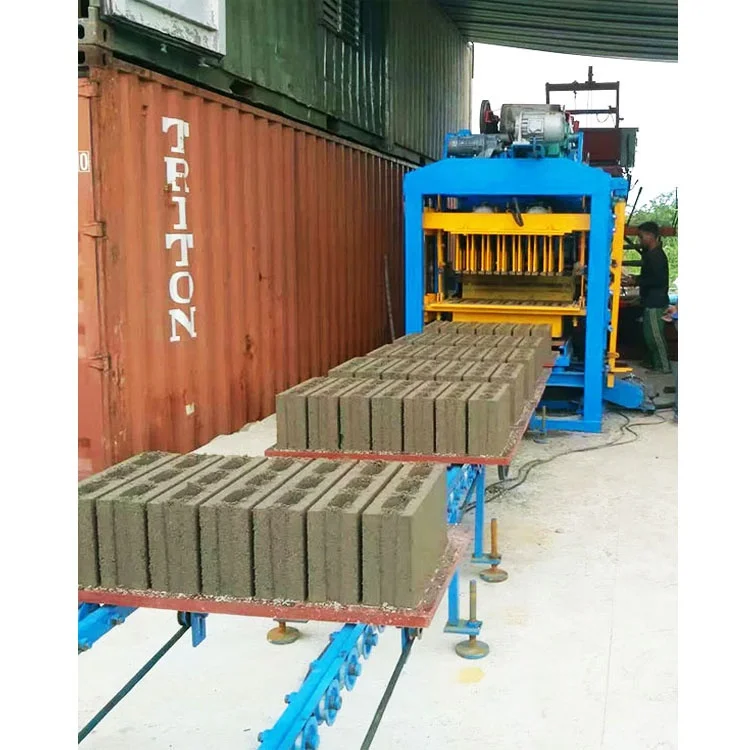
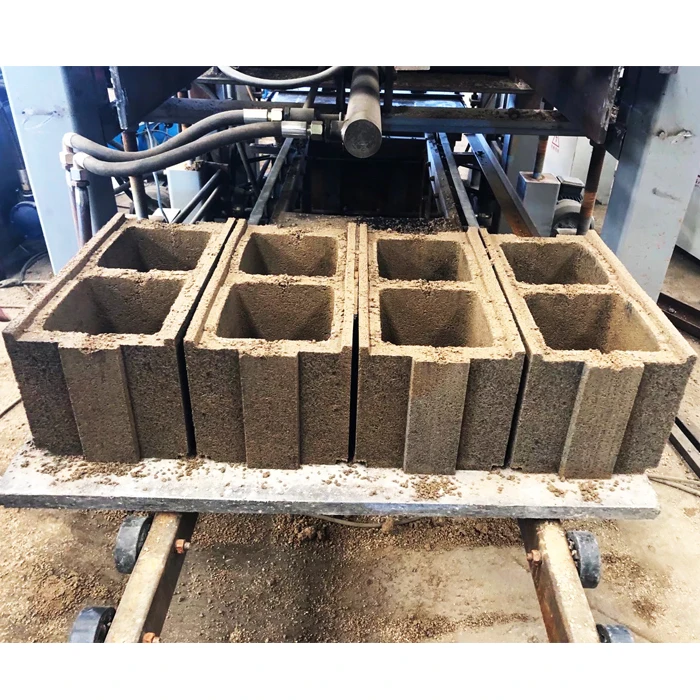


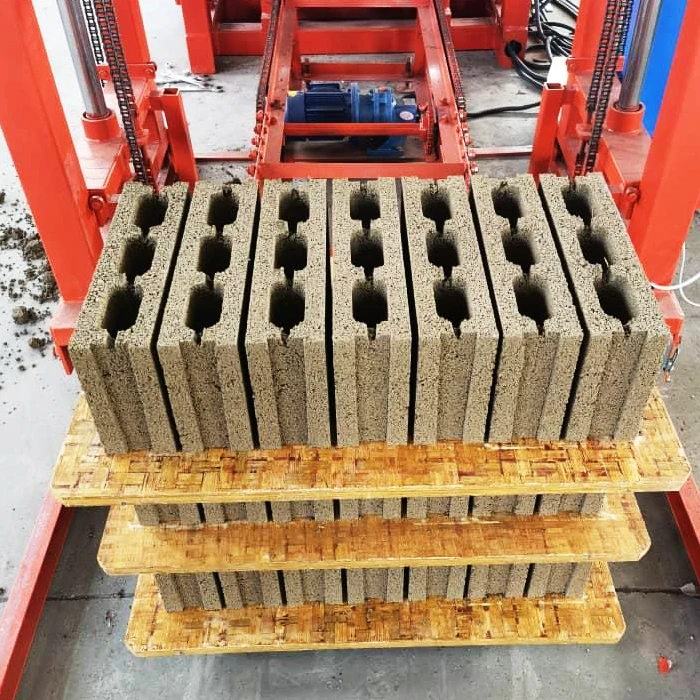
Description
Format-Specific Capacity — every output figure for the QT4-25a is stated per block format and mould layout, so your daily production target is based on the product you actually sell, not a catalogue headline.
Technical Specifications
| Parameter | Value |
|---|---|
| Model | QT4-25a |
| Product Type | Automatic Block Making Machine |
| Rated Power | 27.5 kW |
| Voltage & Frequency | 380V (configurable to customer requirements) |
| Vibration Force | 60 kN |
| Pallet Size | 1020 × 850 × 40 mm |
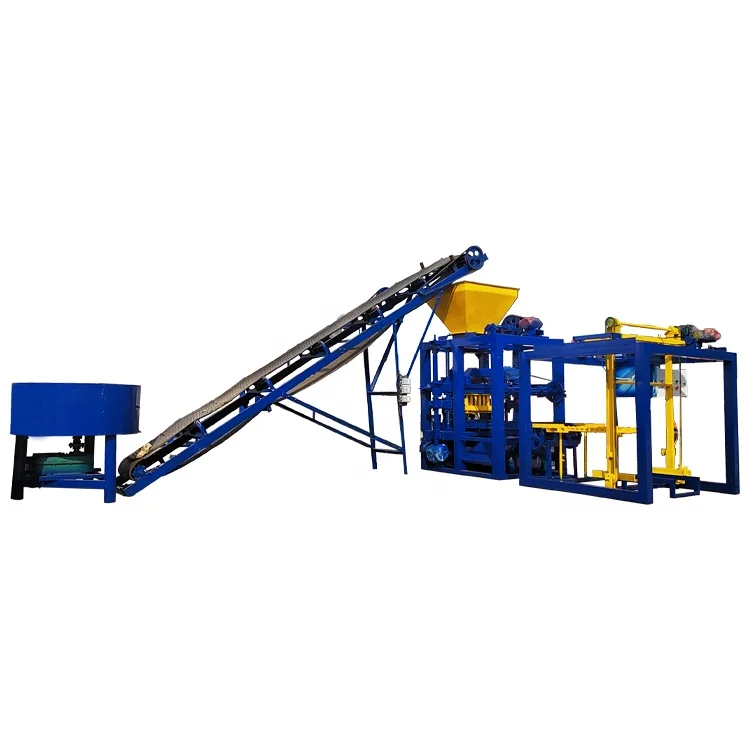
| Overall Dimensions (L×W×H) | 7100 × 1600 × 2610 mm |
| Net Weight | 5800 kg |
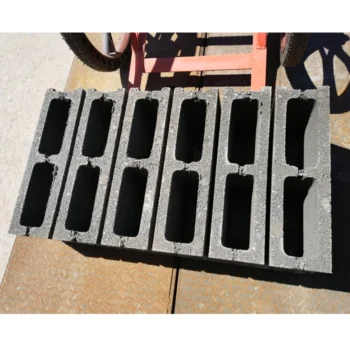
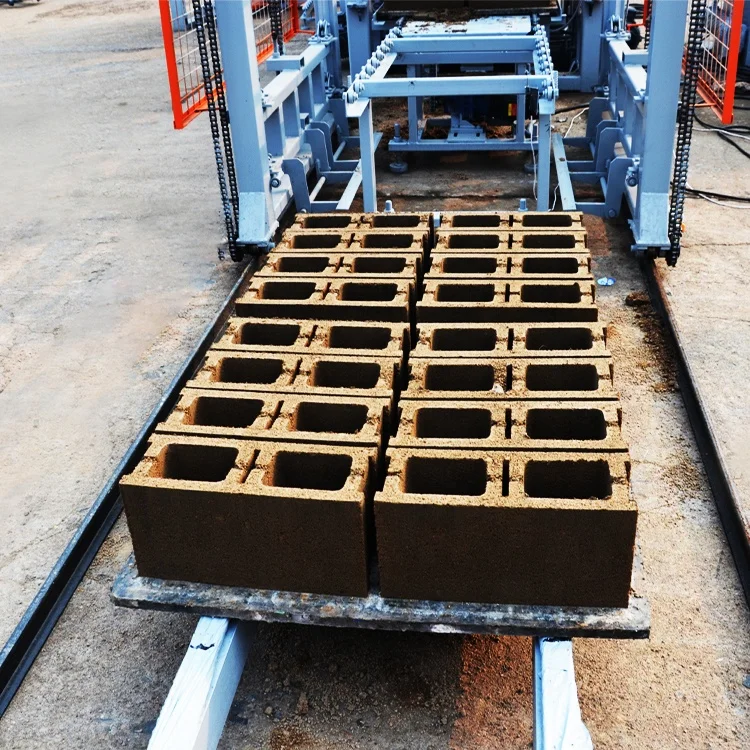
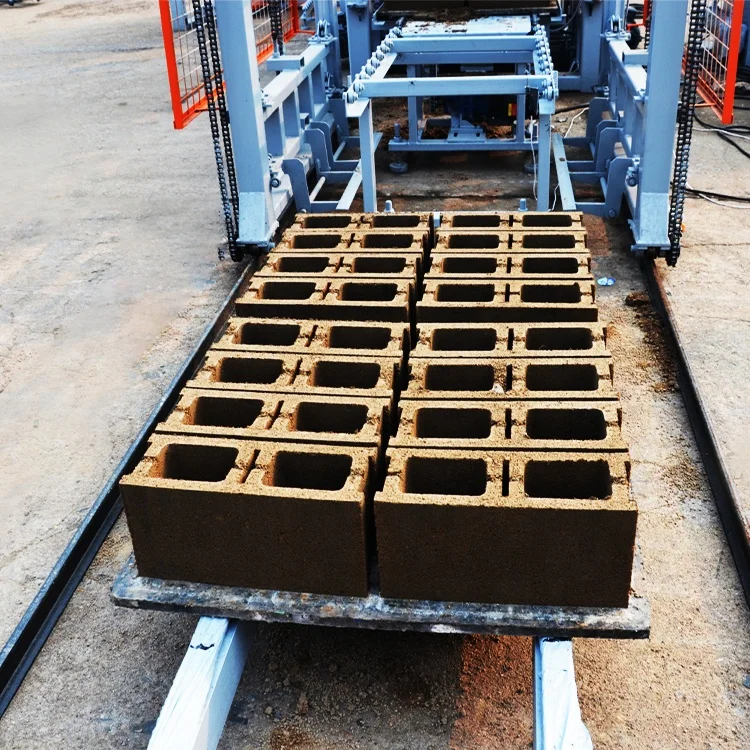
| Mould Formats | 400×200×200 mm (4 pcs/mould), 400×150×200 mm (6 pcs/mould), 225×112.5×53 mm (16 pcs/mould) |
| Output Capacity | 960 pcs/h based on 400×200×200 mm hollow block; 1440 pcs/h based on 400×150×200 mm block; 3840 pcs/h based on 225×112.5×53 mm solid brick |
| Daily Output | 7,680 pcs/day based on 400×200×200 mm hollow block; 11,520 pcs/day based on 400×150×200 mm block; 30,720 pcs/day based on 225×112.5×53 mm solid brick |
| Automation Level | Automatic |
| Certification | ISO9001:2008, CE |
| Warranty | 1 year |
Application Suitability
| Application | Material or Output |
|---|---|
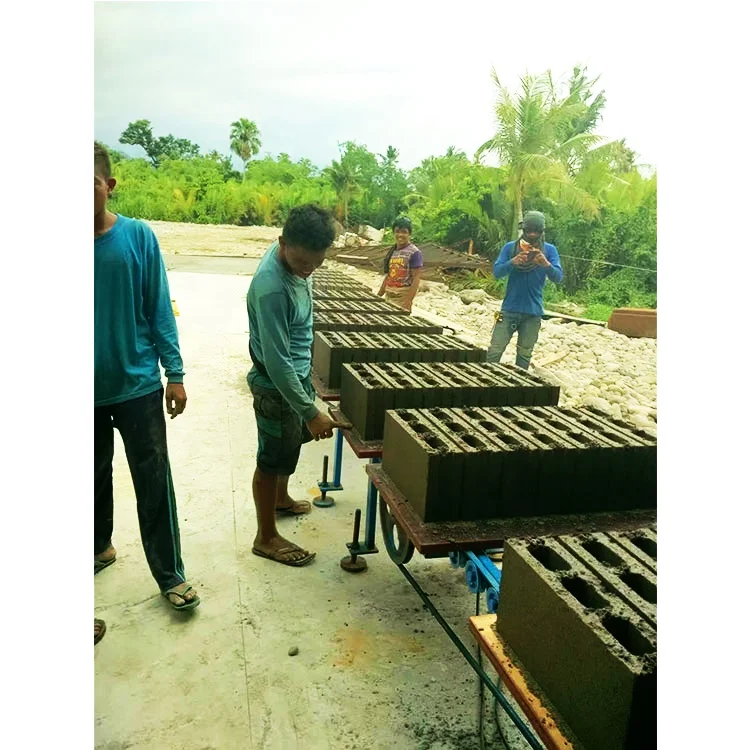
| Hollow block production for small-to-medium plants | Crushed stone, sand, cement, and fly ash mixes forming 400×200×200 mm cavity blocks |
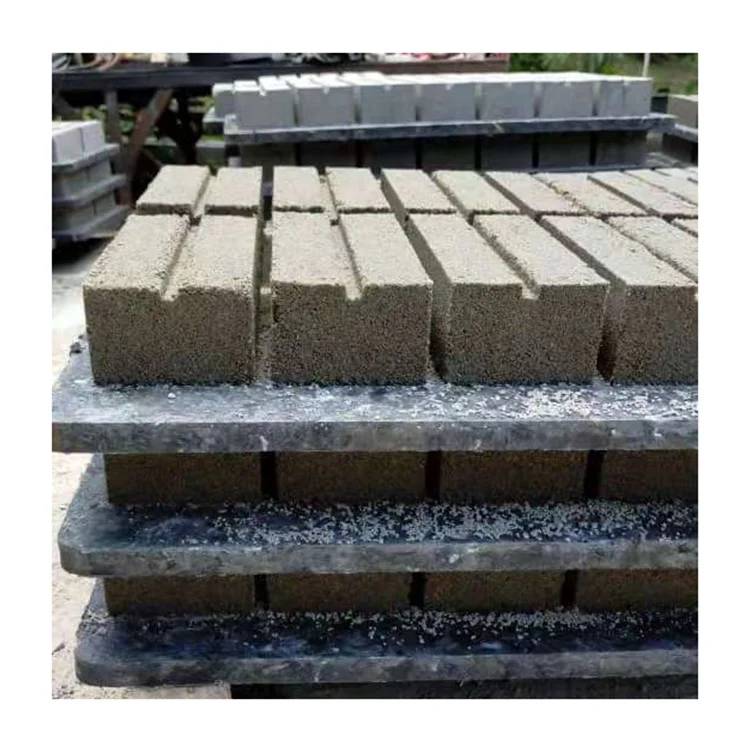
| Solid brick manufacturing for regional building supply | Fine aggregate and cement blends producing 225×112.5×53 mm standard bricks |
| On-site block production for housing and development contractors | Locally sourced aggregate forming 400×150×200 mm walling blocks |
| Format expansion for existing concrete product manufacturers | Switching between hollow block, solid brick, and intermediate formats via mould change |
What "960 Pieces per Hour" Actually Means for the QT4-25a
That figure holds only when the press is running 400×200×200 mm hollow blocks at four pieces per mould.
I have seen buyers compare machines on a single output number pulled from a brochure, then discover on commissioning day that the format they sell most — say a 150 mm wide walling block — runs at a different cycle and mould count. The QT4-25a automatic block making machine specifications break capacity down per format because a 960-piece hourly rate for hollow blocks becomes 3,840 pieces when the same press is fitted with a 16-cavity solid brick mould. Without that format-level detail, daily targets are guesswork [NEED_CITE: block output calculation methods by format and cycle time].
Matching Block Format to Mould Layout and Cycle Time
The QT4-25a ships with three standard mould formats, each changing what the press produces per cycle. A four-cavity hollow block mould fills a 1020 × 850 mm pallet with four 400×200×200 mm units, while the sixteen-cavity solid brick mould places 225×112.5×53 mm bricks across the same pallet area. The cycle time implied by the model designation must be verified against your specific mix and block format before finalising daily output projections. This is the kind of detail that determines whether a QT4-25a automatic block making machine meets your plant’s actual sales volume.
Vibration Force and Mix Design Alignment
The 60 kN vibration force must work with your local aggregate grading and cement ratio to compact the mix evenly across the mould cavity. A mix that is too dry or too coarse for that force level produces blocks with weak edges and inconsistent density. I once worked with a buyer whose river sand had a high clay content; the standard vibration setting left the blocks crumbly at the corners, and we had to adjust both the mix moisture and the vibration duration before strength targets were met. Confirming this match before production avoids costly rework after the machine arrives [NEED_CITE: vibration force requirements relative to aggregate type and moisture].
Pallet Dimensions and Curing Area Compatibility
The 1020 × 850 × 40 mm pallet size governs how many blocks cure per rack and whether your existing forklift can handle the loaded pallet weight. A pallet this size loaded with sixteen solid bricks and wet concrete can exceed what a light-duty forklift is rated for. Equally, if your curing racks were built for a different pallet footprint, every pallet will need manual repositioning — negating the efficiency the automatic press is supposed to deliver. Specifying pallet size against your actual curing infrastructure is as important as the press itself.
Reading the Specification Sheet Beyond Headline Numbers
Rated power at 27.5 kW tells you the electrical supply the QT4-25a needs, including motor starting current, which must be factored into your site’s total connected load. The 60 kN vibration force, combined with hydraulic pressure during the compression stroke, determines the final block density and compressive strength — but only if the hydraulic circuit is adjusted to match the vibration amplitude your mould requires. Machine weight at 5,800 kg influences foundation design; a slab that flexes under vibration will cause uneven compaction and accelerated frame wear. These are the parameters that separate a machine that runs from one that runs consistently.
The Cost of Skipping Format-Level Verification
Buyers who confirm only the headline capacity often find their real daily output falls well short once the machine is running their target format. Pallets that do not fit existing curing racks force a complete rack rebuild or manual handling at the end of every shift. Mould changeover that was not tested at the factory can consume most of a working day, erasing the format flexibility the machine was purchased for [NEED_CITE: common block machine commissioning delays and their causes]. These are not machine defects — they are specification gaps that surface only after installation.
Why Source the QT4-25a Through a Format-Matched Approach
Block machinery is the only product line here, so the press, mould, pallet, and handling equipment are specified as one system rather than sourced separately. Every quotation includes a capacity calculation that names the block format behind each output figure, not a single unqualified number. Mould design covers the formats your regional market actually buys, with custom drawings available when standard formats do not match. The automation level can be set to match your current labour and upgraded later, so the investment scales with your production growth [NEED_CITE: matching block machine configuration to buyer mix design and local aggregate].
Documentation & Verification
- Line layout and capacity calculation naming the block format behind each output figure
- Mould drawing and format list showing cavity count, block dimensions, and cycle assumptions
- Pallet specification confirming dimensions and load rating against your curing racks
- Voltage and control language confirmation document issued before production begins
- Factory test record run on your specified block format before dispatch
- Hydraulic and electrical schematic for local maintenance reference
Installation, Commissioning & Support
- Foundation slab must accommodate the 7100 × 1600 mm footprint and 5,800 kg static load plus dynamic vibration forces
- 380V three-phase supply with dedicated circuit sized for 27.5 kW rated power and motor starting surge
- Machine shipped partially dismantled; reassembly and levelling required on-site before commissioning
- First-run parameter setting covers vibration duration, hydraulic pressure, and feed volume matched to your mix
- Operator training on mould changeover procedure, daily greasing points, and pallet inspection routine
- Wear parts list with mould plate and vibration spring replacement intervals included in manual
What to Include in Your Inquiry
To size the QT4-25a correctly, share the block format or formats your market sells, including dimensions and target daily volume. Provide a sample or lab report of your local aggregate — sand type, maximum particle size, and typical moisture content — so vibration and feed settings can be matched before the machine is built. Confirm your site voltage and frequency, and whether your curing racks and forklift are already in place or being planned alongside the press.
Frequently Asked Questions
Q: How is output capacity calculated for each block format on the QT4-25a?
A: Output is calculated by multiplying the number of blocks per mould by the number of cycles per hour, then by the working hours per day. For the QT4-25a, this means 960 pieces per hour with a four-cavity hollow block mould and 3,840 pieces per hour with a sixteen-cavity solid brick mould. Each figure is tied to its specific format and cannot be transferred across mould types.
Q: How do I match vibration force and hydraulic pressure to my local aggregate?
A: The 60 kN vibration force must be paired with the right hydraulic compression to suit your aggregate grading and cement ratio. Coarse or high-clay materials may need longer vibration or adjusted moisture. We request a material sample or lab report before finalising these settings so the machine arrives configured for your actual mix, not a default.
Q: What mould formats are available, and can I request custom mould drawings?
A: Standard moulds cover 400×200×200 mm hollow blocks, 400×150×200 mm walling blocks, and 225×112.5×53 mm solid bricks. If your market sells a format outside these dimensions, custom mould design is available from buyer drawings. The mould drawing and format list are confirmed before production to ensure cavity count and block dimensions match your requirements.
Q: How do I confirm pallet size against my existing curing racks and forklift?
A: The QT4-25a uses 1020 × 850 × 40 mm pallets. Before ordering, measure your curing rack spacing and check your forklift’s rated capacity against the weight of a loaded pallet with wet blocks. If either does not match, we adjust pallet dimensions or recommend handling changes so the line works end to end without manual bottlenecks.
Q: What is the mould change procedure and expected changeover time per format?
A: Mould change involves releasing the clamp bolts, lifting the current mould with the overhead crane or forklift, positioning the new mould, and recalibrating the feed box and vibration settings. The exact changeover time depends on your crew’s familiarity and the tools on site. We include the procedure in the operation manual and cover it during operator training so your team can practise before production begins.