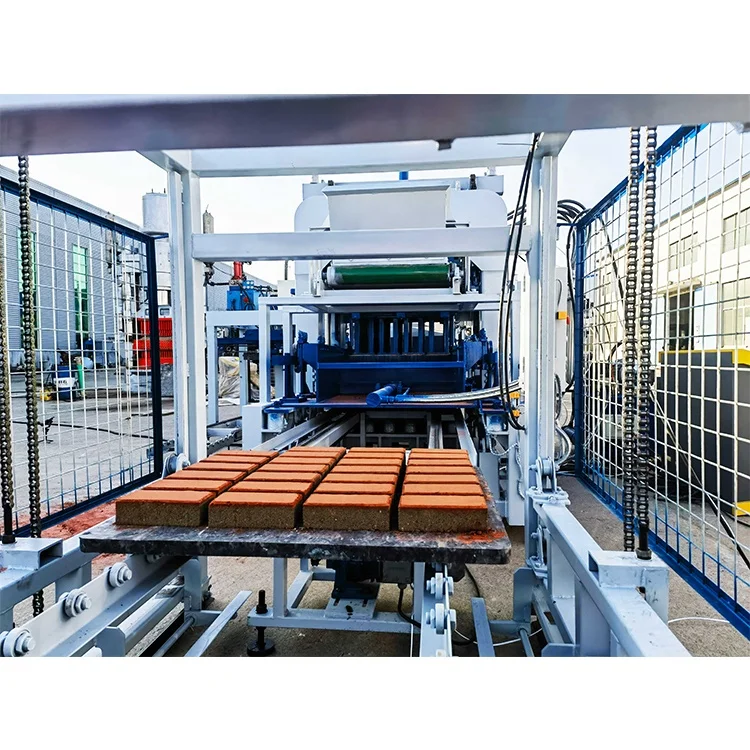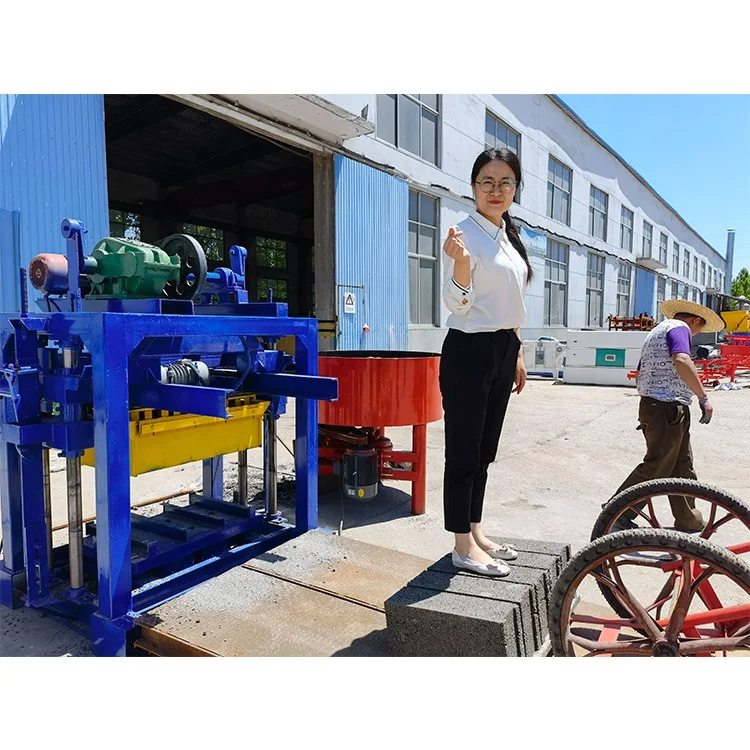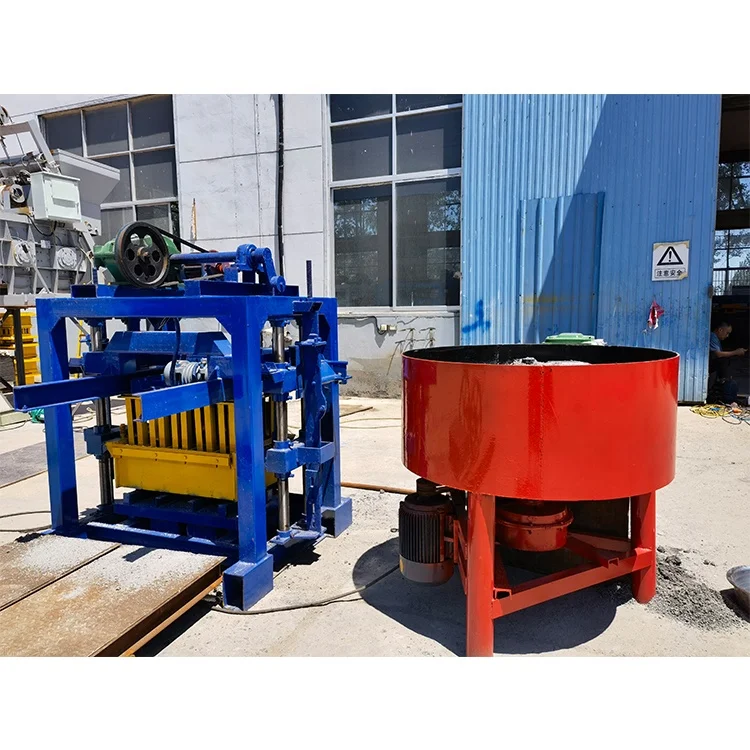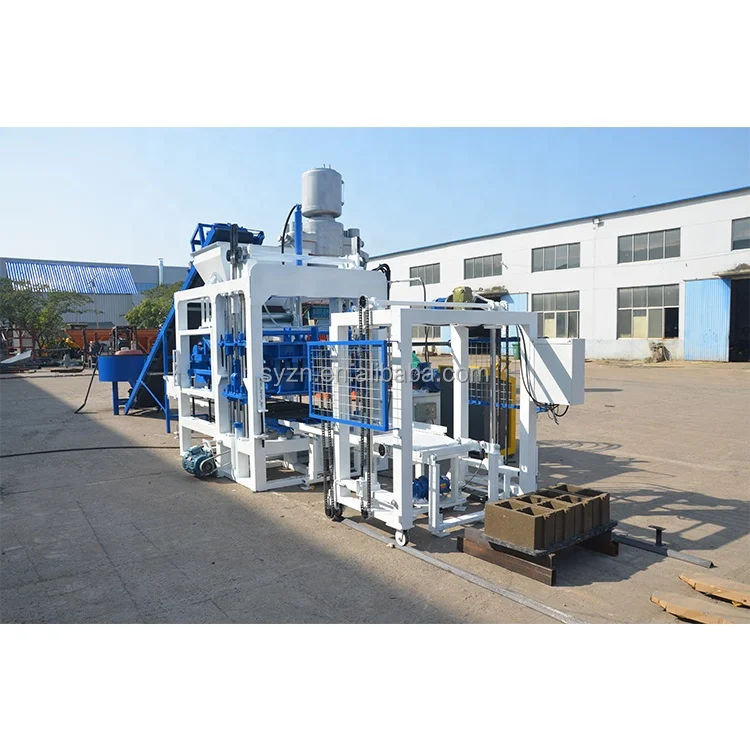


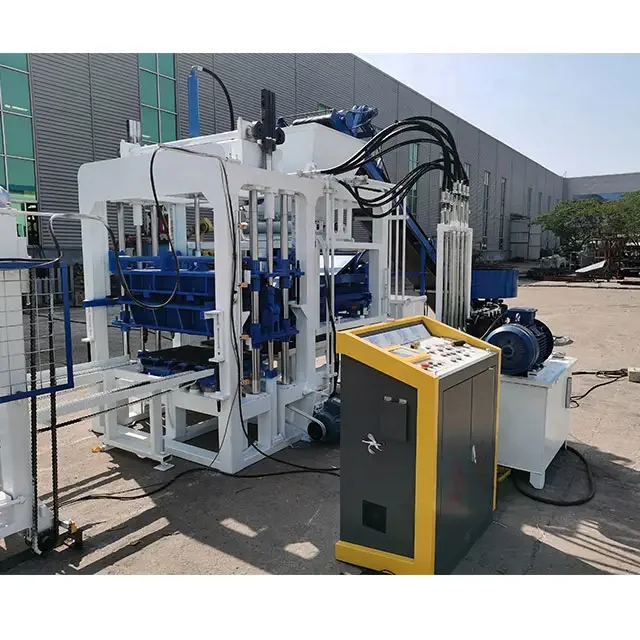
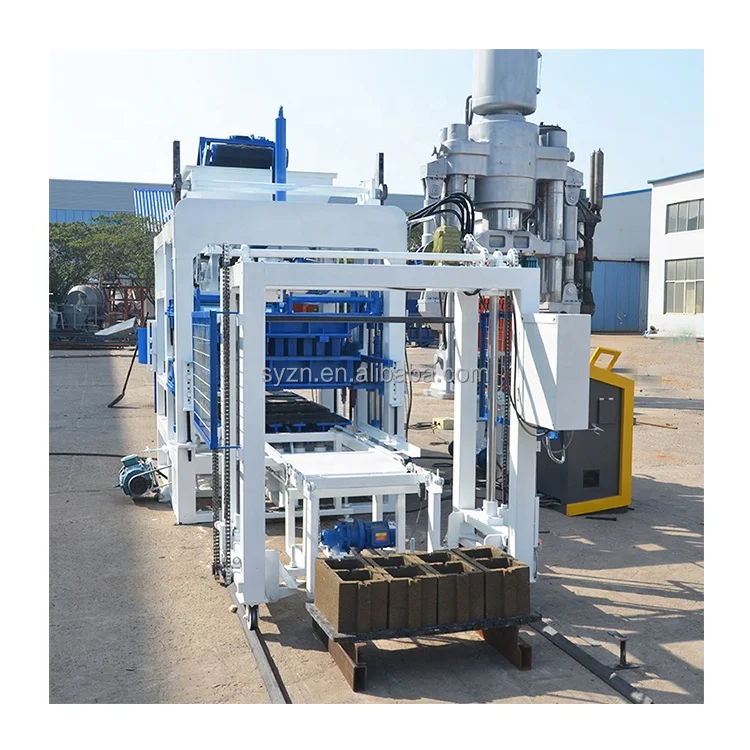
Description
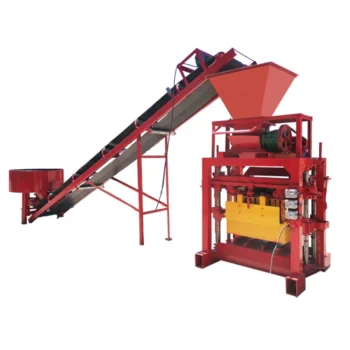
Matched Mould and Output — the QT4-18 is configured against your target block format and local aggregate, so quoted cycle times reflect what you will actually run, not a catalogue default.
Technical Specifications
| Parameter | Value |
|---|---|
| Model | QT4-18 |
| Product Type | Hydraulic Block Making Machine |
| Overall Dimensions (L×W×H) | 3900×1600×2300 mm |
| Moulding Cycle | 15–25 s |
| Vibration Force | 40–50 kN |
| Total Power | 24 kW |
| Mixer Model | JQ350 |
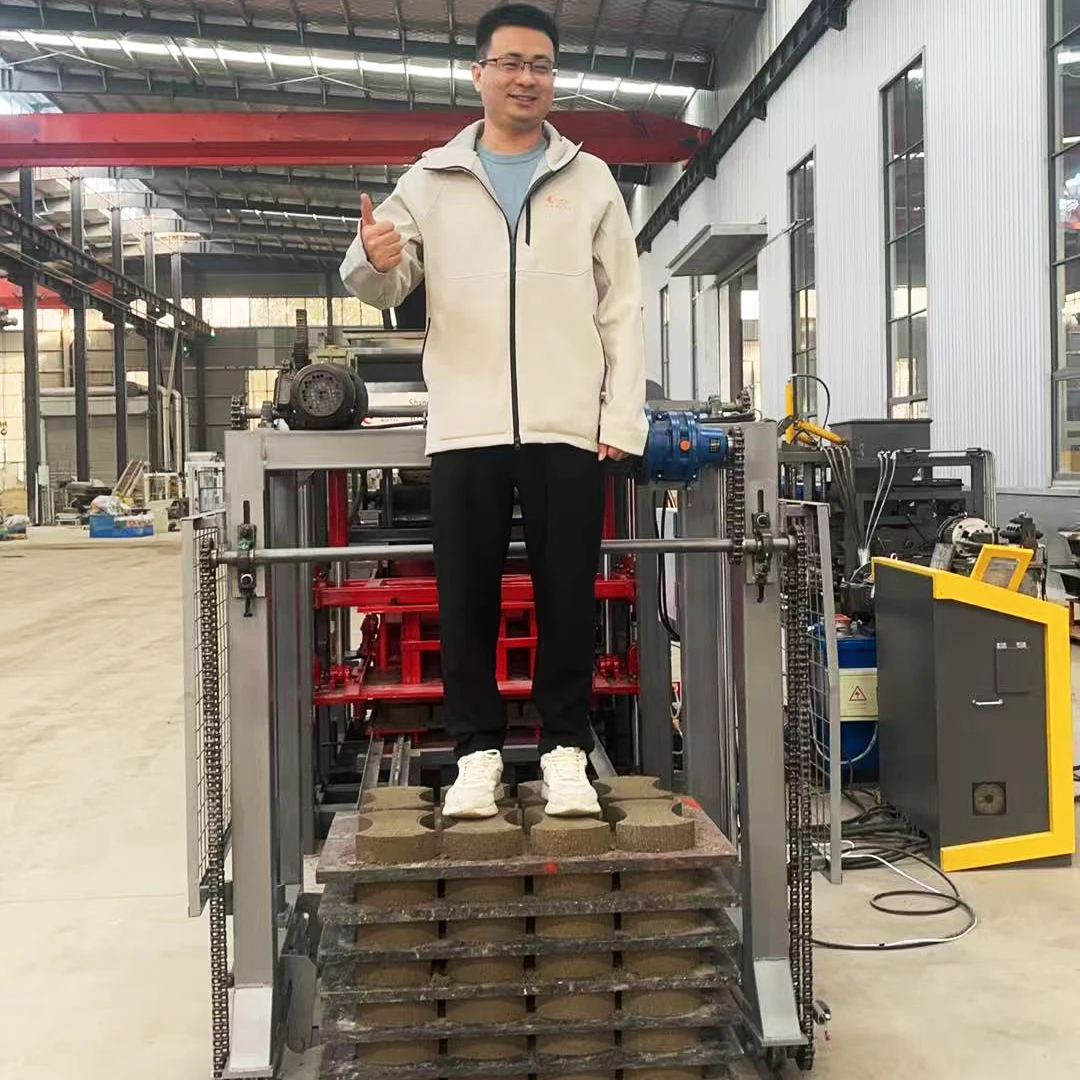
| Pallet Size | 850×550×25 mm |
| Net Weight | 3 T |
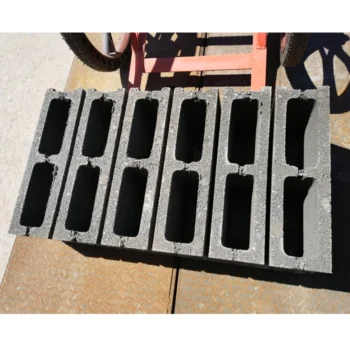
| Applied Products | paver, solid block, hollow block, curbstone |
| Raw Materials | crushed stones, sand, cement, dust, fly ash |
| Control System | PLC control system |
| Hydraulic Station | included |
| Included Equipment | block making machine, hydraulic station, PLC control system, pallet feeder, brick conveyor, block sweeper |
| Free Accessories | manual hydraulic trolley, spare parts and tools |
| Output Capacity (Hollow block 400×200×200 mm) | 1200–1680 pcs/hr, 9600–13440 pcs/8hr |
| Output Capacity (Hollow block 400×150×200 mm) | 1800–2400 pcs/hr, 14400–19200 pcs/8hr |
| Output Capacity (Solid brick 240×115×53 mm) | 3240 pcs/hr, 16200–19440 pcs/8hr |
| Cycle Time per Format | 15–20 s (basis not stated in source — confirm block format / material / thickness) |
| Voltage & Frequency | configurable (confirm before order) |
| PLC Display Language | configurable (confirm before order) |
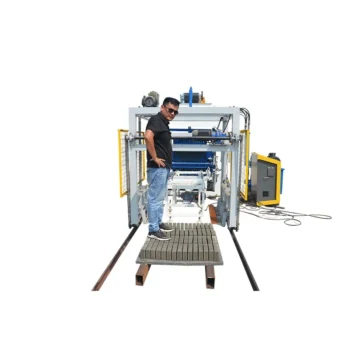
| Automation Level | semi-automatic (manual pallet handling via included manual hydraulic trolley) |
Application Suitability
| Application | Material or Output |
|---|---|
| Hollow block production | Crushed stone, sand, cement, fly ash mixes for 400×200×200 mm and 400×150×200 mm formats |
| Solid brick manufacturing | Fine aggregate and cement blends for 240×115×53 mm standard bricks |
| Paver and curbstone forming | High-strength mixes with coarse aggregate gradation for load-bearing outdoor formats |
| Small-to-medium block plant | Semi-automatic daily output suited to regional building material distributors |
| On-site construction supply | Compact footprint allows contractors to produce blocks directly at the project location |
What Block Machine Specifications Leave Out When Format Is Ignored
Capacity means nothing unless the block format and mix design behind it are stated upfront.
Many quotations lead with a single headline output number, leaving the buyer to discover on site that the figure assumed a small solid brick while the actual target product is a large hollow block. I have watched contractors in Southeast Asia base an entire project timeline on a quoted daily output, only to find the real throughput cut in half because the local river sand carried high clay content and the vibration force was not matched to the mix. The block machine specifications you review must tie every capacity claim to a specific block size, cycle time, and aggregate profile [NEED_CITE: aggregate gradation standards for concrete block production]. Without that linkage, the number on paper stays on paper.
Per-Format Output You Can Actually Plan Around
The QT4-18 block machine specifications break output down by the format you intend to sell. For a 400×200×200 mm hollow block, the rated range is 1,200–1,680 pieces per hour, translating to 9,600–13,440 pieces across an eight-hour shift. Step down to a 400×150×200 mm hollow block and the hourly range moves to 1,800–2,400 pieces. Solid brick at 240×115×53 mm reaches 3,240 pieces per hour. Each figure assumes the moulding cycle stays within 15–25 seconds and the mix design is verified against local aggregate before production starts.
Matching Vibration Force to Mould and Mix
Vibration force on this machine sits in the 40–50 kN range, delivered through the hydraulic station under PLC control. That range is selected to compact crushed stone and fly ash blends without over-vibrating, which can push cement paste to the surface and leave the block core weak. When the target format changes — say from hollow block to a dense paver — the vibration duration and pressure must shift accordingly. The PLC allows the operator to store parameter sets per mould, so switching formats does not mean guessing at the control panel.
How Pallet Size Shapes the Rest of Your Line
The pallet dimension of 850×550×25 mm is not a trivial detail; it determines how many blocks fit on each curing rack, which forklift can handle the loaded pallets, and how much floor space the curing area requires. A buyer who already operates a curing yard built for a different pallet size will face a choice between re-racking the entire yard or losing handling efficiency from day one. Confirming pallet compatibility before the machine ships avoids costly rework once the equipment is on your floor [NEED_CITE: pallet handling standards in block plant layout].
Reading the Specs That Matter for Block Density
Hydraulic pressure and vibration force together decide whether the finished block reaches the compressive strength your local building code demands. The 40–50 kN vibration range works with the hydraulic clamp to settle aggregate particles tightly before the cement matrix sets. Cycle time also plays a role: a shorter cycle means faster throughput but may not give the hydraulic station enough dwell time to fully compact a stiff, low-slump mix. That is why the quoted 15–25 second cycle must be validated against the exact block format and material blend you plan to run.
The Cost of Skipping Mix Design Verification
When a buyer orders without sending a local aggregate sample, the machine arrives configured for a generic sand-and-cement ratio that may not exist at the job site. Blocks come out with edge cracks, low compressive strength, or surface voids, and the operator blames the machine. In reality, the vibration force was set for a material that was never sourced. Resolving the issue means re-tuning the hydraulic pressure, adjusting the PLC parameters, and sometimes replacing the mould — all after production has already started and deadlines are slipping [NEED_CITE: concrete block compressive strength testing methods].
Why This Configuration Approach Works Differently
Block machinery is the single focus of this supply line, so the machine, mould, pallet, and handling equipment are specified as one matched set rather than assembled from separate vendors. Each QT4-18 quotation starts with the buyer’s target block format, local aggregate, and daily output requirement, not a catalogue default. Mould design covers the exact formats the buyer’s market sells, including custom drawings when needed. The automation level is selectable, allowing a buyer to begin with semi-automatic pallet handling and add stacking automation later. Installation support includes operator training and a full wear parts list so the first mould change does not stall the line.
Documentation & Verification
- Line layout drawing with capacity calculation stated per target block format
- Mould drawing and format list confirming which blocks the quoted cycle time covers
- Pallet specification sheet for cross-check against existing curing racks and forklifts
- Voltage, frequency, and PLC display language confirmation document signed before production
- Factory test record run on the buyer’s specified block format before dispatch
- Operation and maintenance manual with hydraulic and electrical schematics
Installation, Commissioning & Support
- Foundation plan accounts for the 3,900×1,600 mm footprint and 3-tonne net weight
- Dedicated power circuit sized for 24 kW total draw with confirmed voltage and frequency
- Machine arrives assembled; pallet feeder and brick conveyor bolt on at site
- First-run commissioning verifies PLC parameters against your actual aggregate and block format
- Operator training covers mould change procedure, cycle time adjustment, and daily greasing points
- Spare parts kit and manual hydraulic trolley included for immediate pallet handling on day one
Before You Send an Inquiry
To size this machine correctly, share the block format your market demands, the daily output you need to hit, and a sample or analysis of your local aggregate. Include your site voltage, frequency, and preferred PLC display language so the electrical package matches your grid. If you already have curing racks or forklifts in place, note the pallet dimensions they accept.
Frequently Asked Questions
Q: How is capacity calculated per block format and what cycle time is assumed?
A: Each output figure is tied to a specific block size — for example, 1,200–1,680 pieces per hour for a 400×200×200 mm hollow block — with a moulding cycle of 15–25 seconds. The calculation assumes the mix design and vibration force are matched to the buyer’s local aggregate and confirmed before production.
Q: Which mould formats are available and how long does a mould change take?
A: Moulds cover hollow block, solid brick, paver, and curbstone formats. Custom mould design to buyer drawings is available. Mould change time depends on the format pair and operator experience; the PLC stores parameter sets per mould so the control side switches instantly once the physical swap is done.
Q: How do I confirm pallet size matches my curing area and handling equipment?
A: The standard pallet measures 850×550×25 mm. Before order, compare this dimension against your existing curing rack slots and forklift tine width. If your yard is built around a different size, pallet and rack adjustments must be decided before the machine ships.
Q: What raw material mix design and aggregate gradation does this machine expect?
A: The QT4-18 handles crushed stone, sand, cement, fly ash, and similar aggregates. The exact ratio and gradation should be validated with a local sample so the 40–50 kN vibration force and hydraulic pressure are set to produce the target compressive strength without edge cracking.
Q: How are voltage, frequency, and PLC language confirmed before shipment?
A: A confirmation document listing the buyer’s site voltage, frequency, and preferred PLC display language is signed before production begins. This prevents commissioning delays caused by mismatched electrical components or an unreadable control interface when the machine arrives.