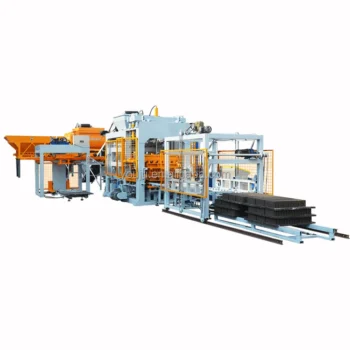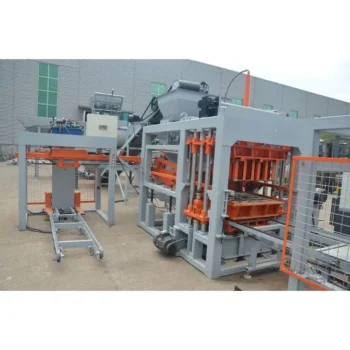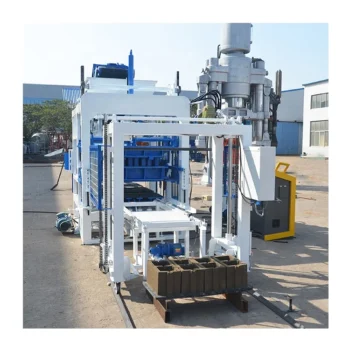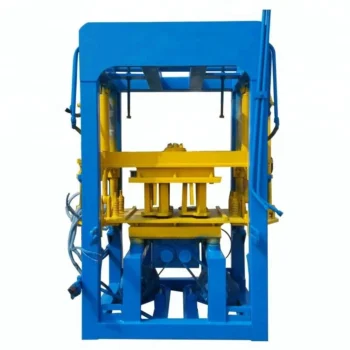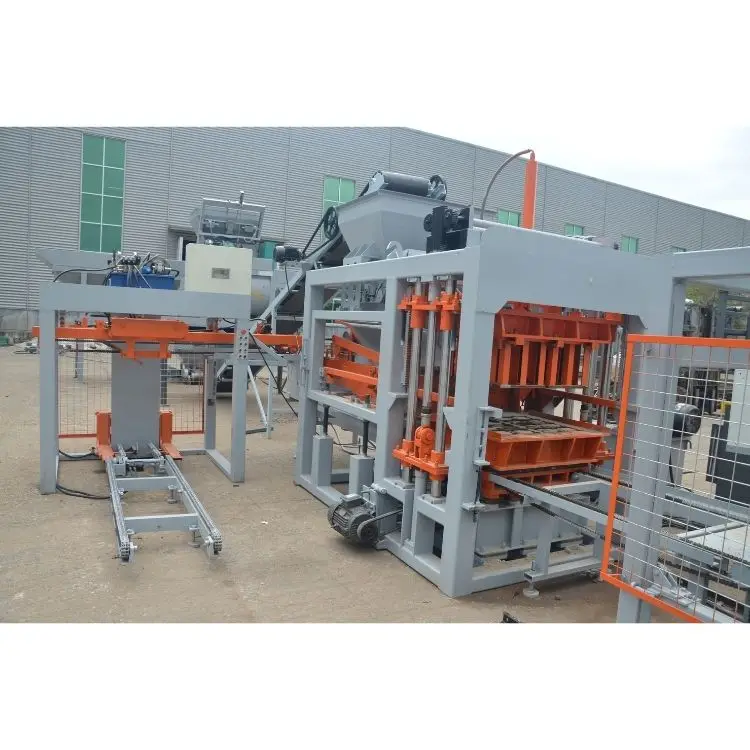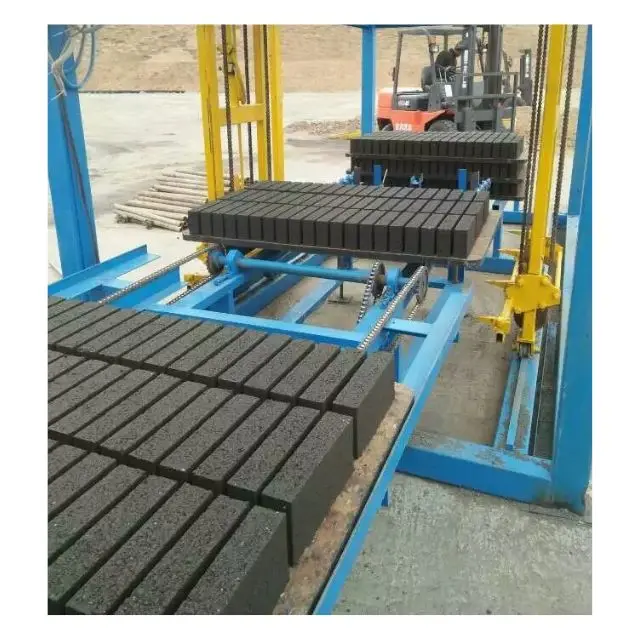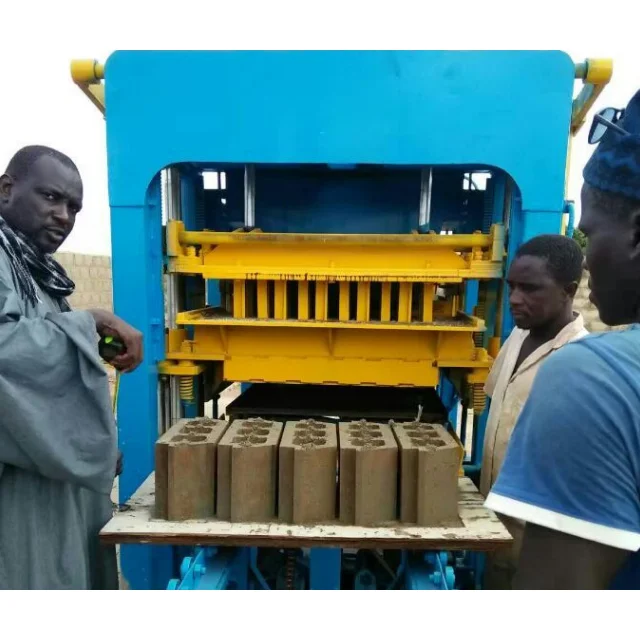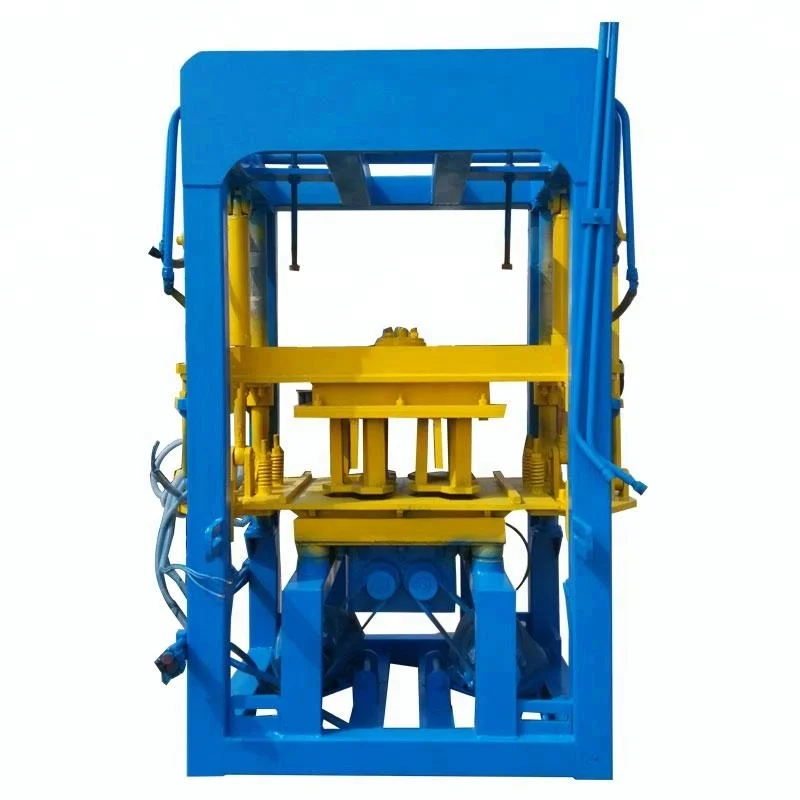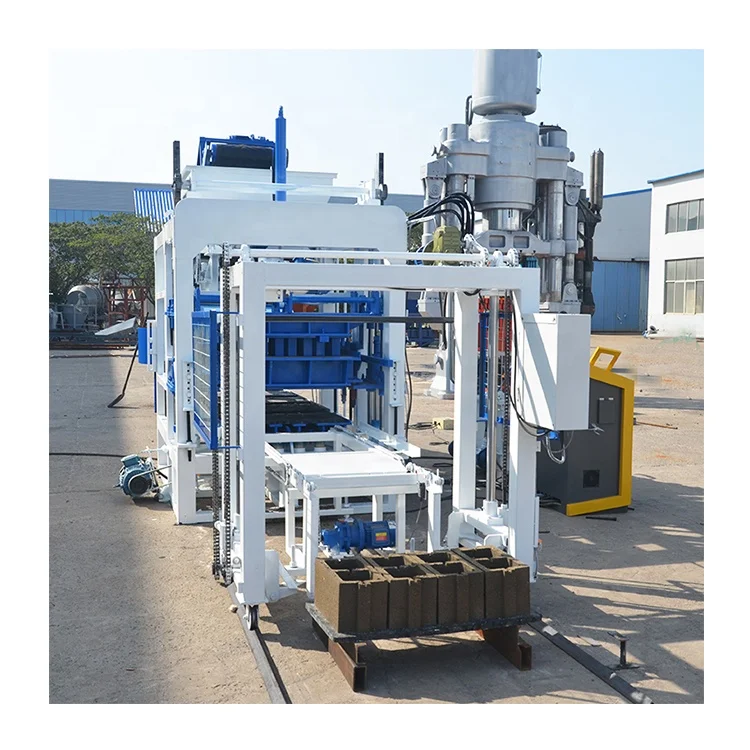
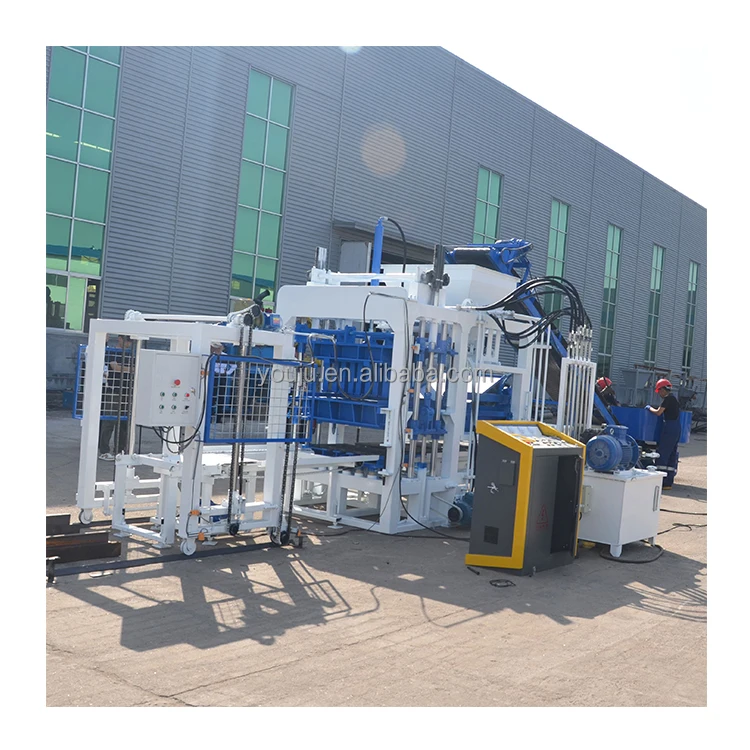
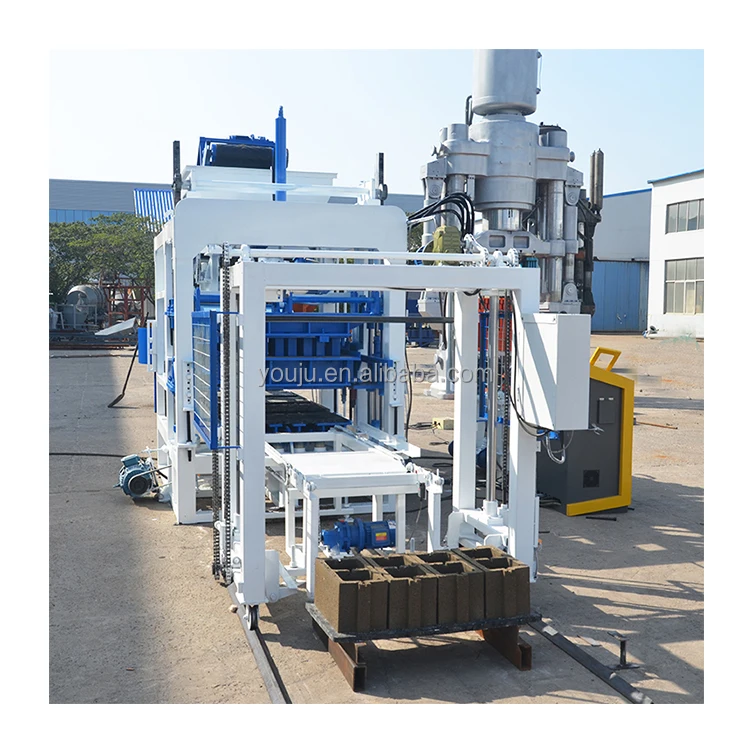
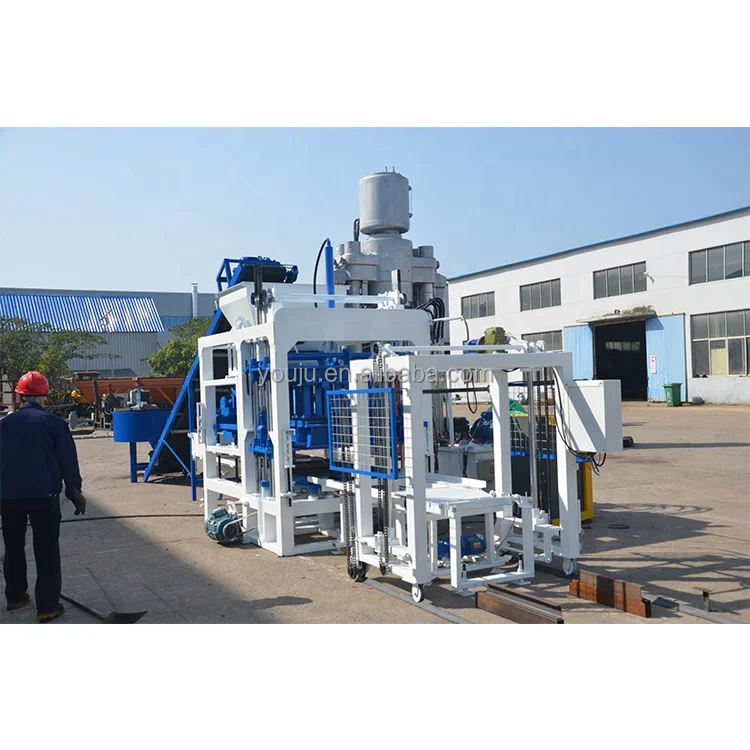
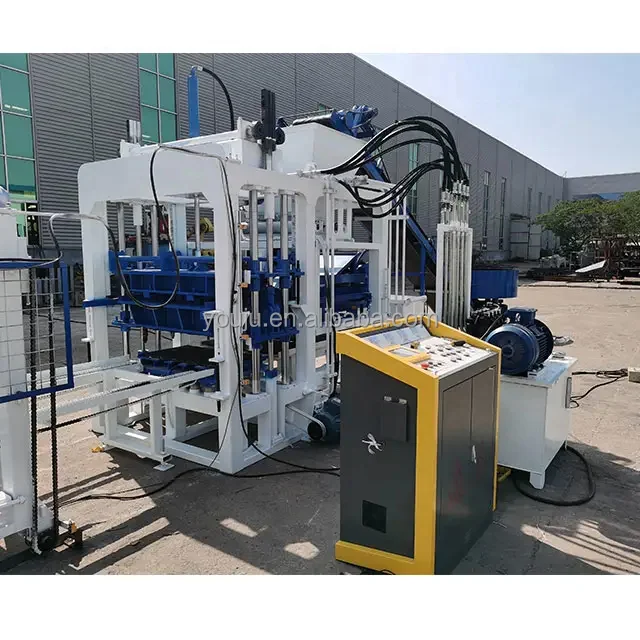
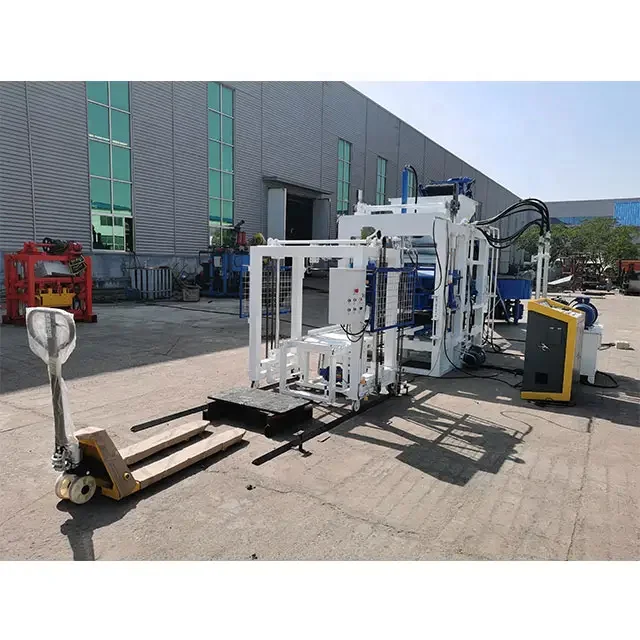
Description
Matched System Approach — every QT4-18 configuration is sized against your actual block format, local aggregate sample, and target daily output rather than a generic catalogue default.
Technical Specifications
| Parameter | Value |
|---|---|
| Model | QT4-18 |
| Product Type | Automatic Concrete Block Making Machine |
| Overall Dimensions (L×W×H) | 2500×1750×2200 mm |
| Rated Hydraulic Pressure | 16 MPa |
| Vibration Form | Platform Vibration |
| Pallet Size | 950×550 mm |
| Molding Cycle | 18–25 s (basis not stated in source — confirm per block format and material) |
| Overall Power | 27.5 kW |
| Control System | PLC with frequency converter and operator interface (brand and language to be confirmed before production) |
| Electrical Components | Schneider (specific series to verify against final BOM) |
| Mould Lifting Mechanism | Double-sided synchronous gears |
| Material Feeder | Distribution belt hopper |
| Supporting Equipment Available | JQ500 pan mixer, 8 m belt conveyor, stacker, block clamper, trolley, cement silo, batching plant |
| Mould Included | One hollow block mould; additional formats available at extra cost |
| Voltage & Frequency | Configurable to target market standard (must be confirmed before build) |
Application Suitability
| Application | Material or Output |
|---|---|
| Hollow block production | Cement, crushed stone, sand, fly ash blends |
| Solid block manufacturing | Dense aggregate and cement mixes |
| Cement brick production | Fine sand and cement with local aggregate |
| On-site contractor production | Available raw materials from local quarry or river sand sources |
| First block plant setup | Low to medium volume formats for regional building material markets |
What "18 to 25 Seconds" Actually Means for Your Daily Output
Cycle time only matters when you know which block format is inside the mould.
When a brochure lists a single molding cycle without naming the block it was measured on, buyers often plan their entire production schedule around a number that vanishes the moment they switch to a different product. A hollow block with thin walls fills and vibrates faster than a dense solid paver of the same footprint. The QT4-18 block machine specifications show a cycle range of 18–25 seconds, but that range collapses or stretches depending on the exact format, wall thickness, and the aggregate you feed into the mixer [NEED_CITE: realistic cycle time variance across block formats]. I have seen plants quote themselves on the shortest cycle in the range and then wonder why their actual shift output lands well short once the mould is changed to the format their market actually buys.
Matching the Mould to the Format Your Market Actually Sells
The 950×550 mm pallet is the governing constraint for every QT4-18 block machine specifications you will evaluate. It defines how many block cavities fit per press, which in turn sets the realistic pieces-per-cycle figure for each format. Before sizing a line, I ask the buyer for the three block types that account for most of their revenue, then work back from pallet area to cavity count to daily output. This prevents the common mistake of ordering a machine based on a hollow block figure when the real money comes from a denser, slower-cycling solid format.
Mould Change Time and Format Flexibility on the Shop Floor
The double-sided synchronous gear system on the QT4-18 controls mould lifting from both sides in parallel, which keeps the mould box level during demoulding. In practice, this means less side-wall scraping and longer intervals between mould refurbishments. The real question for any plant running more than one format is how long a changeover takes during a shift. If a swap eats into production time, the format flexibility the buyer paid for never materialises [NEED_CITE: mould change impact on shift productivity in block plants].
Pressure, Vibration, and the Mix You Can Actually Source
A rated pressure of 16 MPa paired with platform vibration determines how tightly the aggregate particles are compacted inside the mould cavity. But compaction only produces consistent block strength when the vibration force is tuned to the specific gradation and moisture content of the local aggregate. A QT4-18 block machine specifications sheet that lists pressure and vibration without reference to a particular mix design leaves a gap that must be closed during commissioning. I always request a sample of the sand and aggregate before finalising the vibration settings, because a high-clay river sand absorbs energy very differently from a clean crushed granite.
What Happens When Configuration Is Decided After the Machine Ships
Voltage and frequency confirmed after arrival, a PLC display in a language the operator cannot read, and pallets sized without regard to the curing yard the buyer already built — these are not minor oversights. They stall commissioning, force ad-hoc electrical work on site, and turn the first production week into a troubleshooting exercise [NEED_CITE: common commissioning delays in exported block machinery]. The cost shows up as idle labour, delayed deliveries to the first customers, and a loss of confidence in the equipment before it has produced a single saleable block.
Why Buyers Choose This Configuration Path
Block machinery is our single focus, so the QT4-18 press, its moulds, pallets, and supporting conveyors are specified together rather than sourced from disconnected suppliers. Configuration is set against your submitted mix design and target block format, not pulled from a standard catalogue. Mould design covers the formats your regional market demands, including custom drawings when a standard cavity layout does not fit. The automation level can start at semi-automatic operation and expand later, so a first-time plant owner does not over-invest on day one. Installation support includes on-site commissioning and operator training so the team understands the vibration and pressure settings that match their own material.
Documentation & Verification
- Line layout with capacity calculation naming the exact block format behind every output figure
- Machine specification sheet confirming pallet size, pressure rating, and cycle range
- Mould drawing and format list showing every cavity type the QT4-18 will produce
- Pallet material and dimension sheet matched to your curing rack spacing
- Hydraulic and electrical schematic with confirmed voltage, frequency, and PLC language
- Factory test record on your aggregate sample before dispatch
Installation, Commissioning & Support
- Foundation must support the 2500×1750 mm footprint and dynamic vibration loads from platform vibration
- Dedicated electrical circuit sized for 27.5 kW total draw with confirmed voltage and frequency
- Machine ships partially dismantled; reassembly requires overhead clearance above 2200 mm
- Commissioning includes vibration tuning against your local aggregate sample for target block strength
- Operator training covers PLC interface navigation, mould change procedure, and daily maintenance checks
- Wear parts list covers mould liners, hydraulic seals, and vibration motor components for first-year stocking
Requesting an Accurate Configuration Proposal
To size a QT4-18 that matches your actual production needs, send the target block formats with dimensions, the daily output you need per format, and a representative sample of your local sand and aggregate. Include your site voltage, frequency, and preferred PLC display language. If you already have curing racks and a forklift on site, share the rack spacing and lift capacity so the pallet specification aligns from the start.
Frequently Asked Questions
Q: What daily output can I expect from the QT4-18 for each block format I plan to produce?
A: Output depends on the specific block dimensions, wall thickness, and mix design. The 18–25 second cycle range is a starting point, not a guarantee. We calculate realistic daily output per format once we know which moulds you will run, the aggregate you will feed, and the shift length you plan. This gives you an honest figure to build your business plan around rather than a single optimistic number.
Q: How does the 950×550 mm pallet size affect my curing yard and forklift setup?
A: The pallet dimension governs how blocks are arranged after pressing and must match your curing rack width and forklift tine spacing. If your existing racks were built for a different pallet, you will either need to modify the racks or adjust the pallet specification before the machine is built. We confirm pallet size against your site layout during the proposal stage.
Q: What is the mould change procedure and how long does it take on the shop floor?
A: The double-sided synchronous gear system keeps the mould box level during removal and installation, reducing side-wall binding. Actual changeover time depends on operator familiarity and the tools available at the press. We include the procedure in operator training and recommend scheduling format changes at shift boundaries to avoid interrupting continuous production runs.
Q: How are vibration and pressure matched to my local aggregate for consistent block strength?
A: The 16 MPa rated pressure and platform vibration must be tuned to your specific sand gradation, moisture content, and cement ratio. We request an aggregate sample before commissioning and adjust vibration amplitude and dwell time during the first production runs. This prevents the common problem of blocks that test strong in the factory but crack on site because the settings do not match your material.
Q: Which electrical details must be confirmed before the QT4-18 ships?
A: Voltage, frequency, and PLC display language need to be locked in before the control panel is wired. Shipping a machine configured for the wrong supply standard causes commissioning delays and may require on-site rewiring. We confirm these parameters during the quotation stage and document them on the electrical schematic before production begins [NEED_CITE: voltage and frequency standards by export market].