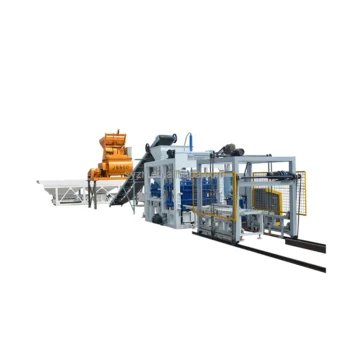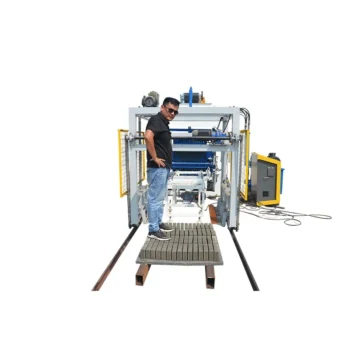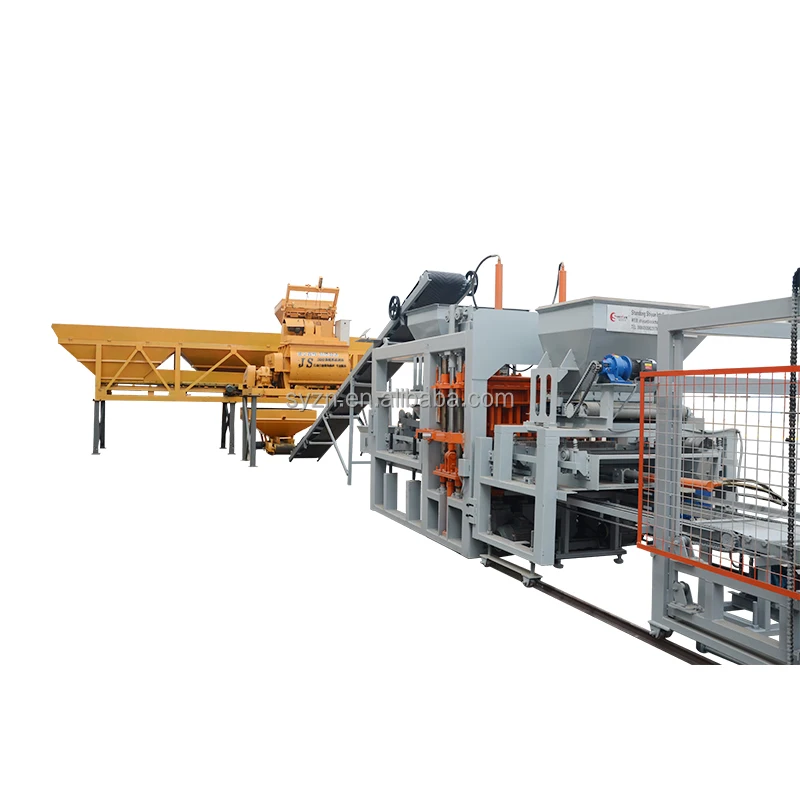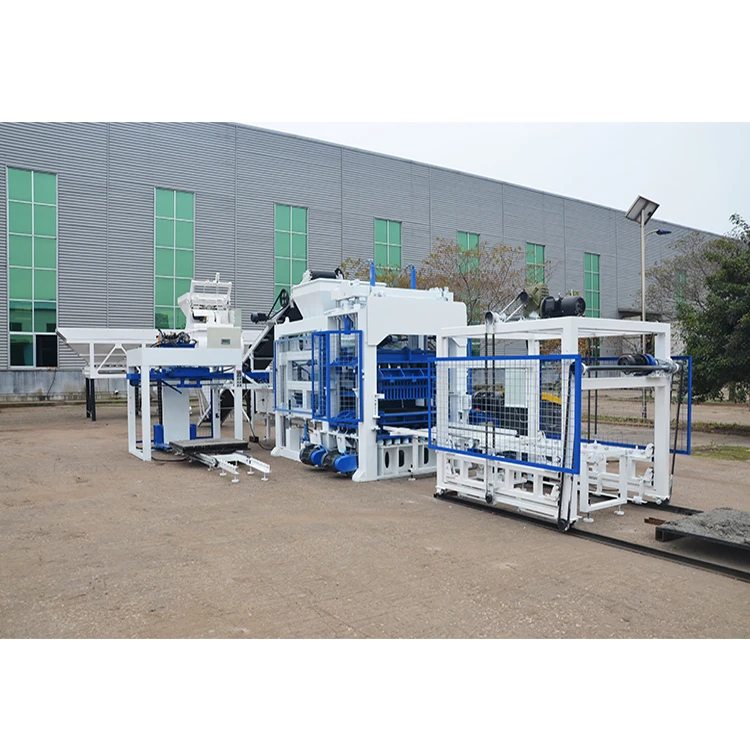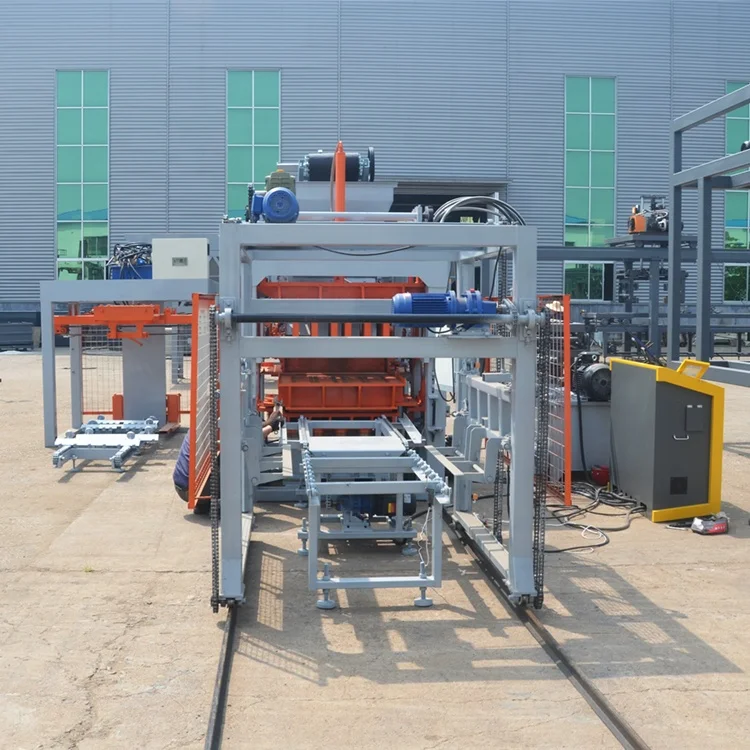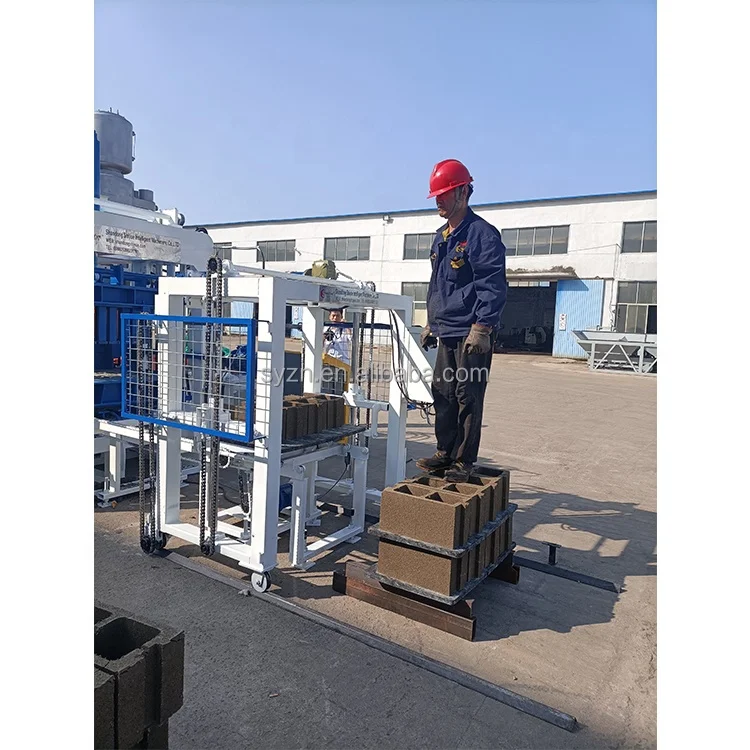
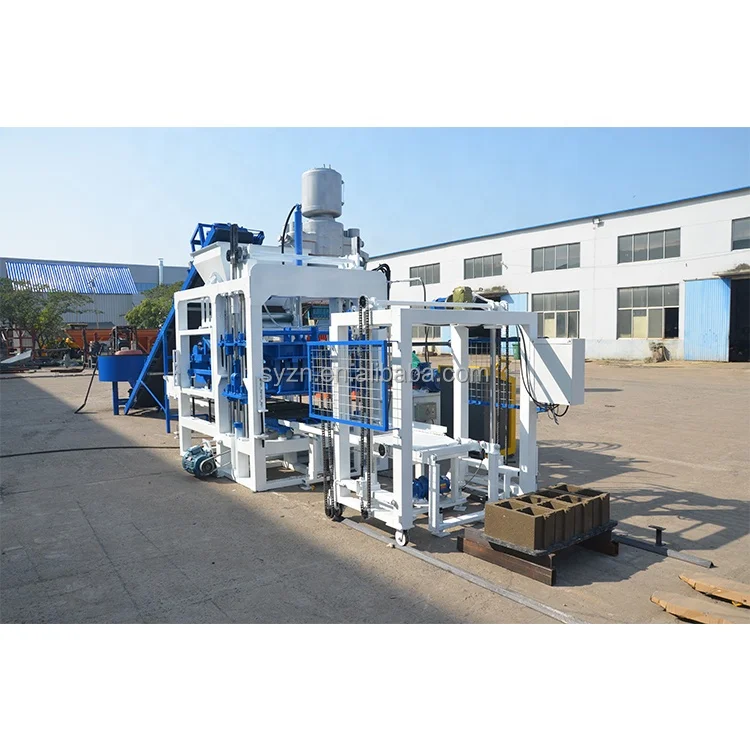

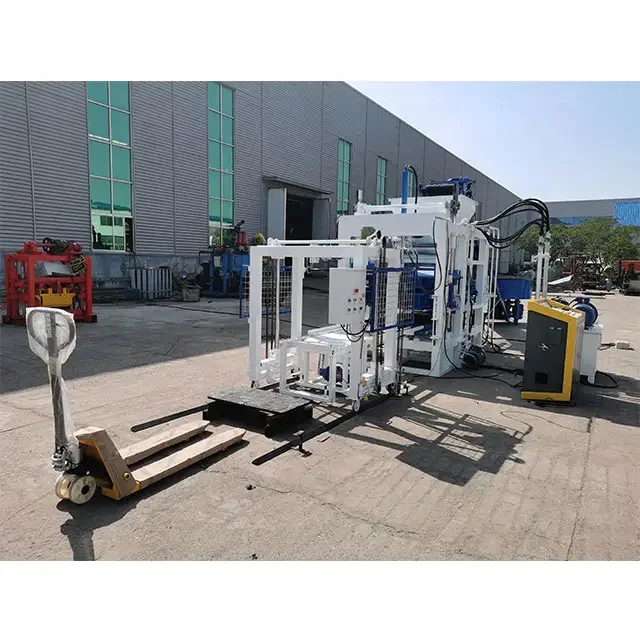


Description
Matched Mould and Line Design — every QT4-18 configuration is built around the buyer’s actual hollow block format, local aggregate properties, and daily output target instead of a generic catalogue default.
Technical Specifications
| Parameter | Value |
|---|---|
| Model | QT4-18 |
| Product Type | Automatic Hollow Brick Making Machine |
| Vibration Mode | Multiaxis synchronizer vibration (vertically downward) |
| Guide Bearing | Long-period over length guide bearing (upper mould to mould box alignment) |
| Mixer System | Multiaxis forced mixer (adaptable to raw materials of different nature) |
| Hydraulic System | High thermal efficiency, low heat productivity |
| Control System | Computer controlled, fully automatic |
| Rack Construction | High strength special welding technique (vibration shock resistant) |
| Automation Level | Fully automatic |
| Output Capacity | Refer to capacity table (basis not stated in source — confirm block format and material before quoting) |
| Mould Format | Hollow brick (additional formats available on request) |
| Pallet Size | To be confirmed based on curing area and handling equipment |
| Rated Power | To be confirmed |
| Voltage & Frequency | Configurable to destination market standard |
Application Suitability
| Application | Material or Output |
|---|---|
| Hollow brick production for building construction | Crushed stone, sand, cement, fly ash, lightweight aggregate |
| Concrete product manufacturing | Varied raw material types including industrial by-products |
| Fixed-plant block production | Standard and custom hollow block formats |
| On-site block production for housing projects | Locally sourced aggregate with site-specific mix design |
Why "Cycles per Hour" Tells You Nothing About Your QT4-18 Hollow Brick Machine Output
Real daily capacity only exists when the block format, mix design, and aggregate are defined first.
I watched a buyer receive a mid-tier hollow brick press and immediately call the factory because his shift output fell well below the brochure number. The catalogue had quoted a cycle rate based on a standard 400×200×200mm hollow block in clean river sand. His local volcanic scoria absorbed water differently and required a longer compaction window [NEED_CITE: effect of aggregate porosity on vibration cycle time]. The machine was not wrong — the specification conversation was incomplete. When sizing a QT4-18 hollow brick machine, the honest starting point is your specific block dimension, target compressive strength, and the aggregate you can actually source within a reasonable haul distance. Everything else follows from that.
Matching the Mould to the Block Your Market Actually Buys
A hollow brick machine only earns its keep when the mould produces a format that moves in your local market. The QT4-18 supports custom mould design to buyer drawings, which means you can specify cavity count, wall thickness, and face dimensions before the machine enters production. Standard catalogue moulds may get you started, but regional building codes often dictate exact block dimensions that generic tooling cannot meet.
Vibration Alignment and Block Density Consistency
Consistent wall density across every cavity in a multi-cavity mould depends on how evenly vibration force reaches the farthest corner of the mould box. The long-period over length guide bearing on the QT4-18 keeps the upper mould aligned with the mould box throughout extended production runs. When that alignment drifts, blocks on one side of the pallet cure weaker than the other — a defect that only shows up during the drop test at the building site [NEED_CITE: vibration uniformity and compressive strength variation in concrete masonry units].
Reading the Specs That Actually Matter on Site
The multiaxis synchronizer vibration delivers force vertically downward, which compacts the mix uniformly through the full depth of the mould cavity rather than concentrating energy near the base. This matters most for taller hollow blocks where insufficient compaction in the upper section leads to spalling during handling. The multiaxis forced mixer handles raw materials of different nature — from fine river sand to coarse crushed aggregate — reducing the chance that your local material forces an expensive substitute. Hydraulic pressure and vibration force must be balanced together: too much vibration without adequate hydraulic clamping causes the mould to bounce, producing blocks with laminated internal fractures. The high thermal efficiency hydraulic system keeps oil temperature stable across long shifts, preventing pressure drift that would otherwise alter block density from morning to afternoon. Rack construction using high strength special welding technique resists the cumulative fatigue of thousands of vibration cycles per shift, maintaining frame geometry over years of operation.
What Happens When the Pallet Decision Gets Skipped
Pallet size and material chosen without regard to the curing area and forklift the buyer already has leads to a bottleneck that no amount of press speed can fix. If the pallets do not stack on your existing curing racks, every block must be hand-transferred to different boards before curing begins. Buyers who discover this after the machine arrives end up running at a fraction of the line’s designed output while they source compatible pallets [NEED_CITE: pallet compatibility and curing rack logistics in block plants]. The quotation should state pallet dimensions and material before the purchase order is signed.
Why a Single-Focus Supplier Matters for Your Line
Block machinery as a single focus means the QT4-18 press, mould, pallet, and handling equipment are specified as one matched system rather than assembled from separate suppliers who each optimise their own component. Configuration is set against the buyer’s actual mix design and target block format, not a catalogue default that assumes clean quartz sand. Mould design covers the formats your market sells, including custom drawings for non-standard dimensions. The automation level is selectable so you can begin with semi-automatic pallet handling and upgrade the stacking and cubing stations later without replacing the press itself. Installation includes operator training on your specific mix and block format, not a generic start-up procedure.
Documentation & Verification
- Line layout with capacity calculation stating the hollow block format assumed for each output figure
- Mould drawing and format list confirming which block dimensions the quoted QT4-18 will produce
- Hydraulic and electrical schematic with voltage, frequency, and PLC display language confirmed before production
- Factory test record run on your target block format before dispatch
- Operation and maintenance manual with wear parts and mould list included at shipment
- Packing photographs and customs documentation support for your import port
Installation, Commissioning & Support
- Foundation plan matched to the QT4-18 rack dimensions and vibration isolation requirements
- Dedicated power circuit sized to the machine’s rated kW and confirmed voltage and frequency
- Press, mixer, and pallet feeder arrive dismantled and are reassembled on your prepared slab
- First-run parameter setting adjusted to your local aggregate and mix proportions on site
- Operator training covers mould change procedure, daily greasing points, and PLC fault reading
- Wear parts list with part numbers for hydraulic seals, guide bearing sleeves, and mixer blades
Before You Send the Inquiry
To size a QT4-18 hollow brick machine configuration correctly, provide the hollow block dimensions and minimum compressive strength your market requires. Include the type of aggregate you plan to use and whether your site has access to crushed stone, sand, fly ash, or a combination. Specify your local voltage and frequency, the language you need on the PLC display, and whether you already have pallets and curing racks on site that the line must match.
Frequently Asked Questions
Q: How is realistic daily output calculated for my target hollow block size on the QT4-18?
A: Output is calculated per block format, not as a single machine-wide number. We need your exact block dimensions, mix proportions, and aggregate type to determine cycle time and pallets per shift. The capacity table then states pieces per hour for that specific format so your production plan matches what the line actually delivers.
Q: Which mould formats are available, and how long does a change take?
A: Standard hollow block moulds in common regional sizes are available, and custom moulds can be designed to your drawings. Mould change time depends on whether the machine is fitted with a quick-clamp system or bolt-on mounting. We confirm the changeover procedure and expected time before the order is placed.
Q: How is the machine configured for my local aggregate and mix design?
A: We ask for a sample or technical description of your aggregate — grading, absorption rate, and maximum particle size — before finalising the mixer blade geometry and vibration duration. This prevents the common problem where a machine tuned for river sand underperforms on volcanic or crushed stone aggregate.
Q: What pallet size does the QT4-18 require, and will it fit my curing area?
A: Pallet size is matched to the mould footprint and your existing curing rack dimensions. We confirm pallet material — bamboo, PVC, or steel — based on your climate and handling method. The goal is ensuring pallets move from press to curing rack to forklift without manual re-stacking.