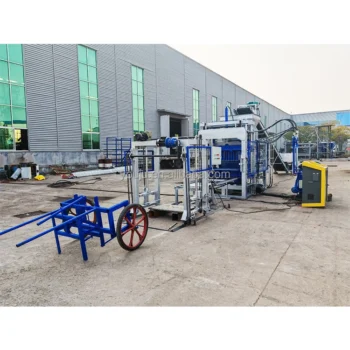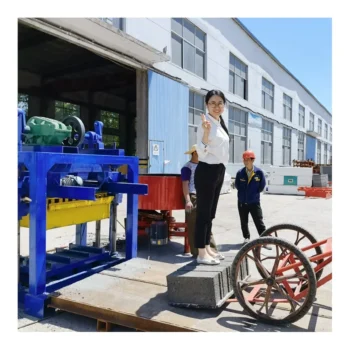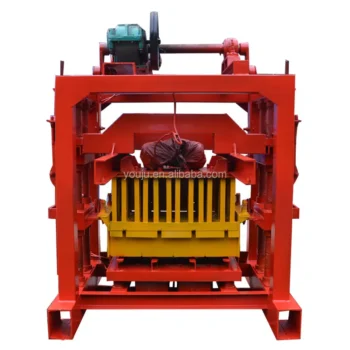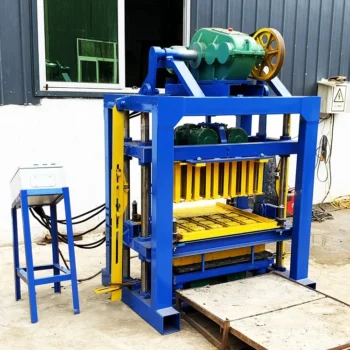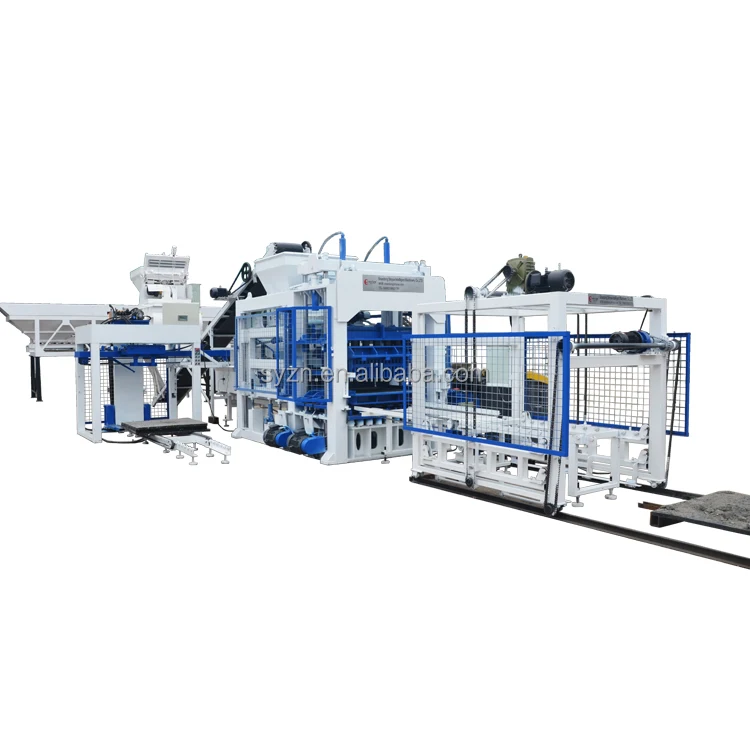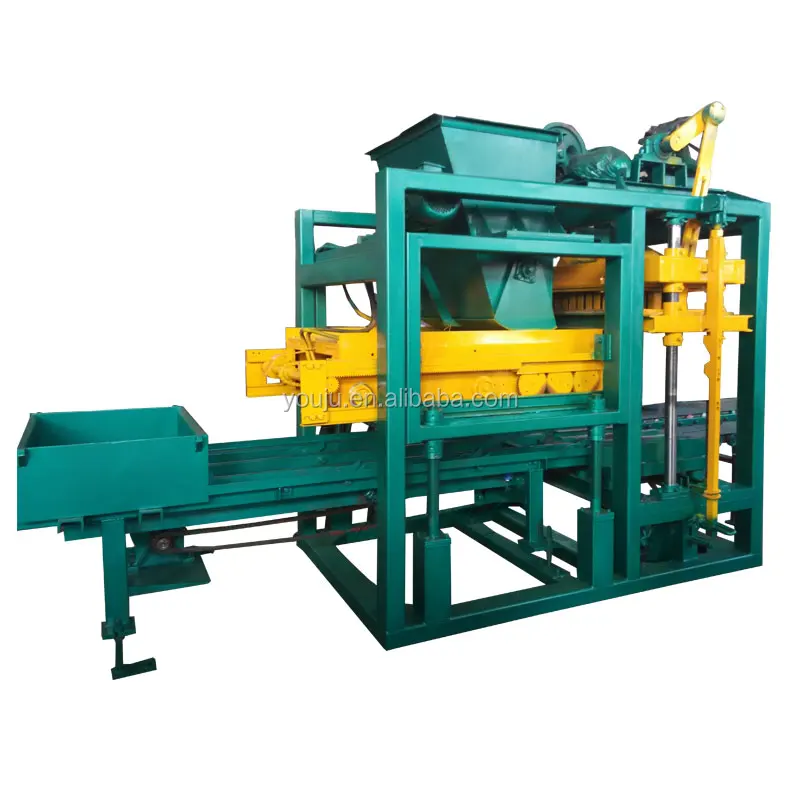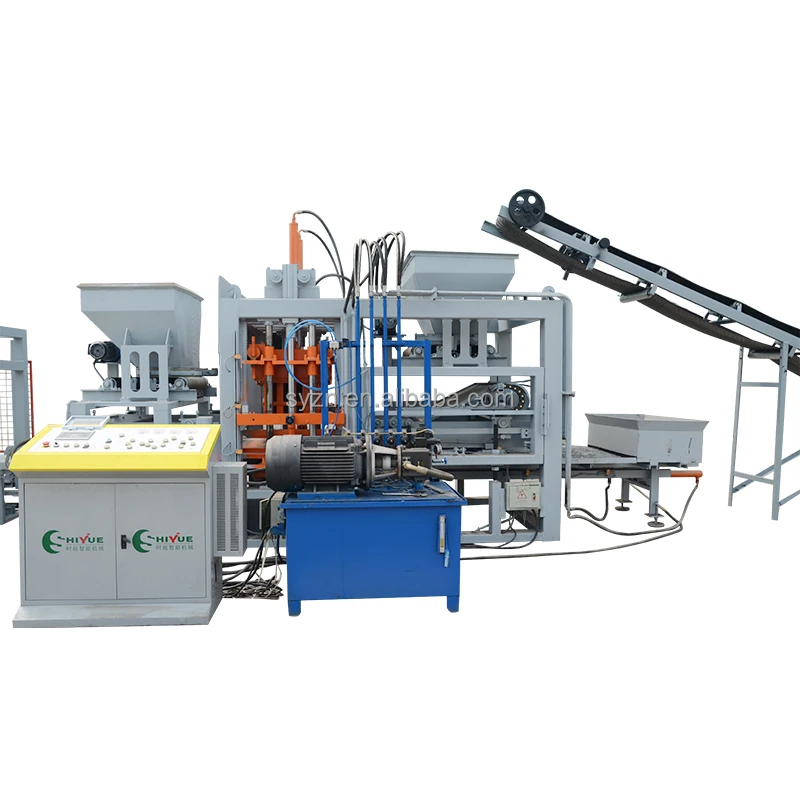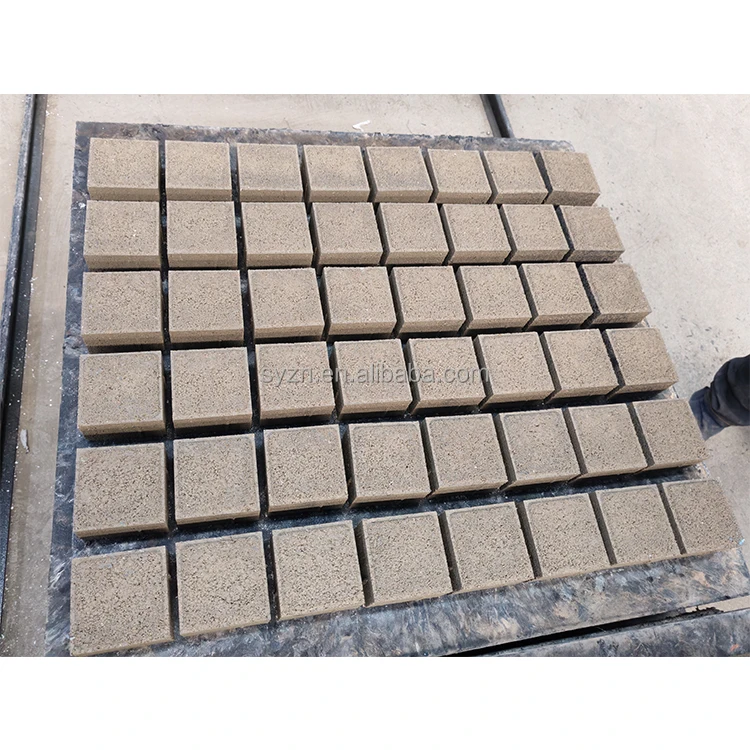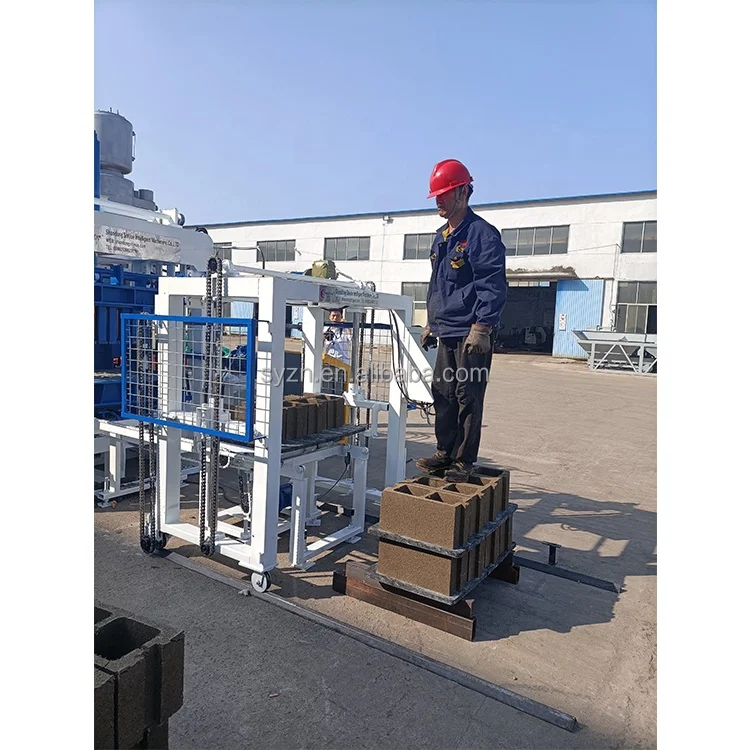
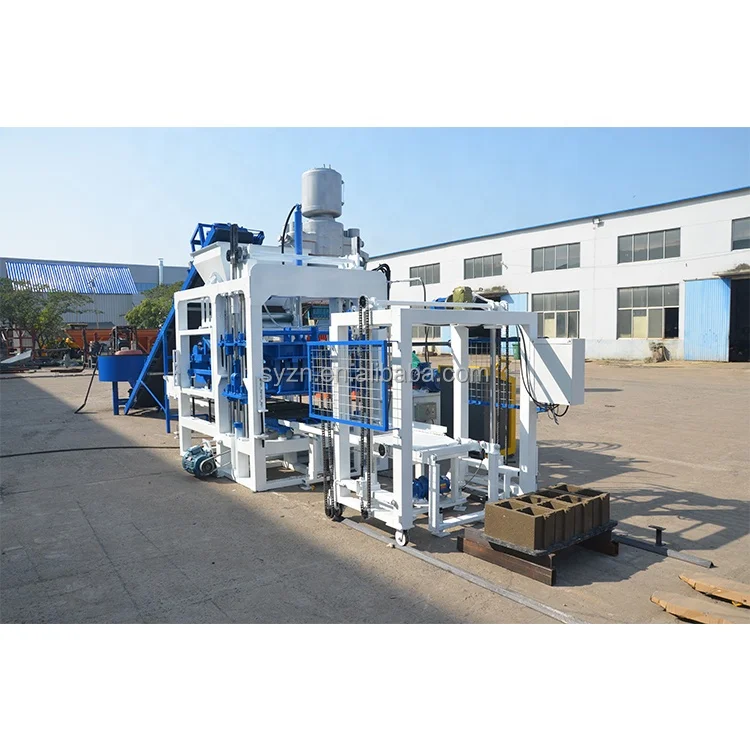
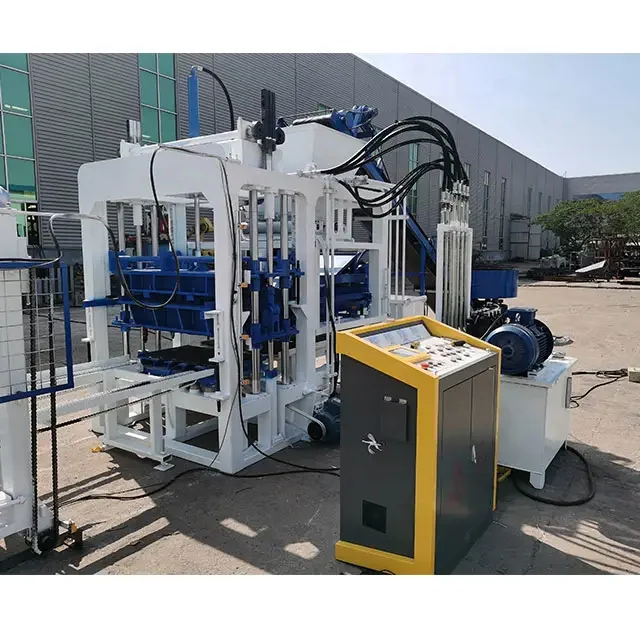
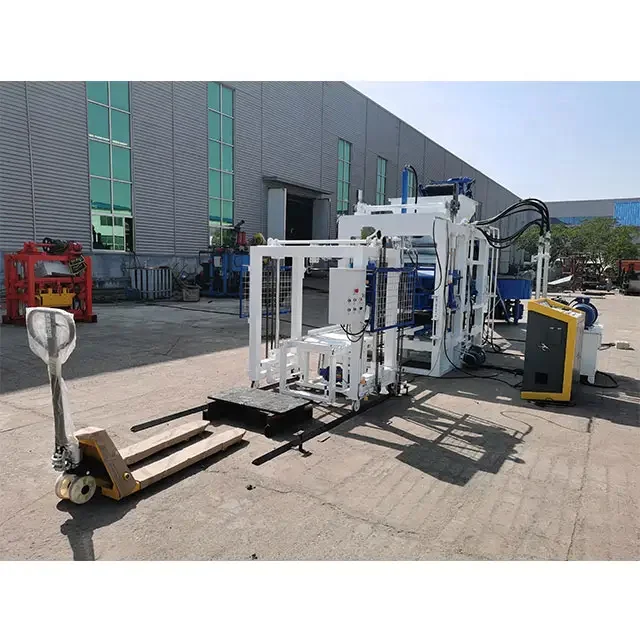
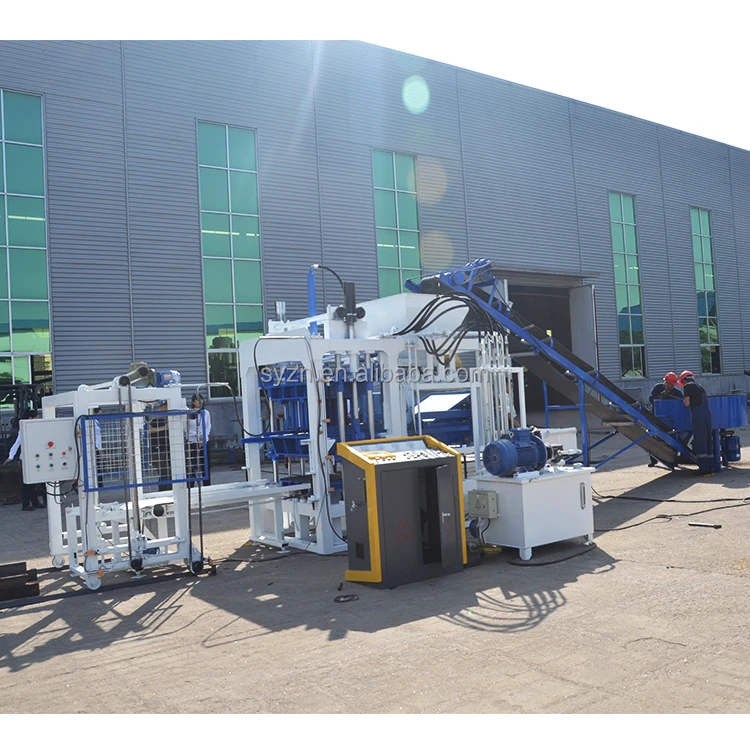

Description
Matched Mould Configuration — capacity figures for the QT4-18 are restated for every block format the buyer actually sells, not a single headline number that hides which block it assumes.
Technical Specifications
| Parameter | Value |
|---|---|
| Model | QT4-18 |
| Product Type | Automatic Hydraulic Block Making Machine |
| Vibration Frequency | 0-60 Hz |
| Vibration Form | Platform Vibration |
| Vibration Force | 45 kN |
| Pallet Size | 900 x 500 mm |
| Molding Cycle | 18-25 s |
| Demolding Method | Hydraulic |
| Control System | PLC & Engine Automatic |
| Output (400x200x200 mm hollow block) | 799 pcs/h, 6,399 pcs/8 hr (basis: 4 pcs/mould, 18 s cycle) |
| Output (400x150x200 mm hollow block) | 999 pcs/h, 7,999 pcs/8 hr (basis: 5 pcs/mould, 18 s cycle) |
| Output (240x115x52 mm solid brick) | 5,199 pcs/h, 41,599 pcs/8 hr (basis: 26 pcs/mould, 18 s cycle) |
| Mould Compatibility | Hollow block, solid brick, color face brick, road curb rock, hydraulic block, sod brick |
| Automation Level | Automatic (PLC controlled with electric and hydraulic interlock) |
| Hydraulic Pressure | (source value not stated — confirm with manufacturer) |
| Rated Power | (source value not stated — confirm with manufacturer) |
| Voltage & Frequency | (source value not stated — confirm with manufacturer) |
| Overall Dimensions (L×W×H) | (source value not stated — confirm with manufacturer) |
| Net Weight | (source value not stated — confirm with manufacturer) |
| Mould Change Time | (source value not stated — confirm with manufacturer) |
| Stacking Method | (source value not stated — confirm with manufacturer) |
| Warranty | 1 year (whole machine, excluding spare parts) |
Application Suitability
| Application | Material or Output |
|---|---|
| Hollow block production for building construction | Crushed stone, river sand, cement, and local aggregate blends |
| Solid brick production for masonry | Fly ash, sand, and cement mixes |
| Color face brick and through-body environmental protection brick | Pigmented face mix with standard body material |
| Road curb stone production | Coarse aggregate and high-cement-ratio mixes |
| Hydraulic block and sod brick production | Permeable aggregate blends for drainage applications |
| Block plants in Kenya, Zambia and similar markets | Locally sourced volcanic ash, quarry dust, or river sand |
What "6,399 Blocks per Shift" Leaves Out About QT4-18 Block Machine Specifications
That figure only holds if your mix, your aggregate, and your block format all match the test conditions behind it.
I once spent a full week on-site recalibrating a line because the buyer ordered from a catalogue capacity figure without telling anyone their sand was replaced with volcanic ash. The vibration force and cycle time that work on standard river sand produced crumbling blocks on that mix. With the QT4-18 block machine, specifications like 45 kN vibration force and 18-25 s cycle time are starting points — they must be validated against your actual raw materials before the machine leaves the factory [NEED_CITE: mix design impact on block density and cycle time].
Matching Mould Format to the Block Your Market Actually Buys
The QT4-18 accepts moulds for hollow block, solid brick, color face brick, road curb rock, hydraulic block, and sod brick. The critical point is that each format delivers a different output rate. A 400x200x200 mm hollow block mould produces 4 pieces per cycle, while a 240x115x52 mm solid brick mould produces 26 pieces per cycle. Buyers sizing a plant around hollow block cannot use the solid brick output figure to plan their shift.
Why Pallet Size Must Be Cross-Checked Before You Order
The 900 x 500 mm pallet is the fixed interface between the press and everything downstream — curing racks, forklifts, and stacking area. If your existing curing racks were built for a different pallet dimension, every pallet must be manually transferred to a second carrier, which defeats the purpose of an automatic line. Confirm your rack spacing and forklift fork width against this pallet size before the QT4-18 block machine specifications are finalized [NEED_CITE: pallet handling compatibility in block plant layout].
How Vibration Force and Cycle Time Interact With Local Aggregate
Platform vibration at 45 kN and 0-60 Hz is designed to compact standard crushed stone and sand mixes. Heavier or lighter aggregates — volcanic ash in East Africa, quarry dust in West Africa, or crushed coral in island markets — each demand a different frequency sweet spot and potentially a longer cycle. The 18-25 s range gives the operator room to adjust, but only if the starting point is set against a sample of your actual mix. A machine tuned for one aggregate and shipped to another will produce inconsistent block strength across every pallet.
The Cost of Skipping Format-Level Capacity Planning
When a buyer orders based on a single capacity number and later discovers the machine produces far fewer of their primary block format than expected, the consequences extend beyond output. Contracts with construction sites go unfulfilled, overtime shifts eat into margins, and the buyer often blames the machine rather than the mismatched specification. This is why every quotation for the QT4-18 should include a format-by-format capacity table tied to the exact moulds being supplied [NEED_CITE: common causes of block plant output shortfalls].
Why Buyers Choose This Configuration Approach
Every QT4-18 is configured against the buyer’s target block format, local aggregate, and daily output requirement rather than shipped from a default catalogue setup. Mould design covers the formats the buyer’s market actually sells, with custom drawings accepted for non-standard sizes. The automation level is selectable, so a buyer can start with semi-automatic pallet handling and add automatic stacking later without replacing the press. Pallet specification, voltage, and PLC language are all confirmed before production begins, preventing commissioning delays on arrival.
Documentation & Verification
- Line layout with capacity calculated per block format and mould
- Mould drawing and format list for every block ordered
- Pallet specification sheet cross-checked to curing rack dimensions
- Hydraulic and electrical schematic for local maintenance teams
- Voltage, frequency, and PLC display language confirmation record
- Factory test record run on buyer-specified block format before dispatch
Installation, Commissioning & Support
- Foundation plan sized to QT4-18 vibration load and platform footprint
- Dedicated power circuit matching confirmed voltage and frequency
- Machine dismantled for container loading with reassembly guide included
- On-site commissioning with cycle time tuned to delivered mix design
- Operator training covering PLC interface and mould change procedure
- Wear parts list with hydraulic seal and vibration motor replacement intervals
What to Include in Your Inquiry
To receive a configuration proposal that reflects your actual production conditions, include the block formats your market sells with target daily volume, the type and source of your primary aggregate, and the voltage and frequency available at your site. If you already have curing racks or forklifts, share their dimensions so the pallet and handling setup can be matched before the quotation stage.
Frequently Asked Questions
Q: How is QT4-18 capacity calculated and which block format is assumed?
A: Each capacity figure is tied to a specific mould. The 6,399 pieces per 8-hour shift assumes 400x200x200 mm hollow blocks at 4 pieces per mould and an 18-second cycle. Switching to solid brick changes the per-cycle count and therefore the shift total. Always ask for a format-by-format table.
Q: What mould formats are available and can I order custom moulds?
A: Standard moulds cover hollow block, solid brick, face brick, curb stone, and sod brick. Custom moulds can be built to buyer-supplied drawings for non-standard dimensions. The mould must be matched to the pallet size and vibration force to ensure consistent demolding.
Q: What pallet size does the QT4-18 use and why does it matter?
A: The QT4-18 uses a 900 x 500 mm pallet. This dimension must match your curing rack spacing and forklift fork width. A mismatch forces manual pallet transfer between the press and curing area, adding labour and slowing throughput.
Q: How do I confirm the machine is configured for my local aggregate?
A: Provide a sample description or lab analysis of your primary aggregate — type, maximum particle size, and moisture range. The vibration frequency range and cycle time are then adjusted during factory testing to match that material before the machine ships.
Q: What documentation comes with the QT4-18 before shipment?
A: Buyers receive a line layout with per-format capacity, mould drawings, pallet specification, hydraulic and electrical schematics, voltage and language confirmation, and a factory test record. All documents are prepared before dispatch so site preparation can begin immediately.