

Description
Mould-Matched System — Every QT4-15A block line ships with pallet size, vibration tuning and automation level specified against your target format, not a default catalogue sheet.
Technical Specifications
| Parameter | Value |
|---|---|
| Model | QT4-15A |
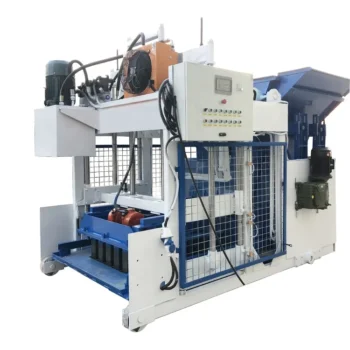
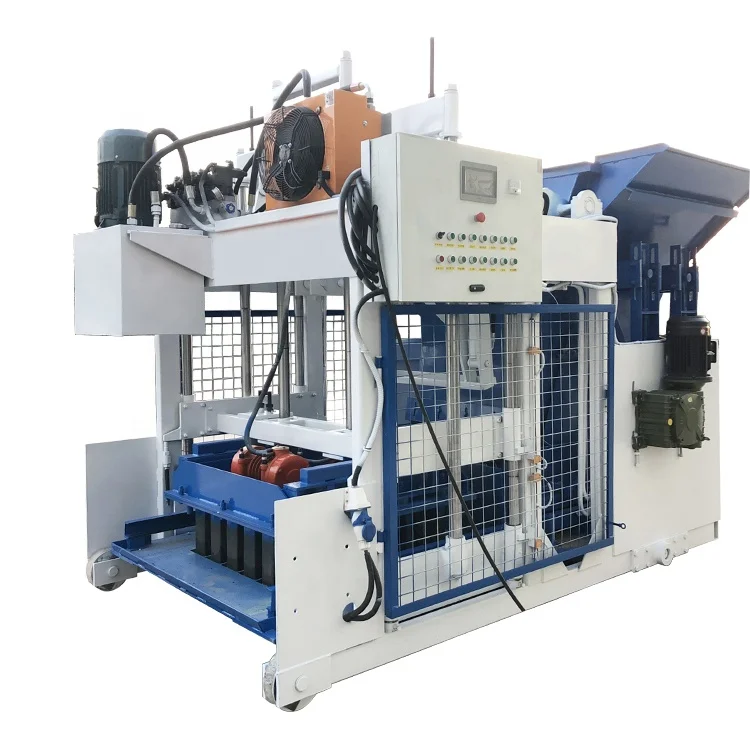
| Product Type | Fully Automatic Concrete Block Making Machine |
| Overall Dimensions (L×W×H) | 7100×1600×2610 mm |
| Molding Cycle | 15–25 s |
| Vibration Frequency | 4600 r/min |
| Exciting Force | 40–50 kN |
| Total Installed Power | 18.45 kW |
| Mixer Model | JQ350 |
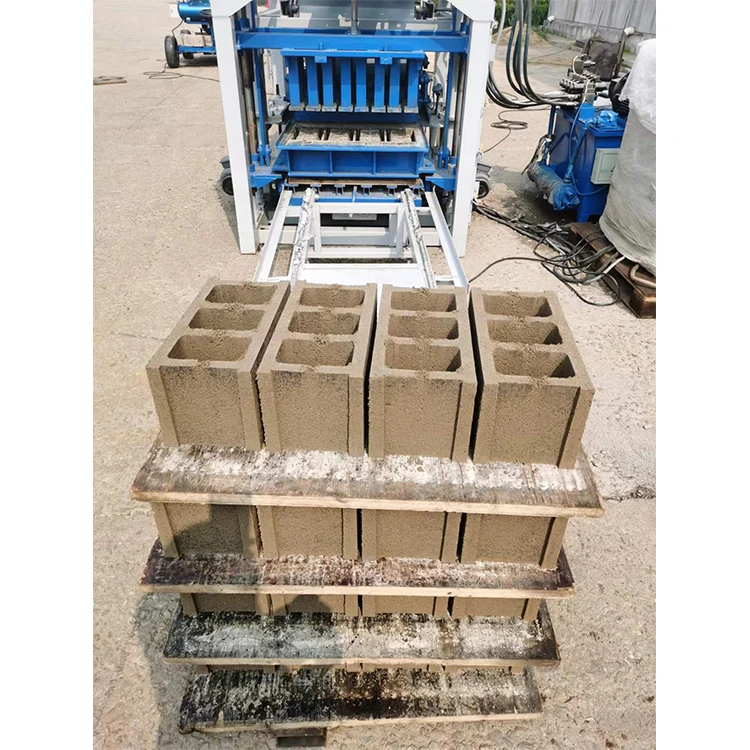
| Pallet Size | 850×550×25 mm |
| Net Weight | 3 T |
| Control System | PLC control system |
| Hydraulic Station | Included |
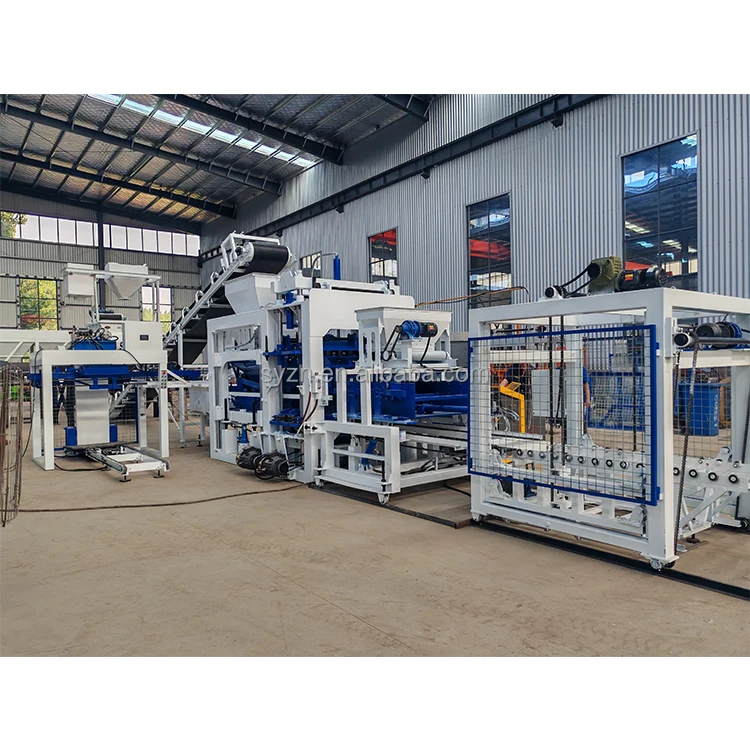
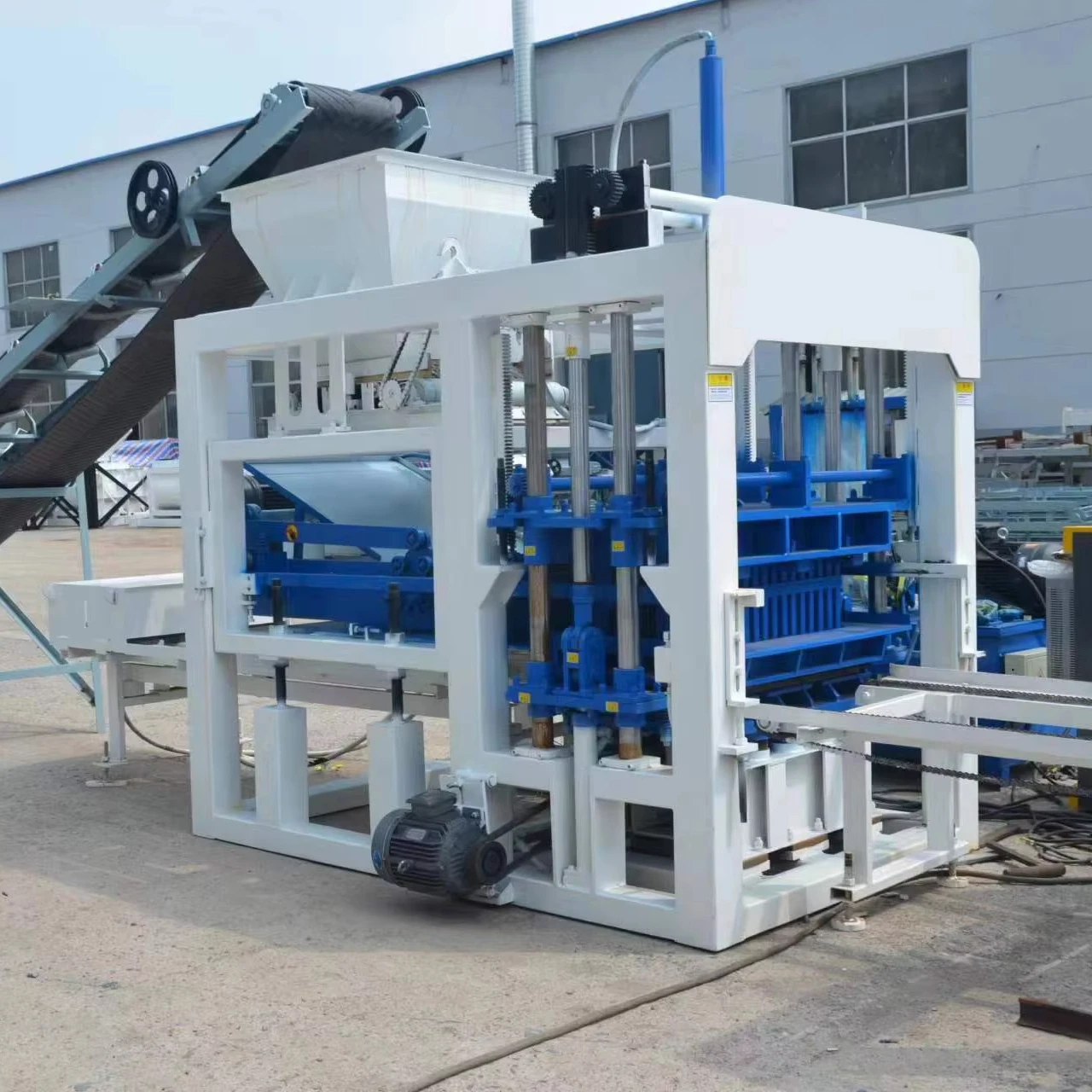
| Line Components | Block making machine, hydraulic station, PLC control system, pallet feeder, brick conveyor, block sweeper, manual hydraulic trolley |
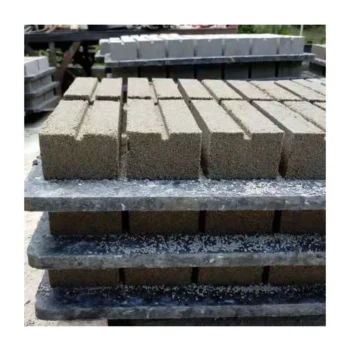
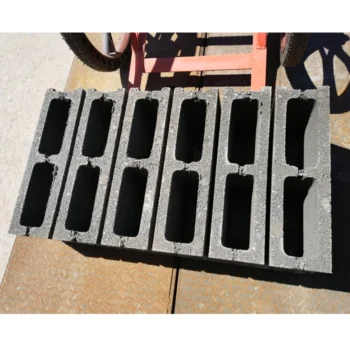
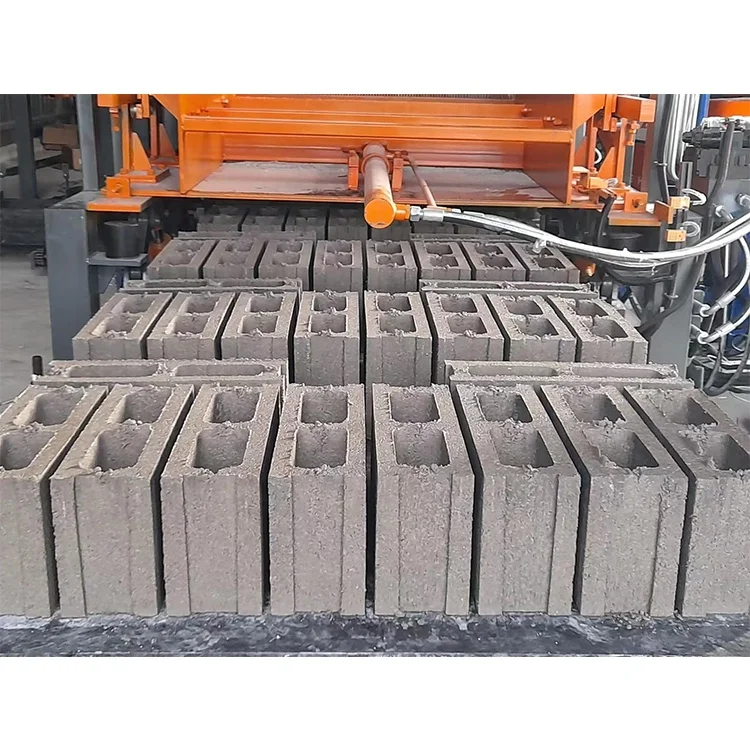
| Output — Hollow Block 400×200×200 mm | 4 pcs/mould, 408 pcs/h, 3264 pcs/8 hr |
| Output — Hollow Block 400×150×200 mm | 5 pcs/mould, 510 pcs/h, 4080 pcs/8 hr |
| Output — Solid Brick 240×115×53 mm | 18 pcs/mould, 2100 pcs/h, 17000 pcs/8 hr |
| Applicable Products | Paver, solid block, hollow block, curbstone (via mould change) |
| Raw Materials | Crushed stone, sand, cement, dust, fly ash |
| Shipping Configuration | Nude packing in 20GP container; approx. 500 pcs pallets loaded |
Application Suitability
| Application | Material or Output |
|---|---|
| Hollow block production for residential and commercial walls | Crushed stone, sand, cement blend; 400×200×200 mm and 400×150×200 mm formats |
| Solid brick manufacturing for load-bearing and partition walls | Sand and cement mix; 240×115×53 mm standard brick format |
| Paver and kerbstone production for municipal and landscaping projects | Fine aggregate and cement with pigment additive; format-specific moulds |
| On-site block production for housing and infrastructure contractors | Locally sourced sand, fly ash or stone dust; semi-automatic line configuration |
| Small-to-medium block plant startups adding format flexibility | Interchangeable moulds covering hollow, solid, paver and curbstone ranges |
Why "Cycles per Hour" Tells You Nothing Without a Block Size
A capacity figure without a format attached is marketing, not engineering.
Many quotations list a single hourly cycle count and let the buyer assume it applies to whatever block they plan to produce. In reality, a mould producing four hollow blocks per cycle and a mould producing eighteen solid bricks per cycle share the same press but deliver radically different daily totals. I have watched plant owners discover this mismatch only after the machine arrived and the first production run fell short of their business plan. The concrete block making machine specifications sheet for the QT4-15A ties every output number to a named block dimension so you can cross-check against your actual order book before signing [NEED_CITE: realistic block plant output planning methods].
Honest Capacity Tied to Block Format
The QT4-15A delivers 3264 hollow blocks (400×200×200 mm) per eight-hour shift, 4080 units of the narrower 400×150×200 mm hollow block, and up to 17000 solid bricks (240×115×53 mm) over the same period. These figures assume the stated mould, a 15–25 second molding cycle and continuous pallet supply. Any concrete block making machine specifications document that omits the format behind a capacity claim leaves the buyer guessing. Here the block format drives the selection, not the other way around.
Mould Flexibility Without Hidden Changeover Penalties
Switching between hollow block, solid brick, paver and kerbstone moulds gives a single press the range of a small product catalogue. Custom mould design to buyer drawings is available, so formats specific to a regional market can be added without sourcing a second machine. The trade-off is changeover time, which must be factored into shift planning when running multiple formats in one day [NEED_CITE: block mould changeover best practices in multi-format plants].
Reading the Vibration and Pressure Numbers
Vibration force of 40–50 kN at 4600 r/min works in tandem with the hydraulic station to compact the mix into a dense, consistent block. Higher frequency breaks down air pockets in fine-aggregate mixes such as stone dust, while hydraulic pressure locks the shape before the block leaves the mould. If local sand carries high clay content — something I encountered on a Gulf project where output dropped sharply until vibration parameters were re-tuned — the exciting force must be adjusted against the actual mix, not a laboratory sample. Pallet size at 850×550×25 mm should be confirmed against the buyer’s existing curing racks and forklift capacity so that blocks move smoothly from press to curing area without re-handling.
When the Wrong Configuration Costs More Than the Machine
Ordering a line without confirming pallet material, stacking method and voltage can negate any advantage the press itself offers. If pallets are sized for a curing area the plant does not have, blocks pile up on the floor and crack before curing is complete. If the PLC display language does not match the operator crew, fault diagnosis stalls and downtime stretches from minutes into hours [NEED_CITE: common commissioning delays caused by voltage and language mismatches]. The manual hydraulic trolley included with the QT4-15A handles block transfer, but buyers planning higher throughput should discuss automatic stacking options before the order is locked.
What Sets This Procurement Path Apart
Block machinery is the single focus here, so the press, mould, pallet and handling equipment are specified as one matched system rather than assembled from separate vendors. Every configuration is set against the buyer’s actual mix design and local aggregate, not a generic catalogue default. Mould drawings cover the exact formats the buyer’s market sells, including custom profiles. Automation level is selectable — a buyer can start with the semi-automatic arrangement the QT4-15A ships with and add automatic stacking later. Installation and commissioning support includes operator training so the crew can run the line independently from week one.
Documentation & Verification
- Line layout and capacity calculation stating the block format assumed for each output figure
- Mould drawing and format list covering every block type in your production plan
- Pallet specification cross-checked against your curing rack dimensions and forklift rating
- Voltage, frequency and PLC display language confirmation document before production begins
- Factory test record on your target block format before dispatch
- Hydraulic and electrical schematic for on-site maintenance reference
Installation, Commissioning & Support
- Foundation must accommodate 7100×1600 mm footprint and dynamic vibration loads from the 40–50 kN exciting force
- Dedicated power circuit sized for 18.45 kW total installed load including JQ350 mixer motor
- Machine ships in nude packing inside a 20GP container; reassembly required on site
- PLC control system parameters tuned to your block format and mix during commissioning visit
- Operator training covers mould change procedure, daily lubrication and hydraulic inspection routines
- Wear parts list and mould inventory provided for first-year maintenance planning
Before You Request a Quote
Send the block formats your market actually buys, the daily volume you need for each, and a sample of your local aggregate so the vibration and pressure settings can be matched before the machine is built. Confirm your site voltage, frequency and preferred PLC language to avoid commissioning delays. If you already have curing racks and forklifts on site, share their dimensions so the 850×550×25 mm pallet can be validated or adjusted.
Frequently Asked Questions
Q: How do I confirm the real daily output for the block format my market sells?
A: Request the capacity calculation document that ties each output figure to a specific block dimension and molding cycle. For the QT4-15A, hollow block 400×200×200 mm yields 3264 pieces per eight-hour shift, while solid brick reaches 17000. Your actual output depends on mix consistency, pallet supply continuity and operator rhythm.
Q: How long does a mould change take, and what does it require?
A: Mould change on the QT4-15A is manual and typically requires basic hand tools and two operators. Exact changeover time depends on mould size and bolt configuration. If your shift plan calls for multiple formats per day, discuss quick-release mould options during the quotation stage.
Q: Does the pallet size match my existing curing area and forklift?
A: The standard pallet measures 850×550×25 mm. Before production starts, share your curing rack spacing and forklift tine width so the pallet specification can be confirmed or adjusted, preventing re-handling and block damage on the curing floor.
Q: Can vibration force be adjusted for my local aggregate?
A: Yes. The 40–50 kN exciting force at 4600 r/min can be tuned during commissioning. Sending an aggregate sample beforehand allows the vibration and hydraulic pressure settings to be matched to your mix, avoiding the density and strength issues that arise when default parameters meet unfamiliar raw materials.
Q: What documentation confirms electrical and control compatibility before shipping?
A: A voltage, frequency and PLC display language confirmation document is issued before production begins. This prevents the common situation where a machine arrives with the wrong plug standard or an interface language the operator crew cannot read, delaying commissioning by days or weeks.