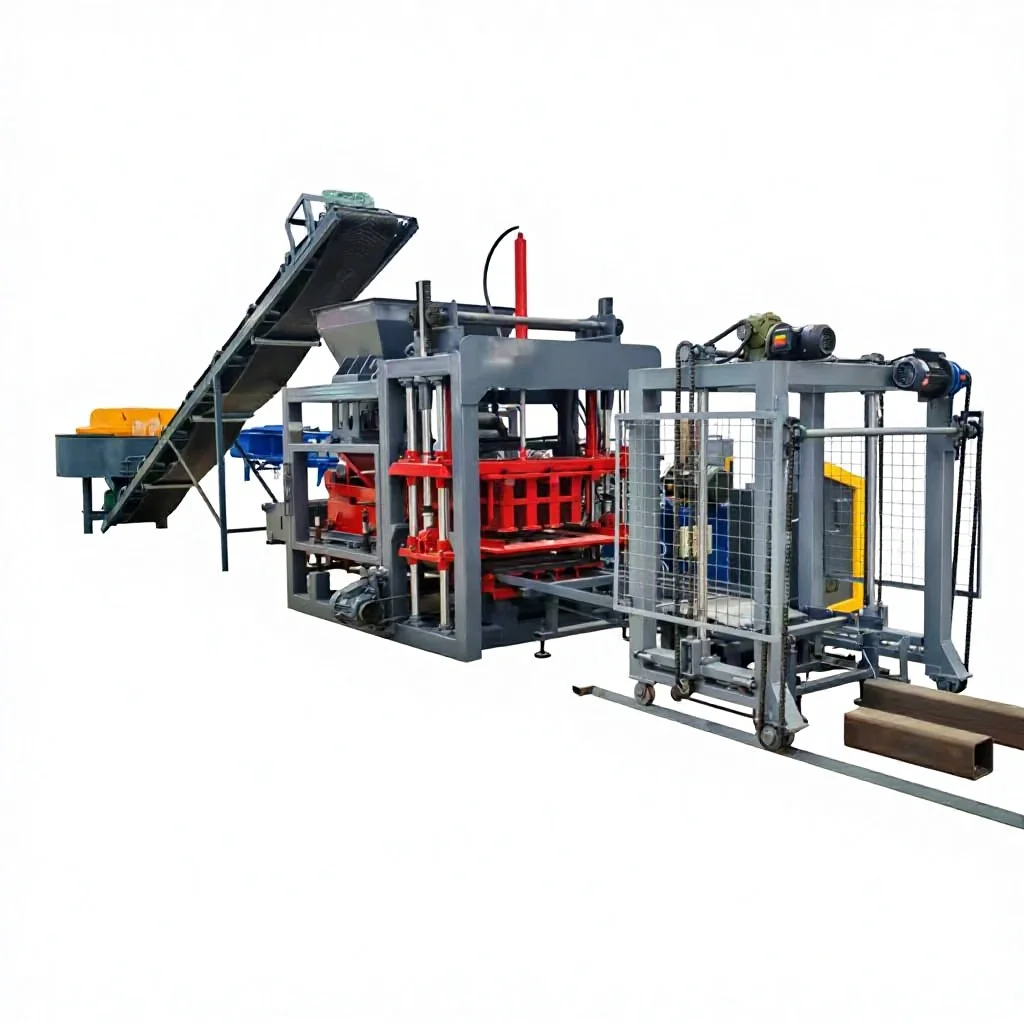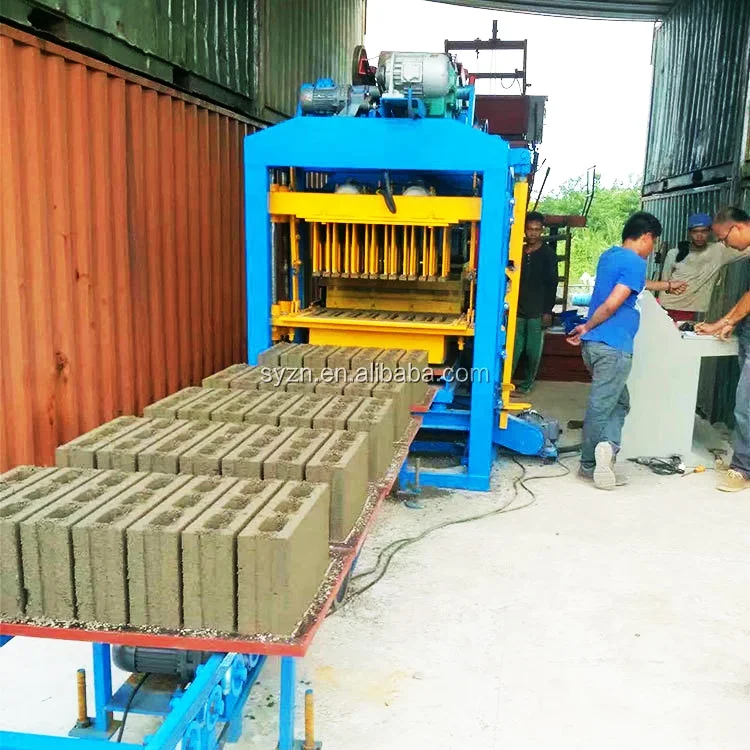
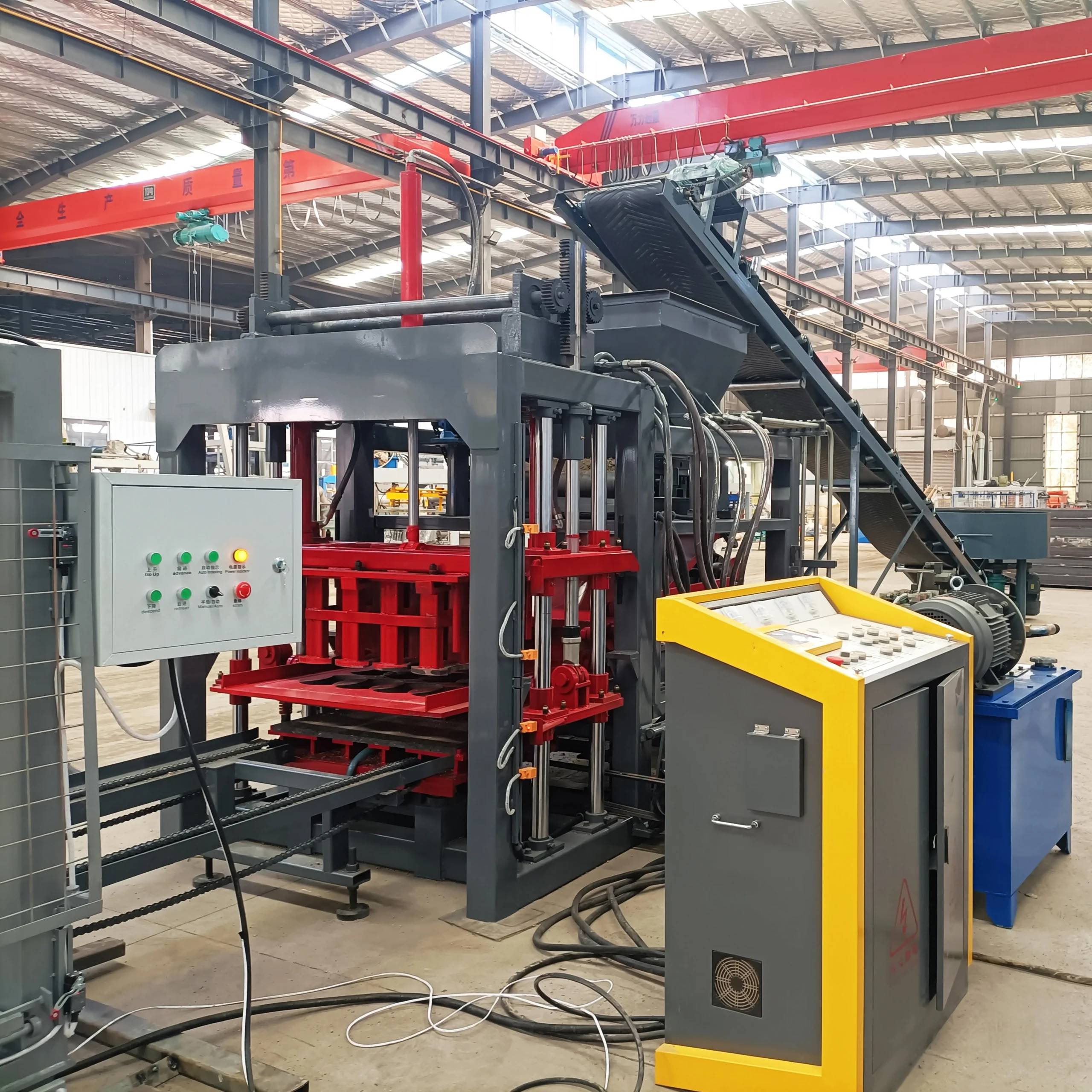
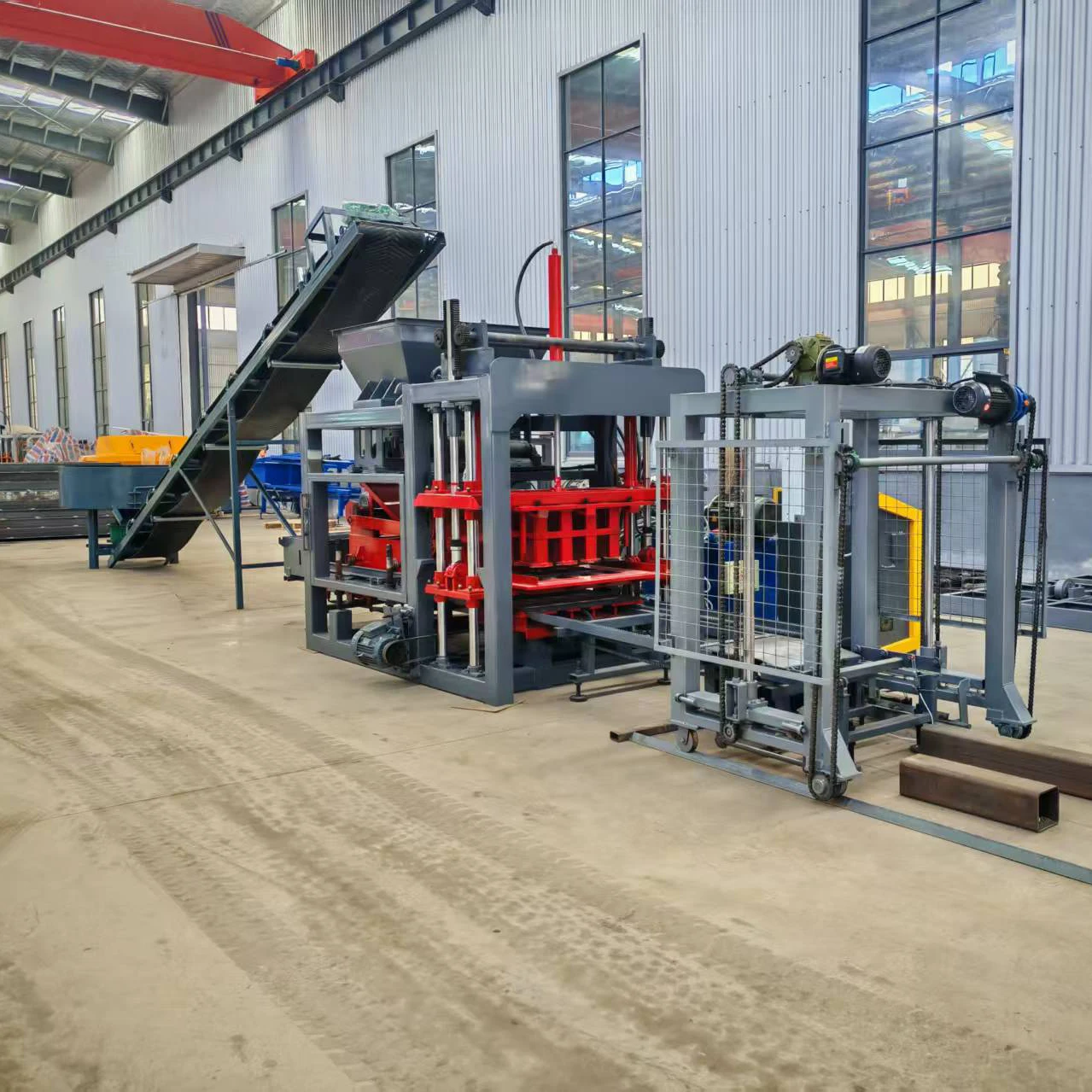
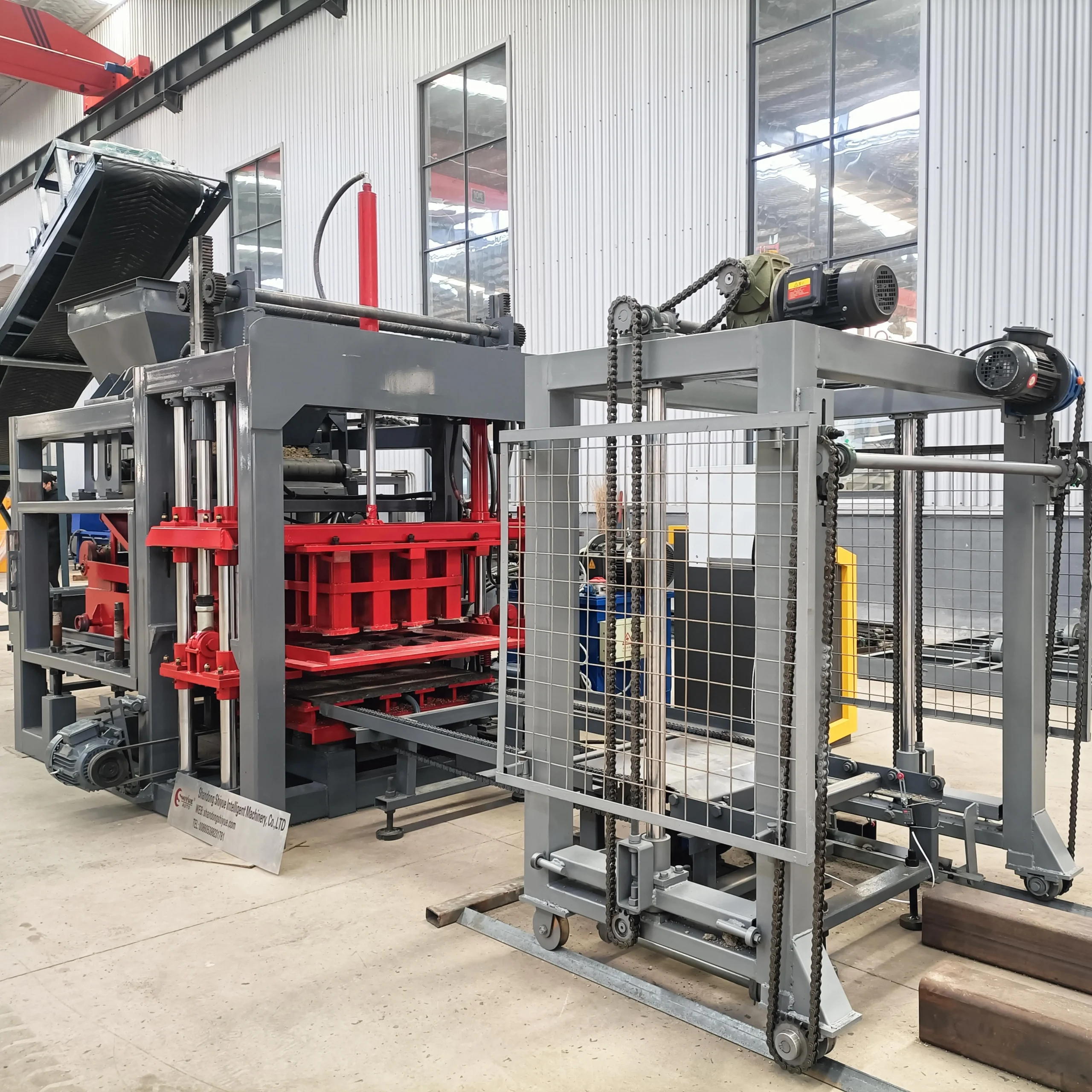

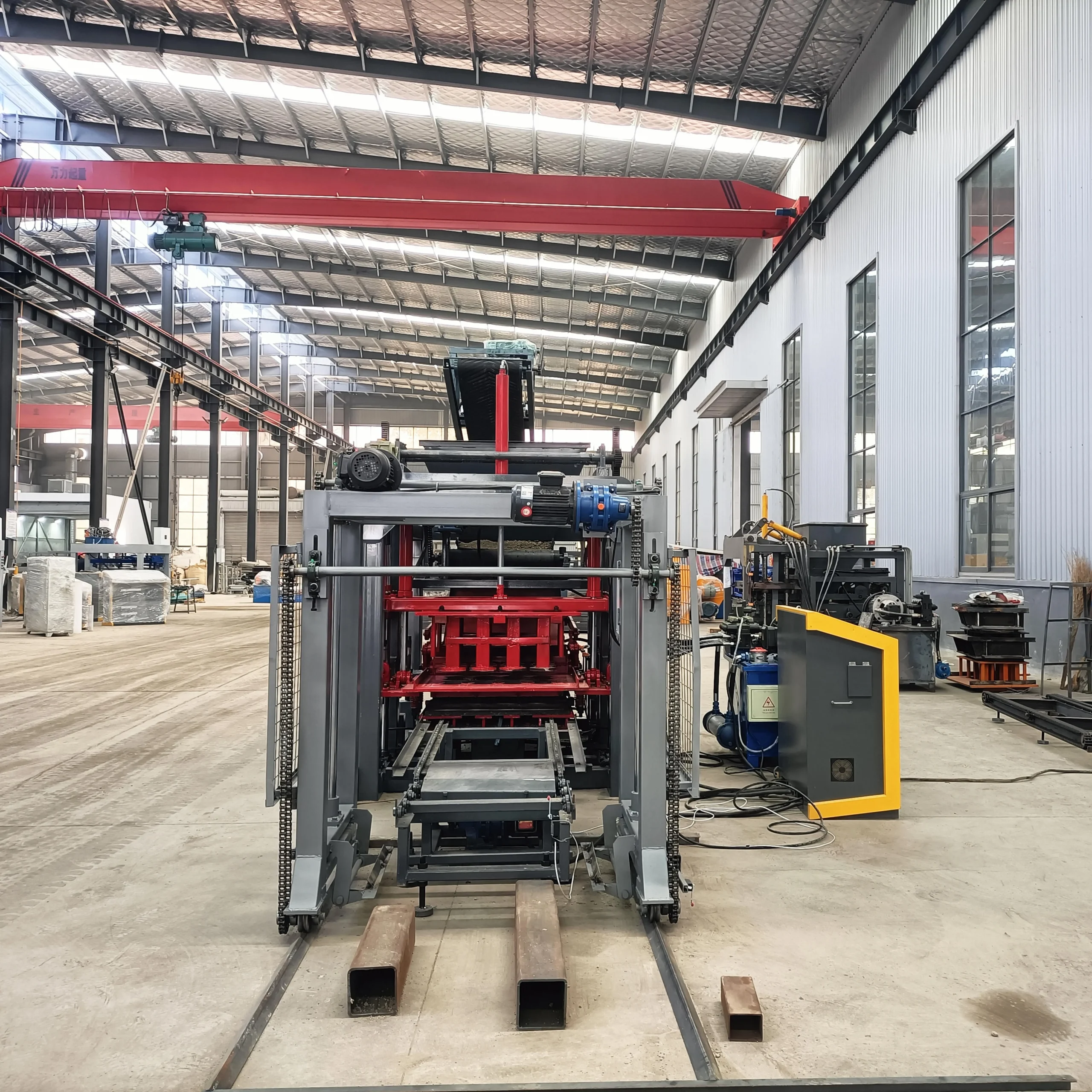
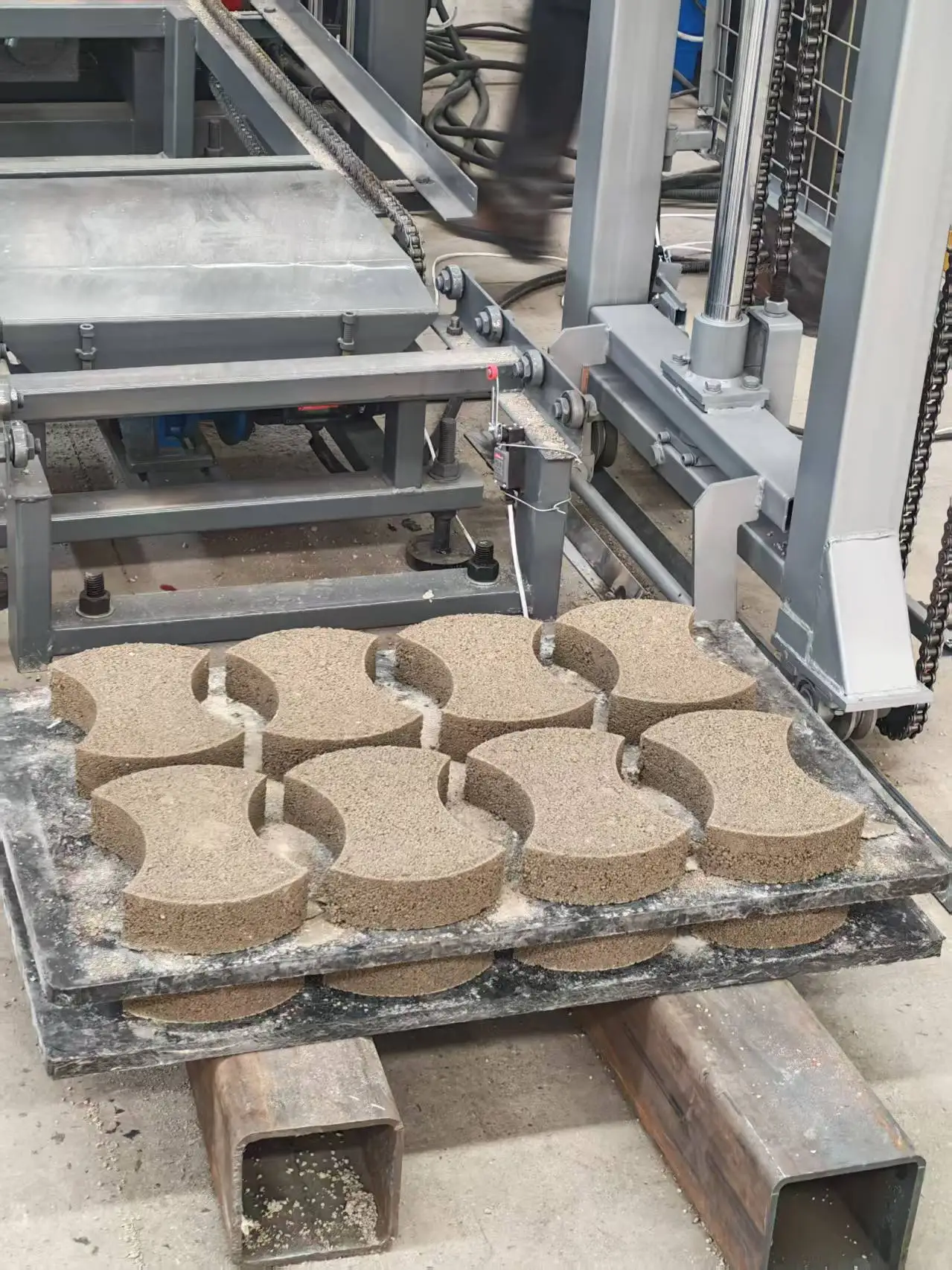
Description
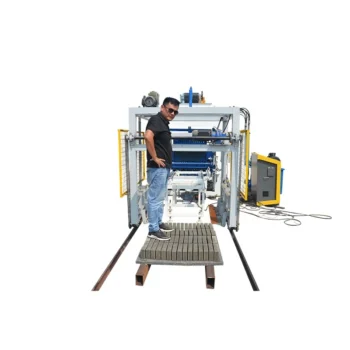
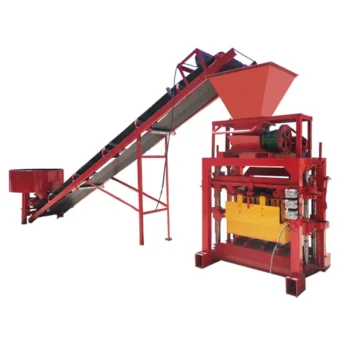
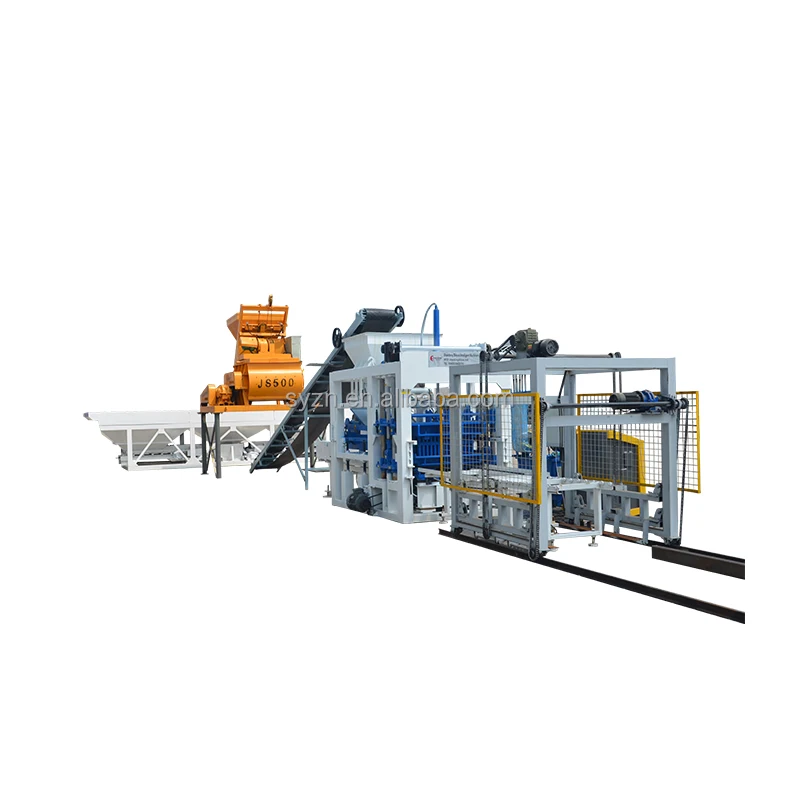
Honest Capacity by Format — The QT4-15A is configured around your actual block type, local aggregate and pallet handling setup, so the output figures you see on the layout drawing match what the machine delivers on your shop floor.
Technical Specifications
| Parameter | Value |
|---|---|
| Model | QT4-15A |
| Product Type | Fully Automatic Concrete Block Making Machine |
| Overall Dimensions (L×W×H) | 4100×1600×2600 mm |
| Rated Pressure | 16–21 MPa |
| Main Vibration Form | Platform Vibration |
| Vibration Frequency | 4200 r/min |
| Vibration Force | 55 kN |
| Pallet Size | 880×550 mm |
| Molding Cycle | 25–30 s (basis not stated in source — confirm block format, material, thickness) |
| Overall Power | 18.45 kW |
| Total Mass | 4 T |
| Demolding Method | Hydraulic |
| Factory Area | 300 m² |
| Control System | PLC |
| Automation Level | Fully Automatic |
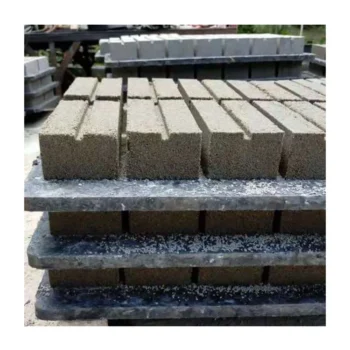
| Applied Products | Concrete blocks, hollow/solid blocks, pavers, interlocking blocks, curbstone, colored pavers |
| Raw Materials | Crushed stone, sand, cement, dust, fly ash, gravel, slag |
| Warranty | 1 year |
| Certification | CE (verify applicability for specific configuration) |
Application Suitability
| Application | Material or Output |
|---|---|
| Hollow block production for housing projects | Crushed stone, sand, cement blends |
| Solid block manufacturing for load-bearing walls | Gravel, cement, fly ash mixes |
| Interlocking paver production for walkways and driveways | Fine aggregate, cement, pigment |
| Curbstone and kerb production for roadworks | Coarse aggregate, cement, slag |
| Colored paving block runs for landscaping | Sand, cement, oxide pigments |
Why the Molding Cycle Number Means Nothing Without the Block Format
A cycle time only becomes useful once you know which block is sitting on the pallet.
Catalogues often quote a single cycle figure and let buyers assume it applies to every mould in the range. In practice, a 400×200×200 mm hollow block compacts and releases differently from a 60 mm thick interlocking paver. I once spent three days re-tuning vibration parameters on a QT4-15A line in the Middle East because the local river sand carried a high clay content that the standard recipe never accounted for; daily output settled at roughly six-tenths of the headline number until we re-matched pressure and frequency to that specific mix [NEED_CITE: aggregate variability effects on compaction cycle]. Requesting the QT4-15A block machine specifications without naming your top-selling format is like buying a truck without stating the payload.
Matching Vibration Force to Your Mix Design
The 55 kN vibration force and 16–21 MPa hydraulic pressure on the QT4-15A block machine must work together with your actual raw material. High-clay sand needs longer vibration to push air out, while clean crushed stone compacts faster but demands higher pressure to lock particles. When these two forces are set to a default rather than your mix, block strength drifts from batch to batch. We review your aggregate sieve analysis and cement ratio before locking the QT4-15A block machine specifications into the PLC, so the machine arrives already tuned for your material.
Pallet Size and the Curing Area You Already Have
An 880×550 mm pallet looks compact until you realise it must fit your existing curing racks, forklift tines and drying yard layout. Buyers who skip this check end up rebuilding curing racks or buying a new forklift after the QT4-15A arrives. We confirm pallet dimensions against your site drawing before production starts, and the pallet material — wood, bamboo or composite — is chosen for the humidity and temperature of your curing zone [NEED_CITE: pallet material selection for concrete block curing].
Reading the Spec Sheet Beyond the Headline Numbers
Platform vibration at 4200 r/min delivers energy through the mould table rather than the mould walls, which suits dense pavers and kerbstones where surface finish matters. The 4100×1600×2600 mm footprint means the press itself fits a modest bay, but you still need room upstream for the mixer and downstream for pallet return. Overall power at 18.45 kW covers the press motors and hydraulic pump; the batching and stacking stations draw separately. Hydraulic demolding lifts the mould box vertically, reducing edge chipping on thin pavers compared with mechanical cam release. Total mass of 4 T keeps the machine stable under full vibration without requiring a deep pit foundation, though a level concrete slab rated for dynamic load is mandatory. Factory area of 300 m² is the minimum for press, mixer, pallet circulation and short-term curing; most buyers allocate more once stacking and bagging are included.
What Happens When the Pallet and Forklift Conversation Is Skipped
Buyers who confirm the press but leave pallet handling to the last minute often find the cured blocks have to be moved by hand, wiping out the labour saving the QT4-15A was supposed to deliver. The pallet return conveyor, stacking height and forklift mast clearance all depend on the 880×550 mm pallet size chosen at order stage. Change any one of those after the machine is built and you face re-engineered conveyors or a lower stack limit that cuts curing capacity [NEED_CITE: pallet handling bottlenecks in block plants]. That is why we treat pallet specification as a line-level decision, not a press-only detail.
What You Get When the Line Is Specified as One System
The QT4-15A press, moulds, pallets and handling equipment are designed together so cycle times match at every station — the press never waits for a pallet and the stacker never waits for a block. Moulds are built to the formats your market actually buys, and custom drawings are accepted when a standard mould does not cover your profile. Voltage, frequency and PLC display language are confirmed in writing before production, so the machine powers up in your language on day one. Factory test records are run with your chosen block format, not a generic test block, giving you a real baseline before shipment. CE documentation is prepared where your market requires it, and wear parts lists identify every hydraulic seal and vibration spring by part number so replacements are one email away.
Documentation & Verification
- Line layout showing capacity calculated per block format you confirmed
- Mould drawing package listing every format included at order
- Voltage, frequency and PLC language sign-off sheet before production
- Factory test record run on your selected block profile and mix
- Hydraulic and electrical schematics with labelled component list
- Wear parts catalogue with part numbers for seals, springs and mould liners
Installation, Commissioning & Support
- Level concrete slab rated for 4 T dynamic load, matching the 4100×1600 mm footprint
- Dedicated power circuit sized for 18.45 kW plus upstream mixer draw
- Machine arrives partially assembled; press frame and hydraulic pack bolt on site
- PLC language and block parameters verified against your mix during commissioning
- Operator training covers mould change, pallet feed and daily vibration check
- Wear parts stock list provided so first replacement order is planned before run-out
What to Include in Your First Enquiry
Tell us the block formats your market moves fastest — hollow, solid, paver, kerb — and the daily volume you need for each. Share your local aggregate source and any sieve analysis you have, so we can match vibration and pressure before quoting. Confirm your site voltage, frequency and the language your operators read, along with the curing space and forklift you plan to use with the 880×550 mm pallet.
Frequently Asked Questions
Q: How is cycle time and daily output calculated for each block format on the QT4-15A?
A: Cycle time shifts with block height, cavity count and mix stiffness. We calculate output per format — hollow, solid, paver or kerb — using the 25–30 s range as a starting point, then adjust for your specific mould profile and material. The capacity sheet we issue states the exact format assumed for every number.
Q: Which mould formats fit the 880×550 mm pallet, and can I order custom profiles?
A: Standard moulds cover common hollow blocks, solid blocks, pavers and interlocking shapes within the pallet envelope. If your market sells a profile outside that range, we design a custom mould from your drawing. Mould change uses standard hand tools and does not require a full shift when the format is pre-planned.
Q: How do you match the machine to my local aggregate and mix design?
A: We ask for your aggregate sieve data, cement type and target block strength. Vibration force and hydraulic pressure are then set so compaction suits your material, not a default recipe. This step happens before the PLC parameters are locked for shipment.
Q: What voltage, frequency and PLC language options are confirmed before the machine ships?
A: We confirm supply voltage, phase and frequency for your site, along with the PLC display language your operators use. These are signed off in writing before production starts so commissioning is not delayed by electrical or interface mismatches on arrival.
Q: How long does a mould change actually take on the QT4-15A?
A: With the correct tools on hand and operators trained, a mould swap takes a short portion of a shift rather than a full day. We include a mould change procedure in the manual and cover it during on-site training so your team can switch formats without external support.