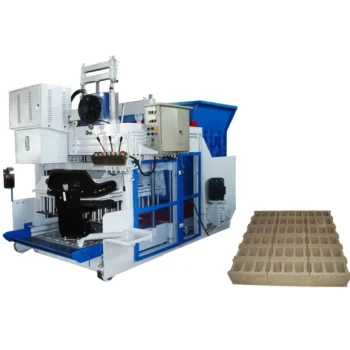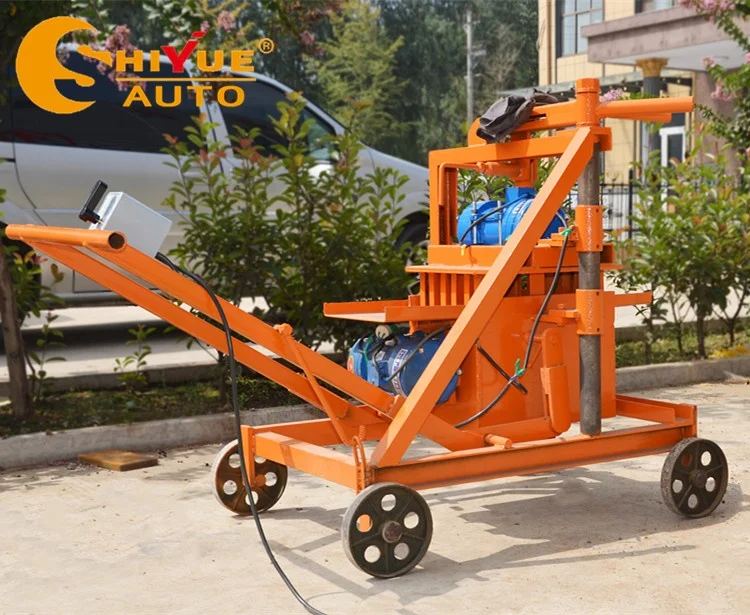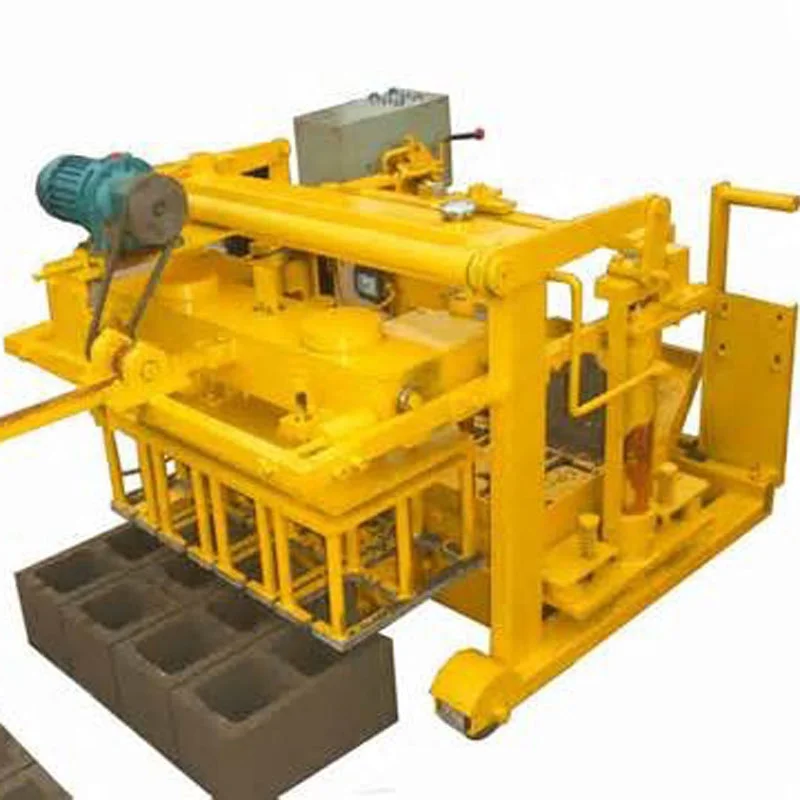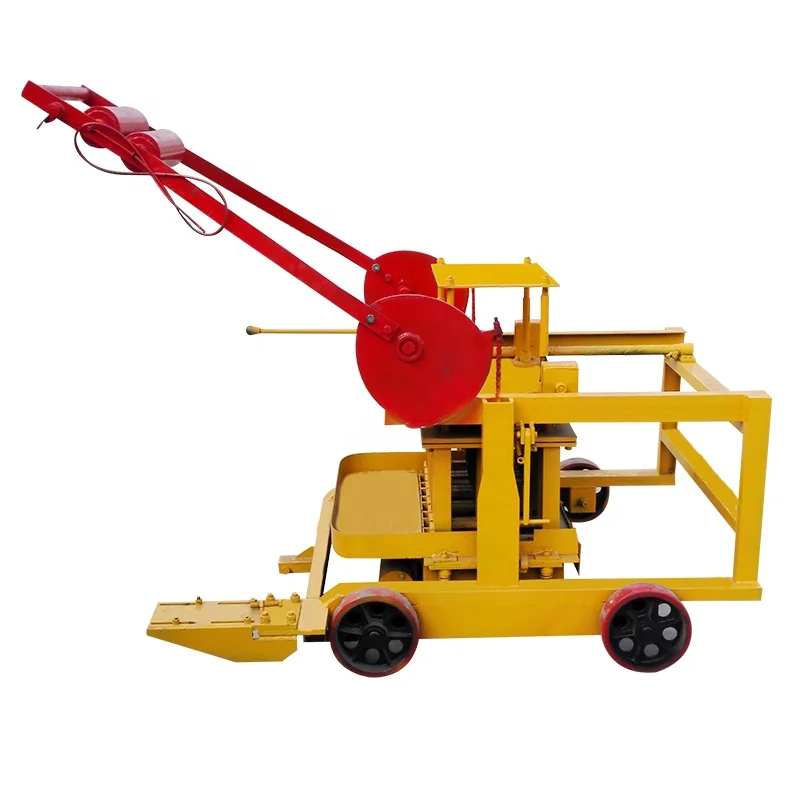


Description
Format-matched capacity — every output figure for the QMY4-30 is calculated against the buyer’s target block size and local aggregate, not the smallest brick in the catalogue.
Technical Specifications
| Parameter | Value |
|---|---|
| Model | QMY4-30 |
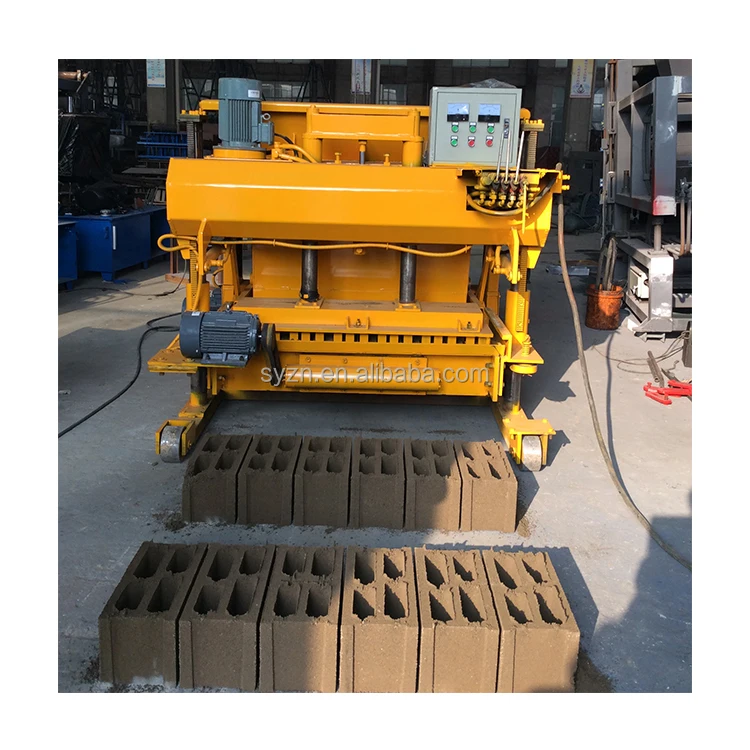
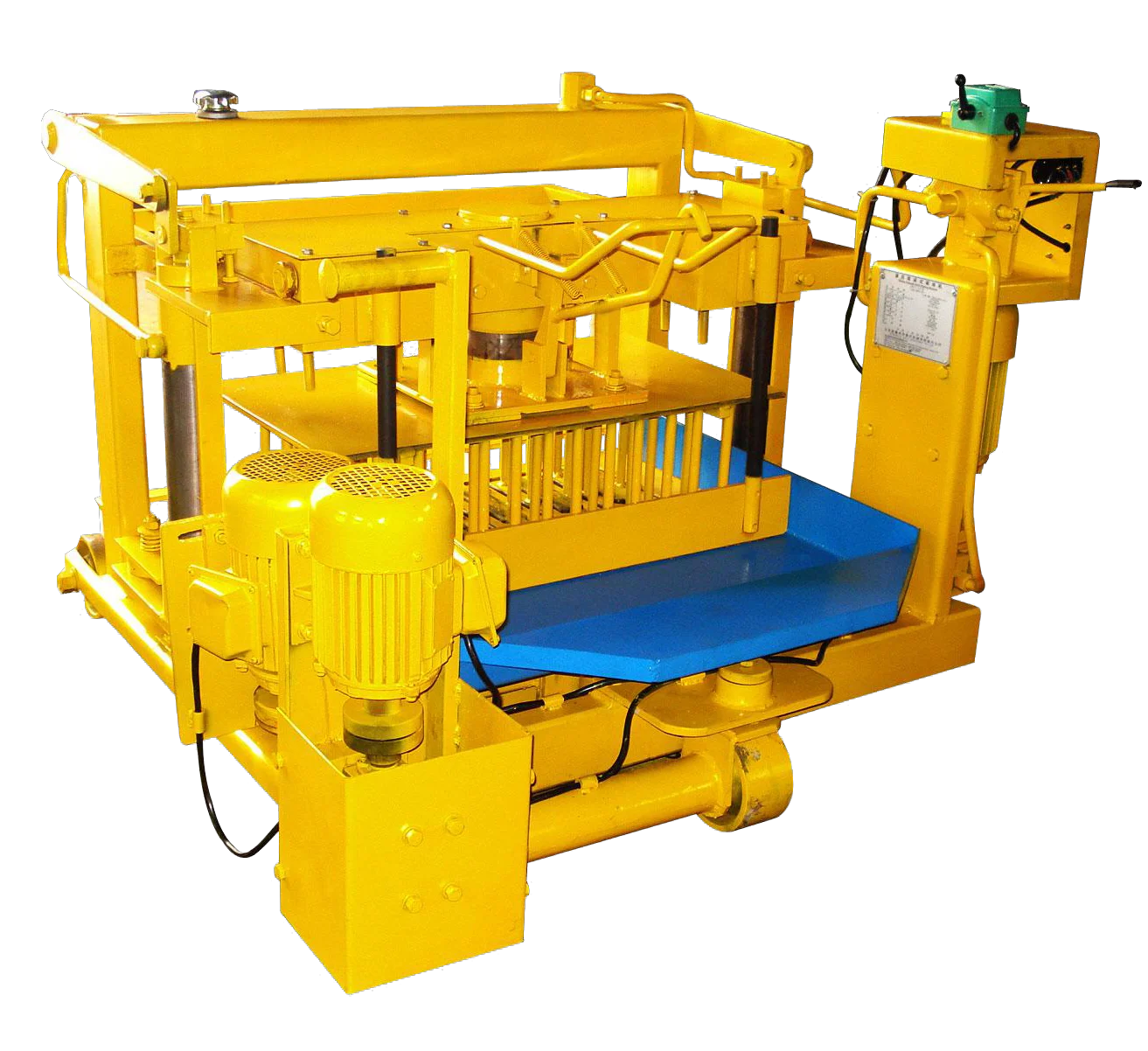
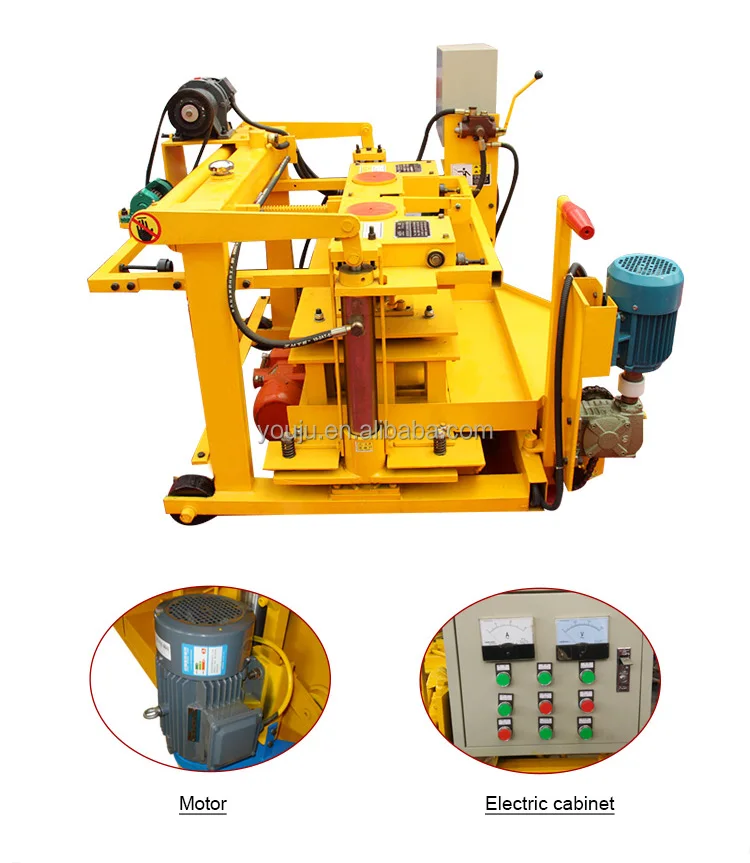
| Product Type | Mobile Egg-Laying Concrete Block Machine |
| Rated Power | 5 kW |
| Overall Dimensions (L×W×H) | 1200 × 1200 × 1100 mm |
| Net Weight | 950 kg |
| Cycle Time | 30 seconds (basis not stated in source — confirm block format, material, and thickness before sizing) |
| Mould Format | Hollow block, solid brick (changeable moulds) |
| Automation Level | Manual / mobile egg-laying (no pallet required) |
| Raw Materials | Cement, sand, crushed stones, slag |
| Output — 400×200×200 mm hollow block | 4 pcs/mould, 480 pcs/hour, 3840 pcs/8 hours |
| Output — 400×150×200 mm hollow block | 5 pcs/mould, 600 pcs/hour, 4800 pcs/8 hours |
| Output — 400×100×200 mm hollow block | 7 pcs/mould, 840 pcs/hour, 6720 pcs/8 hours |
| Pallet Size | N/A (blocks laid directly on ground) |
| Voltage & Frequency | Configurable (to be confirmed before production) |
| Control System | To be confirmed with manufacturer |
| Hydraulic Pressure | To be confirmed with manufacturer |
| Vibration Force | To be confirmed with manufacturer |
Application Suitability
| Application | Material or Output |
|---|---|
| On-site hollow block production for building contractors | Cement, sand, and crushed stone mixes laid directly on prepared ground |
| First-plant entrepreneurs producing solid bricks | Low-investment setup without pallet or curing rack infrastructure |
| Supplementary mobile production alongside a fixed block line | On-demand format changes for small-run site requirements |
| Remote or island construction projects | Portable 950 kg machine movable by standard forklift or crane |
What "480 Pieces per Hour" Actually Means for the QMY4-30 Mobile Block Machine
Capacity only holds when the block format, mix design, and aggregate grading match the mould and vibration settings.
Sellers frequently quote a single headline number without naming the block size behind it. A buyer expecting that figure on a larger hollow block then watches daily output drop sharply. On a Philippine island site I worked with, the local river sand carried high clay content and oversized aggregate. The QMY4-30 mobile block machine could not compact the mix properly at the rated cycle, and actual output fell well below the quoted number. The crew ended up hand-filling blocks to keep masonry work going. [NEED_CITE: aggregate grading standards for concrete block production]
Per-Format Output Data Instead of One Headline Number
The QMY4-30 mobile block machine ships with changeable moulds covering three common hollow block sizes. Each format has its own piece count per mould and verified hourly output: 480 pieces per hour on the 400×200×200 mm block, 600 on the 150 mm wide, and 840 on the 100 mm wide. These numbers are tied to specific mould cavities, so a buyer comparing machines can match them directly against the block sizes their market actually demands.
Why the Egg-Laying Design Matters for First-Plant Buyers
An egg-laying machine lays each block directly on the ground and moves forward to the next position. There is no pallet to purchase, no curing rack to build, and no pallet return conveyor to maintain. For a contractor producing blocks beside the building site or an entrepreneur starting a block business with limited floor space, this removes an entire layer of capital and handling. The trade-off is that ground preparation becomes critical — the surface must be level and firm enough to support wet blocks through the curing period.
Reading the Spec Sheet Against Your Actual Site Conditions
The 5 kW rated power keeps energy draw low, which suits sites running on generators or limited grid connections in remote areas. The 30-second cycle time is achievable when the mix is proportioned correctly for the vibration force available. At 950 kg net weight, the machine is movable by a standard site forklift, but it is not something one person repositions by hand. The overall 1200 × 1200 mm footprint means it works in tight site corners, though operators need clearance around the machine for raw material feeding and block inspection. [NEED_CITE: site preparation requirements for mobile egg-laying block machines]
The Cost of Ignoring Mix Design Before Ordering
When the machine arrives configured for a clean, well-graded aggregate that the buyer cannot source locally, the choices are poor: import the correct material at high freight cost, or run local material and accept weak, inconsistent blocks. High clay content in sand reduces compaction under vibration. Oversized stones jam the mould cavity and produce chipped edges. The result is blocks that fail compressive strength tests and a machine that spends more time down for cleaning than producing. [NEED_CITE: effect of clay content in sand on concrete block compressive strength]
Why Procurement Through This Channel Reduces Sizing Risk
Block machinery is the single focus here, so the QMY4-30 is specified as a matched system — machine, mould, and handling — rather than assembled from separate suppliers. Configuration is set against the buyer’s actual mix design and target block format, not a catalogue default. Mould design covers the formats the buyer’s market sells, including custom drawings when standard sizes do not match local demand. Voltage, frequency, and control language are confirmed before production starts, which prevents commissioning delays after the machine arrives on site. Documentation includes a capacity calculation that names the block format assumed, so there is no ambiguity about what the output figures mean.
Documentation & Verification
- Line layout with capacity calculation naming the exact block format assumed
- Mould drawing and format list confirming cavity count per block size
- Voltage, frequency, and control display language confirmation sheet
- Factory test record run on buyer-specified mix before dispatch
- Packing photographs showing dismantled components for container loading
Installation, Commissioning & Support
- Ground must be level and compacted; the 1200 × 1200 mm footprint requires a flat working strip
- Dedicated power circuit matching confirmed voltage and frequency for the 5 kW motor
- Mould mounting and alignment checked on site before first production run
- Operator training covers mix proportioning, cycle pacing, and mould change procedure
- Wear parts list with mould liner and vibration component replacement intervals
- Routine maintenance schedule tied to daily production hours and local dust conditions
What to Include in Your Inquiry
Provide the block sizes your market sells, the daily output you need for each format, and a sample or description of your local sand and aggregate. Confirm the voltage and frequency available at your site, along with the control display language your operators require. If you have an existing mixer or raw material handling setup, note the capacity so the mobile unit can be paced to match.
Frequently Asked Questions
Q: How is the 480–840 pcs/hr output verified, and what block format does each figure assume?
A: Each output figure is tied to a specific mould cavity count and block dimension. The 480 pcs/hr rate applies to 400×200×200 mm hollow blocks at 4 pieces per mould. The 840 pcs/hr rate applies to 400×100×200 mm blocks at 7 pieces per mould. These assume a 30-second cycle with a compatible mix design and properly graded aggregate.
Q: Which block formats and mould sizes are available, and how long does a mould change take?
A: The QMY4-30 supports hollow block and solid brick formats through changeable moulds. Standard sizes include 400×200×200 mm, 400×150×200 mm, and 400×100×200 mm hollow blocks. Custom mould drawings are available for formats outside this range. Mould change time depends on the mounting system and operator familiarity.
Q: What raw material mix and aggregate grading does the machine require?
A: The machine uses cement, sand, crushed stones, and slag. Aggregate must be graded to fit the mould cavity without jamming, and sand should have low clay content for proper compaction under vibration. Providing a sample of your local materials allows the machine to be configured for your actual supply.
Q: What voltage and frequency options are available, and is the control display configurable?
A: Voltage and frequency are configured to match the buyer’s site supply before production. The control display language is confirmed at the order stage so operators can read instructions and fault codes in their working language upon arrival.
Q: What does the 950 kg weight mean for on-site mobility and foundation needs?
A: The machine is movable by a standard site forklift or small crane but is not manually portable. It requires a level, compacted ground surface rather than a poured concrete foundation. The working area must accommodate the machine footprint plus clearance for material feeding and block curing space.