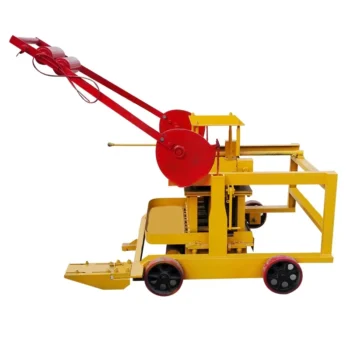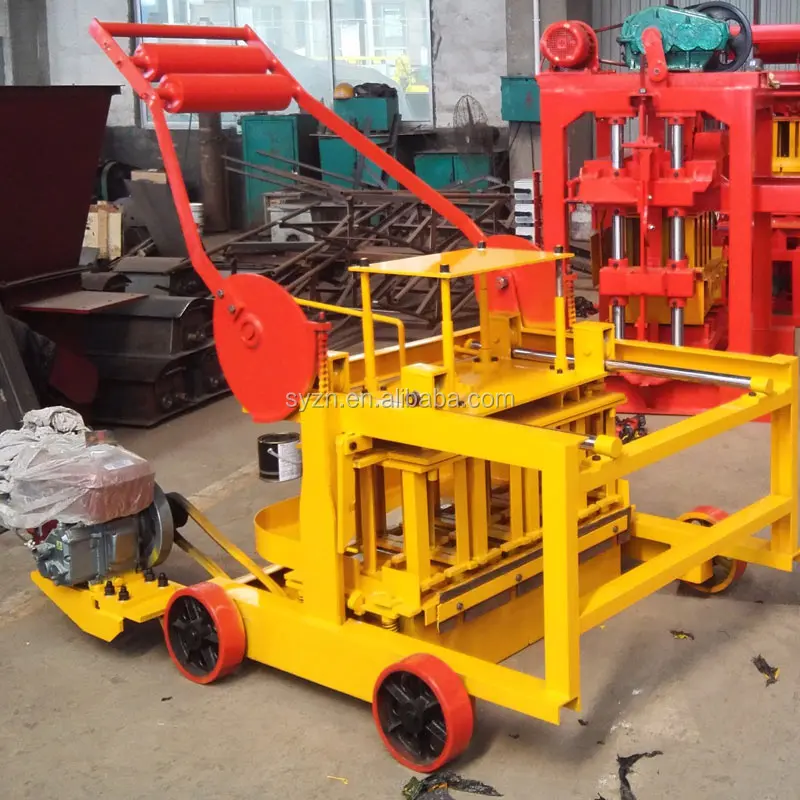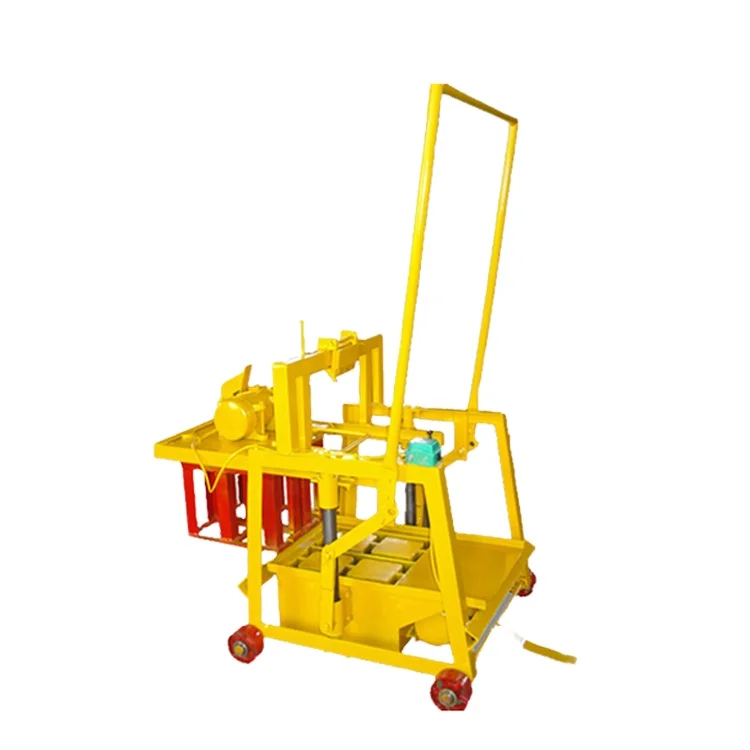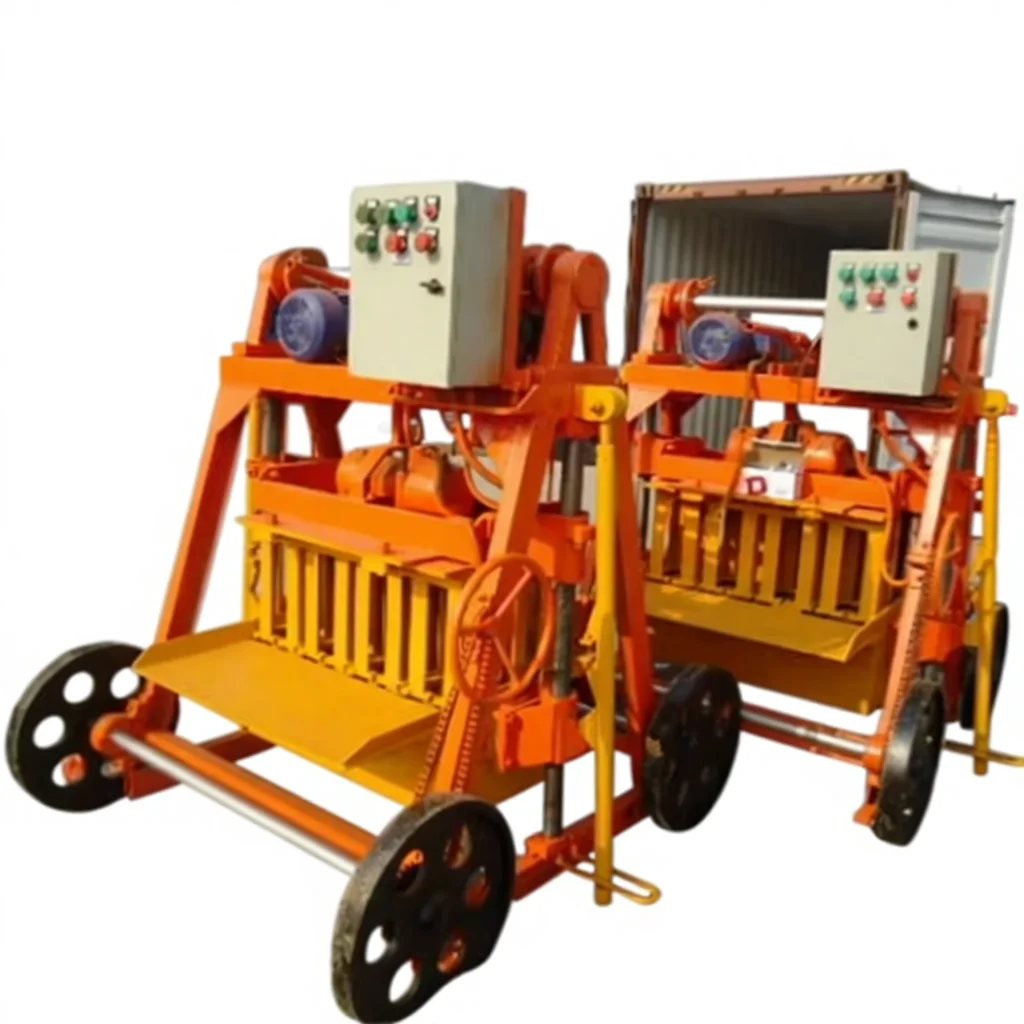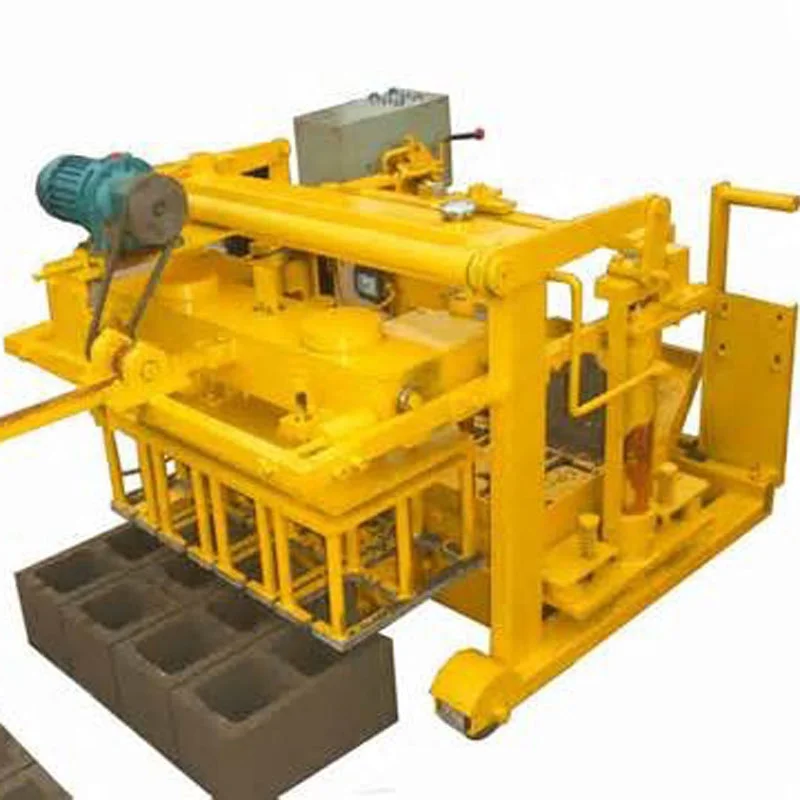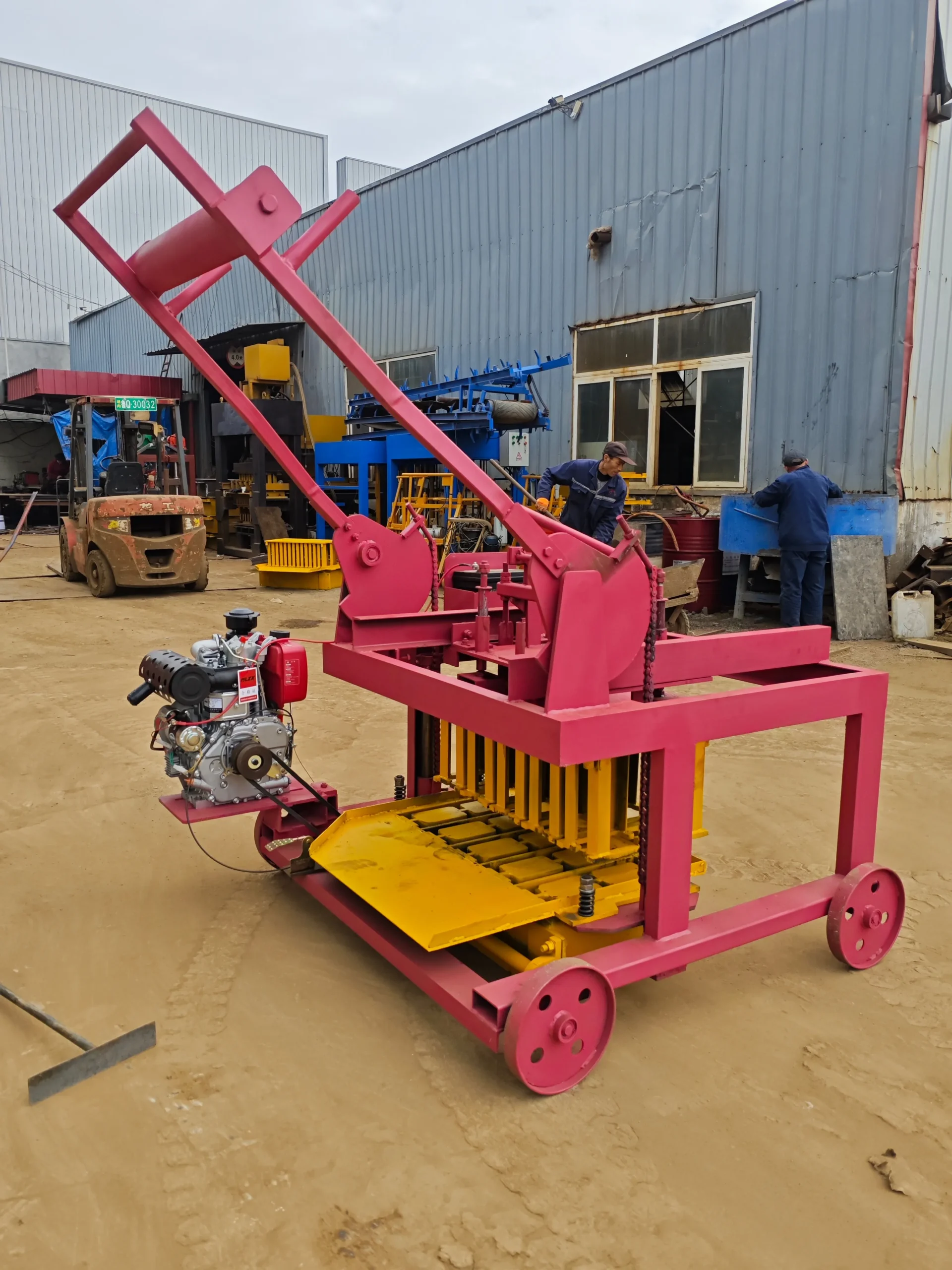

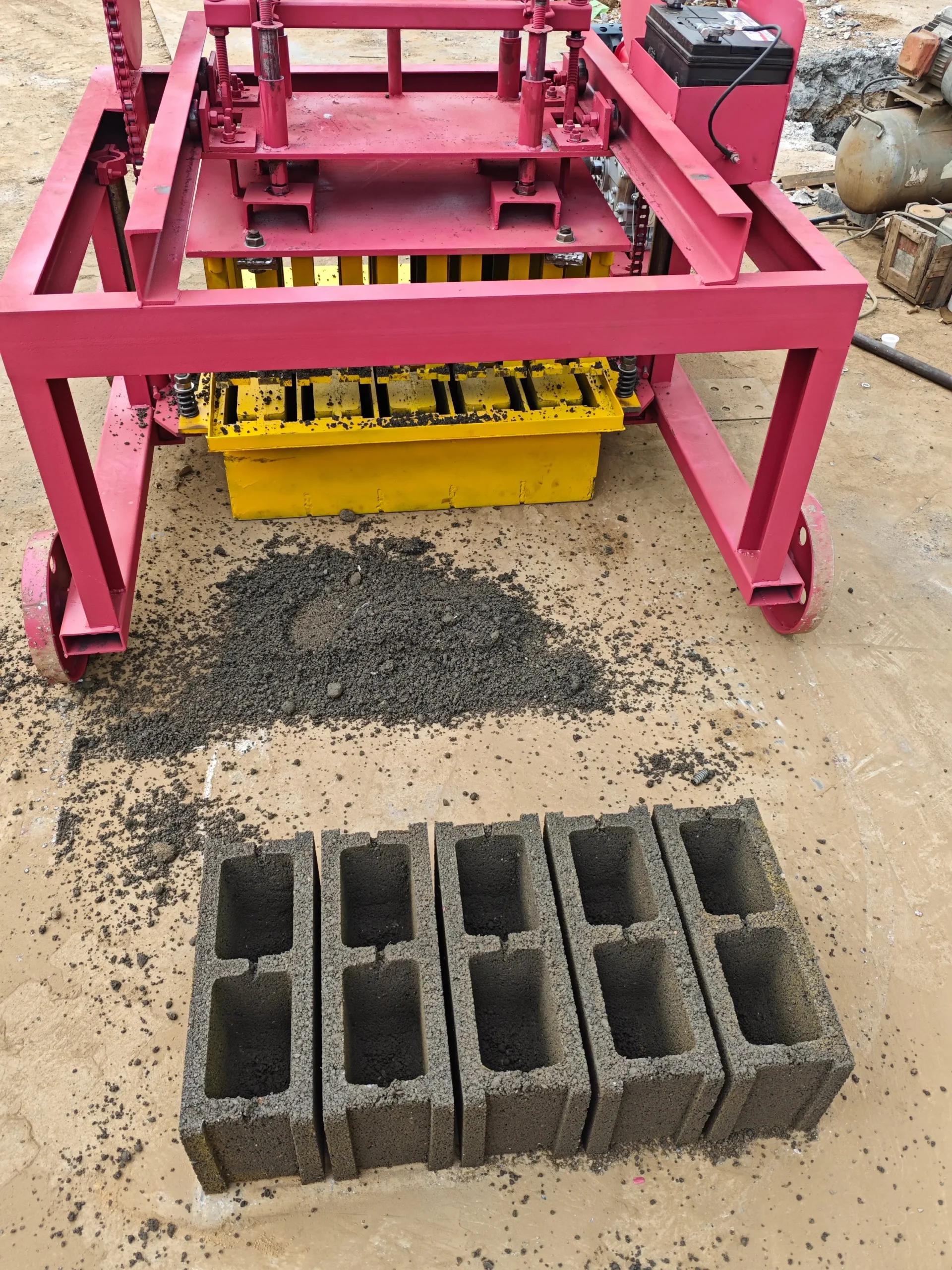


Description
Format-matched capacity — Every cycle time and output figure we quote for the QMR4-45 states the exact block format and material assumption behind it, so your daily production plan starts from reality, not a catalogue guess.
Technical Specifications
| Parameter | Value |
|---|---|
| Model | QMR4-45 |
| Product Type | Mobile Diesel Engine Block Making Machine |
| Molding Cycle | 45s (basis not stated in source — confirm block format / material / thickness) |
| Power Source | Diesel |
| Rated Power | 8hp |
| Molding Form | Vibration and Pressure |
| Vibration Force | 60KN |
| Total Weight | 800kg |
| Overall Dimensions | 2420×1320×1650mm |
| Pallet Requirement | No pallet needed (egg-laying type) |
| Block Formats | Paver brick, hollow block, concrete block, solid brick, fly ash brick |
| Basic Equipment Package | JZC350 Diesel Concrete Mixer or JQ350 Diesel Concrete Mixer (Electric Generating Unit); Trolley |
| Assembly State | Mobile / egg-laying type |
| Automation Level | Semi-automatic |
| Voltage & Frequency | Not stated in source (diesel engine start circuit to be confirmed) |
| Control System | Not stated in source |
Application Suitability
| Application | Material or Output |
|---|---|
| On-site hollow block production | Crushed stone, river sand, cement, water |
| Solid brick manufacturing for local housing | Fly ash mixed with sand and cement |
| Paver brick production for walkways and yards | Fine aggregate with pigment and cement binder |
| Remote project block supply | Local volcanic or lightweight aggregate with adjusted mix |
| Small-scale first plant operation | Any standard concrete block mix compatible with diesel mixer |
Why "Cycles per Hour" Means Nothing Without the Block Format Attached
A cycle time only matters when you know which block size and mix density it was measured against.
Buyers routinely receive mobile block machine specifications that list cycles per hour as a single headline number. That figure almost always assumes the lightest, smallest format the press can handle. When the same machine runs 200mm hollow blocks with a heavier aggregate, the actual cycle stretches and daily output drops noticeably. Without the format stated, the quoted capacity becomes a ceiling you never reach [NEED_CITE: standard capacity measurement methods for concrete block presses].
Matching Vibration Force to Your Local Aggregate
The QMR4-45 delivers 60KN of vibration force combined with pressure molding to consolidate concrete into the mould. This force level suits standard crushed stone and sand mixes common in most regional markets. When buyers source lightweight volcanic aggregate or high-fines river sand, the consolidation behavior changes and the vibration duration may need adjustment to achieve target block density. Asking for a sample of your local aggregate before finalizing the machine setup is a practical first step.
What the Egg-Laying Design Removes from Your Site Plan
Pallet-free egg-laying operation means the QMR4-45 lays each block directly onto the ground and moves forward, leaving the product to cure in place. This eliminates pallet purchase, pallet storage area, and daily pallet handling labor from your cost structure. The trade-off is that your curing area must be a flat, hardened surface large enough to hold a full day’s output until the blocks gain sufficient strength for stacking [NEED_CITE: ground curing requirements for mobile egg-laying block machines].
Reading the Specs That Actually Affect Block Quality
The 8hp diesel engine drives both the vibration motor and the hydraulic pressure system, so engine load directly influences block consistency. Running the engine below its rated RPM reduces vibration force below the 60KN rating and produces under-compacted blocks with lower compressive strength. The 45-second molding cycle, once confirmed against your specific block format, sets the rhythm for daily output calculation. Total machine weight of 800kg provides the static mass that keeps the unit stable during vibration — a lighter frame would transmit vibration into the ground rather than into the concrete mix, reducing compaction efficiency. The semi-automatic control level means an operator manages material feeding and machine movement, keeping capital cost lower while requiring consistent manual input throughout each shift.
What Happens When Mix Design and Machine Setup Never Meet
A block machine configured for a standard sand-cement mix will underperform when the buyer switches to a local aggregate with different moisture absorption or particle shape. The vibration frequency that compacts granite dust effectively may leave volcanic scoria poorly consolidated. Blocks come out with inconsistent density, fail compressive strength tests, and the buyer spends weeks adjusting ratios without knowing the machine parameters also need revision [NEED_CITE: aggregate variability effects on concrete block compressive strength].
Why Buyers Source This Machine Range Here
Block machinery is our single focus, so the QMR4-45 arrives with its mixer, trolley, and mould specified as one matched set rather than assembled from separate suppliers. We set the configuration against your actual mix design and target block format instead of shipping a catalogue default. Mould options cover the formats your local market sells, and custom drawings are available for non-standard sizes. Automation level is selectable — start semi-automatic now and plan for upgrades later. Installation support includes on-site commissioning with operator training so your crew understands the relationship between engine RPM, vibration duration, and block density from day one.
Documentation & Verification
- Line layout showing curing area footprint required for the QMR4-45 egg-laying output
- Machine specification sheet with confirmed block format behind each cycle time figure
- Mould drawing and format list for hollow, solid, paver, and fly ash brick sizes
- Hydraulic and electrical schematic covering the diesel start circuit
- Factory test record using your specified aggregate and block format
- Operation and maintenance manual with wear parts replacement intervals
Installation, Commissioning & Support
- Flat hardened ground area sized to hold one full day of egg-laid blocks before stacking
- Diesel fuel supply and engine maintenance schedule aligned with 8hp unit service intervals
- Machine arrives mobile-ready with trolley for immediate on-site positioning
- First-day commissioning covers vibration duration tuning against your aggregate sample
- Operator training on engine RPM monitoring to maintain 60KN vibration consistency
- Wear parts list with mould and vibration component replacement timeline
Planning Your Inquiry
To size the QMR4-45 correctly for your project, share the specific block formats your market demands and the daily volume you need from each. Send a sample of the aggregate you plan to use so we can match vibration parameters before build. Confirm the diesel fuel grade available locally and any ancillary electrical requirements for the mixer start circuit.
Frequently Asked Questions
Q: How is cycle time and daily output calculated for each block format on the QMR4-45?
A: The 45-second figure listed in standard specifications requires confirmation against your exact block size, wall thickness, and material density. We calculate realistic daily output by running your specific format through a timed production test, then multiplying by effective shift hours minus mould change and maintenance breaks.
Q: Which mould formats are available and what is the mould change procedure?
A: The QMR4-45 accepts moulds for hollow blocks, solid bricks, paver bricks, and fly ash bricks. Mould change involves unbolting the current mould box, lifting it clear, and securing the replacement — typically completed within a portion of one shift. Custom mould drawings can be produced for non-standard block dimensions your market requires.
Q: How do vibration force and pressure match my local aggregate?
A: The 60KN vibration force is calibrated for standard crushed stone and sand mixes. Lightweight aggregates like volcanic scoria or high-fines river sand absorb vibration differently. We request an aggregate sample before build so vibration duration and pressure settings are adjusted to achieve consistent block density with your specific material.
Q: What curing area setup is needed despite the pallet-free design?
A: The egg-laying design deposits blocks directly on the ground, so you need a flat, hardened surface large enough for a full day’s production. Blocks remain in place until they reach handling strength, then they are manually stacked. Curing time depends on local temperature, humidity, and your cement content.
Q: What spare parts and mould replacements are included with first delivery?
A: The standard package includes the diesel mixer and trolley. A wear parts list covers vibration components and mould liners with expected replacement timelines based on production volume. We provide availability schedules for first replacements so you can plan orders before stock runs out.