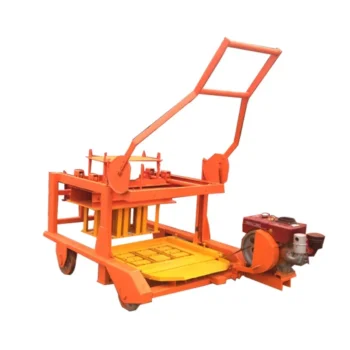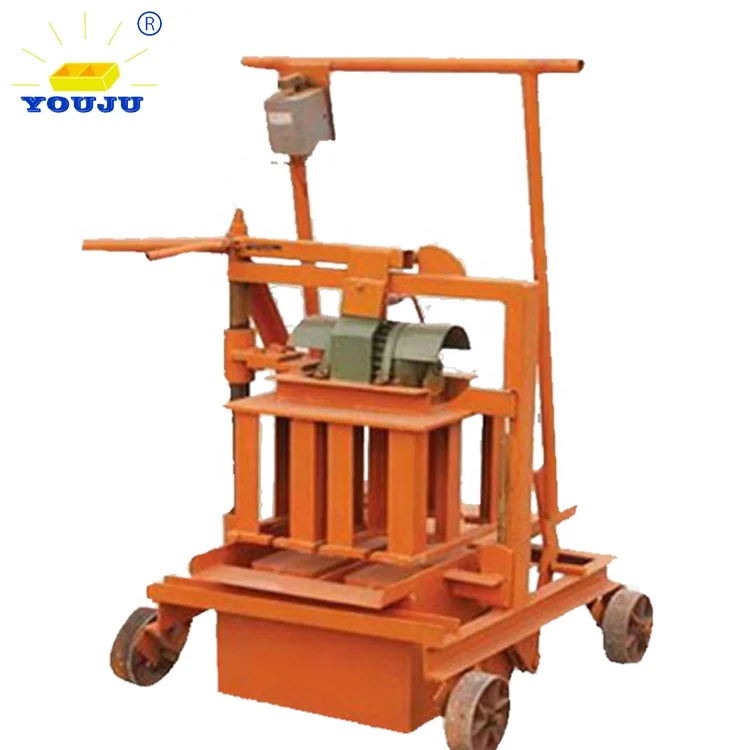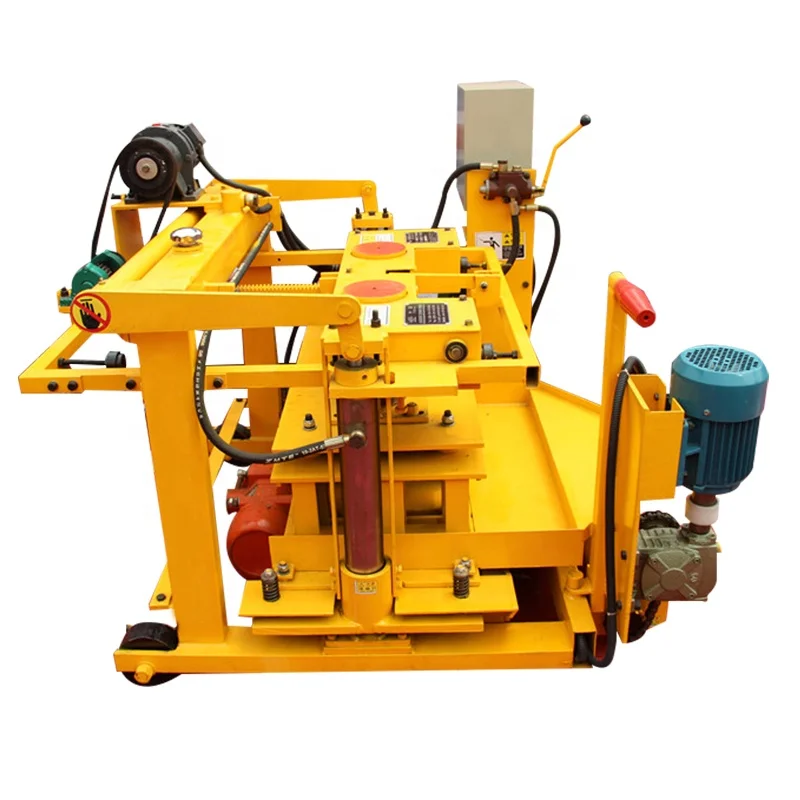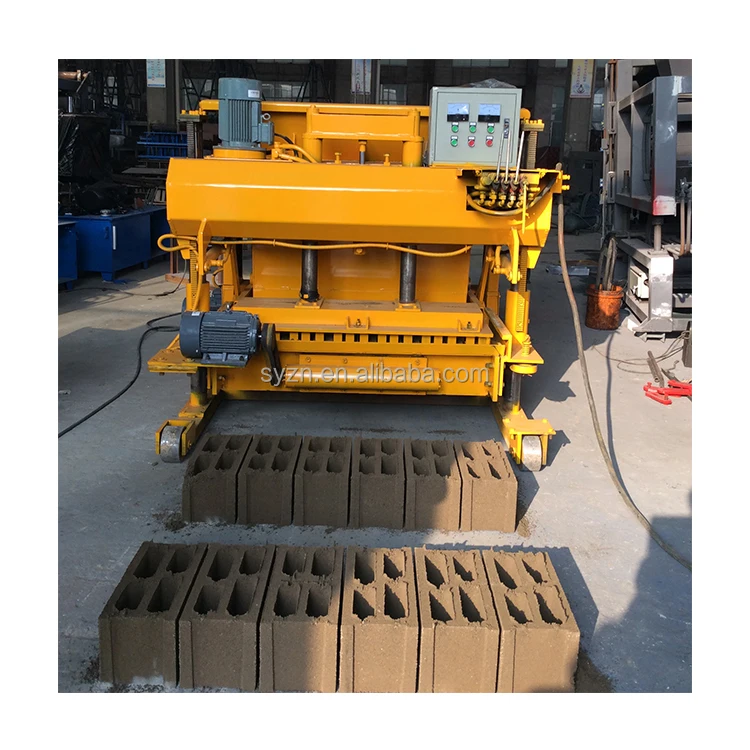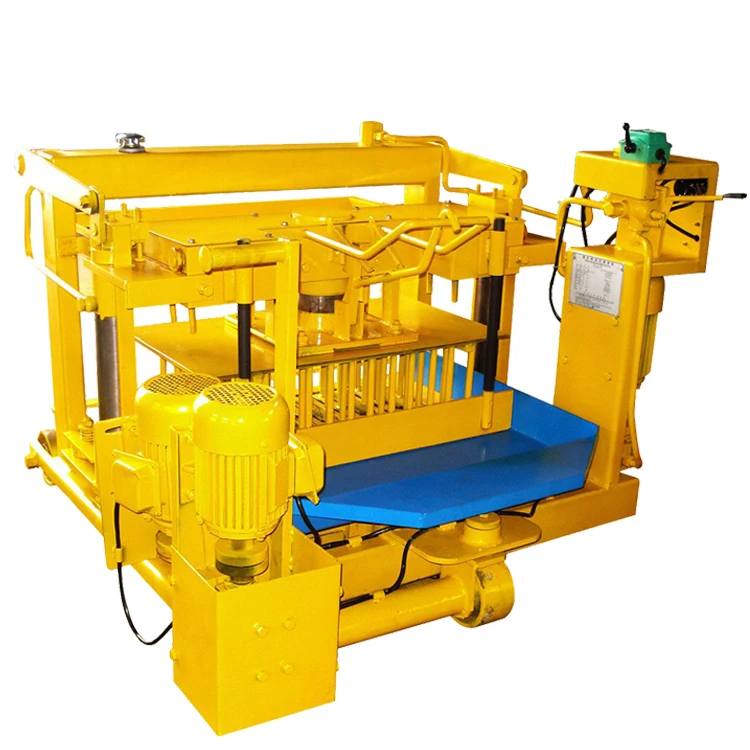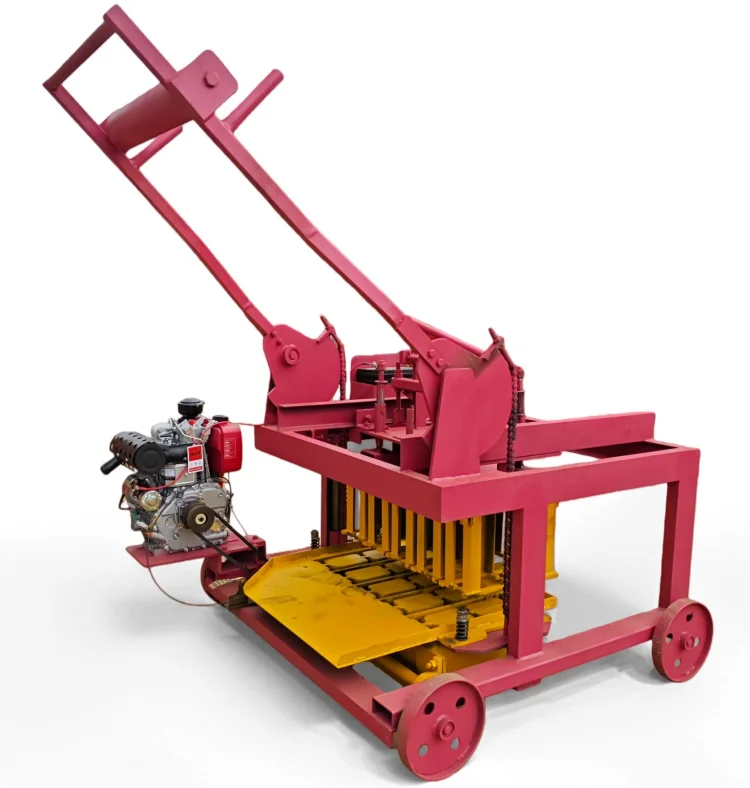

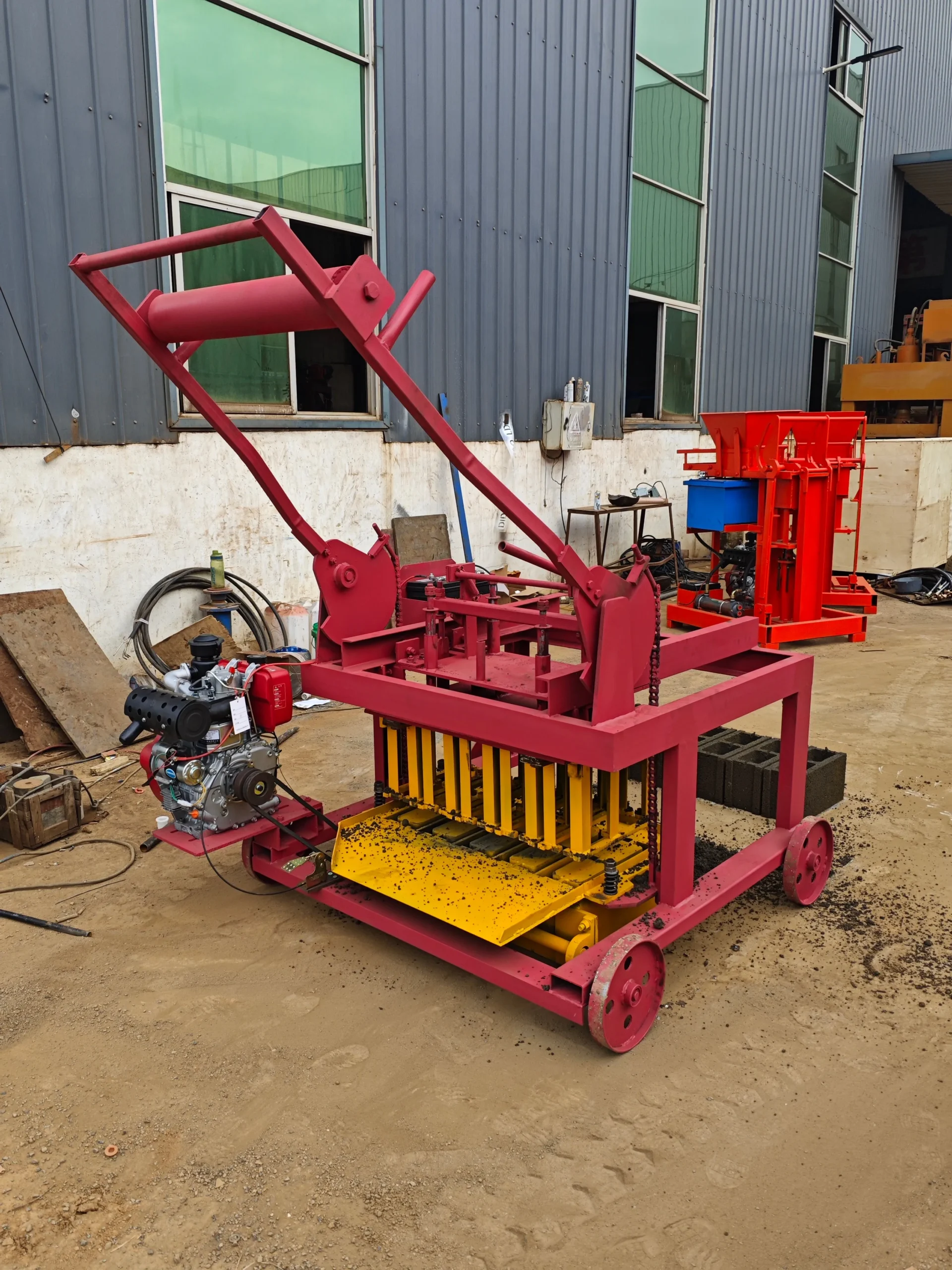
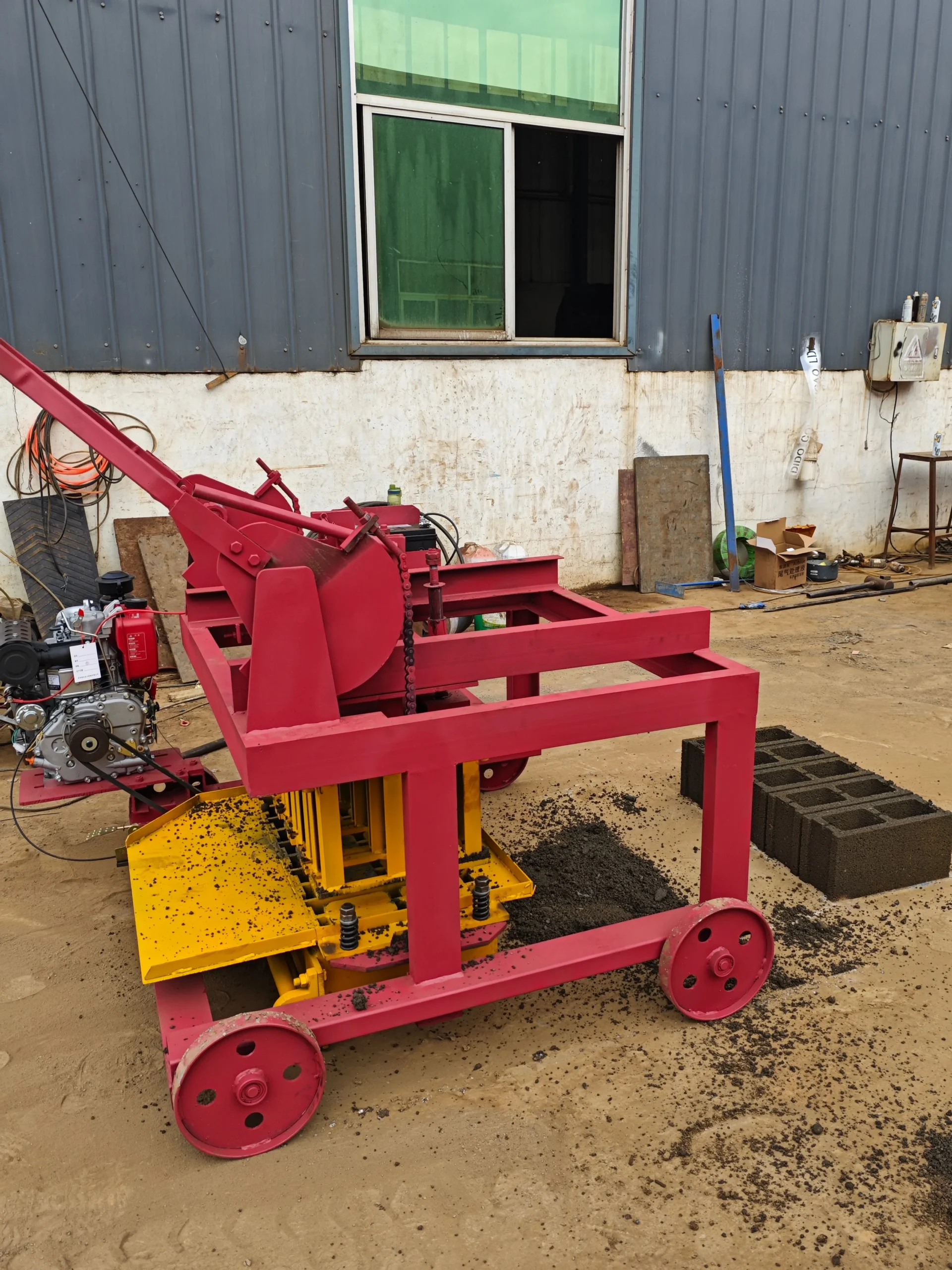
Description
Mould-led configuration — cycle time and daily output are confirmed per block format and your local aggregate before the order is placed, not left as a catalogue default.
Technical Specifications
| Parameter | Value |
|---|---|
| Model | QMR4-45 |
| Product Type | Mobile Block Making Machine |
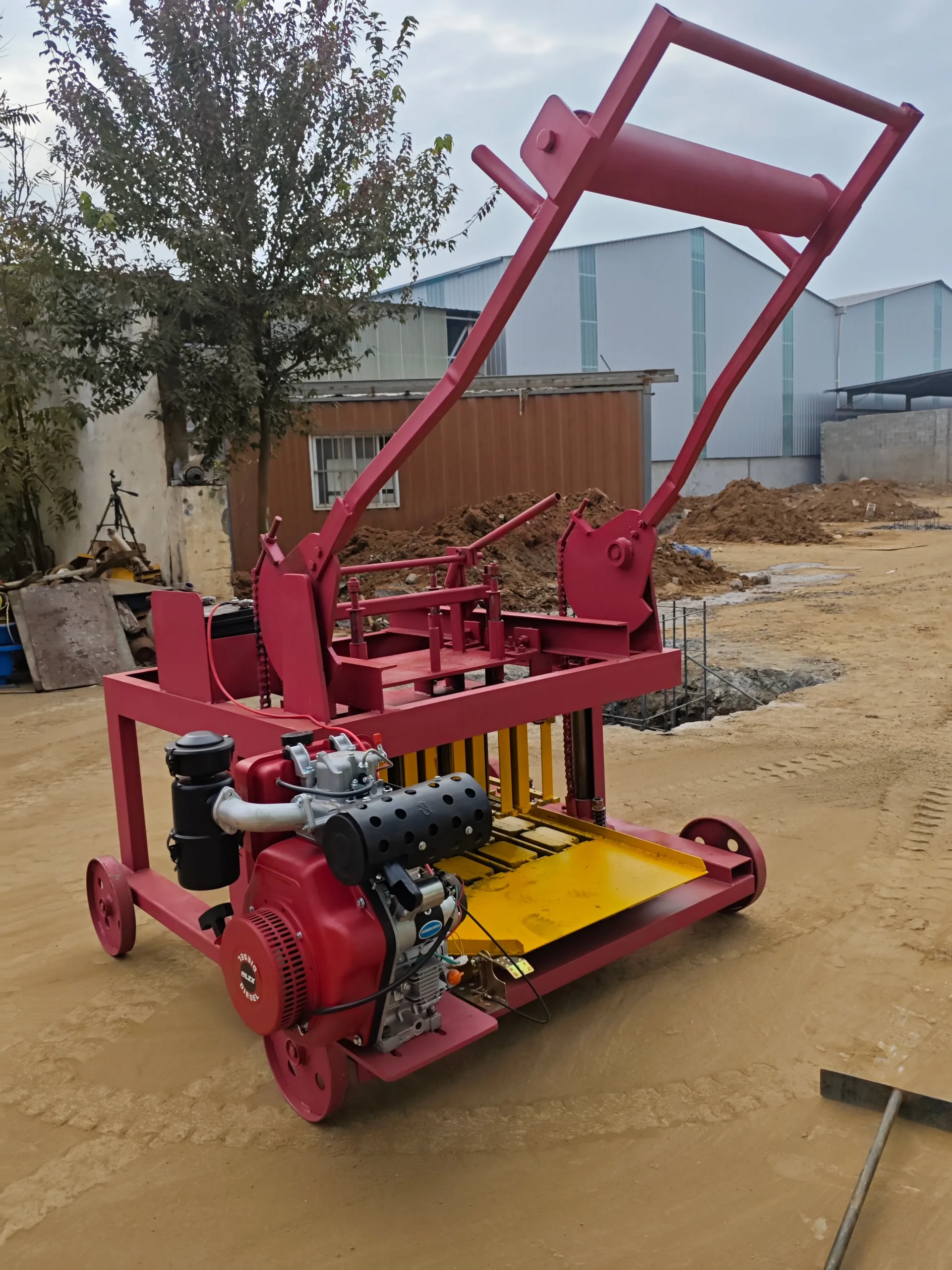
| Power Source | Diesel |
| Rated Power | 8 hp |
| Molding Cycle | 45 s (baseline — actual cycle confirmed per chosen block format) |
| Molding Form | Vibration and Pressure |
| Vibration Force | 60 kN |
| Total Weight | 800 kg |
| Overall Dimensions | 2420 × 1320 × 1650 mm |
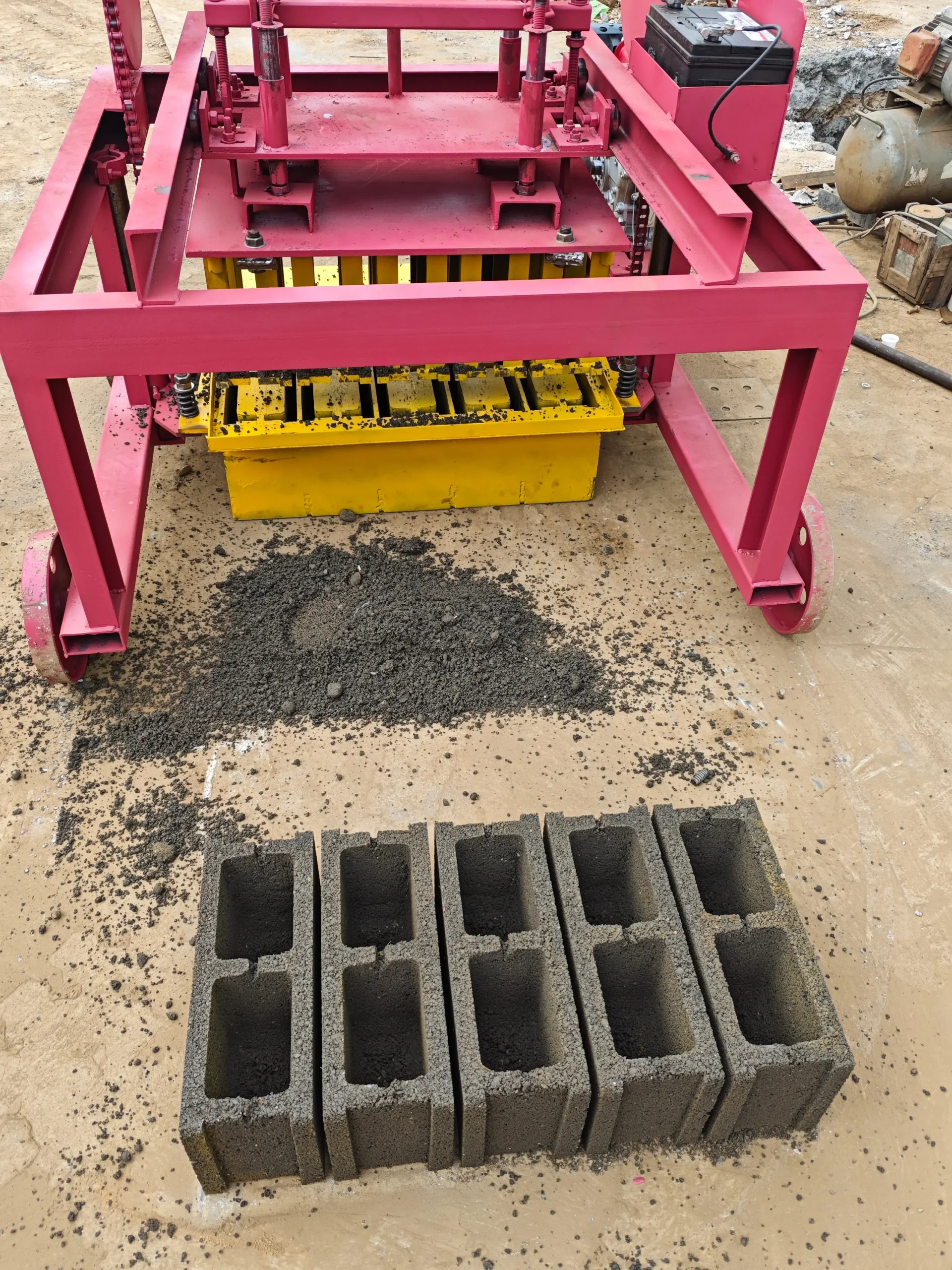
| Pallet Requirement | No pallet needed (egg-laying design) |
| Compatible Block Formats | Paver brick, hollow block, concrete block, solid brick, fly ash brick |
| Automation Level | Manual operation with motorized vibration and pressure |
| Basic Equipment Included | JZC350 or JQ350 Diesel Concrete Mixer; Trolley |
| Output Capacity | To be confirmed per block format, mix design, and local aggregate |
Application Suitability
| Application | Material or Output |
|---|---|
| On-site hollow block production for housing projects | Crushed stone, sand, and cement mixed on-site |
| Small-scale solid brick manufacturing | Fly ash, sand, and cement blends |
| Remote infrastructure paver production | Local aggregate with cement binder |
| First block plant for entrepreneurs | Low-investment, pallet-free operation with diesel power |
What a "45-Second Cycle" Actually Means for Your Daily Output
The cycle time printed on the plate is a baseline — your real throughput depends on which block format you run and how your mix behaves under pressure.
I have watched contractors order a mobile machine based on a single headline number, only to find that hollow blocks take noticeably longer than solid pavers because the deeper draw requires extended vibration to fully compact the web [NEED_CITE: molding cycle variance across block geometries]. When the machine arrives on-site, the crew is already behind schedule before the first block is laid. The mobile block machine specifications how to choose question really comes down to matching cycle time, vibration force, and your actual mix design to the format your market buys.
Vibration Force Meets Local Aggregate
The QMR4-45 delivers 60 kN of vibration force combined with pressure molding. That figure only matters when it is evaluated against your local aggregate’s particle shape and grading. Angular crushed stone compacts differently from rounded river gravel, and a mix that works in one region may produce weak, friable blocks in another. Confirming the vibration force against your specific material before shipment prevents the costly material substitution that catches many first-time buyers off guard.
Pallet-Free Operation on Unprepared Sites
The egg-laying design lays each block directly onto the ground surface, eliminating pallet purchase, pallet storage, and the forklift traffic that a stationary line demands. For a contractor producing hollow blocks on a housing project, this means the curing area is simply the cleared ground adjacent to the work zone. The machine moves forward as each row is completed, leaving the blocks in place to cure.
Reading the Specs That Actually Matter
The 8 hp diesel engine provides fully off-grid operation, which is the defining advantage when mobile block machine specifications how to choose are being evaluated for remote sites with no stable grid connection. The 800 kg total weight keeps the machine movable by hand trolley yet heavy enough to resist walking during the vibration cycle. The included JZC350 or JQ350 diesel mixer ensures the concrete supply keeps pace with the 45-second baseline cycle, so the press is not left idle waiting for the next batch. Because voltage and frequency are not applicable to a purely diesel-driven system, the commissioning delay that plagues electric machines at border crossings is avoided entirely.
The Cost of Skipping Format-Specific Capacity Checks
When output is quoted without naming the block format behind the number, buyers plan their project timelines around a throughput that only applies to the fastest, simplest shape [NEED_CITE: capacity misquotation in mobile block machine tenders]. Hollow blocks with deep cores require longer vibration and slower demolding than solid pavers. A schedule built on the solid-brick cycle will fall behind within the first week, and the contractor absorbs the delay penalty rather than the supplier.
Why Sourcing the Press and Mould Together Matters
Every QMR4-45 is configured against the buyer’s target block format and local raw material before production begins. The mould, vibration force, and mixer are specified as one matched set rather than sourced separately, which prevents the mismatch where a machine arrives with moulds that do not suit the buyer’s market. Factory testing uses the buyer’s stated mix design to confirm block strength and cycle time, so the figures in the documentation reflect real production conditions rather than catalogue assumptions.
Documentation & Verification
- Capacity calculation sheet stating cycle time per individual block format
- Mould drawing and format list confirming which block types are produced
- Factory test record showing block sample from buyer’s specified mix design
- Operation and maintenance manual with mould change procedure
- Packing photographs and customs documentation support
Installation, Commissioning & Support
- Flat, compacted ground surface required for egg-laying operation across the 2420 × 1320 mm machine footprint
- Diesel engine eliminates electrical connection, removing voltage and frequency verification before first startup
- Machine delivered fully assembled with trolley and diesel mixer for same-day block production
- On-site operator training covering mould change, mix proportioning, and vibration cycle adjustment
- Wear parts list and mould replacement schedule provided at handover
Before You Request a Quote
To size the QMR4-45 correctly, share the block format your market sells, the daily output you need to sustain, and the local aggregate available on your project site. If your site has existing ground conditions or curing-area constraints, describe those so the line layout reflects your actual working space.
Frequently Asked Questions
Q: How is output capacity calculated and which block format is the basis?
A: Output is calculated per block format using the measured molding cycle for that specific shape and your confirmed mix design. A hollow block with deep cores requires longer vibration than a solid paver, so each format carries its own cycle time and daily output figure. The capacity sheet provided with your quotation states the format behind every number.
Q: Which mould formats are available for the QMR4-45 and how long does a mould change take?
A: Moulds are available for hollow block, solid brick, paver brick, concrete block, and fly ash brick formats. Custom moulds can be designed to your drawings. The mould change is manual and the procedure is documented in the operation manual. Confirm the format list with your sales engineer before dispatch.
Q: How do I match vibration force to my local aggregate for consistent block strength?
A: The 60 kN vibration force must be evaluated against your aggregate’s particle shape, grading, and cement ratio. Angular crushed stone compacts differently from rounded gravel. Share your material test data so the vibration and pressure settings are confirmed against your specific mix before the machine ships.
Q: What curing area do I need for egg-laying production on-site?
A: The pallet-free design lays blocks directly on compacted ground, so the curing area is simply the cleared space adjacent to the production path. Plan enough length for the day’s output to remain undisturbed during the initial curing period. The machine advances as each row is completed.
Q: Can I add an electric-start variant or generator for sites with partial grid access?
A: The standard configuration is fully diesel-powered. If your site has partial electrical availability, discuss an electric-start variant or generator specification with your sales engineer. Voltage, frequency, and control language must be confirmed before shipment to avoid commissioning delays.