

Description
Matched Machine and Mould System — every QMJ4-45 configuration starts with your actual block format, local aggregate and daily target, not a catalogue default, so capacity figures hold up on your job site.
Technical Specifications
| Parameter | Value |
|---|---|
| Model | QMJ4-45 |
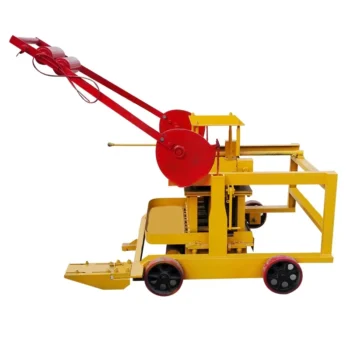
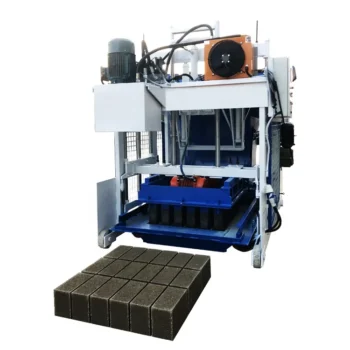
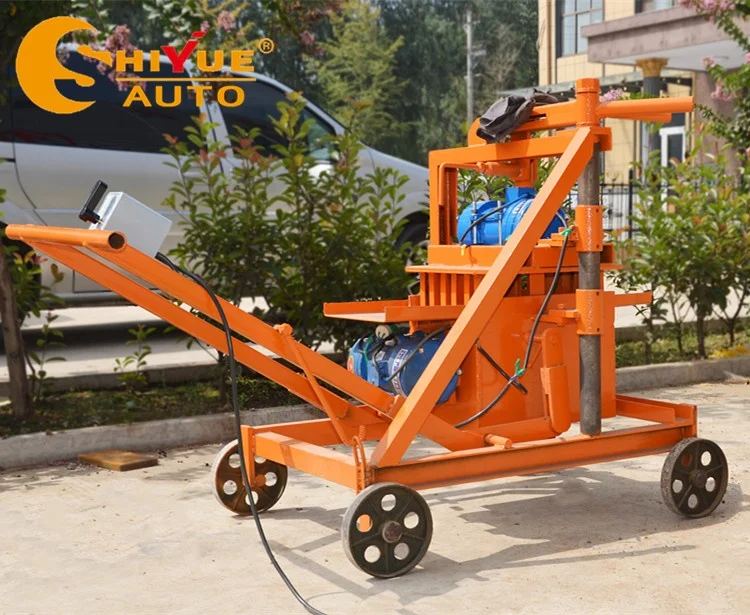
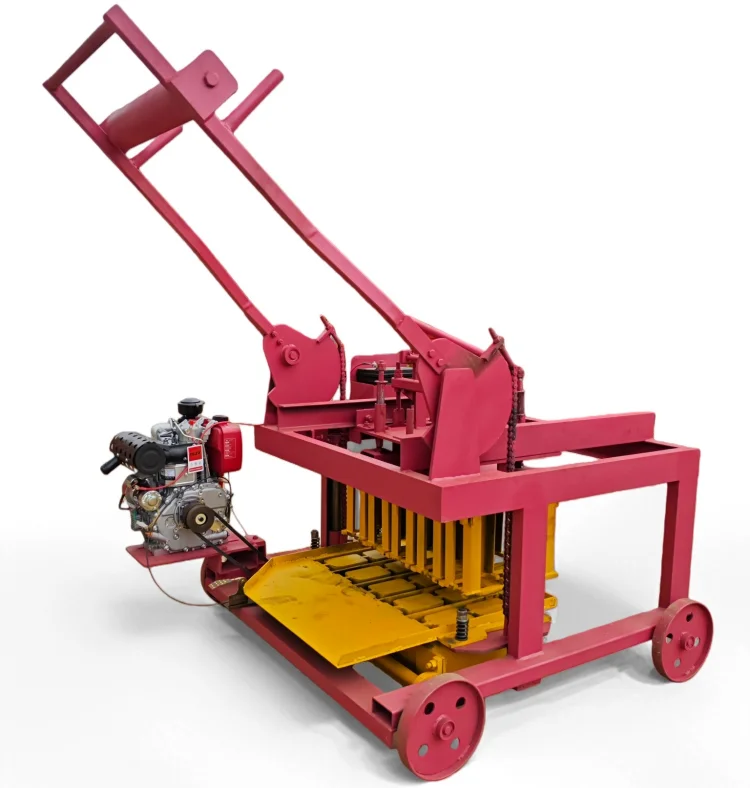
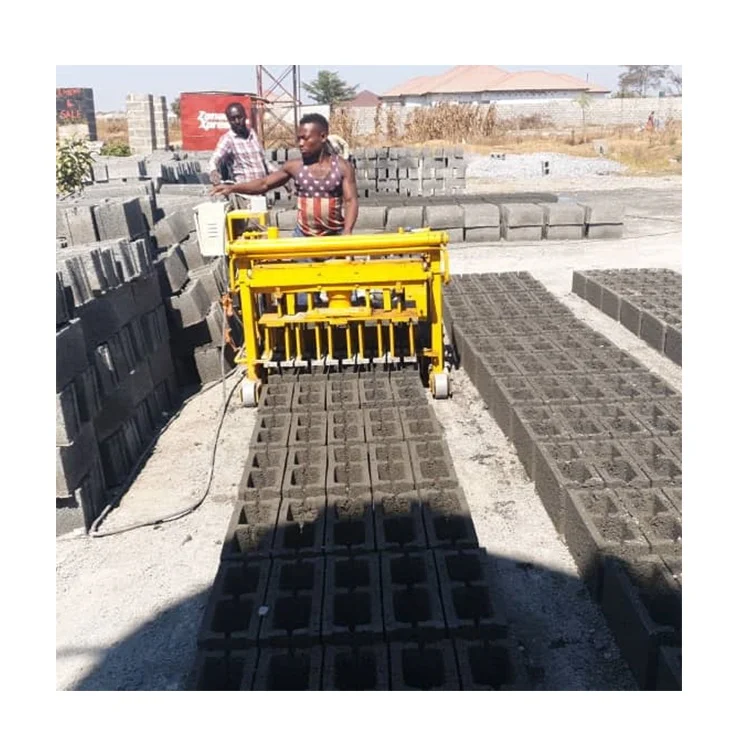
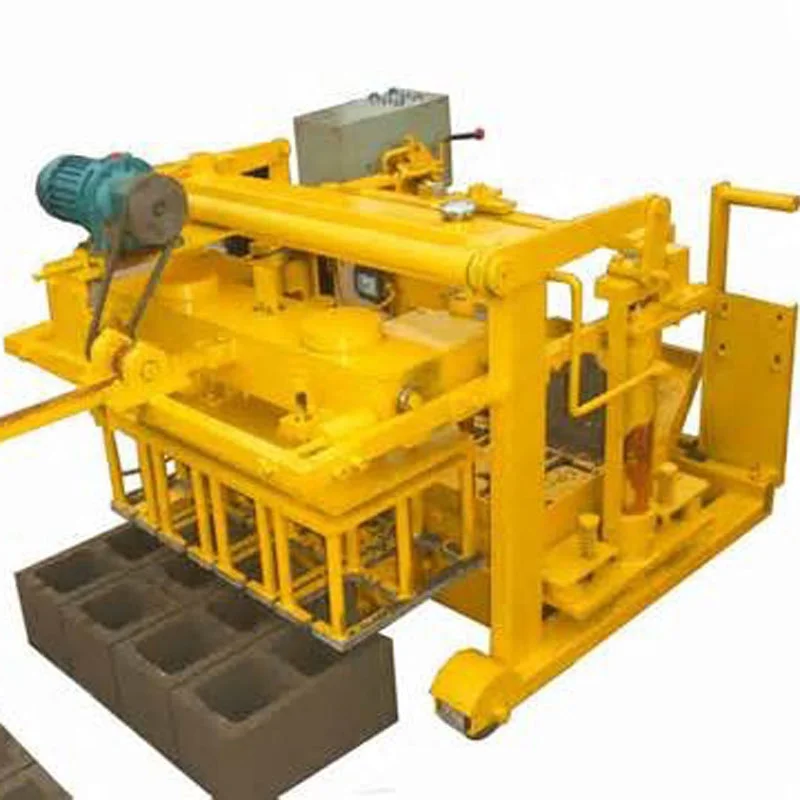
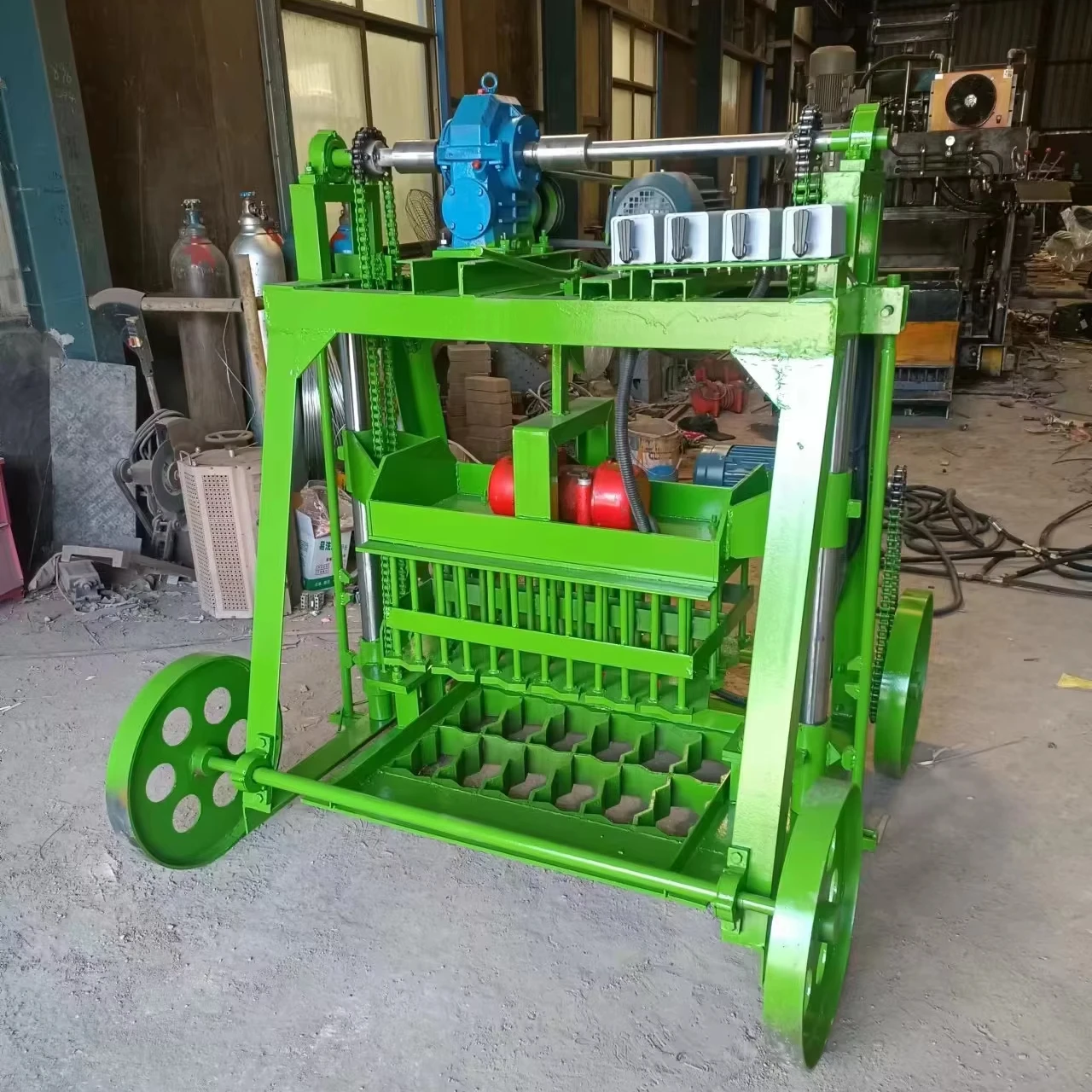
| Product Type | Mobile Egg Laying Block Making Machine |
| Molding Capacity | 4 pcs per mold (hollow block 400×200×200mm) |
| Molding Cycle | 40–45 seconds |
| Productivity (400×200×200mm hollow block) | 3000 pcs/day based on an 8-hour shift |
| Productivity (400×150×200mm hollow block) | 3500 pcs/day based on an 8-hour shift |
| Productivity (400×120×200mm hollow block) | 4500 pcs/day based on an 8-hour shift |
| Overall Productivity Range | 2600–4000 pcs/day (basis not stated in source — confirm block format / material / thickness) |
| Vibration Frequency | 2400 r/m |
| Hydraulic Method | Mold vibration |
| Demold Method | Manual |
| Turning Method | Manual |
| Total Power | 6 kW |
| Power Source | Diesel or petrol engine |
| Automation Level | Manual pallet handling, egg-laying mobile type |
| Pallet Requirement | No pallets required |
| Warranty | 1 year |
Application Suitability
| Application | Material or Output |
|---|---|
| On-site hollow block production | Crushed stone, river sand, cement blends without a fixed batching plant |
| Contractor self-production at remote job sites | Engine-driven operation where grid power is unavailable or unreliable |
| Small-scale block plant startups | Low-footprint operation with manual demold and no pallet logistics |
| Multi-site housing projects | Mobile relocation between development phases |
Why the Capacity Range Tells Only Half the Story
Most quotations list a single daily output figure and leave the buyer guessing which block format that number assumes.
The QMJ4-45 mobile egg laying block machine specifications must always tie output to a specific hollow block dimension and shift length, or the number is meaningless for your project planning.
I have seen contractors in Latin America arrive on site expecting a certain daily tonnage, only to discover the quoted capacity was based on a smaller block size they do not even sell in their market. When the mould cavity count drops from four to three because you switch to a thicker wall format, your cycle output follows. That gap between expectation and reality is where project delays begin. This page breaks down every productivity figure by format so you can match the machine to your actual sales mix before signing anything [NEED_CITE: common causes of capacity disputes in mobile block machinery procurement].
Format-by-Format Output Clarity
The QMJ4-45 produces four 400×200×200mm hollow blocks per mold cycle, running a 40 to 45 second cycle, which yields approximately 3000 pieces across an eight-hour shift. Shift to a 400×150×200mm format and daily output moves to around 3500 pieces; a thinner 400×120×200mm block pushes output toward 4500 pieces per day. A technical buyer evaluating mobile egg laying block machine specifications needs these per-format figures, not a blended range, because your revenue depends on the specific block your market actually orders.
Engine-Driven Independence for Off-Grid Sites
The diesel or petrol engine configuration removes the dependency on site electricity entirely. Remote housing developments, rural infrastructure projects and disaster reconstruction zones often lack stable grid connections during early construction phases. By driving the vibration motor and hydraulic system from an onboard engine, the QMJ4-45 allows block production to begin the same week the site is cleared. The six kilowatt total power requirement is well within the range of compact industrial engines commonly serviced in developing markets [NEED_CITE: off-grid construction equipment power requirements].
How Vibration and Mold Design Shape Block Integrity
The 2400 r/m vibration frequency applied directly to the mold cavity is the primary factor determining block density and compressive strength. Unlike machines that vibrate the table beneath the pallet, this egg-laying design transmits vibration into the mold itself, compacting the concrete mix around the cavity cores. For hollow blocks, consistent wall density matters because thin-shell formats are more sensitive to under-compaction. If your local river sand carries high clay content — a condition I encountered repeatedly on Colombian job sites where blocks cracked after curing — the vibration force must be paired with a mix adjustment to avoid weak zones in the block wall.
The Cost of Skipping the Mix Design Conversation
When a machine is configured for a clean aggregate blend that the buyer cannot actually source locally, the first production run reveals the problem. Blocks crack during curing, compressive test results fall below specification, and the buyer blames the machine when the real issue is an unverified material assumption. Confirming your sand source, aggregate grading and cement ratio before the mold is built prevents an entire batch from ending up as rubble. This verification step matters even more on mobile egg laying block machines, where the operator cannot fine-tune hydraulic pressure the way a fully automatic line allows.
Why Buyers Source This Machine Here
Block machinery is the sole product focus, meaning the QMJ4-45 arrives as a matched system of machine, mold and handling logic rather than an assembly from unrelated suppliers. Configuration is set against the buyer’s target format and local aggregate, not pulled from a generic catalogue page. Custom mold design is available to match the specific block dimensions your market demands, including drawings for non-standard wall thicknesses. The semi-automatic starting point leaves a clear upgrade path — buyers who begin with manual egg-laying production can transition to a pallet-based semi-automatic line as demand grows, retaining familiarity with the brand’s operating principles. Installation support and operator training ensure the first week of production runs under guided supervision rather than guesswork [NEED_CITE: block machinery after-sales support standards].
Documentation & Verification
- Machine specification sheet listing output per hollow block format with shift assumptions
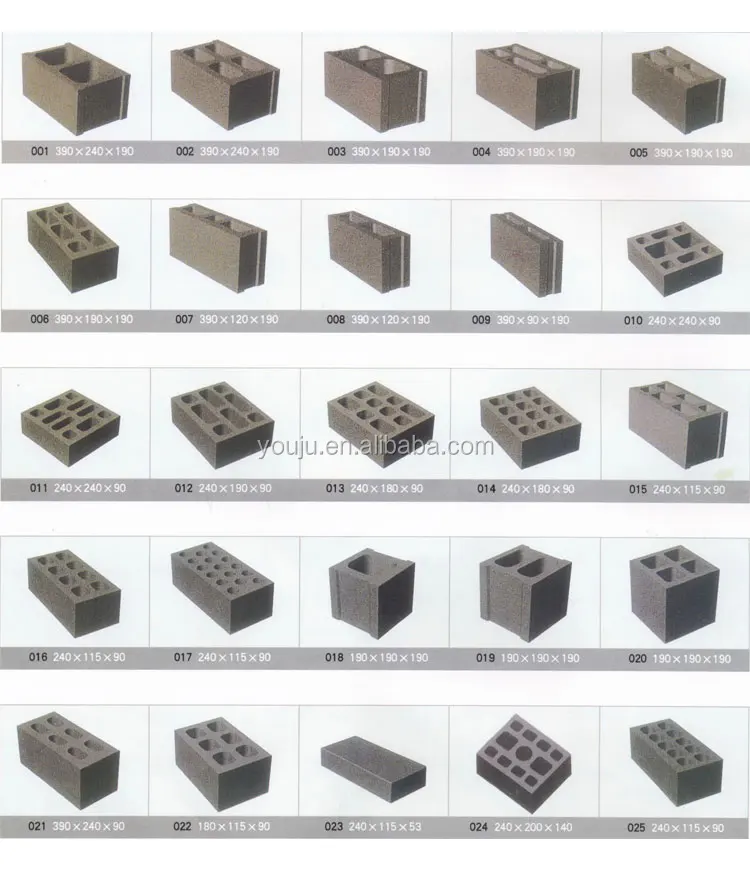
- Mold drawing and format list confirming cavity dimensions match your market
- Pallet specification sheet clarifying egg-laying operation requires no pallet procurement
- Hydraulic and electrical schematic for the engine-driven power configuration
- Factory test record on your target block format before dispatch
- Operation and maintenance manual with engine service intervals and wear parts list
Installation, Commissioning & Support
- Level compacted ground or concrete slab sufficient for egg-laying without fixed foundation bolts
- Fuel supply logistics planned for the diesel or petrol engine based on your site location
- Machine arrives partially assembled; on-site setup covers engine mount, mold installation and vibration calibration
- First production run supervised with mix ratio adjustments based on your local sand and aggregate
- Operator training covers mold change procedure, manual demold timing and engine maintenance schedule
- Wear parts list provided with recommended reorder intervals for vibration components and mold liners
Start the Technical Conversation
Tell me the exact hollow block dimensions your market sells, the daily volume your project requires, and the type of sand and aggregate available at your site. Share whether grid power is accessible or if the engine-driven configuration is mandatory. With that information I can confirm the realistic cycle output for your format and flag any mix design concerns before a quotation is prepared.
Frequently Asked Questions
Q: The daily output range is wide — which block format determines my actual capacity?
A: The 2600–4000 piece range depends entirely on your block dimensions. A 400×200×200mm hollow block yields about 3000 pieces per eight-hour shift, while a thinner 400×120×200mm format reaches roughly 4500. We state the output per format so you can calculate based on your actual sales mix.
Q: Can I order custom molds for block sizes my local market demands?
A: Custom mold design is available based on your drawings or target block dimensions. We confirm cavity count, wall thickness and cycle compatibility with the QMJ4-45 before production begins, ensuring the new mold runs within the machine’s vibration and demold parameters.
Q: My site has no stable electricity — how does the engine option work in practice?
A: The QMJ4-45 is driven by a diesel or petrol engine rated for the six kilowatt total power requirement. You manage fuel supply and routine engine servicing locally, which is straightforward in most markets where small industrial engines are common.
Q: Can I upgrade from this mobile machine to a semi-automatic line later?
A: Yes. The transition typically involves adding a pallet-based conveyor, mixer station and stacking system while moving the block press to a fixed position. We can specify the upgrade path so future components integrate with your existing operational knowledge.
Q: Will you adjust the machine setup based on my local raw materials?
A: We request aggregate and sand samples before finalizing the mold and vibration settings. This step prevents the common failure where blocks crack during curing because the machine was calibrated for a cleaner mix than what your site actually sources.