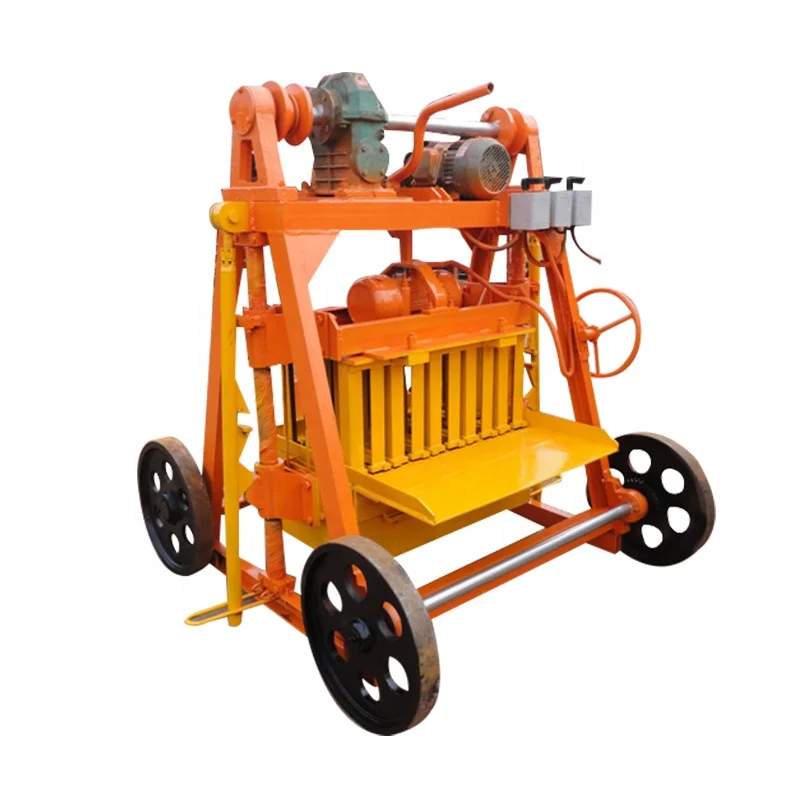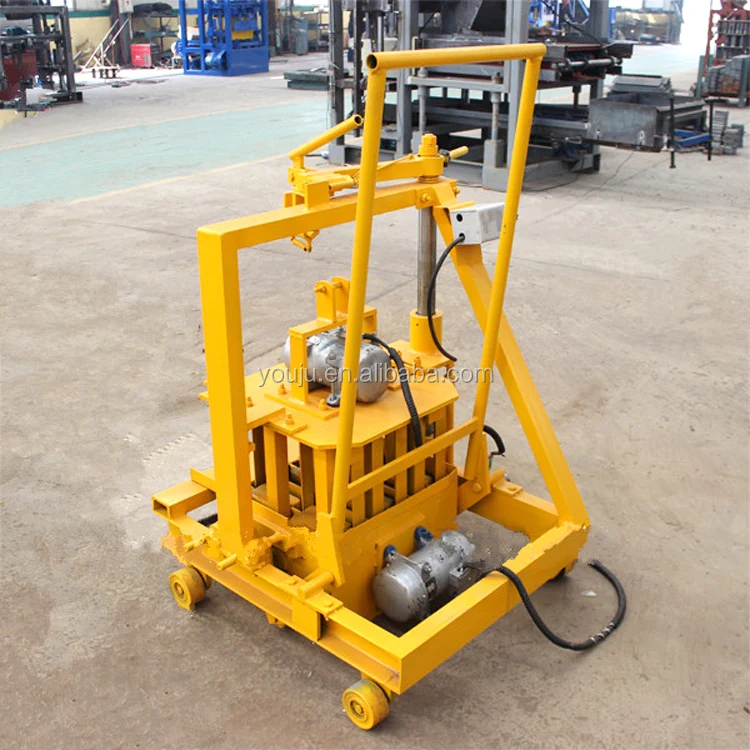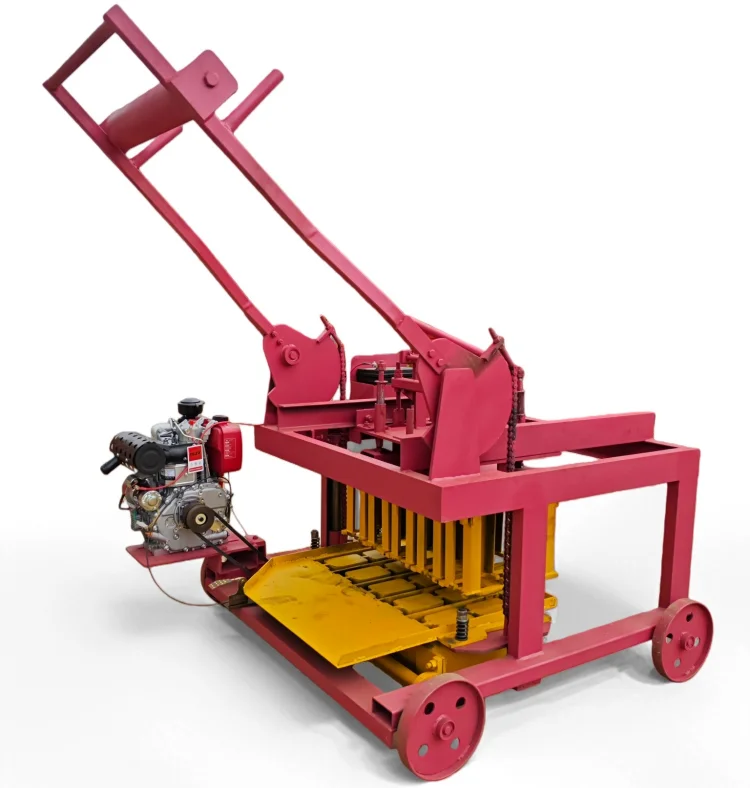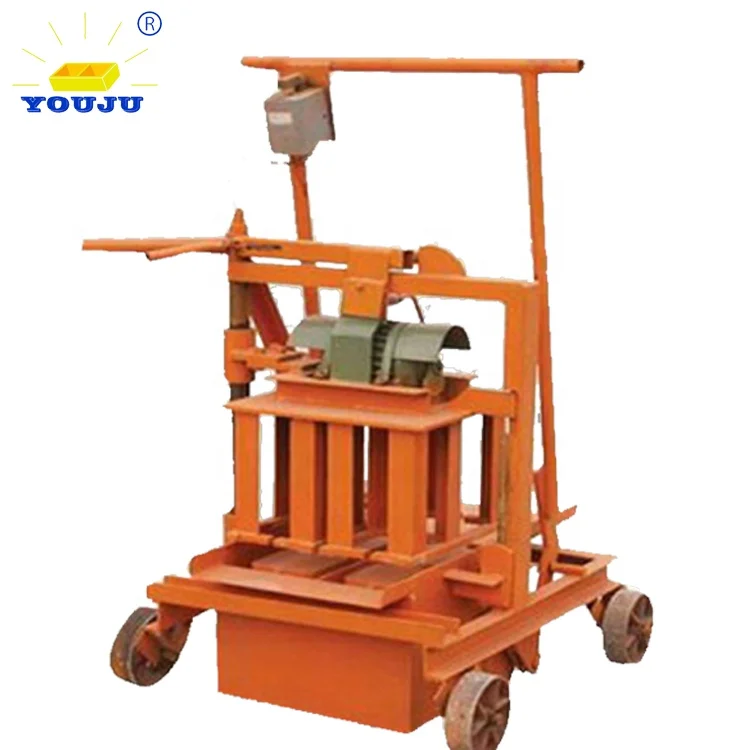
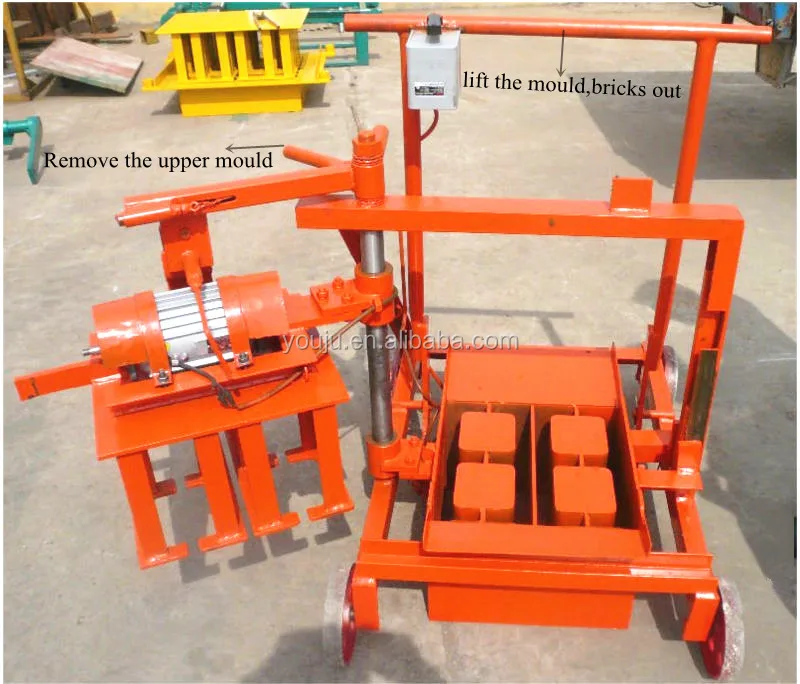
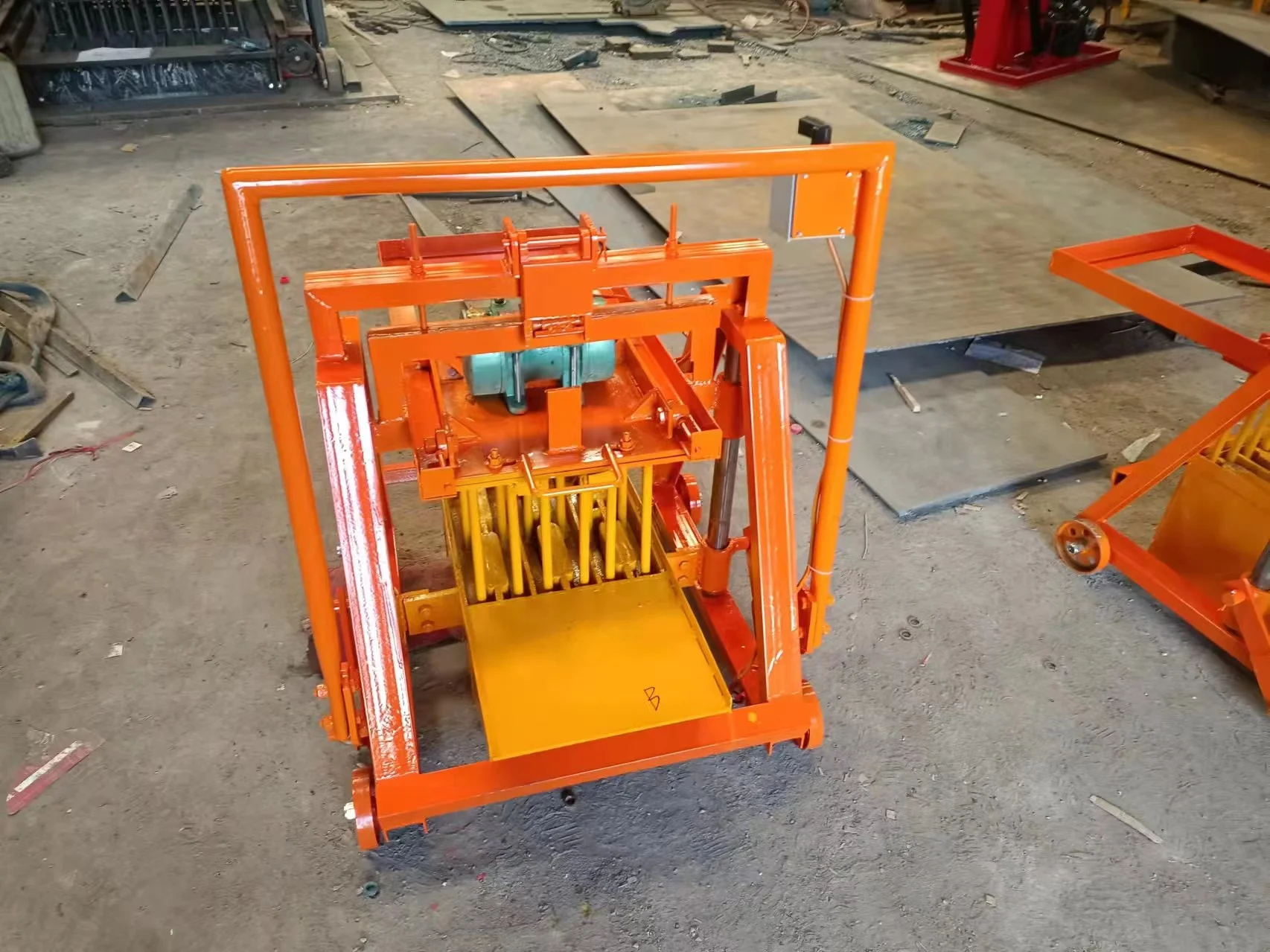
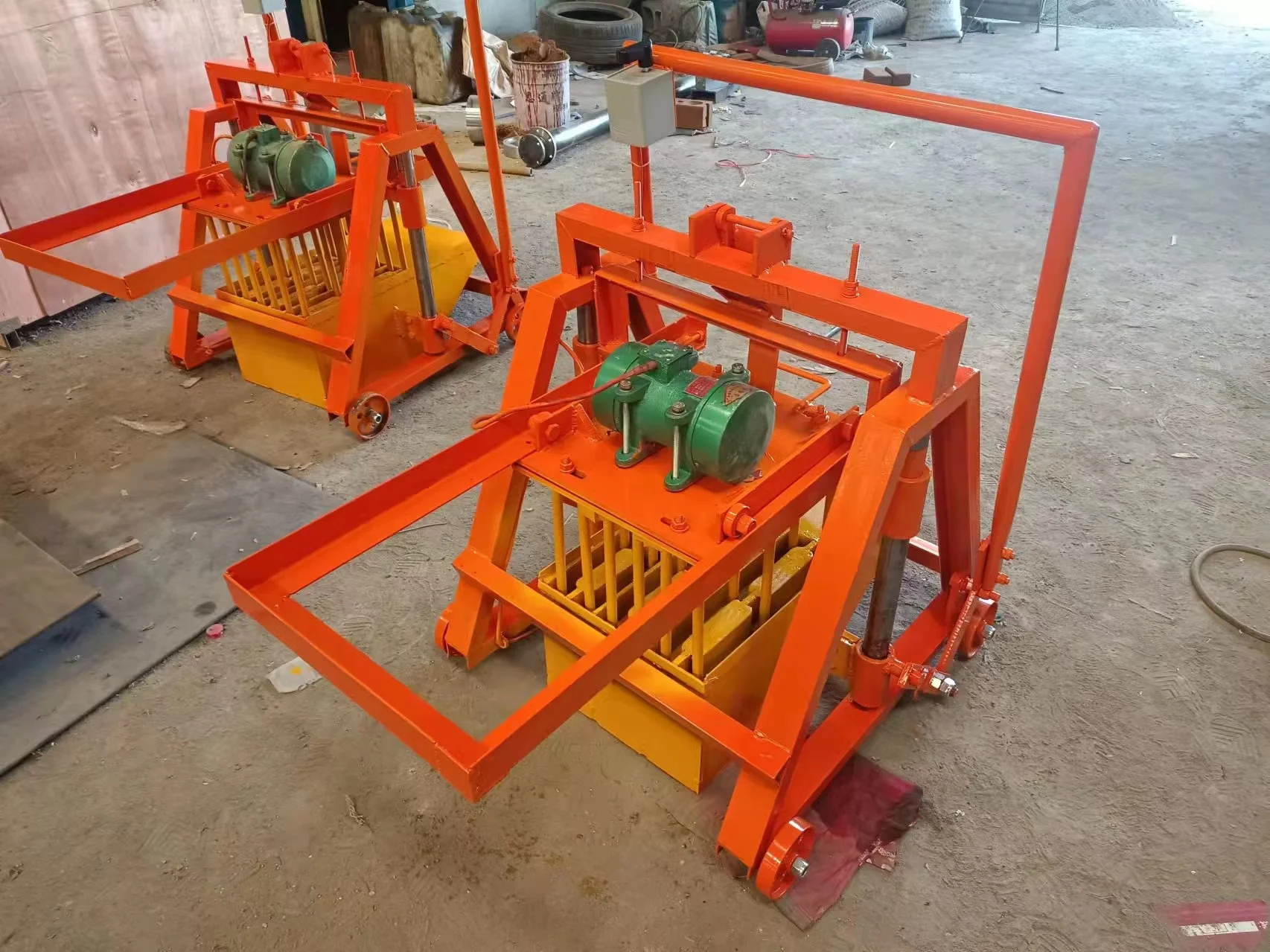
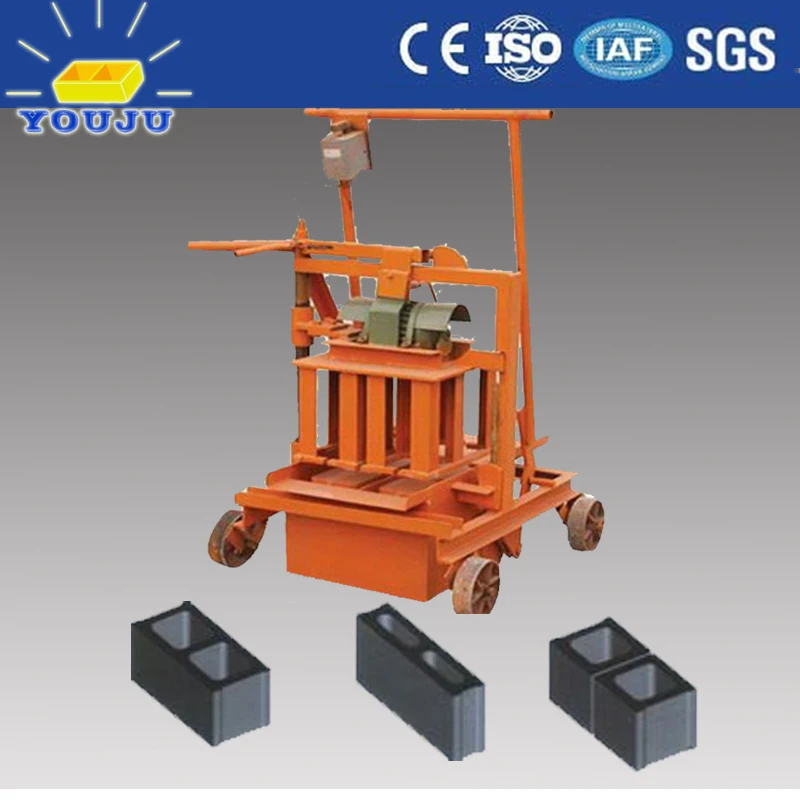
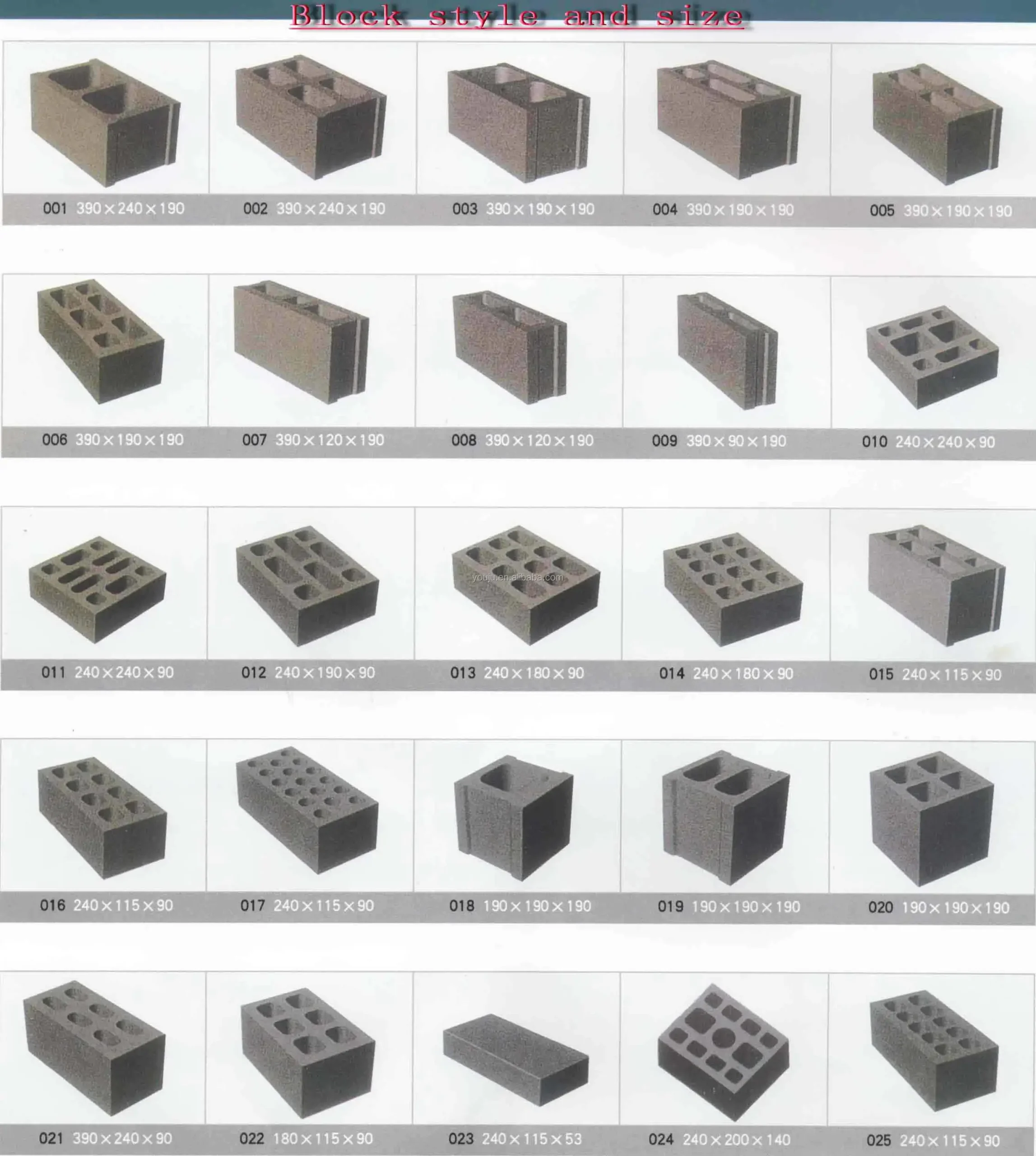
Description
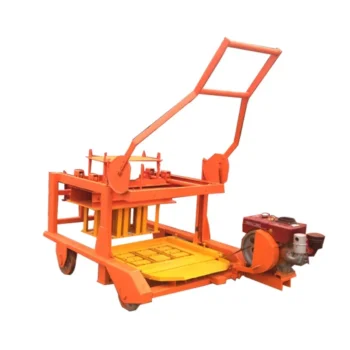
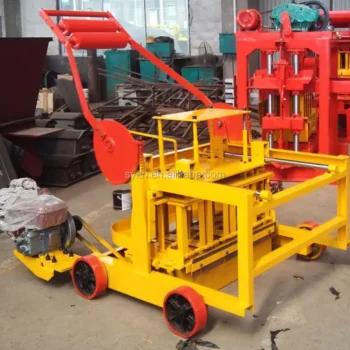
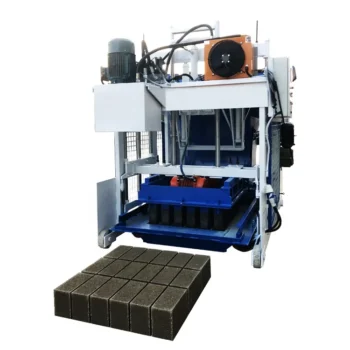
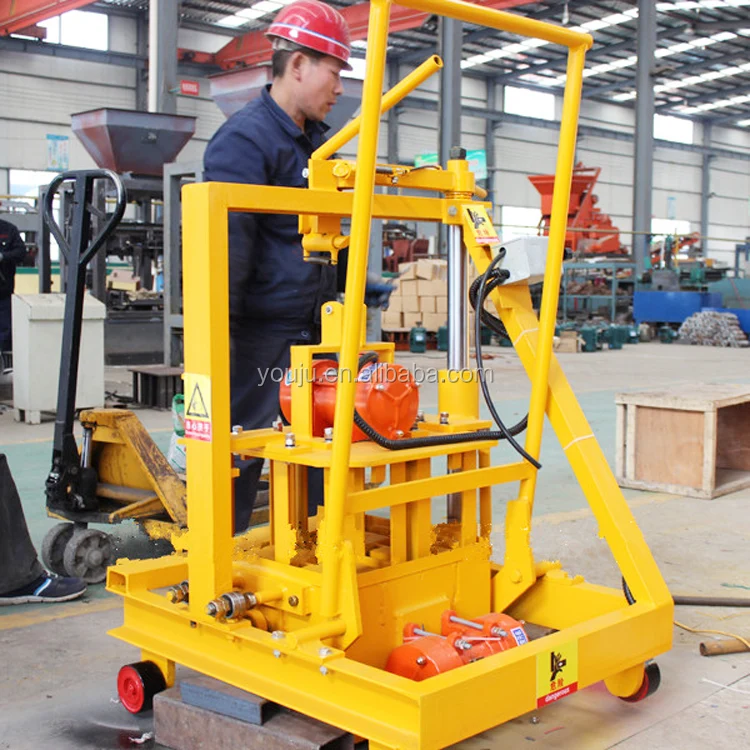
Mould-First Configuration — every QMJ2-45 output figure is tied to a specific hollow brick dimension and cavity count, so the capacity you plan against matches the product you actually sell.
Technical Specifications
| Parameter | Value |
|---|---|
| Model | QMJ2-45 |
| Product Type | Mobile Block Making Machine |
| Moulding Cycle | 25–30s |
| Power Source | Diesel engine (off-grid capable) |
| Automation Level | Manual mobile operation |
| Pallet Requirement | No pallet required (egg-laying type) |
| Labour Requirement | 1 to 3 workers per shift |
| Output Capacity | 160 pcs/h based on 400×200×200mm hollow brick (2 pcs/mould) |
| Output Capacity | 240 pcs/h based on 400×150×200mm hollow brick (3 pcs/mould) |
| Output Capacity | 320 pcs/h based on 400×100×200mm hollow brick (4 pcs/mould) |
| Daily Output (8h) | 1280 pcs based on 400×200×200mm hollow brick |
| Daily Output (8h) | 4800 pcs based on 400×150×200mm hollow brick |
| Daily Output (8h) | 2560 pcs based on 400×100×200mm hollow brick |
| Mould Change | Changeable for different hollow brick formats |
| Mobility | Freely movable on-site without fixed plant |
| Space Requirement | Usable in small space |
| Voltage & Frequency | Not applicable (diesel powered) |
| Standards | ISO 9001:2000, CE |
Application Suitability
| Application | Material or Output |
|---|---|
| On-site hollow block production | Crushed stone, river sand, cement and water mix laid directly on compacted ground |
| Remote project sites without grid power | Diesel-driven operation producing hollow bricks in locations with unreliable or absent electricity |
| Housing and development projects | Local block supply produced adjacent to the build area, eliminating transport costs |
| First-stage entrepreneur block yard | Low-capital entry producing 400×200×200mm and 400×100×200mm hollow bricks with 1–3 operators |
What "160 Pieces per Hour" Leaves Out About Mobile Block Machine Specifications
The number only holds if the block format, mould cavity count and cycle time all stay exactly as stated — change one variable and the output shifts.
I have watched buyers compare mobile block making machine specifications from two suppliers side by side, pick the higher hourly figure, and then discover on arrival that the quoted capacity assumed a small solid brick while they needed a 200mm hollow block that cuts output nearly in half. The QMJ2-45 produces 160 pcs/h only on the 400×200×200mm format with a 2-cavity mould. Switch to the 4-cavity 100mm mould and you reach 320 pcs/h — but those are thinner partition blocks with very different market pricing. [NEED_CITE: block format assumptions in capacity quotations across mobile block machine catalogues] Without this breakdown before purchase, daily planning becomes guesswork.
Matching Mould Selection to the Hollow Brick Your Market Buys
The QMJ2-45 frame accepts interchangeable moulds for three standard hollow brick formats: 400×200×200mm, 400×150×200mm and 400×100×200mm. Choosing the right mould depends entirely on which block your local construction market specifies for load-bearing and partition walls. A machine ordered with only the 200mm load-bearing mould cannot produce the thinner 100mm partition block without a separate mould purchase and changeover, so confirming the full format list before production begins avoids idle shifts later.
Cycle Time Reality on Different Aggregate Densities
The 25–30 second moulding cycle assumes a mix that consolidates under the vibration force available from this class of mobile block making machine. When the local aggregate is significantly lighter than standard crushed stone — volcanic scoria or expanded clay, for instance — the vibration energy needed to achieve full compaction increases, and the cycle often extends beyond 30 seconds to maintain block strength. [NEED_CITE: effect of lightweight aggregate density on vibration compaction time in mobile block production] This is why confirming your aggregate type before the machine ships matters more than confirming the paint colour.
Reading the Specs That Actually Determine Daily Output
Three parameters interact to set realistic production volume on the QMJ2-45. The mould cavity count determines pieces per cycle — 2, 3 or 4 depending on format. The moulding cycle of 25–30 seconds sets how many cycles fit into an hour. The manual labour requirement of 1–3 workers governs how fast mixed material is fed, how quickly the machine is repositioned between lays, and how long curing-area logistics take. If the feed rate cannot keep up with the cycle, the machine stands idle between presses and actual output drops below the theoretical figure. This is where mobile block making machine specifications on paper diverge from what happens on the ground when a two-person crew tries to maintain pace on a hot afternoon.
The Cost of Skipping the Aggregate Question
A buyer who orders without confirming local aggregate properties often faces a painful choice after arrival: reformulate the mix using materials that may not be locally available, or accept blocks that crack under their own weight when stacked. With a mobile egg-laying machine like the QMJ2-45, the problem compounds because blocks are laid directly on the ground with no pallet support during curing — weak green strength means the bottom course deforms before it sets. [NEED_CITE: on-site block failures linked to unverified aggregate density and mix proportion] Sorting this out remotely through video calls is far harder than adjusting vibration parameters during a factory test with a sample of the actual aggregate shipped in advance.
Why the Format-First Approach Works Here
Every output figure in the specification table above is stated with the exact block format and cavity count behind it, so there is no single headline number that hides an assumption. The QMJ2-45 is configured around the hollow brick formats the buyer’s market actually purchases, with mould drawings confirmed before production starts. The diesel power source removes grid dependency, and the egg-laying design eliminates pallet cost entirely — two variables that often surprise first-time buyers who budgeted for a stationary machine. Mould change capability across formats lets one machine frame cover both load-bearing and partition block demand as a project evolves.
Documentation & Verification
- Capacity calculation sheet stating block format, cavity count and cycle time for each output figure
- Mould drawing and format list confirming available hollow brick sizes and custom options
- Machine specification sheet with engine rating, vibration force and overall dimensions
- Operation and maintenance manual with wear parts list for first replacement planning
- Factory test record conducted on the buyer’s specified block format before dispatch
Installation, Commissioning & Support
- Ground surface must be level and compacted to support egg-laying blocks without pallet cushioning
- Diesel engine requires no electrical connection, only fuel supply and basic ventilation clearance
- Machine arrives assembled with minimal on-site setup needed before first production run
- Mould change procedure demonstrated during commissioning, covering all ordered formats
- Wear parts list provided with recommended stock quantities for remote-site operation
Before You Request a Quote
To match the QMJ2-45 to your project accurately, share the specific hollow brick formats your market demands, the local aggregate type and source, and the daily output you need per format. Mention whether the site has reliable flat ground for egg-laying production and any curing space constraints. [NEED_CITE: site survey requirements for mobile block machine deployment]
Frequently Asked Questions
Q: How is daily output calculated for the QMJ2-45 and which block format does each figure assume?
A: Each daily output figure is calculated from the moulding cycle of 25–30 seconds, the cavity count of the specific mould, and an 8-hour shift. The 1280-piece figure assumes the 400×200×200mm hollow brick with 2 cavities; the 2560-piece figure assumes the 400×100×200mm hollow brick with 4 cavities. Real output depends on crew speed and material feed consistency.
Q: What hollow brick formats can the QMJ2-45 produce and how long does a mould change take?
A: The machine accepts moulds for 400×200×200mm, 400×150×200mm and 400×100×200mm hollow bricks. Mould changeover involves unbolting the current mould box and fitting the replacement, which a trained operator completes within a working shift. Confirming all required formats at order stage ensures moulds ship together with the machine.
Q: What mix design and local aggregate properties affect block strength on this mobile machine?
A: Block strength depends on cement ratio, aggregate gradation and density, water content and the vibration compaction achieved during the 25–30 second cycle. Lightweight aggregates like volcanic scoria require longer vibration or adjusted mix proportions to reach target strength. Sharing a sample of local aggregate before shipment allows factory testing with your actual material.
Q: What site conditions does the QMJ2-45 need for ground surface, curing area and space?
A: The egg-laying design requires a flat, compacted surface where blocks are deposited directly without pallets. Curing space must accommodate the daily output laid in rows with walking gaps for water spraying. The machine operates in a small footprint, but the total area needed grows with production volume and curing duration before blocks can be moved.