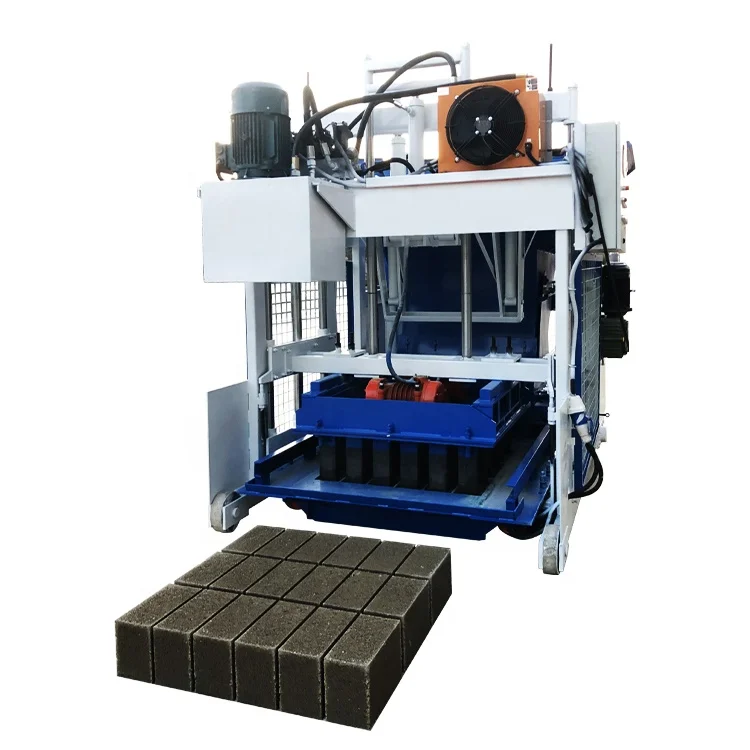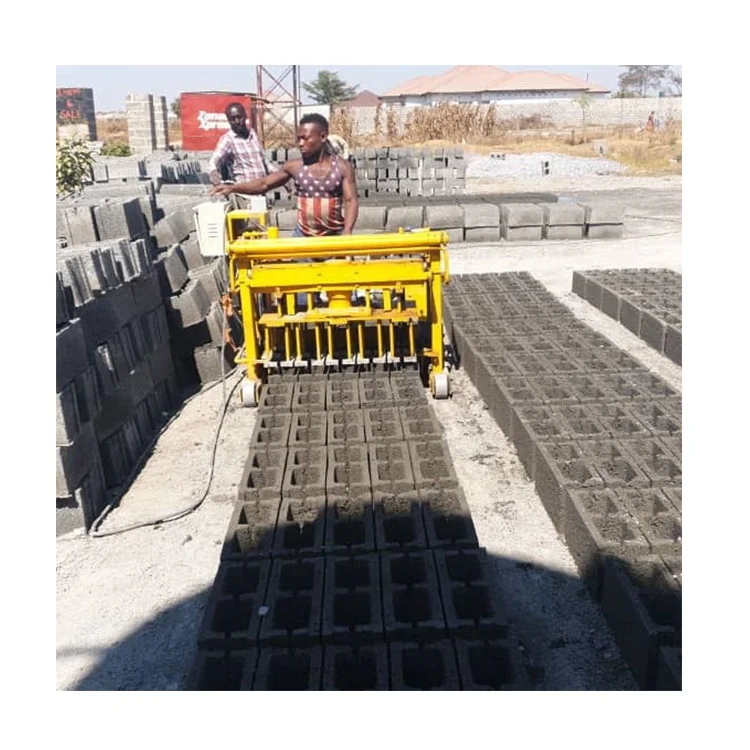
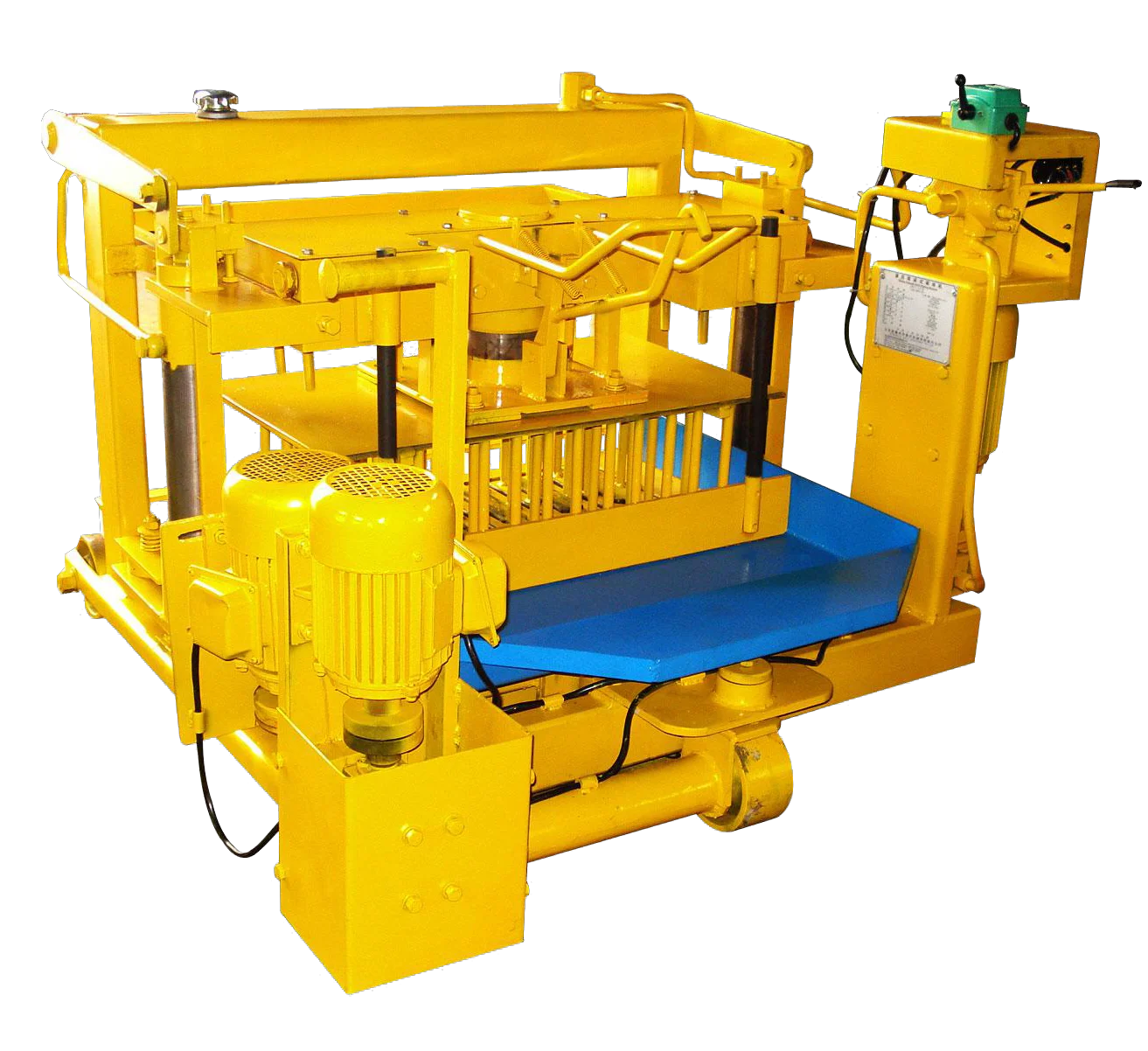
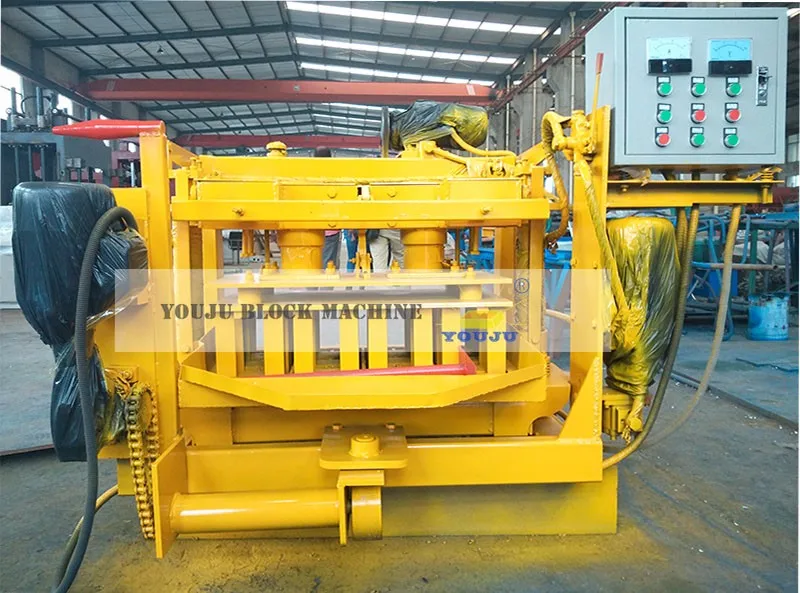
Description
Mould-to-Market Matching — Every QMY4-30 capacity figure we quote is tied to a named block format, cycle time, and shift length so your daily output projection holds up on the first production day.
Technical Specifications
| Parameter | Value |
|---|---|
| Model | QMY4-30 |
| Product Type | Mobile Concrete Block Making Machine |
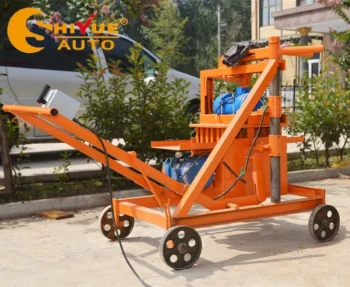
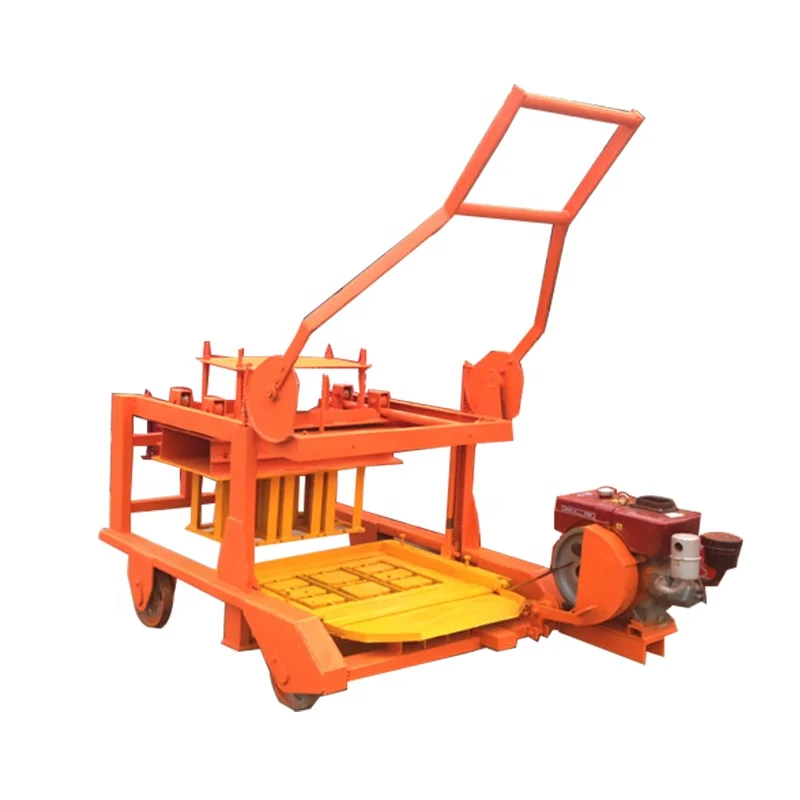
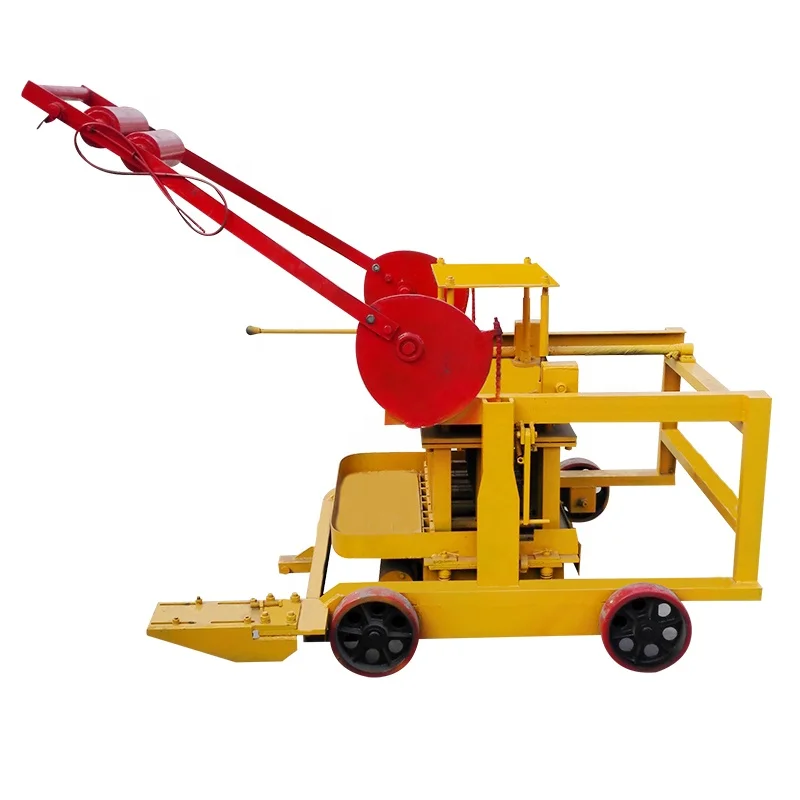
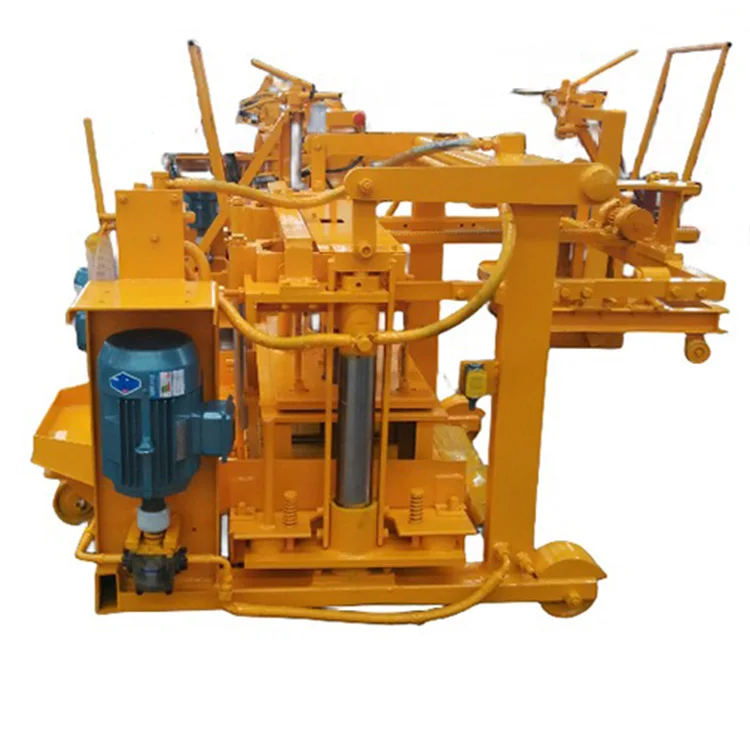
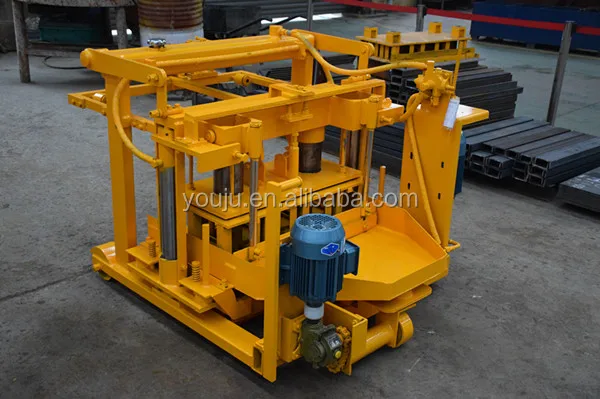
| Assembly State | Mobile / egg-laying, lays blocks directly on ground |
| Rated Power | 5 kW |
| Cycle Time | 30 seconds |
| Overall Dimensions | 1200 × 1200 × 1100 mm |
| Net Weight | 950 kg |
| Output — 400×200×200 mm hollow block | 480 pcs/h (4 pcs/mould), 3,840 pcs per 8-hour shift |
| Output — 400×150×200 mm hollow block | 600 pcs/h (5 pcs/mould), 4,800 pcs per 8-hour shift |
| Output — 400×100×200 mm hollow block | 840 pcs/h (7 pcs/mould), 6,720 pcs per 8-hour shift |
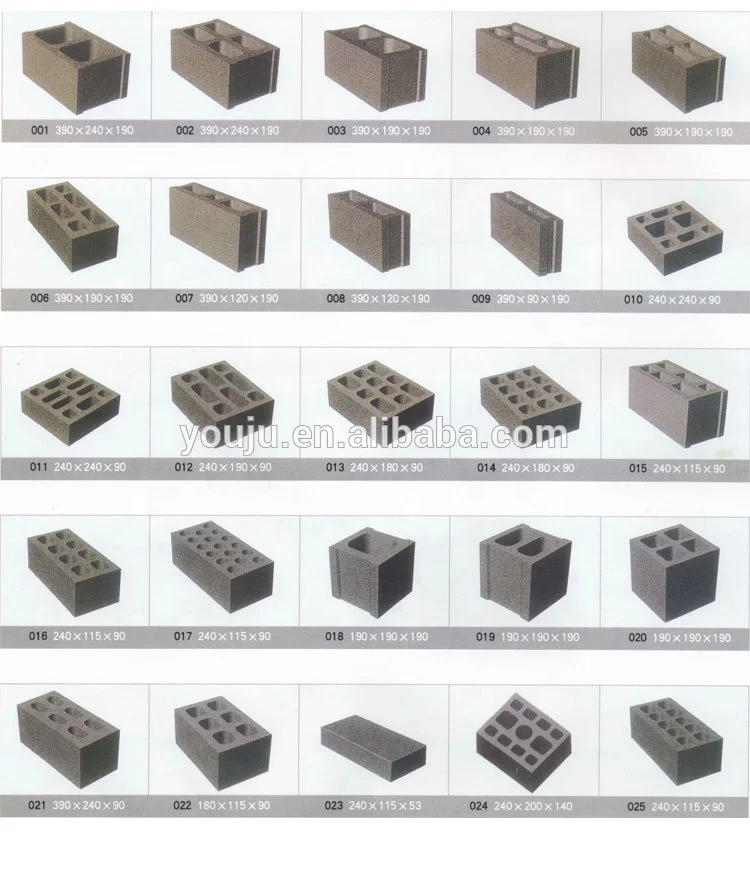
| Mould Format | Hollow block and solid brick, changeable moulds |
| Automation Level | Manual operation, 2 workers |
| Raw Materials | Cement, sand, crushed stones, slag |
| Voltage & Frequency | To be confirmed against buyer’s site supply |
| Control System | To be confirmed (manual or PLC) |
Application Suitability
| Application | Material or Output |
|---|---|
| On-site hollow block production for housing projects | Cement, sand, crushed stone — 400×200×200 mm format |
| Small workshop solid brick manufacturing | Cement and local aggregate mix, solid brick mould |
| Remote infrastructure site block supply | Slag-blended mix, 400×100×200 mm partition blocks |
| First-plant entrepreneur start-up | Low-investment, two-worker egg-laying operation |
What "840 Pieces per Hour" Actually Means for Your Block Format
The QMY4-30 mobile block machine specifications only hold real value when every output number names the exact block size and cycle it was measured against.
I have watched buyers arrive at a factory showroom, see a headline capacity figure on a brochure, and sign a purchase order without ever asking which block format that number assumed. Six weeks later, the machine lands on their site, they load the mould for the 200 mm hollow block their market actually buys, and the daily tally comes in at less than half what they planned for. The gap is not a machine defect. It is a quoting gap — the capacity was stated for the smallest, fastest format in the mould catalogue, not the one the buyer sells [NEED_CITE: common capacity misrepresentation in block machinery quotations].
The mobile block machine specifications on this page tie each figure to a named dimension: 480 pieces per hour at 400×200×200 mm, 600 at 400×150×200 mm, and 840 at 400×100×200 mm, all at a 30-second cycle. Pick the row that matches your market and plan your shift from that row, not from the highest number in the table.
Matching Block Format to the Market You Actually Sell
Format selection starts with what your local hardware distributors and contractors order, not with what runs fastest on the machine. A region building heavily with 200 mm structural hollow blocks needs a machine that holds dimensional tolerance on that format across an eight-hour shift, even if the 100 mm partition block cycles quicker. The QMY4-30 accepts changeable moulds for both hollow block and solid brick, so you can add formats as your market shifts without replacing the press itself. The mobile block machine specifications sheet you request should list every mould drawing and format the supplier will include, not just the one used in the demo video.
On-Site Production Without Pallet Logistics
The egg-laying design means blocks are deposited directly onto the ground or a prepared concrete floor, removing the pallet circulation system that a stationary plant requires. For a construction contractor producing hollow blocks beside a housing development, this eliminates pallet purchase, pallet storage space, and the forklift traffic that a pallet-return line demands. You need a level, cured concrete slab of adequate area for the blocks to cure in place — the slab dimensions should be confirmed against your daily output before the machine ships [NEED_CITE: curing area requirements for egg-laying block machines].
Reading the Specs That Shape Daily Output
Cycle time, vibration force, and hydraulic pressure interact to determine both block density and how fast the machine actually moves through a shift. The QMY4-30 runs a 30-second cycle, but that number is achievable only when the mix design flows cleanly into the mould and the vibration force is sufficient to compact the local aggregate within those 30 seconds. If your sand is fine-graded volcanic ash rather than coarse river sand, the vibration setting that works in the factory demo may leave your blocks under-compacted. The rated power of 5 kW must cover both vibration motor and any hydraulic pump simultaneously; verify that the motor nameplate matches continuous duty, not peak rating. Net weight of 950 kg provides the static mass that resists vibration walk-off, so the machine stays positioned on the slab without anchoring bolts, yet remains movable by two workers when the production area shifts.
When the Wrong Mix Design Cancels Out Every Other Spec
I once commissioned a mobile egg-layer for a customer in Colombia who had sourced volcanic ash as his primary aggregate. The machine was configured for standard sand gradation, and in the first week block compressive strength swung wildly between batches while mould wear doubled from the abrasive fines. We re-tuned vibration force and pressure on site and rebuilt the mix ratio, but two weeks of production were lost before output stabilised. That experience is why we now ask every buyer for a sample of their actual raw material before we confirm the machine configuration. A mobile block machine can meet every specification on paper and still produce inconsistent blocks if the mix design was never matched to the aggregate you can actually source locally [NEED_CITE: aggregate gradation impact on block compressive strength].
Why Sourcing the Machine and Mould From One Supplier Matters
Block machinery is our single focus, so the QMY4-30 press, its moulds, and the supporting handling approach are specified as one matched system rather than assembled from separate vendors. We set the configuration against your actual mix design, local aggregate, and target block format instead of quoting a catalogue default. Mould design covers the formats your market sells, including custom drawings when standard sizes do not fit. You can start with manual pallet-free operation and add automation later as volume grows. Installation support includes on-site commissioning and operator training so the crew understands mix ratios, cycle timing, and mould change procedure from day one [NEED_CITE: single-supplier block line integration benefits].
Documentation & Verification
- Line layout and capacity calculation stating the exact block format and shift hours assumed
- Machine specification sheet with voltage and frequency confirmed to your site supply
- Mould drawing and format list matching your local market block dimensions
- Hydraulic and electrical schematic for your maintenance team
- Factory test record run on your specified mix before dispatch
- Operation and maintenance manual in your preferred control language
Installation, Commissioning & Support
- Level concrete slab sized for daily output curing area before the QMY4-30 arrives on site
- Dedicated electrical circuit matching confirmed voltage and frequency at 5 kW continuous draw
- Machine delivered fully assembled — no foundation bolts required for the 950 kg egg-laying frame
- First-run commissioning with vibration and pressure tuned to your local aggregate sample
- Two-worker operator training covering mix ratio, 30-second cycle pacing, and mould change steps
- Wear parts list and mould inventory supplied so first replacement is on hand before it is needed
Before You Send an Inquiry
Tell us which hollow block or solid brick format your local market orders most, your target daily output, and the raw materials available within hauling distance of your site. Share your site voltage and frequency so we can confirm the motor winding before production starts. If you have an existing concrete slab, send its dimensions so we can verify the curing area will support the shift volume you plan.
Frequently Asked Questions
Q: How is daily output calculated and which block format does each capacity figure assume?
A: Each output figure on this page names the exact block dimension and mould cavity count. For example, 480 pieces per hour assumes a 400×200×200 mm hollow block at four cavities per mould with a 30-second cycle. Multiply the hourly figure by your actual shift hours, then subtract breaks and mould change time for a realistic daily total.
Q: What block sizes and mould formats are available, and can custom moulds be made?
A: The QMY4-30 accepts changeable moulds for hollow block and solid brick. Standard sizes include 400×200×200, 400×150×200, and 400×100×200 mm. Custom moulds can be designed to buyer drawings when your local market requires dimensions outside the standard range.
Q: What mix design and local aggregate conditions are needed for consistent block strength?
A: Consistent strength requires the vibration force and mix ratio to match your specific aggregate gradation and cement type. We ask buyers to send a raw material sample before confirming configuration so the machine settings and mix guidance are calibrated to what you can actually source locally.
Q: What voltage and frequency confirmation is needed before the machine is shipped?
A: We need your site voltage, phase, and frequency to match the motor winding and any control components. Providing this before production avoids commissioning delays caused by a motor that does not match local electrical supply standards [NEED_CITE: voltage and frequency standards by export market].
Q: Does the QMY4-30 require pallets or a fixed plant foundation?
A: No. The egg-laying design deposits blocks directly onto a level concrete slab, eliminating pallet purchase and circulation. You need a prepared curing area sized to your daily output, but no bolted foundation or pallet return system is required.