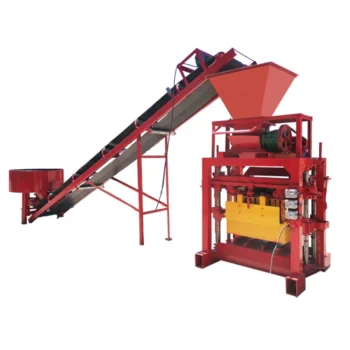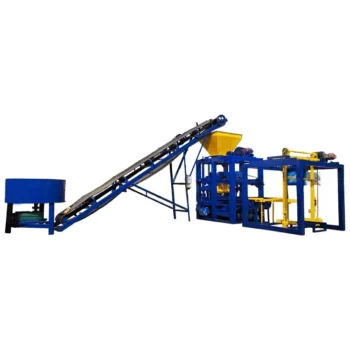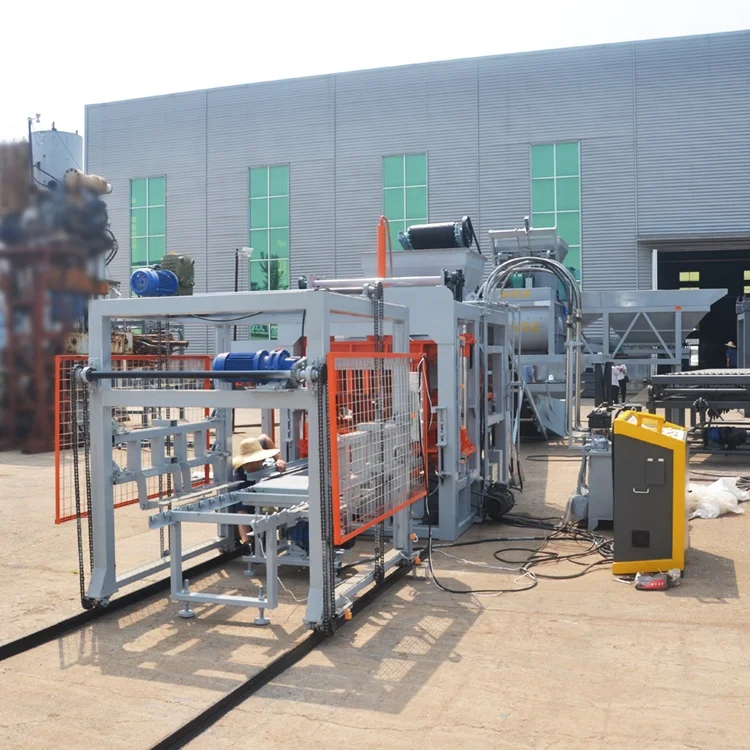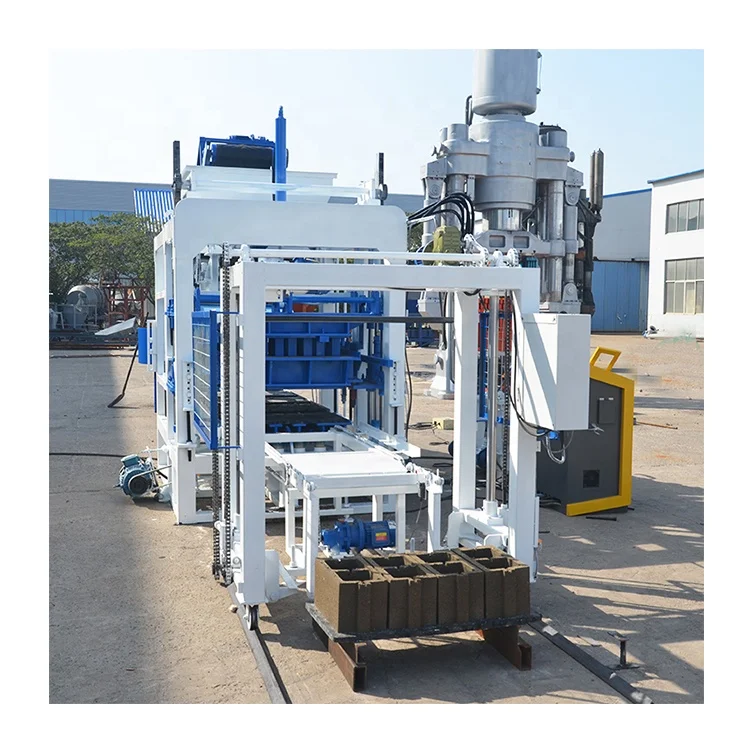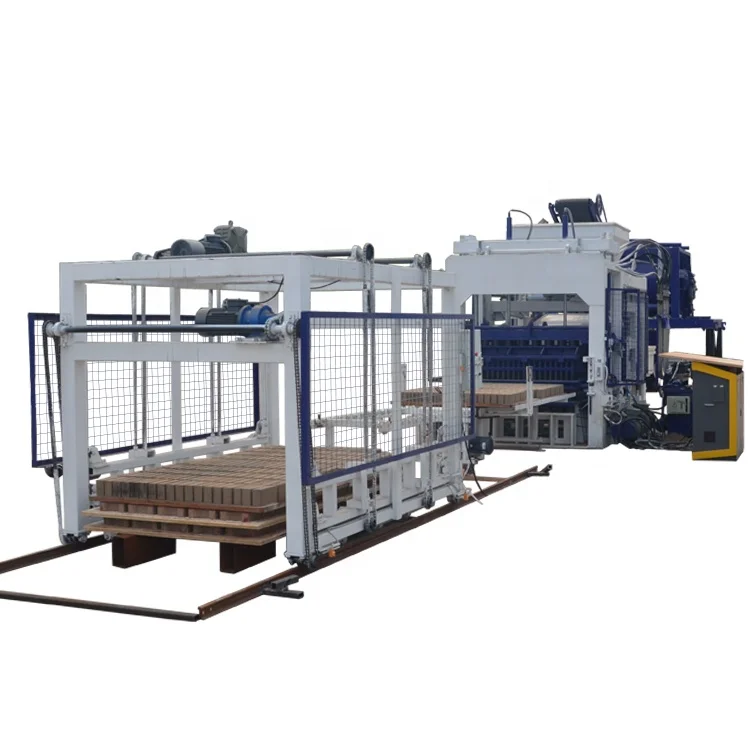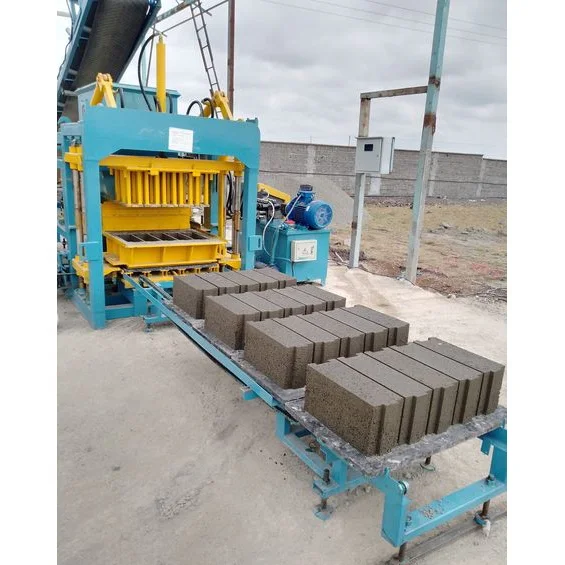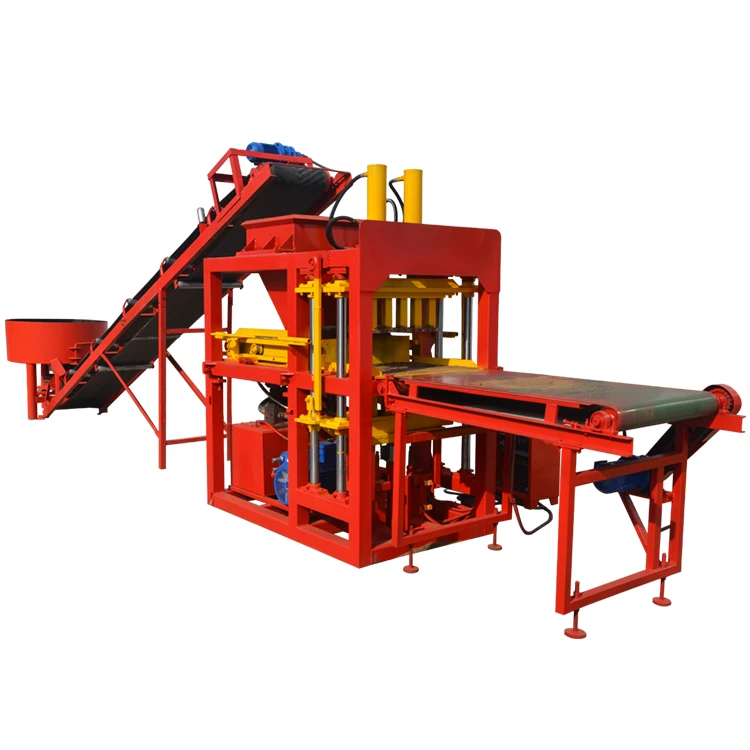
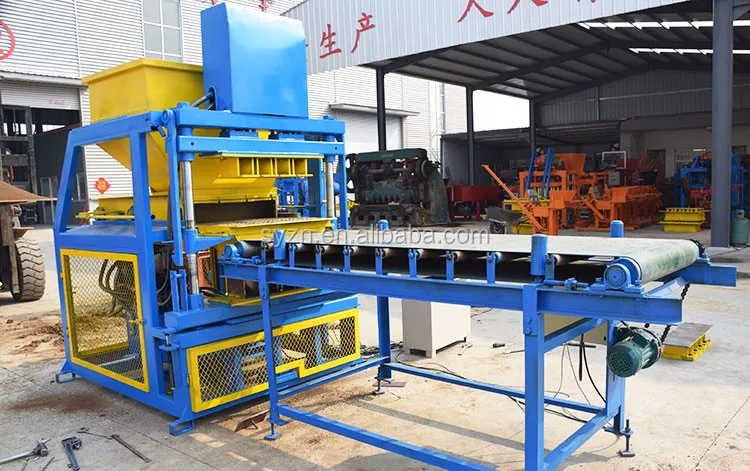


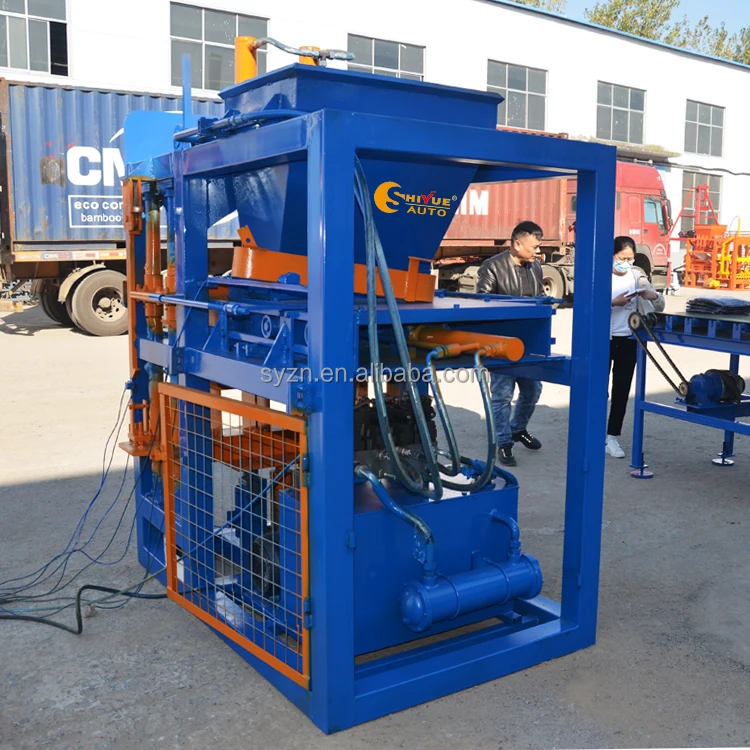
Description
Mould Matched to Your Block Format — The LY4-10 is set up to produce the interlocking profiles your market actually buys, with cycle time and hydraulic pressure tuned to your local clay or cement mix instead of a catalogue default.
Technical Specifications
| Parameter | Value |
|---|---|
| Model | LY4-10 |
| Product Type | Automatic Clay Interlocking Brick Making Machine |
| Rated Power | 11 kW |
| Control System | PLC control system with hydraulic system |
| Overall Dimensions (L×W×H) | 2260 × 1500 × 2380 mm |
| Molding Cycle | 10–15 s (basis not stated in source — confirm block format / material / thickness) |
| Output Capacity | 4 bricks per cycle (basis not stated in source — confirm block format / material / thickness) |
| Raw Material Compatibility | Clay, soil, earth, mud, concrete, cement, fly ash, water |
| Automation Level | Automatic (material feeding, mould pressing, mould lifting) |
| Mould Format | Interlocking bricks (multiple formats by changing moulds) |
| Assembly State | Fully assembled |
| Key Features | PLC-controlled operation, hydraulic pressing, quick mould change capability |
Application Suitability
| Application | Material or Output |
|---|---|
| On-site interlocking brick production for housing projects | Locally sourced clay or soil mixed with water and stabiliser |
| Block plant adding interlocking formats to existing range | Cement and fly ash blends with fine aggregate |
| First brick plant for entrepreneurs | Earth and mud mixes where conventional firing is unavailable |
| Paving and landscaping brick runs | Concrete-based mixes with colour oxide additives |
What the "4 Bricks per Cycle" Claim Depends On
The cycle figure only holds when the block format, wall thickness, and mix moisture are all specified together.
I have watched a site engineer in Guangdong stare at a pallet of crumbling interlocking bricks because the supplier quoted a molding cycle based on a standard solid format, while the buyer was running a deep-cavity interlocking profile with a high-clay local soil. The automatic clay interlocking brick making machine specifications you read in a brochure rarely say which brick drawing was used to measure that cycle. If the format changes, the pressure hold time and vibration duration must change too [NEED_CITE: relationship between block cavity depth and required compaction time]. Without that clarity, daily output on a real interlocking profile can fall well below the number on the quotation.
Matching the Interlocking Profile to the Local Mix
The LY4-10 handles clay, soil, earth, cement, and fly ash, but the interlocking brick format you choose must suit what is actually in your ground. A profile with thin webs demands a well-graded mix with enough fines to bridge the cavity; a coarse river sand will leave weak points that break during demoulding. The PLC control system stores pressing parameters, so once the correct pressure and cycle time are found for your material, the automatic clay interlocking brick making machine specifications can be locked in and repeated across batches.
Mould Changeover and Format Flexibility
Producing more than one interlocking profile on the same press is only valuable if the changeover does not consume most of a shift. The LY4-10 is designed with mould lifting and pressing mechanisms that allow a format swap without major dismantling. Buyers who need two or three profiles for different wall thicknesses can keep a spare mould set on the floor and switch during a planned stop, keeping the line available for the bulk of the production day [NEED_CITE: typical mould change procedures for hydraulic interlocking brick presses].
How Hydraulic Pressure and Vibration Shape Block Density
Interlocking bricks must reach a target compressive strength to survive transport and laying. The 11 kW rated power drives a hydraulic pressing system that compacts the mix into the mould cavity, while the vibration settles fines into the interlocking tongues and grooves. If the vibration is too short, the tongues remain porous; if the pressure is too high for a lean clay mix, the brick cracks on release. Getting this balance right requires running test cycles on your actual material and recording the settings in the PLC, which is why the automatic clay interlocking brick making machine specifications should always be confirmed against a sample batch before full production starts.
The Cost of Ignoring Mix-to-Format Alignment
When a buyer assumes any interlocking profile can run on any local clay without adjusting the hydraulic pressure, the result is a pallet of bricks that spall at the interlock joints after a few days of curing. The block plant then stops, retests the mix, waits for a new mould if the original profile is too aggressive for the material, and loses production time while the issue is resolved. Most of these delays trace back to a quotation that listed cycle time without the underlying material assumption [NEED_CITE: common causes of block rejection at construction sites].
Why Source This Machine Through Our Configuration Process
Block machinery is our single focus, so the LY4-10 is specified as a matched system — press, mould, and pallet — rather than assembled from unrelated suppliers. We set the hydraulic pressure and vibration sequence against your actual mix design, not a generic default. Mould drawings for the interlocking profiles you need are confirmed before production, and custom profiles can be developed from your sketches. Automation level is selectable, so a buyer can begin with semi-automatic pallet handling and add stacking later. Installation and commissioning support includes operator training on the PLC interface and mould change procedures.
Documentation & Verification
- Line layout and capacity calculation stating the exact interlocking brick format assumed
- Mould drawing and format list confirming included and custom profiles
- Voltage, frequency, and PLC display language confirmation sheet
- Factory test record on the buyer’s mix design before dispatch
- Hydraulic and electrical schematic for on-site maintenance reference
- Operation and maintenance manual covering mould change procedures
Installation, Commissioning & Support
- Foundation pad must accommodate the 2260 × 1500 mm footprint with clearance for mould lifting
- Dedicated power circuit rated for the 11 kW load, voltage and frequency confirmed before shipment
- Machine arrives fully assembled; pallet feed and discharge conveyors connected on site
- PLC parameters set to the buyer’s confirmed interlocking format during commissioning
- Operator training covers mould change, emergency stop, and daily lubrication points
- Wear parts list provided with initial spares for hydraulic seals and mould liners
What We Need from You to Quote Accurately
Send the interlocking brick drawing or profile name you intend to produce, along with a description of the local clay or cement mix available at the site. Confirm the daily output target in finished bricks, the voltage and frequency at the plant, and the preferred language for the PLC display. If the curing area and pallet handling equipment already exist, share the pallet dimensions so the line can be matched to what you have on the floor.
Frequently Asked Questions
Q: How is daily output calculated for the LY4-10, and which brick format does the 4-bricks-per-cycle figure assume?
A: The 4-bricks-per-cycle value is a baseline that must be confirmed against the specific interlocking brick format, wall thickness, and material mix. Daily output is then calculated by multiplying the confirmed cycle time by the number of production hours, minus planned stops for mould changes and maintenance. We provide a written capacity calculation tied to your exact block drawing before the order is finalised.
Q: Which clay or soil mixes are compatible, and how is hydraulic pressure matched to the material?
A: The LY4-10 works with clay, soil, earth, cement, and fly ash blends. During configuration, we review your local material description and adjust the hydraulic pressing parameters in the PLC to achieve the required compaction for the chosen interlocking profile. Test cycles are run to verify block strength before the machine is dispatched.
Q: What mould formats are available, and how long does a changeover take?
A: Multiple interlocking brick profiles are available, and custom moulds can be produced from buyer drawings. The changeover involves lifting the existing mould, swapping the die set, and resetting the PLC parameters for the new format. Exact changeover time depends on the profile complexity and is confirmed during operator training.
Q: What voltage and PLC language options are confirmed before shipment?
A: Voltage, frequency, and PLC display language are confirmed with the buyer before production begins. This ensures the control panel matches the site power supply and the operators can read the interface on arrival, avoiding commissioning delays caused by mismatched electrical standards.
Q: What pallet size is used, and is it compatible with existing handling equipment?
A: Pallet size is selected to match both the mould footprint and the buyer’s existing curing racks and forklifts. We confirm pallet dimensions and material during the configuration stage so that the output integrates with the site’s curing area without requiring additional handling equipment.