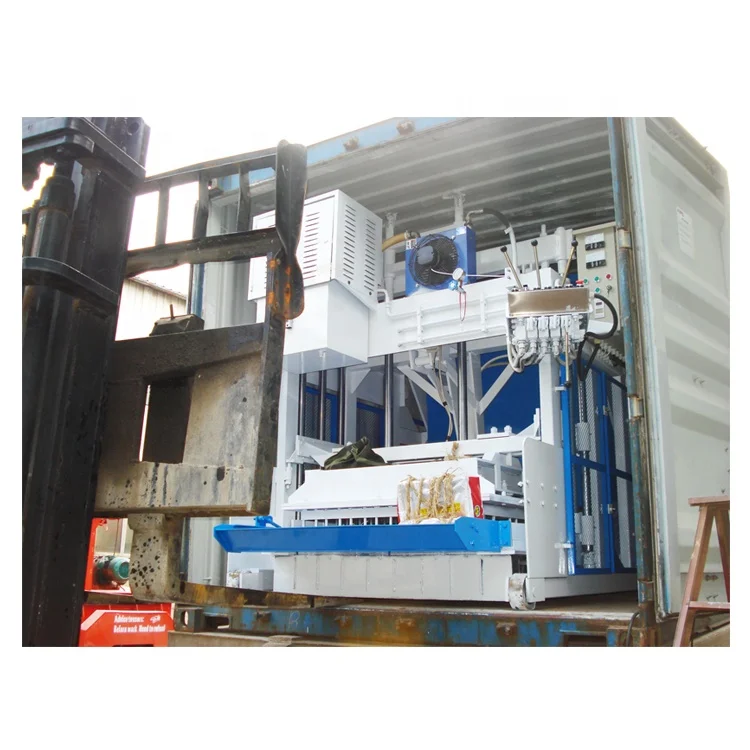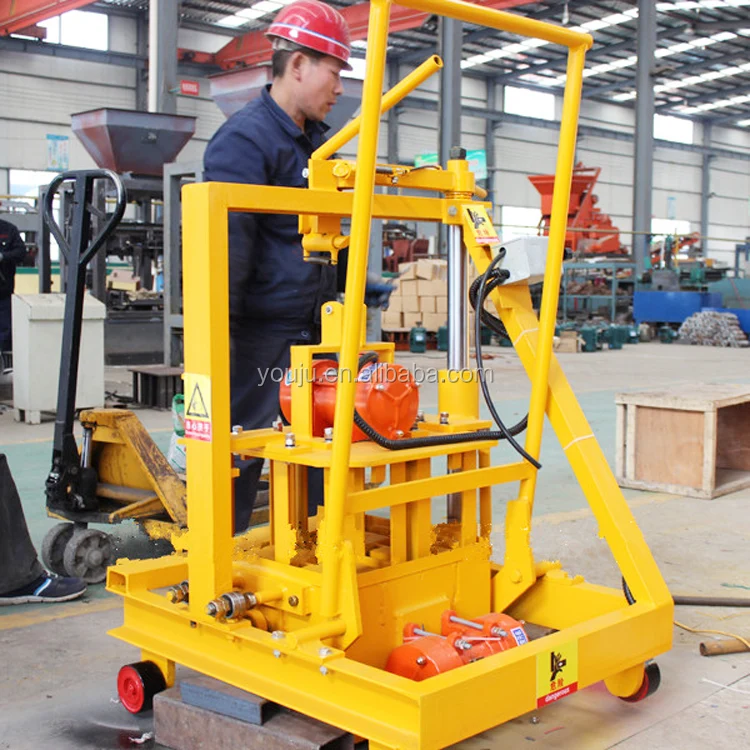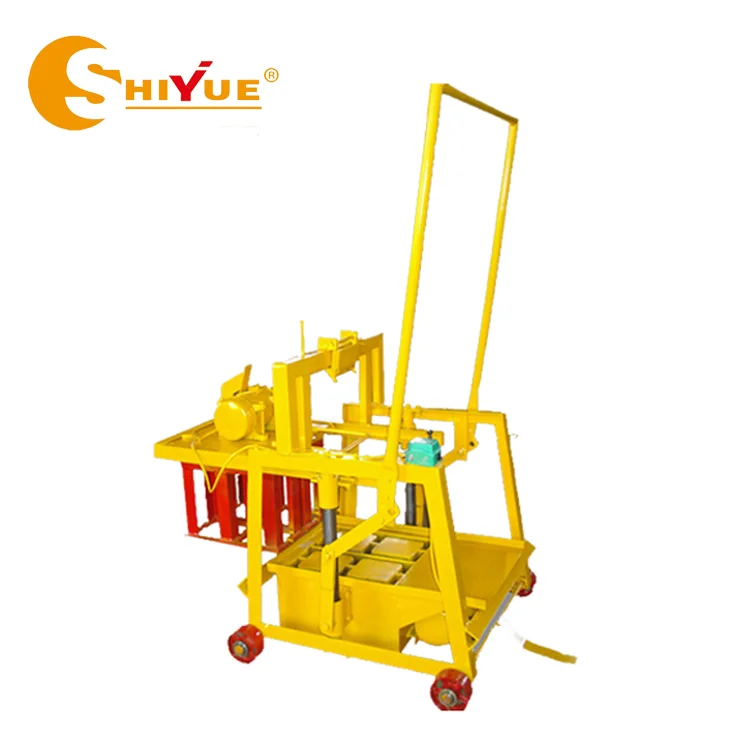

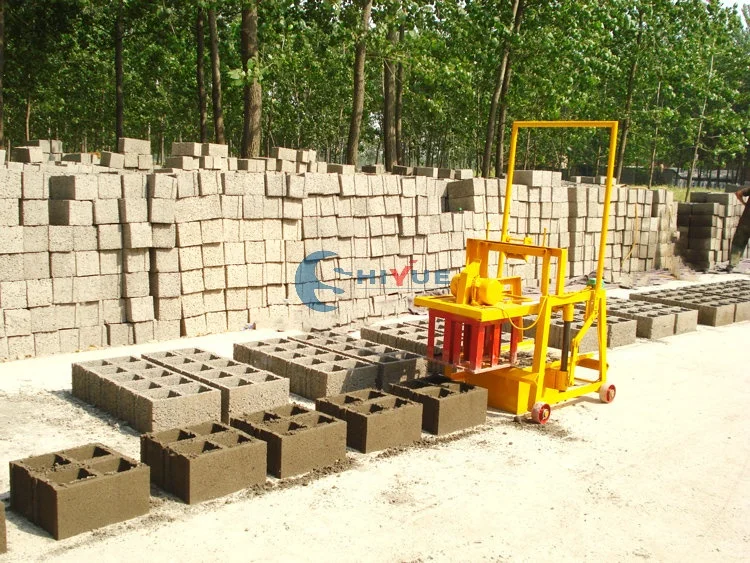


Description
Mould-Driven Output Sizing — capacity for the QMJ2-45 is quoted per hollow brick format and cycle count rather than a single headline number, so buyers match the machine to the block their market actually sells.
Technical Specifications
| Parameter | Value |
|---|---|
| Model | QMJ2-45 |
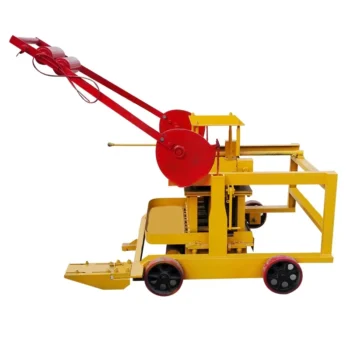
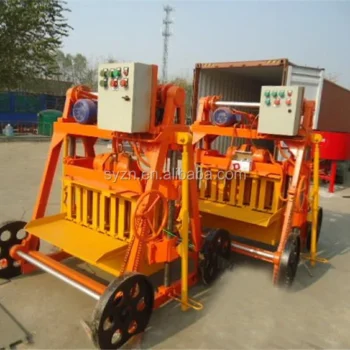
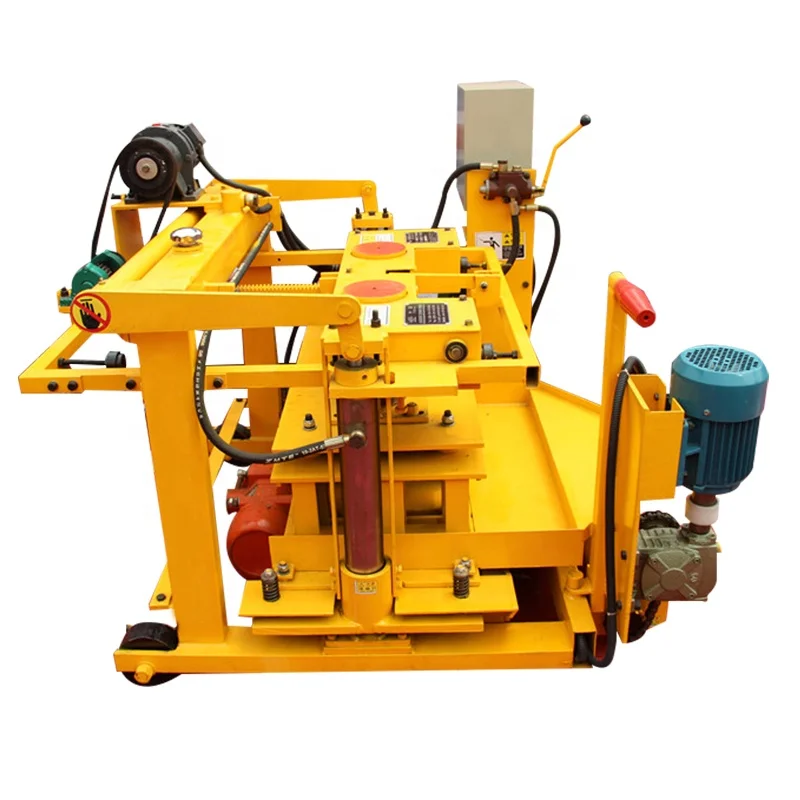
| Product Type | Mobile Egg-laying Block Making Machine |
| Operation Mode | Manual |
| Pressure Type | Hydraulic Pressure |
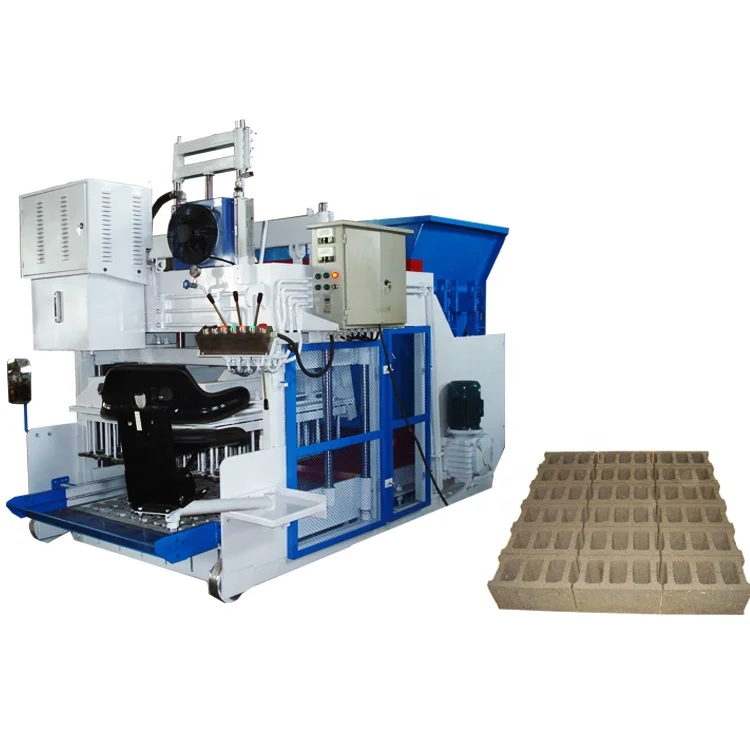
| Mould Formats Available | 400×200×200 mm, 400×150×200 mm, 400×100×200 mm hollow brick |
| Pieces per Mould Cycle | 2 pcs (400×200), 3 pcs (400×150), 4 pcs (400×100) |
| Cycle Time | 25–30 s per format |
| Rated Output — 400×200×200 mm | 160 pcs/h, approx. 1280 pcs per 8-hour shift |
| Rated Output — 400×150×200 mm | 240 pcs/h (8-hour shift figure requires verification against cycle math) |
| Rated Output — 400×100×200 mm | 320 pcs/h, approx. 2560 pcs per 8-hour shift |
| Pallet Requirement | None — egg-laying design, blocks cured in place on ground |
| Labour Requirement | 1 to 3 workers |
| Control System | Manual operation, no PLC |
| Power Source | Electric motor (rating to confirm) or diesel option (to confirm) |
| Voltage & Frequency | To confirm before order based on destination country |
Application Suitability
| Application | Material or Output |
|---|---|
| On-site hollow block production for housing projects | Cement, crushed stone, sand, water — mixed locally |
| Remote infrastructure sites without fixed plant | Hollow bricks laid directly on compacted ground |
| First-time block entrepreneurs with small yards | Low-volume hollow brick runs with minimal capital outlay |
| Overflow or supplementary production for existing plants | Additional hollow brick formats alongside main press output |
Why "Cycle per Hour" Without Format Context Misleads Buyers
Every capacity number on this page is tied to a specific hollow brick dimension and mould cavity count.
Capacity quoted in cycles per hour without stating which block format that figure assumes is one of the most common reasons a buyer’s real daily output falls far short of expectation. I have stood on sites in West Africa where the machine was running, the operator was working full shifts, and the yard was still half-empty at the end of the week — because the quoted capacity assumed a smaller block than what the local market demanded. With the QMJ2-45 mobile block machine, the 160 pcs/h figure only holds for the 400×200×200 mm hollow brick at 2 pieces per mould. Switch to the 400×100×200 mm format and the hourly count rises to 320 pcs/h, but the block volume per piece drops accordingly [NEED_CITE: block format and cycle time relationship in egg-laying machines]. Buyers need the format behind every number before they commit.
Format-by-Format Output Breakdown
The QMJ2-45 covers three hollow brick formats commonly traded across African and South Asian construction markets. Each format has a different cavity count per mould, which directly determines how many blocks drop per cycle. The 400×200×200 mm hollow brick produces 2 pieces per cycle at a 25–30 second interval, giving a stated 1280 pieces across an 8-hour shift. The mobile block machine specifications for the 400×100×200 mm format show 4 pieces per cycle, lifting the shift output to approximately 2560 pieces — but those pieces are thinner, so total concrete volume consumed per shift stays in a comparable range.
Mould Selection and Local Market Fit
Choosing the right mould is not about maximising the piece count on paper. In markets where 400×150×200 mm hollow blocks are the standard wall unit, running the 400×200 format means the builder cuts blocks on site, creating waste and slowing masonry work. The QMJ2-45 uses interchangeable moulds, so a buyer can order the formats their contractors actually specify. Mould change on this class of egg-laying machine is a manual procedure — understanding how long it takes and whether it needs a second operator matters when a single machine is expected to serve two or three formats across the same week [NEED_CITE: mould interchange procedures on manual mobile block presses].
Reading the Specs That Actually Govern Block Quality
Hydraulic pressure and vibration force together determine whether a hollow block reaches the compressive strength the local building code demands. On the QMJ2-45, the pressure type is hydraulic, but the exact pressure rating and vibration force are not published in the source data — these must be confirmed against the buyer’s mix design and aggregate type. A fine sand with high clay content absorbs vibration differently from clean crushed stone, and a machine set for one will underperform on the other. The cycle time of 25–30 seconds allows the hydraulic system to compact the mix fully, but only if the water-cement ratio and aggregate grading fall within the range the mould was designed for. Manual operation means the operator controls feed timing, which introduces batch-to-batch variation that an automatic system would eliminate. Labour requirement of 1 to 3 workers reflects this: one feeds, one operates the press lever, and one moves finished blocks or manages the mix.
What Happens When Format and Aggregate Are Mismatched
I have seen machines arrive on site and produce hollow blocks that crumble at the corners within the first week. The root cause is rarely the press itself — it is the gap between the mix the machine was configured for and the aggregate the buyer can actually source locally. When sand is too fine or contains a high percentage of clay, the vibration force that works on clean gravel fails to consolidate the mix, leaving voids inside the block wall. On an egg-laying machine with no pallet, the block must hold its shape the instant the mould lifts. If the mix is wrong, the block slumps before curing even begins, and the entire shift output is scrap. This failure mode is not visible in the factory test, where the manufacturer uses their own calibrated aggregate [NEED_CITE: effect of local aggregate on block strength in mobile presses].
Why Sourcing This Machine Here Reduces Configuration Risk
Block machinery is the single product focus, so the QMJ2-45 is specified as a matched system — machine, mould, and curing method considered together rather than assembled from separate suppliers. Configuration is set against the buyer’s actual mix design and target block format, not pulled from a catalogue default. Mould design covers the hollow brick formats the buyer’s market sells, with custom drawings available when standard sizes do not match local building practice. The automation level is manual on this model, but the product range includes semi-automatic and fully automatic lines, so a buyer starting with the QMJ2-45 has an upgrade path when volume grows. Installation support includes operator training on site, which matters for a manual machine where technique directly governs block consistency.
Documentation & Verification
- Capacity calculation sheet stating the hollow brick format assumed for each output figure
- Mould drawing and format list confirming included and optional cavity sizes
- Voltage, frequency, and motor rating confirmation matched to destination country
- Factory test record run on the buyer’s specified block format before dispatch
- Operation and maintenance manual covering mould change and hydraulic service intervals
Installation, Commissioning & Support
- Level compacted ground required — no fixed foundation or curing rack infrastructure needed for the egg-laying design
- Power supply confirmation: electric motor rating and voltage to be verified against site supply before the QMJ2-45 ships
- Machine arrives assembled with mould installed; operator training covers feed technique and cycle timing
- Mould change demonstrated on site so the crew can switch hollow brick formats without external support
- Hydraulic system inspection schedule provided, with wear parts list and recommended spare stock for the first year
What to Share Before Requesting a Quotation
To size the QMJ2-45 correctly, send the hollow brick dimensions your market trades most, along with a sample or description of the sand and aggregate available locally. Confirm the voltage and frequency at your site, and whether three-phase power is accessible or a diesel drive is needed. If you have an existing curing yard, note its dimensions so the egg-laying layout can be planned around it.
Frequently Asked Questions
Q: How is the 8-hour output calculated for each hollow brick format?
A: Each output figure starts from the cycle time of 25–30 seconds and the number of pieces per mould for that specific format. The 1280-piece figure for the 400×200×200 mm block assumes 2 pieces per cycle sustained across an 8-hour shift. The 400×150×200 mm figure of 4800 pieces per shift appears in some source data but contradicts the cycle math — 240 pcs/h over 8 hours yields 1920 pieces — so buyers should request written verification before ordering.
Q: Which hollow brick moulds ship with the machine and which are ordered separately?
A: The standard mould included with the QMJ2-45 varies by order configuration. Buyers should confirm at quotation stage which of the three formats — 400×200, 400×150, or 400×100 — is included in the base price and which are listed as additional mould orders. The mould drawing and format list document makes this explicit before production begins.
Q: What mix design works with this mobile block machine for consistent block strength?
A: The QMJ2-45 compacts through hydraulic pressure and vibration, so the mix must be calibrated to those forces. Clean crushed stone and well-graded sand with limited clay content produce the most consistent results. Buyers should send a sample of their local aggregate so the manufacturer can recommend a water-cement ratio and confirm whether the standard vibration setting is sufficient or needs adjustment.
Q: How long does a mould change take on the QMJ2-45?
A: Mould change on this manual egg-laying machine is a mechanical procedure involving bolt release and lifting the mould out of the press frame. On comparable machines in this class, a single operator with basic tools completes the swap within a short work pause. Exact timing depends on bolt condition and operator familiarity — request the mould change procedure document to plan shift scheduling around format switches.
Q: What electrical specifications must be confirmed before the machine ships?
A: The QMJ2-45 source data does not state a fixed motor rating or voltage. Buyers must confirm their site voltage, frequency, and phase configuration before production so the correct motor is fitted. If three-phase power is unavailable at the work site, a diesel engine option may be available — this should be discussed at the inquiry stage to avoid commissioning delays on arrival.