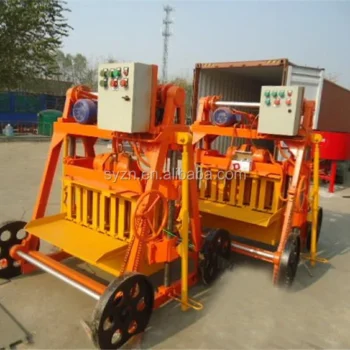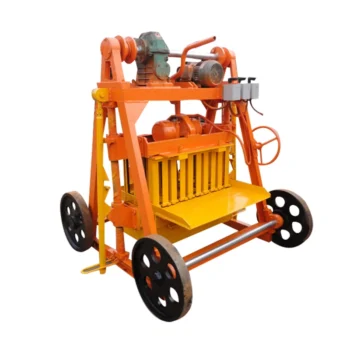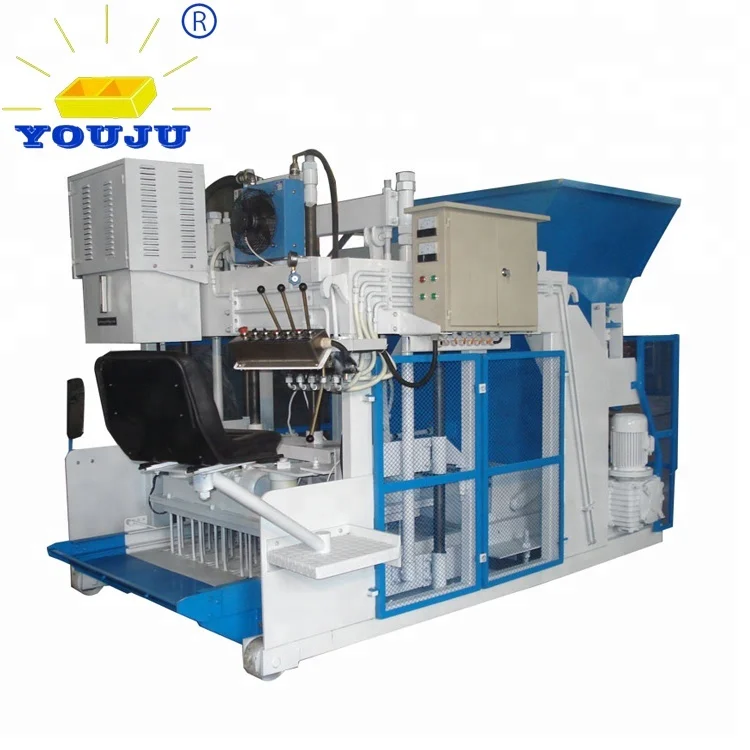



Description
Matched System Sizing — every QMR4-45 configuration is set against your target block format, local aggregate and curing conditions rather than a catalogue default, so output figures survive contact with your actual site.
Technical Specifications
| Parameter | Value |
|---|---|
| Model | QMR4-45 |
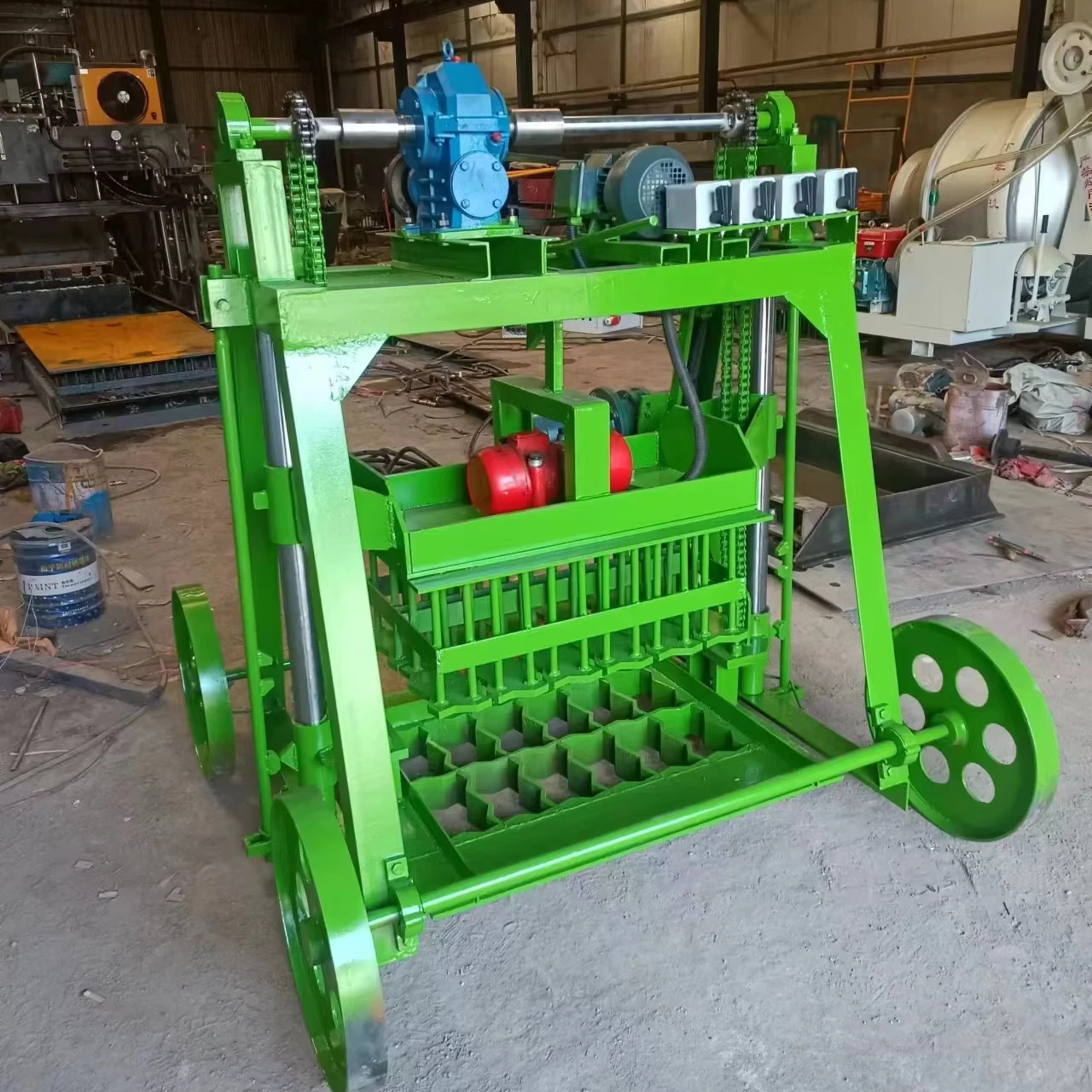
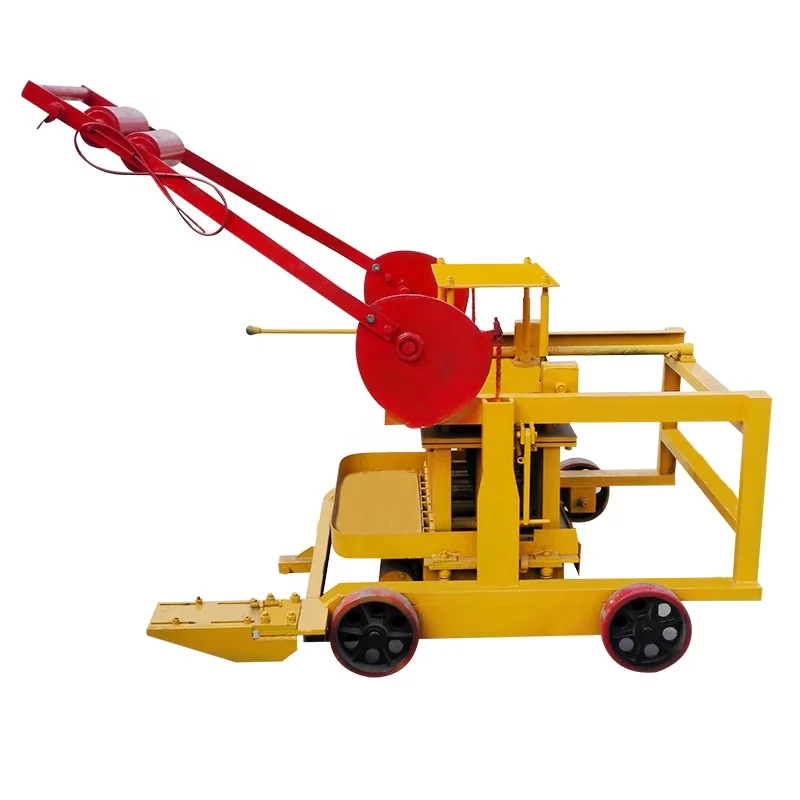
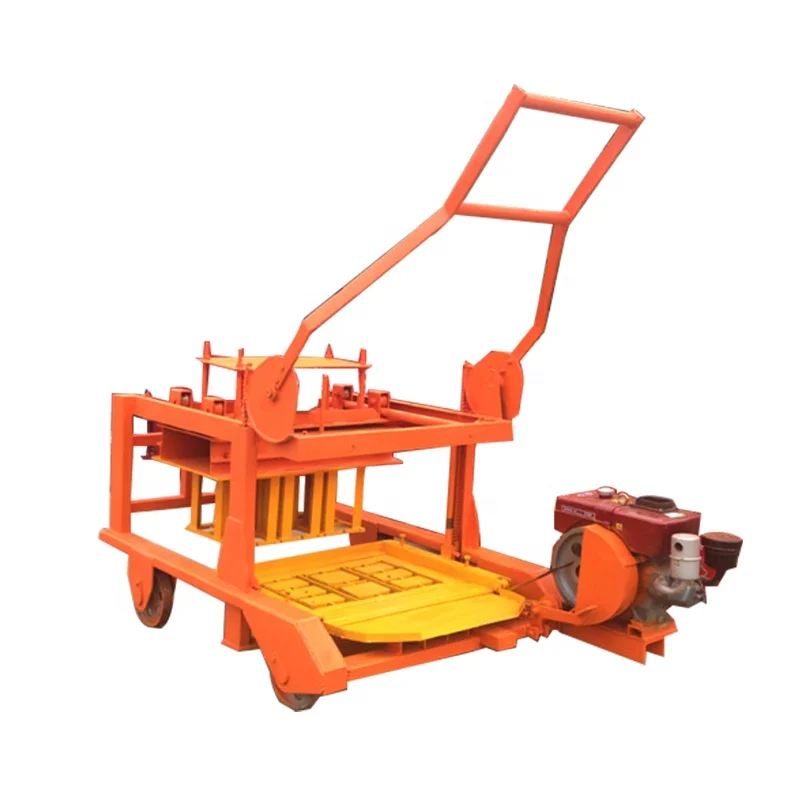
| Product Type | Mobile Concrete Block Making Machine |
| Overall Dimensions (L×W×H) | 1100 x 950 x 2100 mm |
| Net Weight | 810 kgs |
| Molding Cycle | 30-45 s per press |
| Power Source | Diesel / Petrol Engine / Electric (selectable) |
| Output Capacity | 2560 pcs/day (basis not stated in source — confirm block format / material / thickness) |
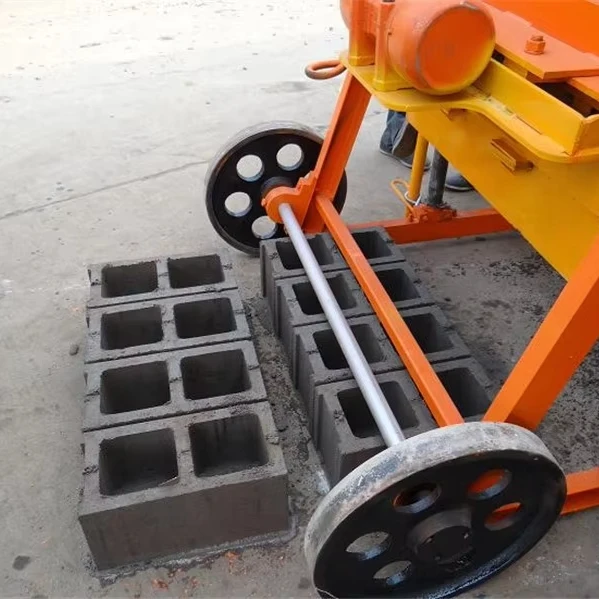
| Mould Format Compatibility | Paver brick, hollow block, concrete block, solid brick, fly ash brick |
| Pallet Requirement | None (egg-laying / mobile type) |
| Automation Level | Manual / semi-automatic mobile operation |
| Basic Equipment Included | JZC350 Diesel Concrete Mixer or JQ350 Diesel Concrete Mixer (with Electric Generating Unit); Trolley |
| Warranty | 1 Year |
Application Suitability
| Application | Material or Output |
|---|---|
| On-site housing project block production | Hollow blocks and solid bricks from locally sourced crushed stone, river sand and cement |
| Remote infrastructure contractor supply | Paver bricks and kerbstones produced adjacent to the paving work area |
| First block plant with limited capital | Concrete blocks and fly ash bricks without requiring a fixed factory building |
| Off-grid or unreliable power sites | Diesel or petrol engine driven production independent of grid supply |
What "2560 Pieces per Day" Actually Requires You to Verify
Daily output is only meaningful when tied to a specific block format, wall thickness and mix design.
Most mobile block machine quotations state a single daily capacity number without naming the block size that number assumes. When the machine arrives and you install a 200mm hollow block mould instead of the thin solid brick used for the test, the cycle lengthens and the daily total drops noticeably. The QMR4-45 is no exception — the 2560 pcs/day figure must be confirmed against the exact format and aggregate you will run. Mobile block machine specifications should always list output per format, not as a blanket claim. [NEED_CITE: block format impact on cycle time and daily output for egg-laying machines]
Mould Format Range and Changeover Realities
The QMR4-45 supports hollow block, solid block, paver and fly ash brick formats from a single mobile platform. Each format requires its own mould, and the changeover time between formats determines how much of your shift is spent producing versus reconfiguring. Mobile block machine specifications often list format compatibility without stating how long a swap takes, which is where flexibility disappears in practice. Plan your production schedule around one primary format per shift and treat secondary formats as short supplementary runs.
Pallet-Free Operation and Curing Area Implications
Egg-laying design means the QMR4-45 places blocks directly on the ground, eliminating pallet purchase, handling and return logistics. This simplifies the production line but shifts the burden to your curing area layout — you need a flat, level surface large enough to hold a full day’s output before blocks are moved. The trolley included in the base equipment assists with repositioning the machine between rows. [NEED_CITE: curing area surface preparation requirements for mobile egg-laying block machines]
Reading the Core Parameters That Determine Block Quality
The molding cycle of 30-45 seconds per press defines your throughput ceiling, but actual cycle length depends on how quickly the mix feeds, how the operator times the vibration, and how fast the machine travels to the next position. The net weight of 810 kgs is significant for a mobile unit — heavier machines transmit vibration force more effectively into the mix, producing denser blocks with higher compressive strength. Power source selection between diesel, petrol and electric affects not only operating cost but also vibration consistency, since engine-driven units may fluctuate under load while electric motors hold steady frequency. The included JZC350 or JQ350 mixer must be matched to the machine’s cycle rate so that fresh mix arrives before the press is ready, avoiding idle time.
The Cost of Skipping the Raw Material Trial
Ordering a mobile block machine without first testing your local aggregate leads to blocks that crumble at the edges or fail compressive strength tests. River sand with high clay content, for instance, demands a different cement ratio than clean crushed stone dust. When the mix is wrong, the vibration force and cycle settings that work in the factory test produce weak blocks on your site. Sorting and discarding failed batches daily erodes whatever margin the machine’s price advantage offered. [NEED_CITE: impact of local aggregate clay content on concrete block compressive strength]
Why Sizing Happens Here Before Quotation
The QMR4-45 configuration begins with your target block format and the raw materials available within transport distance of your site. Mould drawings are confirmed against the block dimensions your market actually purchases, not a default set. The power source is selected based on your site’s grid reliability rather than a standard electric assumption. Mixer capacity and trolley specification are matched to the daily volume you plan so the press never waits for material. Factory testing runs your specific mix before dispatch, not a reference aggregate chosen for convenience.
Documentation & Verification
- Line layout drawing showing curing area dimensions matched to QMR4-45 daily footprint
- Capacity calculation sheet stating the block format assumed for the output figure
- Mould drawing pack with dimensions for each format included in your order
- Voltage, frequency and power source confirmation record before production begins
- Factory test record using your submitted raw material sample
- Operation and maintenance manual with wear parts and mould replacement schedule
Installation, Commissioning & Support
- Flat, level curing surface prepared to the dimensions stated in the line layout before machine arrival
- Power supply confirmed to match the selected diesel, petrol or electric configuration of the QMR4-45
- Machine assembled and first test run supervised with your local aggregate and mix proportions
- Operator training covering mould change procedure, cycle timing and daily maintenance checks
- Wear parts list provided with recommended reorder points based on your production volume
- Follow-up support for mix adjustment if block strength results from site samples differ from factory test
What to Include in Your Inquiry
Provide the exact block format dimensions you plan to produce as your primary product, along with a sample or description of your local sand and aggregate type. State your site’s power availability — whether grid electricity, generator or no reliable supply exists — so the correct power source is configured. Confirm your available curing area dimensions so the line layout accounts for realistic daily placement space.
Frequently Asked Questions
Q: How is the 2560 pcs/day capacity verified, and which block format does it assume?
A: That figure must be confirmed against a specific block size, wall thickness and mix design. We request your target format dimensions and a raw material sample, then run a factory test to establish the actual cycle time and daily output you can expect on your site with your aggregate.
Q: Which mould formats are included and how long does a changeover take?
A: The base configuration includes moulds specified to your order. Changeover time depends on the format difference and operator experience — it is documented during commissioning so your production schedule can plan format runs realistically without losing most of a shift to swaps.
Q: How should I choose between diesel, petrol and electric power for my site?
A: If your project site lacks reliable grid power, diesel or petrol engine configuration keeps production running independently. Electric drive suits established yards with stable supply and offers more consistent vibration frequency. We confirm your site conditions before finalizing the power source selection.
Q: What does pallet-free operation mean for my curing area setup?
A: The QMR4-45 places blocks directly on the ground, so you need a flat, level surface large enough to hold a full production day. The included trolley helps reposition the machine row by row. We provide a layout drawing showing the minimum curing footprint for your chosen daily volume.
Q: How is block strength matched to my local aggregate rather than a catalogue default?
A: We ask you to send a sample of your sand and aggregate before the order is finalized. The factory test runs your actual material through the QMR4-45, and we adjust the vibration duration and mix recommendation until compressive strength meets your market standard.