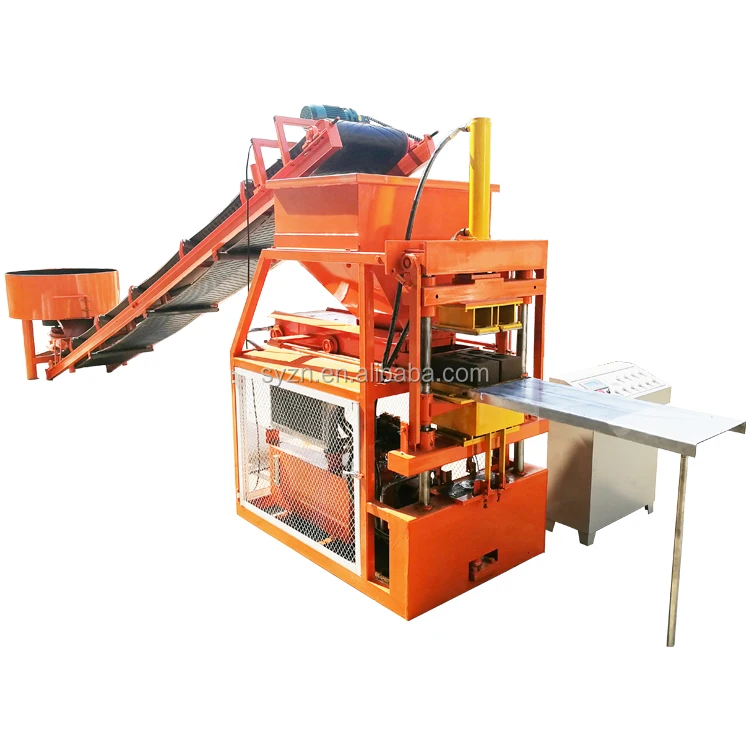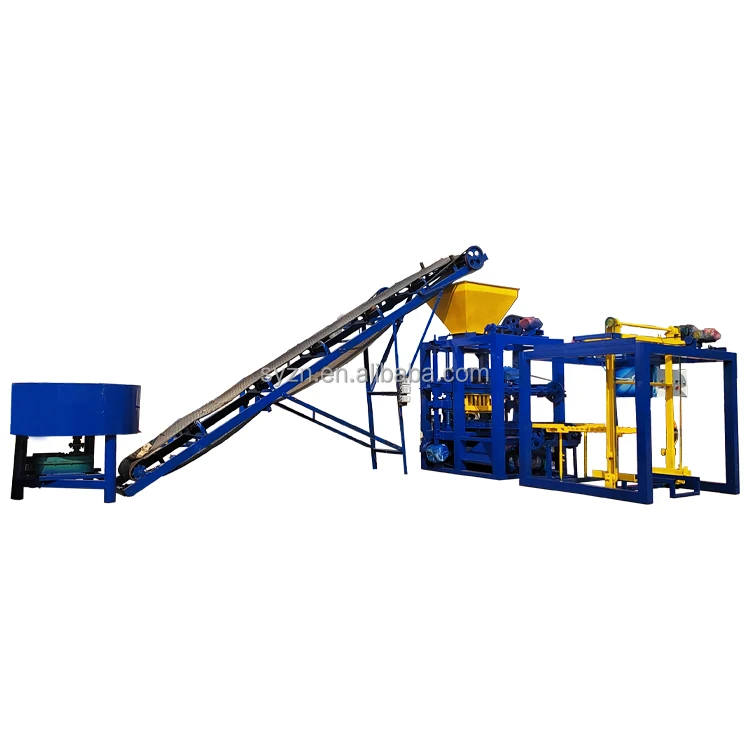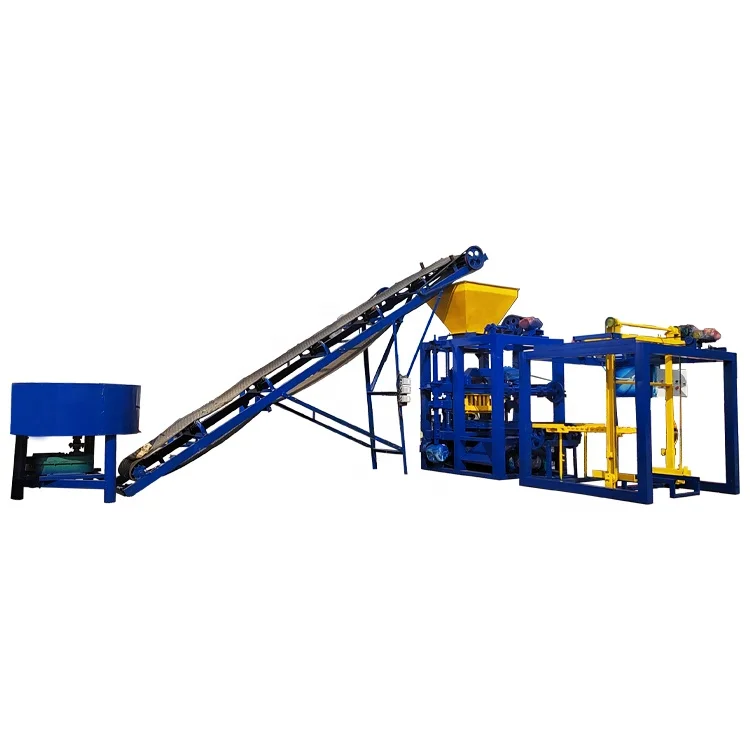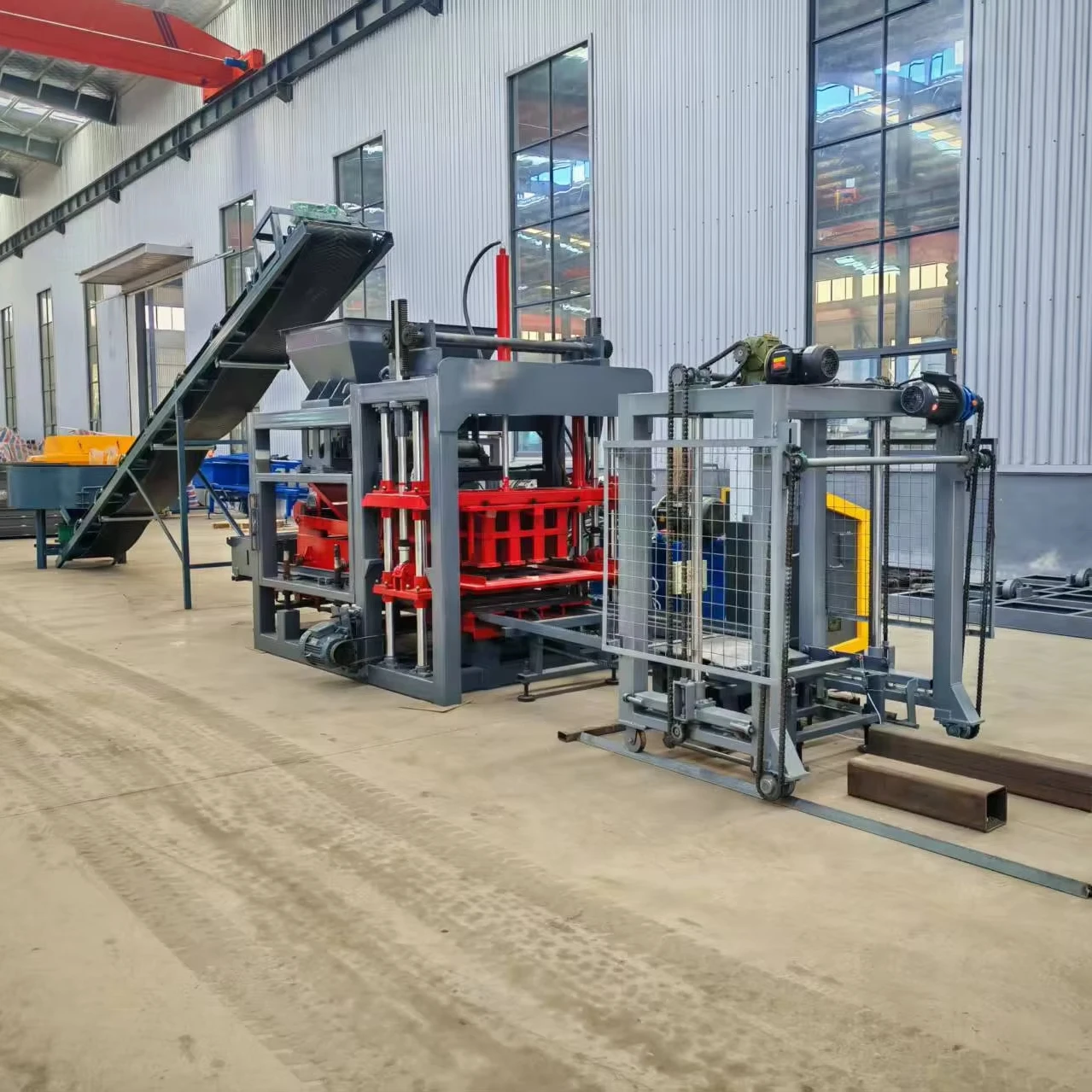


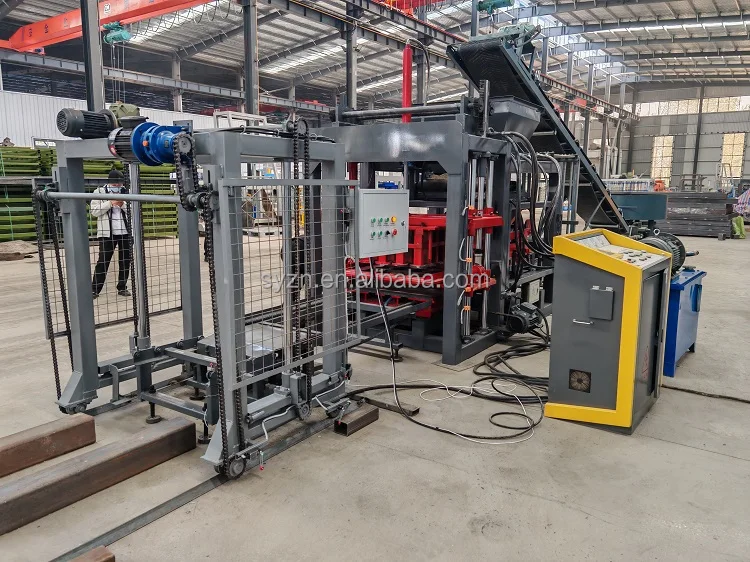
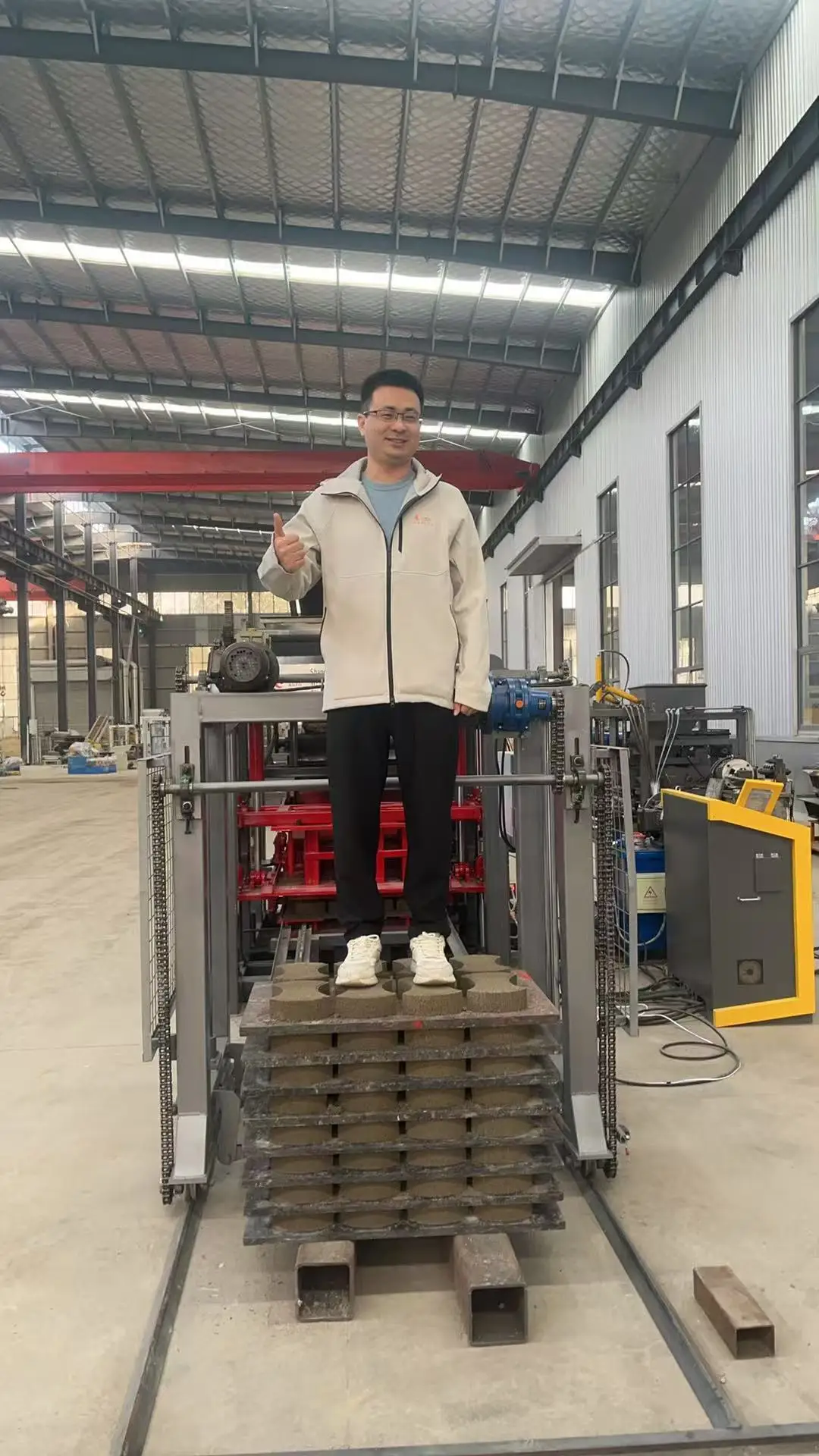
Description
Mould-Pallet-Machine Matching — every QT4-18 configuration starts from the block format you actually sell and the aggregate you can source locally, not from a catalogue default.
Technical Specifications
| Parameter | Value |
|---|---|
| Model | QT4-18 |
| Product Type | Hydraulic Concrete Block Making Machine |
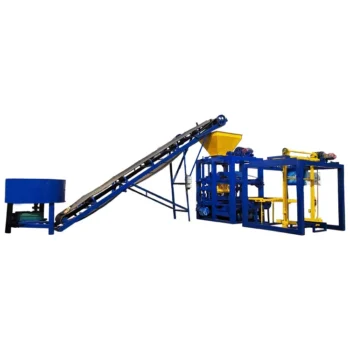
| Overall Dimensions (L×W×H) | 3900×1600×2300 mm |
| Molding Cycle | 15–25 s |
| Vibration Force | 40–50 kN |
| Total Power | 24 kW |
| Mixer Model | JQ350 |
| Pallet Size | 850×550×25 mm |
| Total Weight | 3 T |
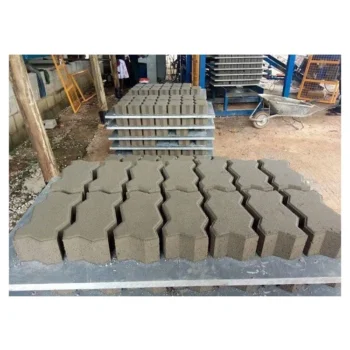
| Applied Products | Paver, solid block, hollow block, curbstone |
| Raw Materials | Crushed stone, sand, cement, dust, fly ash |
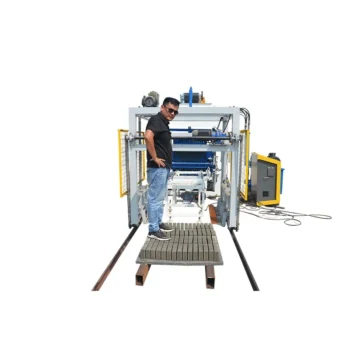
| Automation Level | Semi-automatic |
| Hydraulic Station | Equipped |
| Output — Hollow Block 400×200×200 mm | 4 pcs/mould, 360 pcs/h, 2880 pcs/8h (basis: Q4 reference; table states 9600–13440 pcs/8h — confirm cycle time and format) |
| Output — Hollow Block 400×150×200 mm | 1800–2400 pcs/h, 14400–19200 pcs/8h (basis: 15–20 s cycle) |
| Output — Solid Brick 240×115×53 mm | 3240 pcs/h, 16200–19440 pcs/8h (basis: 15–20 s cycle) |
| Stacking Method | Automatic stacker included |
| Control System | To be confirmed (PLC / relay / language options) |
| Voltage & Frequency | To be confirmed per target market |
| Certification | To be confirmed (CE declaration where applicable) |
Application Suitability
| Application | Material or Output |
|---|---|
| Hollow block production for building walls | Crushed stone, sand, cement, fly ash mixes |
| Solid brick manufacturing for masonry | Cement-stabilized sand and stone dust |
| Interlocking paver production for walkways and yards | Fine aggregate with cement binder |
| Curbstone forming for road and pavement edging | Coarse crushed stone with high cement content |
| On-site block production for housing projects | Locally sourced aggregate and cement |
| Format expansion for existing concrete product plants | Multiple mould changes on one host machine |
What "2880 Blocks per Day" Actually Means for QT4-18 Concrete Block Making Machine Specifications
Capacity only matters when the block format and cycle time behind it are named.
I once watched a buyer in East Africa receive a block machine rated at a daily output that assumed river sand in the mix. His site used volcanic crushed stone. The vibration force and hydraulic pressure were not matched to that aggregate, and block density fell below standard. Daily usable output dropped to roughly half the quoted number because the rest cracked during curing. The QT4-18 concrete block making machine specifications must be read against the exact block size you intend to produce and the raw materials available within hauling distance of your plant. A figure like 2880 pieces per 8-hour shift for 400×200×200 mm hollow blocks assumes a specific cycle time and mould cavity count — change the format to a smaller solid brick and the number shifts entirely [NEED_CITE: block output calculation methods by format and cycle time].
Mould Format Versatility on a Single Host
The QT4-18 runs hollow blocks, solid bricks, pavers, and curbstones on one press frame by swapping dedicated moulds. Each mould is built to the cavity count and dimensions that match the pallet size of 850×550×25 mm, so the forming area is fully used without dead zones. Buyers who sell multiple formats in their local market can add moulds over time without replacing the host machine. The hydraulic station provides the pressing force while the vibration system works through both the bed mould and the upper mould compression to compact the mix uniformly across every cavity.
Matching Vibration and Pressure to Local Aggregate
Block strength depends on how well the vibration force of 40–50 kN and the hydraulic pressure suit the particle shape and grading of your aggregate. Angular crushed stone requires different vibration amplitude and dwell time than rounded river sand. When the mix design and the machine parameters are aligned, blocks leave the press with consistent density from the first pallet to the last. When they are not, the outer shell may look acceptable while internal compaction remains uneven, leading to breakage during handling or failing compressive strength tests at the job site [NEED_CITE: relationship between aggregate shape and vibration requirements in block pressing].
Reading the Specs That Determine Real Output
The 15–25 second molding cycle range tells you that a simple hollow block with a straightforward cavity pattern sits at the shorter end, while a dense paver or curbstone requiring longer vibration and higher hydraulic dwell pushes toward the upper limit. The 24 kW total power covers the hydraulic pump, vibration motors, and the JQ350 mixer running upstream. Pallet size at 850×550×25 mm determines how many blocks fit per cycle and must align with the curing rack spacing and the fork dimensions of the loader you already operate. The automatic stacker reduces the manual labour between press output and curing racks, but the stacking pattern must match the pallet dimensions to avoid unstable columns. Semi-automatic operation means pallet feeding and block removal still involve operator input, which keeps initial investment lower while leaving an upgrade path to full automation later.
The Hidden Cost of Skipping Configuration Details
A pallet size chosen without checking your curing rack spacing means pallets will not slide into the racks you already built, forcing a rebuild or a pallet reorder before the first production run. Voltage and frequency left unconfirmed until the machine arrives can delay commissioning by weeks while a transformer or replacement motor is sourced locally. A control panel display in a language the operators cannot read turns every parameter adjustment into guesswork, increasing the chance of incorrect cycle settings that affect block density [NEED_CITE: commissioning delays caused by unconfirmed electrical specifications].
Why Buyers Source This Machine Here
Block machinery is the single focus of this supply operation, so the QT4-18 press, its moulds, pallets, and the stacker are specified as one system rather than assembled from separate vendors. Configuration is set against your actual mix design and target block format, not pulled from a standard catalogue line. Mould design covers the formats your market sells, and custom moulds can be built to buyer drawings when a project specifies a non-standard block dimension. Automation level starts at semi-automatic with a clear upgrade path, so a buyer can begin production at a manageable investment and add automatic pallet feeding or cubing as volume grows. Installation support includes on-site commissioning and operator training so the crew understands cycle settings, mould change procedure, and daily maintenance from the first shift.
Documentation & Verification
- Line layout showing capacity per block format with cycle time stated for each
- Mould drawing and format list covering every block size you plan to produce
- Pallet specification with material type and load rating matched to your curing racks
- Voltage, frequency, and PLC display language confirmed in writing before production
- Factory test record run on your target block format before dispatch
- Operation and maintenance manual with wear parts list and replacement intervals
Installation, Commissioning & Support
- Foundation pad sized to the 3900×1600 mm footprint with level tolerance for hydraulic alignment
- Dedicated power circuit rated for 24 kW total draw at confirmed voltage and frequency
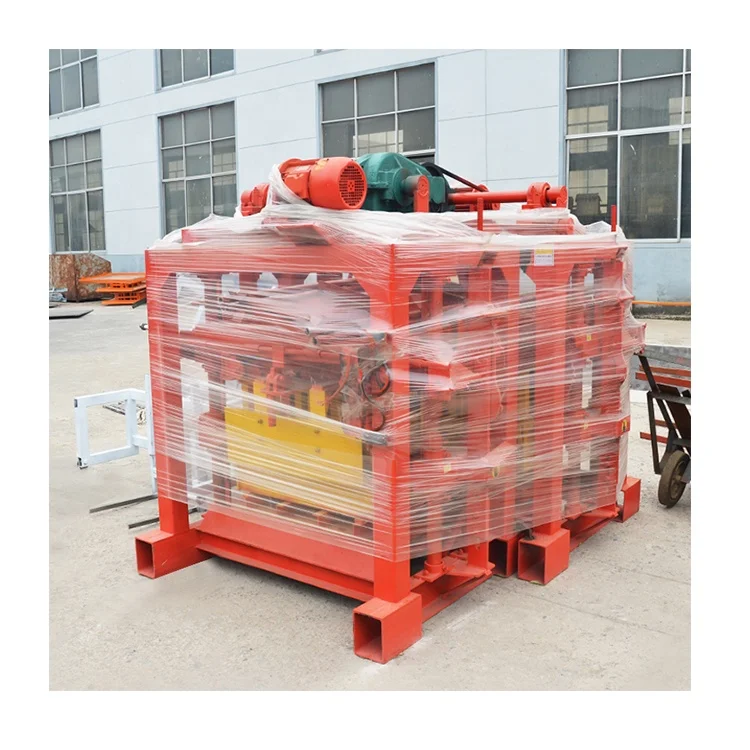
- Machine shipped in dismantled state with reassembly and hydraulic line connection on site
- First-run parameter tuning for vibration force and cycle time against your specific mix design
- Operator training covering mould change, pallet handling, and stacker operation
- Wear parts list with reorder part numbers for hydraulic seals and vibration springs
Starting Your QT4-18 Inquiry
Tell us the block formats you sell today and any you plan to add, along with the daily output target for each. Share the aggregate type available in your area and any compressive strength requirement from local building codes. Confirm the voltage, frequency, and preferred control panel language at your site so electrical specifications are locked before production begins.
Frequently Asked Questions
Q: How is output capacity calculated per block format and what cycle time does each figure assume?
A: Each output figure is tied to a specific block size, mould cavity count, and cycle time range. For example, 400×150×200 mm hollow blocks at 15–20 seconds per cycle yield a different hourly rate than solid bricks at the same cycle. We provide a capacity calculation document naming every format and its assumed cycle before order confirmation.
Q: Which mould formats are available and can custom moulds be designed to buyer drawings?
A: Standard moulds cover hollow blocks, solid bricks, pavers, and curbstones sized to the 850×550 mm pallet. When your market requires a non-standard dimension or interlocking profile, custom moulds are designed from your drawings and tested on the host machine before shipment.
Q: How is the machine configured to match local aggregate and mix design for target block strength?
A: We review your aggregate type, particle grading, and cement ratio, then set vibration force and hydraulic pressure parameters accordingly. Angular crushed stone and rounded sand demand different settings. A test run on your mix recipe is documented before the machine leaves the factory.
Q: What pallet size and material are recommended for the buyer’s curing area and handling equipment?
A: The standard pallet is 850×550×25 mm, but material selection — bamboo, PVC, or steel — depends on your curing method and expected pallet lifespan. We confirm that pallet dimensions match your existing curing rack spacing and forklift fork width before finalizing the order.
Q: How long does a mould change take and what tools are required on site?
A: Mould change time depends on the format difference and whether the new mould is pre-assembled with its vibration springs. Standard hand tools are sufficient. We provide a step-by-step mould change procedure in the operation manual and cover the process during on-site operator training.