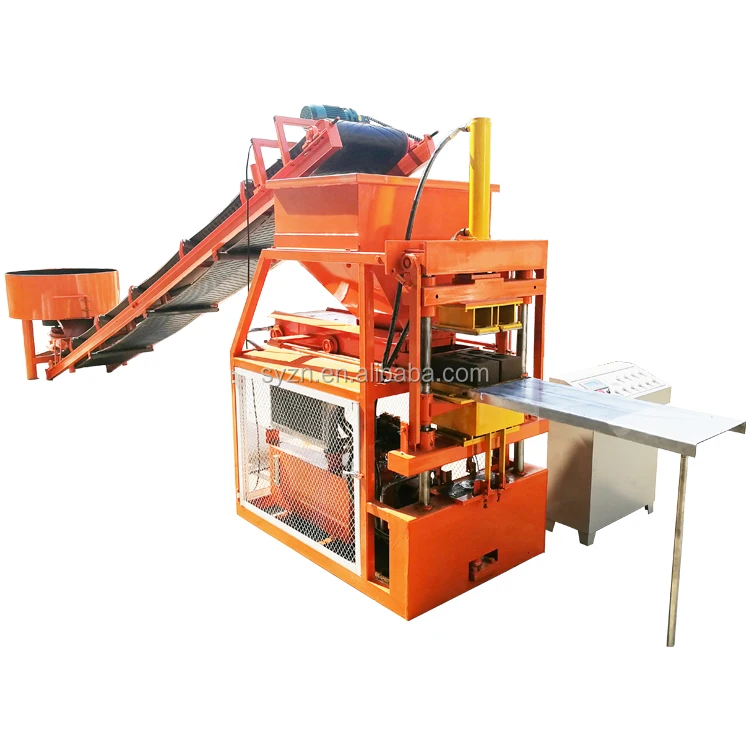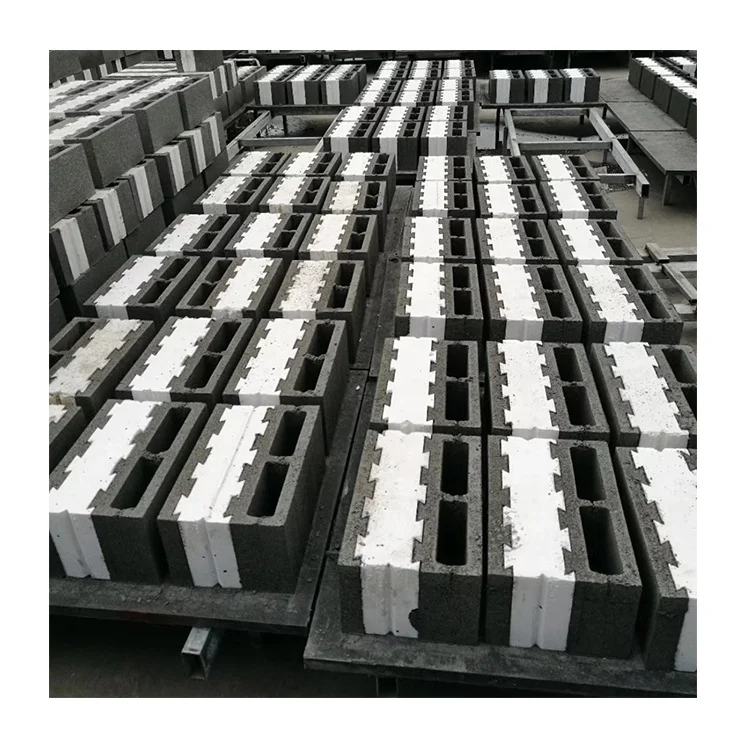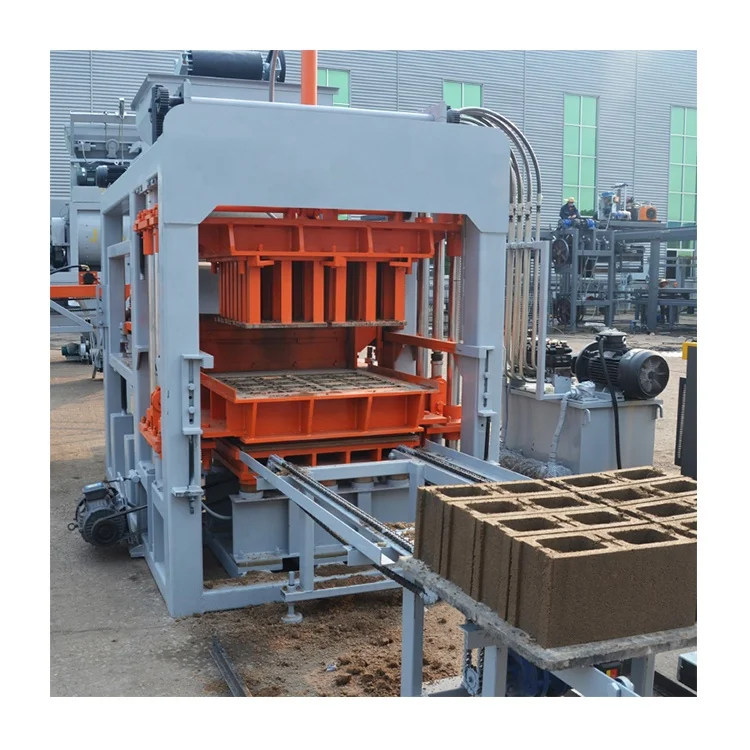

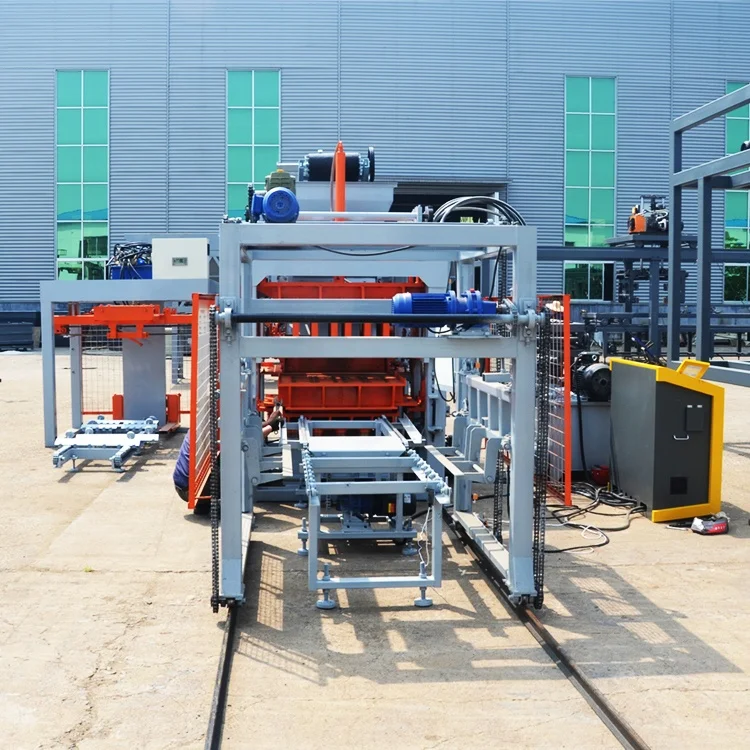
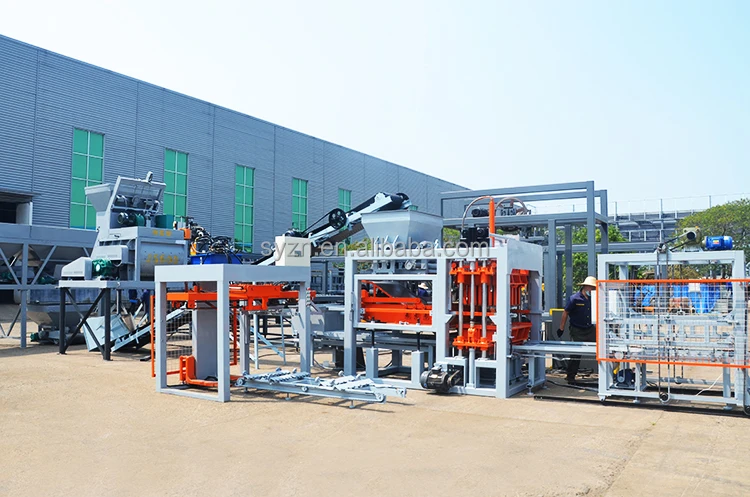


Description
Format-matched block machinery — capacity calculations stated per block format with cycle time and mould selection based on your local aggregate and target market.
Technical Specifications
| Parameter | Value |
|---|---|
| Model | QT6-15 |
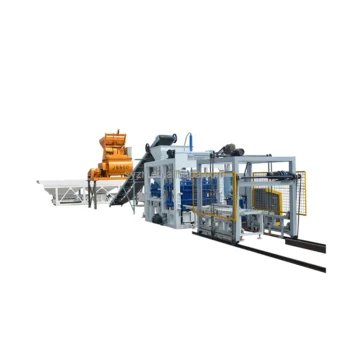
| Product Type | Hydraulic Vibration Block Making Machine |
| Overall Dimensions | 7400×1900×2660 mm |
| Total Weight | 7T |
| Molding Cycle | 15-25s |
| Vibration Frequency | 4600 r/min |
| Exciting Power | 40-50KN |
| Rated Power | 31.25kW |
| Mixer | JQ350 |
| Pallet Size | 850×550×25mm |
| Output Capacity (Hollow block 400×200×200mm) | 1200-1680 Pcs/Hr |
| Output Capacity (Hollow block 400×150×200mm) | 1800-2400 Pcs/Hr |
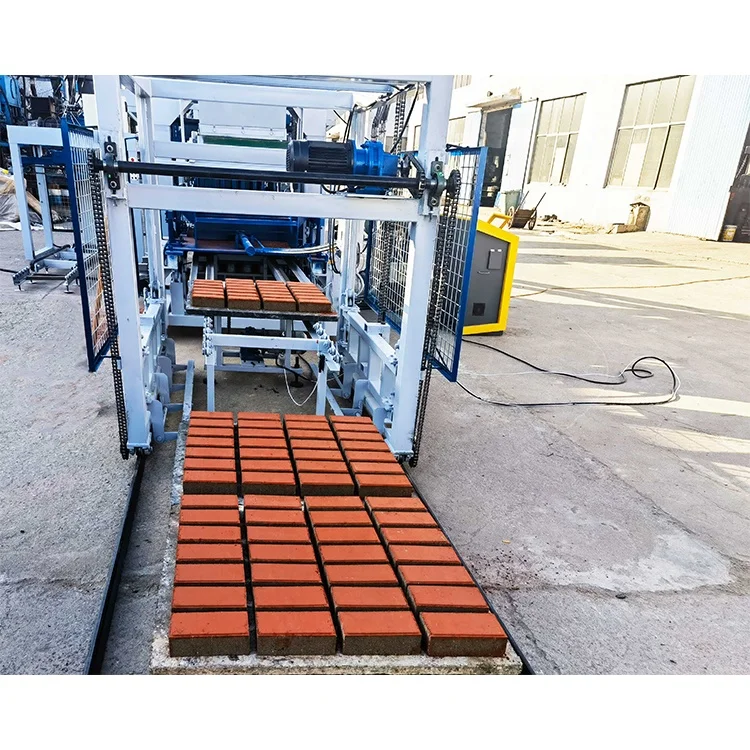
| Output Capacity (Solid brick 240×115×53mm) | 3240 Pcs/Hr |
| Daily Output (Hollow block 400×200×200mm) | 9600-13440 Pcs/8hr |
| Daily Output (Hollow block 400×150×200mm) | 14400-19200 Pcs/8hr |
| Daily Output (Solid brick 240×115×53mm) | 16200-19440 Pcs/8hr |
| Automation Level | Fully Auto |
| Control System | PLC control system |
| Assembly State | Block making machine, hydraulic station, PLC control system, pallet feeder, brick conveyor, block sweeper |
| Voltage & Frequency | (basis to be confirmed) |
| Mould Change Time | (basis to be confirmed) |
| Hydraulic Pressure | (basis to be confirmed) |
Application Suitability
| Application | Material or Output |
|---|---|
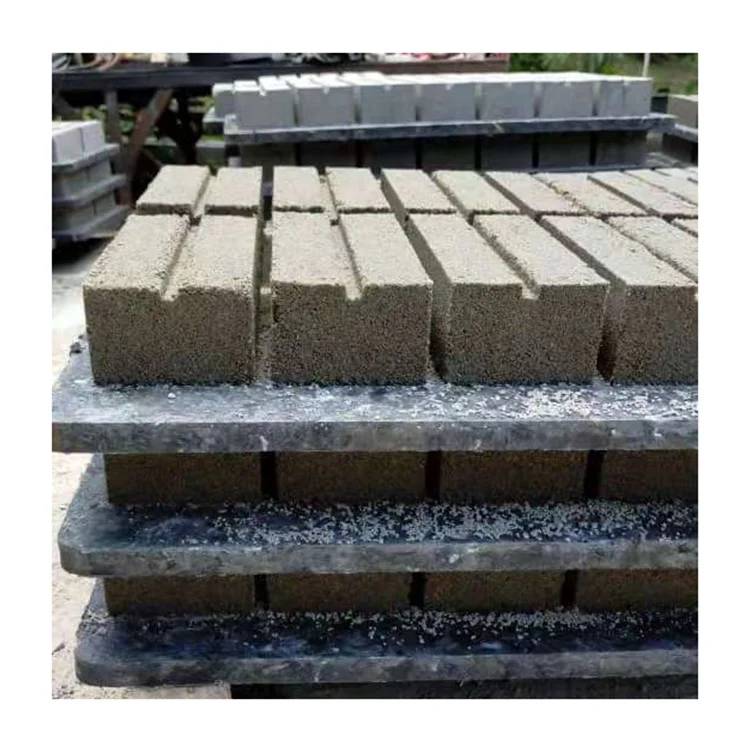
| Hollow block production | Crushed stones, sand, cement, fly ash (400×200×200mm and 400×150×200mm formats) |
| Solid brick production | Sand, cement, dust, fly ash (240×115×53mm format) |
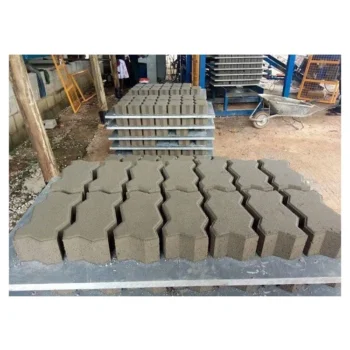
| Paver and curbstone manufacturing | Aggregates and cement with format-specific moulds |
| On-site construction block production | Local crushed stone and sand mixes for development projects |
What Block Machine Specifications Leave Out About Real Capacity
Capacity figures mean nothing without the block format and mix design stated alongside them.
A supplier quotes 1680 pieces per hour but does not tell you that figure assumes a 400×200×200mm hollow block on a clean, well-graded aggregate. When your local sand carries high clay content or your crusher dust skews fine, the vibration and pressure settings need adjustment, and cycle times stretch. Buyers who skip the mix test often find their actual daily output falls well short of the brochure number [NEED_CITE: common causes of block machine output shortfall]. That gap is not a machine defect — it is a specification gap that could have been closed before the order was placed.
Matching the QT6-15 to Your Block Format and Market
This block machine specifications review starts with the formats your market actually buys. The QT6-15 produces hollow blocks in two standard sizes, solid bricks, pavers, and curbstones through mould changes. Each format has its own cycle time within the 15-25 second range and its own output tier, so the machine must be sized against the format that represents your highest volume, not the one that gives the best headline number.
How Local Aggregate Dictates the Configuration
Before any configuration is finalised, a sample of your sand and crushed stone should be tested for particle size distribution and clay content. The vibration frequency of 4600 r/min and exciting power of 40-50KN work across a range of mixes, but the hydraulic pressure and cycle time must be tuned to achieve target block strength with your specific materials [NEED_CITE: aggregate grading standards for concrete block production]. Skipping this step is how plants end up with blocks that crack during curing or fail compression tests on site.
Reading the Specs That Actually Matter
The pallet size of 850×550×25mm determines how many blocks are formed per cycle and must match the curing racks and forklifts already in your yard — a mismatch here means buying new handling equipment or restacking by hand. The JQ350 mixer feeds the press, and its batch volume must align with the cycle time so the hopper never runs dry mid-press. The PLC control system manages the sequence, but the display language and voltage must be confirmed before production starts, not after the machine arrives and the electrician discovers a frequency mismatch [NEED_CITE: industrial voltage and frequency standards by region].
The Cost of Skipping the Format and Mix Conversation
When a buyer orders on catalogue capacity alone, the consequences arrive in stages. First, the blocks come out under-strength because the vibration force was set for a different aggregate profile. Then the pallet handling bottlenecks because the curing area was designed around a different pallet dimension. Finally, the first mould change takes most of a shift because the quick-change system was not specified, and the format flexibility the buyer paid for disappears into downtime [NEED_CITE: block plant operational efficiency studies].
Why Buyers Specify With Us
Block machinery is our single focus, so the QT6-15 is quoted as a matched system — press, mould, pallet, and handling — not assembled from separate supplier catalogues. Every configuration is set against your actual mix design and target block format, not a default table. Moulds are designed for the dimensions your market sells, including custom drawings when standard sizes do not apply. The automation level is selectable, so a plant can start with the included pallet feeder and brick conveyor, then add stacking later. Installation includes operator training so your team knows the parameter adjustments for each format from day one.
Documentation & Verification
- Line layout and capacity calculation stating the block format assumed for each QT6-15 output figure
- Mould drawing and format list confirming dimensions for hollow, solid, paver, and curbstone
- Voltage, frequency, and PLC display language confirmation sheet signed before production
- Hydraulic and electrical schematic for the QT6-15 station connections
- Factory test record on your specified block format and mix before dispatch
- Wear parts and mould list with part numbers for reordering
Installation, Commissioning & Support
- Foundation plan based on the QT6-15 footprint of 7400×1900mm and 7T operating weight
- Dedicated power circuit for the 31.25kW rated load, voltage confirmed before wiring
- Machine arrives with hydraulic station and PLC cabinet pre-assembled for faster site connection
- First-run parameter tuning against your local aggregate to hit target block strength
- Operator training covering mould change procedure and cycle time adjustment per format
- Wear parts inventory list with lead times for hydraulic seals and mould liners
How to Start the Conversation
Tell us which block format represents your highest daily volume, the source and type of your sand and aggregate, and the voltage and frequency at your site. If you have existing curing racks or forklifts, share the dimensions so we can confirm pallet compatibility. We will respond with a capacity calculation stated per format, not a single headline figure.
Frequently Asked Questions
Q: How is output capacity calculated per block format for the QT6-15?
A: Each output figure is based on a specific block dimension and a standard cycle time within the 15-25 second range. For example, 1200-1680 hollow blocks per hour assumes the 400×200×200mm format. Switching to a smaller solid brick format changes the mould, cycle time, and pallet pattern, which produces a different hourly figure entirely.
Q: How do I match the 850×550mm pallet to my curing area and forklift?
A: Measure your existing curing rack slots and forklift tine spacing before ordering. If your racks were built for a different pallet size, blocks will need restacking after demoulding, adding labour and breakage risk. We confirm pallet dimensions against your handling setup during the proposal stage.
Q: What block formats can the QT6-15 produce and are custom moulds available?
A: Standard formats include 400×200×200mm and 400×150×200mm hollow blocks, 240×115×53mm solid bricks, pavers, and curbstones. Custom moulds can be designed to your drawings when local building codes require non-standard dimensions. Mould compatibility is confirmed before the machine enters production.
Q: How do I confirm the machine is configured for my local aggregate?
A: Send us a sample of your sand and crushed stone before quotation. We run a trial mix, press test blocks, and check compressive strength. The vibration force, hydraulic pressure, and cycle time are then set to those results, not to a catalogue default.