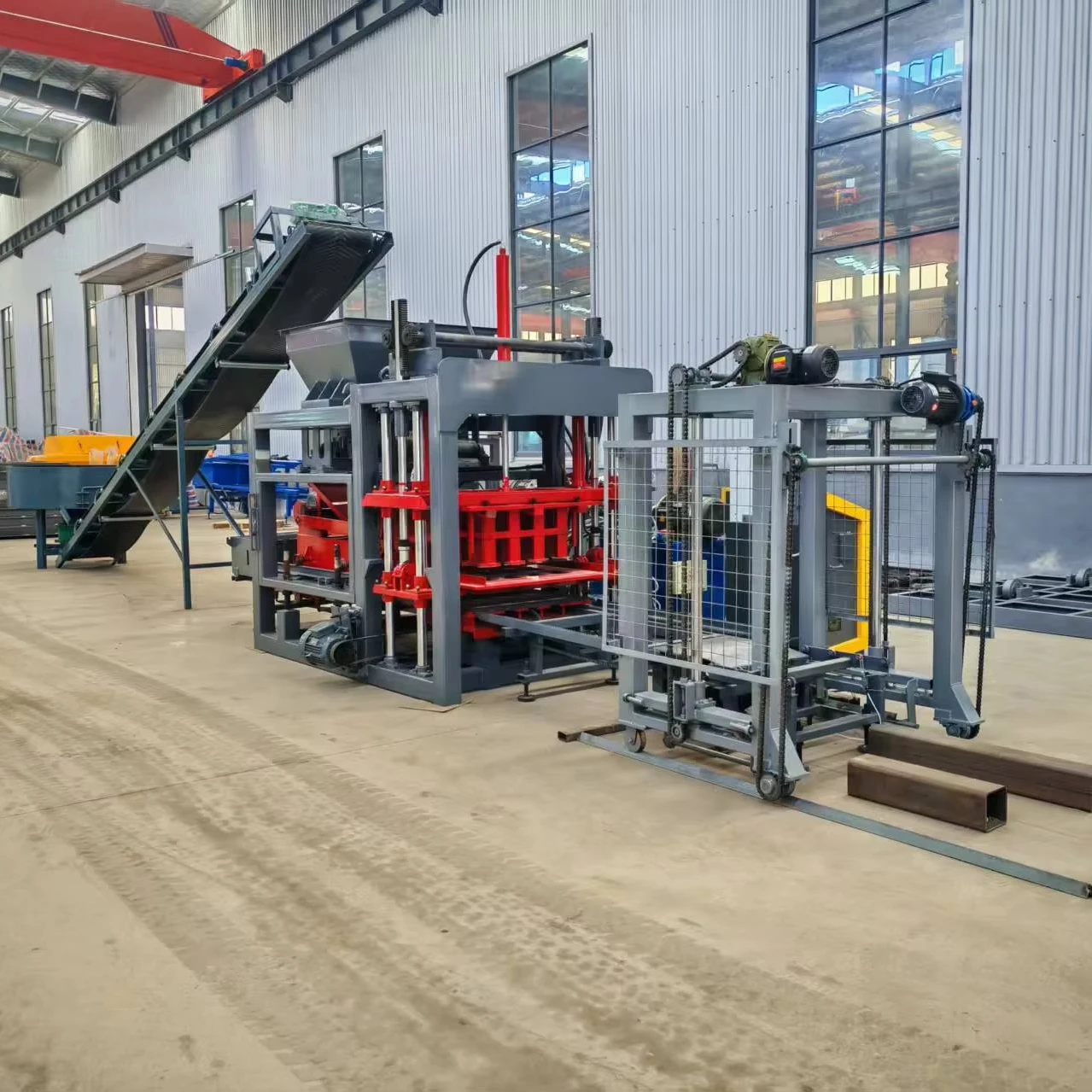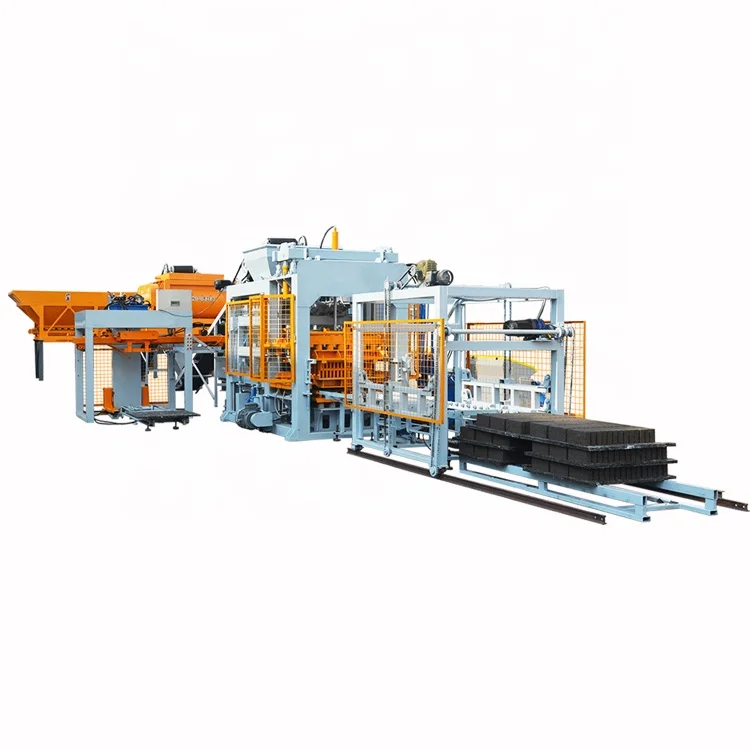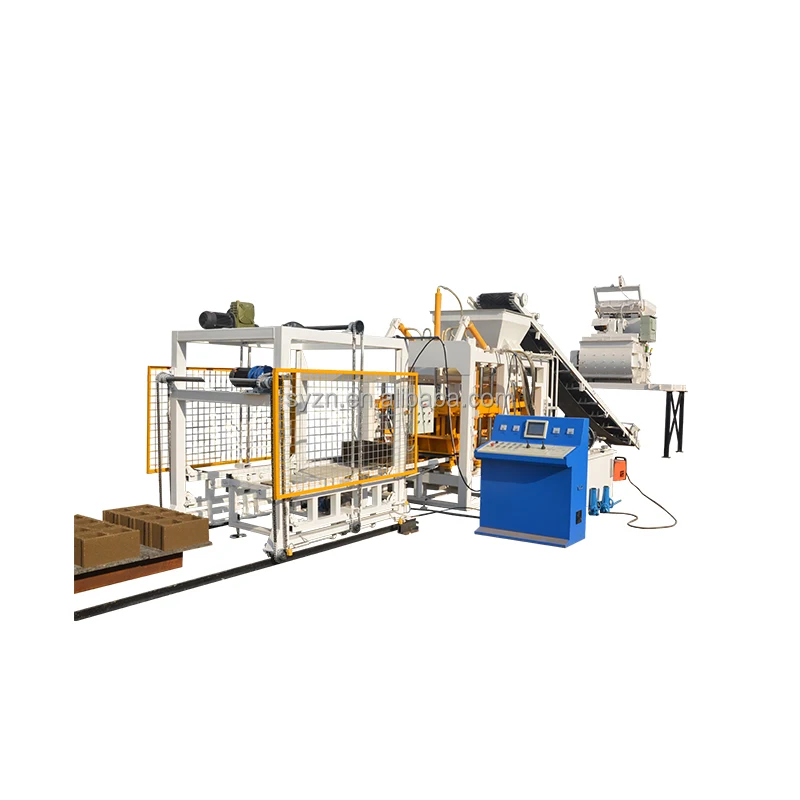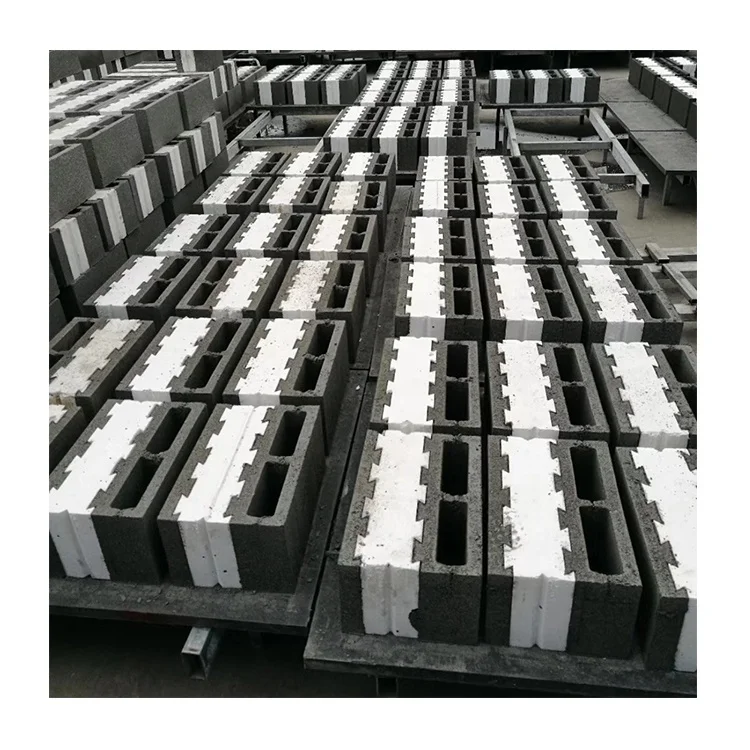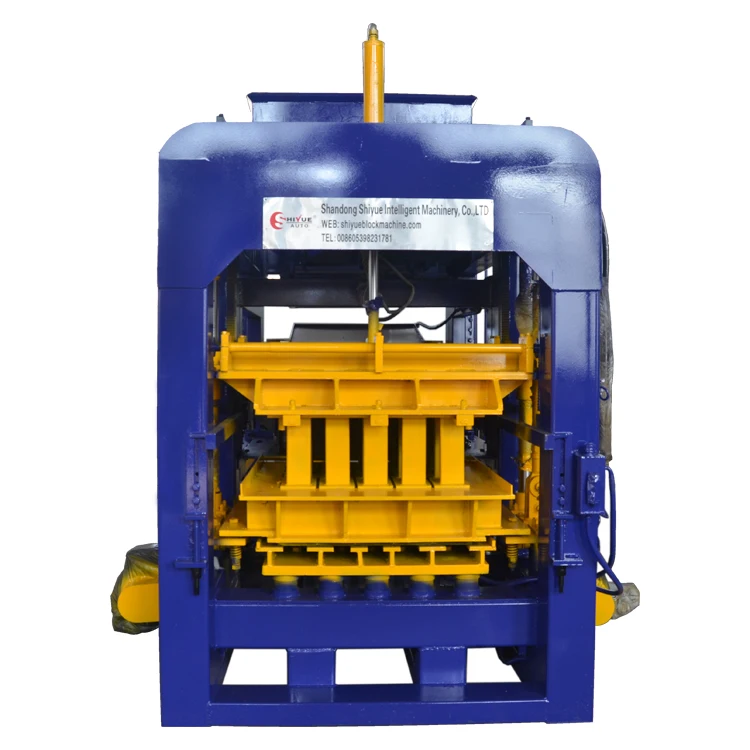
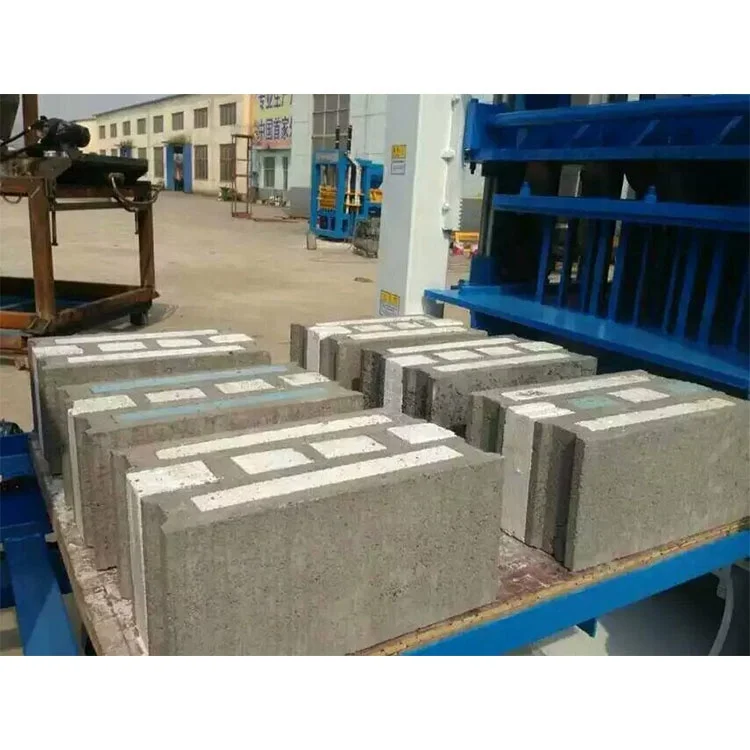

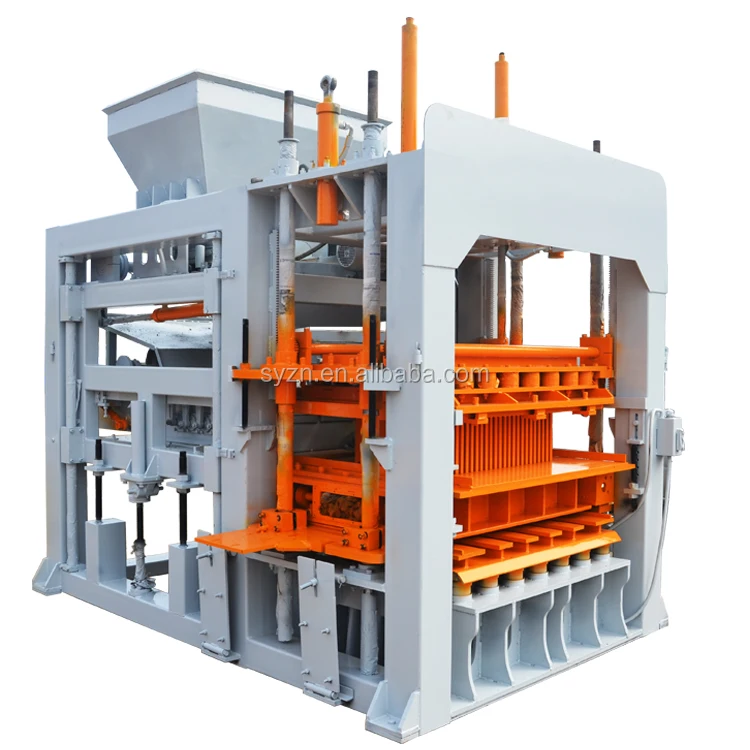
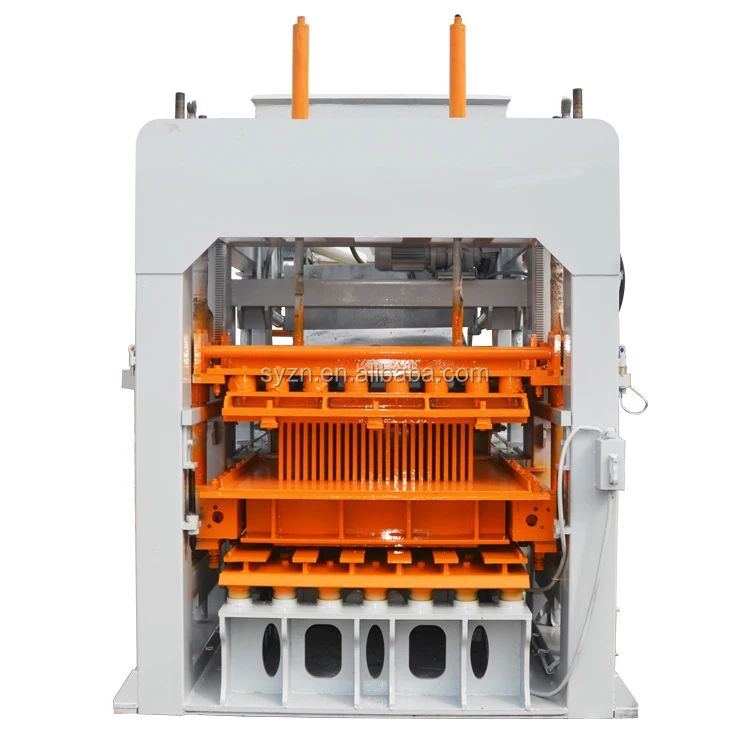
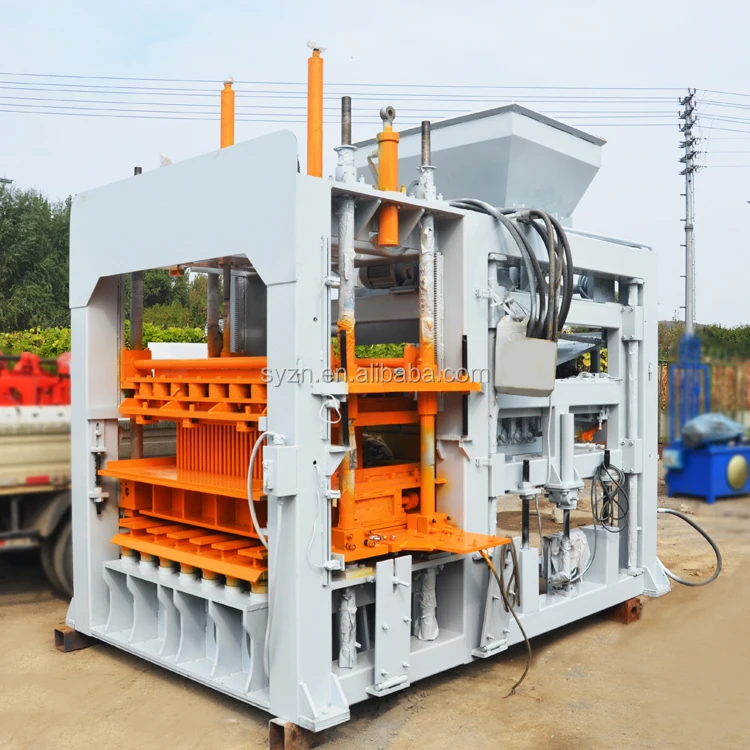
Description
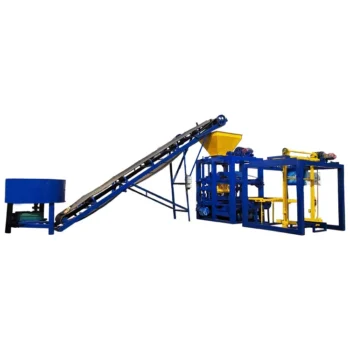
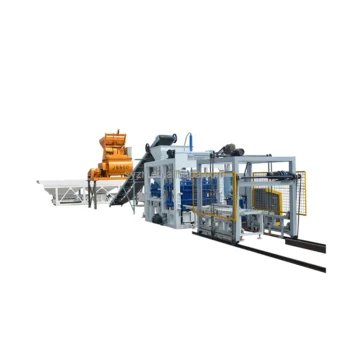
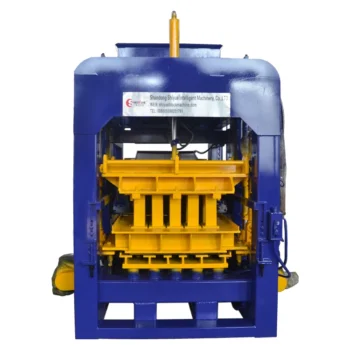
Mould and Capacity Matched — the QT8-15 block machine is configured around the exact format your market sells, not a catalogue default, with cycle time and pallet size verified against your local aggregate and curing setup.
Technical Specifications
| Parameter | Value |
|---|---|
| Model | QT8-15 |
| Product Type | Automatic Concrete Block Making Machine |
| Overall Dimensions (L×W×H) | 8300×1860×3000 mm |
| Rated Pressure | 21 MPa |
| Main Vibration Form | Platform Vibration |
| Vibration Frequency | 2800–4500 r/min |
| Vibration Force | 45 kN |
| Pallet Size | 950×900 mm |
| Molding Cycle | 15–20 s (basis not stated in source — confirm block format / material / thickness) |
| Overall Power | 55.5 kW |
| Total Mass | 8 T |
| Demolding Method | Hydraulic |
| Factory Area Required | 300 m² |
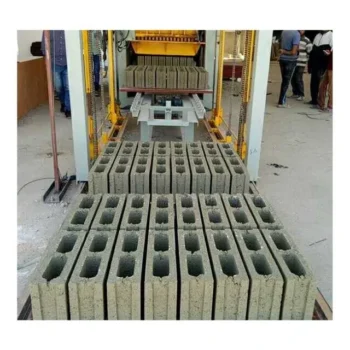
| Applied Products | Hollow blocks, solid blocks, pavers, interlocking blocks, curbstone, colored pavers |
| Raw Materials | Crushed stone, sand, cement, fly ash, gravel, slag, dust |
| Automation Level | Automatic (stacking, cubing and pallet handling extent to be confirmed) |
| Voltage & Frequency | Configurable — confirm before order |
| Control System | PLC — brand and display language to be confirmed |
| Warranty | 1 year (excluding spare parts) |
| Loading | 1×40HQ container (basic equipment) |
Application Suitability
| Application | Material or Output |
|---|---|
| Hollow block production for residential and commercial walls | Crushed stone, sand, cement, fly ash blends |
| Solid block manufacturing for load-bearing structures | Dense aggregate mixes with cement |
| Paving block and colored paver production for walkways and plazas | Fine sand, cement, pigment additives |
| Interlocking block and kerbstone for road and landscape projects | Gravel, slag, cement combinations |
| Porous and permeable brick for drainage applications | Open-graded aggregate with controlled cement ratio |
What the QT8-15 Block Machine Specifications Leave Out About Real Output
Cycle time means nothing without the block format attached to it.
A machine quoted at a certain number of cycles per hour tells you very little when the buyer is producing 400×200×200 mm hollow blocks on one shift and 200×100×60 mm pavers on the next. The mold cavity count, compaction depth, and material flow behavior all change between formats, and the QT8-15 block machine specifications only become meaningful when tied to the specific product you plan to sell. I once worked with a plant in Southeast Asia that ordered based on a single cycle-time figure, then discovered their primary product — a thick interlocking paver — required a longer press cycle than the hollow block used for the factory test. Their actual daily output dropped noticeably below the quoted number. [NEED_CITE: block format impact on cycle time and daily output in concrete block production]
Matching Vibration Force to Your Local Aggregate
The QT8-15 block machine delivers platform vibration at 45 kN across a 2800–4500 r/min frequency range, which covers a broad spectrum of mix designs. However, the right frequency setting depends entirely on your aggregate gradation, particle shape, and moisture content. Volcanic ash, for example, absorbs water differently than river sand, and the vibration profile that produces a dense hollow block with one material may leave voids or surface defects with another. Confirming the vibration parameters against your actual raw material before production begins is essential for consistent block strength.
Pallet Size and the Curing Area You Already Have
The 950×900 mm pallet size on the QT8-15 must align with the curing racks, forklift tine spacing, and storage layout already in place at your facility. A mismatch here means either modifying your curing infrastructure after the machine arrives or running a pallet size that your handling equipment cannot move efficiently. This is one of the most frequently overlooked details in block machine procurement, and it surfaces only when the first batch of wet blocks needs to move from the press to the curing yard. [NEED_CITE: pallet handling compatibility in concrete block plant layout]
How Pressure and Vibration Shape Block Density
The 21 MPa rated pressure and hydraulic demolding system on the QT8-15 work together with the platform vibration to compact the mix into the mold cavity. Higher pressure alone does not guarantee a stronger block — if the vibration frequency is too low for the aggregate particle size, the material will not flow into the mold corners, leaving weak edges. Conversely, excessive vibration with insufficient pressure produces a block that looks complete on the surface but lacks internal density. The balance between these two forces must be set according to the specific block format, wall thickness, and target compressive strength. For a standard hollow block, the hydraulic pressure and vibration frequency are tuned differently than for a dense paver or a thin interlocking unit, which is why the QT8-15 block machine specifications should always be reviewed in the context of your primary product.
The Cost of Skipping Format-Specific Capacity Checks
When a buyer orders a block machine based on a single output figure without verifying it against each planned format, the result is a production schedule that cannot meet delivery commitments. The machine runs, the blocks come out, but the daily count for the high-demand product falls short of what the sales team promised. In some cases, the buyer then attempts to shorten the cycle time to compensate, which reduces compaction quality and increases the rejection rate at the curing stage. [NEED_CITE: consequences of inaccurate capacity planning in block manufacturing]
Why Sourcing the QT8-15 Here Reduces Configuration Risk
Block machinery is our single focus, so the QT8-15 is specified as a matched system — machine, mold, pallet, and handling equipment are selected together rather than assembled from separate suppliers. The configuration is set against your actual mix design and target block format, not pulled from a catalogue default. Mold design covers the formats your market sells, including custom drawings when standard options do not match. Automation level is selectable, allowing a buyer to begin with semi-automatic pallet handling and add stacking or cubing functions later. Installation support includes operator training so the crew understands how mold change, vibration settings, and hydraulic pressure interact on this specific machine.
Documentation & Verification
- Line layout and capacity calculation stating which block format the output figure assumes
- Machine specification sheet with confirmed voltage, frequency, and PLC display language
- Mold drawing and format list covering all block types in your product range
- Pallet specification matched to your curing rack dimensions and forklift capacity
- Hydraulic and electrical schematic for local maintenance reference
- Factory test record on your target block format before dispatch
Installation, Commissioning & Support
- Foundation plan sized to the 8300×1860 mm footprint and 8 T operating mass
- Dedicated power circuit rated for the 55.5 kW total load with confirmed voltage and frequency
- Machine arrives in one 40HQ container with dismantling guide for site reassembly
- On-site commissioning includes vibration frequency tuning to your local aggregate
- Operator training covers mold change procedure, hydraulic pressure adjustment, and PLC navigation
- Wear parts and mold list provided with recommended replacement intervals
Before You Send an Inquiry
To size the QT8-15 accurately, share your primary block format with target dimensions, the daily output you need for that specific product, and the local aggregate types available at your site. Include your existing voltage and frequency supply, the PLC display language your operators require, and details of your current curing racks and forklift so the pallet specification can be confirmed before production starts.
Frequently Asked Questions
Q: How is QT8-15 capacity calculated per block format, and what is the realistic daily output?
A: The 15–20 second molding cycle is a baseline that changes depending on block format, material, and wall thickness. We provide a per-format capacity breakdown that states the exact product dimensions, cavity count, and assumed mix design behind each output figure, so you can plan production around the blocks you actually sell.
Q: Which mold formats are available for the QT8-15, and can you design custom molds?
A: Standard molds cover hollow blocks, solid blocks, pavers, interlocking blocks, and curbstones in common dimensions. When your market requires a format outside the standard range, we design custom molds to your drawings and confirm compatibility with the 950×900 mm pallet and hydraulic demolding system.
Q: How does the 950×900 mm pallet align with my curing racks and forklift?
A: Before production, we verify that the pallet dimensions match your existing curing rack spacing and forklift tine width. If your handling equipment requires a different pallet size, we adjust the specification and confirm the change against the machine’s mold and feeding system compatibility.
Q: What raw materials and mix designs is the QT8-15 configured for?
A: The machine processes crushed stone, sand, cement, fly ash, gravel, slag, and dust. Vibration frequency and hydraulic pressure are set based on your specific aggregate gradation and moisture content to ensure consistent block strength across formats.
Q: What documentation comes with the QT8-15 block machine?
A: You receive a machine specification sheet, mold drawing and format list, pallet specification, hydraulic and electrical schematic, voltage and control language confirmation, factory test record on your block format, operation manual, and wear parts list.