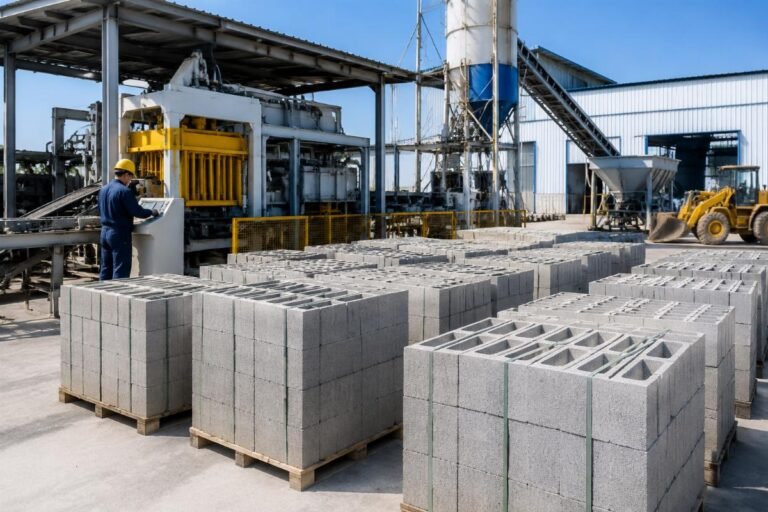
Commercial AAC Block Line Manufacturer for Ethiopia
Standard autoclaves do not work everywhere.
Sourcing a Commercial AAC Block Line Ethiopia requires more than comparing equipment prices; it demands technical adaptation to high-altitude conditions and a supplier capable of providing comprehensive on-site training to prevent operational failures. Most buyers focus on machine capacity, but the true driver of return on investment is operator proficiency and atmospheric pressure calibration. Without these adjustments, even premium equipment will underperform in the East African context.
I have spent years moving between the workshop floor in Linyi and construction sites across Africa. The transition from monitoring hydraulic vibration tables to managing overseas project deliveries taught me that specifications on paper rarely match reality on the ground. In Ethiopia, the challenge is not just logistics; it is physics. [NEED_CITE: impact of altitude on boiling point and pressure vessel efficiency]
The following guide breaks down why standard lines fail, how to evaluate turnkey solutions, and what support ensures long-term stability.
Why Standard AAC Lines Fail in Ethiopia’s High-Altitude Zones?
Technical parameters must be customized for local atmospheric pressure to ensure safety and efficiency.
Most manufacturers ship autoclaves calibrated for sea-level or low-altitude operations. This is a critical oversight for plants located near Addis Ababa or other highland areas. At elevations above two thousand meters, atmospheric pressure drops significantly. This reduction lowers the boiling point of water and alters the pressure differential required for effective steam curing.
A few years ago, I managed a project for a plant just outside the capital. The client had sourced a standard line without altitude-specific adjustments. For the first two weeks, production seemed normal. By the third week, steam began leaking from the autoclave doors during the curing cycle. The seals were not failing due to wear; they were failing because the internal pressure settings did not account for the lower external atmospheric pressure. The system was over-pressurizing relative to the ambient environment, causing seal fatigue and safety valve triggers.
We had to halt production and recalibrate the entire steaming curve. The technical team adjusted the pressure thresholds and modified the sealing mechanisms to accommodate the local atmospheric conditions. This experience highlights a non-negotiable requirement: any Commercial AAC Block Line Ethiopia must come with pre-calculated, altitude-adjusted steaming parameters. [NEED_CITE: engineering standards for pressure vessels at varying altitudes]
Without this customization, energy consumption spikes as the system struggles to maintain temperature, and product quality suffers due to inconsistent curing. Buyers must demand proof that the supplier has experience with high-altitude installations. Ask for specific case studies where steaming curves were modified for similar geographic conditions.
Key Components to Evaluate in a Turnkey AAC Solution?
Prioritize suppliers offering integrated batching, cutting, and autoclaving systems with proven installation records.
When evaluating a Commercial AAC Block Line Ethiopia, it is tempting to focus solely on the autoclave or the cutting machine. However, the integrity of the final product depends on the synergy between all components. A turnkey solution must include precise batching systems, reliable mold handling, and accurate cutting units that work in harmony.
One common failure point in startup plants is raw material inconsistency. Local sand sources in Ethiopia can vary significantly in grain size and moisture content. If the batching system lacks proper screening integration or moisture compensation, the slurry mixture will be unstable. This leads to poor bubble formation in the aerated concrete, resulting in weak blocks or excessive waste.
I recall a startup that struggled with block collapse during the demolding phase. The issue was not the autoclave; it was the initial mix design. The supplier had provided a generic recipe that did not account for the specific silica content of the local sand. We had to conduct pre-commissioning mix design trials on-site, adjusting the lime and cement ratios until the slurry achieved the right viscosity. [NEED_CITE: best practices for AAC raw material preparation and mix design]
To avoid such pitfalls, evaluate the supplier’s ability to provide integrated solutions. Look for systems that include sand screening machines and automated batching controls. The table below outlines the key differences between basic and integrated component packages.
| Component Feature | Basic Package | Integrated Turnkey Package |
|---|---|---|
| Raw Material Handling | Manual feeding, no screening | Automated screening and moisture control |
| Batching System | Fixed ratio, manual adjustment | PLC-controlled, dynamic moisture compensation |
| Cutting Precision | Standard wire tension, manual alignment | Hydraulic tensioning, automated vertical/horizontal cutting |
| Mold Circulation | Single mold set, manual transfer | Multi-mold circulation, automated return system |
| Commissioning Support | Remote guidance only | On-site mix design trials and parameter tuning |
A supplier who offers only equipment without the flexibility to adapt to local raw materials is a risk. Ensure the Commercial AAC Block Line Ethiopia you choose includes provisions for on-site testing and adjustment of the batching and cutting processes.
How to Calculate True ROI Beyond Equipment Price?
Factor in energy efficiency, labor training costs, and local raw material adaptability.
The sticker price of a Commercial AAC Block Line Ethiopia is only a fraction of the total investment. Many buyers make the mistake of comparing quotes based solely on hardware costs. This approach ignores the operational expenses that determine long-term profitability. Energy consumption, labor efficiency, and material waste are the true drivers of ROI.
In high-altitude regions, energy efficiency is particularly sensitive. If the autoclave is not optimized for local conditions, it will consume more fuel or electricity to reach the required curing temperature. Over a year, this inefficiency can cost several times the initial savings from buying a cheaper, unadjusted unit. [NEED_CITE: energy consumption analysis per cubic meter of AAC produced]
Labor training is another hidden cost. A highly automated line is useless if the operators cannot manage it. I have seen plants where sophisticated PLC systems were bypassed by workers who did not understand the logic, leading to frequent jams and downtime. The depth of on-site training provided by the supplier is crucial. It is not enough to translate the manual; the supplier must train operators on troubleshooting, maintenance, and process optimization.
Consider the cost of spare parts and logistics. During the rainy season, road conditions in some parts of Ethiopia can delay shipments. A plant that runs out of critical wear parts, such as cutting wires or seal rings, faces expensive downtime. A smart buyer calculates the cost of an initial spare parts kit covering six to twelve months of operation. This upfront investment prevents mid-six-figure losses from unexpected stoppages.
When calculating ROI, include these factors:
- Energy consumption per cubic meter under local conditions.
- Cost of comprehensive operator training and ongoing remote support.
- Value of an initial spare parts inventory to mitigate logistics delays.
- Waste reduction achieved through precise mix design and cutting accuracy.
What Support Ensures Long-Term Production Stability?
Look for suppliers providing remote diagnostics, rapid spare parts shipping, and comprehensive operator training.
Buying a Commercial AAC Block Line Ethiopia is the beginning of a long-term partnership. The complexity of AAC production means that issues will arise. The difference between a minor hiccup and a major shutdown often depends on the support structure provided by the manufacturer.
Remote diagnostic capabilities are essential. Modern PLC systems can transmit data that allows engineers to identify problems before they cause failure. A supplier who offers real-time remote assistance can guide local technicians through repairs, reducing downtime significantly. This is particularly valuable in regions where specialized expertise may be scarce.
However, technology alone is not enough. Human expertise is critical. I emphasize the importance of extensive on-site training. When I visit a site, I do not just oversee installation; I spend time with the operators. We walk through every step of the process, from raw material intake to final packaging. This hands-on approach builds confidence and competence in the local team.
Spare parts availability is another pillar of stability. Delays in shipping critical components can halt production for weeks. Suppliers with established logistics networks and the ability to offer express shipping for urgent parts provide a significant advantage. [NEED_CITE: industry benchmarks for spare parts delivery times in emerging markets]
Additionally, consider the supplier’s commitment to continuous improvement. As your plant matures, you may want to optimize production or expand capacity. A partner who understands your specific setup can provide tailored advice for upgrades or efficiency enhancements.
Key support elements to verify:
- Availability of remote diagnostic tools and technical support hours.
- Speed and reliability of spare parts shipping, including express options.
- Depth and duration of on-site operator and maintenance training.
- Willingness to provide ongoing consultation for process optimization.
Conclusion
Success in AAC production depends on technical adaptation and operational expertise.
Sourcing a Commercial AAC Block Line Ethiopia is not just about purchasing machinery; it is about securing a solution that works in your specific environment. High-altitude adjustments, raw material compatibility, and thorough training are non-negotiable for sustainable operations. By focusing on these critical factors, investors can avoid common pitfalls and build a profitable, efficient production facility. Choose a partner who understands the local context and provides the support needed for long-term success.