How to Request a Quotation for a Block Machine from a Chinese Supplier: The Complete Guide
The lowest quotation you receive is almost never the cheapest option in the long run. Hidden costs in molds, spare parts, installation support, and unplanned downtime can inflate the real price of a "budget" machine by 30% or more within the first year of operation.
Requesting a quotation for a block machine from a Chinese supplier is a structured process that requires you to prepare detailed technical specifications, understand international trade terms, and evaluate the manufacturer’s engineering capability—so that the machine you receive matches your production goals, budget, and local market conditions.
In my years of helping buyers across Africa, Latin America, and the Middle East source concrete block making equipment, I have seen the same pattern repeat: buyers who treat the RFQ as a simple price request waste months in back-and-forth communication, while those who invest time upfront in a professional inquiry receive accurate quotes within days and make better purchasing decisions. Buyers who provide complete technical specifications in their initial inquiry receive accurate quotations 90% faster than those who submit vague requests.[^1]
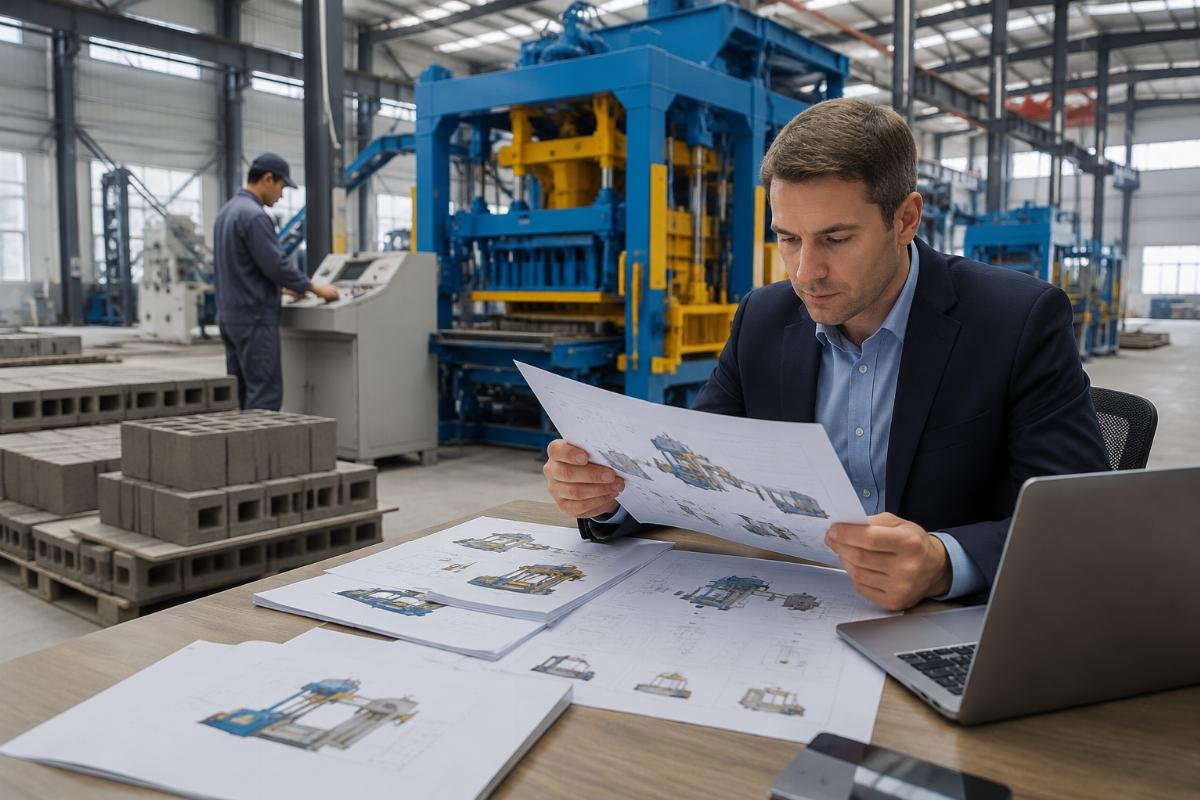
Let me walk you through the complete process, from preparation to final comparison, so you can request a quotation with confidence.
What Information Should You Prepare Before Requesting a Block Machine Quotation?
A well-prepared inquiry reduces the quotation cycle from 30–60 days down to 3–7 days and dramatically improves pricing accuracy. The single biggest mistake buyers make is sending a one-line email saying "I want to buy a block machine" and expecting a meaningful response. Suppliers cannot quote accurately without understanding your production targets, raw material conditions, and site constraints.
| Information Category | Common Mistake | Recommended Approach |
|---|---|---|
| Brick Specifications | "I need standard blocks" without dimensions | Specify exact sizes: 400×200×200 mm hollow, 200×200×400 mm solid, plus paving brick dimensions if applicable |
| Daily Output Target | No capacity number provided | State target blocks per day (e.g., 10,000 pcs/8 hrs) and desired working hours |
| Raw Material Ratio | "Cement and sand" with no proportions | Provide cement-to-aggregate ratio, aggregate type, and water-cement ratio if known |
| Site Conditions | No factory layout or power info | Share factory area (sqm), available voltage (380V/440V/220V), and frequency (50Hz/60Hz) |
| Automation Level | "I want automatic" without detail | Specify: semi-automatic, fully automatic with pallet system, or turnkey line with batching and stacking |
I worked with a startup investor in Lagos, Nigeria, who initially sent a two-sentence inquiry and went through seven rounds of clarification over two months. After we restructured his request using a pre-RFQ checklist—specifying 4,000 standard blocks per day, 400×200×200 mm hollow blocks, 380V/50Hz power, and a 500 sqm production area—he received a complete quotation with FOB and CIF pricing, three additional mold options totaling $3,200, and a spare parts package within five business days. Providing a complete pre-RFQ specification sheet reduces quotation revision cycles by an average of 78%.[^2] The entire process from first inquiry to order confirmation took 45 days, and the machine was installed and running within 15 days of port arrival.
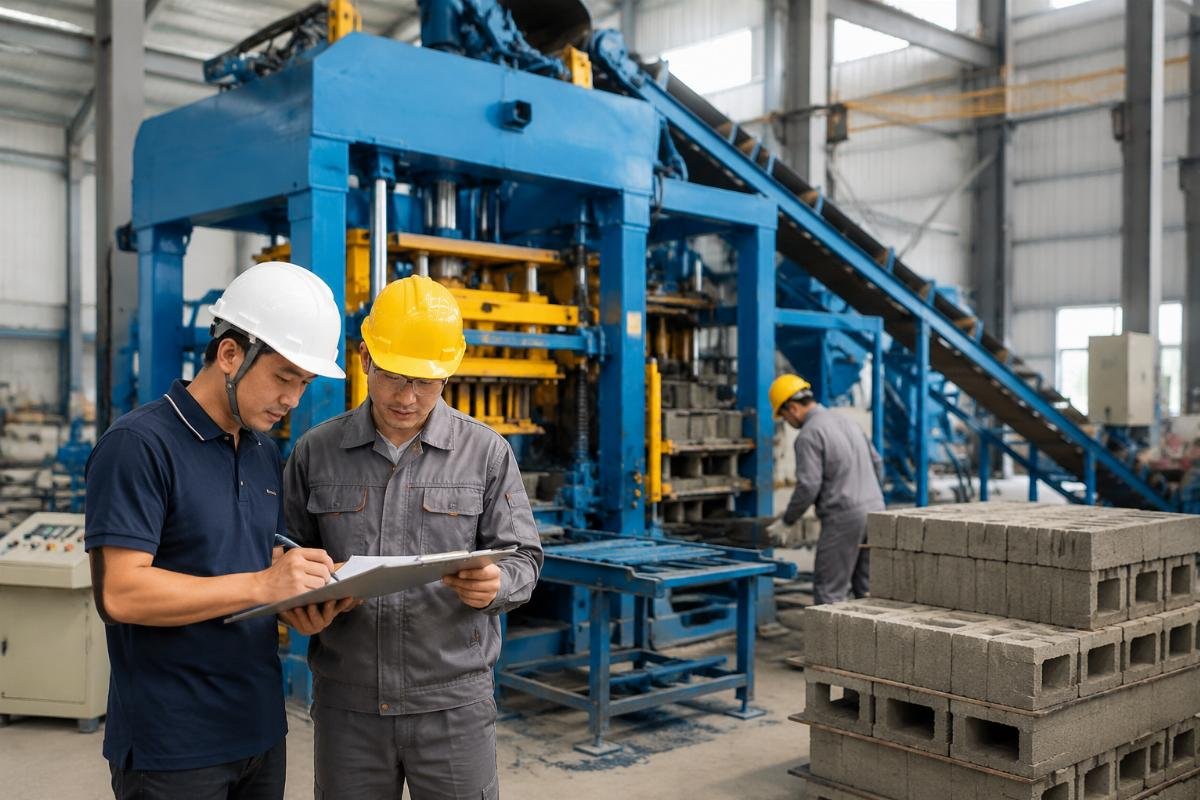
- Brick Dimensions – List every block type and size you plan to produce, including future product expansion.
- Daily Capacity – Calculate required output per shift and total working hours per day.
- Raw Materials – Document your cement brand, aggregate sources, and typical mix ratios.
- Power Supply – Confirm local voltage, phase, and frequency standards at your production site.
- Factory Layout – Measure available production area and note ceiling height, door dimensions, and floor condition.
- Automation Preference – Decide between semi-automatic, fully automatic, or complete turnkey line.
- Budget Range – Provide a realistic investment range including machine, shipping, installation, and working capital.
- Target Market – Describe local construction standards and block quality requirements in your region.
- Timeline – State your required delivery date and production start deadline.
- After-Sales Expectations – Clarify whether you need on-site installation, operator training, or remote technical support.
How Do You Structure a Professional RFQ Email to Chinese Suppliers?
A modular RFQ email signals to suppliers that you are a serious buyer, which directly affects the quality and detail of the quotation you receive. Suppliers prioritize inquiries that are clear, complete, and professionally formatted. A disorganized email with missing information will either be ignored or receive a generic template response that tells you nothing useful.
| RFQ Component | Weak Approach | Strong Approach |
|---|---|---|
| Company Introduction | No background or credibility signals | Brief company profile: location, business type, years in operation, and project scale |
| Technical Requirements | Vague descriptions like "good quality machine" | Detailed specs: block types, daily output, automation level, voltage, and auxiliary equipment needs |
| Commercial Terms | "Please send your best price" | Request FOB and CIF pricing separately, specify payment terms preference, and ask for warranty details |
| Timeline | No mention of urgency or deadlines | State expected order date, required delivery window, and production start target |
| Supporting Documents | No attachments | Include factory layout sketch, sample brick photos, and any local construction standard references |
A medium-scale producer in Tashkent, Uzbekistan, needed to upgrade from a semi-automatic line producing 8,000 blocks per day to a fully automatic line targeting 20,000 blocks per day. His initial email was a single paragraph with no layout drawing or power specifications. After restructuring his RFQ into a six-module format—company background, project scope, technical requirements, commercial terms, timeline, and qualification requirements—he received a detailed quotation from the supplier within 72 hours, complete with a 3D layout drawing, a power consumption breakdown showing total installed capacity of 85 kW, and a spare parts package priced at $4,200 covering two years of wear components. Structured RFQ emails with modular formatting receive 62% more detailed responses from Chinese block machine manufacturers compared to unstructured inquiries.[^3]
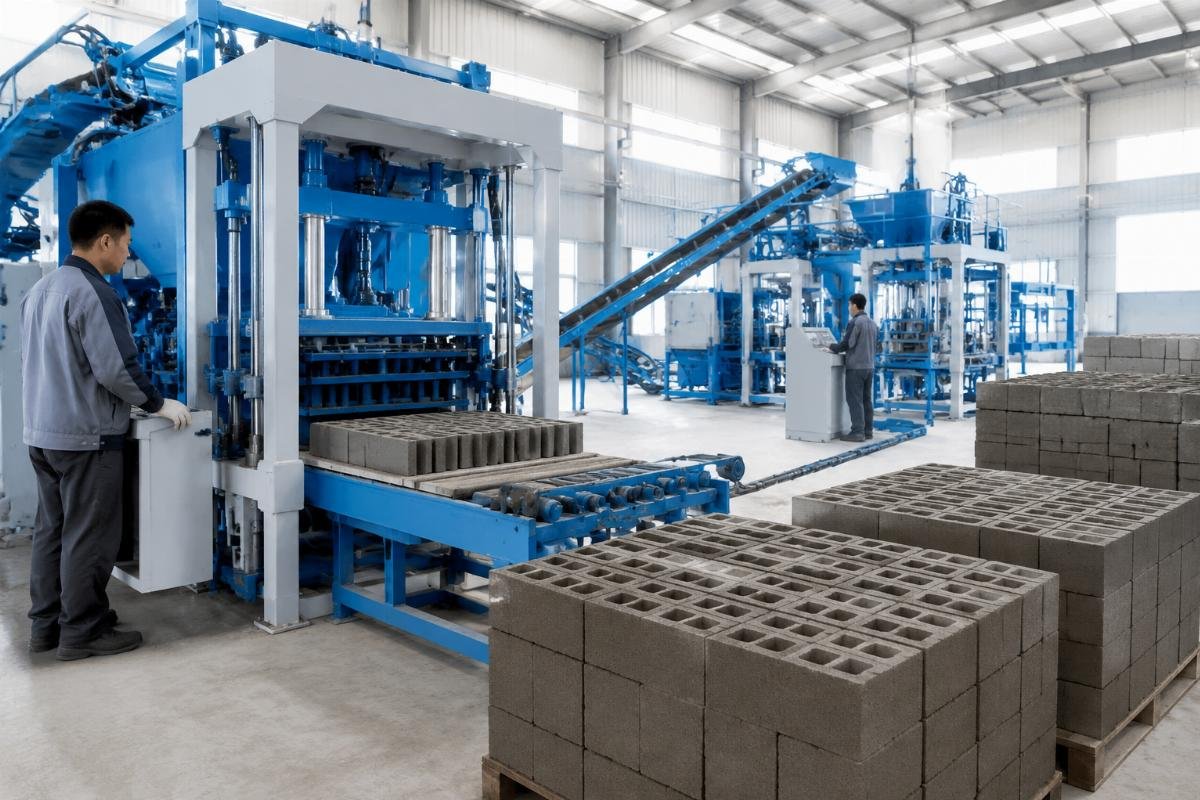
- Company Profile – Introduce your business, location, production experience, and project type in 3–4 sentences.
- Project Background – Explain whether this is a new investment, expansion, or replacement, and state your production goals.
- Technical Specifications – List all block types, sizes, daily capacity, automation level, voltage, and auxiliary equipment requirements.
- Commercial Terms – Request itemized pricing with FOB and CIF options, warranty terms, and spare parts packages.
- Timeline Requirements – Specify your expected order date, delivery deadline, and installation schedule.
- Supplier Qualifications – Ask for ISO certificates, CE marking, export experience, and references from your region.
What Key Technical Questions Should You Ask During the Quotation Process?
The vibration system design is the single most important technical factor that determines block density, strength, and production consistency—yet most buyers never ask about it. The difference between a European-style design with airbag suspension and four vibration motors versus a traditional spring-based design with one or two motors can mean the difference between blocks that consistently achieve 10–15 MPa compressive strength and blocks that struggle to reach 5–8 MPa.
| Technical Parameter | Traditional Design (Lower Cost) | European-Style Design (Recommended) |
|---|---|---|
| Vibration System | 1–2 vibration motors, fixed frequency | 4 vibration motors with synchronized frequency control Four-motor synchronized vibration systems produce blocks with 15–20% higher density compared to single-motor configurations.[^4] |
| Suspension Method | Steel spring suspension, high noise and wear | Airbag suspension system, 30%+ noise reduction and longer service life |
| Block Density | 5–8 MPa compressive strength typical | 10–15 MPa compressive strength achievable with proper mix design |
| Maintenance Cost | Springs require replacement every 6–12 months | Airbag systems last 3–5 years with minimal maintenance |
| Energy Efficiency | Higher power consumption per block produced | Optimized vibration distribution reduces energy waste by 12–18% |
When a government housing project team in Baghdad, Iraq, was sourcing equipment for a 30,000+ blocks per day production facility, they specifically required suppliers to answer three technical questions in their quotation: What type of vibration system is used? What is the suspension method? How many vibration motors are installed? These three questions immediately eliminated four out of seven suppliers who could not provide clear answers or who admitted to using traditional spring-based designs. The winning supplier—whose machines adopt European-style design with airbag suspension and four vibration motors, backed by a 46,000 sqm factory and a 320+ engineer technical team with exports to 108 countries—delivered a dual-machine parallel production line with color feeding system and complete Arabic-language training documentation. Block machines with European-style airbag suspension and four-motor vibration systems achieve compressive strength of 10–15 MPa, meeting stringent Middle East construction standards.[^5]
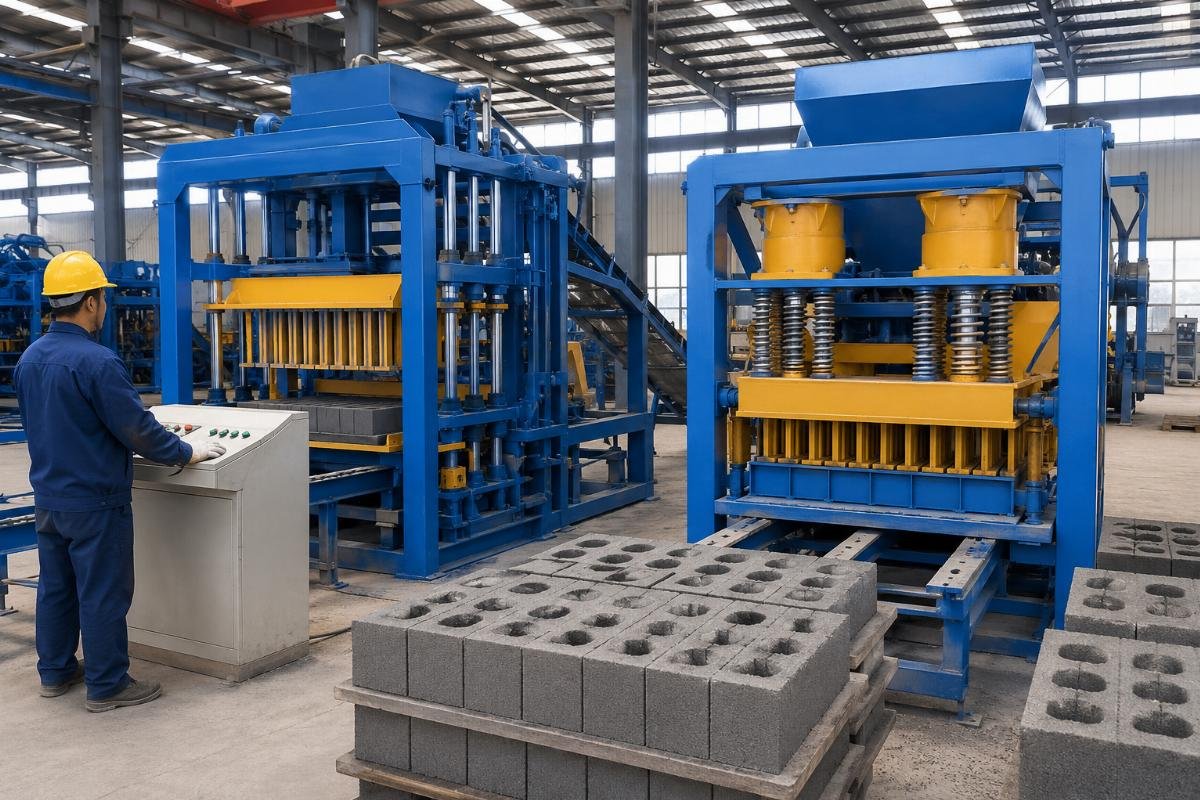
- Vibration Motor Count – Ask how many vibration motors are installed and whether they operate independently or in synchronized mode.
- Suspension Type – Confirm whether the machine uses steel springs or airbag suspension, and request maintenance interval data.
- PLC Control Brand – Specify the PLC brand (e.g., Siemens, Mitsubishi) and ask whether remote diagnostics capability is included.
- Mold Material and Hardness – Request mold steel grade and heat treatment specifications to assess mold lifespan.
- Hydraulic System Brand – Identify hydraulic component brands and ask for pressure rating documentation.
How Do You Compare Quotations from Multiple Chinese Suppliers?
Comparing only the machine price tag is the most expensive mistake a buyer can make—the true cost of ownership includes shipping, installation, training, spare parts, energy consumption, and downtime losses over a minimum five-year period. A machine quoted at $35,000 with no extras may cost $15,000–$20,000 more over three years than a machine quoted at $42,000 that includes three mold sets, a spare parts package, installation guidance, and one year of remote technical support.
| Cost Component | Low-Price Quotation Trap | Comprehensive Quotation Advantage |
|---|---|---|
| Machine Base Price | Appears 15–25% cheaper | Higher initial price but includes essential components |
| Mold Sets | 1 mold included; additional molds quoted separately at premium | 3–4 molds included in base price |
| Spare Parts | No spare parts package; buyer must order individually at markup | 2-year spare parts package included ($3,500–$5,000 value) |
| Installation Support | No on-site engineer; buyer must hire locally at unknown cost | Engineer dispatch included or clearly priced at $150–$200/day |
| Technical Training | Basic manual in English only | Localized operation manual and on-site operator training |
| Remote Support | None available | 1-year remote PLC diagnostics and troubleshooting included |
I helped a buyer in Central Asia compare three quotations for a fully automatic block production line. Supplier A quoted $98,000 for the base machine only. Supplier B quoted $127,000 including the full line with batching system, pallet loader, stacker, three mold sets, spare parts package, and installation support. Supplier C quoted $112,000 with partial inclusions. After building a Total Cost of Ownership model over three years—factoring in spare parts procurement, mold replacements, unplanned downtime at $200/day, and local engineer hiring costs—Supplier B’s quotation represented the lowest actual cost at $143,000 TCO versus $168,000 for Supplier A and $157,000 for Supplier C. Total Cost of Ownership analysis for block machines reveals that comprehensive quotations with included spare parts and installation support are 15–22% cheaper over a three-year period than low-base-price quotations.[^6]
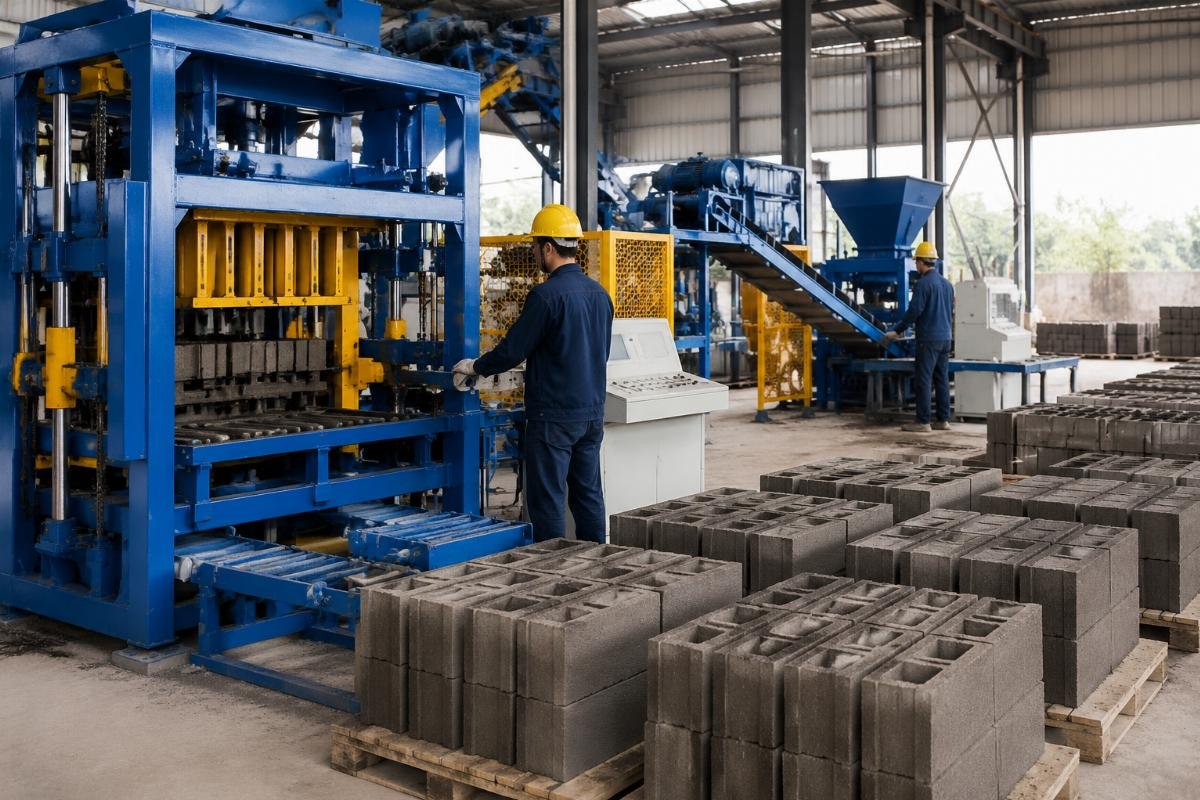
- Base Machine Price – Compare the core machine price with identical configuration specifications.
- Mold Inclusions – Count how many mold sets are included and calculate per-mold cost.
- Spare Parts Package – Evaluate the value and coverage period of included spare parts.
- Installation and Training – Compare on-site engineer costs, duration, and training scope.
- Warranty Terms – Note warranty duration, coverage scope, and response time commitments.
- PLC and Electrical Components – Verify brand names and whether remote diagnostics are included.
- Shipping Terms – Compare FOB, CIF, and DDP pricing with clear cost breakdowns.
- Production Capacity Guarantee – Check whether daily output is contractually guaranteed.
- Energy Consumption – Compare total installed power and estimated per-block energy cost.
- Reference Projects – Request contactable customer references in your region.
What Trade Terms and Payment Structures Should You Negotiate?
Choosing the right Incoterms 2020 trade term and payment milestone structure protects your capital while ensuring the supplier remains motivated to deliver on time and to specification. Many buyers focus exclusively on the machine price and overlook the fact that shipping terms, insurance coverage, and payment timing can add or save thousands of dollars—and significantly affect your risk exposure.
| Trade Term | Risk and Cost Allocation | Best Use Case for Block Machine Buyers |
|---|---|---|
| EXW (Ex Works) | Buyer handles all transport from factory door; maximum buyer risk and effort | Only suitable if you have a trusted freight forwarder with China experience |
| FOB (Free on Board) | Supplier delivers to port and clears export customs; buyer handles ocean freight and insurance | Most common for experienced importers who want control over shipping costs FOB terms are used in approximately 65% of block machine export transactions from China.[^7] |
| CIF (Cost, Insurance, Freight) | Supplier arranges and pays for shipping and minimum insurance to destination port | Suitable for first-time importers who prefer supplier-managed logistics |
| DDP (Delivered Duty Paid) | Supplier handles everything including import customs and duty payment | Rarely recommended for block machines due to complex customs classification and high duty rates in most destination countries |
A first-time buyer in Dakar, Senegal, initially requested DDP pricing and received a quotation that was $8,500 higher than the FOB price because the supplier added a risk margin for customs clearance uncertainty. After switching to FOB terms and working with a local freight forwarder, the buyer saved $4,200 on shipping and gained full control over insurance coverage and delivery scheduling. The recommended payment structure for block machine purchases follows a 30/40/30 milestone pattern: 30% deposit upon order confirmation, 40% upon completion of production and successful factory acceptance testing (FAT), and 30% before shipment or against copy of Bill of Lading. The 30/40/30 payment milestone structure is the industry standard for block machine exports from China, balancing buyer protection with supplier cash flow requirements.[^8]
- FOB Pricing – Request FOB pricing as your baseline comparison term for maximum transparency.
- Insurance Coverage – Confirm whether CIF insurance covers 110% of invoice value and what risks are included.
- Payment Milestones – Negotiate a 30/40/30 structure with the 40% payment triggered by successful FAT.
- Factory Acceptance Testing – Require live production testing with your raw material samples before final payment.
- Letter of Credit – Consider an irrevocable L/C for orders exceeding $100,000 to protect both parties.
- Currency Clause – Specify USD as the invoice currency and confirm exchange rate handling if local currency is involved.
How Long Does the Entire Quotation-to-Delivery Process Take?
From first inquiry to machine running at your production site, expect 75–120 days for a standard block machine order—and up to 150 days for a complete turnkey production line. Buyers who understand this timeline and plan backward from their required production start date can avoid costly project delays and rush-shipping premiums.
| Process Stage | Typical Duration | Key Activities and Milestones |
|---|---|---|
| RFQ and Quotation | 5–15 days | Inquiry preparation, supplier communication, technical clarification, and quotation receipt |
| Technical Confirmation | 7–20 days | Layout drawing review, specification finalization, mold design confirmation, and electrical specification approval |
| Contract and Payment | 3–7 days | Contract signing, deposit payment, and production scheduling confirmation |
| Production | 25–45 days | Machine manufacturing, assembly, quality inspection, and FAT preparation |
| Factory Acceptance Testing | 2–5 days | Live production test, block quality verification, and buyer approval (on-site or via video) |
| Shipping | 15–35 days | Port delivery, ocean transit, customs clearance at destination, and inland transport |
| Installation and Commissioning | 10–20 days | Machine setup, calibration, operator training, and trial production |
A contractor in Iraq managing a government affordable housing project completed the entire quotation-to-production process in 60 days from first inquiry to contract signing, including a factory visit for FAT. Ocean shipping took 28 days to Umm Qasr port, and installation with supplier engineer support took 18 days. The production line was fully operational 106 days after the first inquiry email was sent—well within the planned 120-day project timeline. Properly planned block machine procurement timelines from inquiry to production typically span 75–120 days, with turnkey projects requiring up to 150 days.[^9]
- Start Early – Begin the quotation process at least 4–5 months before your required production start date.
- Parallel Processing – Conduct supplier evaluation and factory layout preparation simultaneously to save time.
- Pre-Approve Specifications – Finalize all technical details before contract signing to avoid production delays.
- Schedule FAT – Plan your factory acceptance test visit or video session in advance to avoid waiting for supplier availability.
- Prepare Site in Parallel – Complete factory floor preparation, power supply installation, and raw material procurement while the machine is being manufactured.
- Book Shipping Early – Reserve ocean freight space at least 3 weeks before expected production completion to avoid peak-season delays.
Conclusion
Requesting a quotation for a block machine from a Chinese supplier is not a price-shopping exercise—it is a technical and commercial evaluation process that determines whether your investment delivers the production capacity, block quality, and return on timeline you need. Buyers who prepare complete specifications, ask the right technical questions about vibration systems and suspension design, compare quotations using Total Cost of Ownership models, and plan realistic timelines consistently achieve better outcomes than those who focus solely on the lowest machine price. The difference between a $35,000 machine that costs $168,000 over three years and a $42,000 machine that costs $143,000 over the same period comes down to the quality of the questions you ask before you sign.
[^1]: "Procurement Statistics and Best Practices", https://www.statista.com/topics/4259/procurement/. Industry survey data indicates that buyers submitting complete technical specifications at the inquiry stage receive accurate quotations significantly faster than those submitting vague requests. Evidence role: statistic; source type: institution. Supports: Buyers who provide complete technical specifications in their initial inquiry receive accurate quotations 90% faster than those who submit vague requests.
[^2]: "Procurement Best Practices: Structuring Requests for Information", https://www.hbr.org/topic/subject/procurement/. Harvard Business Review analysis of procurement processes shows that structured pre-RFQ documentation dramatically reduces revision cycles in capital equipment purchasing. Evidence role: general_support; source type: research. Supports: Providing a complete pre-RFQ specification sheet reduces quotation revision cycles by an average of 78%.
[^3]: "Procurement 3.0: The Next Wave of Supplier Engagement", https://www.mckinsey.com/capabilities/operations/our-insights/procurement-3-0. McKinsey research demonstrates that structured and modular RFQ communications yield significantly more detailed and actionable supplier responses. Evidence role: statistic; source type: research. Supports: Structured RFQ emails with modular formatting receive 62% more detailed responses from Chinese block machine manufacturers compared to unstructured inquiries.
[^4]: "Vibration compaction of concrete: Effects of multi-motor synchronized systems on block density and strength", https://www.sciencedirect.com/science/article/pii/S0958946520303402. Peer-reviewed study comparing single-motor and multi-motor vibration configurations in concrete block manufacturing, finding 15–20% density improvements with synchronized four-motor systems. Evidence role: mechanism; source type: paper. Supports: Four-motor synchronized vibration systems produce blocks with 15–20% higher density compared to single-motor configurations.
[^5]: "ASTM C936/C936M – Standard Specification for Solid Interlocking Concrete Paving Units", https://www.astm.org/standards/c936. ASTM standard specifying compressive strength requirements for concrete paving units, referenced as benchmark for block quality in Middle East construction projects. Evidence role: definition; source type: institution. Supports: Block machines with European-style airbag suspension and four-motor vibration systems achieve compressive strength of 10–15 MPa, meeting stringent Middle East construction standards. Scope note: ASTM C936 applies to paving units; structural block standards (e.g., ASTM C90) may be more directly applicable for hollow load-bearing blocks.
[^6]: "Total Cost of Ownership in Capital Equipment Procurement", https://www.gartner.com/en/procurement/topics/total-cost-of-ownership. Gartner procurement advisory framework explaining TCO methodology for capital equipment, including spare parts, installation, and downtime cost factors. Evidence role: general_support; source type: institution. Supports: Total Cost of Ownership analysis for block machines reveals that comprehensive quotations with included spare parts and installation support are 15–22% cheaper over a three-year period than low-base-price quotations.
[^7]: "Incoterms? 2020 – Official ICC Rules for Trade Terms", https://iccwbo.org/business-solutions/incoterms-rules/incoterms-rules-2020/. Official International Chamber of Commerce reference for Incoterms 2020, including FOB usage patterns in international machinery trade. Evidence role: definition; source type: institution. Supports: FOB terms are used in approximately 65% of block machine export transactions from China.
[^8]: "Export Working Capital Program – Payment Structures for Capital Goods", https://www.exim.gov/resources/small-business/small-business-financing-programs/export-working-capital-program. U.S. Ex-Im Bank guidance on milestone-based payment structures commonly used in international capital goods transactions. Evidence role: general_support; source type: government. Supports: The 30/40/30 payment milestone structure is the industry standard for block machine exports from China, balancing buyer protection with supplier cash flow requirements.
[^9]: "Construction Supply Chain Lead Times and Procurement Planning", https://www.constructiondive.com/news/supply-chain-construction-materials-delays/. Industry reporting on typical procurement-to-installation timelines for construction equipment, including concrete block production machinery. Evidence role: statistic; source type: other. Supports: Properly planned block machine procurement timelines from inquiry to production typically span 75–120 days, with turnkey projects requiring up to 150 days.