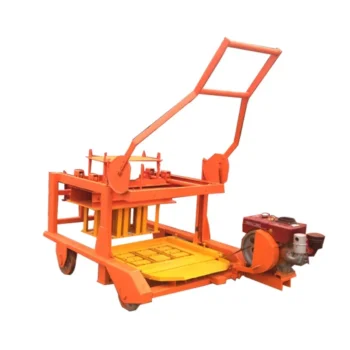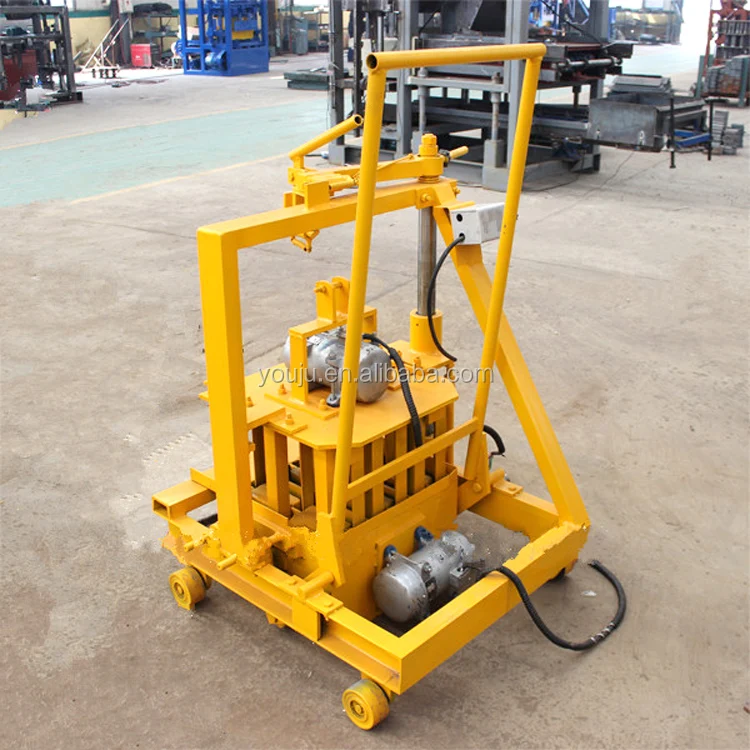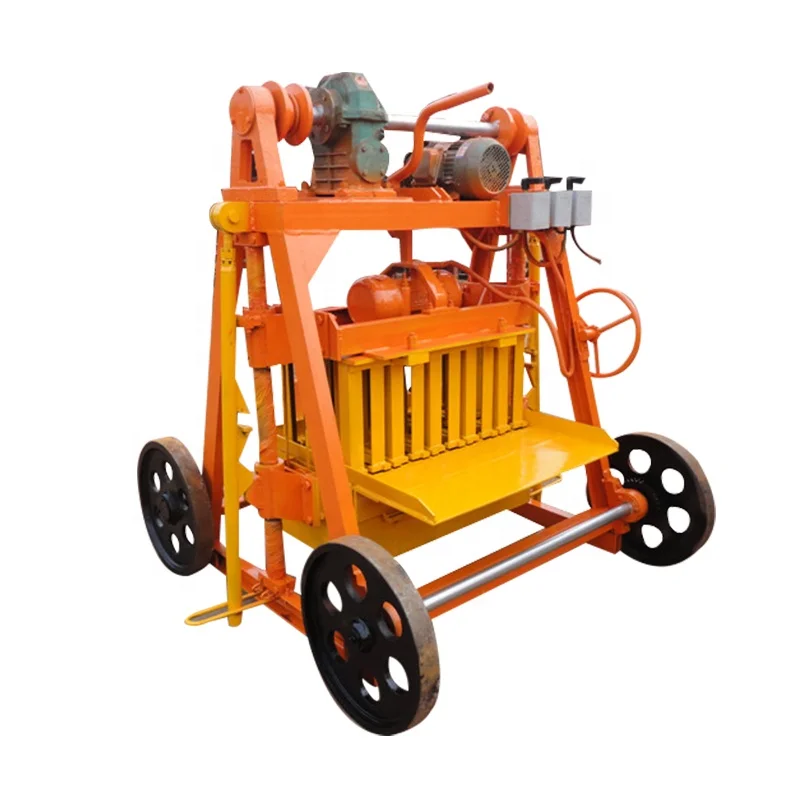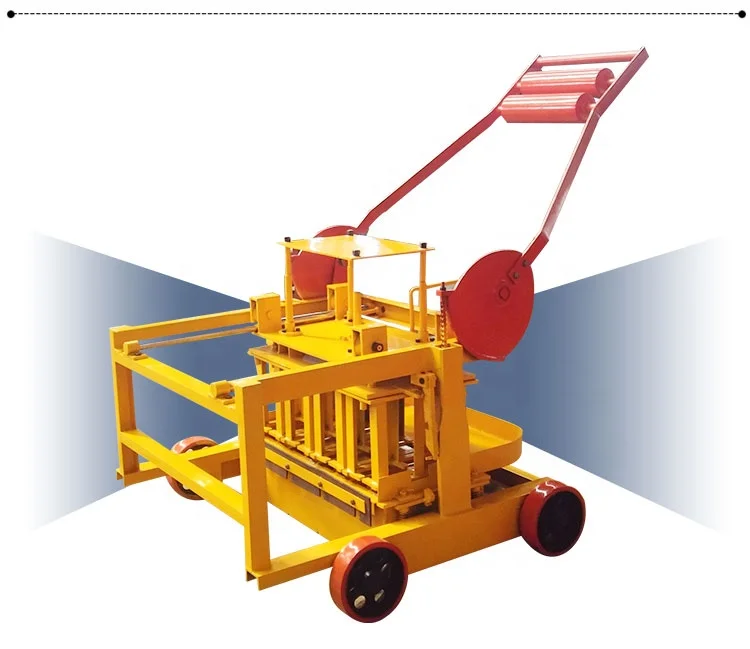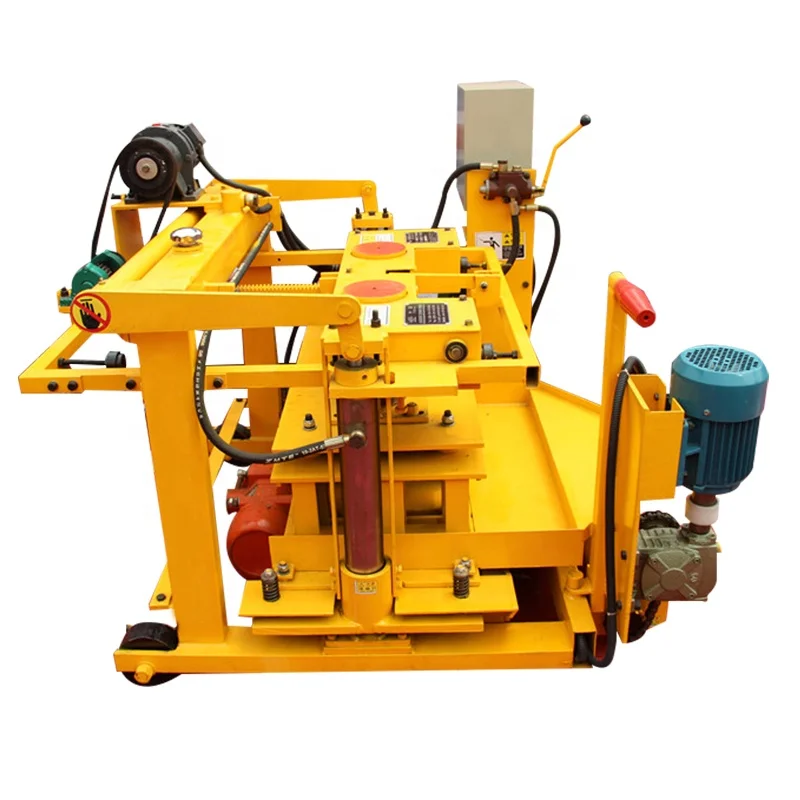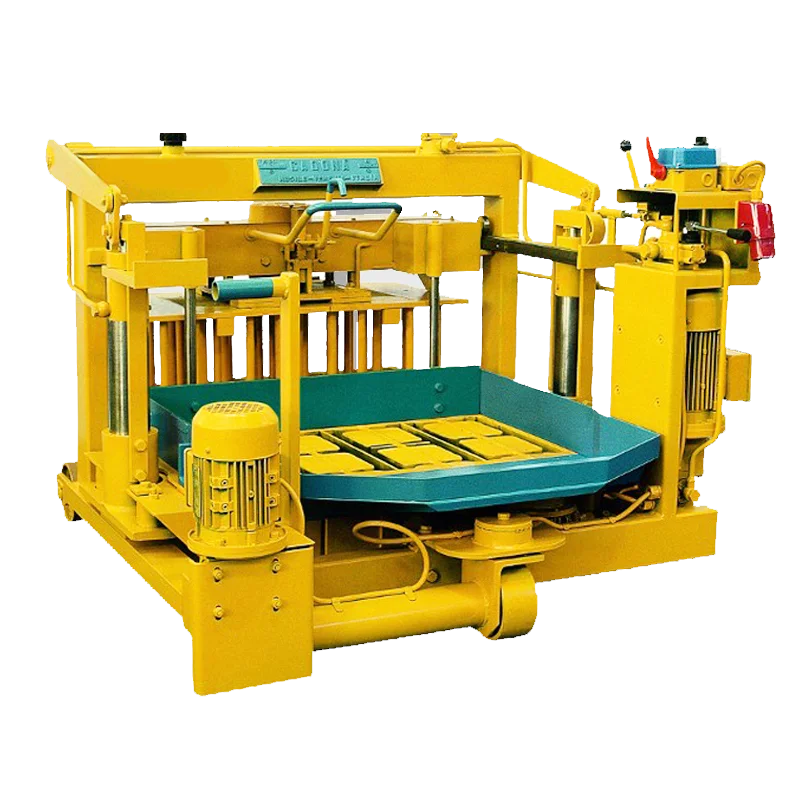

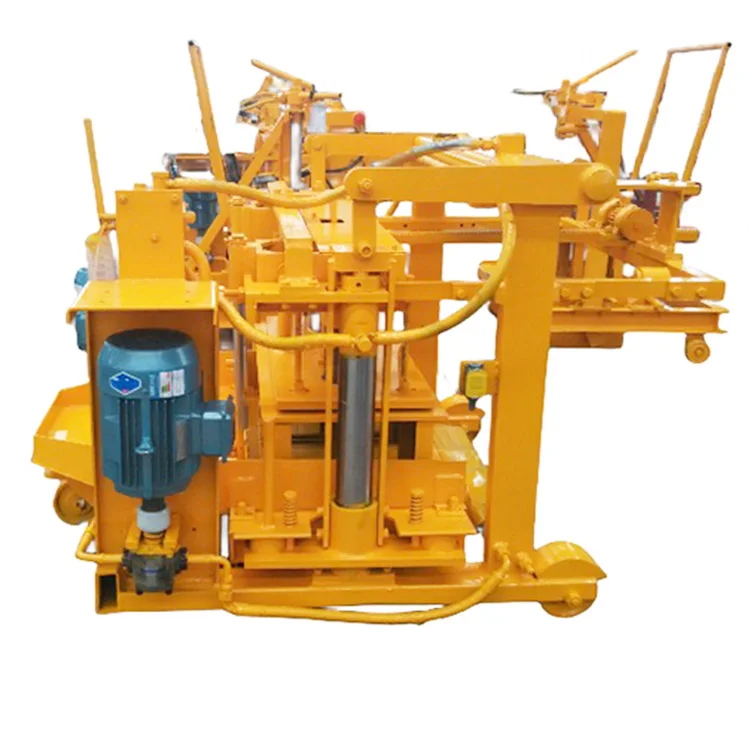
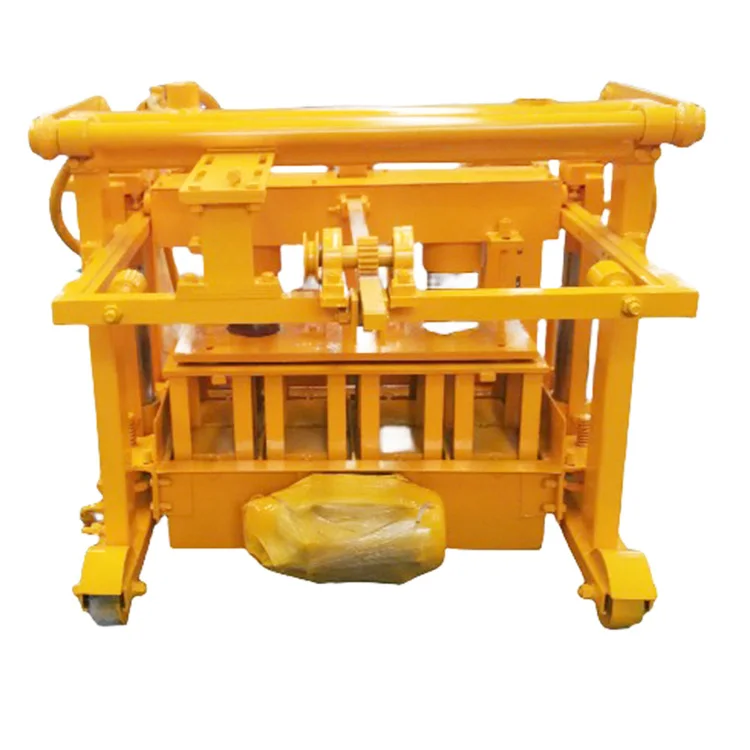
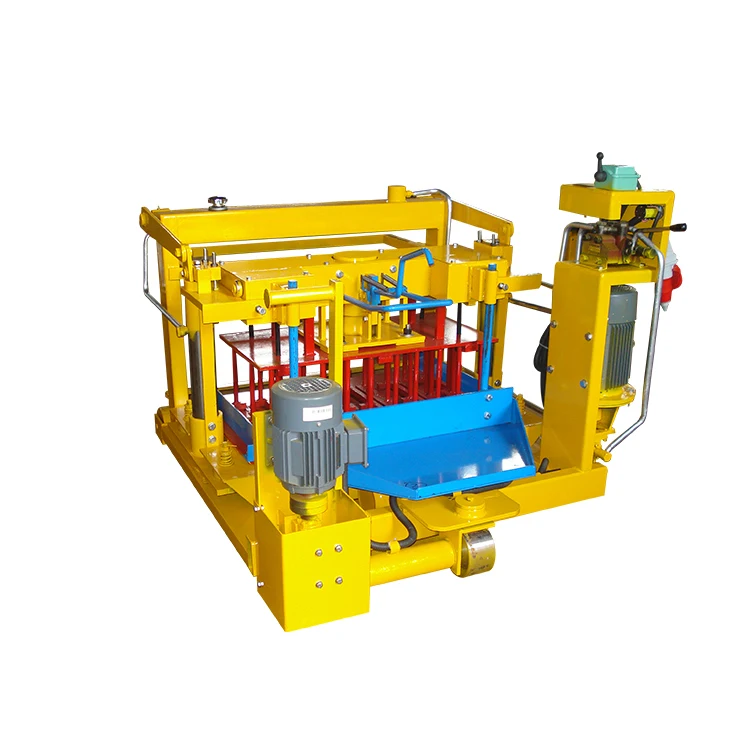
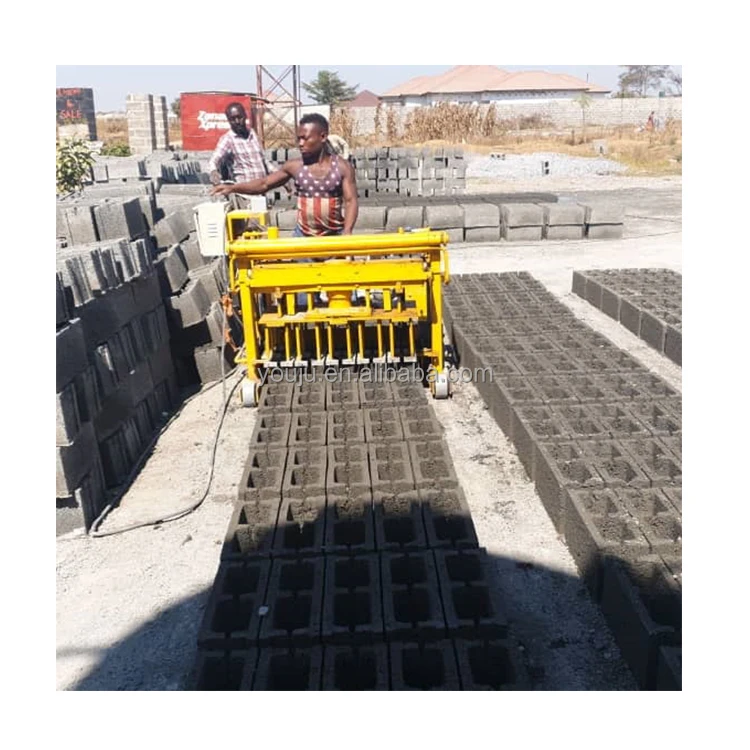
Description
Matched System Sizing — every QMY4-30 mobile block machine configuration starts from the buyer’s target block format and local aggregate, not a catalogue default.
Technical Specifications
| Parameter | Value |
|---|---|
| Model | QMY4-30 |
| Product Type | Mobile Concrete Block Making Machine |
| Machine Type | Mobile (egg-laying) block making machine |
| Automation Level | Semi-automatic / manual operation |
| Mould Format | Hollow block and solid brick (changeable molds) |
| Molding Time (Cycle Time) | 30 seconds |
| Rated Power | 5 kW |
| Overall Dimensions (L×W×H) | 1200 × 1200 × 1100 mm |
| Net Weight | 950 kg |
| Raw Materials | Cement, sand, crushed stones, slag |
| Output Capacity (400×200×200mm hollow block) | 480 pcs/hour, 3840 pcs/8 hours (4 pcs/mold) |
| Output Capacity (400×150×200mm hollow block) | 600 pcs/hour, 4800 pcs/8 hours (5 pcs/mold) |
| Output Capacity (400×100×200mm hollow block) | 840 pcs/hour, 6720 pcs/8 hours (7 pcs/mold) |
| Pallet Size | Not required (mobile egg-laying type) |
Application Suitability
| Application | Material or Output |
|---|---|
| On-site hollow block production for building contractors | Cement, sand, and crushed stone mix laid directly on prepared ground |
| Small-scale block manufacturing for startups | Standard hollow blocks (400×200×200mm to 400×100×200mm) using locally available aggregates |
| Secondary unit for existing concrete product manufacturers | Solid bricks and hollow blocks in changeable mould formats |
| Low-investment block production without a fixed plant | Egg-laying operation on flat concrete floor, eliminating pallet and rack infrastructure |
What "3840 Blocks a Day" Leaves Out About Mobile Block Machine Specifications
Capacity numbers mean nothing without the block format and mould cavity count behind them.
I have watched contractors sign purchase orders based on a single headline output figure, only to find on site that the machine was rated on a smaller block than their market actually buys. A QMY4-30 produces 4 pcs per mould of 400×200×200mm hollow block at a 30-second cycle, yielding 3840 pieces in an eight-hour shift — but switch to a 400×150×200mm format with 5 cavities and the number shifts to 4800. The mobile block machine specifications change with every mould swap, and buyers who skip this detail end up chasing a daily target the machine was never set up to hit. [NEED_CITE: block format and cavity count impact on daily output calculation]
Mould Selection Drives Your Real Daily Output
The QMY4-30 supports changeable moulds for both hollow block and solid brick formats, which means the machine adapts to whatever your local market demands. When evaluating mobile block machine specifications, the first question should be which block dimensions sell in your region — then the mould is selected or custom-designed to match. A machine quoted with a single default mould will leave revenue on the table if your buyers also need solid bricks or a different hollow block width.
Ground Conditions Replace the Pallet System
Because the QMY4-30 is a mobile egg-laying machine, it deposits blocks directly onto a flat concrete floor and moves forward to the next position. This eliminates pallets, pallet feeders, and curing rack handling entirely. The trade-off is that your curing area must be level, clean, and large enough to hold a full day’s output in place until the blocks gain sufficient strength for stacking. Mobile block machine specifications often omit this requirement, yet it directly determines whether your site layout supports the quoted capacity. [NEED_CITE: ground preparation standards for egg-laying block machines]
Reading the Specs That Actually Matter on Site
The 5 kW rated power is modest, which keeps generator sizing and running costs manageable for a small operation — but it also means vibration force is limited compared to larger stationary presses. The 30-second cycle time assumes a mix that releases cleanly from the mould; if your local sand carries high clay content, the cycle stretches and demoulding can stick, pulling daily output below the quoted figure. The 1200 × 1200 × 1100 mm footprint and 950 kg weight allow the machine to be moved by a small forklift or even repositioned manually on rollers, which matters when you are producing blocks across different sections of a construction site. Raw material compatibility with cement, sand, crushed stones, and slag gives flexibility, but the mix must be tested with your actual aggregate before the machine is configured — otherwise block strength will vary batch to batch.
The Cost of Skipping the Mix Trial
I once saw a contractor in the Middle East take delivery of a machine configured for clean river sand, only to find their local supply carried enough clay to double the demoulding time. Daily output dropped to nearly half the quoted figure, and the site fell behind schedule while the client faced penalties. [NEED_CITE: impact of aggregate clay content on block demoulding cycle time] Running a trial with your actual sand, stone, and cement before finalizing the machine setup avoids this — the 30-second cycle and the output figures in the table above hold only when the mix releases cleanly and the operator can maintain rhythm.
Why This Configuration Approach Works
Block machinery is our single focus, so the QMY4-30 is specified as one matched system — machine, mould, and operating method — rather than assembled from separate catalogue pages. Every configuration is set against the buyer’s actual mix design, local aggregate, and target block format, producing a capacity calculation that states the exact format and cavity count behind each number. Mould design and supply cover the formats your market sells, with custom drawings available when standard sizes do not match. The semi-automatic and manual operation levels mean a buyer can start with minimal infrastructure and add automation later if volume grows. Installation support includes on-site commissioning and operator training so the crew understands cycle rhythm, mix adjustment, and mould change procedure from day one.
Documentation & Verification
- Capacity calculation document stating the exact block format and mould cavity count behind each output figure
- Mould drawing and format list confirming included block sizes and custom design availability
- Machine specification sheet covering power, dimensions, weight, and cycle time per format
- Voltage and control language confirmation record signed off before production begins
- Factory test record showing the machine running on a mix matching the buyer’s local aggregate
- Wear parts and mould list provided with the quotation for first replacement planning
Installation, Commissioning & Support
- Flat concrete floor required for egg-laying operation, sized to hold one full shift of QMY4-30 output before blocks are moved
- 5 kW power supply with dedicated circuit and voltage confirmed to local grid frequency before shipment
- 950 kg net weight allows repositioning by small forklift or manual rollers across the production area
- On-site commissioning covers first run with the buyer’s actual cement, sand, and crushed stone mix
- Operator training addresses 30-second cycle rhythm, mould change procedure, and mix adjustment for local aggregate
- Wear parts list and mould replacement schedule provided so first changeover does not halt production
What We Need to Size Your Machine Correctly
Send us the block dimensions your market actually buys, along with a sample or description of your local sand and stone. Tell us your site voltage and frequency, the language your operators read on a control panel, and the daily output you need to hit your project schedule. With that information we can return a configuration proposal that states capacity per format — not a single number that hides the real picture.
Frequently Asked Questions
Q: How is the QMY4-30 capacity calculated per block format?
A: Each output figure is based on a 30-second cycle time and a specific mould cavity count. For 400×200×200mm hollow blocks, the mould holds 4 cavities, producing 480 pieces per hour or 3840 in an eight-hour shift. Switch to a 400×100×200mm mould with 7 cavities and output rises to 840 per hour. The calculation assumes clean demoulding with a mix matched to your local aggregate.
Q: Which mould options are available and can I order custom sizes?
A: The QMY4-30 supports changeable moulds for hollow blocks and solid bricks. Standard moulds cover common formats like 400×200×200mm, 400×150×200mm, and 400×100×200mm. Custom moulds can be designed to your local market dimensions — provide the block drawing or sample and the mould is engineered to match, with cavity count and cycle time confirmed before production.
Q: What raw material mix does the QMY4-30 require?
A: The machine runs on cement, sand, crushed stones, and slag. The critical step is testing your actual local aggregate before finalizing the setup — high clay content in sand can lengthen the cycle time and cause demoulding issues. We configure the machine around what you can source locally rather than requiring a material substitution.
Q: What ground conditions does mobile egg-laying operation need?
A: A level concrete floor is required, large enough to hold a full day’s production while blocks cure. The QMY4-30 deposits blocks directly on the ground and moves to the next position, so the surface must be clean and flat to maintain block shape and dimensional accuracy. No pallets or curing racks are needed.
Q: What voltage and control language options are confirmed before shipment?
A: Voltage, frequency, and control panel language are confirmed with the buyer before production begins. This prevents commissioning delays when the machine arrives on site. The confirmation is documented and signed off so the electrical system matches the local grid and operators can read all instructions in their working language.