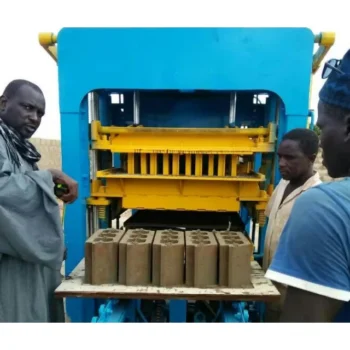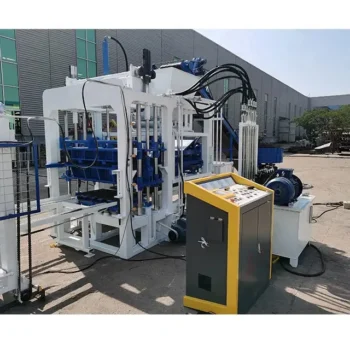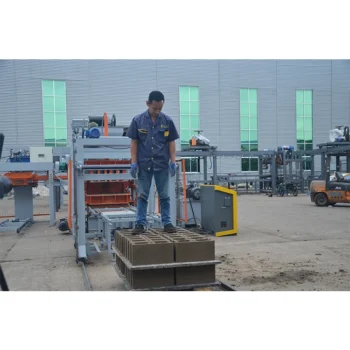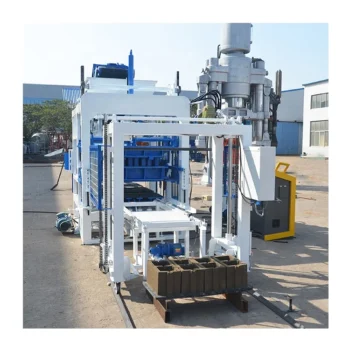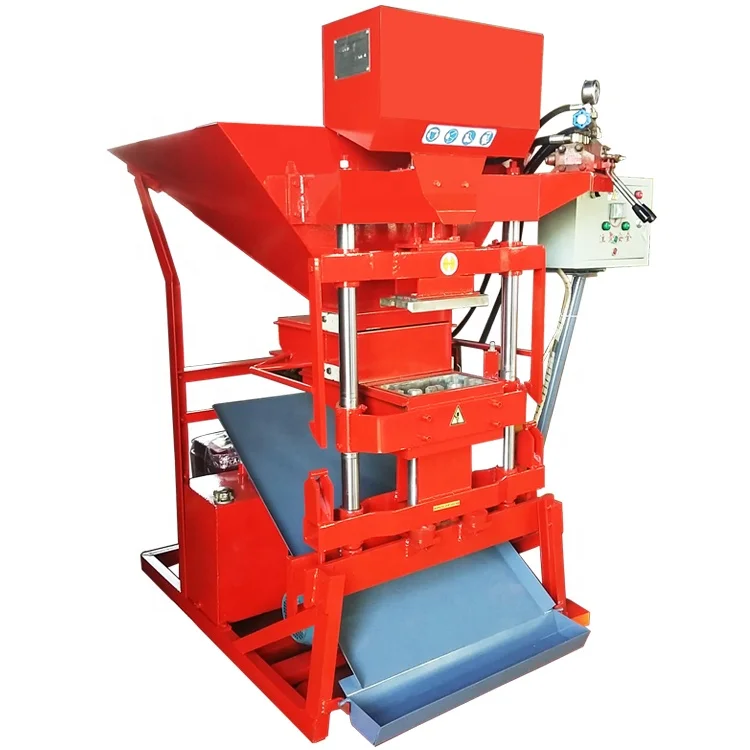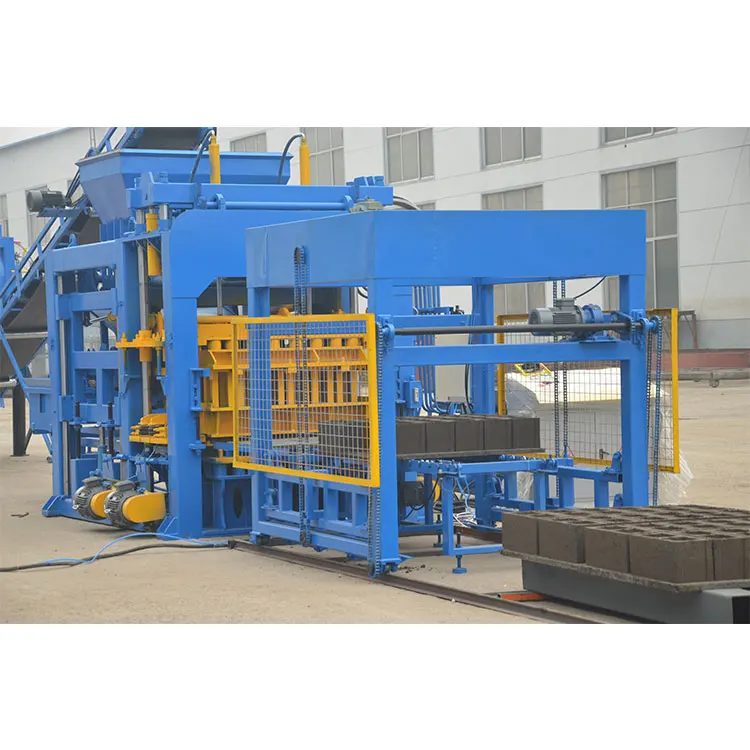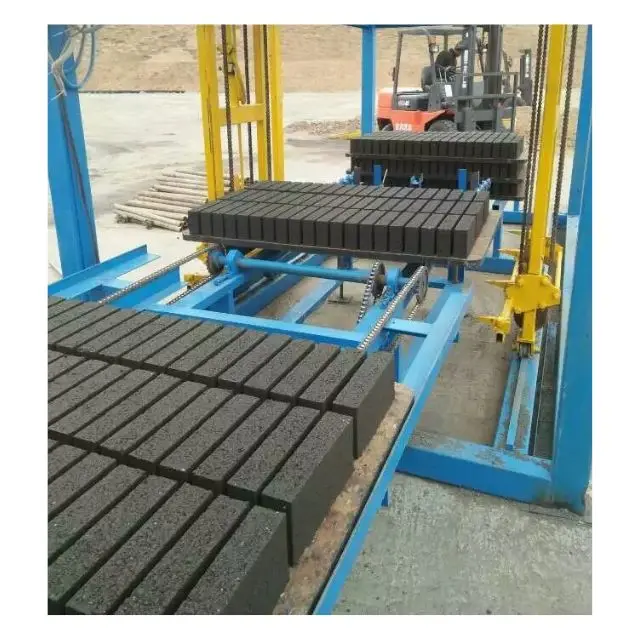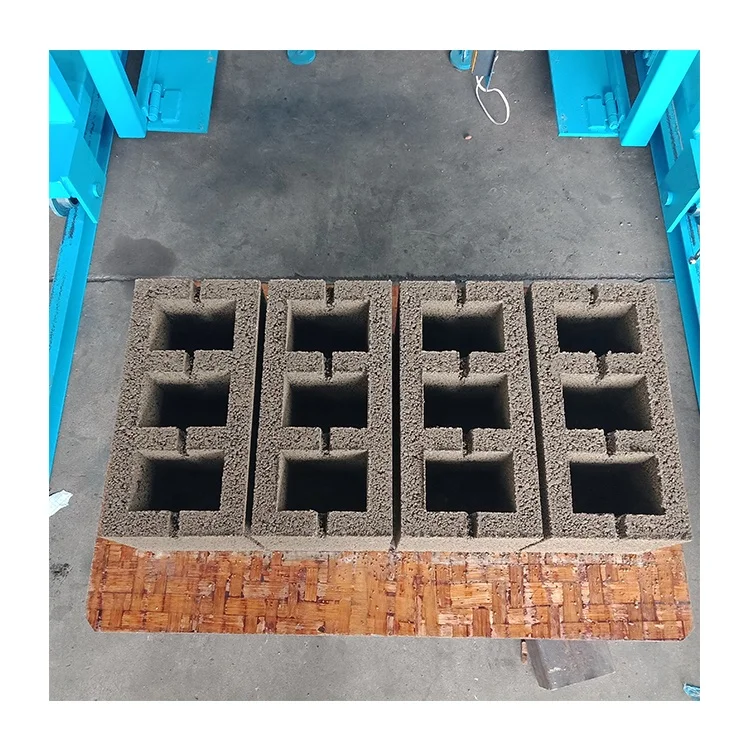
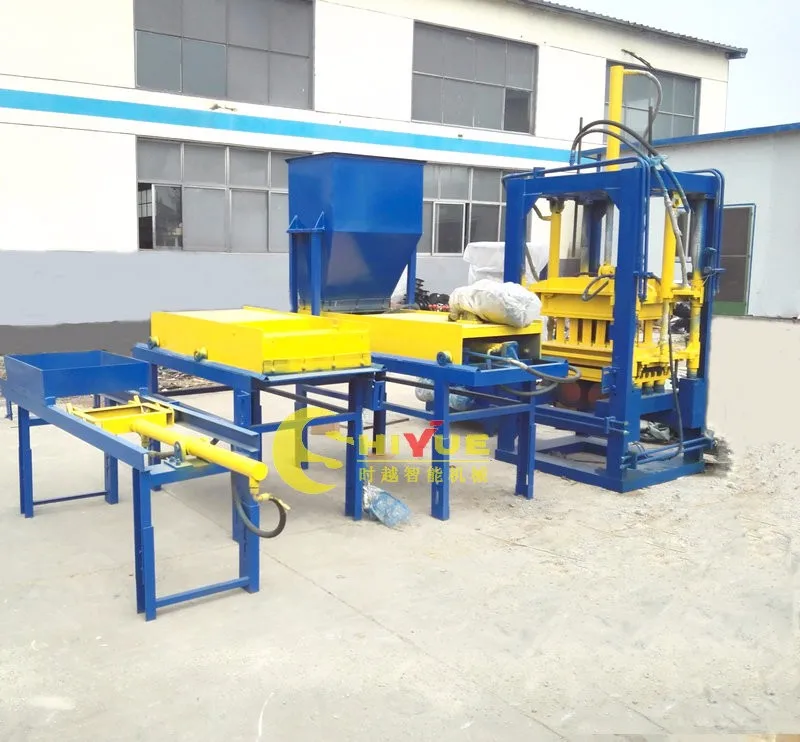
Description
Technical Specifications
| Parameter | Value |
|---|---|
| Model | QTF3-20 |
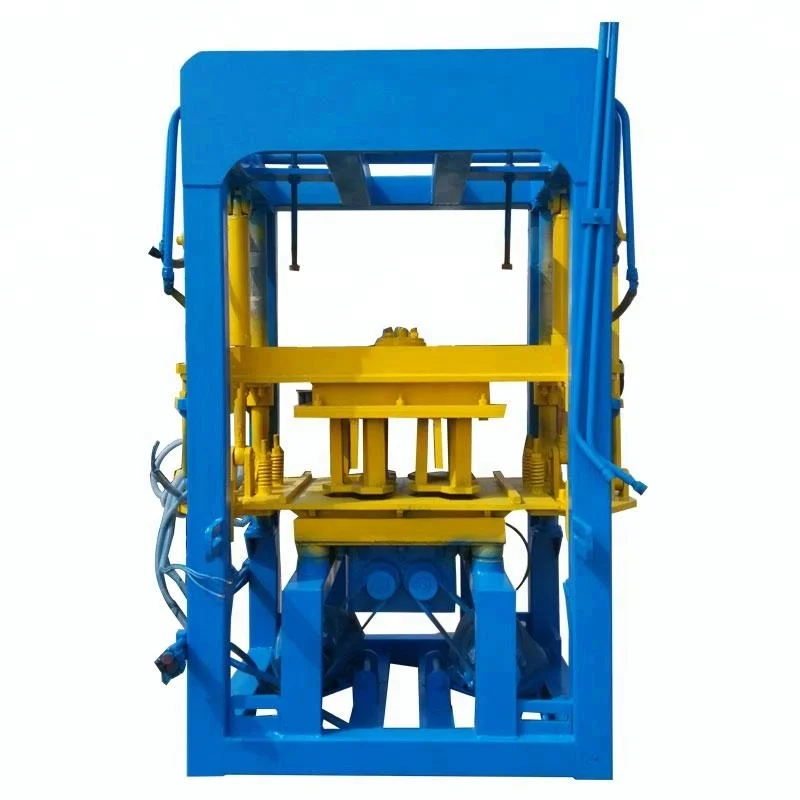
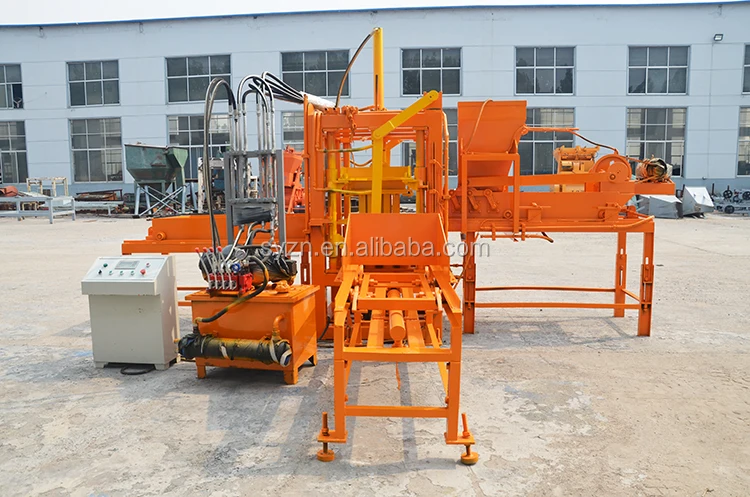
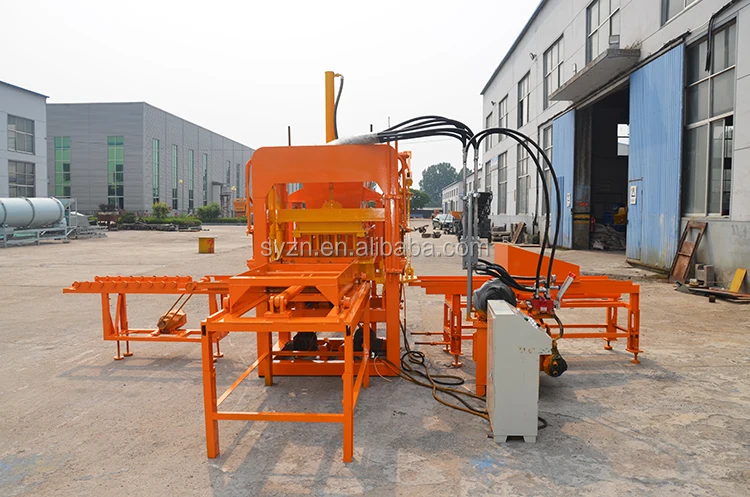
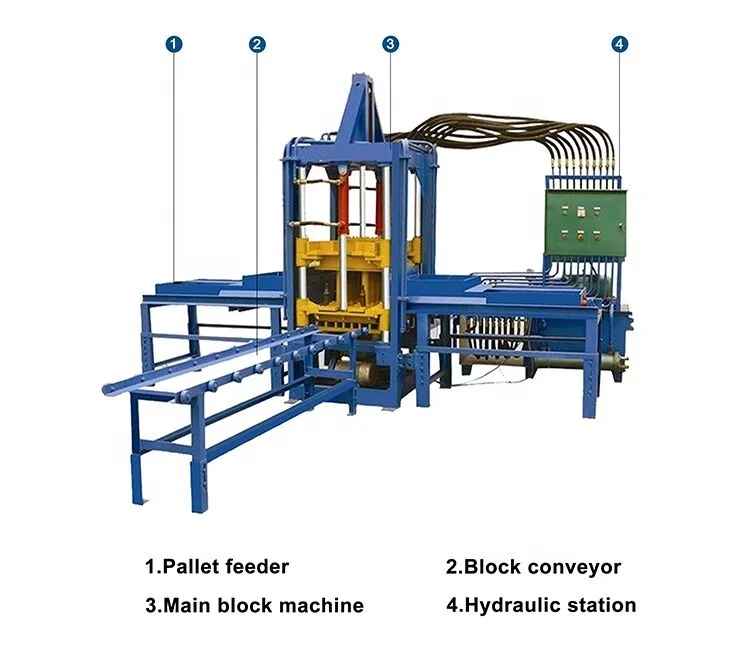
| Product Type | Semi-Automatic Concrete Block Making Machine |
| Automation Level | Semi-automatic |
| Hydraulic System | Equipped (hydraulic press combined with vibration) |
| Output — Paving Block | 2,700 pcs/h based on 200×100×60mm format, 15 pcs/mould |
| Output — Hollow Block | 540 pcs/h based on 400×200×200mm format, 3 pcs/mould |
| Output — Interlocking Block | 1,440 pcs/h based on 225×112.5×60mm format, 8 pcs/mould |
| Daily Capacity — Paving Block | 21,600 pcs per 8-hour shift (200×100×60mm) |
| Daily Capacity — Hollow Block | 4,320 pcs per 8-hour shift (400×200×200mm) |
| Daily Capacity — Interlocking Block | 11,520 pcs per 8-hour shift (225×112.5×60mm) |
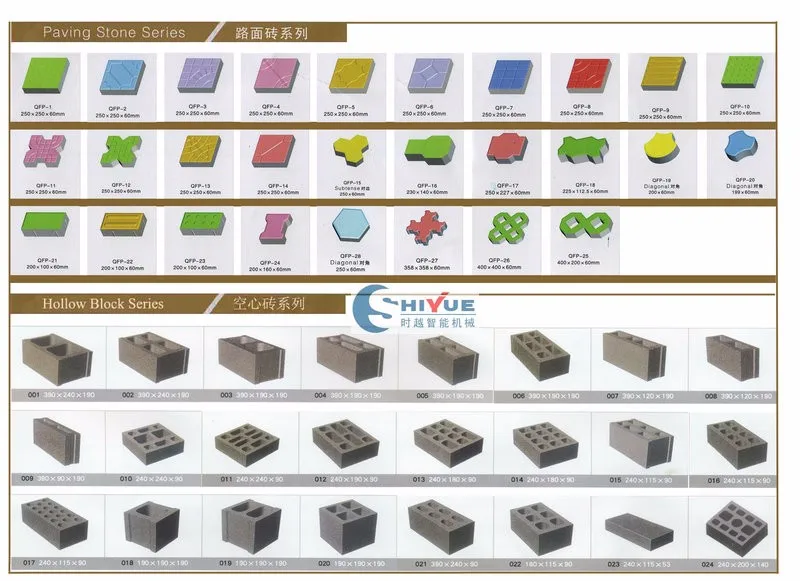
| Block Formats Supported | Paving block, curbstone, hollow block, interlocking brick |
| Voltage & Frequency | Customizable to buyer’s local supply |
| Warranty | 1 year (excluding wearing parts) |
| Vibration Force | (basis to be confirmed) |
| Hydraulic Pressure | (basis to be confirmed) |
| Pallet Size | (basis to be confirmed) |
| Cycle Time | (basis to be confirmed) |
| Mould Change Time | (basis to be confirmed) |
| Control System | (basis to be confirmed) |
| Overall Dimensions | (basis to be confirmed) |
| Rated Power | (basis to be confirmed) |
| Net Weight | (basis to be confirmed) |
Application Suitability
| Application | Material or Output |
|---|---|
| Small-to-medium block plant | Paving blocks and curbstones from crushed stone, sand, and cement |
| On-site contractor production | Interlocking bricks and pavers using locally available aggregate |
| Municipal infrastructure supply | Hollow blocks and kerbstones for drainage and roadworks |
| Landscaping and permeable surfaces | Interlocking and porous bricks from graded aggregate mixes |
| First-plant entrepreneur setup | Multi-format output covering the best-selling local block dimensions |
What "2,700 Pieces per Hour" Actually Means for Your Plant
The number only holds if your block format, mould cavity count, and cycle time match the assumptions behind it.
Every semi automatic block making machine specifications sheet quotes a headline capacity. Most of the time, that figure assumes the smallest, fastest-cycling format in the mould catalogue. When a buyer installs the machine and runs the 400×200×200mm hollow block that actually sells in their market, the output drops to a fraction of the brochure number. I have seen plant owners call us frustrated because they sized their curing yard and labour force around a paving block figure, only to find their real hollow block production was far lower. [NEED_CITE: common causes of capacity shortfalls in block plant commissioning].
Capacity Tied to Mould Format, Not a Catalogue Default
The QTF3-20 output figures above are stated per specific block dimension and cavity count. For 200×100×60mm paving blocks, the machine produces 15 pieces per cycle across a 2,700 pcs/h rate. Switch to 400×200×200mm hollow blocks at 3 pieces per mould, and the rate becomes 540 pcs/h. This is not a limitation of the semi automatic block making machine specifications — it is physics. Larger formats with fewer cavities per cycle simply produce fewer units per hour. The honest approach is to match the machine to the format that dominates your sales volume.
Matching Vibration and Pressure to Your Aggregate
The hydraulic press and vibration system on the QTF3-20 work together to compact the mix into the mould. When I visited a site where the local sand had unusually high clay content, the standard vibration frequency was not enough to consolidate the mix properly, and blocks were cracking at the edges during demoulding. We adjusted the vibration parameters and hydraulic dwell time to compensate, but it took two full days of remote video-guided tuning. [NEED_CITE: effect of aggregate clay content on block compaction]. This is why configuration must be set against your actual raw material sample, not a generic specification.
Reading the Specifications That Matter Most
Hydraulic pressure and vibration force together determine the density and compressive strength of every block the QTF3-20 produces. If the vibration force is too low for a coarse aggregate mix, the concrete will not fully fill the mould corners, producing blocks with weak edges. If the hydraulic pressure is too high for a fine sand mix, the material gets squeezed out before vibration has time to settle it. Pallet size must align with your existing curing racks and forklift dimensions — ordering a pallet width that your forklift cannot handle means replacing your entire handling setup. Voltage and frequency need confirming before production begins; a machine wired for 380V/50Hz arriving at a 440V/60Hz site will not commission without a transformer or motor swap, adding weeks of delay.
The Hidden Cost of a Mismatched Configuration
Choosing a pallet size without checking your curing area layout means blocks may need double-handling before they reach the yard. Selecting a control system without confirming the PLC display language leaves operators guessing at fault codes during the critical first weeks. If the mould change procedure has not been timed against your production schedule, a format switch can consume most of a shift, negating the flexibility you invested in. These issues do not show up in a comparison table, but they surface the first week the machine runs. [NEED_CITE: block plant commissioning delays caused by unconfirmed specifications].
Why Buyers Specify the QTF3-20 Through Us
Block machinery is our single focus, so the machine, mould, pallet, and handling equipment are specified as one matched system rather than sourced from separate suppliers. We set the configuration against your actual mix design and target block format, not a catalogue default. Moulds are designed for the formats your market sells, including custom drawings when standard options do not cover your requirements. The semi-automatic level means you can start with a lower investment and add automation stations later as your output grows. Every quotation includes a capacity calculation that states the block format assumed for each output tier.
Documentation & Verification
- Line layout with capacity calculation tied to each block format and mould cavity count
- Mould drawing and format list confirming included block dimensions and cycle assumptions
- Machine specification sheet showing hydraulic pressure and vibration force matched to your mix
- Factory test record run on a sample of your local aggregate before dispatch
- Voltage, frequency, and control language confirmation sheet signed before production
- Operation and maintenance manual with wear parts and mould replacement list
Installation, Commissioning & Support
- Foundation requirements based on the QTF3-20 vibration load and hydraulic press weight
- Dedicated power circuit sized to the machine’s rated load and your local voltage
- Assembly from shipment condition with alignment of vibration table and mould box
- First-run parameter tuning against your aggregate sample for block density targets
- Operator training covering mould change procedure and daily maintenance checkpoints
- Wear parts list with hydraulic seals and vibration components for first-year planning
What We Need to Size This Machine to Your Plant
To prepare an accurate semi automatic block making machine specifications proposal for the QTF3-20, share the block format and dimensions that represent the majority of your sales volume, along with your target daily output for that format. Provide a description or sample of your local aggregate — sand gradation, stone size, and any clay or silt content you are aware of. Confirm your site voltage, frequency, and the display language your operators will need on the control panel. If you already have curing racks, pallets, or forklifts in place, send their dimensions so the pallet and handling specification matches your existing setup.
Frequently Asked Questions
Q: How is daily output calculated for each block format on the QTF3-20?
A: Each capacity figure is tied to a specific mould and block dimension. The 2,700 pcs/h rate assumes 200×100×60mm paving blocks at 15 pieces per mould, multiplied across an 8-hour shift for 21,600 pieces. The hollow block figure of 540 pcs/h assumes 400×200×200mm at 3 pieces per mould. Daily capacity is the hourly rate times the shift length, excluding mould change downtime and maintenance breaks.
Q: Can custom moulds be designed for block formats not in the standard list?
A: Yes. We design and manufacture moulds to buyer drawings or to a target block dimension you specify. The mould must match the QTF3-20 mould box mounting pattern and the vibration table’s force distribution. We confirm the cavity count, cycle time assumption, and expected output for the custom format before production so there are no capacity surprises after delivery.
Q: How do vibration force and hydraulic pressure match my local aggregate?
A: Coarse aggregate with larger stone requires higher vibration energy to consolidate fully in the mould. Fine sand with clay content needs adjusted pressure and dwell time to prevent material squeeze-out. We ask for a sample or detailed description of your aggregate before finalising the QTF3-20 configuration, then verify block density during the factory test using your material profile.
Q: What is the mould change time and how does it affect production scheduling?
A: Mould change time depends on the format size and the clamping system on the QTF3-20. On a semi-automatic machine, operators manually align and secure the new mould, which takes longer than an automatic quick-change system. If you plan to run multiple formats in one shift, the change time must be factored into your daily output calculation to avoid overstating capacity.
Q: How do I confirm pallet size, voltage, and control language before shipment?
A: These three items are confirmed in writing before the machine enters production. Pallet size is set against your block format, curing rack dimensions, and forklift capacity. Voltage and frequency must match your site supply exactly. The control panel language is specified so operators can read fault codes and cycle parameters on day one. Any mismatch found after arrival delays commissioning and costs money to correct.