
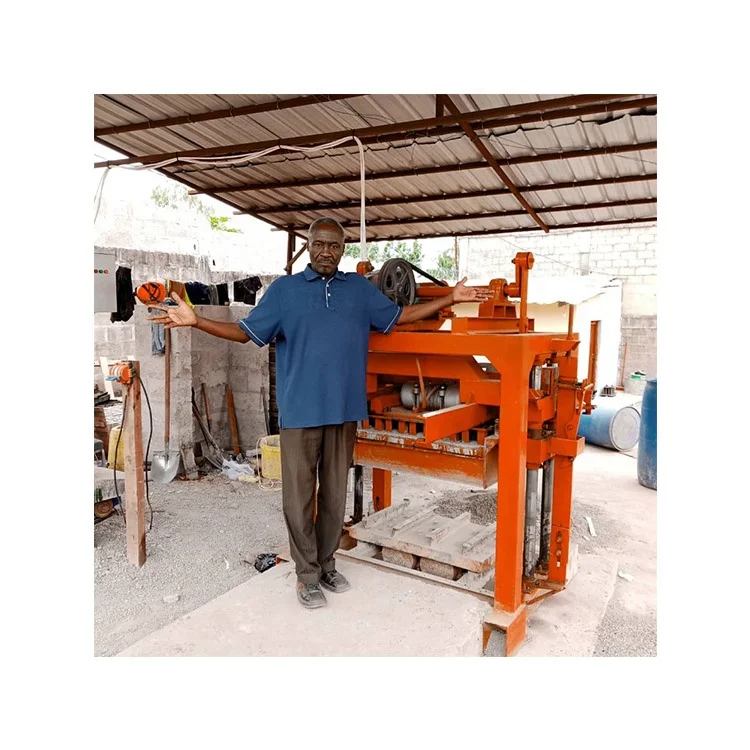
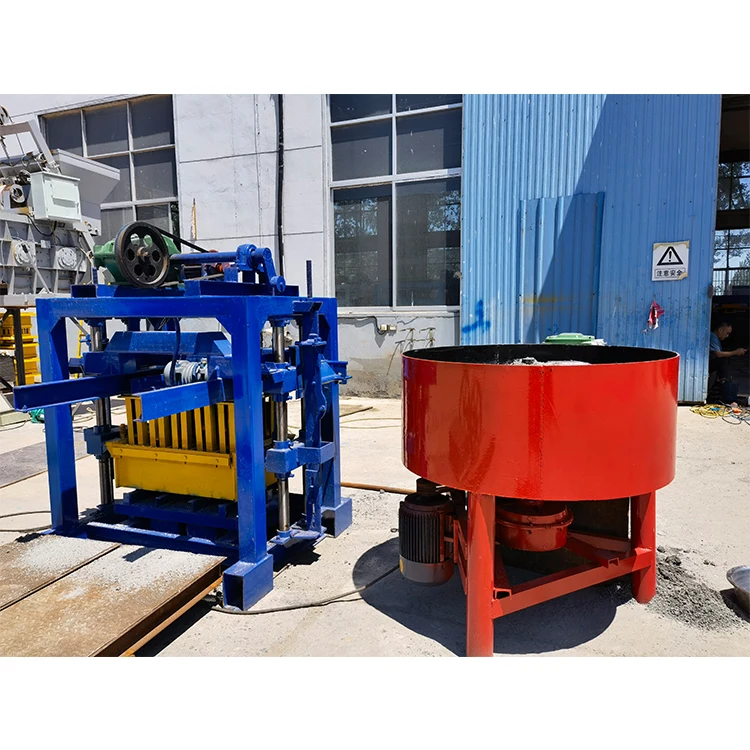
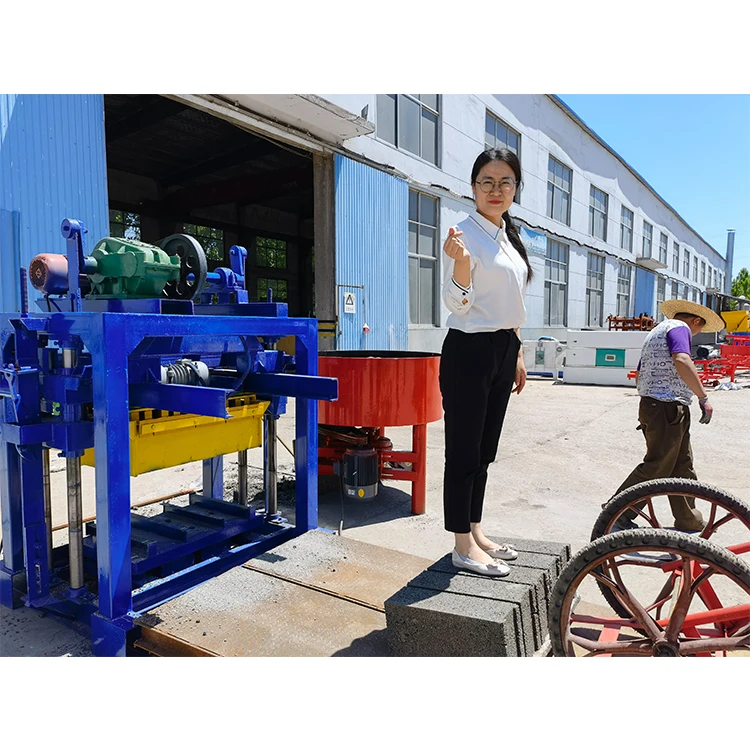

Description
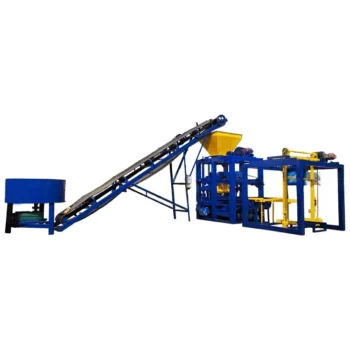
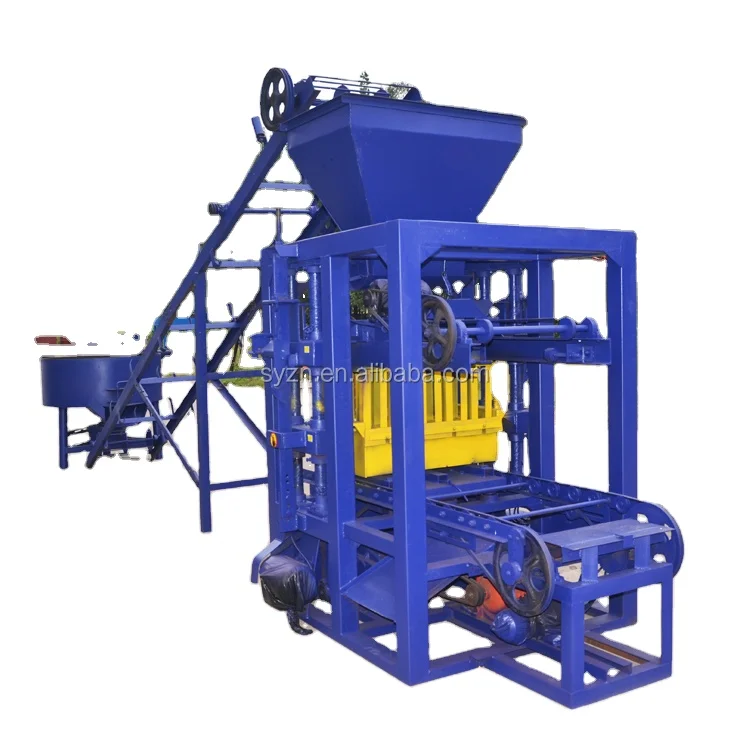
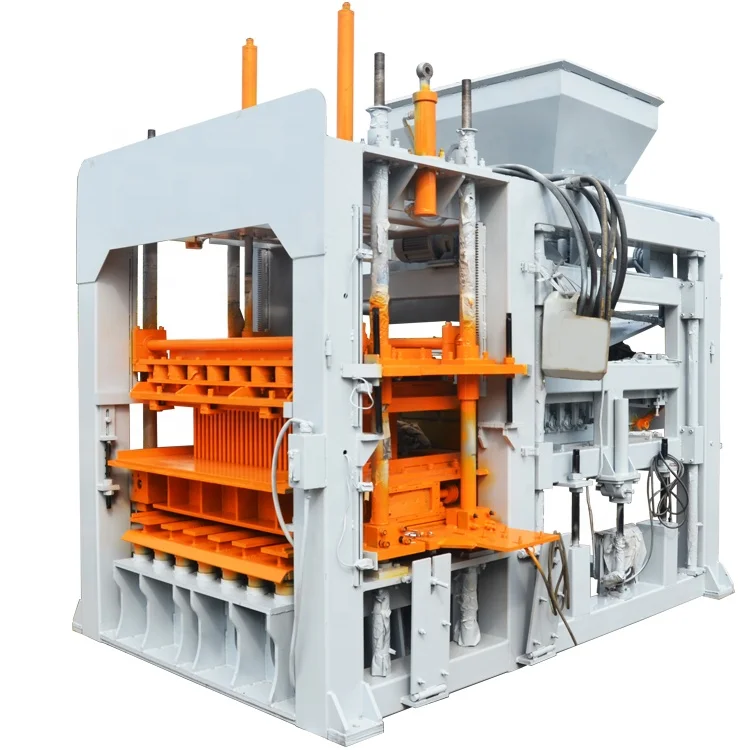
Configuration matched to your aggregate and block format — the QTJ4-40 block machine specifications are verified against the buyer’s actual raw material and target product rather than a default catalogue setting.
Technical Specifications
| Parameter | Value |
|---|---|
| Model | QTJ4-40 |
| Product Type | Semi-Automatic Concrete Block Making Machine |
| Rated Power | 10.4 kW |
| Voltage & Frequency | Configured to buyer’s local supply (basis to be confirmed) |
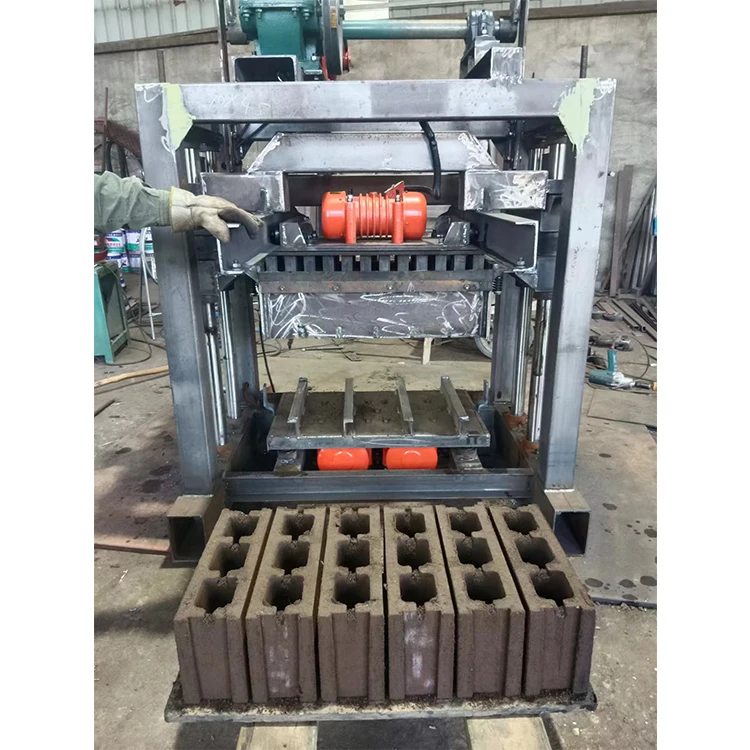
| Control System | Semi-automatic with top die push-pull and automatic scraper |
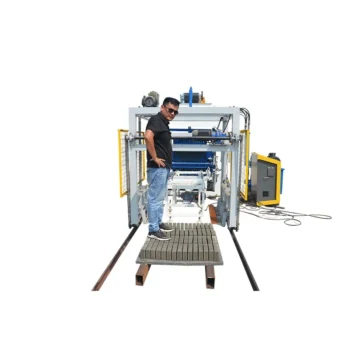
| Overall Dimensions (L×W×H) | 1350 × 1460 × 1800 mm |
| Net Weight | 1 T |
| Moulding Cycle | 40 s |
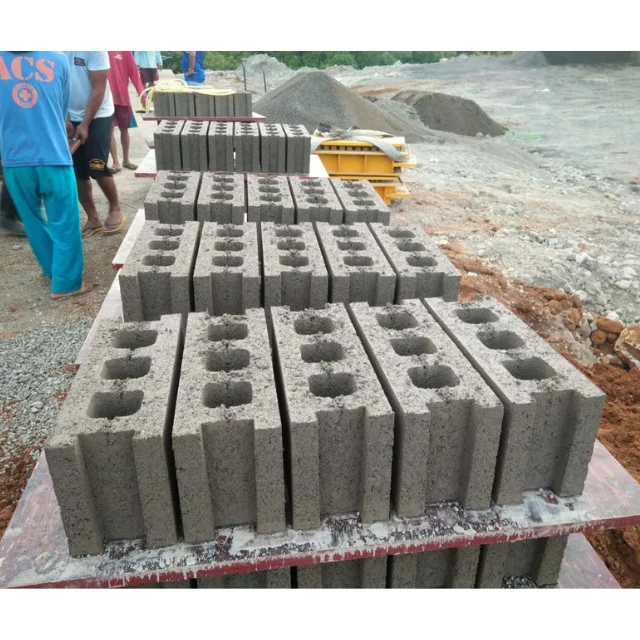
| Output (400×200×200 mm hollow block) | 4 pcs/mould, 360 pcs/h, 2800 pcs/day |
| Output (400×150×200 mm hollow block) | 5 pcs/mould, 450 pcs/h, 3600 pcs/day |
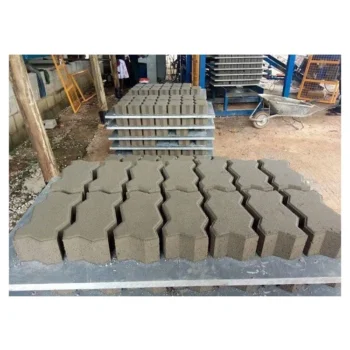
| Output (225×112.5×60 mm solid brick) | 9 pcs/mould, 800 pcs/h, 6400 pcs/day |
| Pallet Size | 850 × 450 mm |
| Vibration System | Bed mould vertical vibration + upper mould compression vibration |
| Raw Materials | Concrete, sand, cement, fly ash, lime, gypsum |
| Automation Level | Semi-automatic |
Application Suitability
| Application | Material or Output |
|---|---|
| Small-to-medium hollow block production | Crushed stone, river sand, cement, and fly ash blends |
| On-site solid brick production for contractors | Local aggregate mixed with Portland cement |
| First-time block plant entrepreneurs | Standard concrete mixes for regional building markets |
| Building material producers adding formats | Interchanging moulds for hollow blocks and solid bricks |
What the Headline Capacity Number Hides About the QTJ4-40 Block Machine Specifications
Output only means something when tied to a specific block size, mould cavity count, and cycle time.
Sellers often quote a single cycles-per-hour figure without naming the format behind it, so a buyer expecting thousands of hollow blocks receives a number that only applies to small solid bricks. With the QTJ4-40 block machine specifications, every capacity figure is anchored to a defined block dimension and mould cavity count. This prevents the gap between quoted capacity and the actual daily output your market demands [NEED_CITE: honest capacity calculation methods in concrete block machinery].
Matching the Mould to Your Block Format
Choosing the right cavity layout is where real output is decided. A 4-cavity mould producing 400×200×200 mm hollow blocks yields a different daily volume than a 9-cavity mould pressing solid bricks, even though the moulding cycle stays at 40 seconds. The QTJ4-40 block machine specifications list three reference formats, but the machine accepts custom moulds drawn to the dimensions your local market actually buys.
Pallet Size and the Curing Area Bottleneck
The 850 × 450 mm pallet must fit your existing curing racks and forklift tines. If the pallet is wider than the rack spacing, blocks are stacked by hand on the floor and curing consistency suffers. Before confirming the order, measure the curing bay width and the forklift fork spread so the pallet specification is locked to your site conditions rather than a default choice [NEED_CITE: pallet handling and curing layout in small block plants].
Vibration Force and Mix Design Alignment
The dual vibration setup — vertical vibration under the bed mould and compression vibration from the upper mould — compacts the mix from two directions. This matters because a mix heavy in fine river sand behaves differently from one loaded with crushed stone dust. The vibration frequency and amplitude need to match the aggregate grading; otherwise block density drops and breakage rises during handling.
When the Wrong Configuration Costs You a Shift
A machine configured for a mix the buyer cannot source locally forces a costly material substitution or a complete change of aggregate supplier. Pallet size chosen without regard to the curing area means blocks sit on the ground, unevenly cured, and strength testing fails. Voltage and control language left unconfirmed until arrival delays commissioning while the electrician sources a transformer and the operator struggles with an unfamiliar display [NEED_CITE: common commissioning delays in exported block machinery].
Why Buyers Source This Machine Here
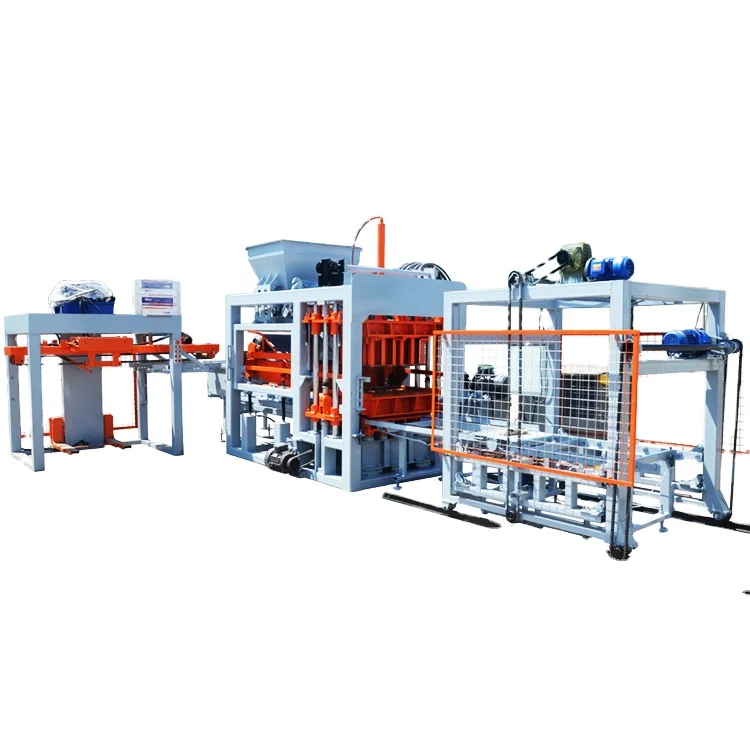
Block machinery is the single production focus, so the QTJ4-40, its mould, pallet, and handling equipment are specified as one matched system rather than assembled from separate suppliers. Configuration is set against the buyer’s actual mix design and local aggregate, not a catalogue default. Mould design covers the formats the buyer’s market sells, including custom drawings. The automation level allows a buyer to start semi-automatic and add stacking later.
Documentation & Verification
- Line layout and capacity calculation stating the exact block format assumed
- Machine specification sheet with confirmed voltage and frequency
- Mould drawing and format list for each ordered cavity layout
- Pallet specification matched to curing rack dimensions
- Hydraulic and electrical schematic for on-site maintenance reference
- Factory test record run on the buyer’s target block format before dispatch
Installation, Commissioning & Support
- Foundation pad leveled to ±5 mm across the 1350 × 1460 mm machine footprint
- Dedicated circuit rated for the 10.4 kW total draw at confirmed voltage and frequency
- Top die push-pull mechanism calibrated on site during first-day commissioning
- Vibration amplitude adjusted to match the buyer’s confirmed aggregate blend
- Operator training covering mould change procedure and scraper adjustment
- Wear parts and mould list provided for first reorder planning
Before You Send an Inquiry
Share the block format your market moves in the highest volume, the daily output you need to hit, and the raw materials available within hauling distance of your site. Confirm your local voltage, frequency, and preferred control display language so the machine arrives ready to run.
Frequently Asked Questions
Q: How is output capacity calculated per block format on the QTJ4-40?
A: Output is derived from the number of cavities in the mould multiplied by the cycles completed per hour, based on a 40-second moulding cycle. Each format — whether 400×200×200 mm hollow block or 225×112.5×60 mm solid brick — has its own cavity count and resulting hourly and daily figures stated in the specification table.
Q: What mould formats are available and how long does a mould change take?
A: Standard formats include hollow blocks and solid bricks listed in the capacity table. Custom moulds can be designed to buyer drawings for formats your local market requires. Mould change involves unbolting the current mould set, fitting the new one, and recalibrating the scraper — plan for a portion of a shift for the swap and first-run adjustment.
Q: How should the machine be configured to match local aggregate and mix design?
A: Provide a sample of your local aggregate and your proposed cement ratio. The vibration amplitude and feed settings are then matched to that specific blend so block density and strength remain consistent across production runs without requiring a material change.
Q: What pallet size and material should I choose for my curing area?
A: The standard pallet is 850 × 450 mm. Before ordering, measure your curing rack spacing and forklift fork width to confirm the pallet fits your handling chain. Bamboo, PVC, or steel pallet options are selected based on your block weight and curing method.
Q: What voltage, frequency, and control language are confirmed before shipment?
A: Voltage and frequency are set to match the buyer’s local grid. The control display language is confirmed during the order process so the operator can read cycle status and fault codes from day one, avoiding commissioning delays on site.