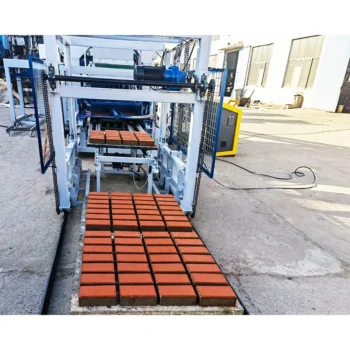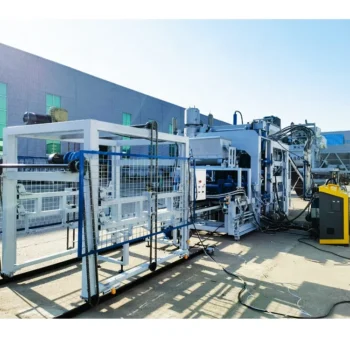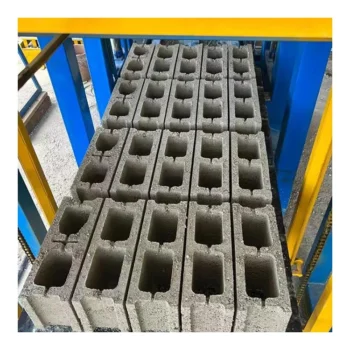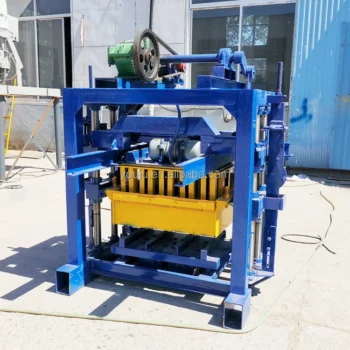
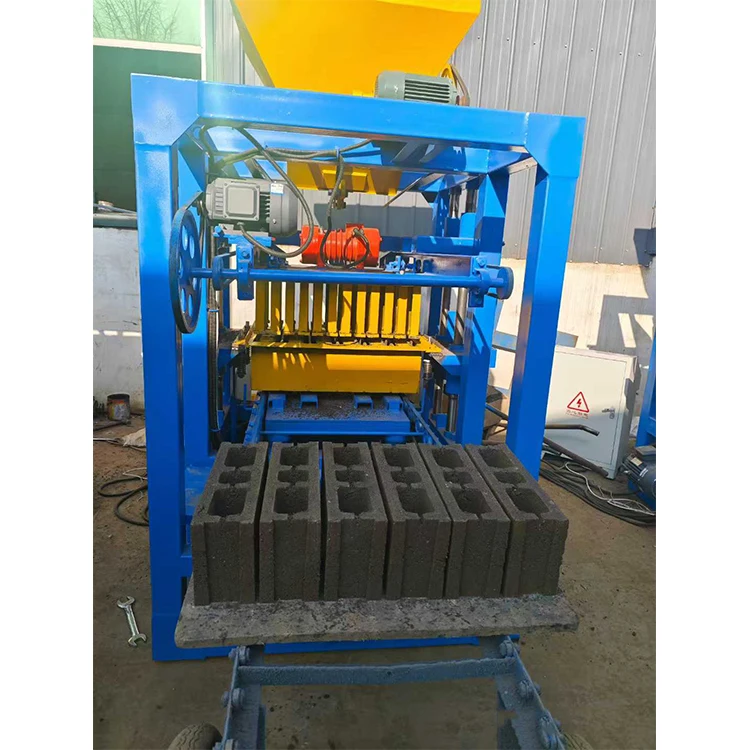
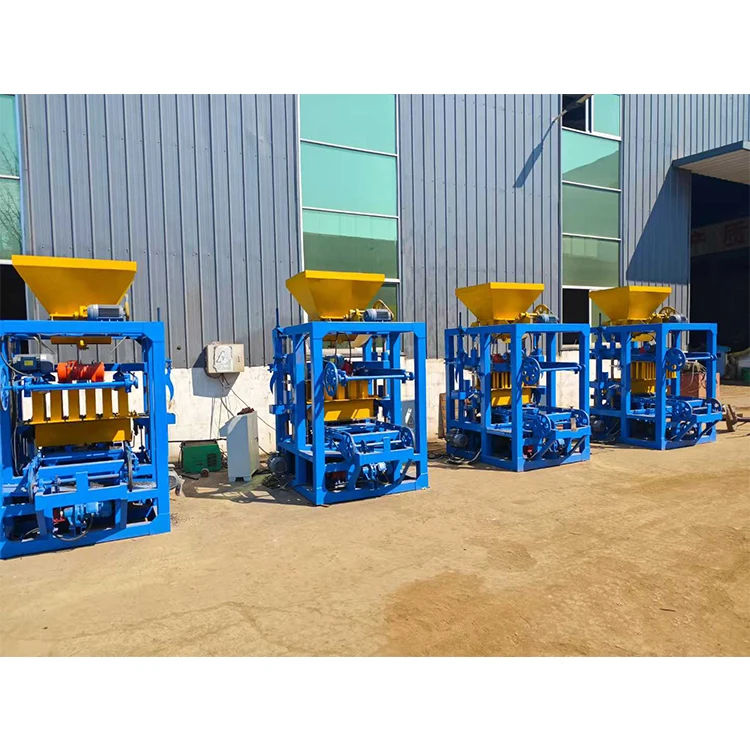
Description
Specified per block format — every capacity figure for the QTJ4-24 is calculated against a named hollow, solid or paving format, not a single catalogue headline.
Technical Specifications
| Parameter | Value |
|---|---|
| Product Type | Stationary Block Making Machine |
| Model | QTJ4-24 |
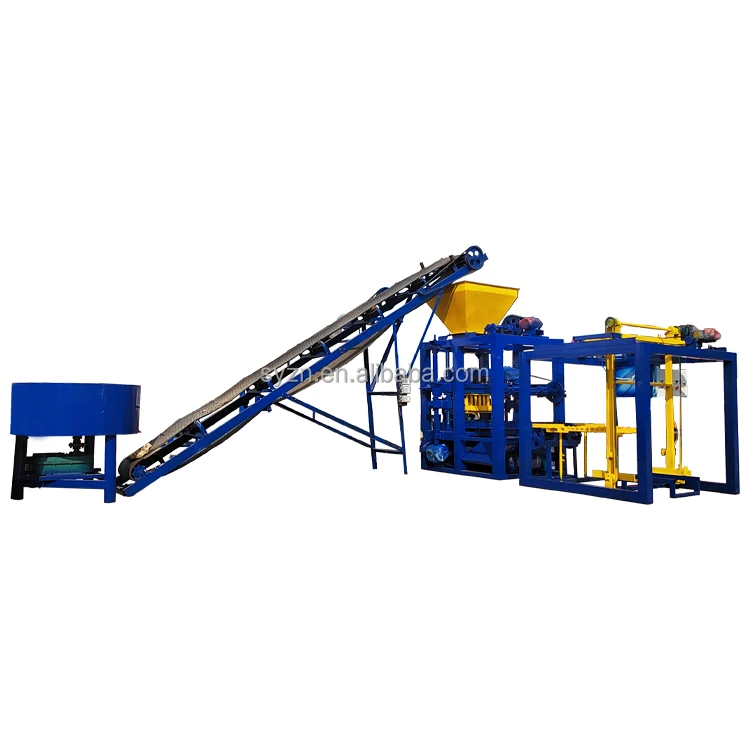
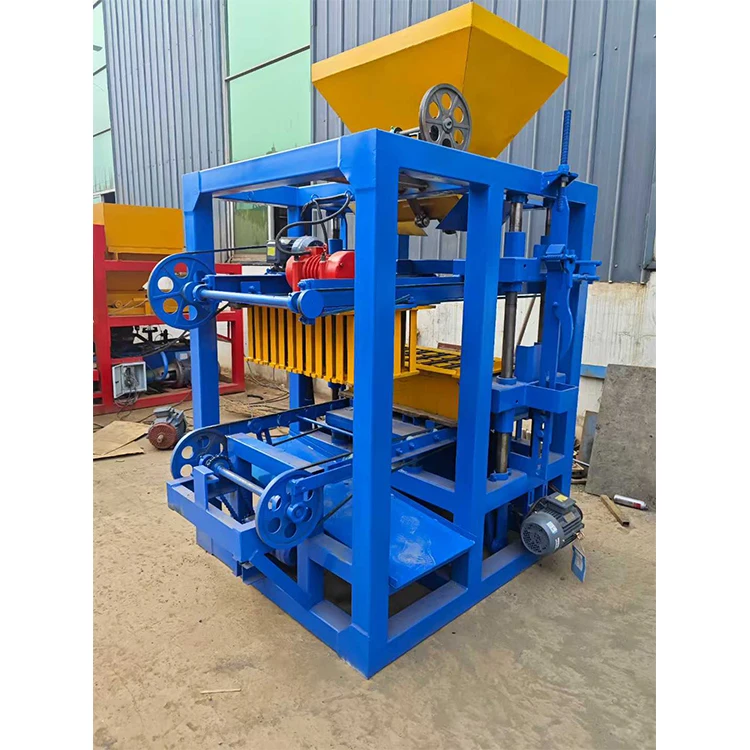
| Overall Dimensions (L×W×H) | 3600×1700×2560mm |
| Total Mass | 2T |
| Pallet Size | 850×450mm |
| Vibration Force | 45kN |
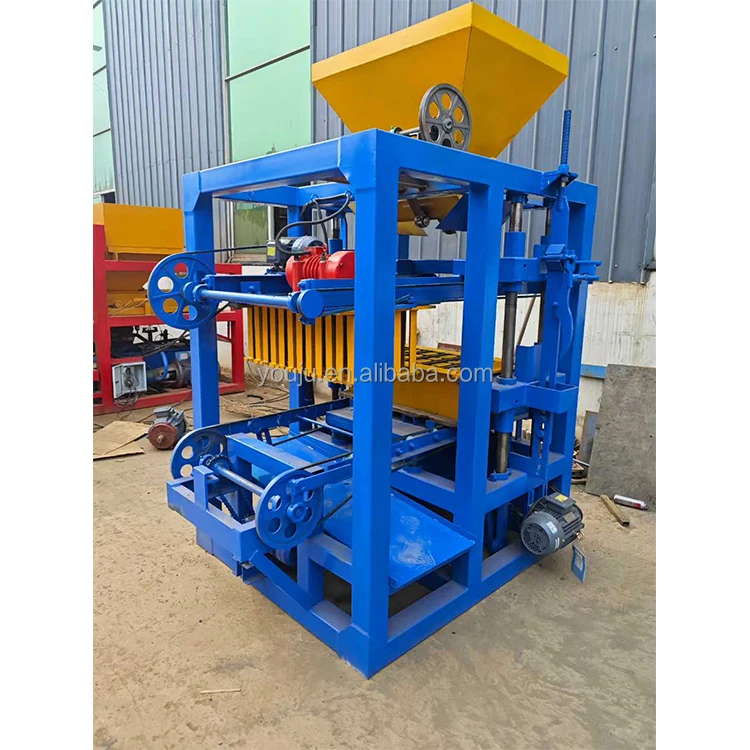
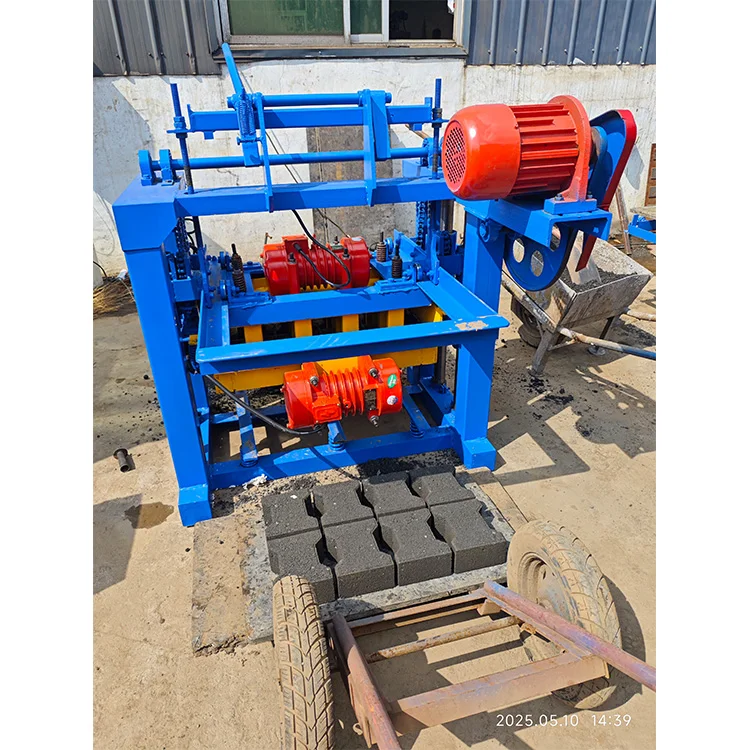
| Vibration Configuration | 2×3kW lower vibrators + 2×1.5kW upper vibrators |
| Molding Cycle | 24-26s (basis not stated in source — confirm block format / material / thickness) |
| Molding Method | Mechanical |
| Material Distribution | Full-automatic spiral |
| Overall Power | 11.95kW |
| Reducer for Mold Lifting | 350-type |
| Materials | Cement, sand, stone |
| Automation Level | Semi-automatic |
| Voltage & Frequency | Configurable (to be confirmed before production) |
| Control System | PLC (to be confirmed with display language) |
| Warranty | 1 year (excluding spare parts) |
Application Suitability
| Application | Material or Output |
|---|---|
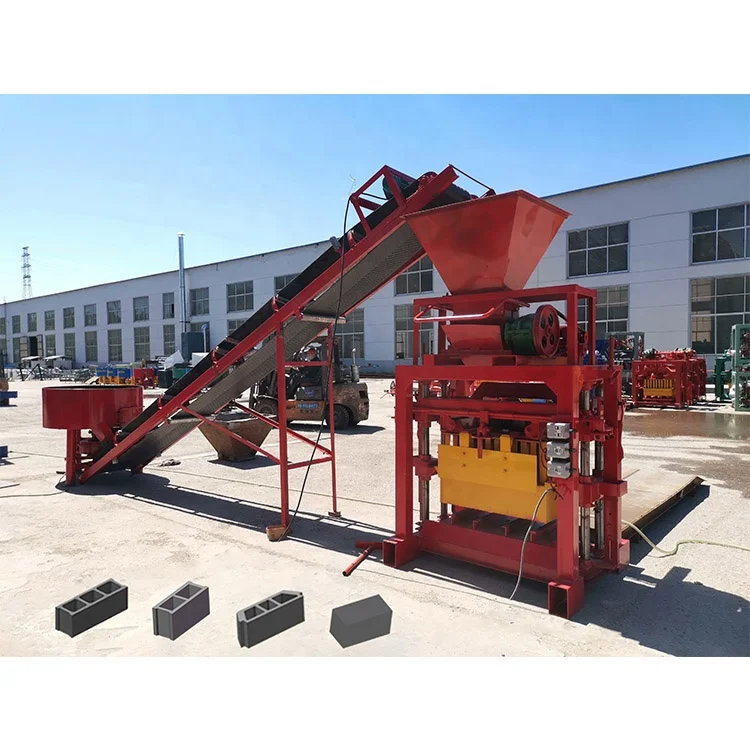
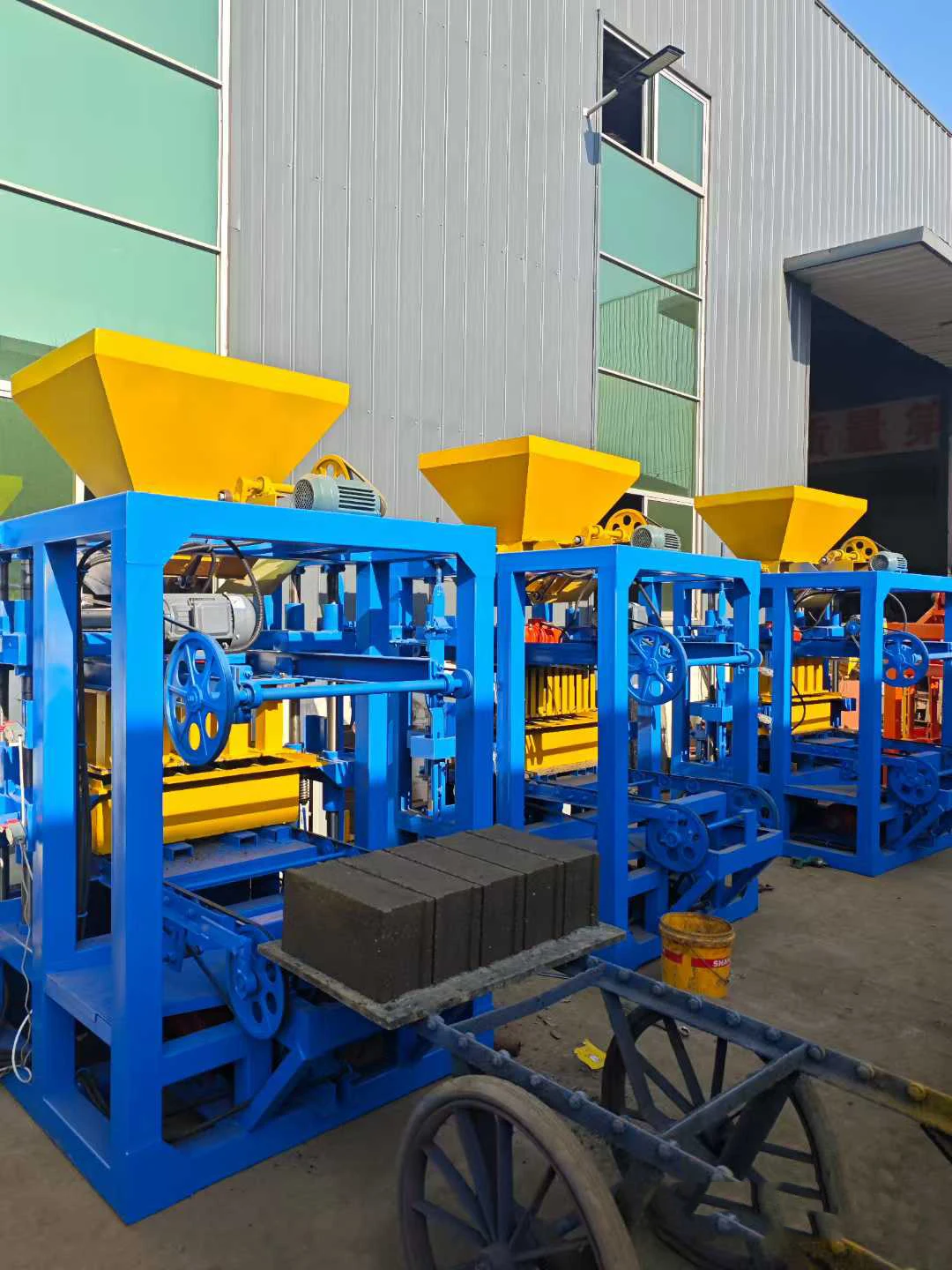
| Hollow block production for load-bearing walls | Cement, sand, crushed stone aggregate |
| Solid block production for partition and foundation work | Cement, sand, fine aggregate |
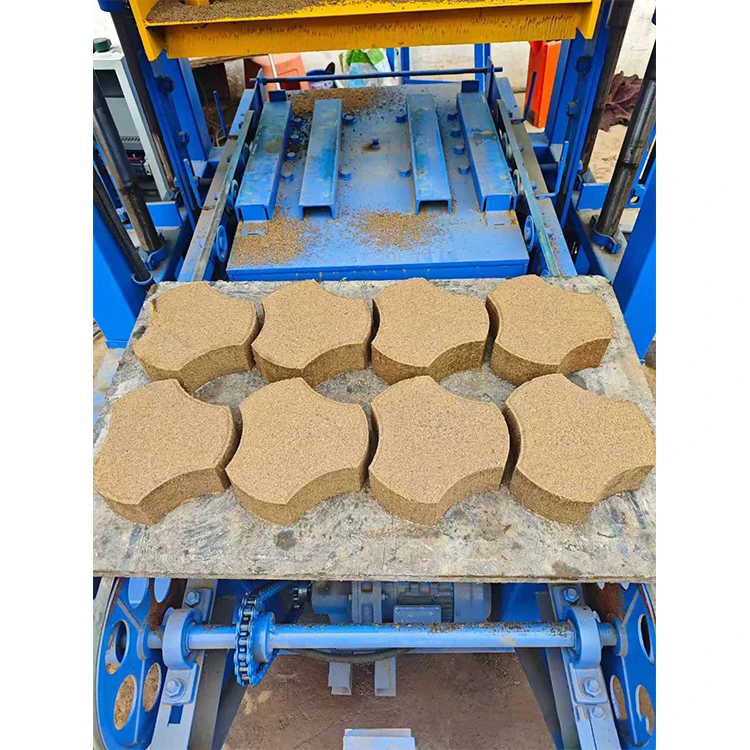
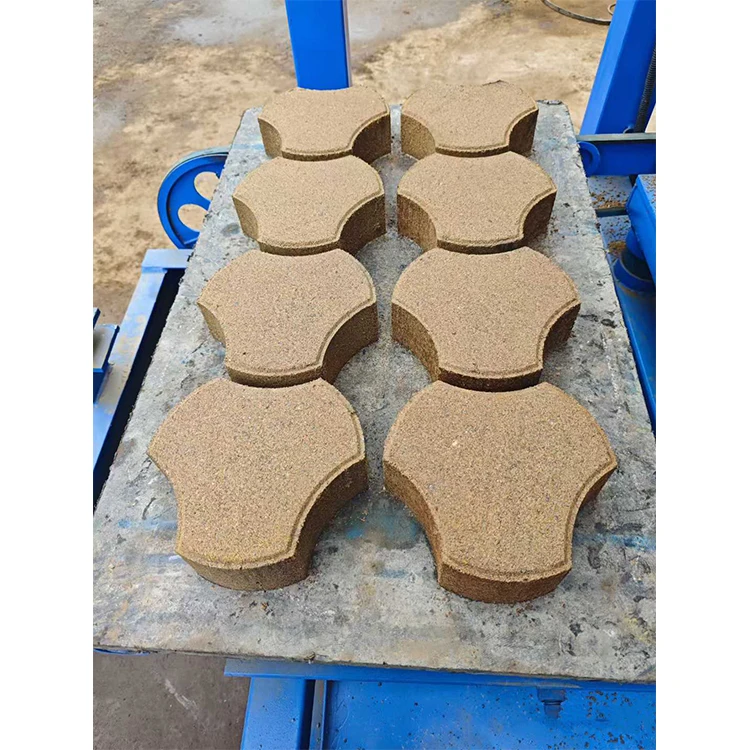
| Interlocking brick production for paving and landscaping | Cement, sand, stone dust |
| Paving block production for walkways and yards | Cement, graded sand, coarse aggregate |
| Small-to-medium block plant startup | Semi-automatic operation, single-operator capable |
Why a Single "Cycle Time" Figure Misleads Block Plant Buyers
Real output only appears when cycle time is stated against a specific block format and wall thickness.
Quoting a QTJ4-24 block machine specifications sheet with a single 24-26s cycle leaves buyers guessing which block format that number assumes. A thin paving brick cycles faster than a 200mm hollow block, and a porous interlocking brick demands longer vibration to consolidate the open structure. When the assumed format is not named, the daily output a buyer plans against falls noticeably short of the figure on paper. I have watched plants in the Pearl River Delta arrive expecting one production rate, then spend weeks re-running capacity trials because the original quote never said which mould the cycle time was measured on [NEED_CITE: block format effect on cycle time].
Matching the QTJ4-24 to Your Selling Format
A technical buyer evaluating a QTJ4-24 block machine needs cycle time broken down per mould: hollow block, solid block, interlocking brick and paving block each impose a different vibration duration. The 45kN vibration force delivered by the dual upper and lower vibrator arrangement (2×3kW lower, 2×1.5kW upper) must be paired with the buyer’s actual mix design and local aggregate to achieve target block strength. A machine tuned for river sand produces a different compaction result than one set for crushed stone dust, so the QTJ4-24 block machine specifications only become meaningful once the local material is on the table.
Pallet Size, Curing Area and the Hidden Handling Bottleneck
The 850×450mm pallet size on the QTJ4-24 must be checked against the buyer’s existing curing rack spacing and forklift tine width before the order is placed. A pallet that does not match the curing area forces the plant to re-rack blocks by hand or invest in new shelving, erasing the output advantage the press itself delivers. Semi-automatic operation means pallets are handled partly by the operator, so the weight and material of each pallet also determine how many cycles one person can sustain through a full shift [NEED_CITE: pallet handling fatigue in semi-automatic block plants].
Reading the Engineering Behind the QTJ4-24 Parameters
The 45kN vibration force generated by four motors — two 3kW units below the mould table and two 1.5kW units above — works together to compact concrete from both faces, reducing voids in hollow block walls. The 350-type reducer that drives the mould lifting mechanism controls the descent speed, which directly affects whether the green block cracks on demoulding. Full-automatic spiral material distribution spreads the mix evenly across the 850×450mm mould cavity, so a drier mix with coarse aggregate does not leave unfilled corners. The 11.95kW overall power draw keeps the machine within the capacity of a standard three-phase supply, but voltage and frequency must be confirmed to match the destination market’s grid [NEED_CITE: voltage and frequency standards by export market].
The Cost of Skipping Format-Level Specification
When a buyer orders without confirming which block formats the quoted mould set covers, the first production run often reveals that the machine was tested on a format the local market does not buy. Switching to the correct mould then exposes a mould change procedure that was never timed, and a vibration setting that was calibrated for a different aggregate. I have seen plants stand idle for days while replacement moulds are shipped, because the original QTJ4-24 block machine specifications did not list the formats the buyer actually needed [NEED_CITE: mould availability for stationary block machines].
Why Buyers Source the QTJ4-24 Through This Configuration Approach
The QTJ4-24 is specified against the buyer’s actual block format, local aggregate and mix design rather than a default catalogue setting. Every mould is designed for the formats the buyer’s market sells, with custom drawings available when standard formats do not match local dimensions. Pallet size and material are chosen to fit the curing area and forklift the buyer already operates. Automation level is selectable, so a plant can start with semi-automatic pallet handling and add automatic stacking later. Installation includes operator training on the specific formats the buyer will run.
Documentation & Verification
- Factory test record run on buyer’s confirmed block format before dispatch
- Mould drawing and format list showing every block type the quoted machine produces
- Pallet specification matched to buyer’s curing rack dimensions and forklift capacity
- Line layout and capacity calculation naming the block format assumed for each output figure
- Voltage, frequency and PLC display language confirmation document signed before production
Installation, Commissioning & Support
- Foundation plan drawn for the 3600×1700mm footprint and 2T operating mass
- Power feed sized for 11.95kW total draw with dedicated breaker per local code
- 350-type reducer and vibration motors inspected and re-tensioned after transit
- Mould lifting and spiral feeder calibrated on-site against buyer’s first production mix
- Operator trained on mould change procedure for each format in the quoted set
- Wear parts list supplied with recommended reorder intervals per vibration motor and spiral flight
What to Include in Your QTJ4-24 Inquiry
Provide the block formats your market buys most — hollow, solid, interlocking or paving — along with wall thickness and target daily output per format. Share a sample or description of your local aggregate so vibration force and mix ratio can be matched before the mould is finalised. Confirm your site voltage, frequency and preferred PLC display language to avoid commissioning delays after the QTJ4-24 block machine specifications are locked and the machine ships.
Frequently Asked Questions
Q: What block format is the 24-26s cycle time based on, and how does output change for other formats?
A: The 24-26s figure is a baseline that must be confirmed against a specific block format, wall thickness and aggregate type. A thinner paving brick cycles faster, while a 200mm hollow block with coarse aggregate requires longer vibration to reach full compaction. The proposal states cycle time and daily output per format so the buyer can plan accurately.
Q: How is the vibration force matched to my local aggregate and target block strength?
A: The 45kN force from the four-motor arrangement is adjusted in duration and amplitude to the buyer’s mix design and aggregate gradation. Crushed stone demands different vibration timing than river sand to achieve the same block density. A sample of local material is used during factory testing to set the parameters before shipment.
Q: What mould formats are available for the QTJ4-24, and how long does a mould change take?
A: Standard moulds cover hollow block, solid block, interlocking brick and paving block in common local dimensions. Custom moulds are available to buyer drawings. Mould change time is measured during factory testing and included in the proposal, so the buyer knows the actual format-switching cost on the shop floor.
Q: Is the 850×450mm pallet size compatible with my existing curing racks and handling equipment?
A: Pallet dimensions and material are confirmed against the buyer’s curing rack spacing and forklift tine width before production. If the existing racks do not match, alternative pallet sizes or curing layouts are proposed so blocks move from press to cure without manual re-handling.
Q: What voltage, frequency and control language options are confirmed before shipment?
A: Voltage and frequency are set to match the destination market’s industrial grid. The PLC display language is confirmed with the buyer before production begins, so operators can read controls and fault messages on day one of commissioning without waiting for a software update.