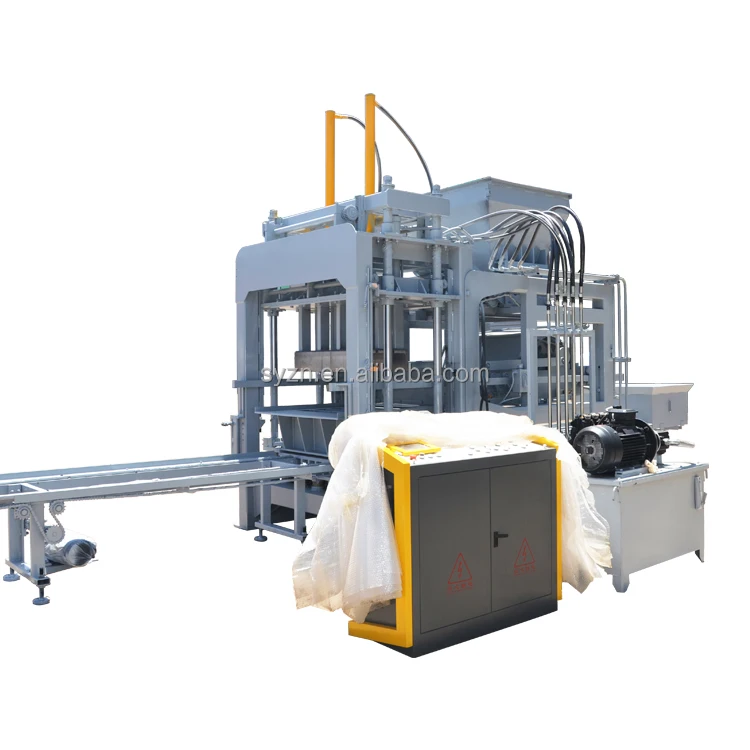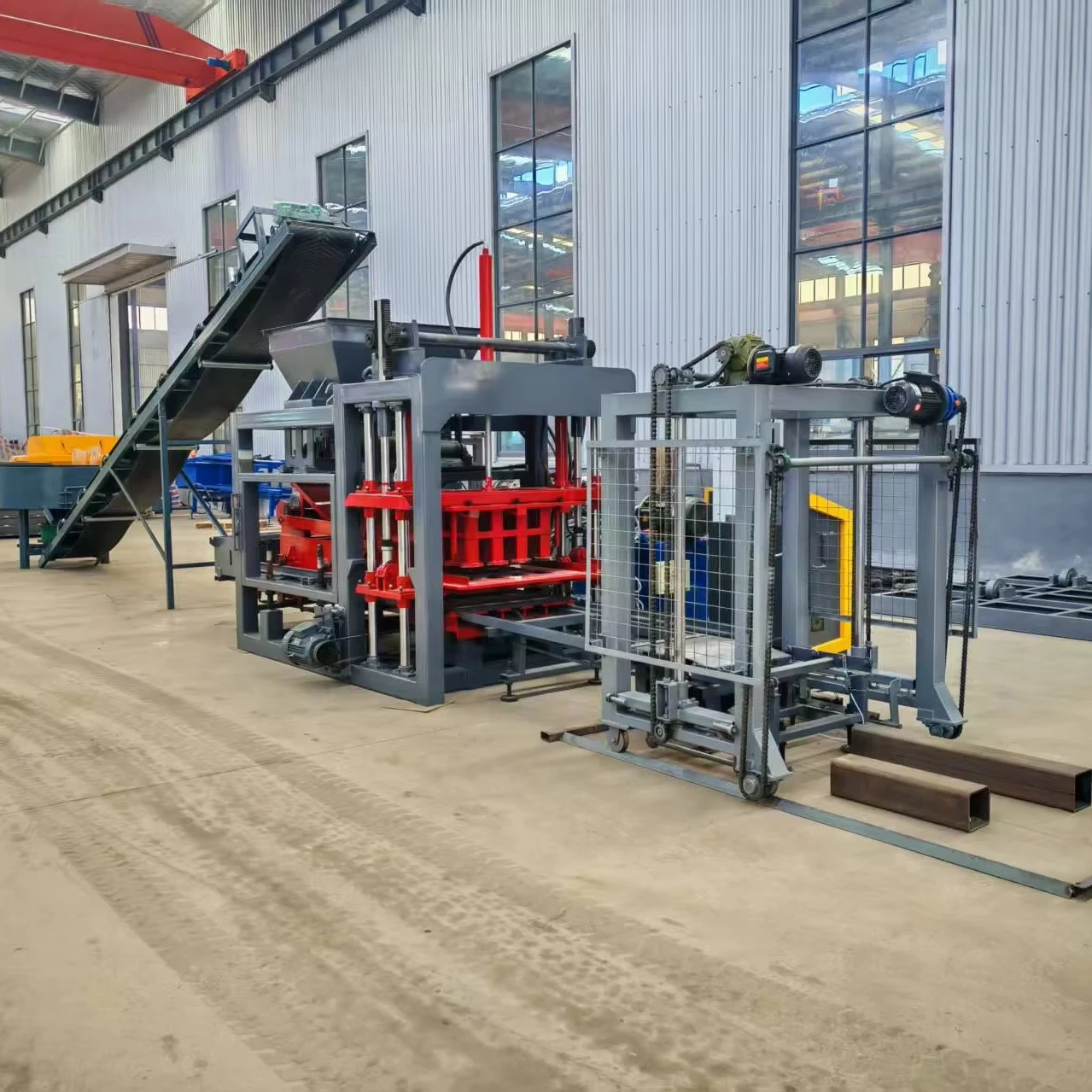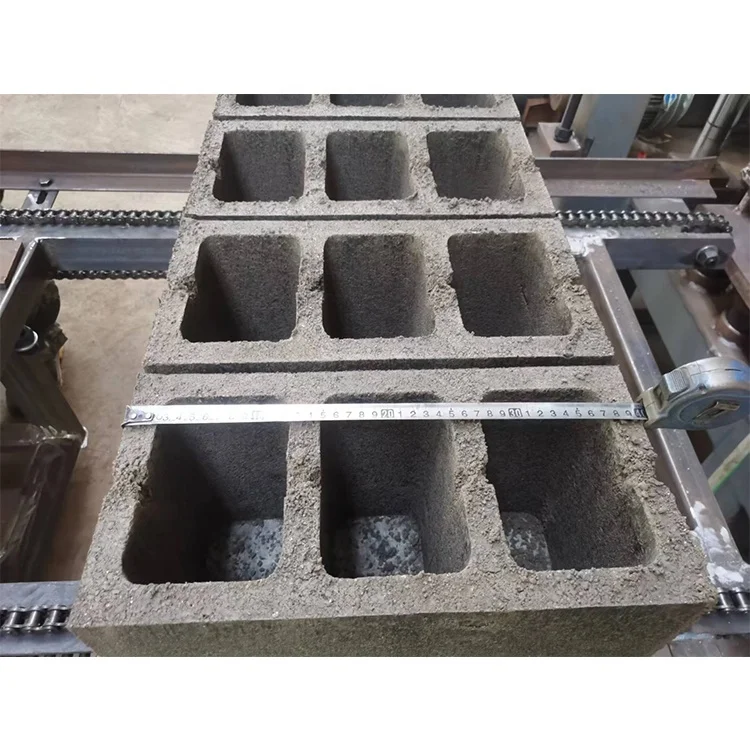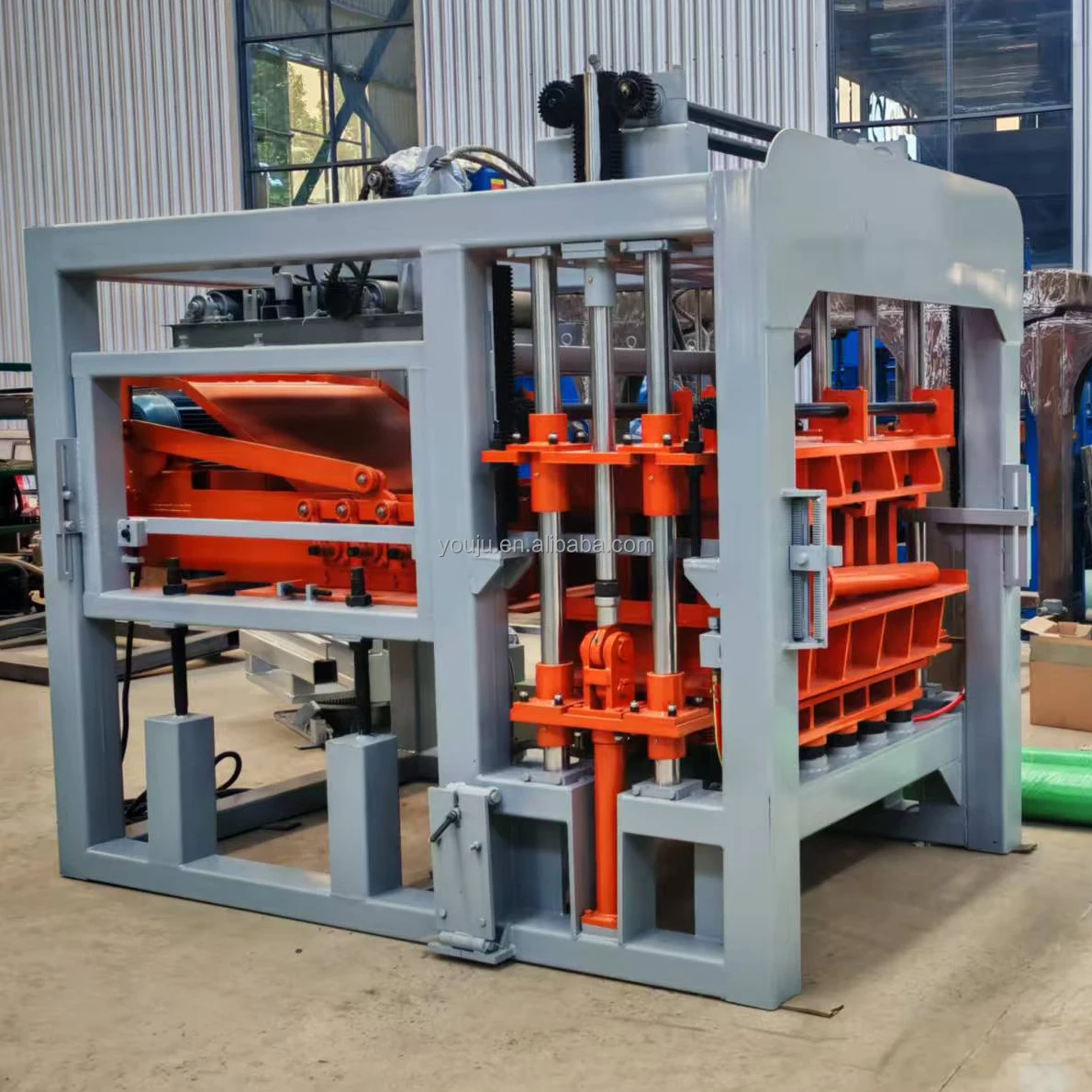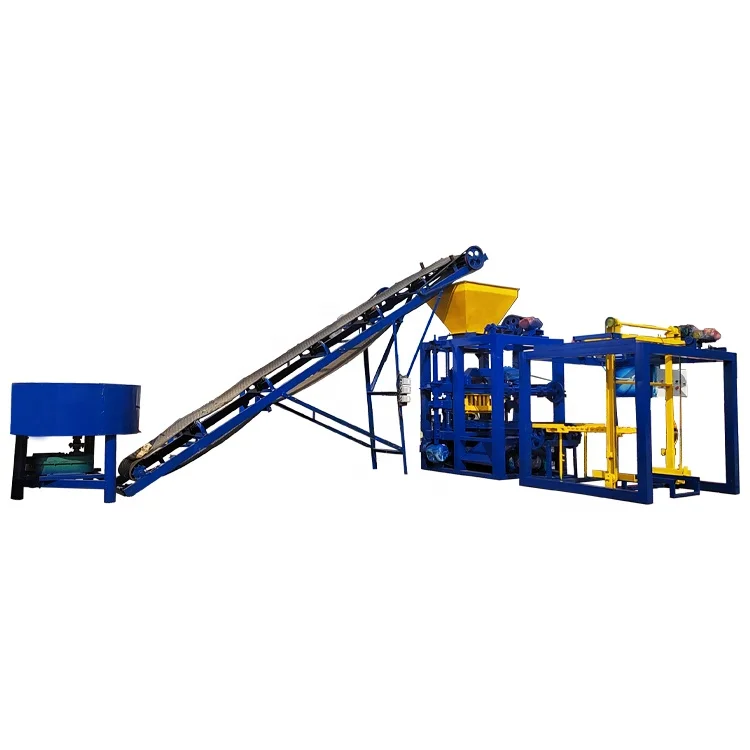

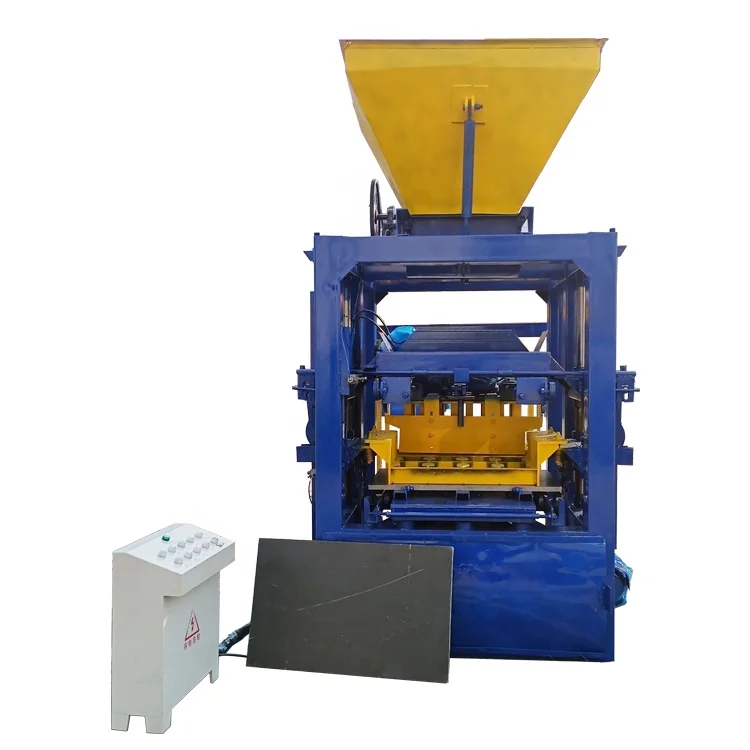
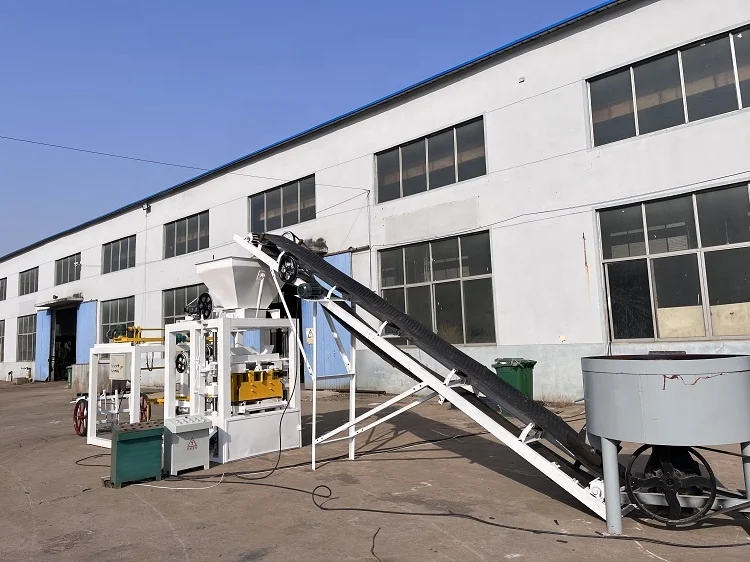
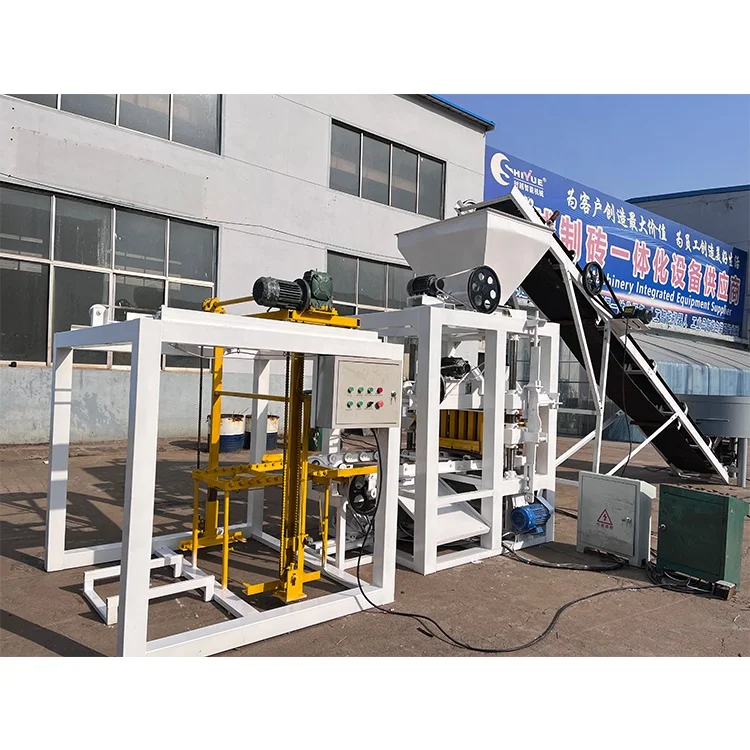

Description
Matched to Your Mix Design — every cycle time and pallet specification for the QTJ4-24 is confirmed against your local aggregate and target block format before the machine ships, not pulled from a generic catalogue.
Technical Specifications
| Parameter | Value |
|---|---|
| Model | QTJ4-24 |
| Product Type | Stationary Block Making Machine |
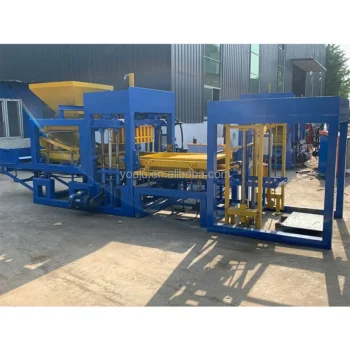
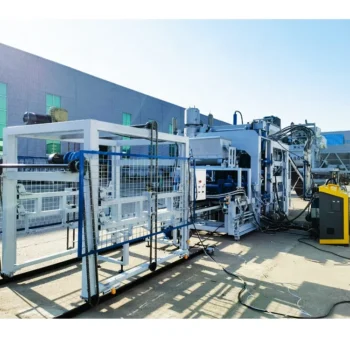
| Overall Dimensions (L×W×H) | 3600×1700×2560 mm |
| Pallet Size | 850×450 mm |
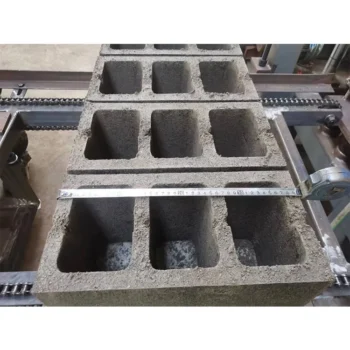
| Mould Format | Hollow block, paving brick, interlocking brick, solid brick |
| Cycle Time | 24–26 s (basis not stated in source — confirm block format / material / thickness) |
| Output Capacity | (basis not stated in source — confirm block format / material / thickness) |
| Automation Level | Semi-automatic (mechanical moulding with automatic spiral material distribution) |
| Stacking Method | Manual (basis to be confirmed) |
| Rated Power | 11.95 kW |
| Vibration System | 2×3 kW lower vibrators + 2×1.5 kW upper vibrators |
| Total Vibration Force | 45 kN |
| Control System | Mechanical / gear-driven (PLC availability to be confirmed) |
| Moulding Method | Mechanical |
| Reducer | 350-type reducer for mold lifting |
| Net Weight | 2 T |
| Warranty | 1 year (excluding spare parts) |
Application Suitability
| Application | Material or Output |
|---|---|
| Hollow block production for masonry walls | Cement, sand, crushed stone |
| Paving brick production for roads and walkways | Cement, sand, fine aggregate |
| Interlocking brick production for landscape and retaining structures | Cement, sand, stone dust |
| Solid block production for load-bearing construction | Cement, sand, coarse aggregate |
| Small to medium block plants with lower investment | Semi-automatic operation, manual pallet handling |
| On-site block production for housing contractors | Local aggregate, site-mixed concrete |
Why "Cycles per Hour" Misses the Real Output Picture
The cycle time printed on a spec sheet only matters when tied to the exact block format you intend to sell.
I once watched a QTJ4-24 block machine specifications sheet promise a steady stream of hollow blocks, but the 24–26 second cycle was timed on a thin paving brick, not the 200 mm hollow block the buyer actually needed. When we switched moulds on site, the cycle stretched and daily output dropped noticeably. That mismatch is common when capacity is quoted without naming the format [NEED_CITE: block format impact on cycle time and daily output]. Before committing to any stationary block machine, ask the supplier to state cycle time and daily output separately for every mould in the quotation, not a single blanket number.
Matching Pallet Size to Your Existing Curing Area
The QTJ4-24 runs on 850×450 mm pallets, a dimension that dictates how many blocks cure per rack and which forklift can handle the loaded weight. If your curing yard was laid out for a different pallet footprint, you will either waste floor space or need new racks. Confirm the pallet material — wood, bamboo, or composite — against your local humidity and handling method before production starts.
Semi-Automatic Positioning in the Block Line
This machine sits between manual egg-laying models and fully hydraulic automatic lines. The spiral material distributor feeds the mould cavity automatically, reducing operator fatigue, while pallet feeding and stacking remain manual tasks. That balance keeps the initial investment lower for first-time plant owners, yet leaves room to add automatic stacking or cubing later as demand grows [NEED_CITE: automation upgrade paths for semi-automatic block machines].
Vibration Force, Reducer Life, and Block Density
The 45 kN vibration force comes from four motors — two 3 kW units beneath the mould table and two 1.5 kW units above — working together to compact the mix from both directions. This dual vibration system produces more uniform density than a single lower vibrator, especially for taller hollow blocks where the top layer tends to stay loose. The 350-type reducer handles mold lifting, a heavy cyclic load that burns out smaller reducers within months. A properly sized reducer keeps the lifting mechanism stable through thousands of cycles, reducing unplanned downtime. Mechanical gear-driven control keeps the electrical system simple, which is an advantage in regions where PLC technicians are scarce, though buyers wanting remote diagnostics should confirm whether PLC control can be added to the QTJ4-24 block machine specifications at a later stage [NEED_CITE: mechanical versus PLC control in block making machines].
The Hidden Cost of Skipping Voltage Confirmation
I have seen machines sit idle on a dock for weeks because the motor was wound for 380 V / 50 Hz while the local grid delivers 440 V / 60 Hz. Rewinding a motor on site costs more than specifying the correct voltage at the order stage, and the delay pushes back production revenue. Always confirm voltage, frequency, and control display language in writing before the machine enters production [NEED_CITE: voltage and frequency standards by export market].
Why Source the QTJ4-24 Through a Block-Line Specialist
The QTJ4-24 is specified here as part of a matched system — machine, mould, pallet, and handling — rather than assembled from separate suppliers. Configuration is set against your actual mix design and local aggregate, not a catalogue default. Mould design covers the formats your market sells, with custom drawings available when standard formats do not match. The automation level is selectable, so a buyer can start with manual pallet handling and add automatic stacking as volume grows. Installation support includes operator training so your crew can run the machine independently from the first shift.
Documentation & Verification
- Line layout showing QTJ4-24 footprint with pallet flow direction marked
- Capacity calculation stating cycle time per block format, not a single figure
- Mould drawing and format list confirming block dimensions before production
- Hydraulic and electrical schematic matching your confirmed voltage and frequency
- Factory test record run on your target block format before dispatch
- Operation manual in the operator’s working language
Installation, Commissioning & Support
- Foundation pad leveled to QTJ4-24 dimensions (3600×1700 mm) with anchor bolt template
- Dedicated circuit rated for 11.95 kW plus starting surge, voltage confirmed pre-shipment
- Machine shipped partially assembled; vibration motors and hopper bolted on site
- First-run commissioning includes cycle time adjustment to your specific block format
- Operator training covers mould change procedure, reducer lubrication, and daily checks
- Wear parts list identifies vibrator motor brushes and reducer seals for local stocking
What to Share Before Requesting a Quotation
Send your target block dimensions, the local aggregate gradation you plan to use, and the daily output you need per format. Include your site voltage, frequency, and preferred control language so the QTJ4-24 block machine specifications in the quotation match your grid and crew from day one.
Frequently Asked Questions
Q: What is the realistic daily output of the QTJ4-24 for hollow blocks versus paving bricks?
A: The 24–26 second cycle time is quoted without stating which block format it assumes. Actual daily output depends on block dimensions, material mix, and curing logistics. Request a format-by-format capacity calculation that names the exact mould, mix, and shift length used for each figure before comparing machines.
Q: Does the QTJ4-24 use a PLC or is it purely mechanical?
A: The standard configuration uses mechanical gear-driven control. PLC availability depends on the manufacturer’s current offering and should be confirmed during the quotation stage. Buyers planning a future upgrade to automatic stacking should verify whether the control architecture supports adding a PLC later.
Q: Is the 850×450 mm pallet compatible with standard curing racks?
A: Compatibility depends on your existing rack spacing and forklift capacity. Some curing systems are built around different pallet footprints, requiring new racks if the dimensions do not match. Confirm pallet size against your current yard layout before placing the order to avoid extra handling equipment costs.
Q: What voltage options are available, and can the control display show my language?
A: Voltage and frequency must be confirmed to match your local grid before production begins. Control display language depends on whether a PLC is fitted. State your site voltage, frequency, and preferred language in the inquiry so the quotation locks these details in before manufacturing starts.