
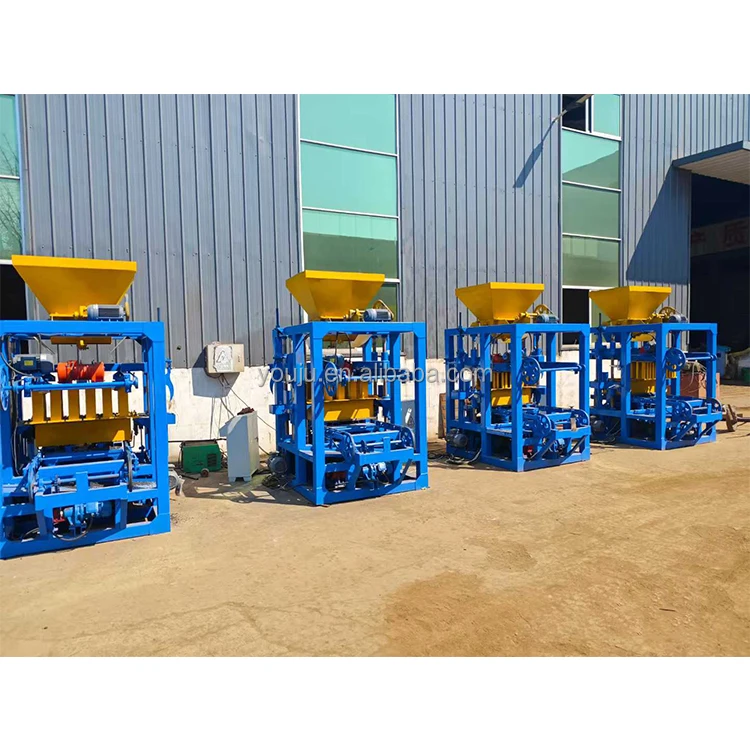
Description
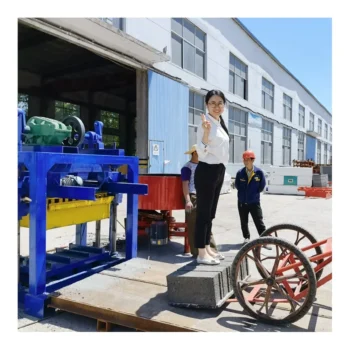
Format-Matched Configuration — every QTJ4-24 semi-automatic block machine is specified against the buyer’s target hollow block or solid brick format, local aggregate, and existing pallet inventory before production starts.
Technical Specifications
| Parameter | Value |
|---|---|
| Product Type | Semi-Automatic Concrete Block Making Machine |
| Model | QTJ4-24 |
| Molding Type | Platform Vibration |
| Overall Dimensions (L×W×H) | 3600mm × 1700mm × 2560mm (working state) |
| Total Mass | 1750kgs |
| Pallet Size | 850mm × 450mm |
| Overall Power | 14.25KW |
| Vibration System | Lower platform vibration (2 × 3kW motors) + Upper vibration (1.5kW attached device) |
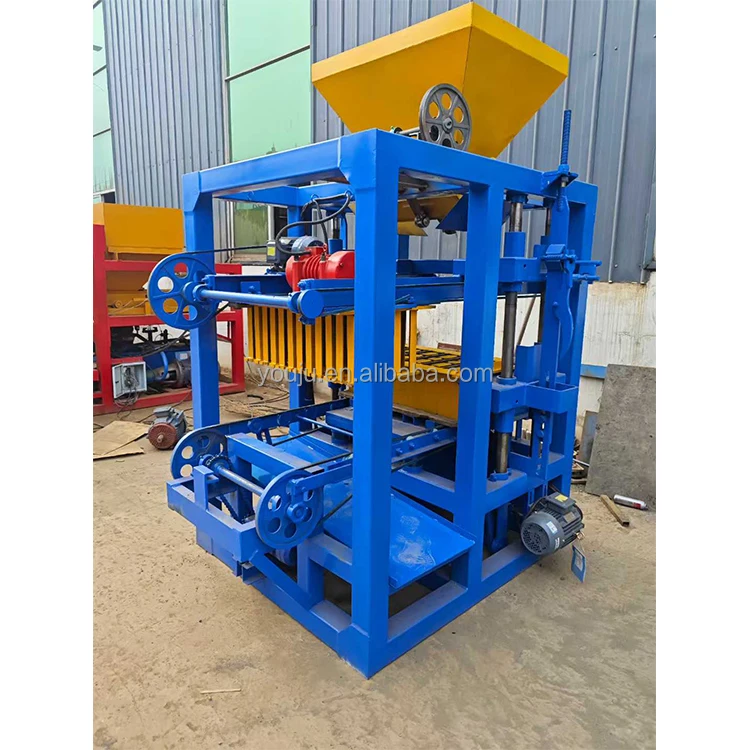
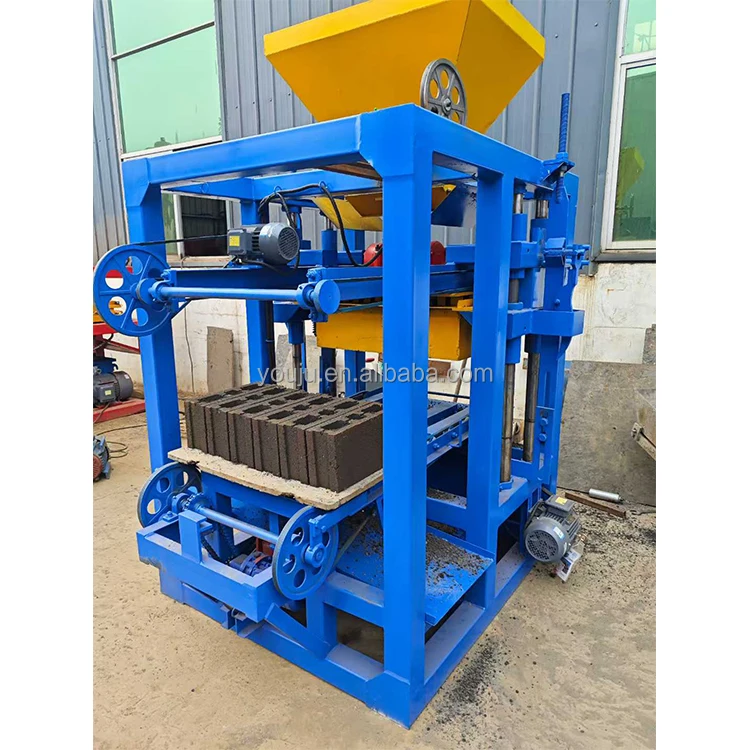
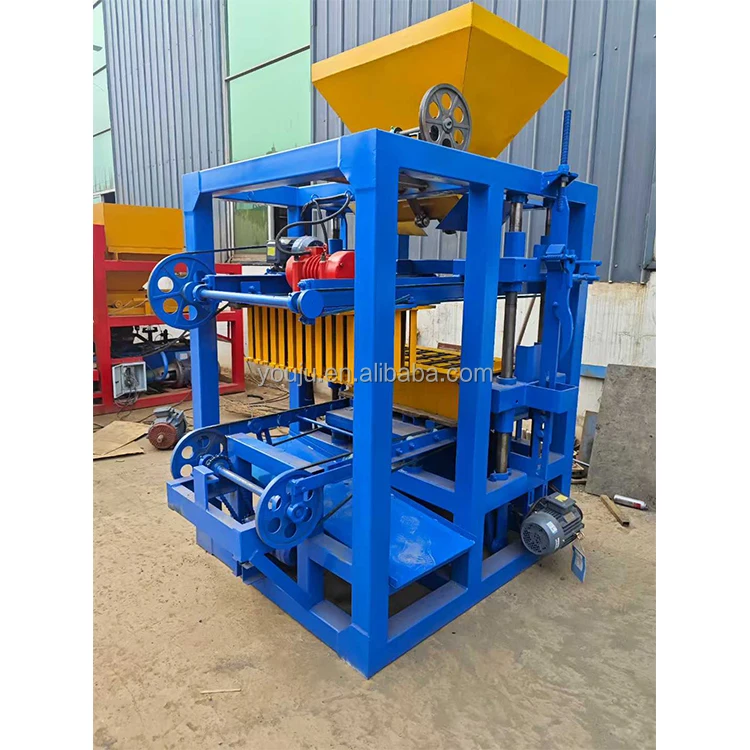
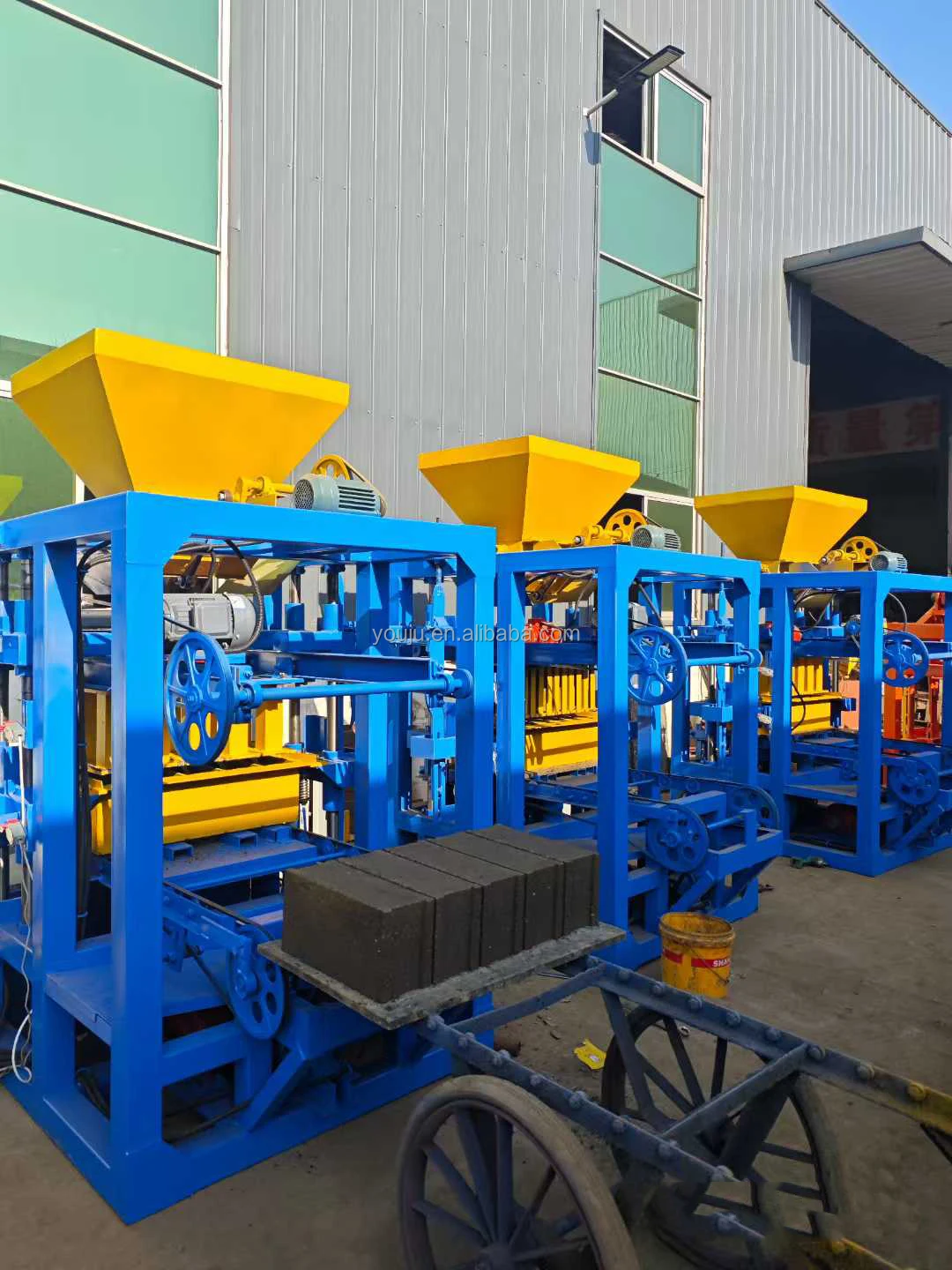
| Machine Frame | Dragon gate style, super steel construction, four vertical wear-resisting shafts |
| Elevating System | Cone-shape motor with JZQ250 speed reducer, V-shape triangle belt drive |
| Delivery Device | Cycloidal pin wheel speed reducer with chains and V-shape triangle belt drive |
| Material Storage | Material releasing hopper + material storing hopper (bolted assembly) |
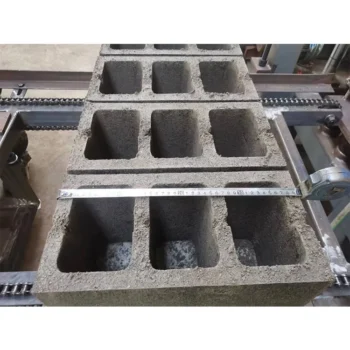
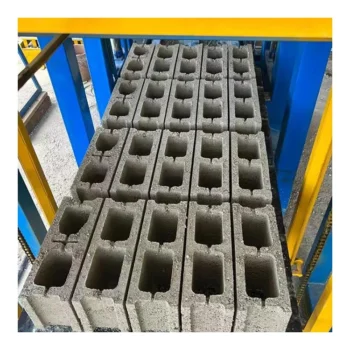
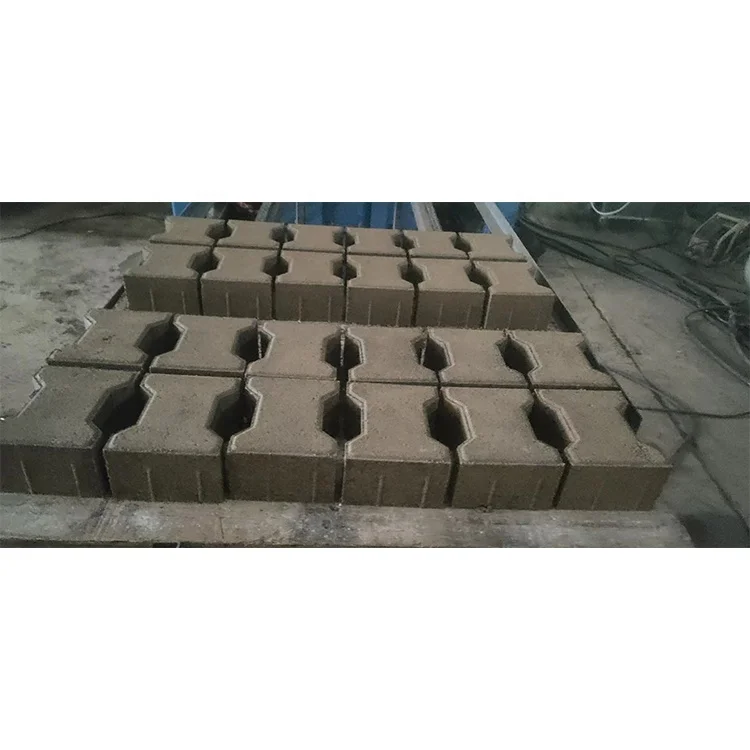
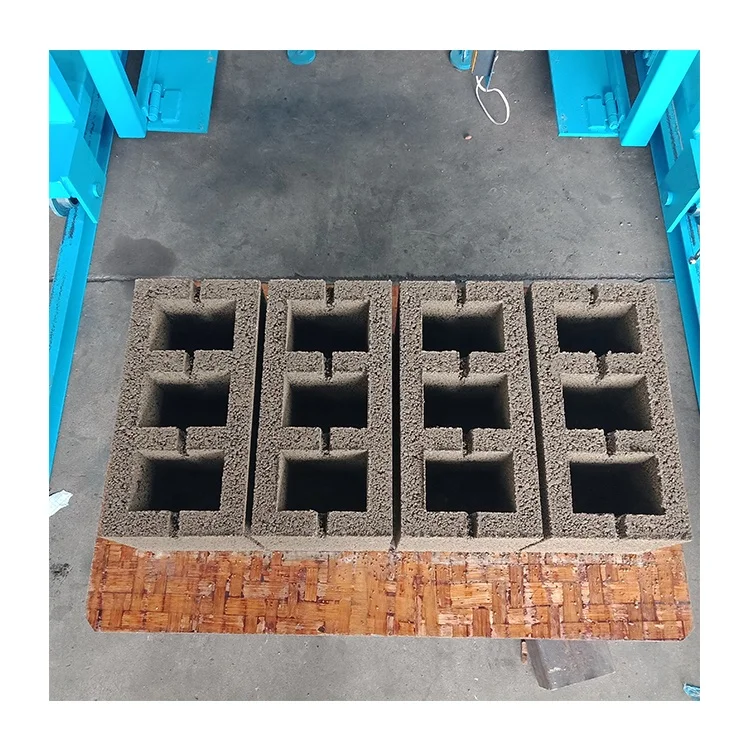
| Mould Format (Hollow Block) | 390mm × 190mm × 190mm, 4 pcs/mold |
| Mould Format (Solid Brick) | 240mm × 115mm × 53mm, 21 pcs/mold |
| Automation Level | Semi-automatic |
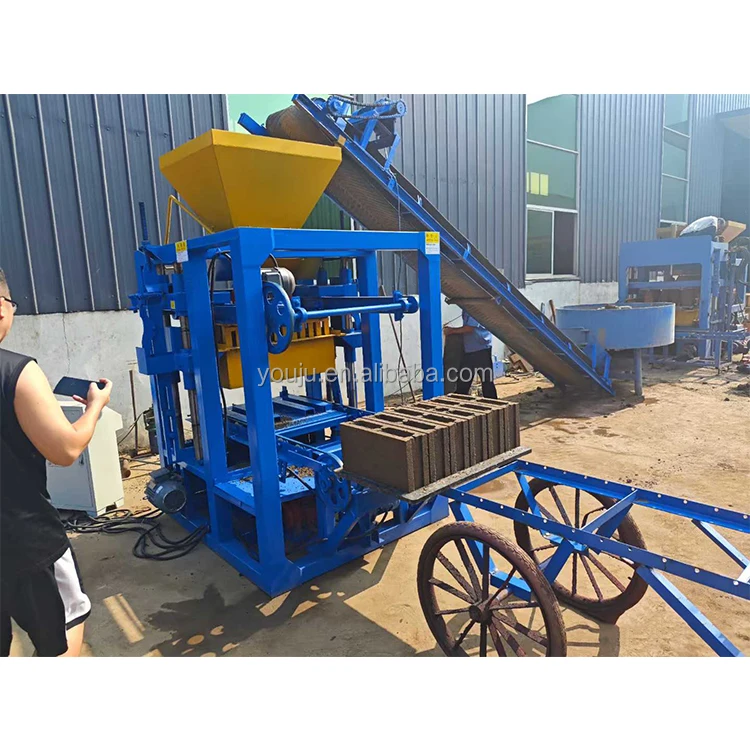
| Support Equipment (Basic) | JQ350 pan mixer, 6m belt conveyor, hand trolley |
| Support Equipment (Optional) | Auto stacker (3–6 layers depending on block height) |
| Voltage & Frequency | Configurable to target market requirements (basis to be confirmed) |
| Cycle Time | Varies by block format, material and thickness (basis to be confirmed) |
| Hydraulic Pressure | Not applicable (mechanical vibration type) |
Application Suitability
| Application | Material or Output |
|---|---|
| Small-scale hollow block plant | Crushed stone, sand, cement, water producing 390×190×190mm blocks |
| Solid brick manufacturing | River sand, fly ash, cement producing 240×115×53mm bricks |
| On-site contractor block production | Locally sourced aggregate for housing or development projects |
| Entrepreneur entry-level block plant | Standard concrete mix with interchangeable mould formats |
What "Cycles per Hour" Leaves Out When Sizing a QTJ4-24 Block Machine How to Choose
The only capacity figure that matters is the one tied to your exact block format, mix design, and local aggregate.
Many quotations for semi-automatic block machine specifications list a single cycles-per-hour number without disclosing which block size or material density that figure assumes. I have watched buyers in Latin America receive machines that performed well on paper but cracked every hollow block during demolding because the vibration frequency was calibrated for standard gravel, not the lightweight volcanic aggregate common in their region. The result is wasted shifts and lost trust with local builders who expect consistent block strength [NEED_CITE: aggregate density impact on vibration compaction]. A QTJ4-24 block machine how to choose decision must start with a sample of your actual raw material, not a catalogue default.
Mould Format Coverage and Daily Output Reality
The QTJ4-24 ships standard with moulds for 390×190×190mm hollow blocks at 4 pieces per cycle and 240×115×53mm solid bricks at 21 pieces per cycle. Custom mould design to buyer drawings is available for formats your local market demands. This semi-automatic block machine specifications package means you know exactly how many pieces of your target product come off the pallet each hour, rather than guessing from a generic rating. Mould change time must be verified against the manufacturer’s current catalogue before ordering.
Dual Vibration Tuned to Local Aggregate
The lower platform vibration driven by two 3kW motors works together with a 1.5kW upper vibration device to compact the concrete mix from both directions. I used to see machines arrive at brick plants and produce hollow blocks that cracked the moment they left the mould because the vibration force was never matched to the lightweight pumice or volcanic scoria available locally. We now require a two-kilogram sample of the buyer’s aggregate, run three test press cycles with the actual mould, and adjust the frequency before the machine leaves the factory [NEED_CITE: vibration frequency matching for lightweight aggregate].
Dragon Gate Frame and Shaft Accuracy
The dragon gate steel frame with four vertical wear-resisting shafts keeps the mould aligned during every press cycle. When the shafts wear unevenly or the frame deflects under vibration, hollow blocks come out with one wall thicker than the other, which fails the compressive strength test at the building inspector’s office. This mechanical construction is what allows the QTJ4-24 to maintain dimensional accuracy across thousands of cycles and multiple mould changes.
Pallet Size and Curing Area Alignment
The 850×450mm pallet must be confirmed against your existing curing yard dimensions and the forklift you already own. I have seen buyers receive pallets that were too wide for their curing racks, forcing them to stack blocks by hand in the sun and lose half the day’s production to uneven curing. The pallet specification is locked in during the quotation stage so there are no surprises at commissioning [NEED_CITE: pallet and curing yard compatibility in block plants].
The Hidden Cost of Skipping Mix Design Validation
When the vibration system is set for a standard gravel mix but the buyer can only source lightweight volcanic aggregate, the hollow blocks demold with hairline cracks along the web. This is not a machine defect — it is a configuration mismatch that could have been caught with a two-kilogram sample and three test cycles. Buyers end up blaming the equipment, ordering replacement parts that do not solve the problem, and losing weeks of production while searching for an aggregate source that fits the factory preset [NEED_CITE: mix design and vibration mismatch consequences].
Why Buyers Specify This Machine Here
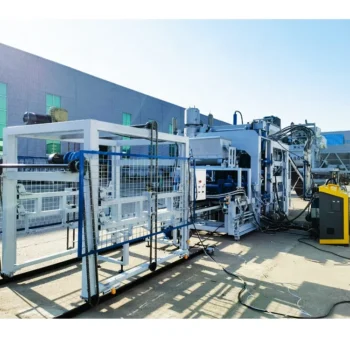
Shandong Shiyue Intelligent Machinery Co., Ltd focuses exclusively on block machinery, so the QTJ4-24 press, mould, pallet, and handling equipment are specified as one matched system. Configuration is set against your actual mix design, local aggregate, and target block format rather than a catalogue default. Mould design covers the formats your market sells, including custom drawings for non-standard sizes. Automation level is selectable, allowing a buyer to start semi-automatic and add auto stacking or pallet feeding later. Installation and commissioning support includes operator training so the first production run meets spec.
Documentation & Verification
- Line layout and capacity calculation stating the exact block format assumed for each output figure
- Mould drawing and format list confirming every block size your local market requires
- Pallet specification sheet validated against your curing area and forklift dimensions
- Voltage, frequency, and PLC display language confirmation document before production begins
- Factory test record on your specific mix design and target block format before dispatch
- Operation and maintenance manual with wear parts and mould replacement list
Installation, Commissioning & Support
- Foundation pad must support 1750kgs total mass plus dynamic vibration load across the 3600mm × 1700mm footprint
- Dedicated electrical circuit sized for 14.25KW overall power with confirmed voltage and frequency
- Machine arrives as a complete unit with separate JQ350 pan mixer and 6m belt conveyor for on-site assembly
- First-run parameter setting includes vibration frequency adjustment based on your aggregate sample test results
- Operator training covers mould change procedure, daily lubrication of four wear-resisting shafts, and belt tension checks
- Wear parts list and mould replacement schedule provided for ongoing maintenance planning
What We Need to Configure Your Line
To move from inquiry to a matched configuration proposal, share your target block format and dimensions, the daily output you need to hit, and the type of aggregate available within hauling distance of your plant. We also need your local voltage and frequency, preferred control panel language, and whether your existing curing yard uses standard racks or open-air stacking. If you are replacing a machine already on site, tell us the pallet size and forklift capacity you are working with so the new line integrates without rework.
Frequently Asked Questions
Q: How is QTJ4-24 daily output calculated per block format?
A: Output is calculated by multiplying pieces per mould by verified cycles per hour for that specific format, mix design, and aggregate density. The 390×190×190mm hollow block mould produces 4 pieces per cycle, while the 240×115×53mm solid brick mould produces 21 pieces per cycle. The capacity document you receive will state the exact format and material assumption behind every figure.
Q: Which mould formats are available beyond hollow block and solid brick?
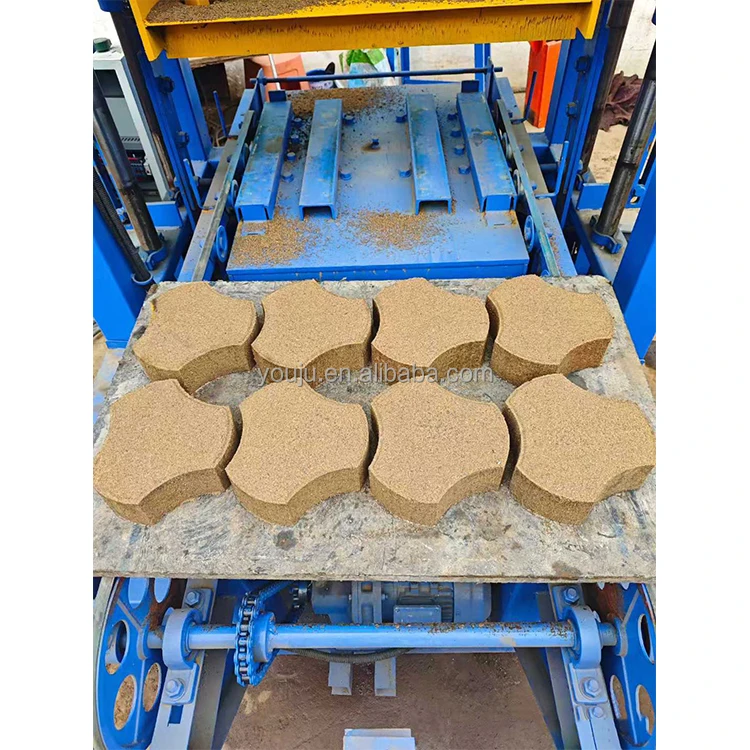
A: Custom mould design to buyer drawings is available for paving blocks, kerbstones, interlocking bricks, and porous bricks that your local market demands. Mould change time varies by format and must be verified against the manufacturer’s current specification sheet before ordering to ensure it fits your production schedule.
Q: How is the 850×450mm pallet validated against my facility?
A: We confirm your curing rack spacing, yard dimensions, and existing forklift fork width before locking the pallet specification. A pallet that does not match your handling equipment forces manual stacking, which slows the line and risks uneven curing that weakens block strength.
Q: Can the QTJ4-24 be upgraded to higher automation later?
A: The semi-automatic configuration can be supplemented with an optional auto stacker that handles 3 to 6 layers depending on block height. Pallet feeding automation and additional handling equipment can also be integrated as your production volume grows, allowing a phased investment approach.
Q: What local aggregate does the vibration system need to be matched against?
A: The dual vibration system must be tuned to your specific aggregate density, whether that is standard crushed gravel, lightweight volcanic scoria, or pumice. We require a two-kilogram raw material sample to run test press cycles and set the correct vibration parameters before the machine ships.