

Description
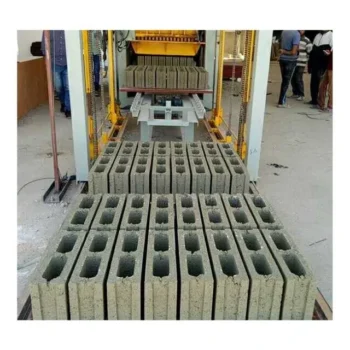
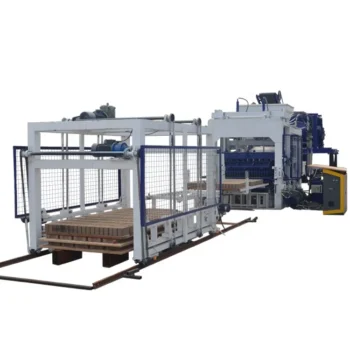
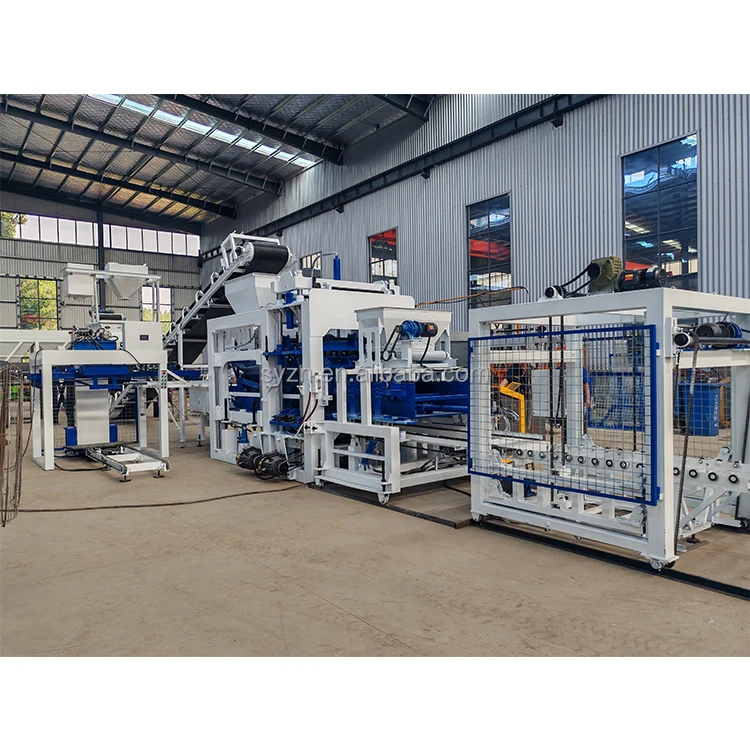
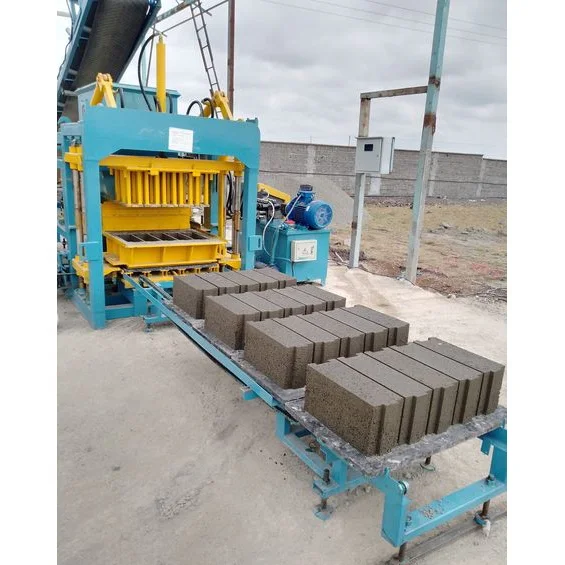
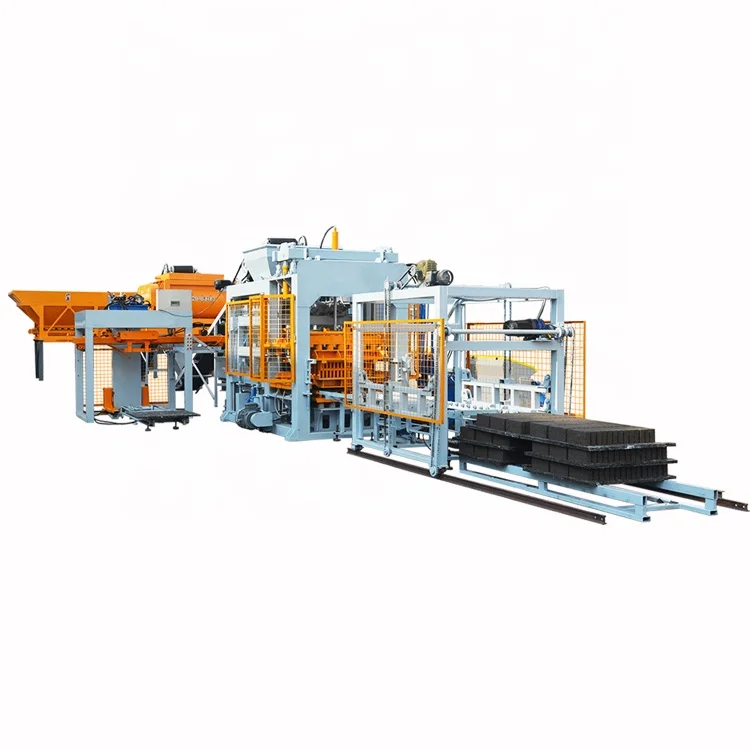
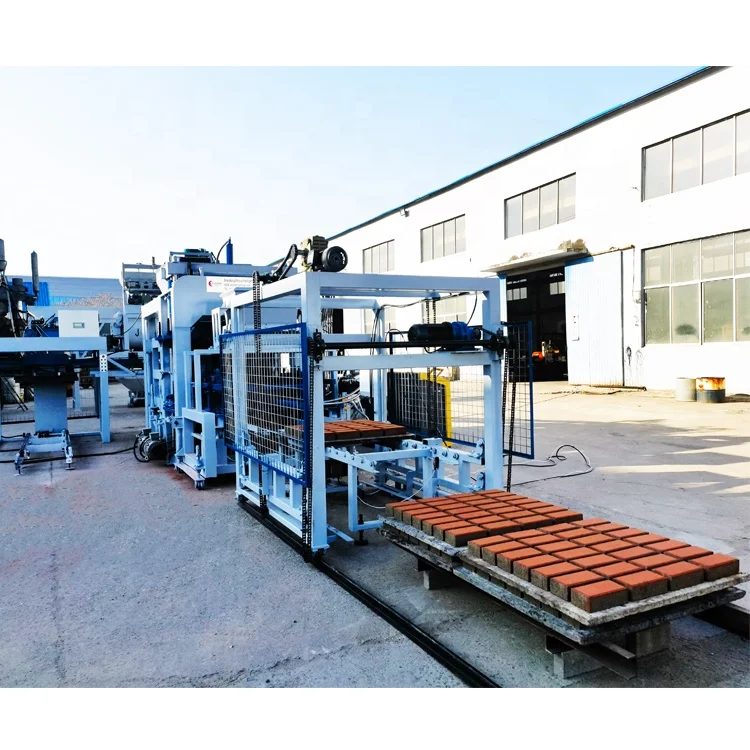
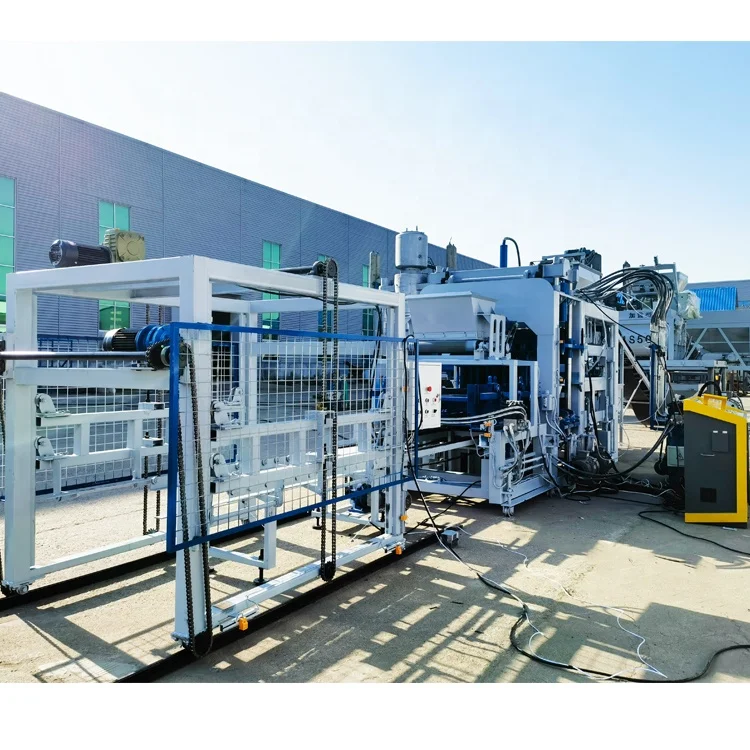
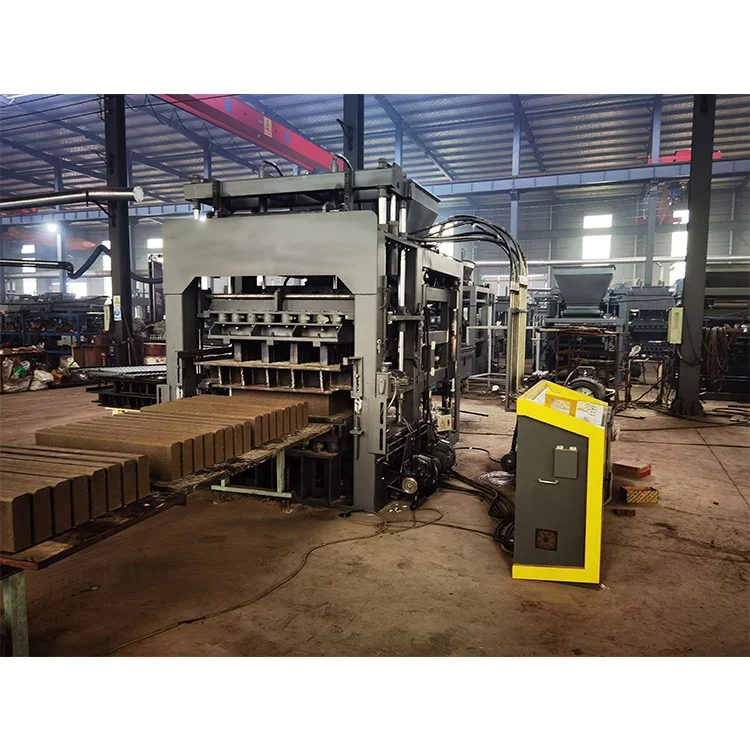
Matched System Configuration — The QT8-15 hydraulic block machine specifications define not just a press, but a complete line where mould, pallet, and stacker are sized together against your actual block format and local aggregate.
Technical Specifications
| Parameter | Value |
|---|---|
| Model | QT8-15 |
| Product Type | Hydraulic Full Automatic Concrete Block Making Machine |
| Overall Dimensions (L×W×H) | 8300×1860×3000mm |
| Rated Pressure | 21MPa |
| Main Vibration Form | Platform Vibration |
| Vibration Frequency | 2800-4500 r/min |
| Pallet Size | 950×900mm |
| Molding Cycle | 15-20s (basis not stated in source — confirm block format / material / thickness) |
| Overall Power | 55.5kW |
| Vibration Force | 45kN |
| Total Mass | 8T |
| Demolding Method | Hydraulic |
| Required Factory Area | 300m² |
| Automation Level | Full Automatic with Stacker |
Application Suitability
| Application | Material or Output |
|---|---|
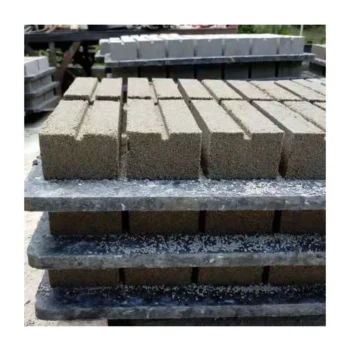
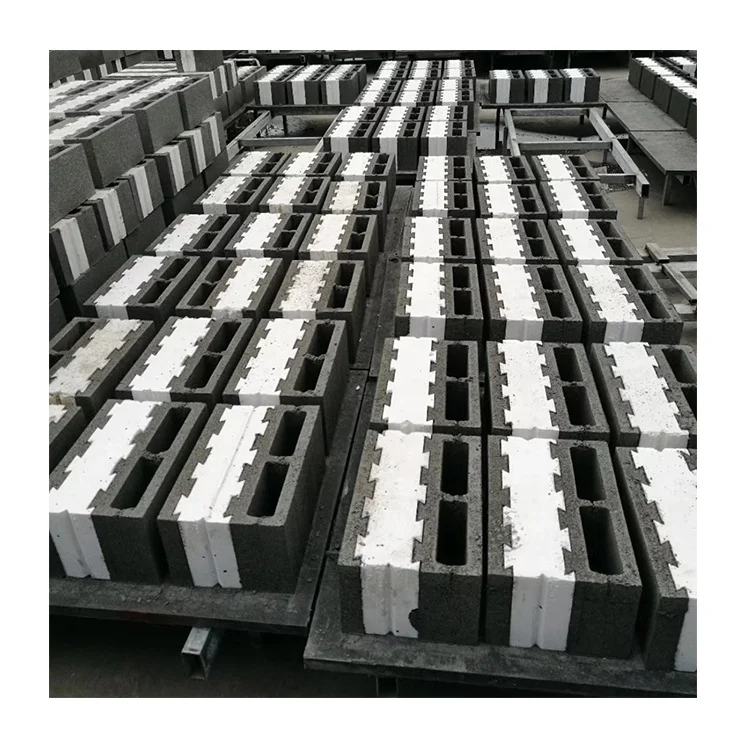
| Hollow Block Production | Crushed stone, sand, cement, fly ash |
| Solid Block Manufacturing | Gravel, sand, cement, slag |
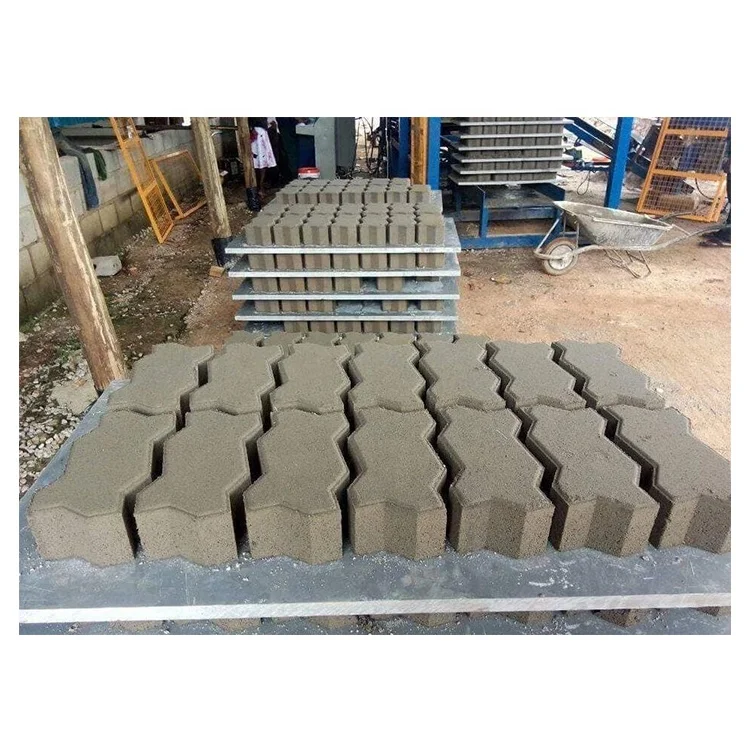
| Paving Block Production | Crushed stone, sand, cement, colored pigments |
| Interlocking Block & Curbstone | Dust, fly ash, gravel, cement |
What "15-20 Seconds" Actually Means for Your Daily Tonnage
Cycle time is meaningless without the exact block format it was measured on.
When a quotation simply lists a molding cycle for the QT8-15 hydraulic block machine specifications, the buyer has no way of knowing if that figure applies to a standard hollow block, a dense paver, or a thin interlocking brick. I have seen plant owners budget for a specific daily output, only to find that the quoted cycle assumed a format their market does not buy. The vibration frequency and hydraulic pressure must be matched to the density of the specific block being produced [NEED_CITE: block density and vibration force matching principles]. Without this match, the machine either under-compacts a heavy paver or cracks a lighter hollow block.
Aligning Pallet Size with Your Existing Curing Yard
The 950×900mm pallet size on this machine is a fixed mechanical constraint that dictates how the entire curing yard must be laid out. If a buyer already operates a fleet of forklifts and curing racks designed for a different dimension, introducing this QT8-15 hydraulic block machine specifications requires a complete overhaul of the handling logistics. The stacker must be calibrated to the exact weight and friction coefficient of the pallet material, whether that is bamboo, steel, or PVC.
The Reality of Format Changeovers on Site
Switching from hollow blocks to pavers is not just a matter of dropping in a new mould. The hydraulic pressure, vibration amplitude, and feed box timing all require adjustment to suit the new format’s mass and geometry. A technical buyer must verify the mould change time against the specific formats they intend to run, as a changeover that consumes half a shift will eliminate the flexibility the machine was purchased for [NEED_CITE: typical block machine mould change procedures].
Interpreting the Vibration and Pressure Relationship
The 45kN vibration force combined with 21MPa hydraulic pressure determines the ultimate compressive strength of the concrete product. Platform vibration transfers energy through the 950×900mm pallet, and if the local aggregate is particularly hard or angular, the frequency must be adjusted within the 2800-4500 r/min range to ensure proper compaction. The 55.5kW total power draw reflects the energy required to maintain this force consistently across every cycle, ensuring that the first block of the day matches the ten-thousandth.
The Hidden Cost of Ignoring Local Aggregate
When a machine is configured for a specific mix design that cannot be sourced locally, the buyer is forced to import expensive additives or accept a weaker product. The vibration force must overcome the internal friction of the buyer’s specific sand and gravel, not the manufacturer’s test material. If the mix is too dry for the configured vibration, the blocks will crumble during the stacking process.
Why Procurement Focuses on the Complete Line
- Single-Source System Matching: The press, stacker, and pallet handling are specified as one unit, preventing the bottleneck that occurs when the press outpaces the curing rack handler.
- Format-Specific Capacity Calculation: Every output figure is tied to a named block format and pallet size, removing the guesswork from plant planning.
- Custom Mould Engineering: Moulds are designed to the buyer’s market dimensions, ensuring the machine produces what actually sells in the target region.
- Automation Scalability: The full automatic stacker eliminates manual pallet handling, a critical factor when labor availability fluctuates.
- Material Adaptation: The hydraulic and vibration settings are calibrated against the buyer’s actual raw material samples, not catalogue defaults [NEED_CITE: concrete mix design for block production].
Documentation & Verification
- Line layout drawing showing 8300mm machine length and stacker placement relative to curing area
- Capacity calculation sheet stating exact block format assumed for each cycle time figure
- Mould drawing package with format list and required changeover tooling
- Hydraulic schematic showing 21MPa circuit and valve response specifications
- Factory test record using buyer-supplied local aggregate sample
- Pallet specification matched to existing forklift and curing rack dimensions
Installation, Commissioning & Support
- Foundation plan accounting for 8T total mass and dynamic vibration loads
- Electrical diagram confirming voltage and frequency before the 55.5kW motor is energized
- Assembly sequence for the 8300×1860×3000mm frame within the 300m² footprint
- PLC parameter setting for specific mould formats and local material density
- Operator training on hydraulic demolding sequence and stacker synchronization
- Wear parts list identifying high-friction points in the feed box and vibration table
Sizing the QT8-15 to Your Production Targets
To determine if the QT8-15 hydraulic block machine specifications match your plant requirements, please provide the exact block formats your market demands, the compressive strength required by local building codes, and a sample analysis of your available aggregate. We also need to confirm the voltage and frequency of your site, along with the dimensions of your existing curing racks and forklift capacity, to ensure the 950×900mm pallet system integrates smoothly.
Frequently Asked Questions
Q: How is the vibration force matched to my local aggregate and mix design?
A: The 45kN vibration force and 2800-4500 r/min frequency range are calibrated using a sample of your local crushed stone, sand, and cement. We test the specific mix to ensure the 21MPa hydraulic pressure produces the required block density without causing surface cracking or internal voids.
Q: What block format is each capacity figure based on?
A: Every output calculation for the QT8-15 hydraulic block machine specifications names the exact block dimensions and pallet configuration used. We do not quote a single cycle time; instead, we provide a matrix showing molding cycles and daily output for hollow blocks, pavers, and interlocking formats individually.
Q: How is pallet size chosen to match my curing area and forklift?
A: The 950×900mm pallet size is verified against your existing curing rack spacing and forklift tine width. If your facility uses a different standard, we assess the feasibility of adapting the stacker and handling equipment before the machine is built, avoiding costly yard modifications later.
Q: What is the realistic mould change time for different formats?
A: Mould change time varies based on the complexity of the format and the demolding mechanism. We provide a specific time estimate for switching between your required hollow block, paver, and interlocking formats, including the hydraulic and PLC adjustments needed for each transition.