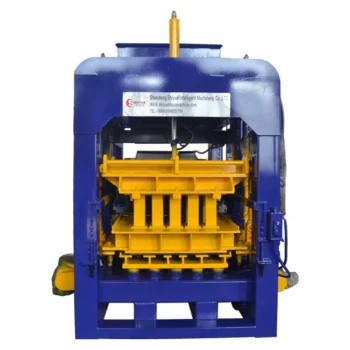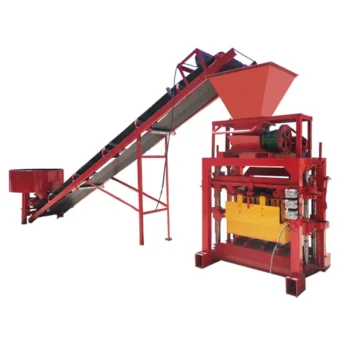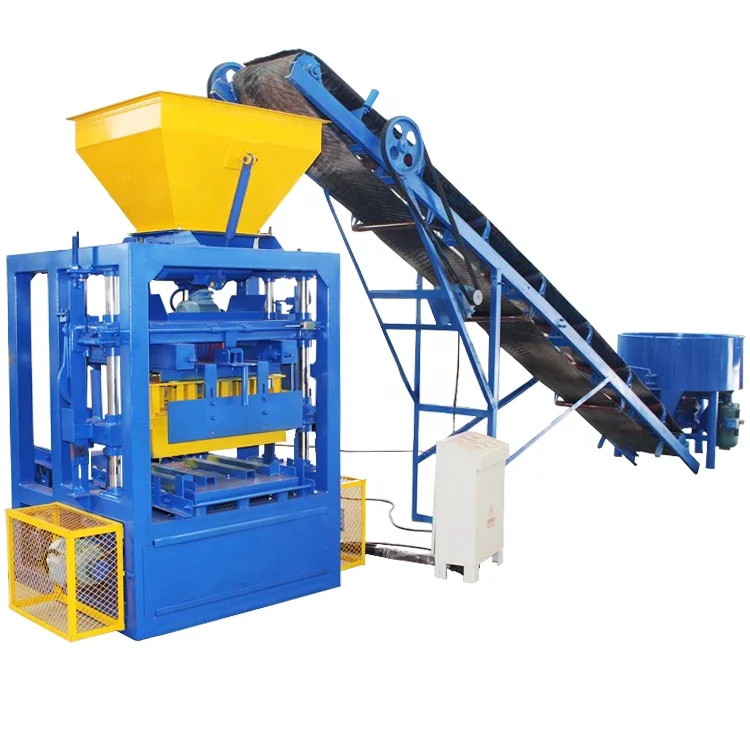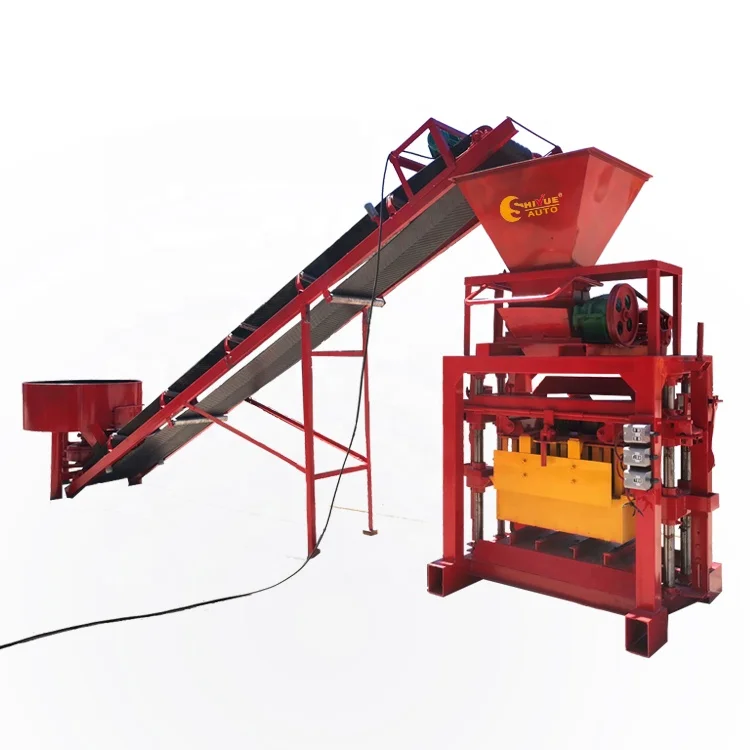

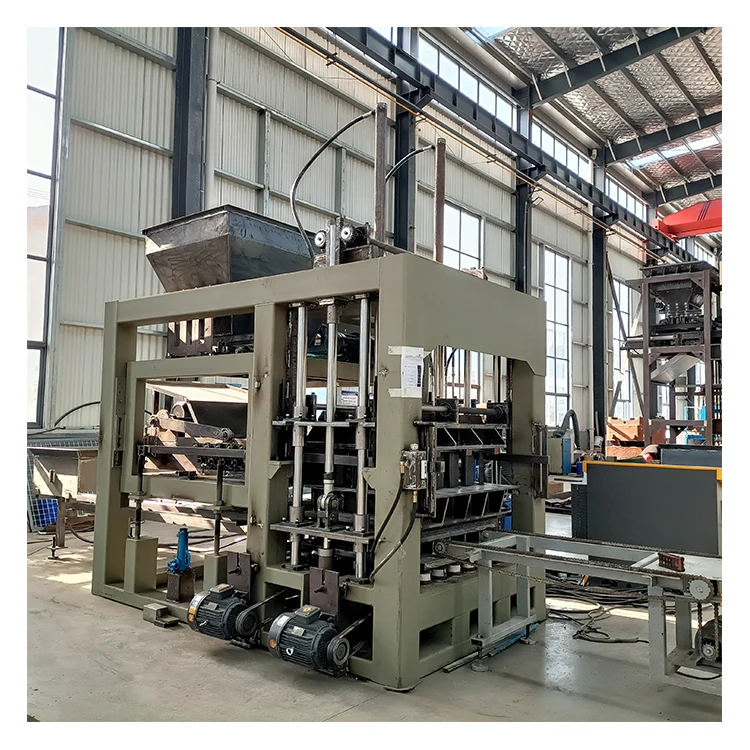
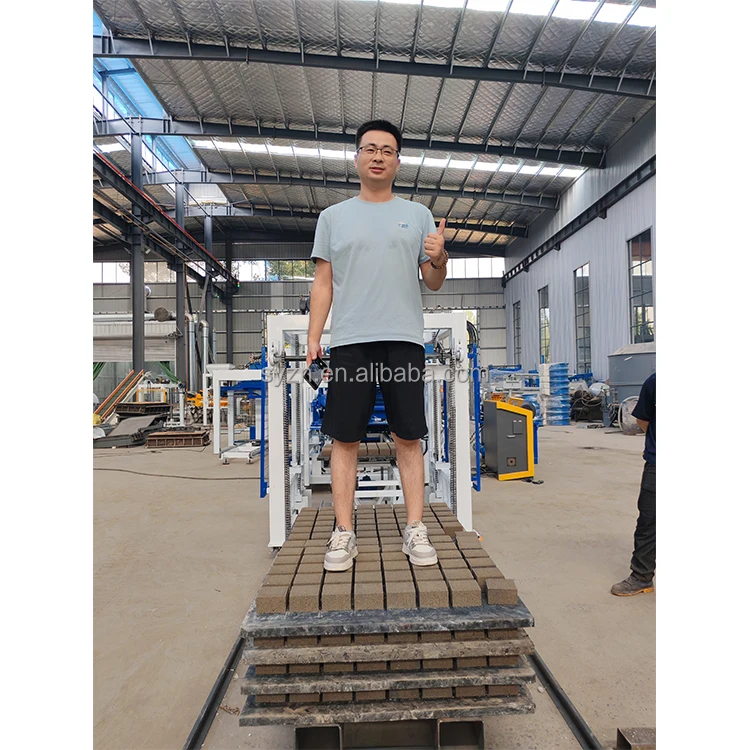
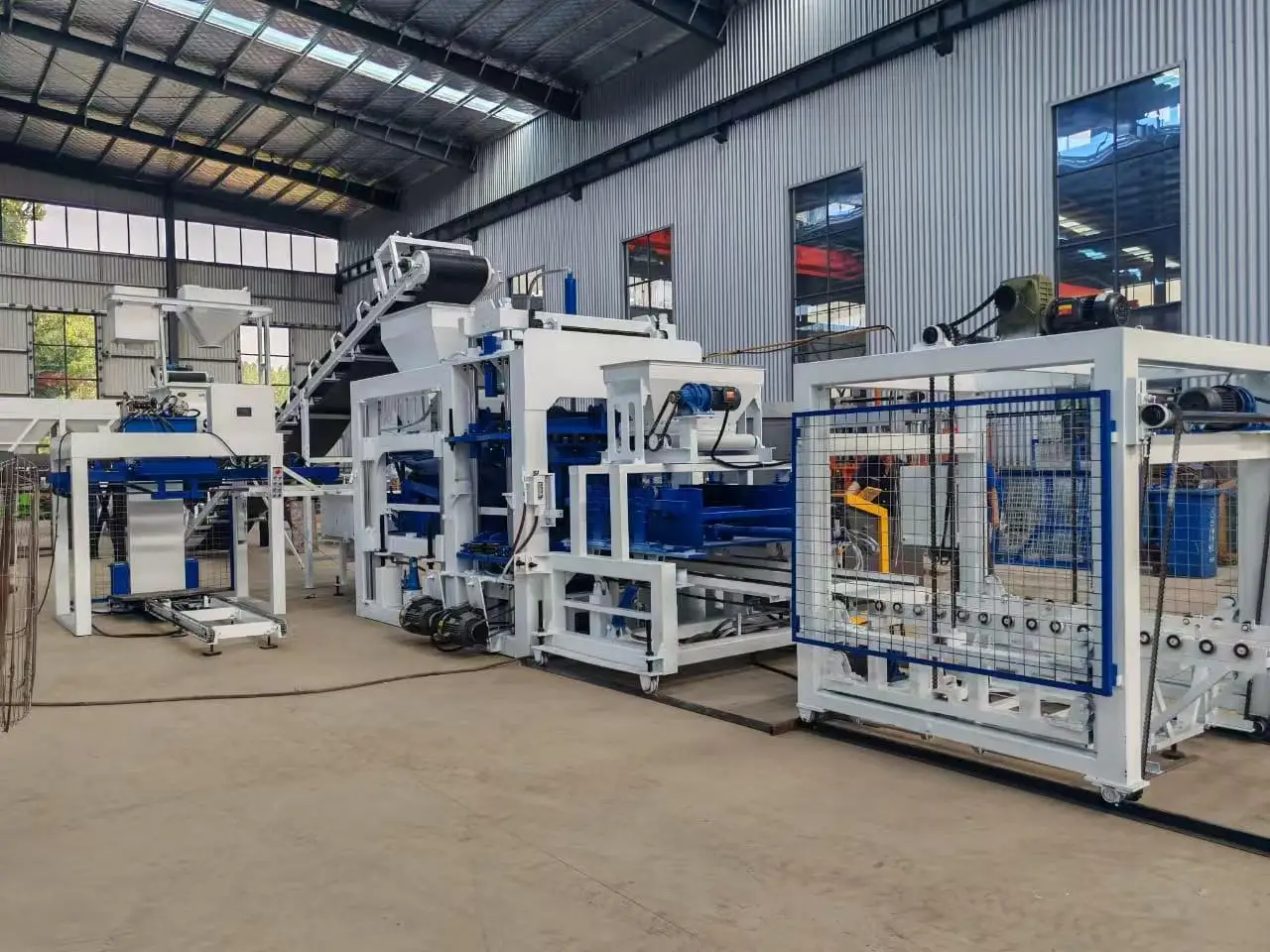
Description
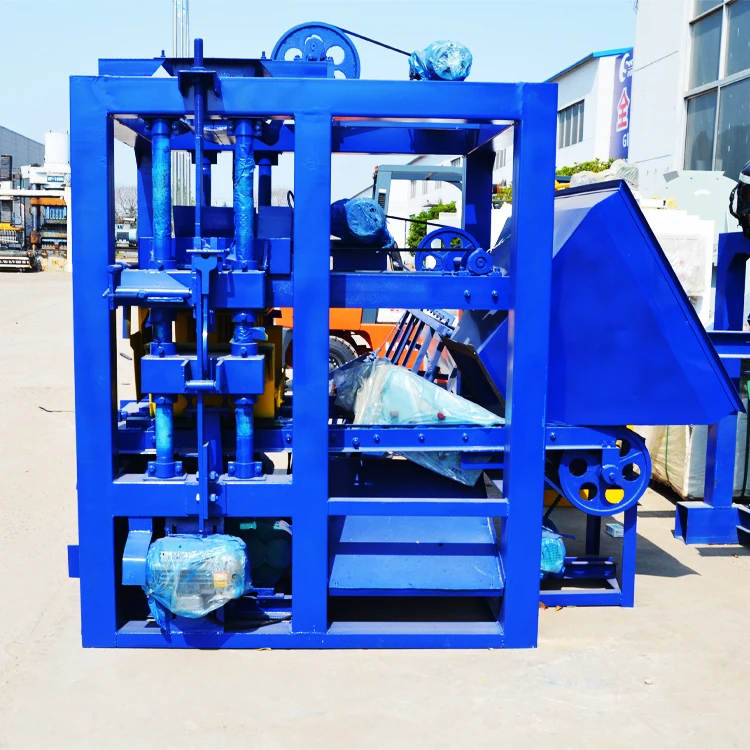
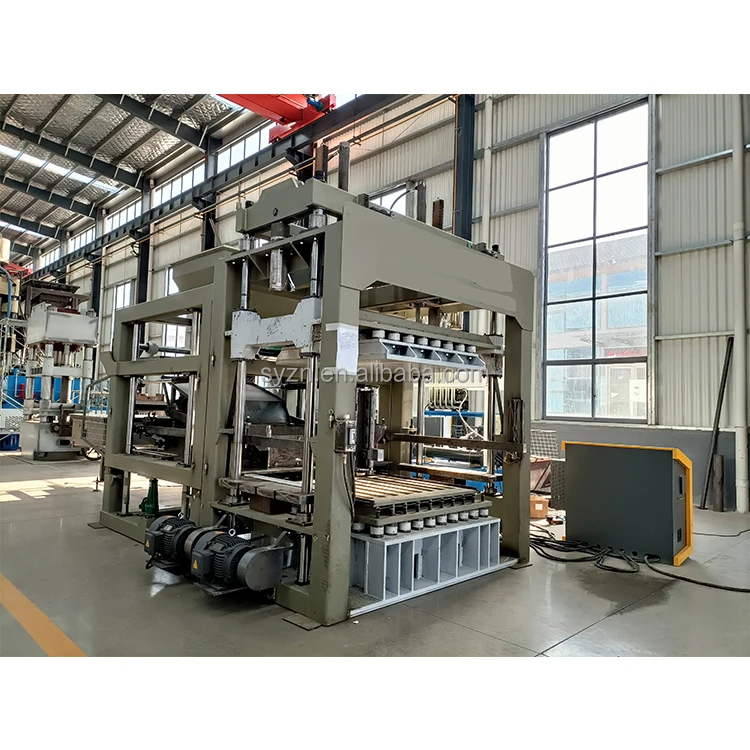
Matched system configuration — Every QT8-15 block machine order starts with your local aggregate profile and target block format, ensuring vibration force and pallet dimensions align with the products you actually sell rather than a generic catalogue default.
Technical Specifications
| Parameter | Value |
|---|---|
| Product Type | Automatic Hydraulic Block Making Machine |
| Model | QT8-15 |
| Overall Dimensions (L×W×H) | 8300 × 1860 × 3000 mm |
| Rated Pressure | 21 MPa |
| Main Vibration Form | Platform Vibration |
| Vibration Frequency | 2800–4500 r/min |
| Vibration Force | 45 kN |
| Pallet Size | 950 × 900 mm |
| Molding Cycle | 15–20 s (basis not stated in source — confirm block format and material) |
| Overall Power | 55.5 kW |
| Total Mass | 8 T |
| Demolding Method | Hydraulic |
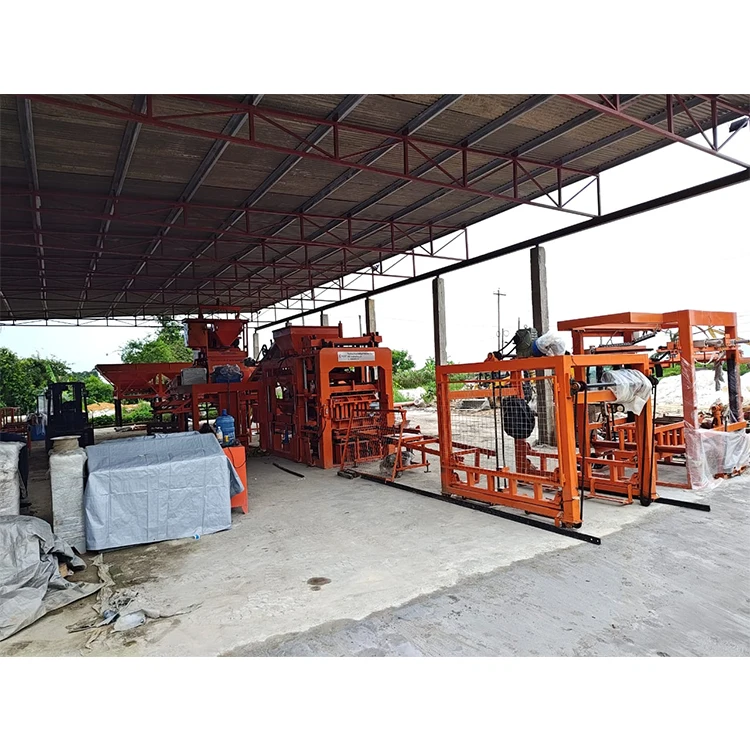
| Recommended Factory Area | 300 m² |
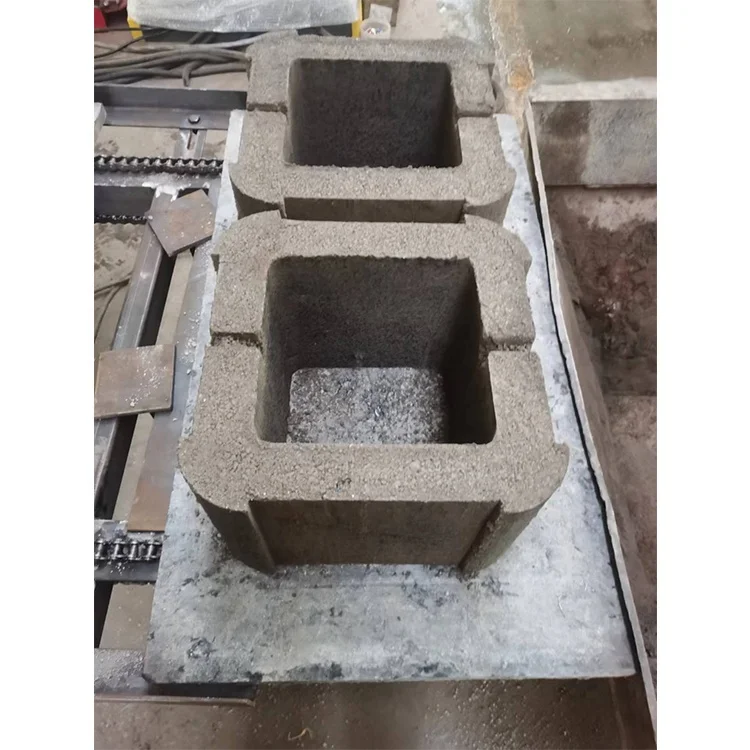
| Applied Products | Concrete blocks, hollow/solid blocks, pavers, interlocking blocks, curbstone, colored pavers |
| Compatible Raw Materials | Crushed stone, sand, cement, dust, fly ash, gravel, slag |
| Warranty | 1 year (whole machine, excluding spare parts) |
Application Suitability
| Application | Material or Output |
|---|---|
| Hollow block production for wall construction | Crushed stone, sand, cement, fly ash blends |
| Solid load-bearing block manufacturing | Dense aggregate with cement binder |
| Interlocking paver production for driveways and walkways | Colored concrete mixes with fine aggregate |
| Kerbstone and curb manufacturing | High-strength concrete with coarse gravel |
| Porous and permeable block production | Open-graded aggregate with reduced cement content |
| On-site block production for housing projects | Locally sourced sand, gravel, and slag |
What "15–20 Seconds per Cycle" Leaves Out About QT8-15 Block Machine Specifications
Cycle time only becomes meaningful once you pin it to a specific block format, wall thickness, and local aggregate gradation.
Many quotations list a single molding cycle number without disclosing which product that figure assumes. A thin paving block on a fine sand mix may hit the lower end of that range, while a tall hollow block packed with coarse crushed stone and fly ash often pushes well past it. When the aggregate arriving at your plant differs from the test material, the QT8-15 block machine specifications on paper no longer match the rhythm of your production floor [NEED_CITE: typical cycle time variation across block formats in hydraulic vibration presses]. Buyers who discover this gap after commissioning end up recalculating shift output and renegotiating delivery schedules.
Format-Specific Output Calculation for Honest Daily Tonnage
The QT8-15 block machine specifications gain real meaning only when tied to your product mix. A hollow block with three large cores demands a longer vibration window than a solid paving brick of the same pallet footprint. Before confirming your order, request a capacity sheet that lists cycle time and pieces per hour for every mould you plan to run. This approach replaces optimistic single-number claims with a format-by-format breakdown you can match against actual market orders.
Matching Vibration Force to Your Aggregate Profile
Platform vibration at 2800–4500 r/min delivers 45 kN of compaction force across the pallet surface. Coarse, angular crushed stone typically absorbs more energy before particles lock into position, requiring a longer dwell at higher amplitude. Fine river sand with fly ash, by contrast, consolidates quickly but risks over-vibration and surface cracking if the frequency is not adjusted downward [NEED_CITE: vibration frequency and aggregate gradation interaction in concrete block forming]. Confirming your exact material blend before factory testing prevents costly re-tuning on site.
Reading the Pressure and Vibration Relationship
The 21 MPa rated hydraulic pressure works in concert with platform vibration to achieve target block density. Pressure alone compresses the mix from above, while vibration rearranges particles from below; when either force is mismatched to the aggregate, the result is inconsistent wall thickness or weak corners on hollow blocks. The QT8-15 block machine specifications list both values, but their combined effect on your specific mix is what determines whether blocks meet compressive strength requirements at the curing yard. A factory test using your shipped sample material is the most reliable way to validate the pairing.
The Hidden Cost of Skipping Pallet and Curing Area Verification
A 950 × 900 mm pallet sounds straightforward until it arrives at a curing yard designed for a different dimension. Forklifts with narrower fork spacing may struggle to lift loaded pallets, and curing racks built for 850 mm widths leave the overhanging edge unsupported, leading to warped blocks and cracked corners [NEED_CITE: pallet dimension compatibility with curing infrastructure in block plants]. These mismatches do not show up in the machine price but surface as daily handling losses once production starts.
Why Sizing to Format Matters Before You Commit
Configuration here begins with the block format your market actually orders, not the one that produces the highest theoretical cycle count. The mould drawing, pallet specification, and vibration settings are all locked to your confirmed product list, so the machine you receive is calibrated for your reality rather than a showroom demo. Pallet dimensions are cross-checked against your existing forklift and curing rack spacing before production starts. Hydraulic and electrical schematics are provided so your maintenance team can trace circuits without guessing. Every QT8-15 block machine specifications sheet references the specific moulds and formats included in your scope.
Documentation & Verification
- Capacity calculation sheet listing cycle time per confirmed block format and pallet load
- Mould drawing set with dimensional tolerances for every format on your order
- Pallet specification matched to your documented curing rack and forklift dimensions
- Voltage, frequency, and PLC display language confirmed in writing before production
- Factory test record run on your shipped sample aggregate before dispatch
Installation, Commissioning & Support
- Foundation plan referencing the 8 T total mass and 8300 mm footprint for concrete pad design
- Electrical hookup guide for the 55.5 kW total power draw with dedicated circuit recommendations
- Hydraulic line pressure verification set to 21 MPa rated pressure during on-site commissioning
- Vibration frequency fine-tuning between 2800–4500 r/min using your local aggregate blend
- Mould change procedure walkthrough covering hydraulic clamping and alignment checks
- Wear parts list identifying high-friction components and recommended replacement intervals
Before You Request a Quote
Share the exact block formats your market requires, including dimensions and target compressive strength. Provide a sample analysis or source description of your local aggregate — sand origin, maximum stone size, and any fly ash or slag availability. Confirm your site voltage and frequency, the PLC language your operators prefer, and whether existing forklifts and curing racks must be accommodated by the 950 × 900 mm pallet size.
Frequently Asked Questions
Q: How is QT8-15 capacity calculated per block format, and what is the realistic daily output for my product?
A: The 15–20 s molding cycle is a starting range that must be validated against your specific block format, wall thickness, and aggregate blend. We prepare a capacity sheet listing cycle time and pieces per hour for each confirmed mould, then multiply by your planned shift hours to give a realistic daily figure rather than a single catalogue number.
Q: Which mould formats are available for the 950×900 mm pallet, and how long does a mould change take?
A: The pallet accepts hollow blocks, solid blocks, pavers, interlocking bricks, and kerbstones within its surface area. Mould change time depends on the hydraulic clamping configuration selected for your line. We document the procedure and target duration in your operation manual so you can plan format changeovers into shift schedules.
Q: How is vibration force and hydraulic pressure matched to my local aggregate and mix design?
A: The 45 kN vibration force and 21 MPa pressure are adjusted during factory testing with your sample material. Coarse aggregate typically requires longer vibration at higher amplitude, while fine sand and fly ash consolidate faster. We record the validated settings so your team can reproduce them on site.
Q: What voltage, frequency, and PLC language options are confirmed before shipment?
A: Voltage and frequency vary by market and must be stated in writing before production begins. The PLC display language is confirmed at the same stage so your operators can read menus and alarms in their working language from the first day of commissioning.
Q: What documentation is provided with the machine?
A: Your package includes a capacity calculation per block format, machine specification sheet, mould drawings for every confirmed product, hydraulic and electrical schematics, a factory test record using your aggregate sample, and an operation and maintenance manual with a wear parts list.