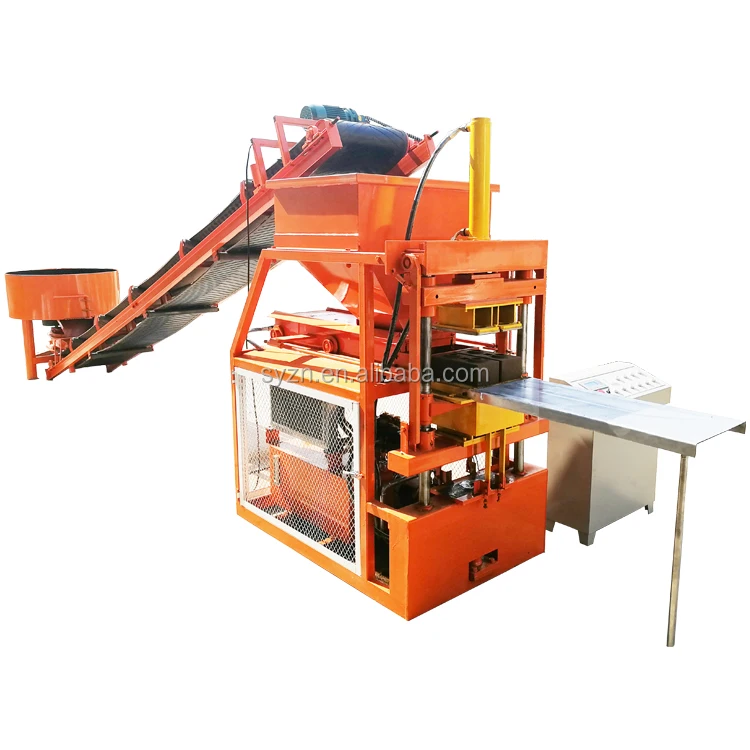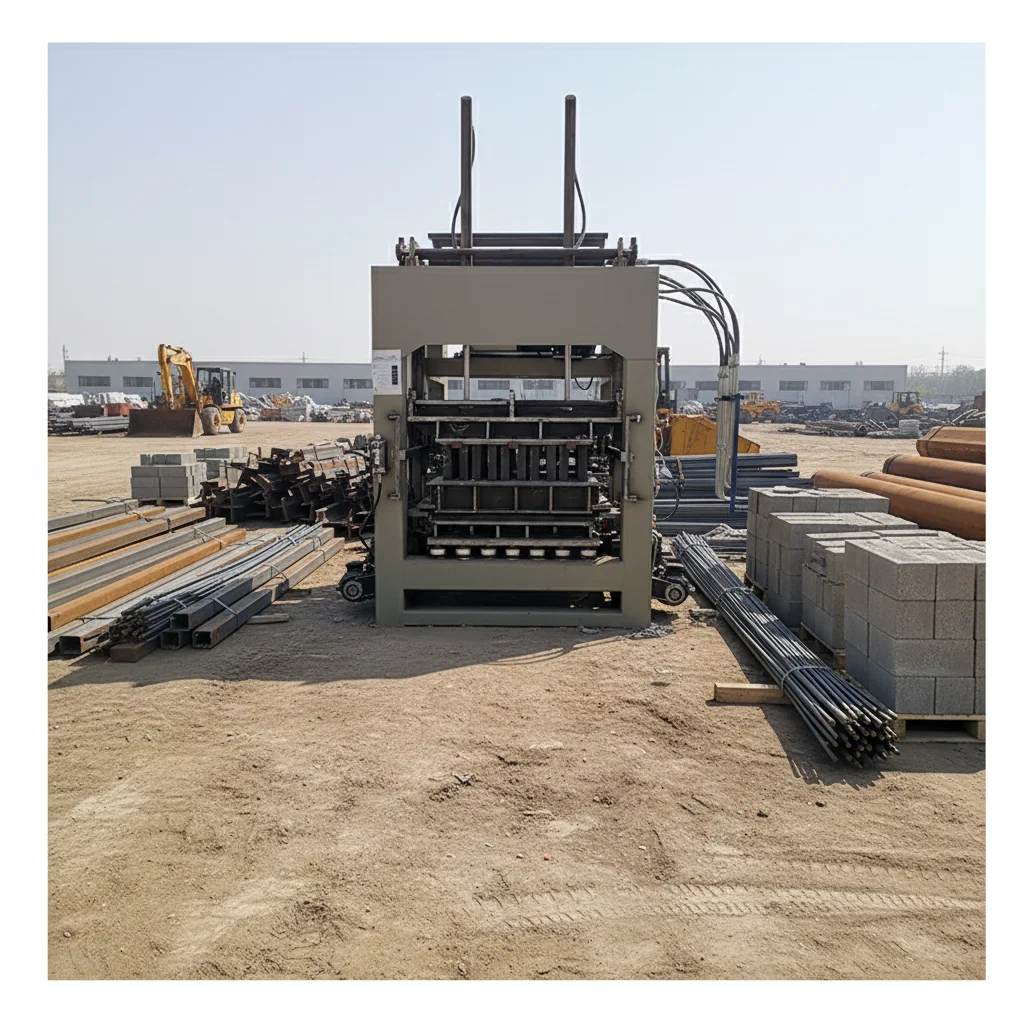
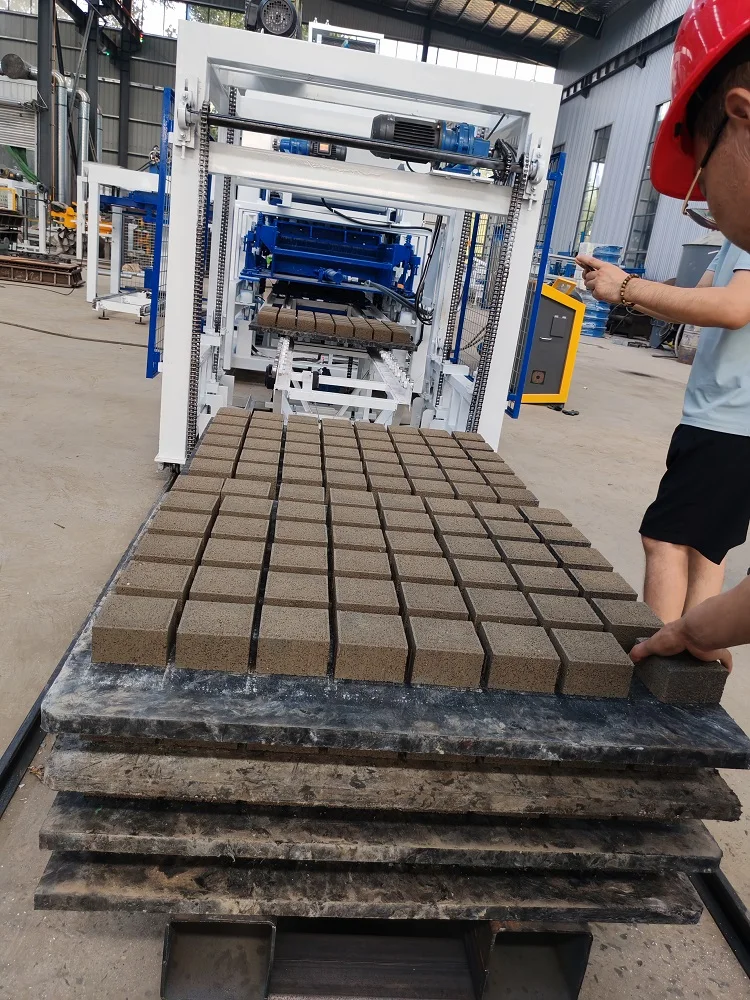


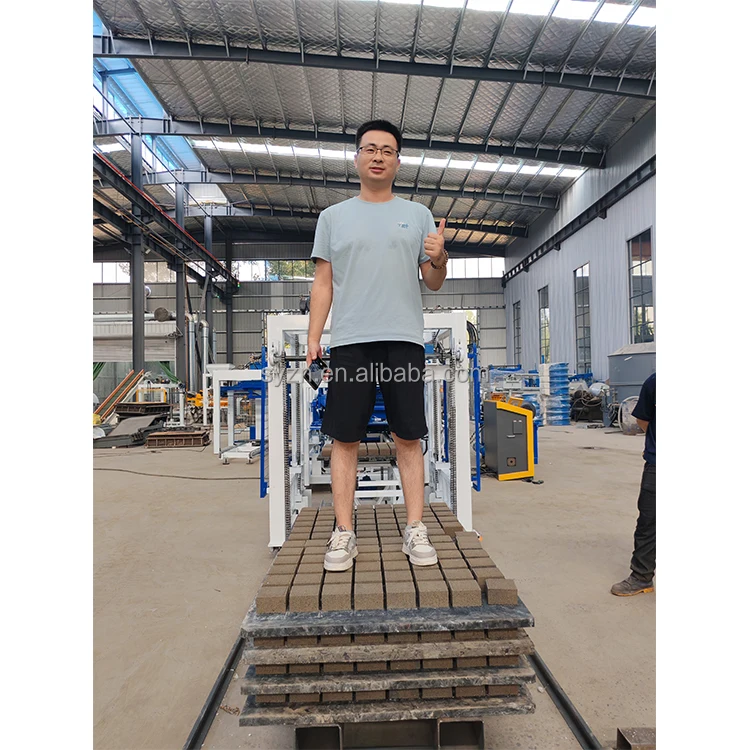
Description
Mould & Format Matching — Every cycle time figure for the QT8-15 is calculated against the specific block format, mix design, and local aggregate you will actually run, not a catalogue default.
Technical Specifications
| Parameter | Value |
|---|---|
| Model | QT8-15 |
| Product Type | Hydraulic Block Making Machine |
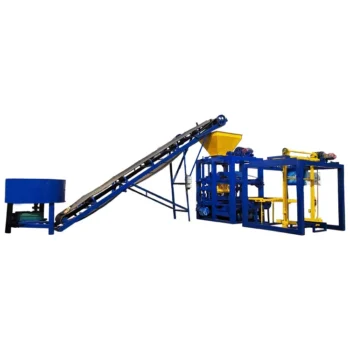
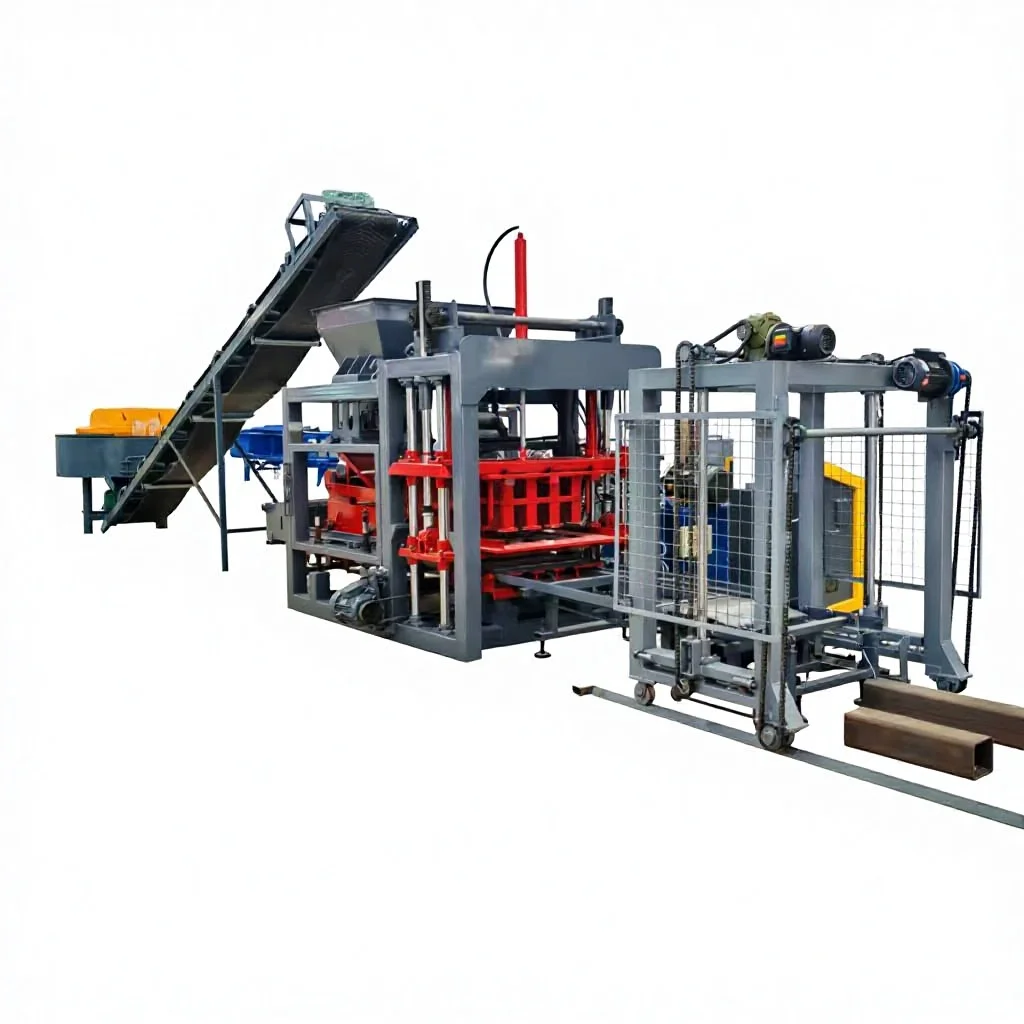
| Overall Dimensions (L×W×H) | 8300 × 1860 × 3000 mm |
| Total Mass | 8,000 kg |
| Overall Power | 55.5 kW |
| Rated Hydraulic Pressure | 21 MPa |
| Main Vibration Form | Platform Vibration |
| Vibration Frequency | 2,800 – 4,500 r/min |
| Vibration Force | 45 kN |
| Pallet Size | 950 × 900 mm |
| Molding Cycle | 15 – 20 s (basis not stated in source — confirm block format / material / thickness) |
| Demolding Method | Hydraulic |
| Recommended Factory Area | 300 m² |
| Raw Materials | Crushed stone, sand, cement, fly ash, gravel, slag, dust |
| Applied Products | Hollow blocks, solid blocks, pavers, interlocking blocks, curbstone, colored pavers |
Application Suitability
| Application | Material or Output |
|---|---|
| Hollow Block Production | Crushed stone, sand, cement, fly ash blends for load-bearing and non-load-bearing walls |
| Solid Block Manufacturing | Dense aggregate mixes for foundation and structural masonry |
| Paving Block & Colored Paver | Fine sand, cement, and pigment layers for pedestrian and vehicular surfaces |
| Interlocking Block | Dry-lean concrete mixes for mortar-free retaining and boundary walls |
| Curbstone & Kerb | High-strength concrete mixes for road edge and drainage channel forming |
What the "15–20 Second Cycle" Actually Means for Your Daily Output
A cycle time is only meaningful when tied to the exact block format and wall thickness you intend to produce.
I once watched a plant owner stare at a silent stacking area because his new machine was quoted at a cycle speed based on a thin paver, but he actually needed to run 200 mm hollow blocks. The QT8-15 block machine specifications you see in brochures rarely state which format the timing assumes. When a buyer in my region ran high-clay local sand through a press set for clean river aggregate, the vibration force was insufficient to consolidate the mix, and daily output dropped to nearly half of the quoted figure. Honest hollow block making machine capacity planning starts with a sample of your actual raw material, not a generic datasheet [NEED_CITE: effects of aggregate clay content on concrete block consolidation and demolding integrity].
Verifying the QT8-15 Block Machine Specifications Against Your Target Format
The platform vibration system on this press delivers force through the mould table rather than the mould walls, which suits formats requiring deep compaction like tall hollow blocks and dense curbstones. When you review the QT8-15 block machine specifications, the 45 kN vibration force and 21 MPa hydraulic pressure must be evaluated together against your specific mix. A hollow block with thin webs needs different vibration frequency tuning compared to a solid paver, and the 2,800 to 4,500 r/min range allows the operator to dial in the right consolidation profile for each format.
Matching the 950 × 900 mm Pallet to Your Curing Yard
Pallet dimensions are frequently overlooked during the selection process, yet they dictate how many blocks you can cure per square meter and which forklift you need to move them. The 950 × 900 mm pallet used by this machine must be checked against your existing curing rack spacing and yard layout. If your yard was set up for a different pallet standard, you face the cost of replacing every pallet or rearranging the entire curing zone. I have seen buyers discover this mismatch only when the first batch of loaded pallets does not fit their rack slots [NEED_CITE: pallet dimension compatibility with curing rack design in block plants].
How Vibration, Pressure, and Mix Design Interact on the Shop Floor
The rated pressure of 21 MPa provides the clamping and demolding force, while the platform vibration at up to 4,500 r/min consolidates the concrete inside the mould cavity. These two forces must be balanced with the moisture content and gradation of your local aggregate. Too much vibration on a lean mix causes segregation where cement paste migrates to the surface, leaving weak block cores. Too little vibration on a stiff mix results in incomplete filling and undersized blocks. The hydraulic demolding system then lifts the mould box without disturbing the freshly formed product, which matters most for interlocking profiles and thin-web hollow blocks that are fragile in the first minutes after pressing. The overall power draw of 55.5 kW across the hydraulic pump, vibration motor, and conveyor drives reflects a mid-range consumption level for this output tier.
The Hidden Cost of Skipping the Pallet and Voltage Conversation
Ordering a machine without confirming the pallet material and electrical configuration leads to delays that are entirely preventable. A buyer who assumed standard timber pallets would be supplied, but needed bamboo pallets for a high-humidity curing environment, faced weeks of re-procurement after the machine arrived. Similarly, a control panel configured for a voltage and frequency that does not match the local grid means the machine sits idle while transformers are sourced. These are not engineering problems; they are communication gaps that surface only after the container is unloaded [NEED_CITE: common commissioning delays caused by voltage and frequency mismatch in exported machinery].
Why Sourcing the Mould and Press as One System Matters
A block machine and its moulds perform as a single forming system, and specifying them separately introduces fit and cycle-time risks. The mould formats for hollow blocks, solid blocks, pavers, interlocking blocks, and curbstones are designed and matched to the vibration frequency and hydraulic stroke of this specific press. Custom mould designs can be produced from buyer drawings for formats your local market demands. The configuration is set against your actual mix design and target block strength, not pulled from a default catalogue page. Pallet size, material, and handling equipment are included in the line specification so that every station from feeding to curing is accounted for. Documentation covers the line layout, capacity calculation per format, and mould drawing before production begins.
Documentation & Verification
- Line layout drawing with capacity calculation stating the exact block format for each output figure
- Mould drawing and format list confirming every block profile included in the order
- Pallet specification sheet matched to your curing rack dimensions and forklift load rating
- Hydraulic and electrical schematic showing valve positions, motor ratings, and wiring routes
- Voltage, frequency, and PLC display language confirmation signed off before production
- Factory test record showing actual cycle times on your requested block format before dispatch
Installation, Commissioning & Support
- Foundation plan based on the 8,300 × 1,860 mm footprint and dynamic vibration load of the platform
- Dedicated power circuit sized for the 55.5 kW total draw with correct voltage and frequency at the main isolator
- Machine arrives as major sub-assemblies requiring on-site alignment of the vibration table and hydraulic frame
- First-run commissioning includes vibration frequency tuning and hydraulic pressure adjustment to your local aggregate
- Operator training covers mould change procedure, pallet feeding sequence, and daily greasing of guide columns
- Wear parts list identifies hydraulic seals, vibration springs, and mould liner plates with reorder part numbers
What to Include in Your Inquiry
To size this machine correctly for your plant, share the specific block formats your market sells, including wall thickness and target compressive strength. Provide a sample or lab report of your local aggregate and sand so that the vibration frequency and hydraulic pressure can be set before the machine leaves the factory. Confirm your site voltage, frequency, and preferred control language so the electrical panel is built to match.
Frequently Asked Questions
Q: How is the QT8-15 hollow block making machine capacity calculated for each block format?
A: The molding cycle of 15 to 20 seconds is a range that varies with block height, wall thickness, and mix stiffness. A capacity calculation is provided that names the exact block format assumed, the pallet pattern, and the number of pieces per pallet, so the daily output figure reflects what you will actually produce rather than a generic hourly rate.
Q: How do I confirm the mould formats match the blocks my local market sells?
A: You share the block dimensions, profiles, and compressive strength grades that your customers specify. A mould drawing and format list is then produced for your approval before manufacturing begins, covering hollow blocks, solid blocks, pavers, interlocking blocks, and curbstones as needed for your market.
Q: What pallet size does the QT8-15 use and how does it affect my curing area?
A: The machine uses a 950 × 900 mm pallet, and this dimension must be checked against your existing curing rack spacing, yard layout, and forklift fork width. The pallet specification is confirmed during the proposal stage so that no modifications are needed to your curing infrastructure upon machine arrival.
Q: How is the machine configured to my local aggregate rather than a catalogue default?
A: Your local sand, crushed stone, or fly ash sample is tested for particle size, moisture retention, and clay content. The vibration frequency range and hydraulic pressure are then set to match that mix profile, ensuring consistent block density and demolding integrity with the materials you can actually source.
Q: What documentation confirms voltage, frequency, and control language before shipment?
A: A voltage, frequency, and PLC display language confirmation document is signed off by both parties before the electrical panel is assembled. The hydraulic and electrical schematic, factory test record, and operation manual in the agreed language are included in the shipping documentation package.