
Description
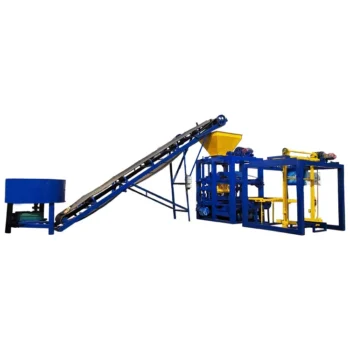
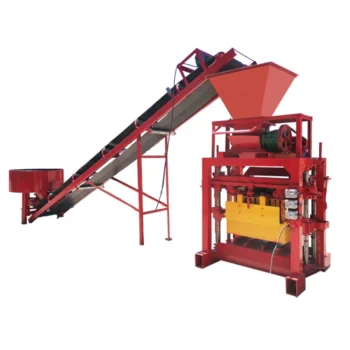
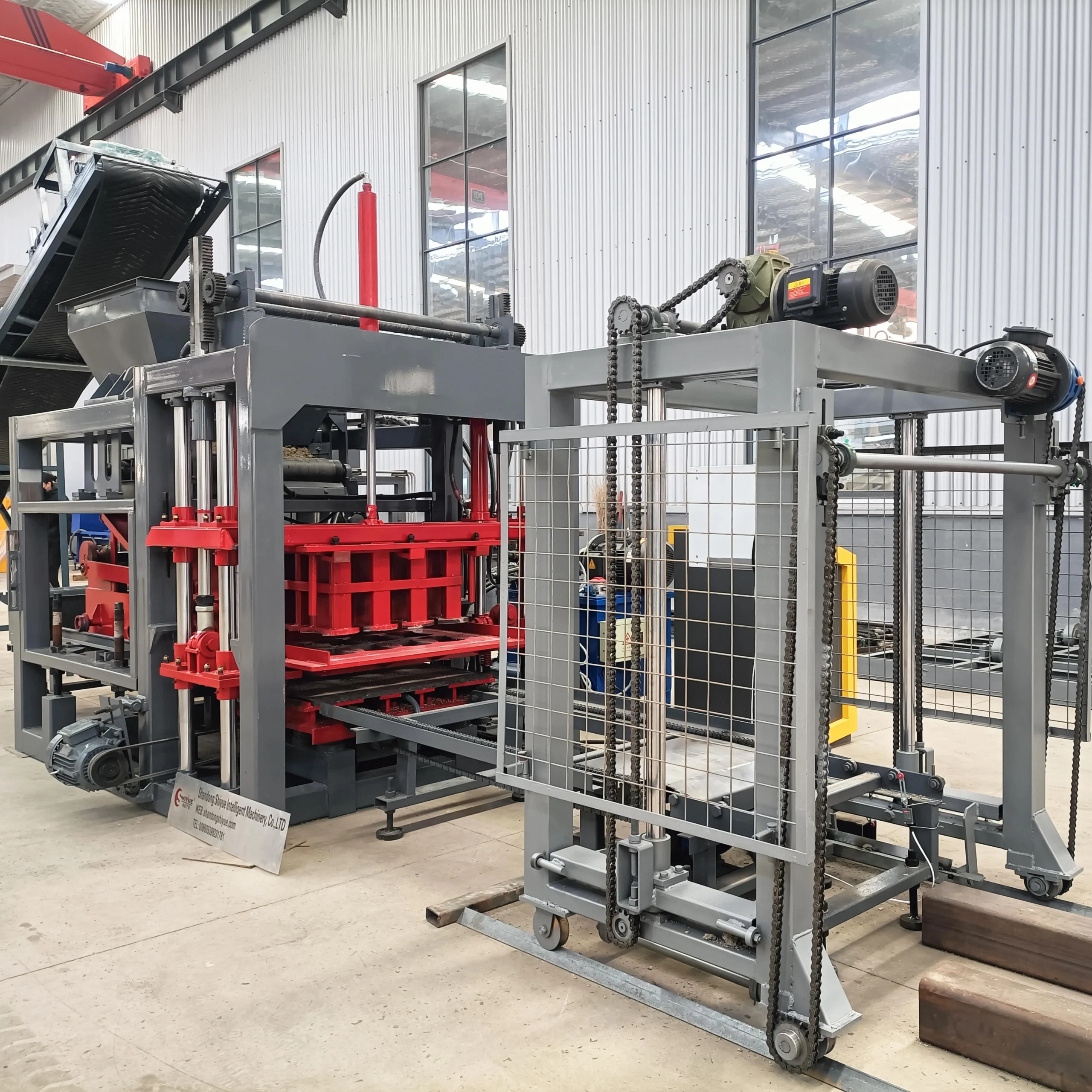
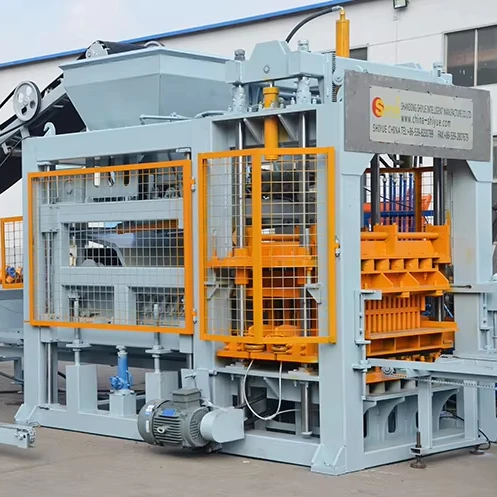
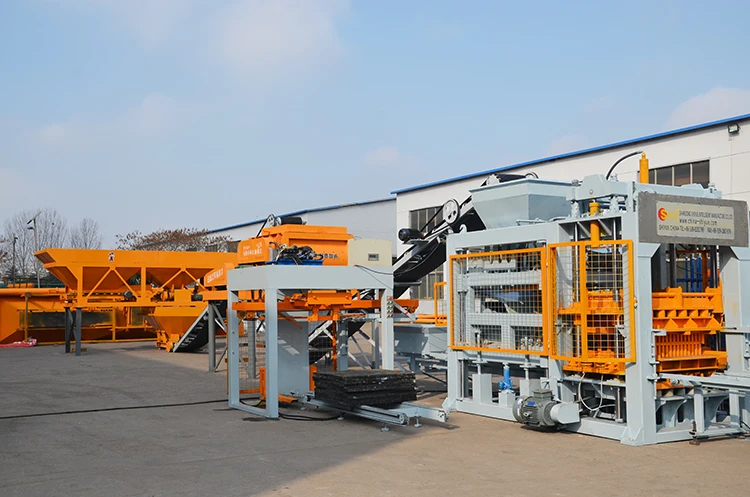
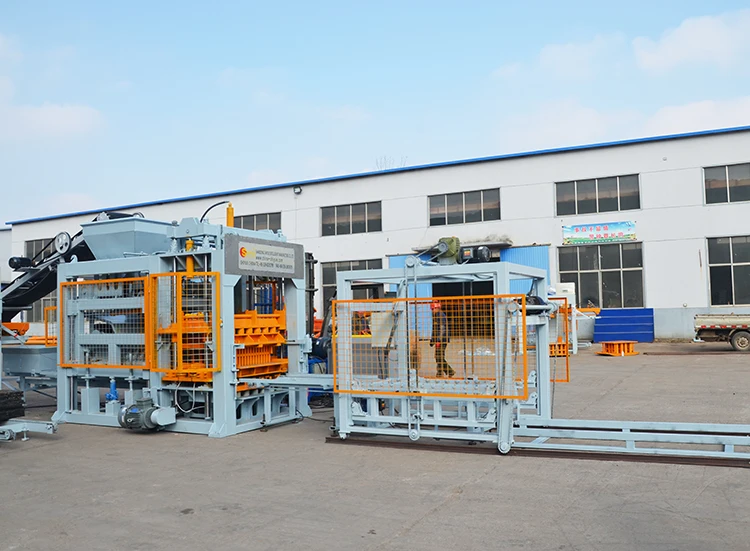
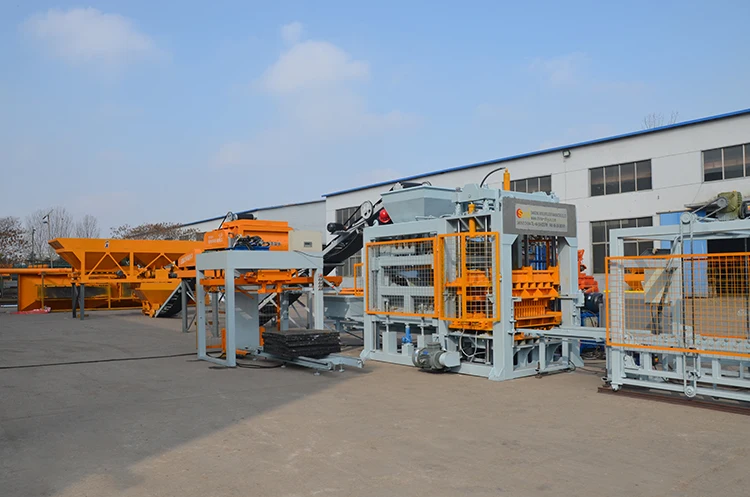
Matched System Specification — Every component from the QT8-15 host press to the pallet and stacking system is configured against your actual block format and local aggregate, eliminating the guesswork between separate suppliers.
Technical Specifications
| Parameter | Value |
|---|---|
| Model | QT8-15 |
| Product Type | Automatic Cement Block Making Machine |
| Dimension of Host Machine | 587022202850mm |
| Weight of Host Machine | 10 Tons |
| Molding Area | 950*900mm |
| Workshop Area | 200㎡ |
| Host Machine Power | 47KW |
| Vibration Force | 100KN |
| Pallet Size | 95090025mm |
| Voltage | 220/380/415/440V (Customized) |
| Molding Period | 15 Seconds |
| Vibration Method | Hydraulic+Platform Vibration |
| Vibration Frequency | 2800-4500 Times/Minute |
| Control System | Siemens PLC with independently developed control program |
| Motor | Germany SIEMENS brand or CE standard brand |
| Travel Switch | France Schneider / Japan Omron |
| Mould Heat Treatment | Carburizing treatment, 54-58 HRC, lifespan over 100,000 times |
| Welding | Carbon dioxide protection welding |
| Output Capacity | (basis not stated in source — confirm block format / material / thickness) |
| Batching Machine | PLD1200 (Weigh-batching hopper 1200L, Ingredient precision ±2%) |
| Mixer | JS750 (Charging volume 1200L, Production capacity 35m3/h) |
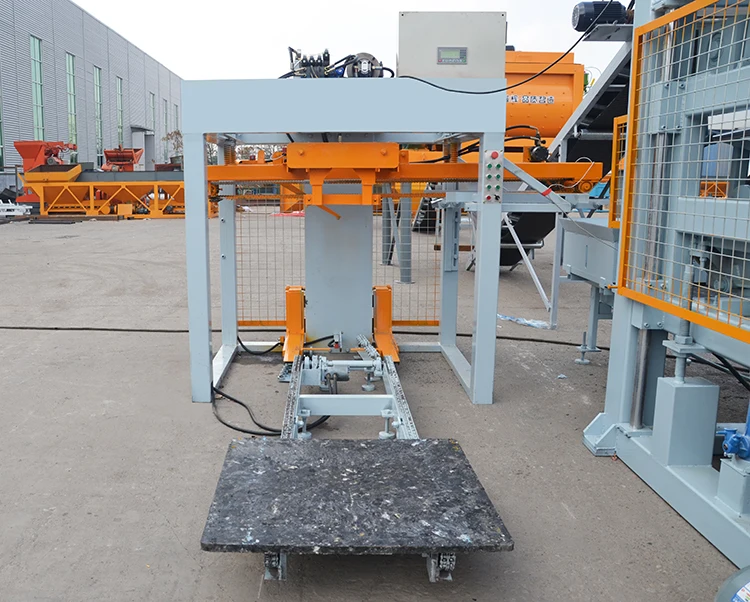
| Stacker | SY-8 (Power 3KW, Mobile pallet stack) |
| Standards | CE |
Application Suitability
| Application | Material or Output |
|---|---|
| Hollow Block Production | Crushed stone, cement, and sand mixes for load-bearing and non-load-bearing walls |
| Solid Block Manufacturing | Dense aggregate blends for high-compression structural requirements |
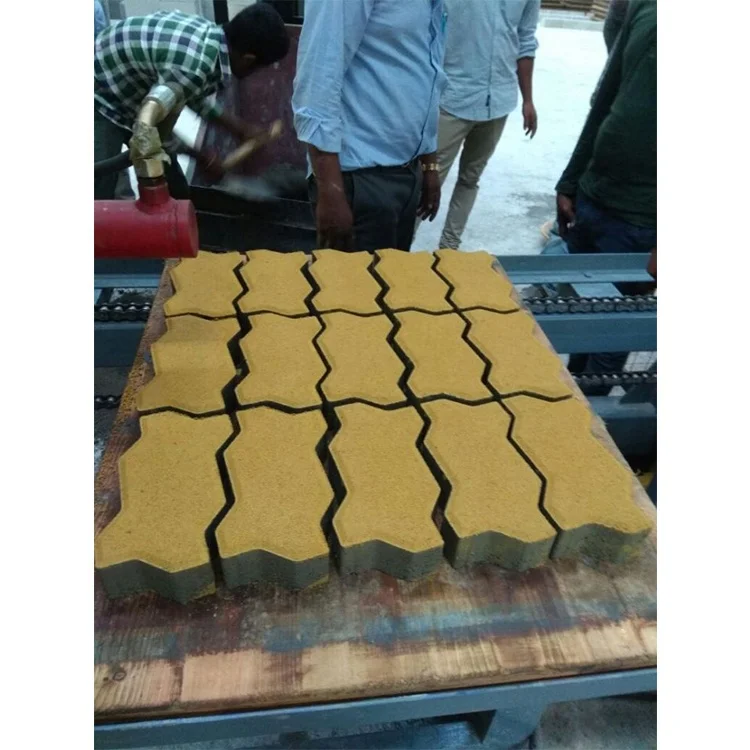
| Paving Brick & Paver Output | Fine aggregates and color pigments for exterior walkways and driveways |
| Interlocking Brick Formation | Specific soil-cement or aggregate ratios for mortarless wall systems |
What the QT8-15 Cycle Time Actually Means for Your Daily Output
The QT8-15 automatic block making machine specifications how to choose should always begin with the specific block format you intend to produce, as cycle times and daily yields vary significantly between hollow blocks and interlocking pavers.
Many buyers focus on the "15-second" molding period without accounting for the pallet return time, the specific vibration frequency required for their local aggregate, or the complexity of the mould design. A 15-second cycle on a standard hollow block is very different from the cycle required for a complex interlocking paver with a color face layer [NEED_CITE: impact of mould complexity on cycle efficiency]. By defining the QT8-15 output per specific block format, we ensure your production plan is based on the actual product your market demands, rather than a theoretical maximum that rarely materializes on the factory floor.
Vibration Force and Hydraulic Pressure Synergy
The 100KN vibration force, combined with hydraulic pressure, is the core of the QT8-15’s ability to produce high-density blocks. For technical buyers, the critical factor is how these two forces are balanced against your specific mix design. If the local aggregate has a high clay content, the vibration frequency (2800-4500 times/min) must be adjusted to ensure proper compaction without segregating the mix. The Siemens PLC allows these parameters to be saved per mould, ensuring batch-to-batch consistency.
Mould Carburizing and Format Flexibility
The 54-58 HRC hardness achieved through carburizing treatment directly impacts the lifespan of the moulds, rated for over 100,000 press cycles. This is essential for manufacturers planning to switch between hollow, solid, and paving formats. A worn mould leads to inconsistent block dimensions and increased rejection rates [NEED_CITE: mould wear impact on block dimensional tolerance]. The QT8-15 platform supports custom mould designs, allowing you to introduce niche formats like kerbstones or porous bricks as your market evolves.
Interpreting the Line Configuration
The JS750 mixer and PLD1200 batching machine are sized to keep the QT8-15 press continuously fed, preventing the "press-waiting" bottleneck common in mismatched lines. The 950*900mm pallet size is a critical dimension that must align with your existing curing racks and forklift capacity. The SY-8 stacker reduces manual handling, but its 3KW power and mobile stack configuration require specific floor space planning to ensure smooth pallet flow from the press to the curing area.
The Hidden Cost of Unconfirmed Voltage and Language
Failing to confirm the voltage (220/380/415/440V) and the PLC display language before production leads to significant delays during commissioning. I have seen machines sit idle for weeks because the local electrical grid could not support the 47KW host machine power requirement, or the operators could not navigate the Siemens PLC menu [NEED_CITE: common commissioning delays in industrial machinery]. These are preventable issues that turn a simple installation into a costly project setback.
Sourcing Based on Technical Reality
We focus exclusively on block machinery, meaning the QT8-15 is never sold as a standalone press but as part of a verified system. Our proposals include a capacity calculation that states the exact block format assumed for every output figure. We provide mould drawings for approval before manufacturing begins, ensuring the machine is built for the formats your customers actually buy. This technical discipline prevents the gap between the catalogue promise and the site reality.
Documentation & Verification
- Line layout showing the 200㎡ workshop requirement and pallet flow logic
- Capacity calculation sheet stating the block format and cycle time assumption
- Mould drawing and format list for buyer approval before production
- Factory test record on the buyer’s specific block format and mix design
- Voltage and PLC language confirmation document signed before dispatch
- Wear parts list with mould carburizing specifications and availability terms
Installation, Commissioning & Support
- Foundation plan accounting for the 10-ton host machine and 100KN vibration force
- Electrical schematic confirming the 47KW power draw and customized voltage setup
- On-site parameter tuning of the Siemens PLC to match local aggregate characteristics
- Operator training on mould change procedures and the 54-58 HRC tooling care
- SY-8 stacker integration with the 950*900mm pallet return system
- Preventative maintenance schedule for the JS750 mixer and hydraulic station
Moving Forward with the QT8-15
To provide an accurate proposal, we require the specific block formats you intend to produce, samples of your local raw materials for testing, and details of your site’s electrical infrastructure. This data allows us to configure the QT8-15 automatic block making machine specifications how to choose for your specific environment, ensuring the machine arrives ready to produce from day one.
Frequently Asked Questions
Q: What is the realistic daily output of the QT8-15 for different block formats?
A: The realistic output depends entirely on the block format and the complexity of the mould design. A standard hollow block will have a faster cycle than an interlocking paver with a color layer. We provide a capacity calculation that states the exact daily output for each format you plan to produce, based on the 15-second base molding period and your specific pallet size.
Q: How is the mould matched to my local aggregate and mix design?
A: We require samples of your local aggregate to perform a mix design trial. The vibration frequency (2800-4500 times/min) and hydraulic pressure are then adjusted on the Siemens PLC to ensure the mould produces consistent block strength with your specific materials, preventing issues like cracking or low compression resistance.
Q: What is the procedure for changing moulds on the QT8-15?
A: The QT8-15 is designed for format flexibility, but the changeover time depends on the mould size and the operator’s training. We provide detailed manuals and on-site training to ensure your team can switch between formats like hollow blocks and pavers efficiently, minimizing downtime and maximizing the value of the carburized tooling.
Q: How do I confirm the pallet size and voltage before production?
A: These are confirmed in writing during the proposal stage. The 950*900mm pallet size must match your curing area layout, and the voltage (220/380/415/440V) must be verified against your site’s transformer capacity to avoid commissioning delays and ensure the 47KW host machine operates safely.