

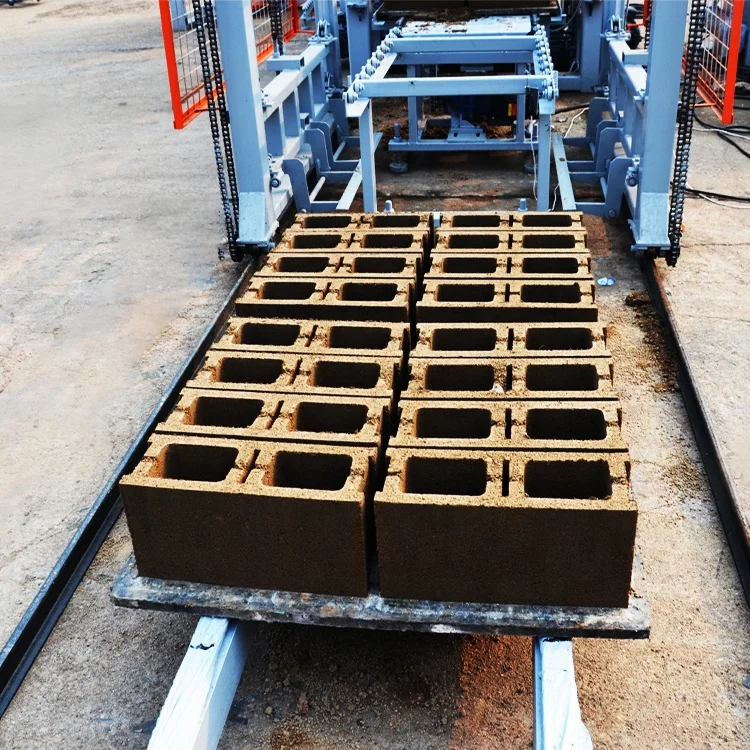
Description
Matched Mould and Machine Output — every capacity figure for the QT6-15 is stated against a named block format, pallet size, and cycle time so your daily plan reflects what the press actually delivers on your site.
Technical Specifications
| Parameter | Value |
|---|---|
| Model | QT6-15 |
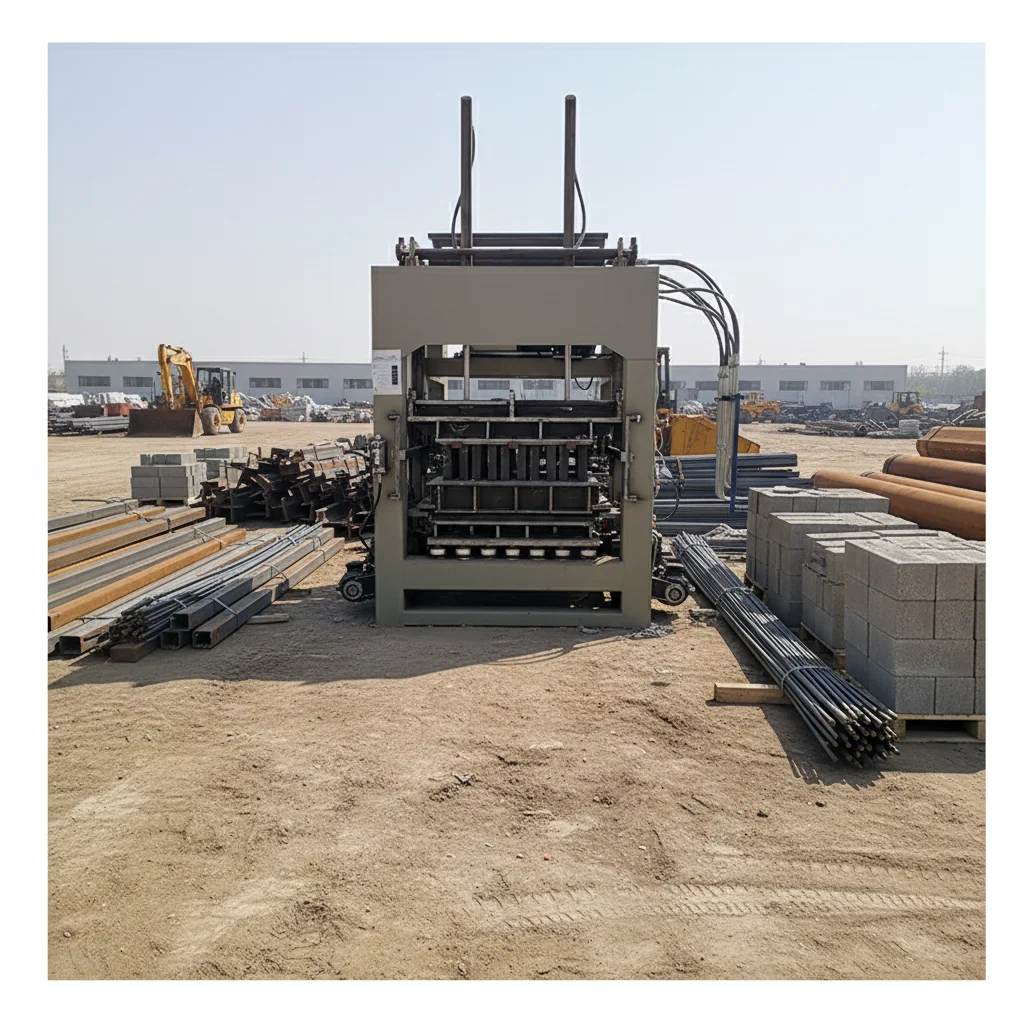
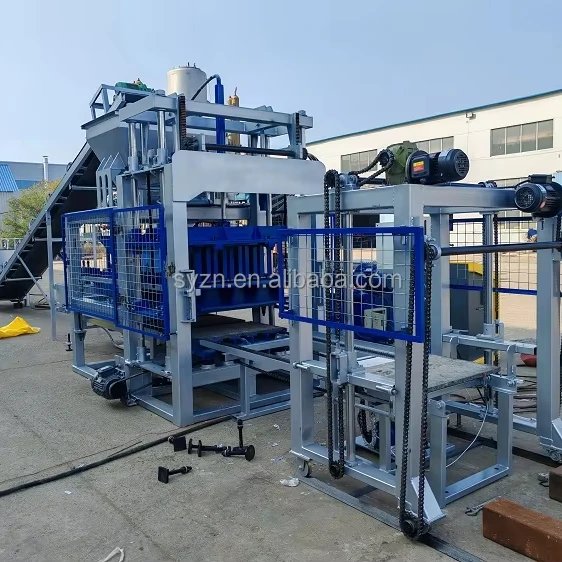
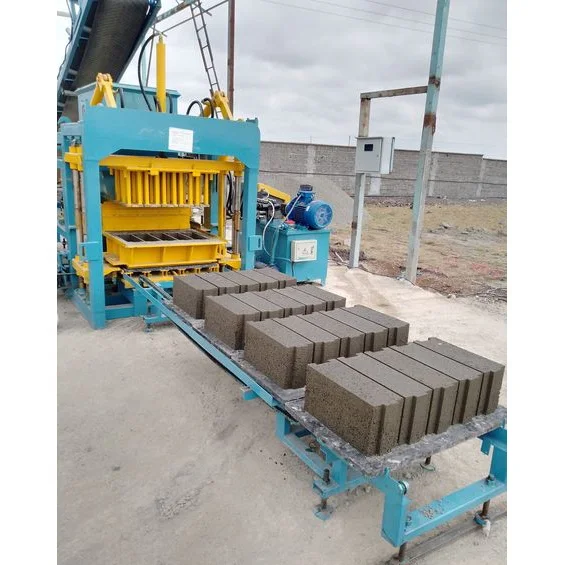
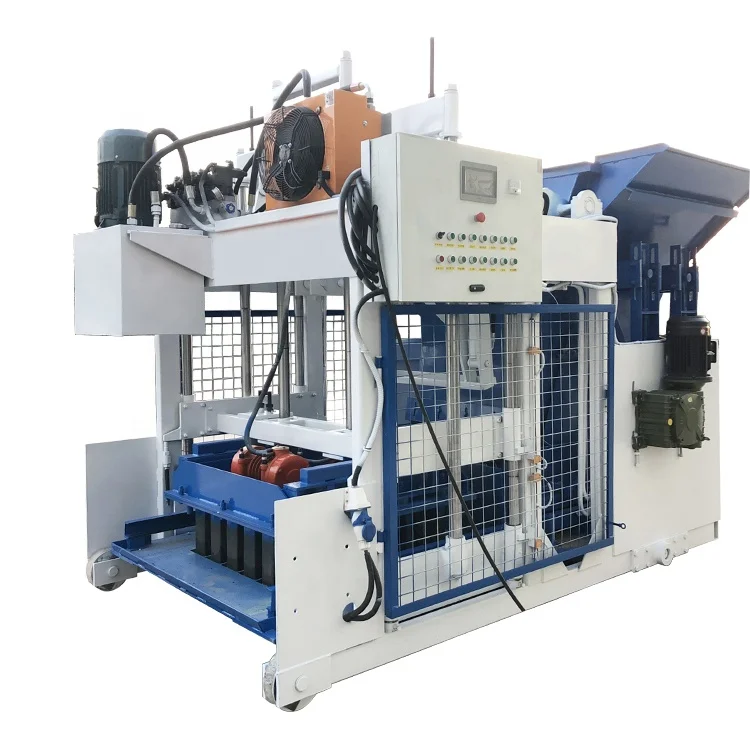
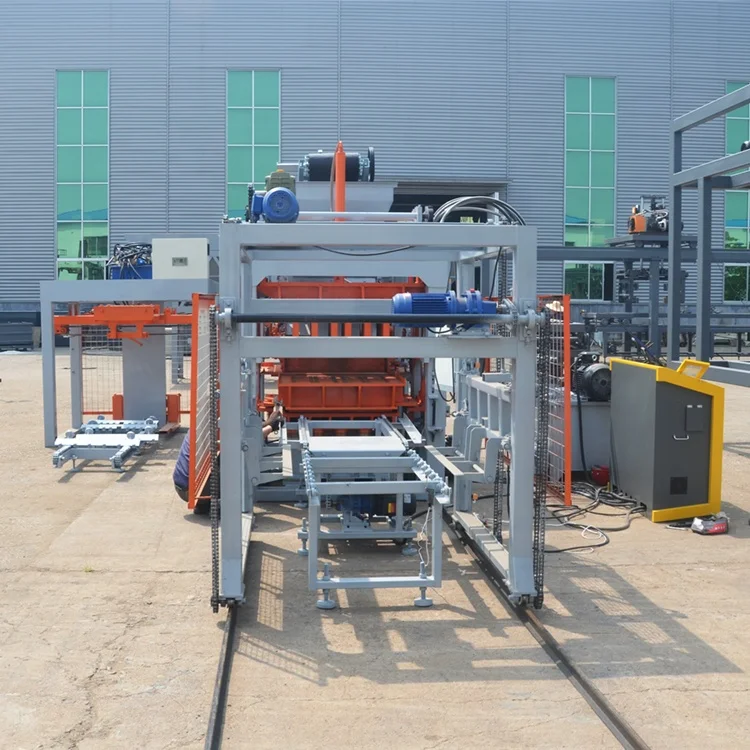
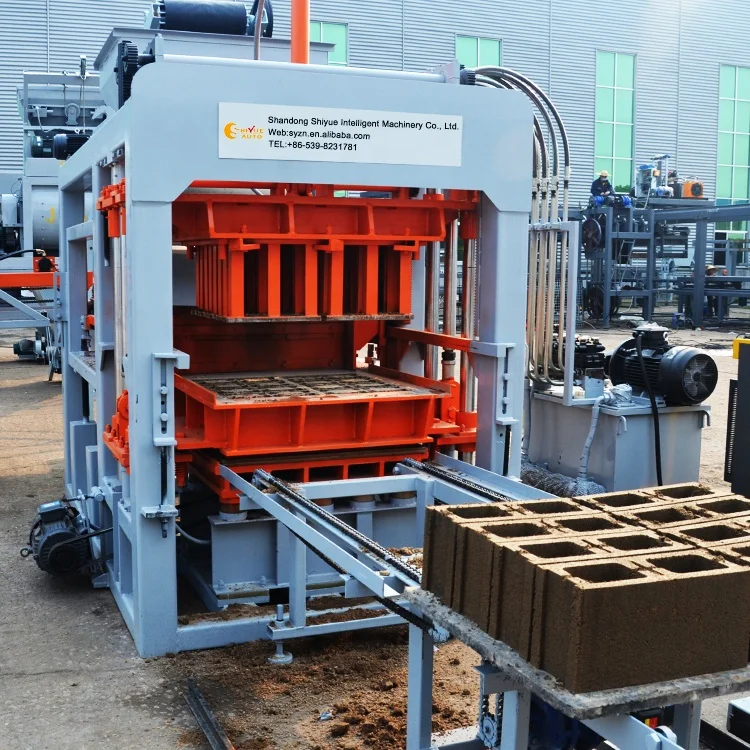
| Product Type | Hydraulic Concrete Block Making Machine |
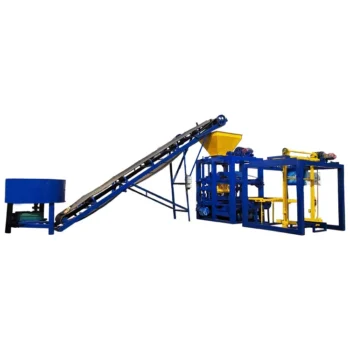
| Overall Dimensions (L×W×H) | 8200 × 1700 × 2950 mm |
| Molding Cycle | 15–20 s (basis not stated in source — confirm block format / material / thickness) |
| Vibration Form | Platform Vibration |
| Vibration Frequency | 0–60 Hz |
| Vibration Force | 45 kN |
| Moulding Mode | Load automatically, vibration moulding |
| Demolding Method | Hydraulic |
| Pallet Size | 880 × 850 mm |
| Overall Power | 37 kW |
| Total Mass | 7 T |
| Factory Area Required | 1200 m² |
| Control System | PLC with touch screen HMI |
| Output: Hollow Block 400×200×200 mm | 1080–1440 pcs/h, 8640–11520 pcs/8 hr |
| Output: Hollow Block 400×150×200 mm | 1440–1920 pcs/h, 11520–15360 pcs/8 hr |
| Output: Solid Brick 240×115×53 mm | 5760–7680 pcs/h, 46080–61440 pcs/8 hr |
| Output: Rectangular Paver 200×100×60 mm | 2160–2880 pcs/h, 17280–23040 pcs/8 hr (cycle 20–25 s) |
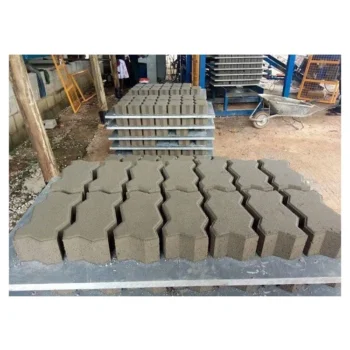
| Output: Zigzag Brick 225×112.5×60 mm | 2160–2880 pcs/h, 17280–23040 pcs/8 hr (cycle 20–25 s) |
| Block Compressive Strength | >15 MPa |
| Hydraulic System | Independent integrated hydraulic station |
| Raw Material Adaptability | Waste ash, slag, and various aggregates with reduced cement dosage |
| Assembly State | Fully assembled line equipment (mechanical, hydraulic, PLC controlled) |
Application Suitability
| Application | Material or Output |
|---|---|
| Hollow block production for wall construction | Crushed stone, river sand, cement, and waste ash blends |
| Solid brick manufacturing for load-bearing structures | Local aggregate with slag or fly ash partial replacement |
| Rectangular and zigzag paver production | Fine aggregate and cement mixes for outdoor paving |
| Interlocking brick runs for housing projects | Site-sourced limestone or basalt aggregate with cement |
| On-site block making for project contractors | Available raw material with minimal cement dosage adjustment |
Why "Cycles per Hour" Misses the Real Output Picture
A capacity number without a block format attached is not a capacity number at all.
Many quotations for block machines in this class quote a single hourly figure, leaving the buyer to discover on commissioning day that the number assumed a small solid brick while the actual production plan targets 400×200×200 hollow blocks. With the QT6-15 block machine specifications laid out per format — from 1080–1440 pieces per hour on the large hollow block up to 5760–7680 pieces per hour on the standard solid brick — you can calculate shift output against the product your market actually buys. [NEED_CITE: common discrepancy between quoted and actual block machine output in export markets]
Format-Specific Capacity as the Starting Point
Before we discuss the QT6-15 block machine specifications further, the first question is always which block or paver you intend to produce. A machine running 200×100×60 rectangular pavers at a 20–25 second cycle delivers a different daily total than the same press running 400×150×200 hollow blocks at 15–20 seconds. Stating capacity per format removes the guesswork from your plant layout and curing rack calculation.
Mould Selection Tied to Local Market Demand
The moulds available for the QT6-15 cover hollow blocks, solid bricks, rectangular pavers, and zigzag interlocking bricks. Each format has its own demolding stroke and vibration profile. When a buyer in a market where zigzag pavers dominate tries to run rectangular pavers on a mould not designed for that pattern, cycle times drift and edge chipping appears. [NEED_CITE: mould-to-format mismatch as a cause of surface defects in concrete pavers] Confirming your target formats before production ensures the mould drawing matches what your distributors stock.
Reading the Core Specifications for Production Impact
The 45 kN vibration force delivered through platform vibration at 0–60 Hz works together with the independent hydraulic station to compact the mix into the mould cavity. Higher frequency with lower amplitude suits fine aggregate paver mixes, while lower frequency with sustained hydraulic hold fills deep hollow block cavities more evenly. The 880 × 850 mm pallet size determines how many blocks cure per rack level and whether your existing forklift can handle the loaded pallet weight. PLC control with a touch screen HMI stores process parameters per mould, so when operators switch from hollow block to paver production the press recalls the correct vibration duration and pressure sequence without manual trial and error. The 37 kW total power draw tells your electrical contractor what dedicated circuit and breaker rating to prepare before the machine arrives.
What Happens When Pallet and Curing Area Do Not Match
A pallet size chosen without checking the buyer’s curing rack spacing leads to wasted vertical space or, worse, pallets that cannot enter the rack at all. The 880 × 850 mm pallet on the QT6-15 must be cross-referenced against rack width and forklift fork length before the order is finalized. When this step is skipped, buyers end up cutting pallets down on site or building new racks — both of which delay production and add cost that was never in the budget. [NEED_CITE: pallet dimension mismatch causing curing area rework in block plants]
Why the Configuration Process Starts With Your Aggregate
We configure the vibration force, hydraulic pressure, and cycle timing against the buyer’s actual mix design and locally available aggregate, not a catalogue default. A machine tuned for river sand will underperform on crushed limestone if the parameters are not adjusted, producing blocks that fail the compressive strength target. With the QT6-15, the 0–60 Hz adjustable frequency range and independent hydraulic station give us the tuning window needed, but only if we know your material before the machine leaves the factory.
Documentation & Verification
- Capacity calculation sheet naming each block format and its cycle time assumption
- Mould drawing with dimensional tolerances for your target block sizes
- Pallet specification listing size, material grade, and loaded weight
- PLC display language and voltage confirmation signed before production
- Factory test record showing output runs on your confirmed block formats
- Wear parts and mould maintenance schedule matched to your production volume
Installation, Commissioning & Support
- Foundation plan sized for the 8200 × 1700 mm machine footprint and 7 T operating mass
- Dedicated 37 kW circuit with voltage and frequency confirmed to your local grid standard
- Machine arrives fully assembled with hydraulic and PLC systems pre-tested at the factory
- On-site commissioning includes parameter tuning for your specific aggregate and mix design
- Operator training covers PLC format recall, mould change procedure, and daily maintenance checkpoints
- Wear parts list provided with recommended replacement intervals based on your production hours
What We Need From You to Size This Correctly
To confirm whether the QT6-15 fits your production plan, share your target block formats with dimensions, the daily output you need per format, and the raw materials available at your site including aggregate type and source. Let us know your local voltage and frequency, the preferred PLC display language, and the pallet size your existing curing racks and forklifts can accommodate. With these details we can return a configuration proposal that states realistic capacity per format rather than a single number that means nothing on the shop floor.
Frequently Asked Questions
Q: How do I verify the real daily output for my specific block format on QT6-15?
A: We provide a capacity calculation document that lists your exact block format, its mould cavity count, and the confirmed cycle time. From there, daily output is calculated against your planned shift hours and pallet cycle. No single generic number is used — every figure traces back to the format you will actually produce.
Q: Which mould formats are available and what is the mould change procedure?
A: Moulds cover hollow blocks, solid bricks, rectangular pavers, and zigzag interlocking bricks. The PLC stores process parameters per mould, so operators recall the correct vibration and pressure settings after a physical change. Custom mould designs can be produced from buyer drawings for formats outside the standard range.
Q: How is vibration force matched to my local aggregate and mix design?
A: The 45 kN platform vibration at 0–60 Hz is adjustable across frequency and duration. Before production, we review your aggregate type, gradation, and cement ratio, then set the vibration profile and hydraulic hold pressure to achieve consistent block density and compressive strength above 15 MPa.
Q: What pallet size does QT6-15 use and how do I confirm it fits my curing setup?
A: The standard pallet size is 880 × 850 mm. Before order confirmation, we ask for your curing rack internal dimensions and forklift fork length so we can verify compatibility. If adjustments are needed, pallet specifications are modified before the machine enters production.
Q: Can I start with fewer formats now and add moulds later?
A: Yes. The QT6-15 accepts additional moulds for any compatible format without modifying the base machine. The PLC accommodates new format profiles as they are added, so you can expand your product range as market demand grows without replacing the press.