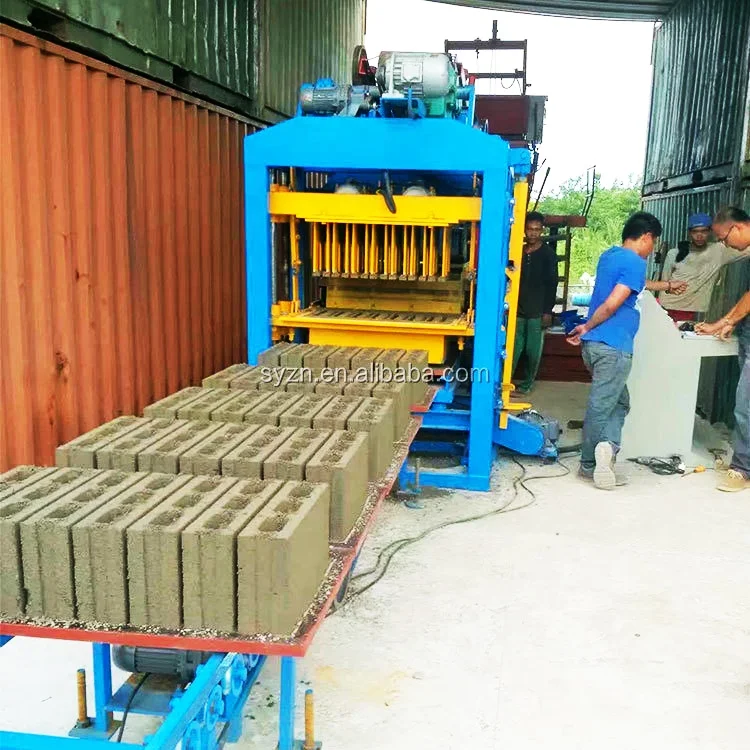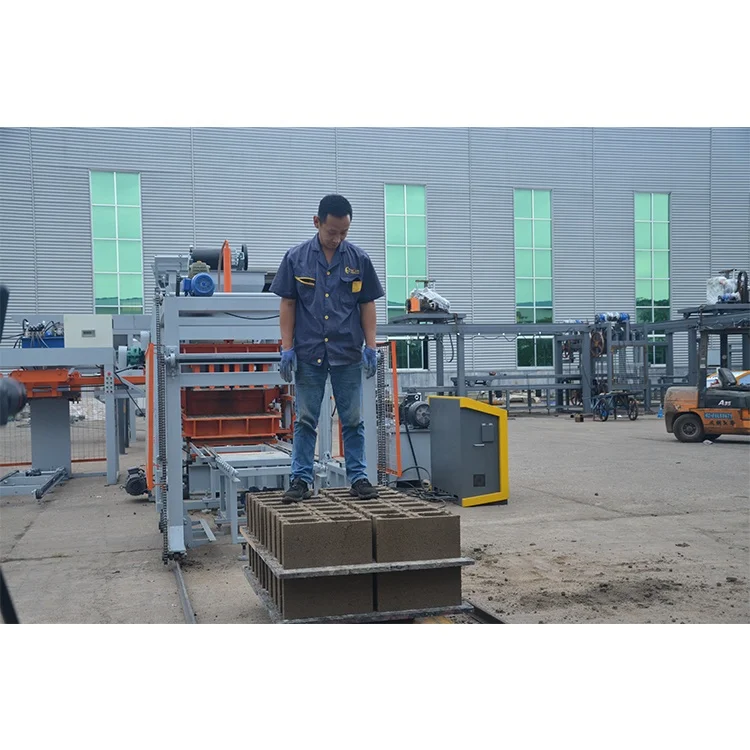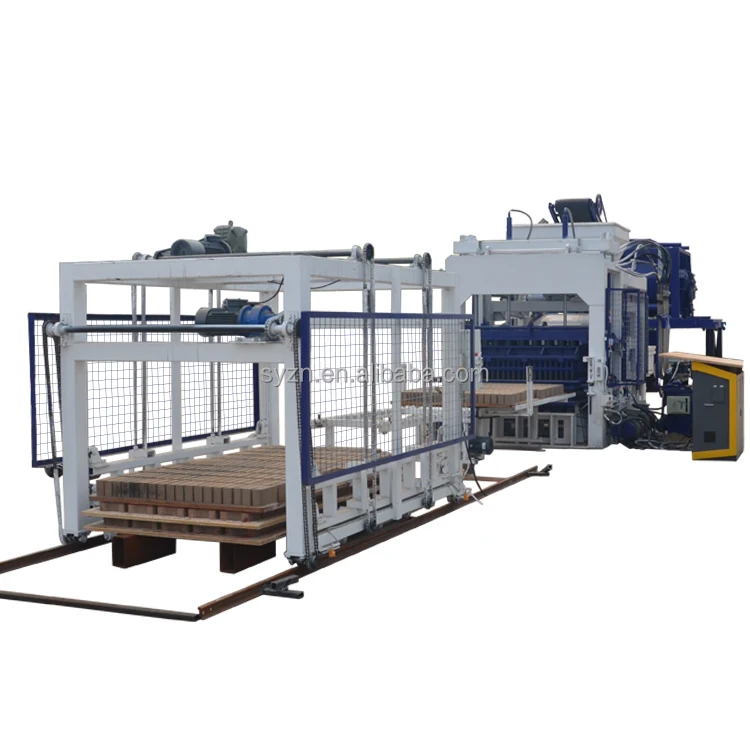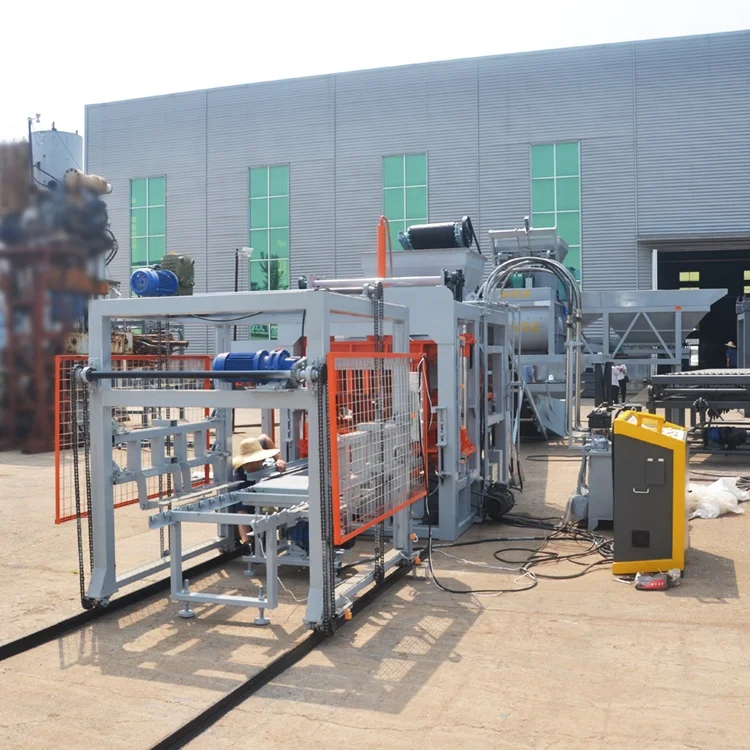
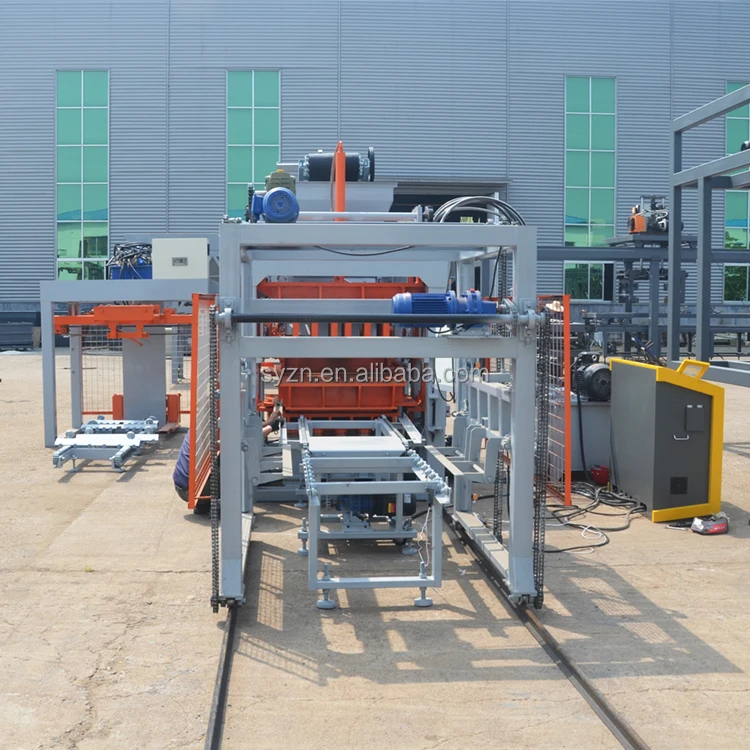


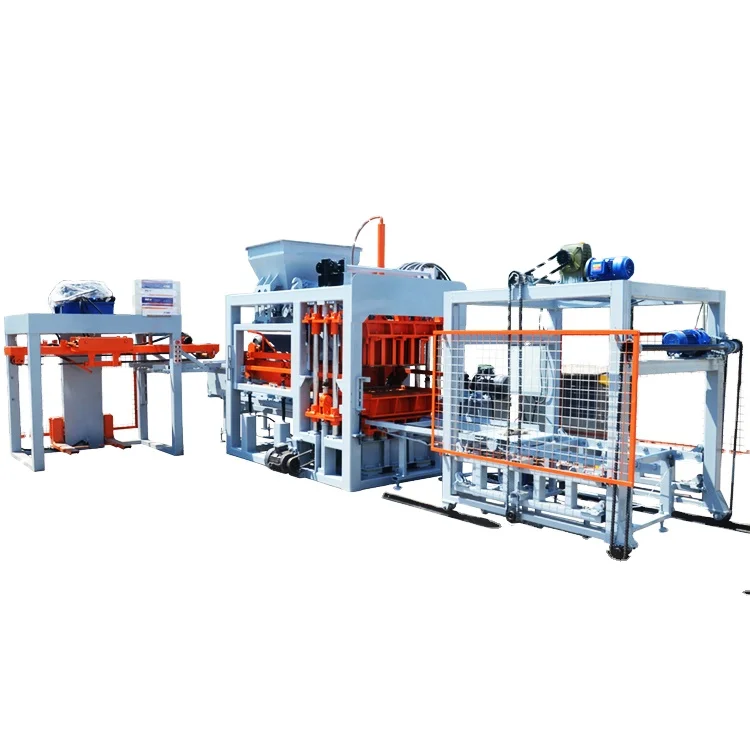

Description
Single-Format Capacity Truth — every QT6-15 output figure on this page names the exact block size, cycle time and shift length it assumes, so the daily total you plan against is the one the line actually delivers.
Technical Specifications
| Parameter | Value |
|---|---|
| Model | QT6-15 |
| Product Type | Hydraulic Block Making Machine |
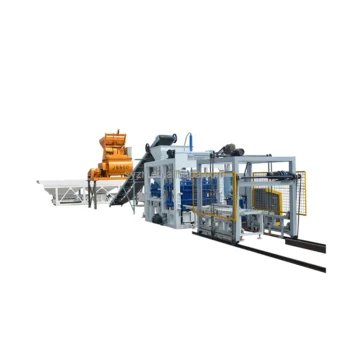
| Overall Dimensions (L×W×H) | 8200 × 1700 × 2950 mm |
| Vibration Frequency | 0–60 Hz (adjustable) |
| Vibration Form | Platform Vibration |
| Vibration Force | 45 kN |
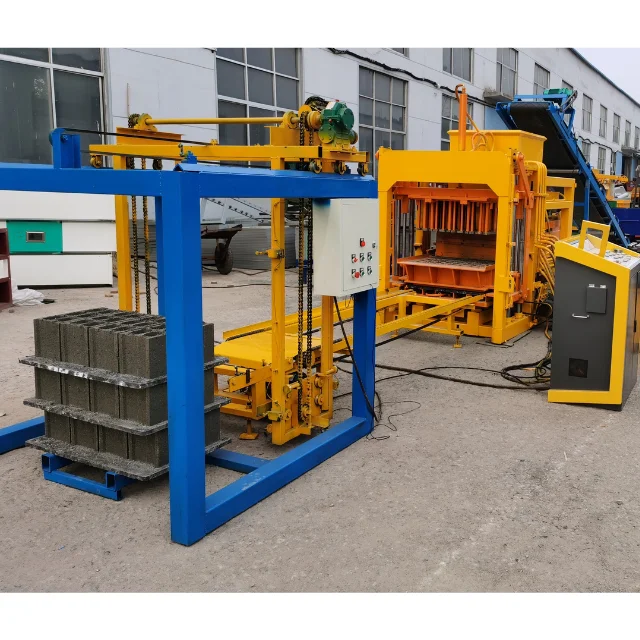
| Moulding Mode | Automatic loading, vibration moulding |
| Demolding Method | Hydraulic |
| Pallet Size | 880 × 850 mm |
| Molding Cycle | 15–20 s (basis not stated in source — confirm block format, material and thickness) |
| Overall Power | 37 kW |
| Total Mass | 7 T |
| Factory Area Required | 1200 m² |
| Control System | PLC with touch screen HMI |
| Hydraulic System | Independent integrated hydraulic station |
| Output (Hollow Block 400×200×200 mm) | 1080–1440 pcs/h, 8640–11520 pcs/8hr |
| Output (Hollow Block 400×150×200 mm) | 1440–1920 pcs/h, 11520–15360 pcs/8hr |
| Output (Solid Brick 240×115×53 mm) | 5760–7680 pcs/h, 46080–61440 pcs/8hr |
| Output (Rectangular Paver 200×100×60 mm) | 2160–2880 pcs/h at 20–25 s cycle, 17280–23040 pcs/8hr |
| Output (Zigzag Paver 225×112.5×60 mm) | 2160–2880 pcs/h at 20–25 s cycle, 17280–23040 pcs/8hr |
| Compressive Strength of Blocks | ≥15 MPa |
| Raw Material Adaptability | Waste ash, slag, and various aggregates |
| Fault Diagnosis | Built-in PLC fault diagnosis system |
| Safety Logic | PLC advanced safe logic circuit with action interlock |
| Warranty | 1 year (excluding spare parts) |
| Voltage & Frequency | To be confirmed against target market |
| PLC Display Language | To be confirmed against buyer requirement |
| Automation Level | Semi-automatic or fully automatic stacking/cubing to be confirmed |
| CE Declaration | Confirm applicability to this model |
Application Suitability
| Application | Material or Output |
|---|---|
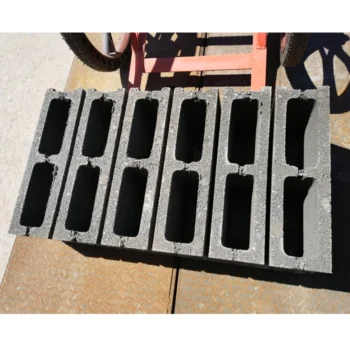
| Hollow block production for building walls | Local crushed stone, sand, cement; waste ash or slag where permitted |
| Solid brick manufacturing | Fine aggregate blends with controlled moisture |
| Rectangular paver for roads, walkways and yards | High-strength aggregate mix, face-mix optional |
| Zigzag (interlocking) paver | Crushed granite or basalt with cement binder |
| Block plants integrating industrial by-products | Fly ash, slag and recycled aggregates with adapted mix design |
Why the QT6-15 Block Machine Specifications Must Name the Block Format First
Capacity without a format attached is not a capacity at all.
A catalogue might promise thousands of pieces per hour, but if that figure was measured on a thin paver and your market buys 200 mm hollow blocks, the real daily output drops by more than half. The QT6-15 hollow block machine documentation on this page lists every output number against a named format, a stated cycle window, and an eight-hour shift — the same conditions you will run under once the line is commissioned. Buyers who skip this matching step consistently discover the shortfall only after the first production week [NEED_CITE: common causes of output shortfall in new block plants].
Matching the Press to the Block Your Market Actually Buys
The QT6-15 block machine specifications show a clear spread: 400×200×200 mm hollow blocks run at 1080–1440 pcs/h, while the same press on 240×115×53 mm solid bricks reaches 5760–7680 pcs/h. That difference is geometry, not marketing. A technical buyer sizing a plant must start with the format that moves volume locally, then verify the cycle time and pallet area can sustain the target shift output.
Mould Change Reality and Format Flexibility
Switching from hollow block to paver moulds involves physical changeover on the QT6-15. Buyers who plan a multi-format catalogue need to confirm mould change procedure and time before the machine ships, because every hour spent retooling is an hour of lost production. The independent hydraulic station and PLC touch screen store cycle parameters per mould, so once each format is tuned, recall takes only a screen tap [NEED_CITE: PLC recipe storage in hydraulic block presses].
What Vibration Force and Hydraulic Pressure Actually Do Together
The 45 kN platform vibration combined with hydraulic demolding pressure determines whether the block leaves the mould with green strength or crumbles at the corner. If your local aggregate is high in fines or clay content, the vibration frequency needs room to adjust — the 0–60 Hz range on the QT6-15 allows that tuning. A mix that works in the factory trial can fail on a different sand source, which is why sending a raw material sample before finalising the mould and pressure setting is a non-negotiable step.
The Hidden Cost of Skipping the Pallet and Curing Match
An 880×850 mm pallet sounds like a detail until your existing curing racks are built for a different size and your forklift tines are too short to centre the load. Buyers who treat pallet specification as an afterthought end up re-racking the entire curing yard or handling output by hand — a bottleneck that cancels out the press capacity they paid for. The pallet dimension, material and curing rack layout must be confirmed as one system before the QT6-15 enters production [NEED_CITE: pallet and curing area coordination in block plants].
What Sets This Sourcing Path Apart
Configuration starts with your raw material sample and target block format, not a default catalogue page. The mould is designed around the dimensions your market sells, including custom drawings when standard formats do not fit. Pallet size, handling equipment and automation level are confirmed as a matched line rather than separate line items. Factory testing runs your specific mix before dispatch, and the PLC display language is locked to your operator requirement before the panel is wired. Documentation travels with the machine so commissioning does not stall on a missing schematic.
Documentation & Verification
- Line layout with capacity stated per block format you confirmed
- Mould drawing and complete format list matching quotation scope
- Pallet size and material spec checked against your curing rack
- Voltage, frequency and PLC language confirmation signed before build
- Hydraulic and electrical schematic for on-site troubleshooting
- Factory test record on your aggregate blend before dispatch
Installation, Commissioning & Support
- Foundation plan sized to the 8200×1700 mm footprint and 7 T mass
- Dedicated 37 kW circuit with confirmed voltage and frequency
- Hydraulic station isolated from vibration during reassembly
- PLC touch screen booted in confirmed operator language on first power-up
- Cycle parameter tuning per block format with your local mix
- Wear parts and mould list handed over with maintenance schedule
What We Need From You to Quote Accurately
Send the exact block dimensions your market moves in volume, the local aggregate type and a raw material sample if possible. Confirm your site voltage, frequency and preferred PLC display language. Share your available curing area dimensions and any forklift or rack equipment already on site so the pallet and handling specification lands as a working system, not a surprise.
Frequently Asked Questions
Q: How is QT6-15 capacity verified per block format, and why do outputs differ so much?
A: Each capacity figure pairs a named block size with a cycle window and an eight-hour shift. Hollow blocks take longer per cycle than solid bricks because of greater mould depth and fill volume, so hourly rates drop even though the press is the same. Verification runs your specific format before dispatch.
Q: Which mould formats can the QT6-15 run, and what affects mould change time?
A: The press supports hollow block, solid brick, rectangular paver and zigzag paver moulds. Changeover time depends on mould locking mechanism familiarity and whether the hydraulic fittings are quick-connect. PLC recipe storage means cycle parameters for each format are recalled instantly once tuned.
Q: How should the 880×850 mm pallet size be matched to my existing curing setup?
A: Measure your curing rack bay width and forklift tine length before confirming pallet material and size. A mismatch forces manual re-stacking or rack rebuilding, both of which erase press capacity gains. We confirm pallet spec against your handling equipment before production starts.
Q: How is the machine configured to my local aggregate instead of a catalogue default?
A: We ask for a raw material sample and your target mix design, then set vibration frequency, hydraulic pressure and mould clearance accordingly. A high-fines sand demands different tuning than clean river gravel, and the 0–60 Hz adjustable platform vibration allows that adjustment on site.
Q: What documentation accompanies the QT6-15 shipment?
A: The package includes a line layout with per-format capacity, mould drawings, pallet specification, hydraulic and electrical schematics, factory test record on your mix, PLC language confirmation, operation manual and a wear parts list. CE declaration applicability is confirmed for your market before booking.